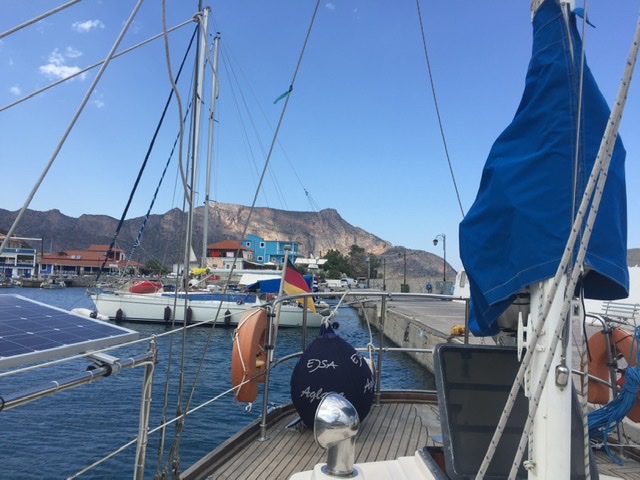
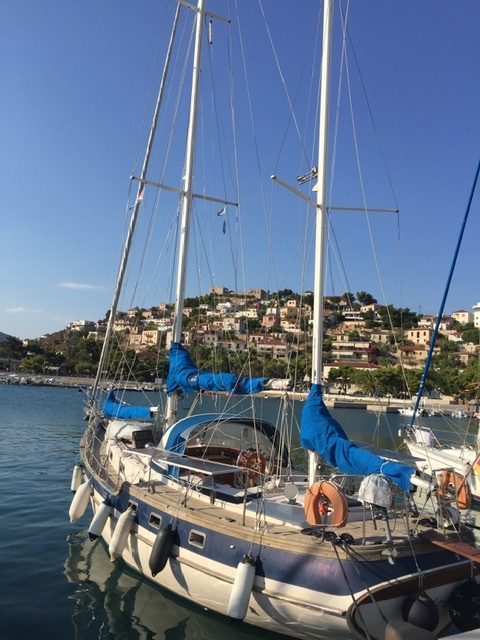
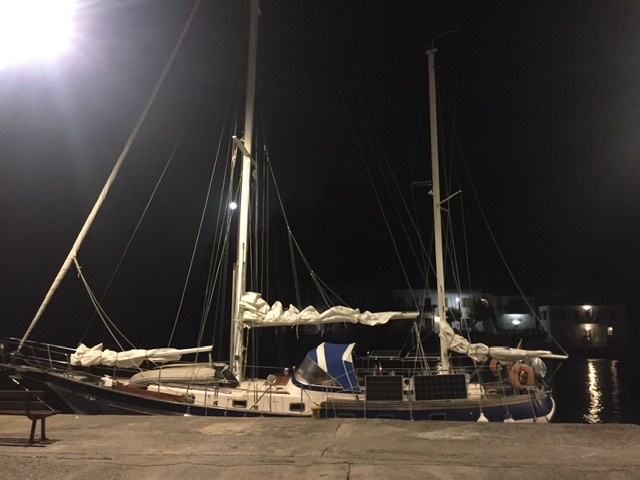
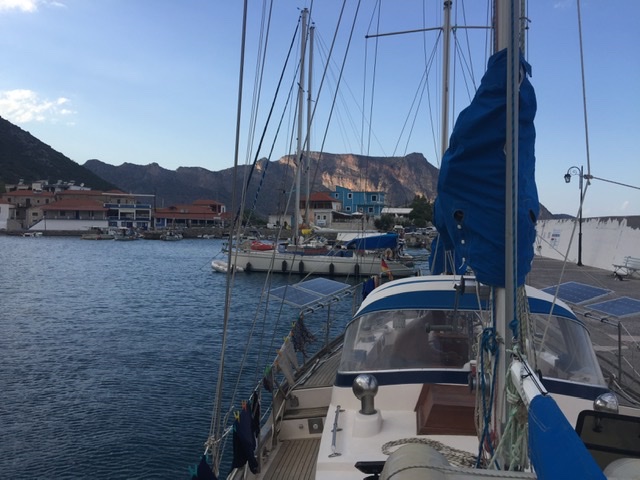
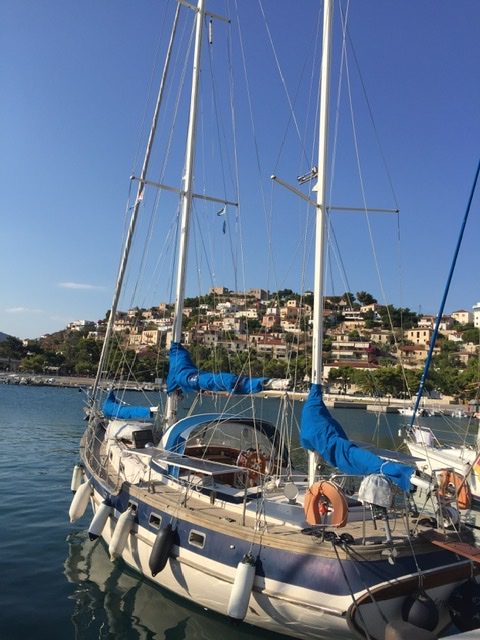
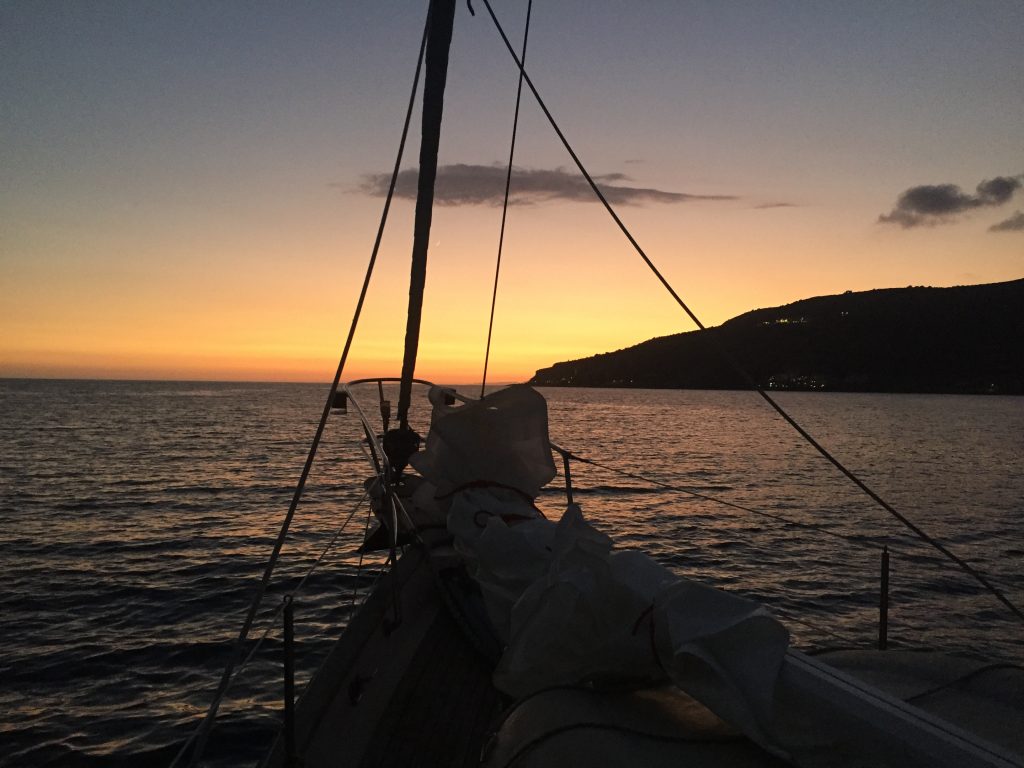
Willkommen! Dies ist die Website von Gisela und Walter Würfel. Hier berichten wir über die Reisen und das Leben auf unserer Segelyacht Aglaya. / Welcome! This is the website of Gisela and Walter Wuerfel. Here we report about the journeys and the life on our sailing yacht Aglaya.
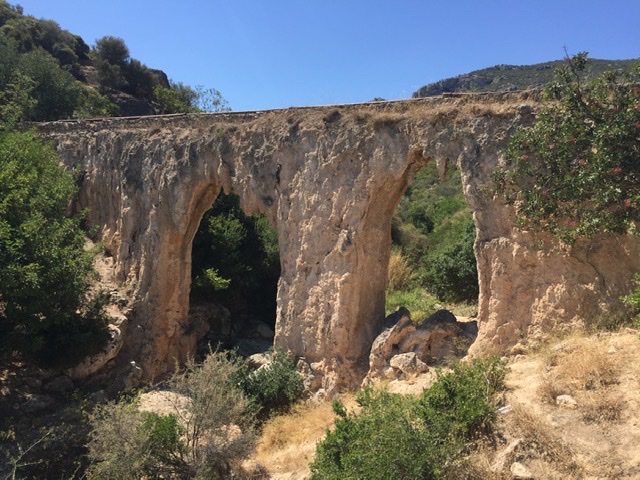
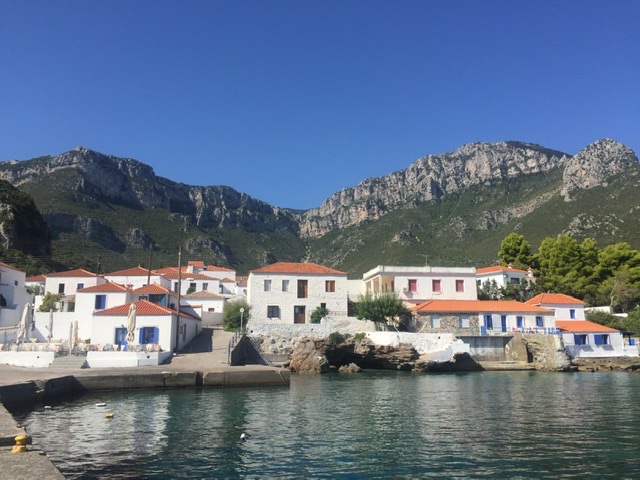
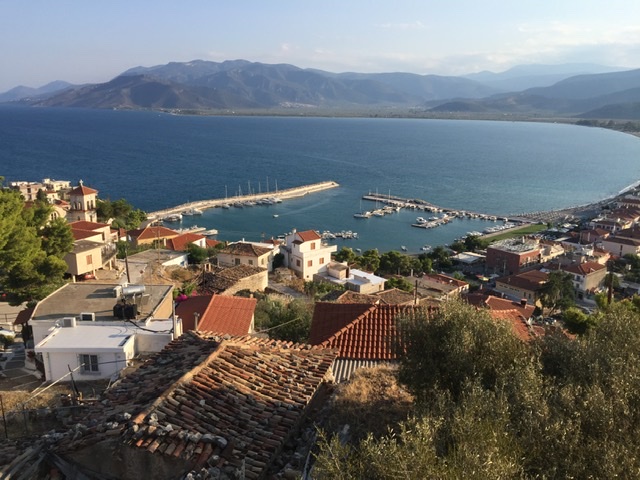
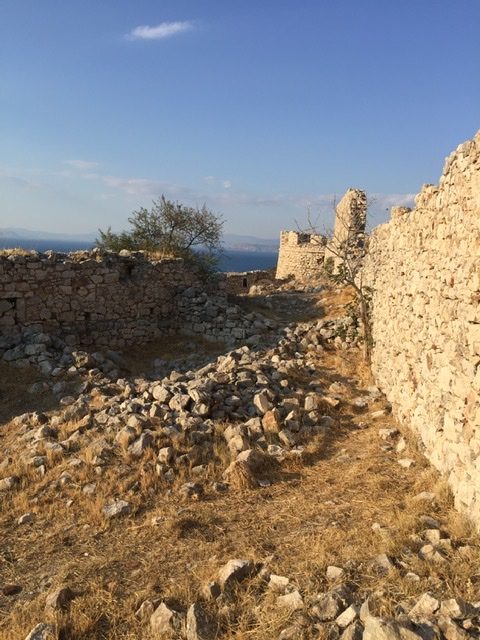
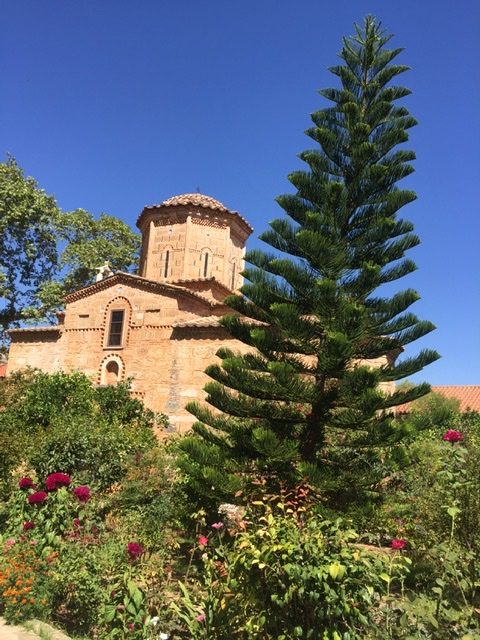
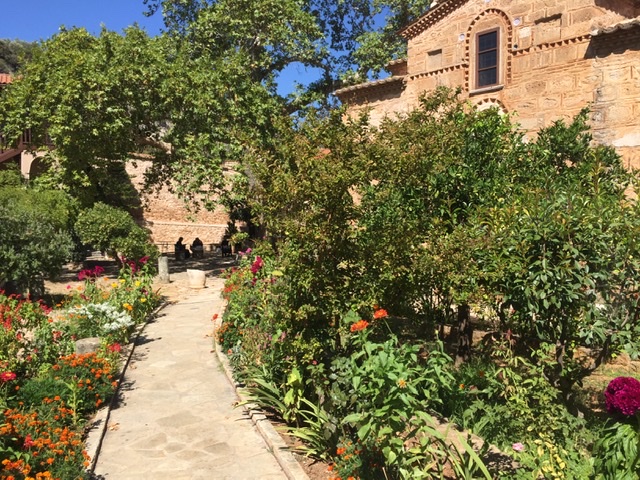
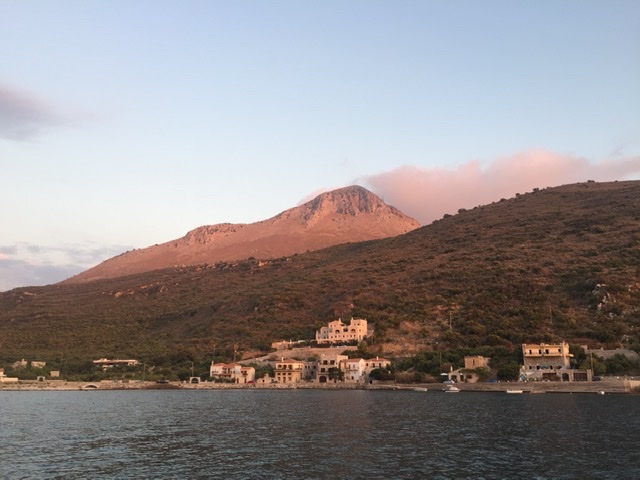
Ovid sang about it, Goethe praised it, and according to the travel guide, even Ernst Bloch was already here: Arcadia, place of longing and fascinating ideal "golden" landscape. And, to quote the travel guide again: "Home of the shepherd god Pan: rugged mountains, gnarled pastures and empty villages, sad myths and places of warlike encounters". We approached Arcadia from the sea. Beautifully rolling hills that change colour depending on the position of the sun and the time of day, from green to brown. In the background, steep rock falls, red karst near Leonidi. The land is barren - except for the alluvial fans of the rivers, which have created fertile plains, olives, vegetables, wine, citrus fruits are cultivated, here are also the cities. Small fishing villages like Kyparissou, Paralio Astros, very idyllic, tiny harbours and beautiful anchor bays. This is one of the reasons why the Roman consul, orator and politician Herodes Atticus built his huge vila here 1900 years ago - with a view of the sea, but seven kilometres away. Next to this villa is the small Monatserste of Loukos with its uniquely beautiful garden. Here a nun explains the difference between Greek Orthodox and Russian Orthodox Church (none except for a few other holidays), then she invites you to a glass of water with homemade marshmellow-like sweets. Besides Roman remains and Byzantine monasteries and churches, there are also Frankish fortresses in Arcadia - Franconia is the collective term for crusaders here. A beautiful, harsh region, you can understand the praise of this country.
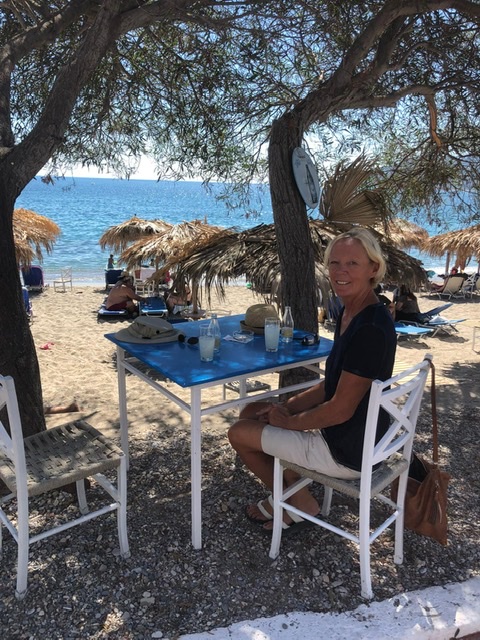
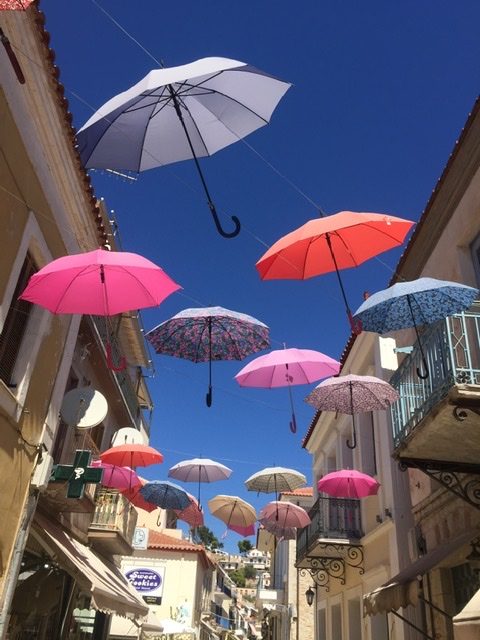
KiparissouPlaka/LeonidiPort of Paralia AstrosParalia Astros: View from the castleParalia Astros: a frankonien castle againAt the beachPedestrian areaMonastery Loukos
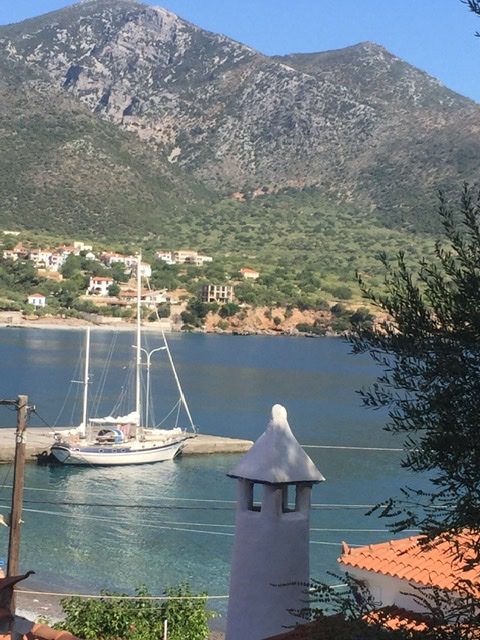
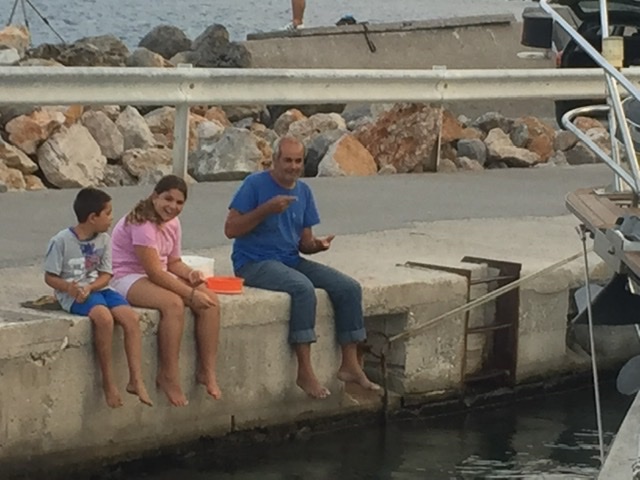
Many who sail know this: there are wonderful nights on board. For example in a beautiful bay. The boat lies quietly at anchor. You lie in the cockpit, look into the rig and into the beautiful starry sky, another glass of wine and then sleep until the sun comes back. Or: On a long trip across the Atlantic. You are at the helm and on watch. All others are sleeping. The rising stars above the horizon. They shine green, red and blue. You observe how they gradually become as white as we know them when they climb higher. But there are also other nights: The wind turns and the anchor chain starts to jerk. Will the anchor hold? You are are alarmed and can‘t sleep anymore. Or: You have chosen a "safe" small harbour because strong wind is announced for the next day. So we did on the east side of the Peloponnese on the way from Monemvasia to the north. In Plaka/Leonidi, a good 20 nautical miles further north, we moored alongside at the pier. A nice little place where we were given a bag of tomatoes, cucumbers and peppers as a welcome present. Here we wanted to stay for two days to explore the surroundings, beautiful villages and impressive rocks.
Then it turned out completely different: At midnight our many fenders scraped up and down the pier violently. No wind but an incredible swell in the harbor. The wind further east had built up this strong swell. It did not hit our boat directly, but it was reflected from the shore into the harbor. So we to make "fender watch", so that our boat was not not damaged. Our Austrian neighbors had the same situation. They know the small port for years and had never experienced such a heavy swell there. It stayed there the next morning as well. So no exploring the area in Leonidi. We fled a bit further north to the port of Astros. Here we now lie calmly in front of the bow anchor with a view of the fortress above the town. We also met our Austrian neighbors here again. And now: sleep and then explore the surroundings.
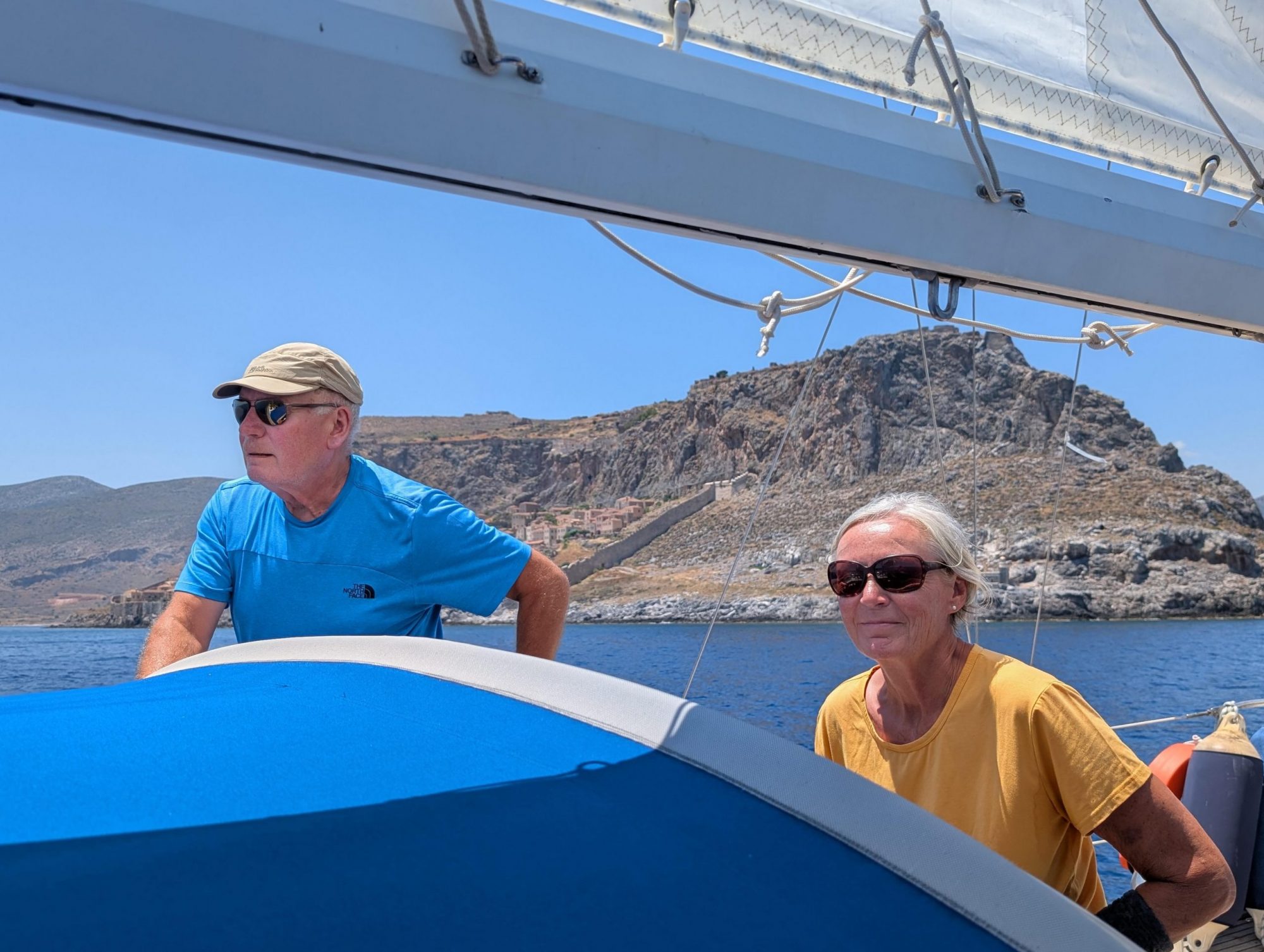
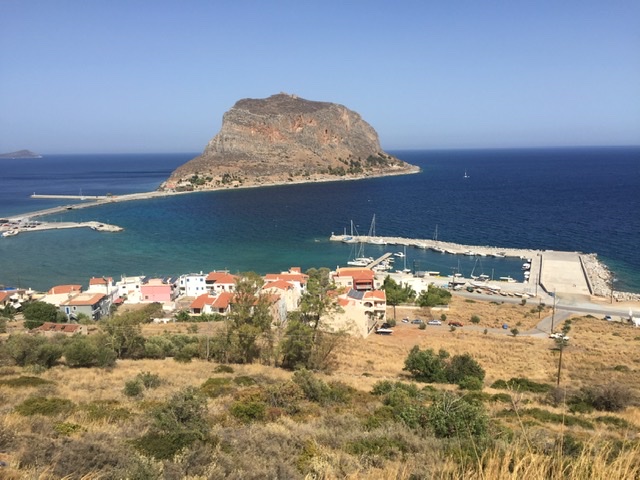
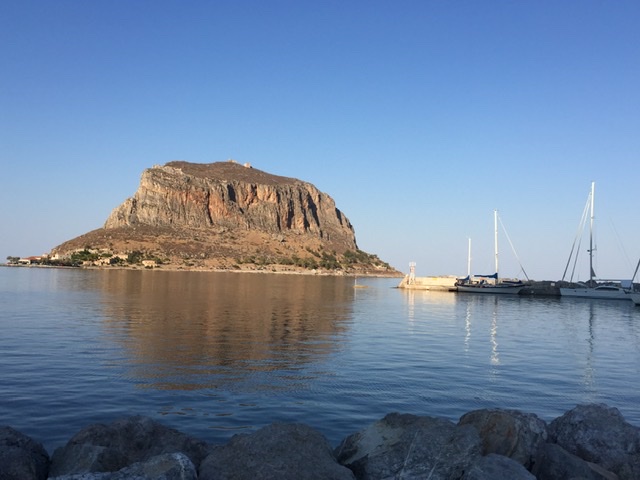
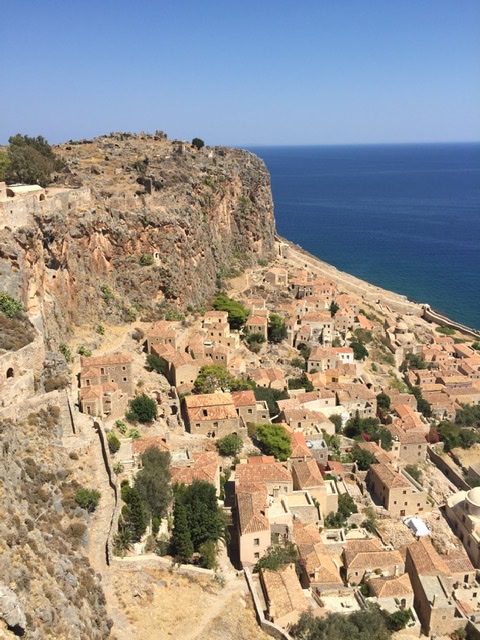
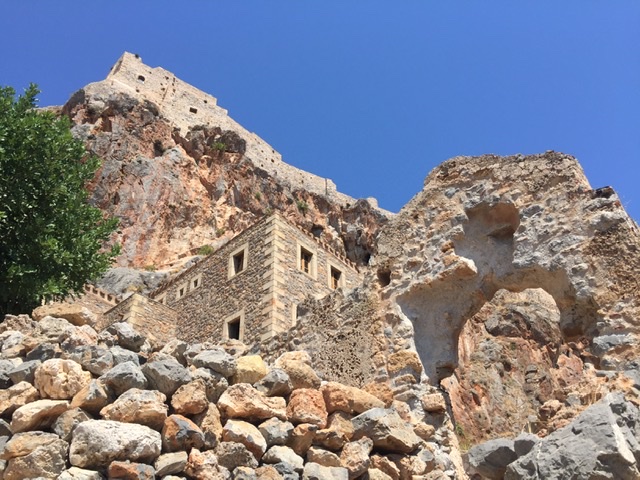
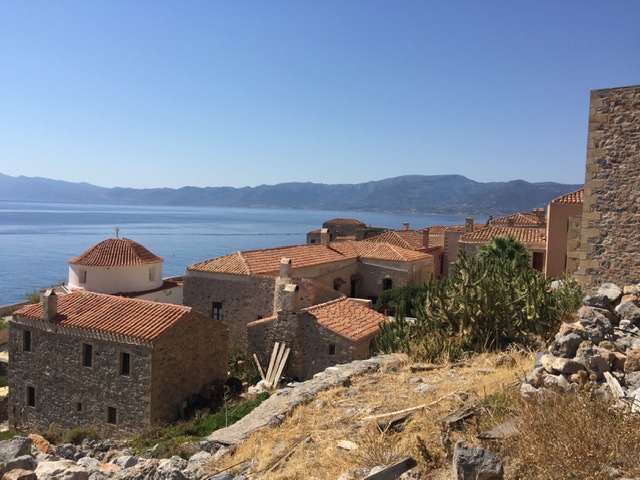
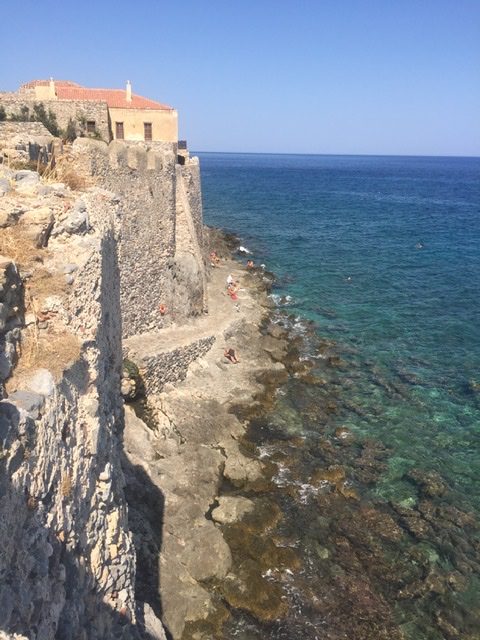
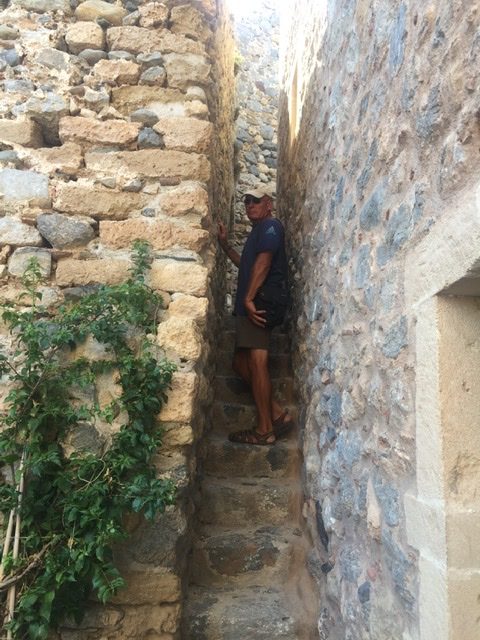
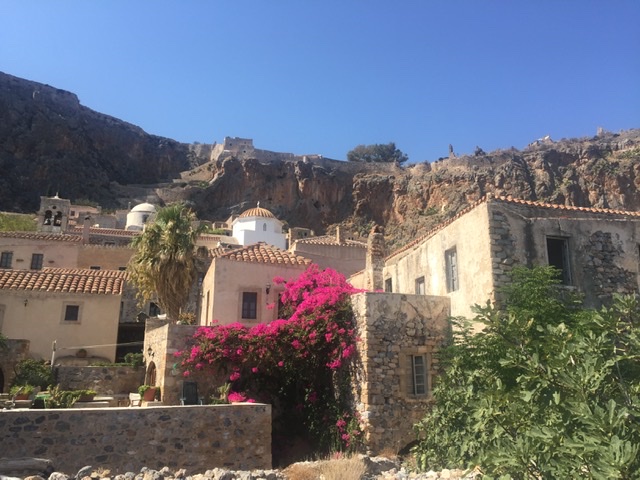
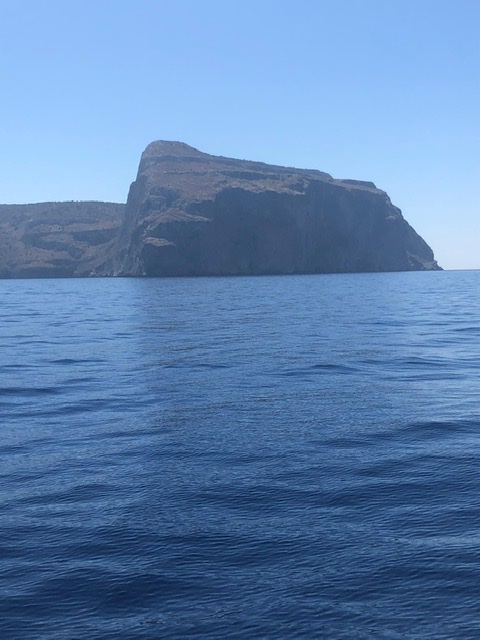
Unbelievable: a rock, just off the coast of the eastern Peloponnese, rises vertically from the sea 200 m high, 1.7 km long. Associations with Ayers Rock cannot be denied. Settled since the 4th century, impregnable, unaffected by the constant alternation between Venetian and Ottoman rule. It only became Ottoman when the Venetians sold it to the Ottomans. This made its strategic position on the sea route from Italy to Constantinople obsolete and sealed its slow decline. At the top, a large plateau, a Byzantine citadel with everything that goes with it, the upper town, of which only ruins remain today, it was inhabited until 1911, by the way. On the southern slope, the lower town, also Byzantine, almost completely preserved, completely surrounded by a city wall that stretches up the steep hill. A maze of alleys, stairs, terraces, winding, without cars, this would also be impossible because of the narrowness and steepness. And a small "portello" in the southern city wall - you climb through and are two steps down at a wild bathing spot - with steps and railings to get safely into the water in the rocky bank. Today the town is home to upmarket tourism, the houses have been sensitively renovated and are used as hotels or holiday flats. Not to forget: From here comes the Malvasia wine, which can be tasted in pubs, taverns, bars and wine shops everywhere. The most impressive thing we have seen on our journey so far.
Lower An Upper town Looking from lower town to upper townThe roofs of lower townExposed bathing spotNarrow lanes
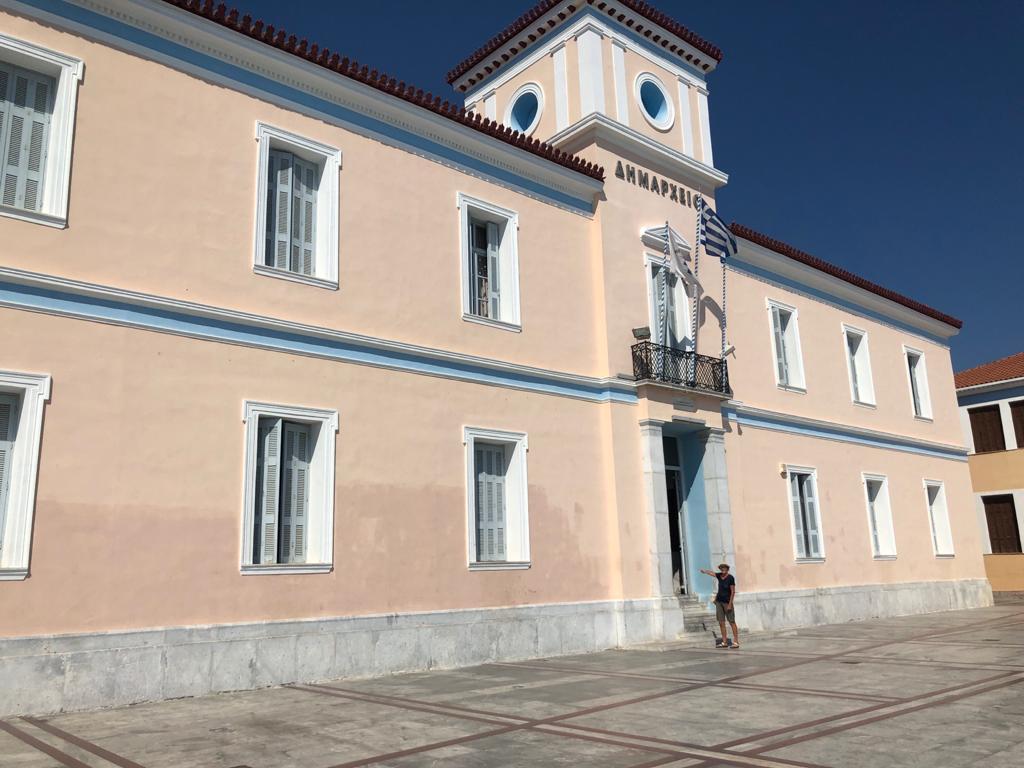
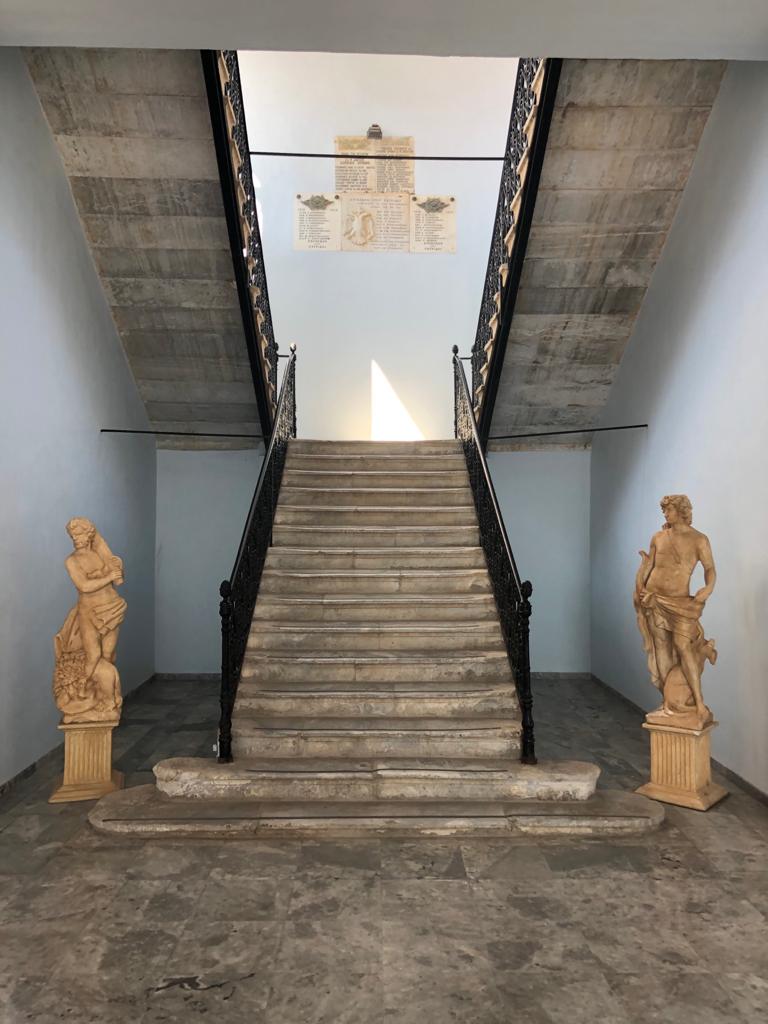
After we had successfully completed our little odyssey through this beautiful town, we thought maybe Kafka was Greek after all……… But one after the other: We came to Gythion and couldn't find a berth in the harbour itself, because it was so crowded that we had to moor outside, at the ferry pier, a 100 x 100 metres concrete slab - very romantic, but as it turned out, a very good, very safe place. Hardly arrived and moored, two friendly officers of the Hellenic Coastguard came in a pickup SUV and asked for the papers. We handed over everything we needed: boat licence, Tepai (Cruising Tax), insurance policy. They kindly pointed out to us that before we leave, over there - they pointed to a house opposite the harbour - we had to pay the mooring fee. The next day, in the afternoon, another pickup SUV of the Coast Guard arrived, with two other officers. They asked for our papers…….we said they could have them, but yesterday there were already two colleagues here who had already done all this. Ah, all right then, have a nice day…….. In the meantime we were already discussing whether we should really sign off. So after five days - Gythion and the surrounding area are really nice - we went to this office after we decided to pay after all. The officer looked at us in astonishment and said that this was the city police and we had to go to the Coastguard, pointing to the other end of the city. There we arrived after a 1.5km walk (35 degrees Celsius). There was a copy of our papers, after all. No, here we were completely wrong, they said. We would have to go to the city administration, they would collect the demurrage fees. That would be back there, the friendly officer pointed to the area we had just come from. So a little longer back to the other end, two buildings with Greek flags in front of them looked quite awe-inspiring. At the first one we were kindly told that this was a school. That we definitely wanted to go to the house next door. And indeed - that was the municipal administration. Everywhere the typical Greek offices: very cramped, very warm, a lot of officials per office for the square metres, shelves with files up to the rather high ceiling. But in the corridors and in the building dignified furnishings, antique figures and even a columned hall. We had to go to Dimitra, we were told, after we had asked a lot of questions. Dimitra sat behind a glass wall and made a phone call. Quite long. Sometimes she tapped energetically with her hair clip on the desk. When she had finished the conversation, she turned to us and was very friendly. She took a closely printed, shrink-wrapped DIN A4 sheet (looked like the small print in the insurance contract) and wrote various numbers among themselves in very precisely legible writing. Then she added them up with the help of a pocket calculator, which looked as if it could do the four basic arithmetic operations - but not any more, and that with rather large keys. The result: 18.04 € for five days. Not much, but there was no supply (electricity, water, showers…). Then we made a crucial mistake: Dimitra asked if she should print out the receipt or if she should send it to us by e-mail. To this day we still don't know why we decided to use the mail variant. After a friendly farewell we went back to the boat. The next day we received the mail from Dimitra with the receipt, but she apologised, she had made a calculation error and the amount would not be 18,04€, but 42,60. We should pay the difference to the account at the National Bank of Greece anyway, thank you very much. We'll see when they sehe sends us a reminder.
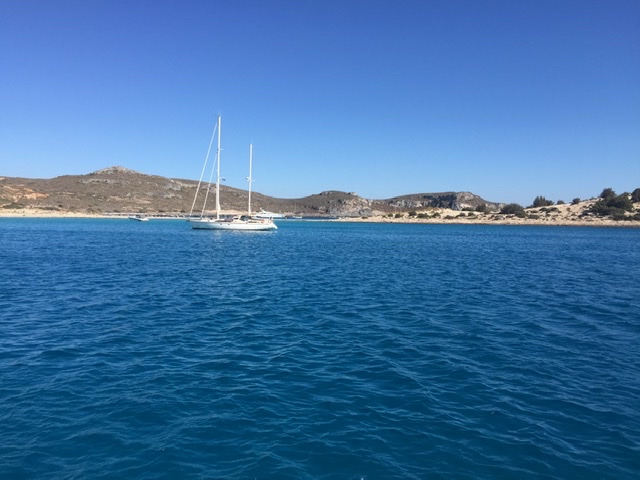
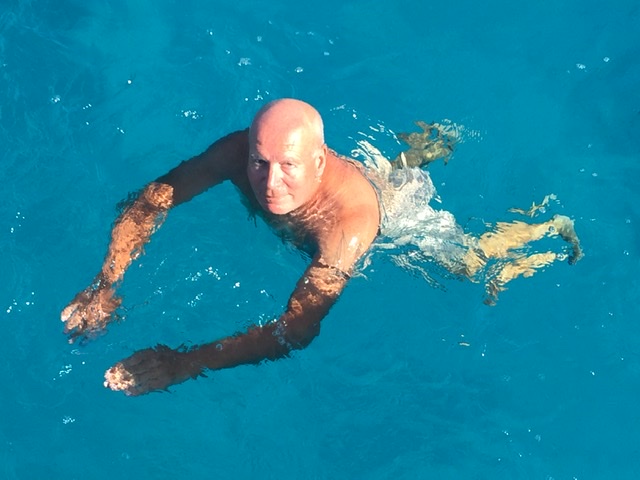
It is said that Elafonisos is the Greek Ibiza. We couldn't find out, at least as far as pubs and discos etc. are concerned. But the beaches and bays are fantastic, fine sand, turquoise sea, picturesque rocks in the background. We spent two days and nights in one of these bays, went swimming from the boat and enjoyed ourselves. However, with a small downer: The bays are mostly open to the southwest, and the swell, the swell that forms during the day due to the constant wind, runs straight into the bay. With the result that the boat rocks, especially when the wave is quite big: always up and down, because it lies at anchor across the waves. That was a bit uncomfortable, one could not sleep so calmly. But because there is almost no light from houses or villages in the bays at night, the starry sky was incredibly beautiful.
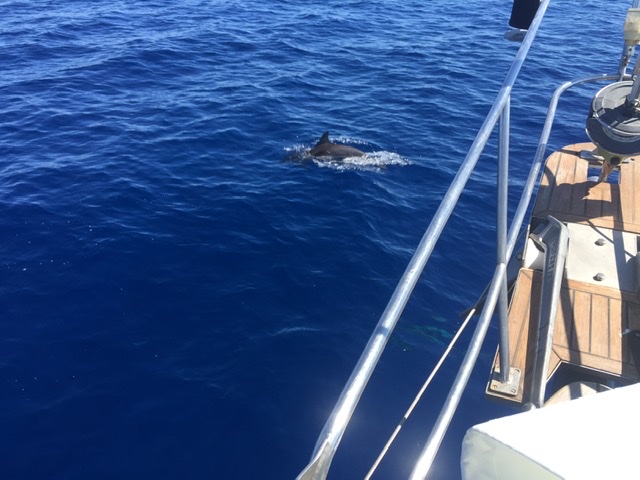
Morning bathDolphins visting our boat
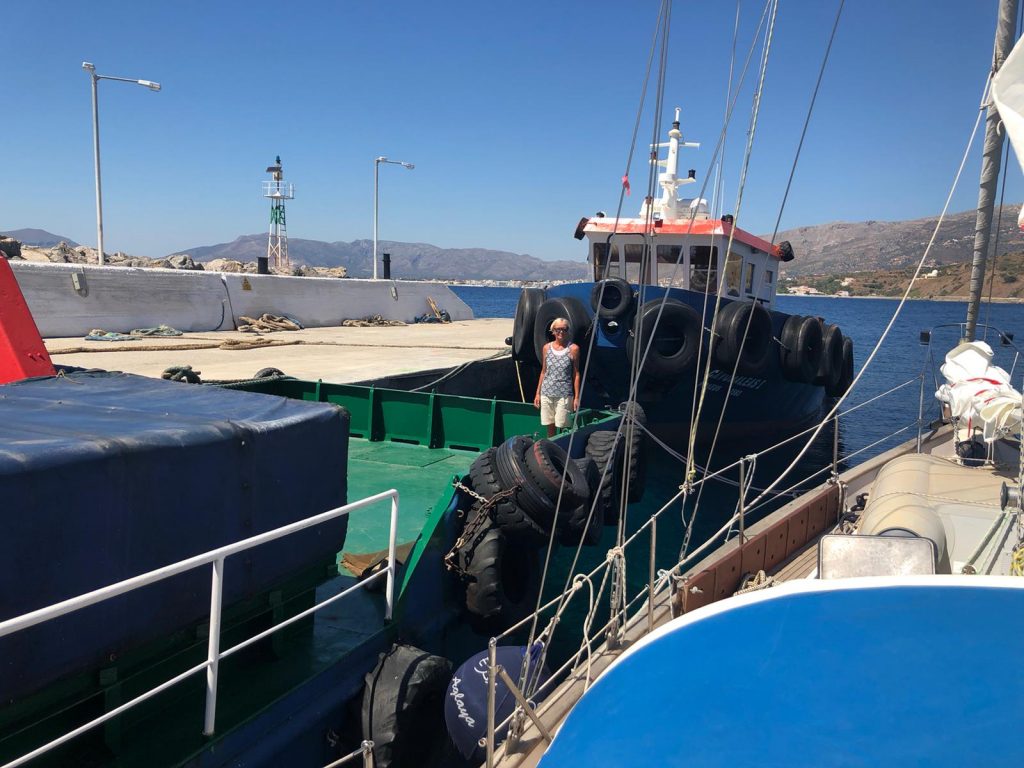
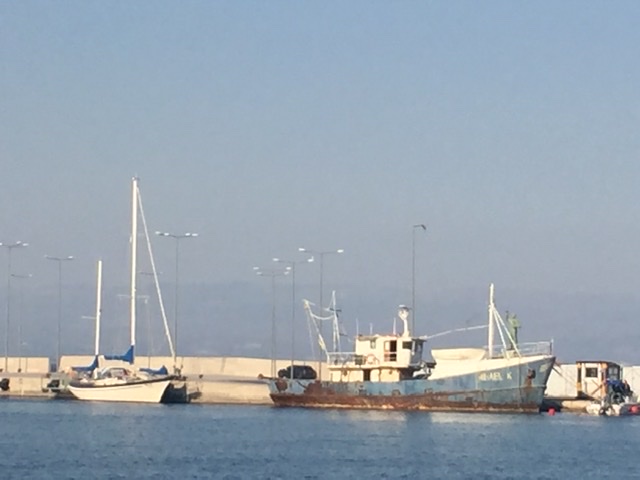
Then we wanted to go to Neapoli, opposite Elafonisos on the mainland. But there it was impossible to go ashore: a very small pier was already occupied by Coast Guard and High Speed Ferry, and the open spaces were too shallow, even though we had a draft of 1.68 m. A slight panic broke out, because we didn't want to be anchored so restlessly again. 2 km east of Neapoli there is the tiny port of Palaiokastro, which looks more like a ship graveyard, at least as far as a few bumbling sailboats are concerned, partly lying on the land and already tipped over. At the much too short pier there was a somewhat rusty, but still functional working ship, estimated to be 20 m long. Two men were fishing and we asked if We Couleur fix our boat at this workboat. Yes yes, was the answer, in two hours another ship would come, but that would be fine. So we moored ourselves to this steel colossus and, although a bit grotesque in appearance, we were all the safer and calmer. The working ship came and maneuvered up to 5cm towards us - the captain was a real professional. Suddenly the owner of the ship we had moored to came and asked when we wanted to leave, we said after one or two nights. No problem was the answer, but he had to go out tomorrow at noon. So it was clear: we would stay one night. We have hardly ever had a berth before that was as exotic, but also as quiet as the one between the truck and the work ship.
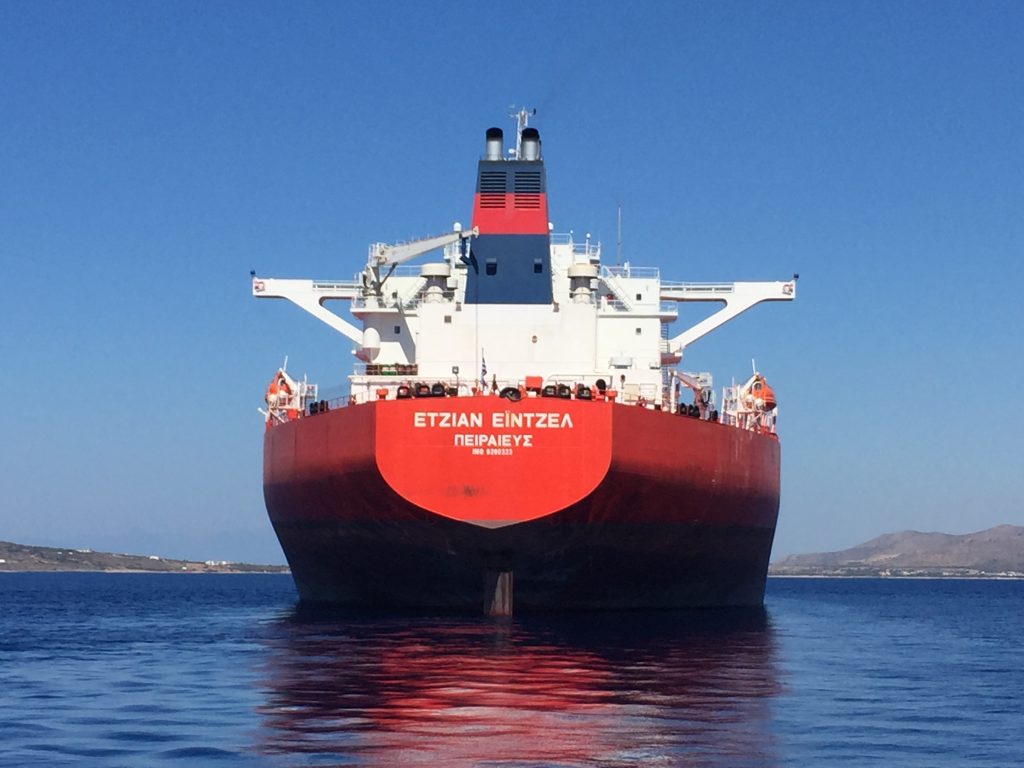
Big cargo ships lie in the road in the Baby of NeapoliAt least we came to Neapoli für a cool beer by foot
From Kalamata we went further south out of the beautiful bay of Limeni to the most southern point of the Peloponnese, which together with Gibraltar/Tarifa is the southernmost point of the European mainland, Cape Tenaro.
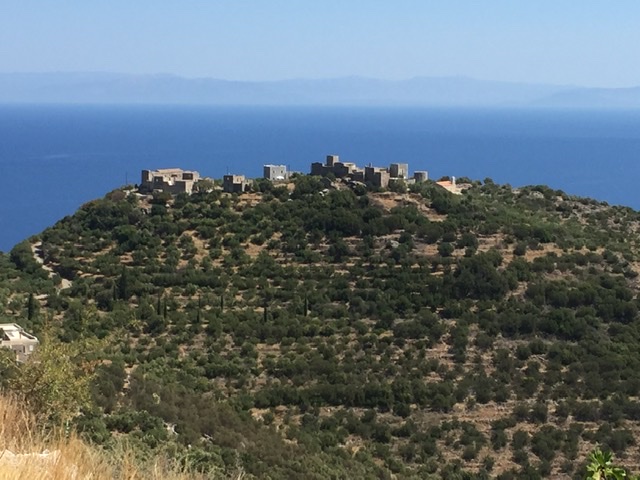
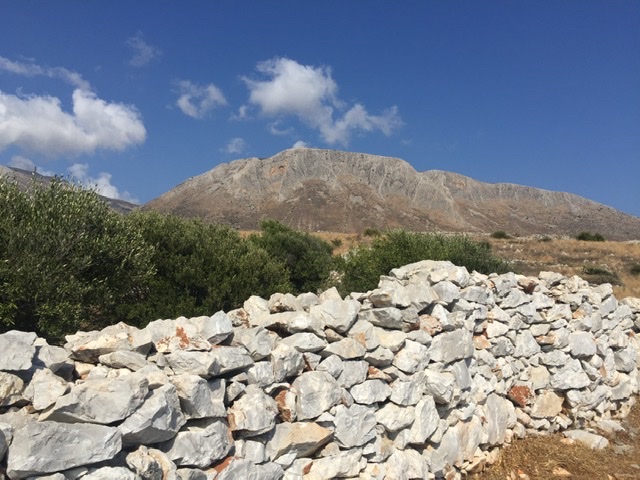
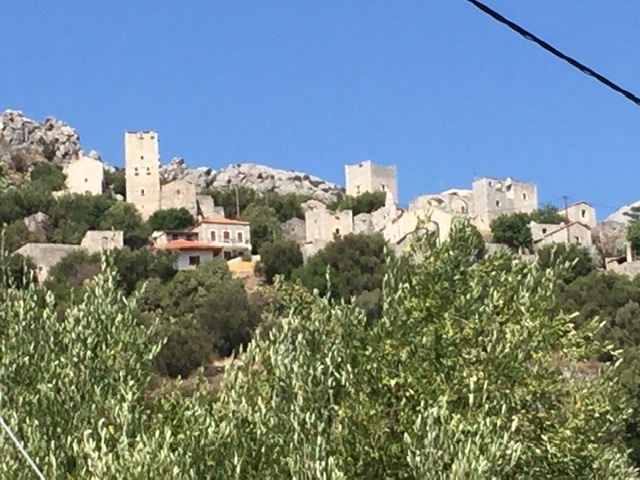
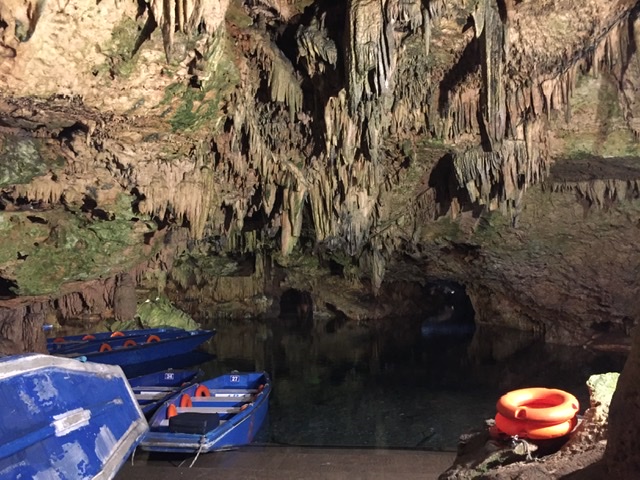
The landscape of this southern part of the peninsula is impressive: wild, rugged, inhospitable, barren, but incredibly beautiful, with high mountains, rock falls, gorges, stalactite caves that can be navigated by small boats.... it is compared to Scotland. It is the Mani, a very special region of Greece.
The Maniotes have been settling here since the second century BC, they see themselves, even today, as the descendants of the Laconians. The special thing: They live in family associations, in clans that have been fighting feuds among themselves since the 16th century, in which there was also blood revenge - right up to the 19th century. Rigid patriarchal structures, honour and male dominance. Against external enemies they held together - the whole changeable time during the rule of the Turks and the Venetians, partly also the crusaders - Franconia is the collective term for it here - they were always independent, never occupied. Even the Bavarian King Otto (who was appointed Greek King in the 19th century) was unable to integrate them completely into the Greek state.
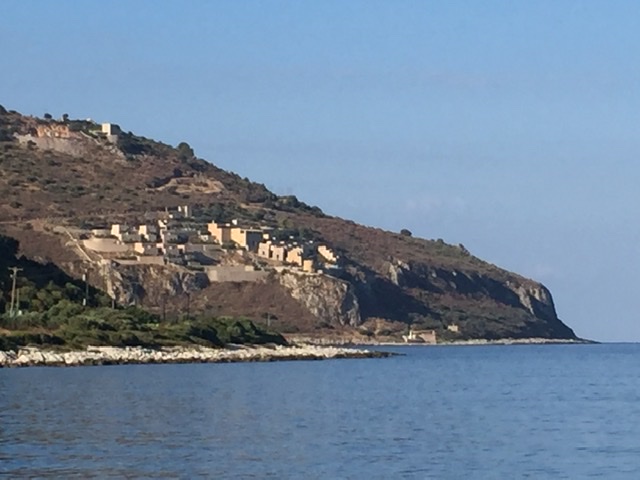
They live in residential towers, which also serve for defence, and which have up to seven floors. From the sea, these towers are good points of approach.
A beautiful bay is Porto Kagio, narrow and sheltered (though not from the winds from the mountains) and a former pirate base.
And near Stoupa on the west side of the peninsula is an old disused lignite mine - the model and backdrop for Nikos Kazantzakis' film Alexis Sorbas.
Further south, just before the Cape, comes the port of Achilles, which operated from here during the Trojan War. Says Homer. And one of the caves just before the cape is one of the entrances to Hades.
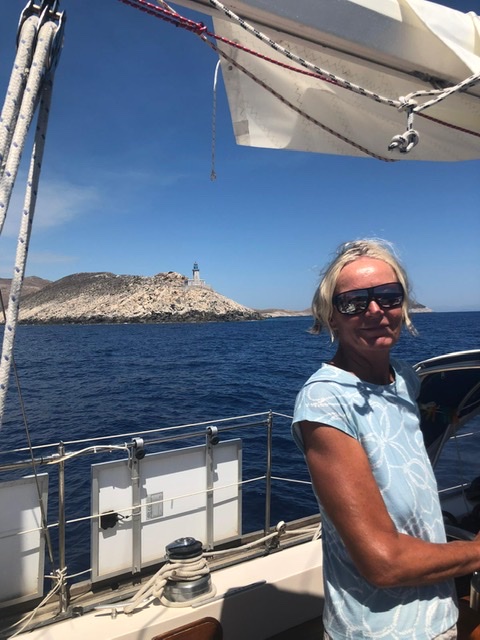
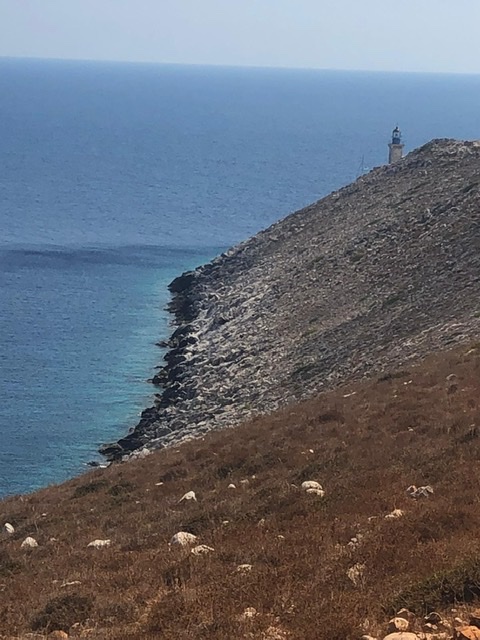
The cape carries an impressive lighthouse, white limestone like the whole landscape in the extreme south of the peninsula. The Greek sailing almanac, which not only has very detailed sailing information, but sometimes also restaurant tips and bizarre things, writes in its note 15: "A large wave once fell upon the light keepers house and washed him together with his dog into the sea. They were never seen again....."
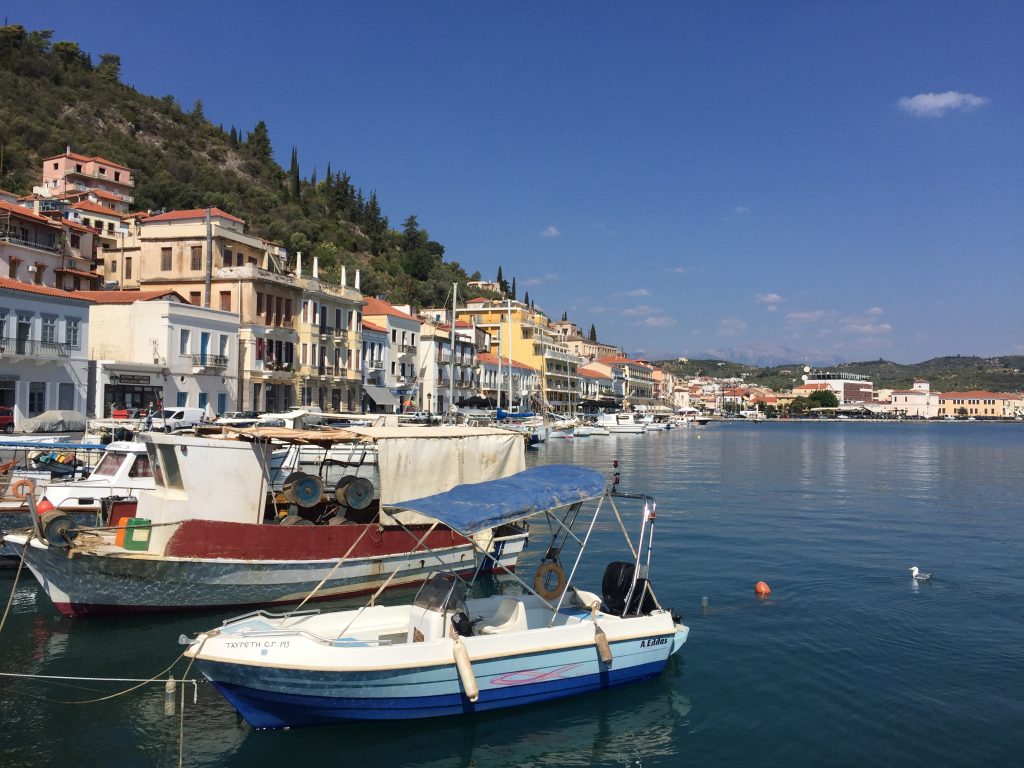
Around the cape the landscape remains rugged and forbidding, sometimes the peninsula is only a few hundred metres wide, until after 20 miles it becomes a little more lovely - we arrive in Githion or Gythion, a beautiful small town built up the slope, colourful, typical houses, Gardens with bougainvillea, lime trees, oleanders, figs.......and a lively harbour, which is difficult for sailors, because it is almost exclusively occupied by fishermen, and in which many rusting and rotting boats have been lying around for years.
Githion PortThe hjghest mountain of the Taygetos: Profitis Ilios (2407m)
The small offshore island of Kranai (Marathonisi) was the scene of the wooing of Artemis, Hera and Athena for Paris. However, this did not take any of the three, but the beautiful Helen, wife of Agamemnon. Thus began the Trojan War. Homer says.
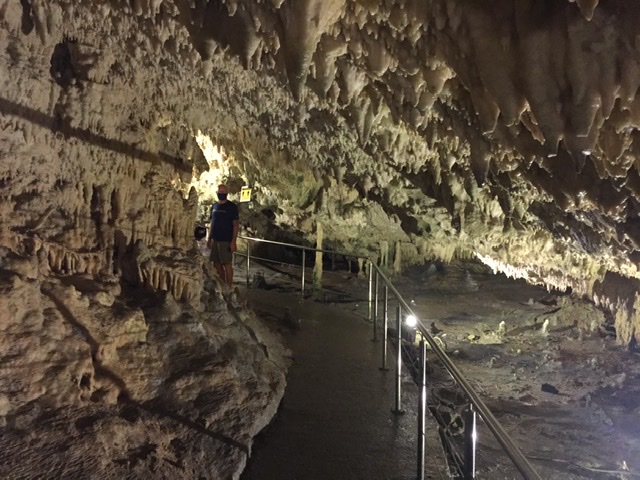
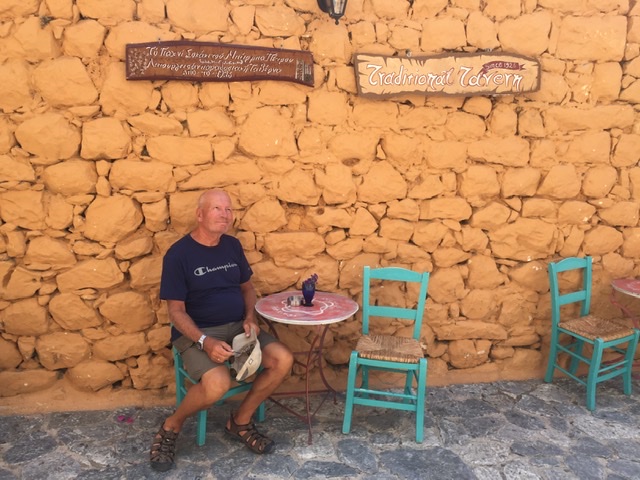
Diros CavesThe small town of Aeropolis has many tavernas
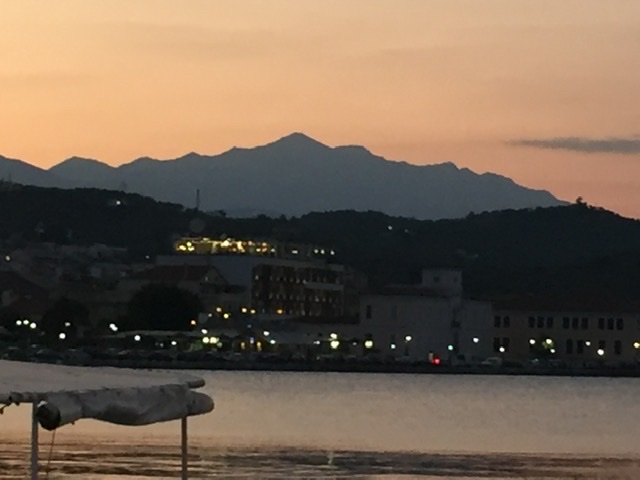
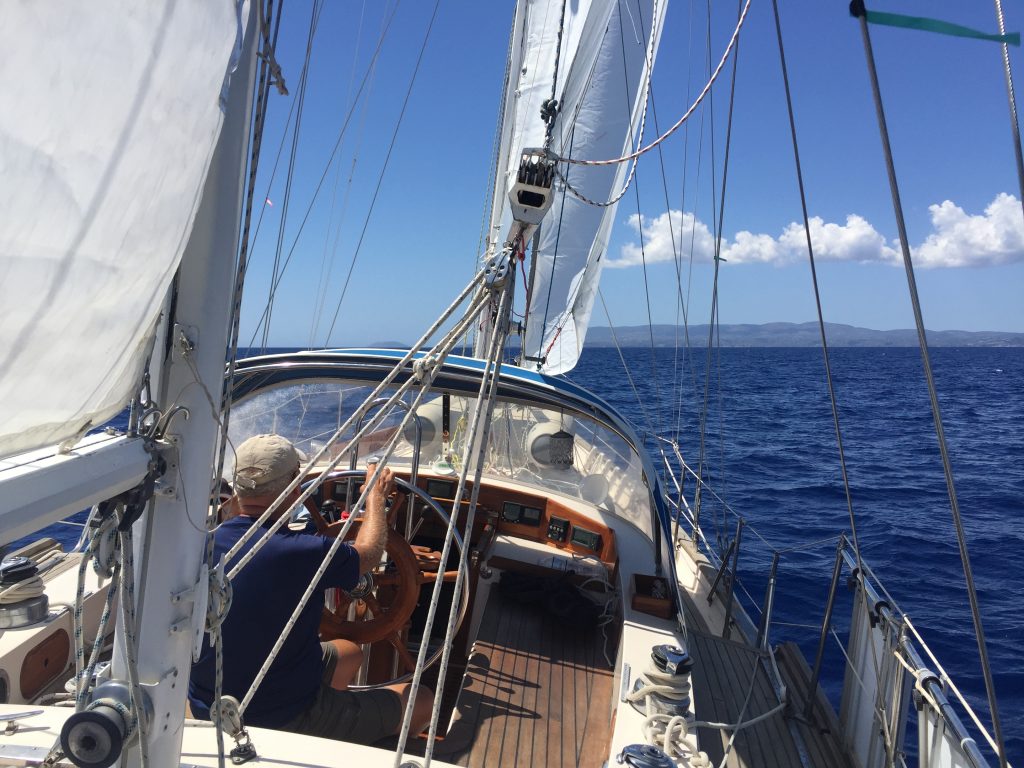
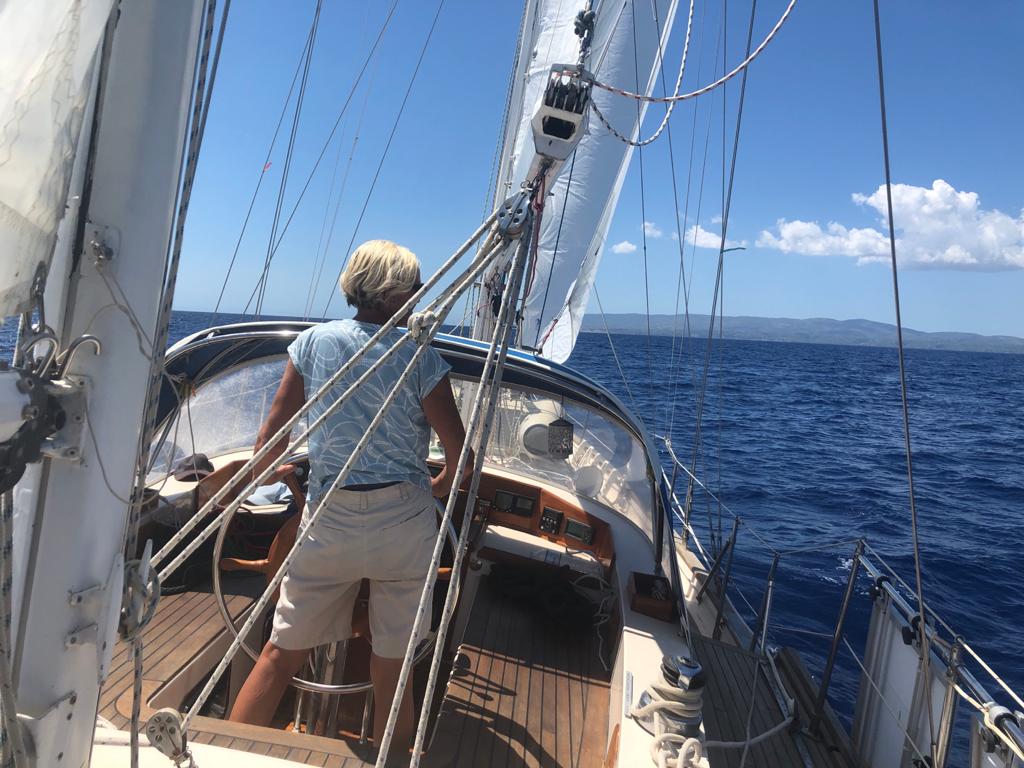
Kalamata is located at the northern end of the Messinian Gulf. There we stayed for several days, among other things to see the ancient Messene. Now we are heading south, with destination Limeni, not a harbour or a marina, but an anchorage. In the south of the Peloponnese, there is no need to get up early or to set off, because the wind in summer mostly does not come before noon. It is mostly a southwesterly wind, which then turns more westerly during the day. That means: first out of the bay under engine, then the wind starts about 5 miles from Kalamata. Southwest: So the wind again exactly from the front. That means: turn around, change of course, instead of southwest now more to the west. But because the coastline further to the south leaps back a little, it's not a big loss of height. Soon a turn is possible again, because the wind has turned further. So we can enter straight into the bay of Limeni. Travel guides compare the landscape that begins here, Mani, with Scotland: barren, harsh, windy, poor……and clans "rule" here, one lives in residential towers like in Tuscany, only harsher, more dismissive. We have to search a bit, but then after six hours of sailing the anchor drops to a turquoise blue shimmering five meters depth on a sandy ground. Open the railing, get out the swimming ladder - go swimming! And the reward for the sailing day: a bay like an amphitheatre: a wide semi-circle that rises sharply, small villages on steep mountain slopes, almost alpine, cubic residential towers, rocks, and in the evening the lights of the villages - beautiful.
Diese Website benutzt Cookies. Wenn du die Website weiter nutzt, gehen wir von deinem Einverständnis aus. / This website uses cookies. If you continue to use the website, we will assume that you have given your consent.
Du kannst deine Zustimmung jederzeit widerrufen. / You can refuse the consent.