Skip to content

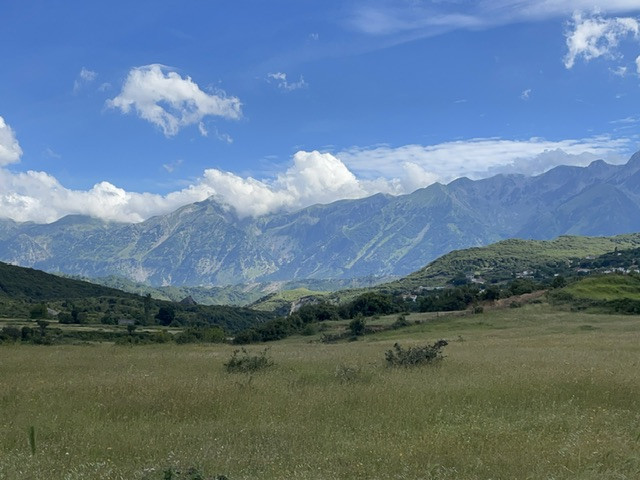
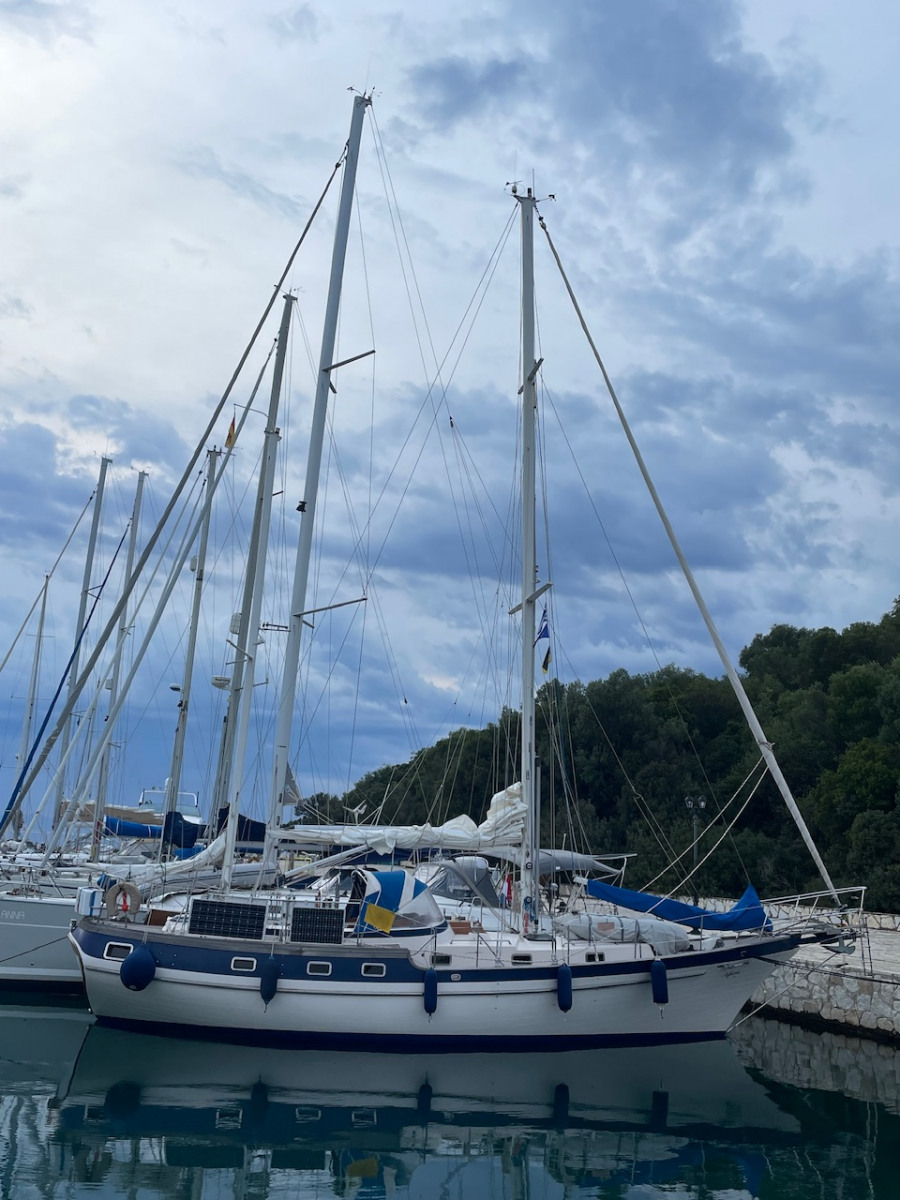
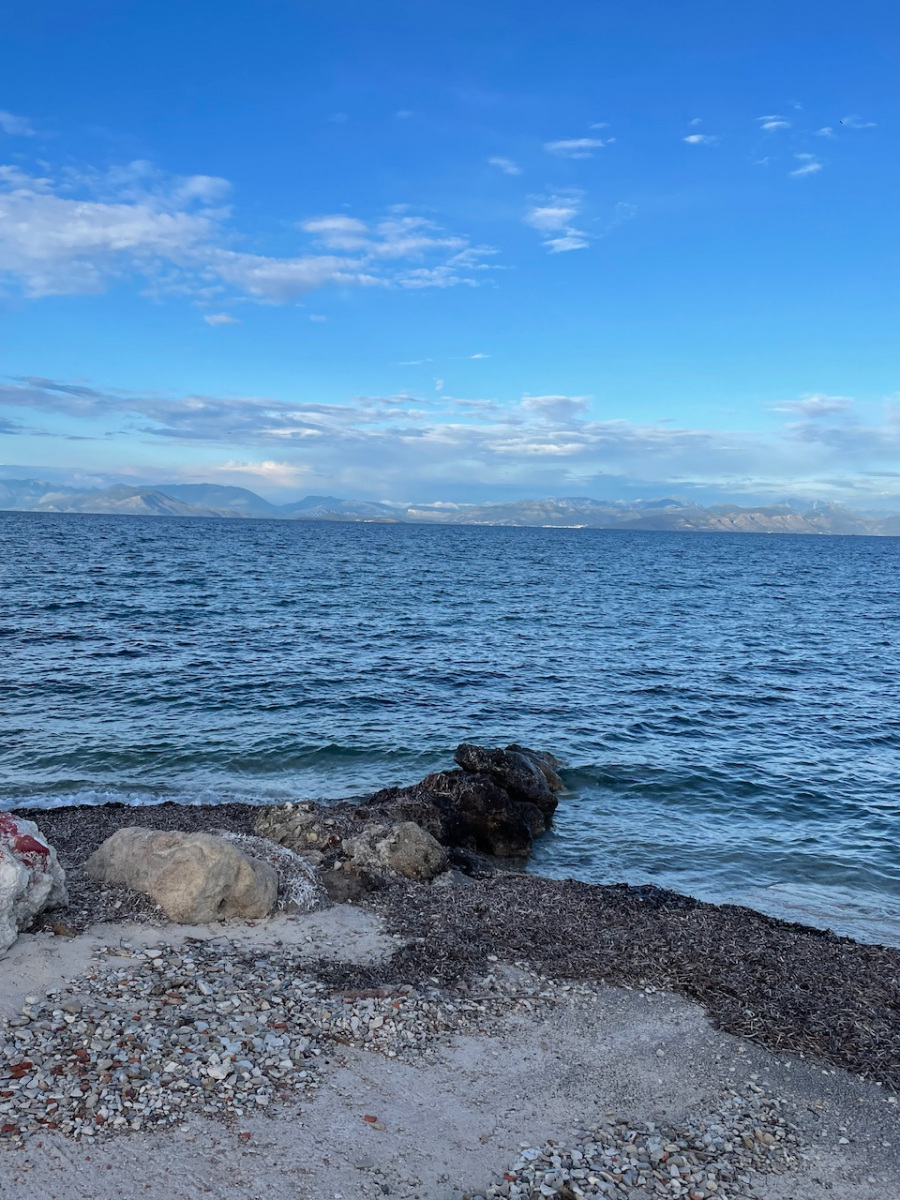
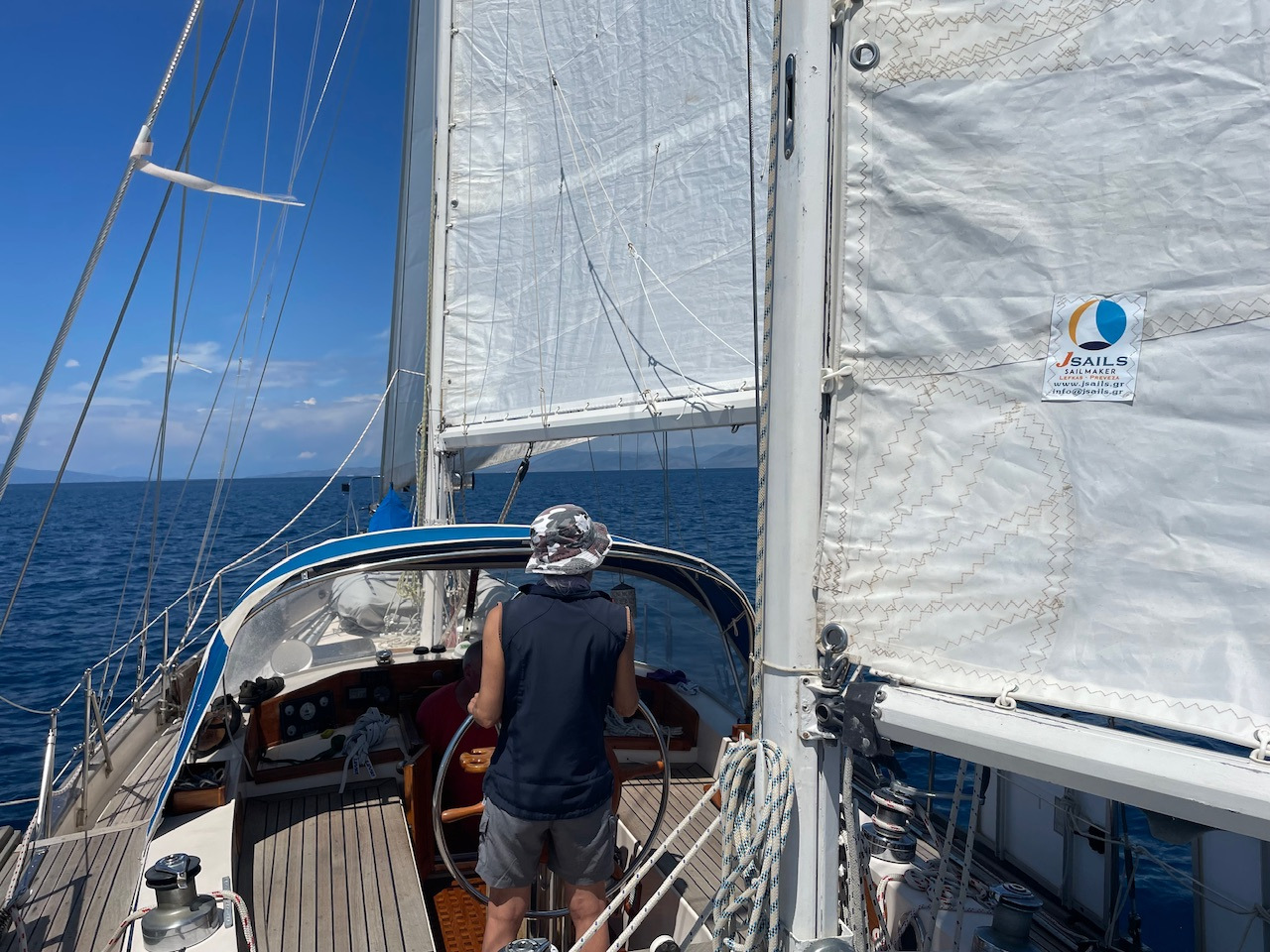
A long 45 nautical miles to the south-west brought us back to Greece, to the small island of Erikoussa just north of Corfu. With little wind in the morning, we first had to motor for a while, still with a view of the high Albanian mountains through which we had travelled in the hire car. Goodbye Albania! But then it was nice sailing with a stern wind.

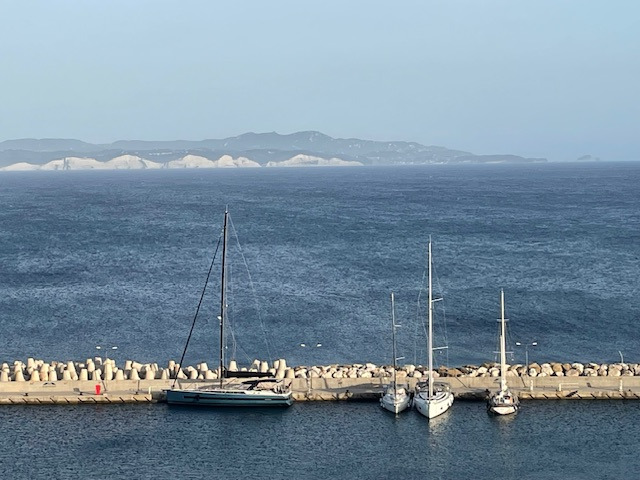
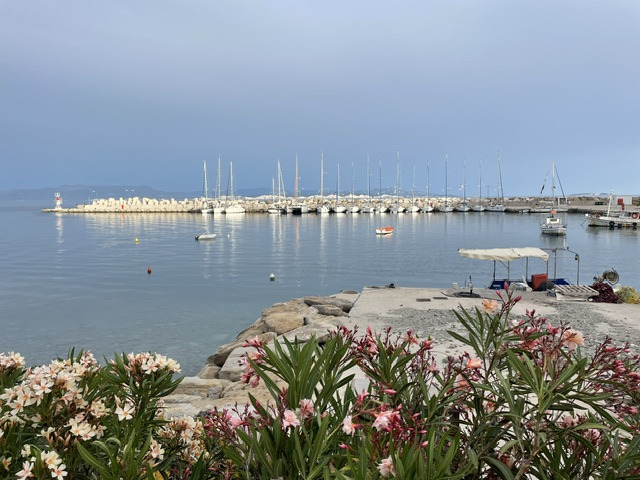
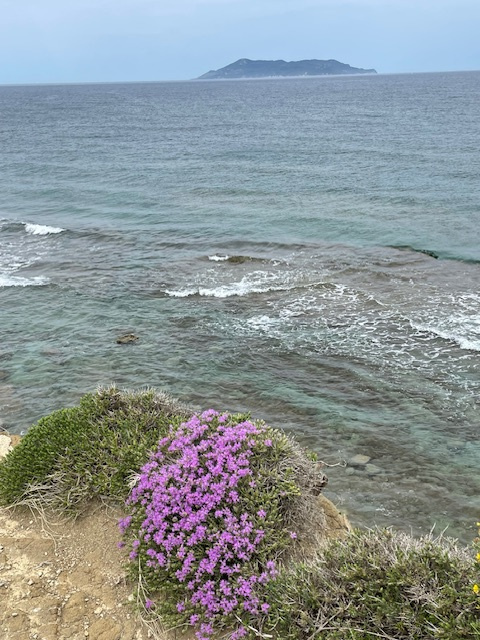
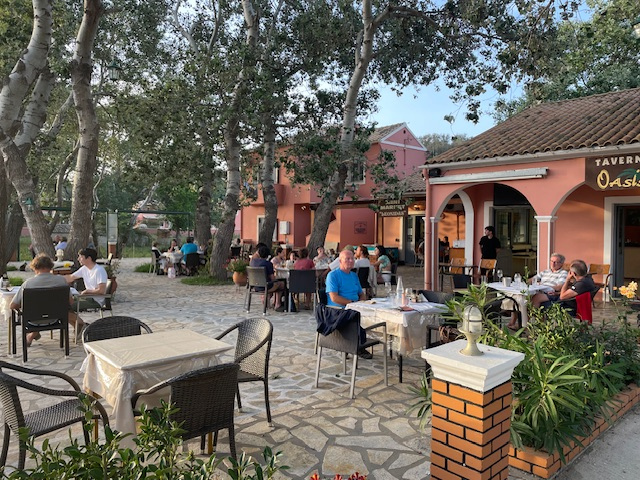
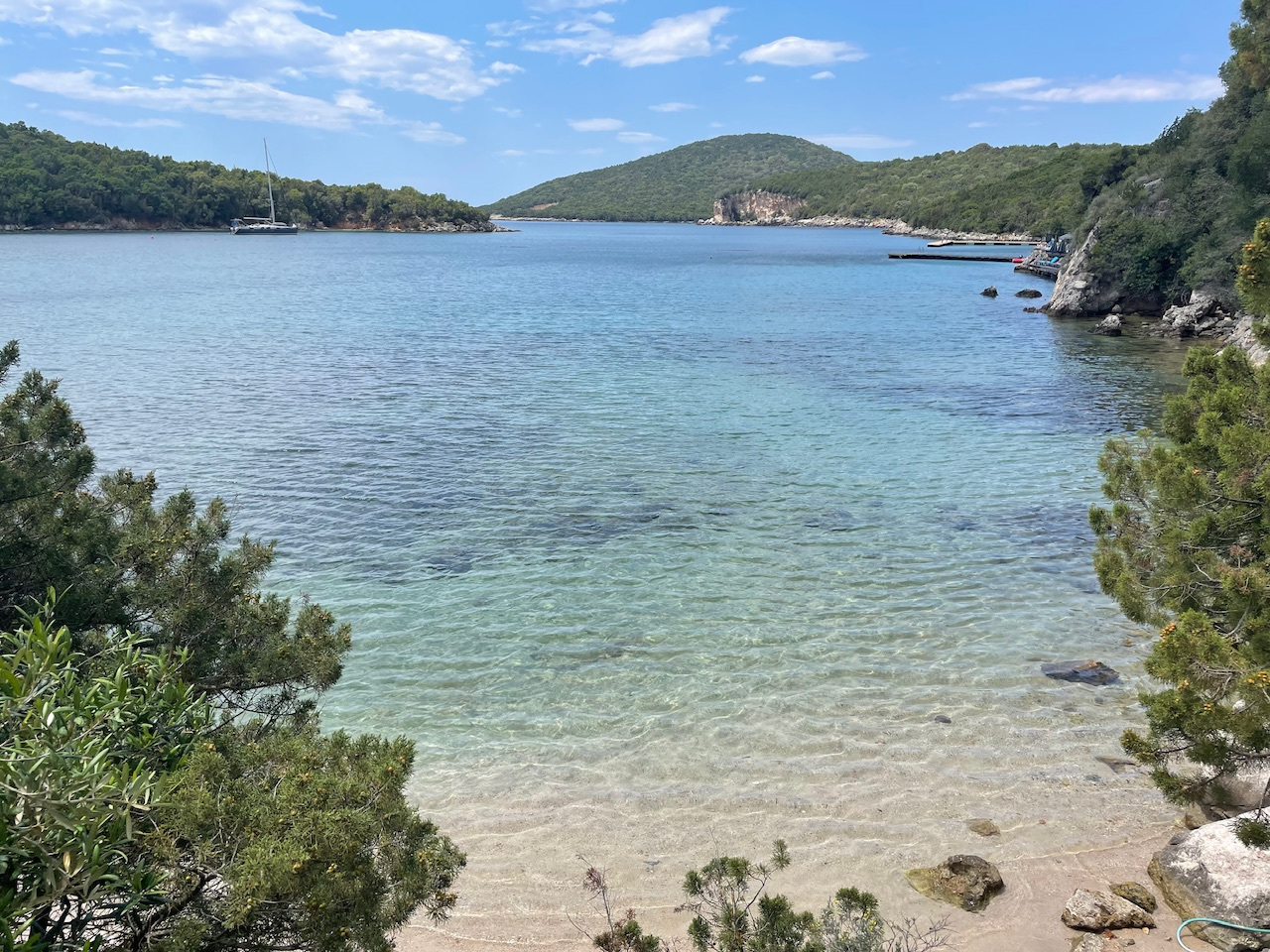
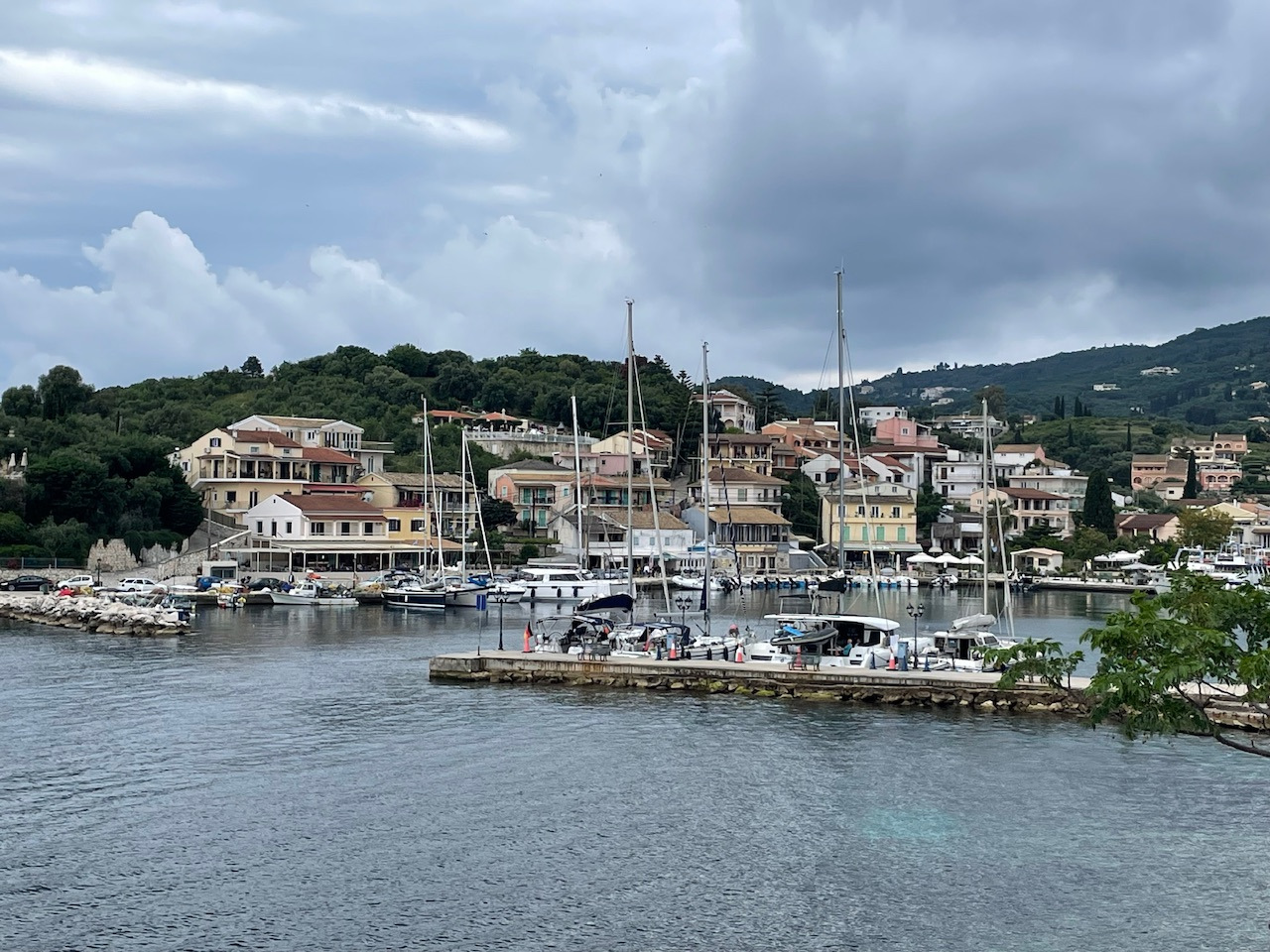
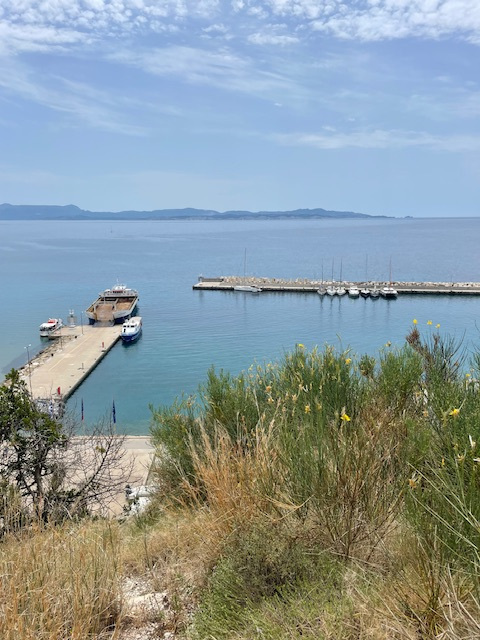
Francesco greeted us in the port of Erikoussa and took our lines. Only around 60 nautical miles from Italy, there is already a bit of Italian flair here. Every time a boat docks, there is a lot of discussion, often a little heated. Erikoussa is the Greek name for heather. We saw a lot of it on our two walks around the island. However, most of it blooms in October. Then the whole island probably glows purple. We stayed on this cosy and beautiful island for three days.

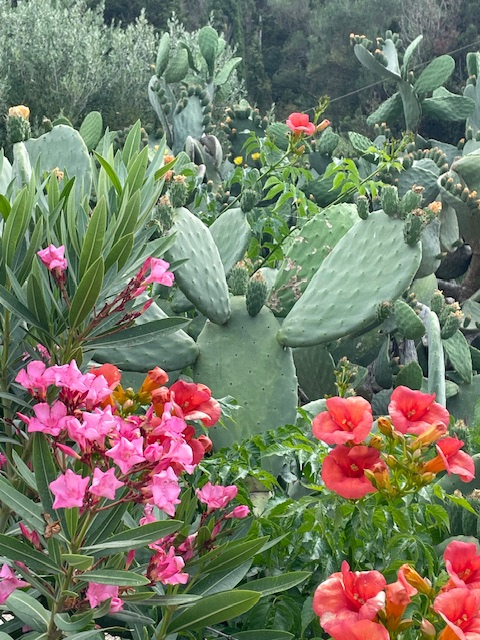
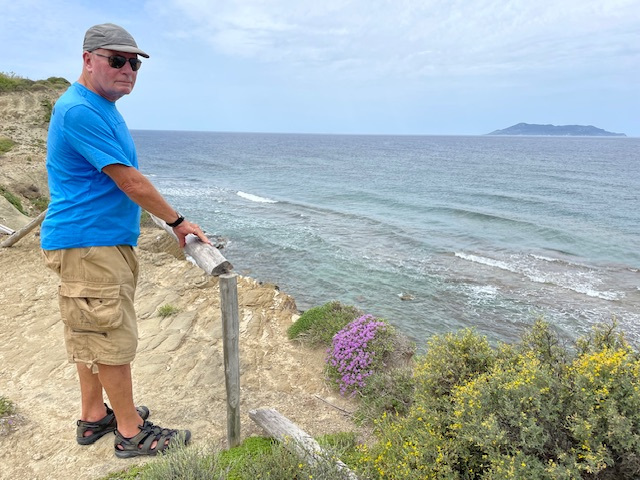
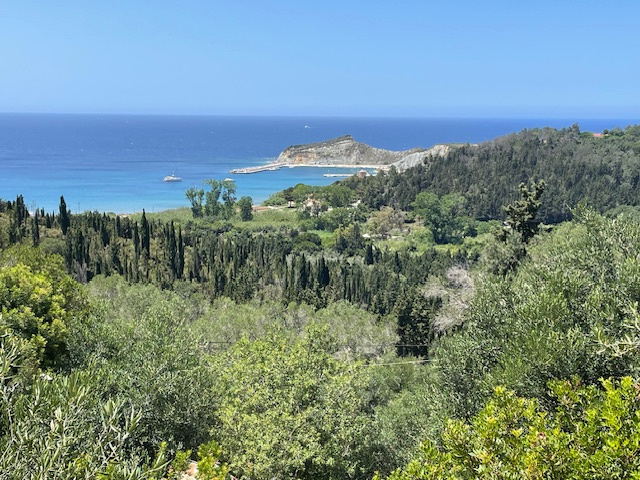
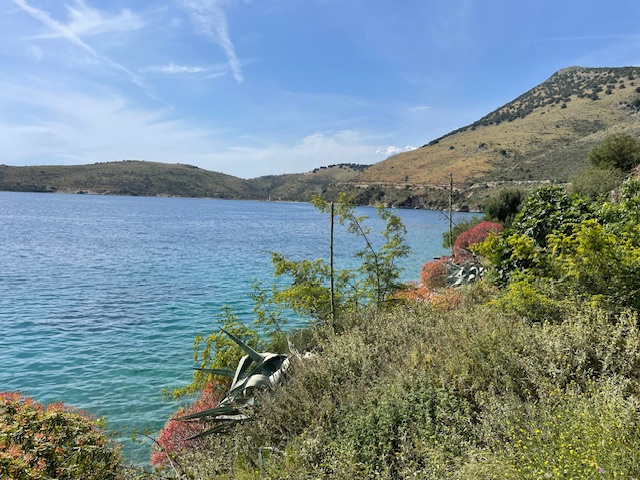
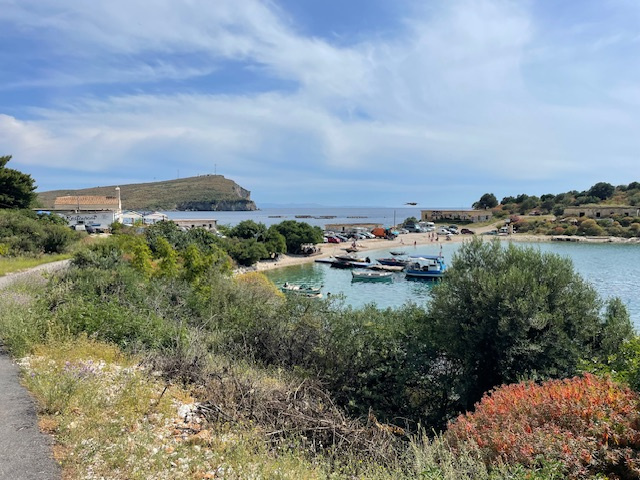
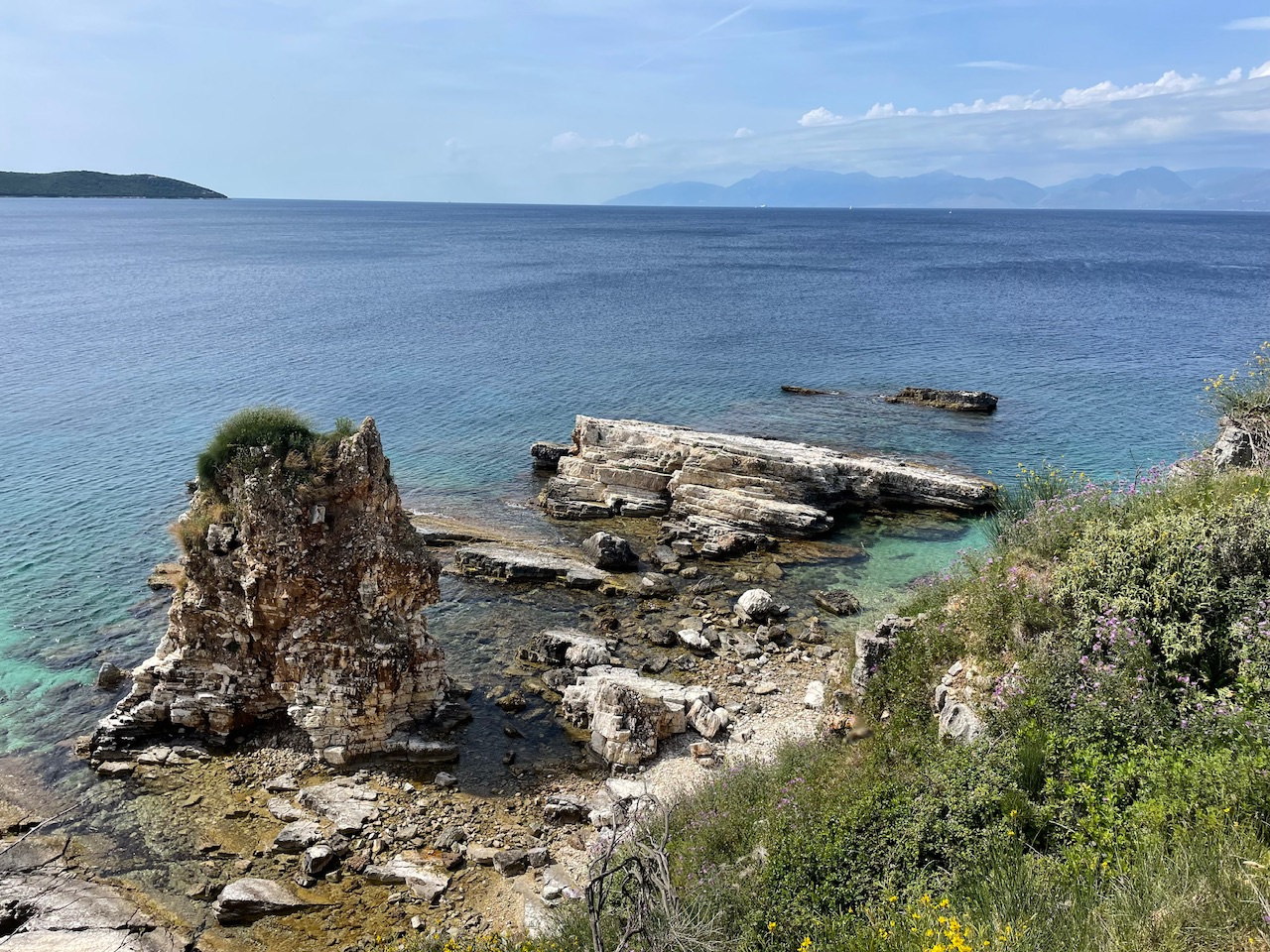
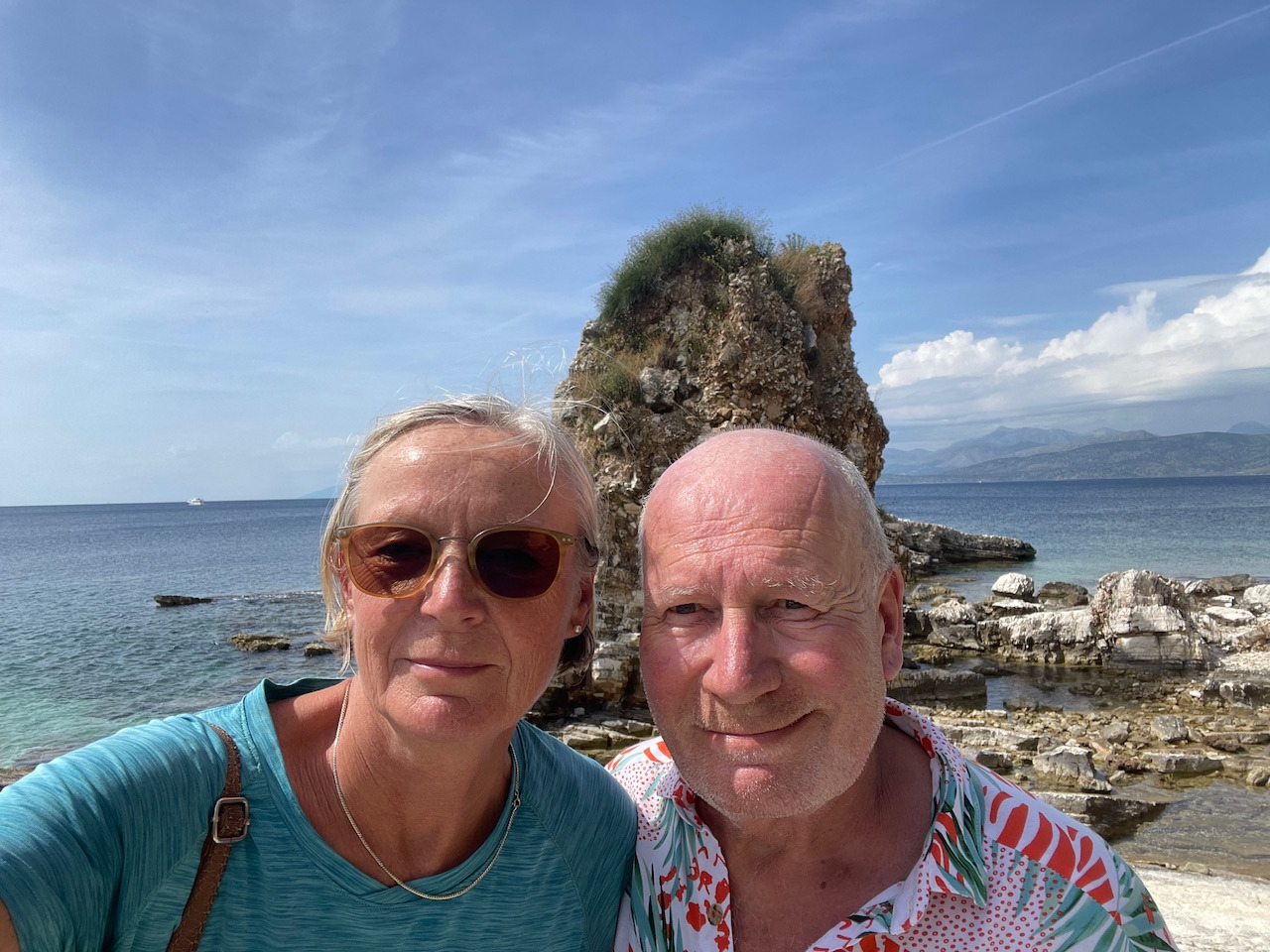
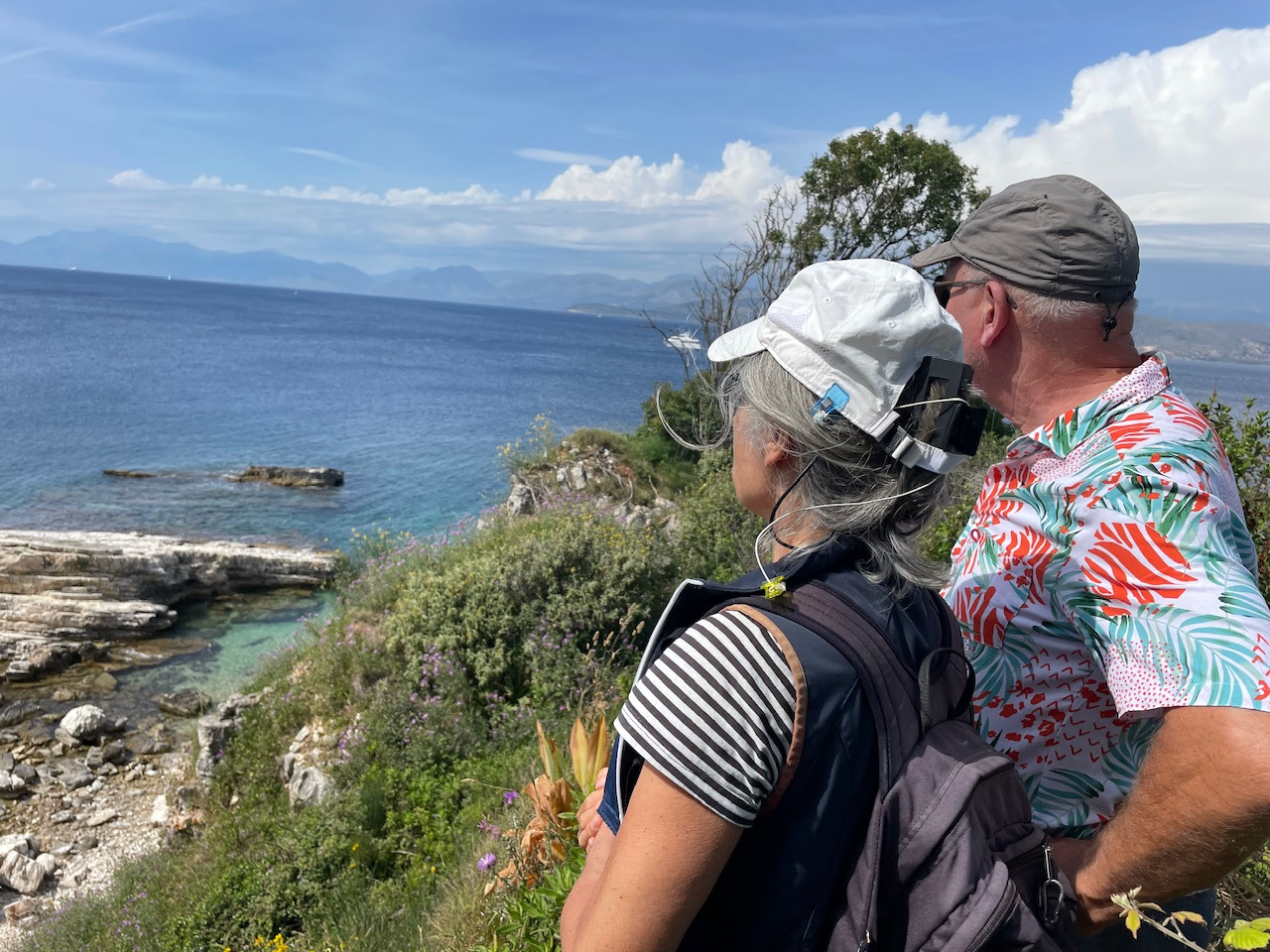
Pictures of Erikoussa
When we wanted to leave, we hesitated at first. The evening before, we had seen a large sailing boat being pushed onto the mooring lines of the other boats by the gusts of wind. There was a lot of shouting in the harbour, but it went well. We didn't want to experience the same when we cast off, but the gusts didn't stop. Francesco then buffered us with his dinghy. Mille grazie Francesco!

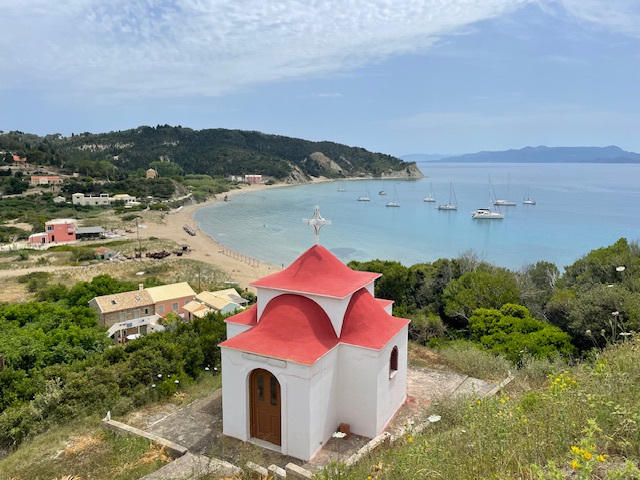
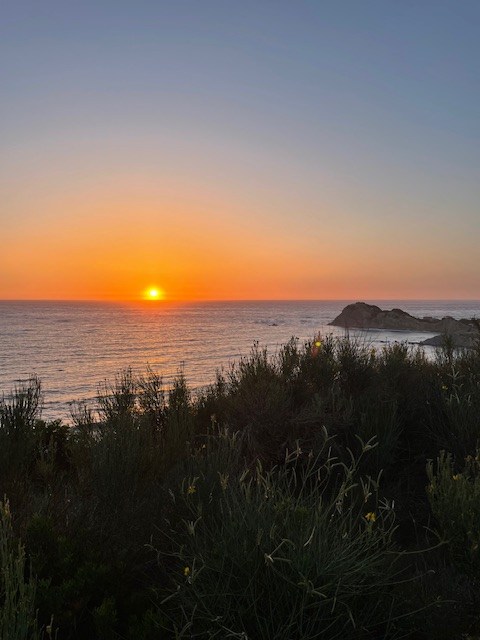
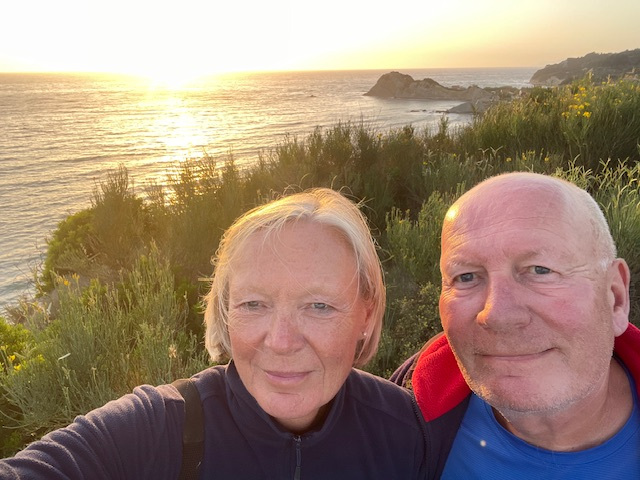
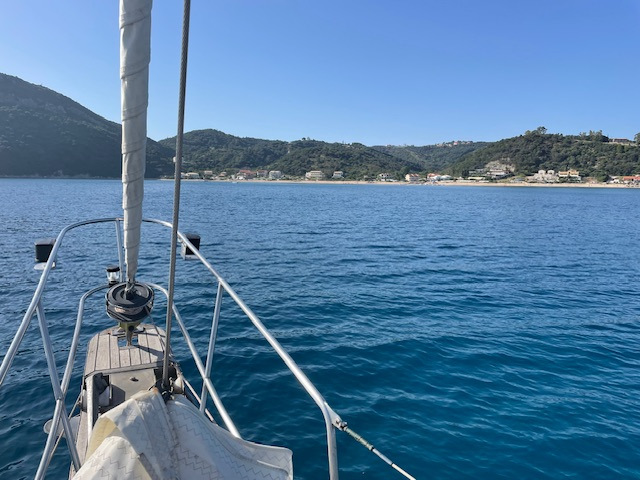
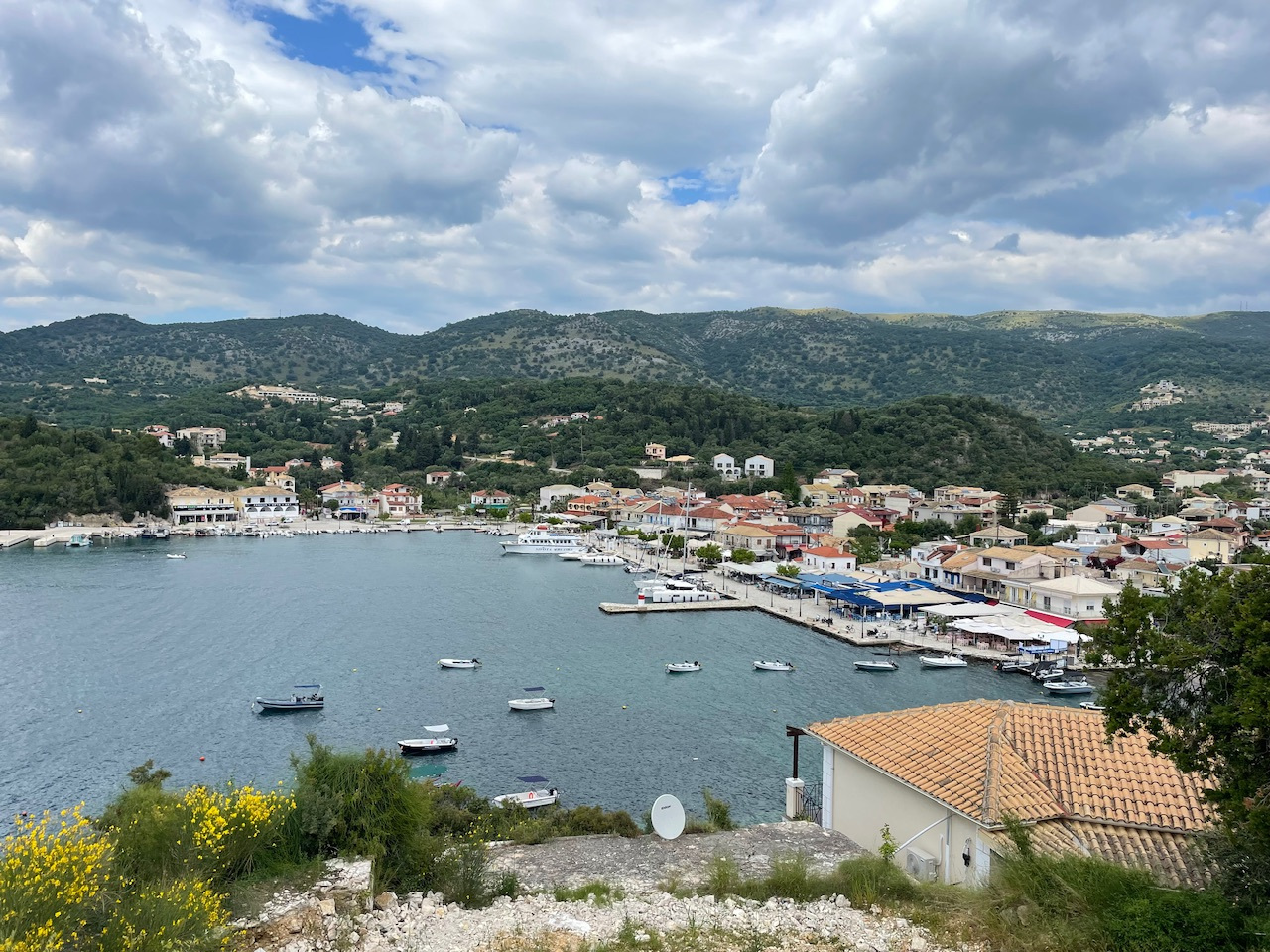
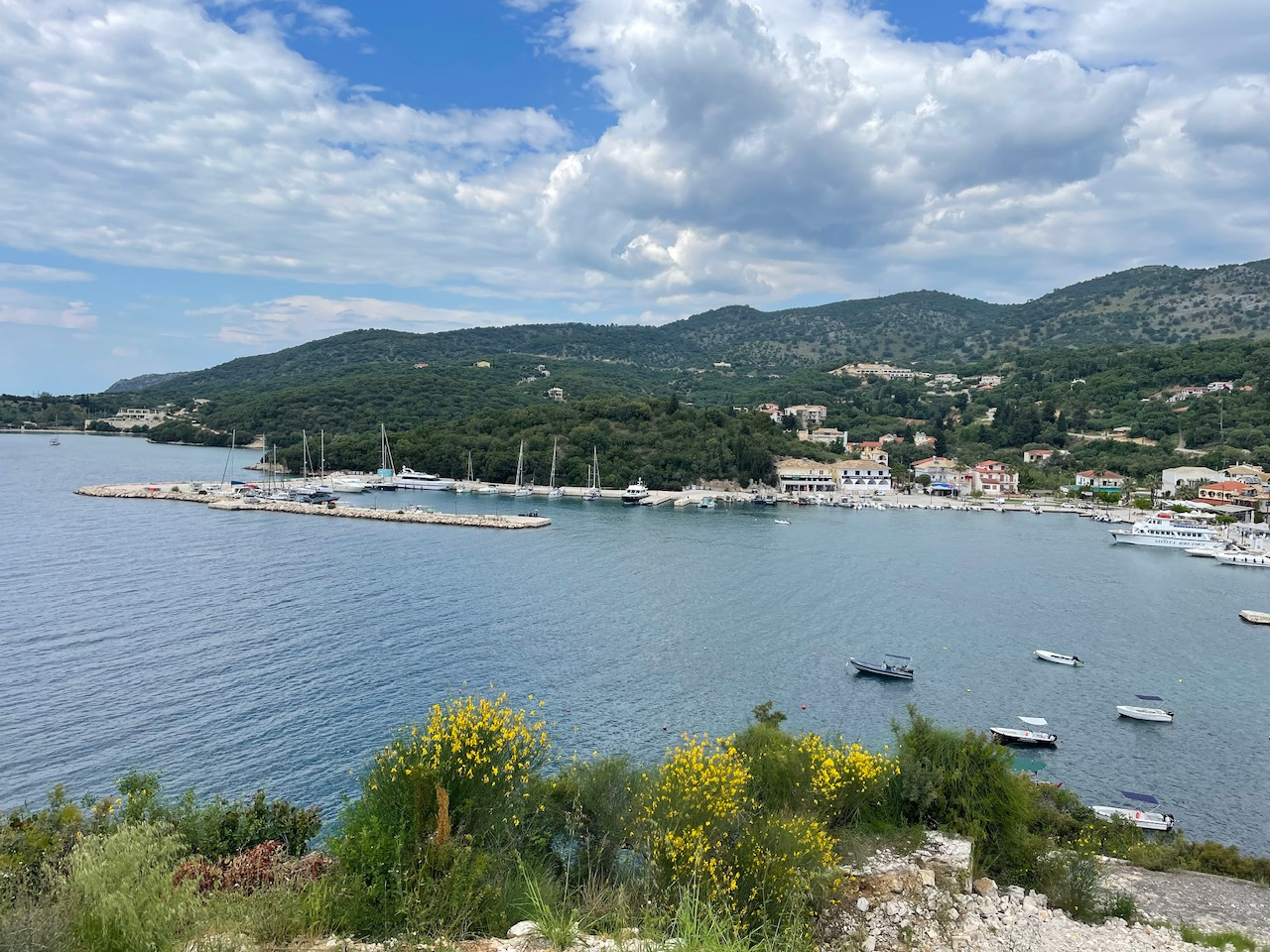
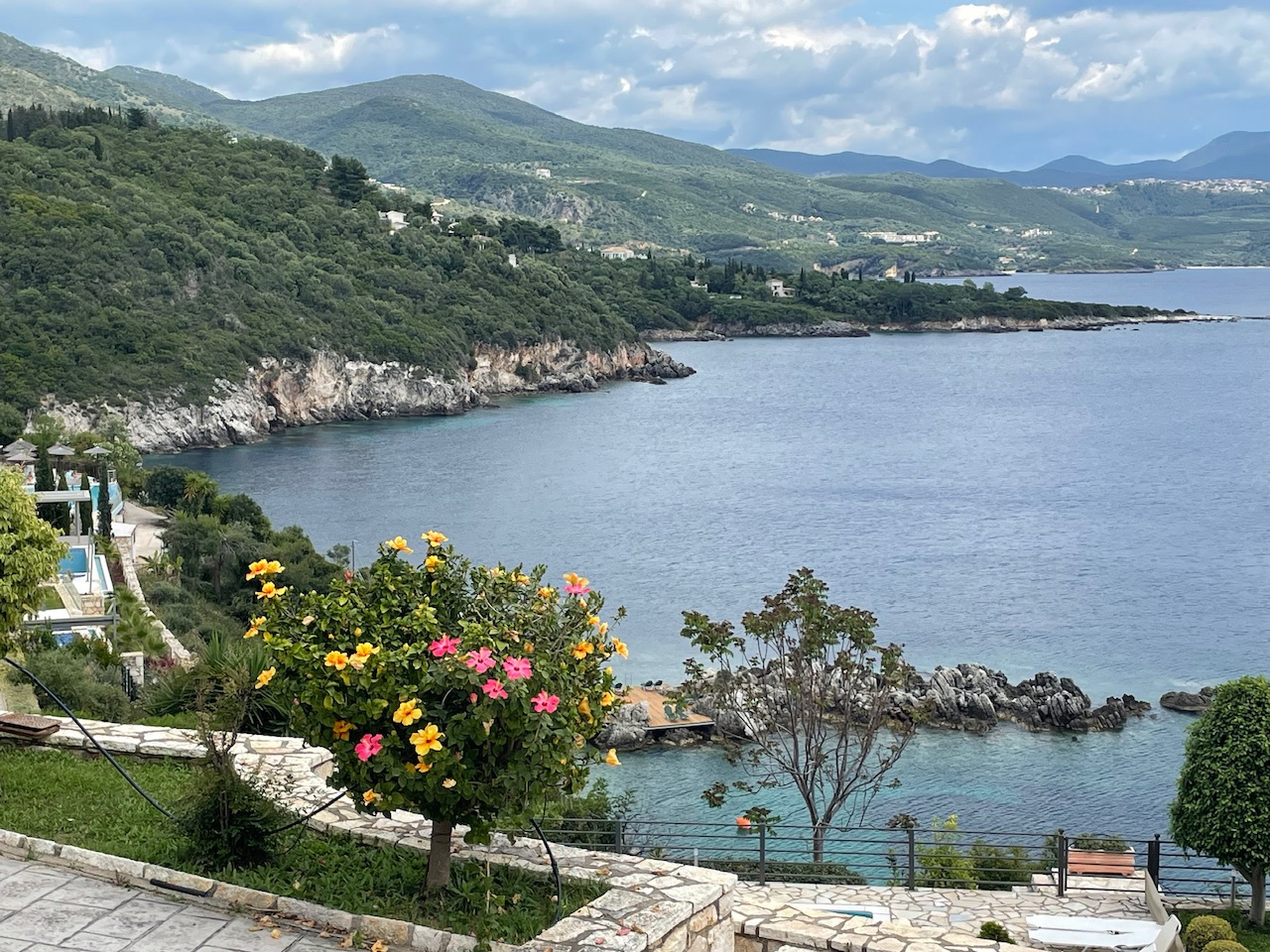
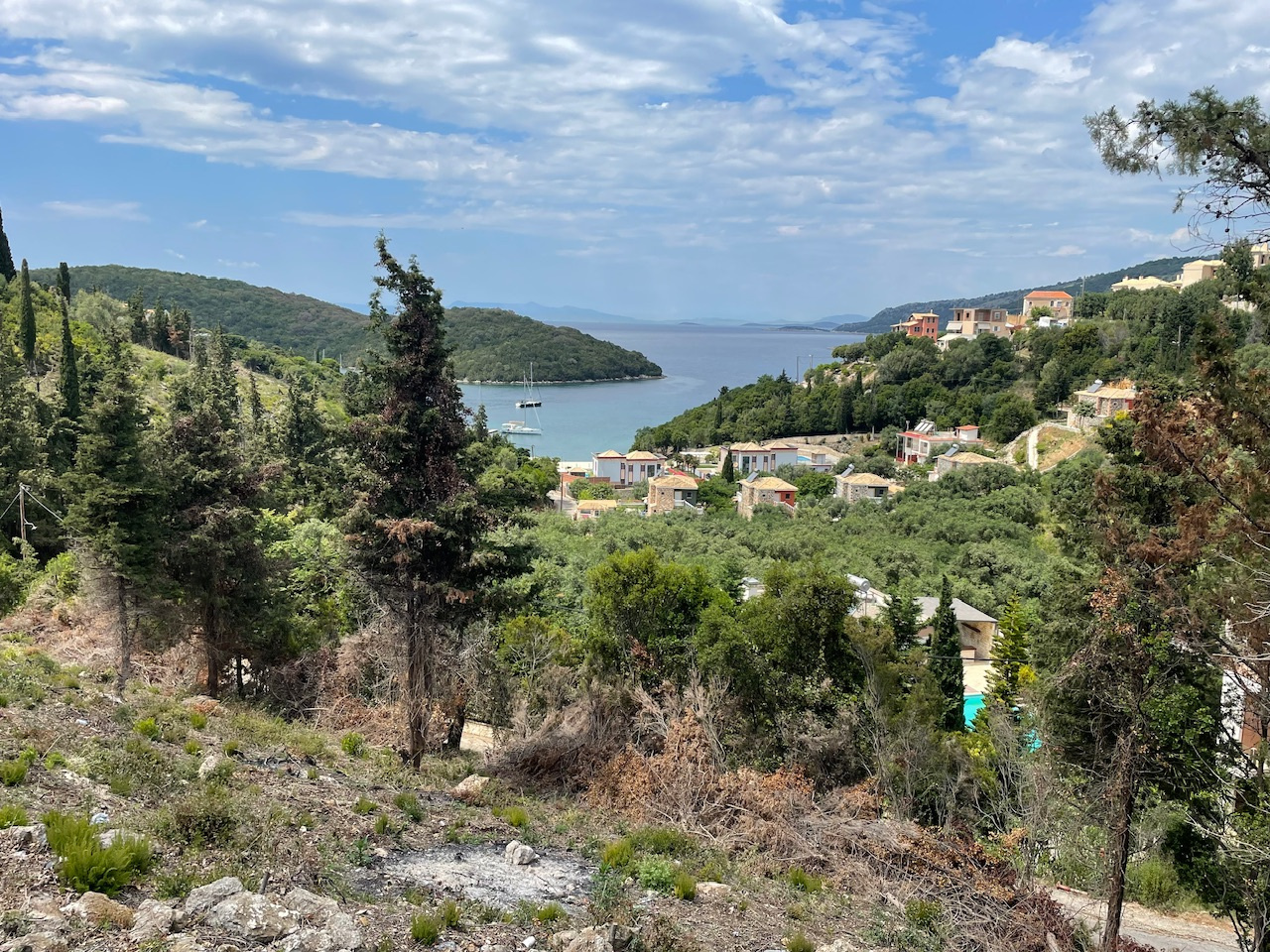
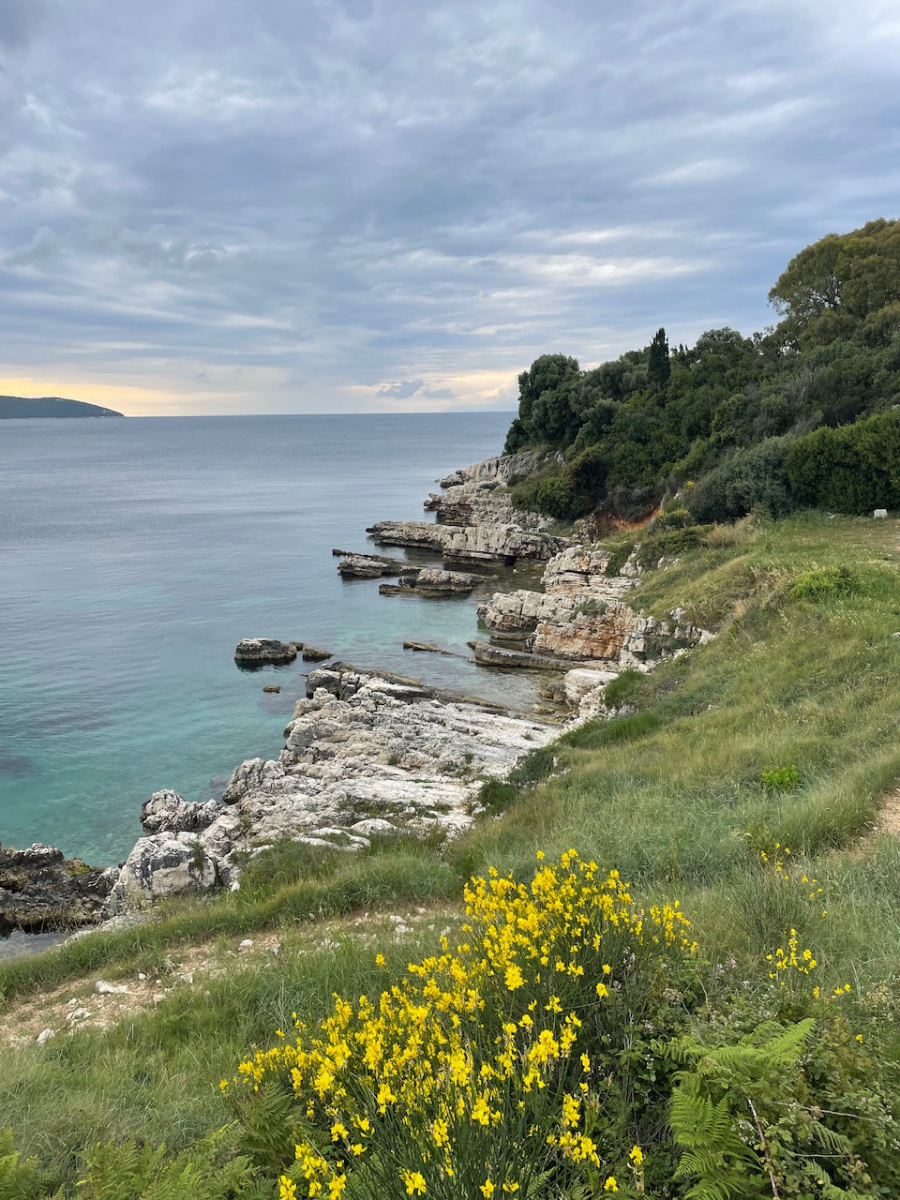
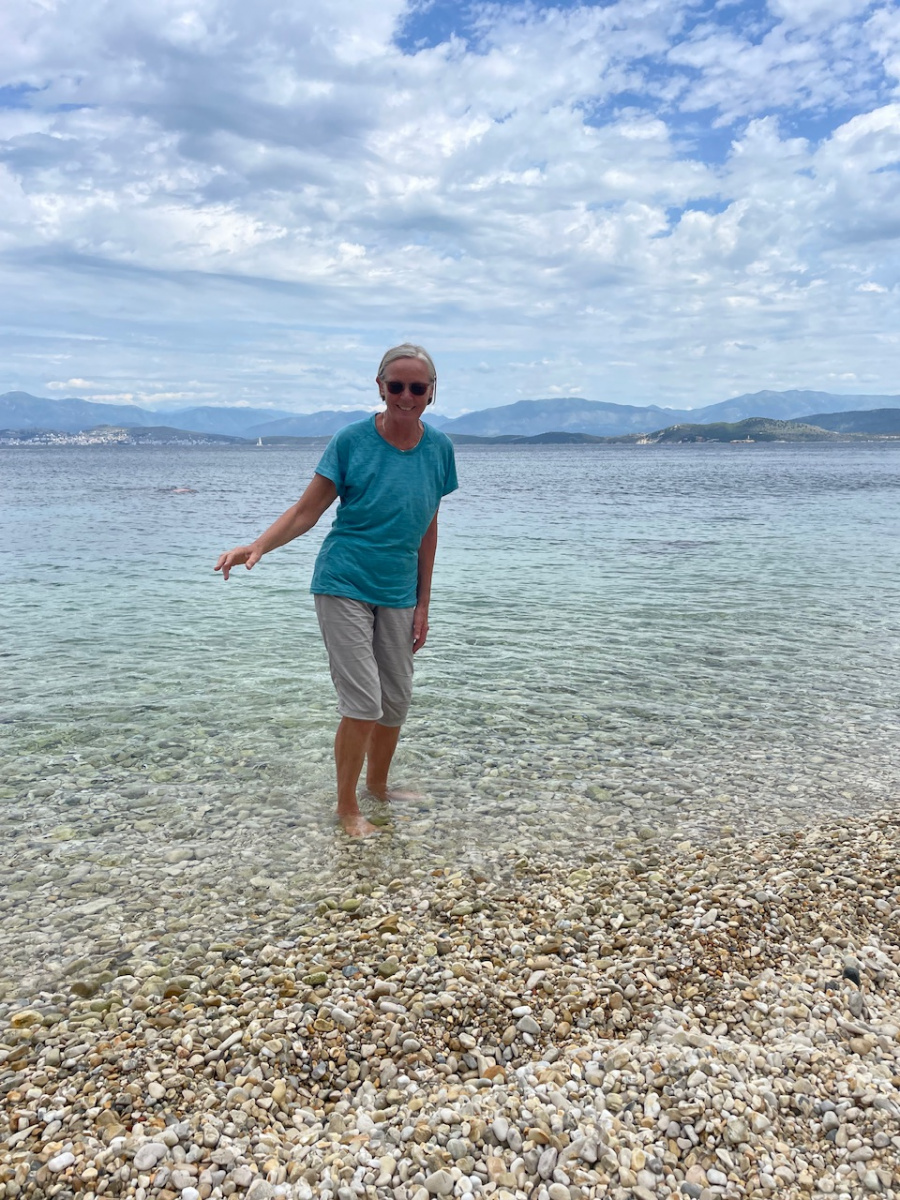
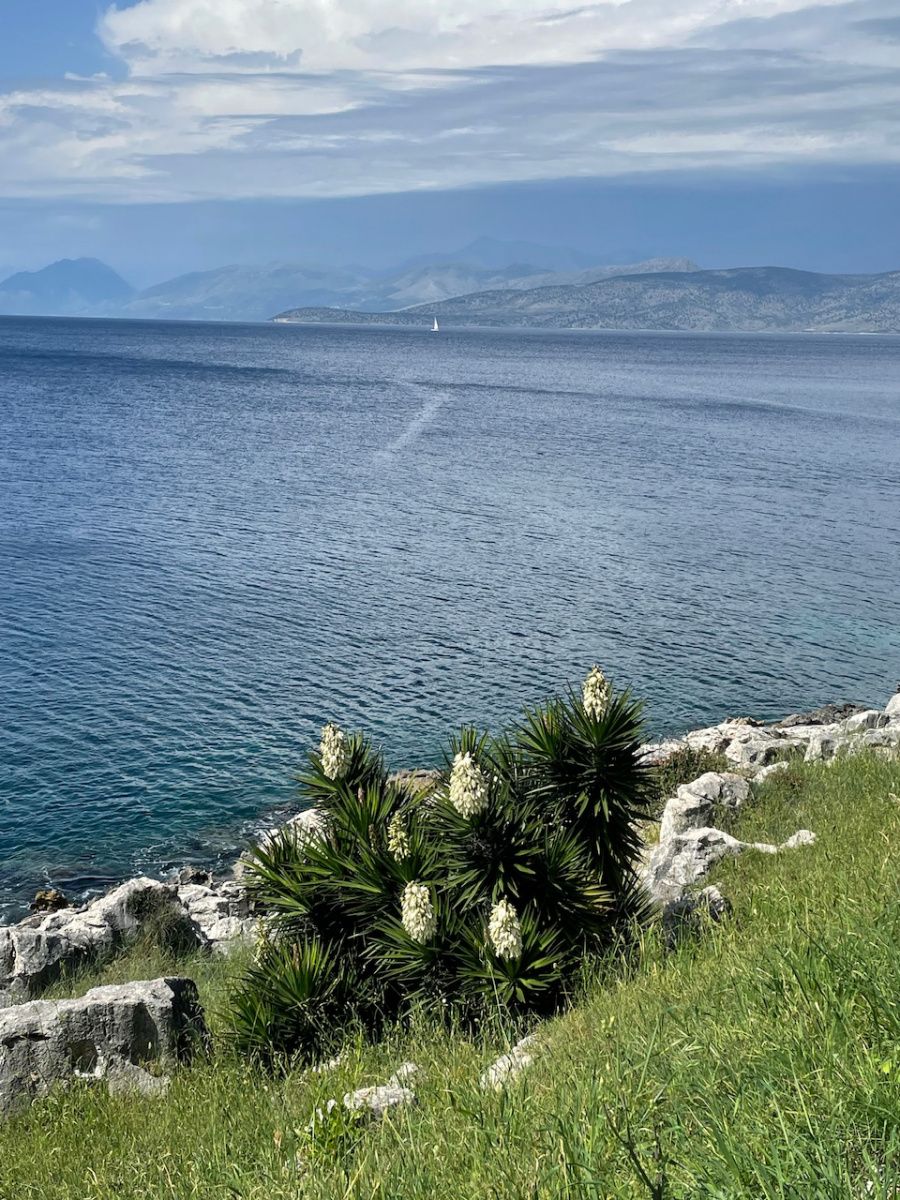
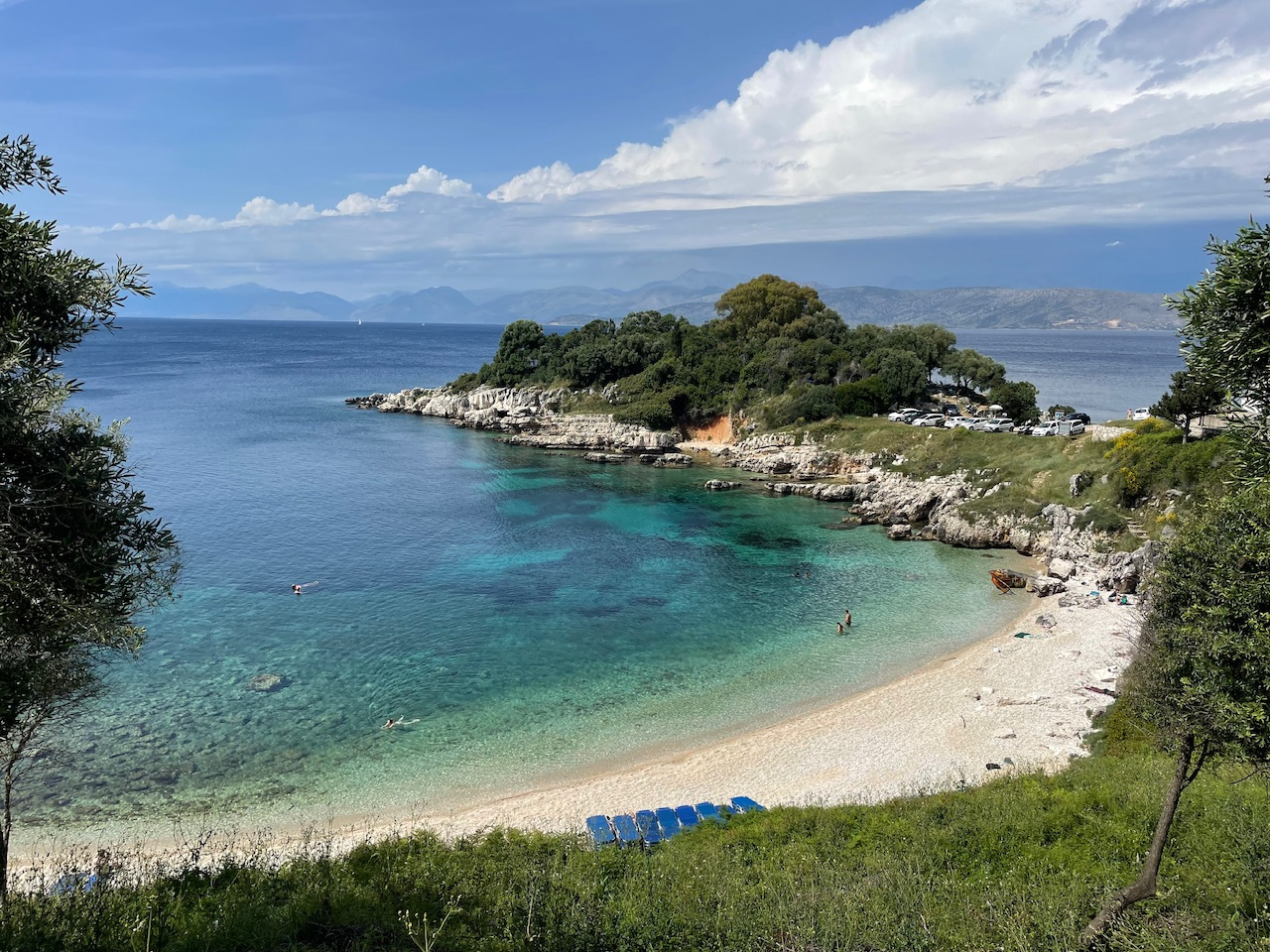
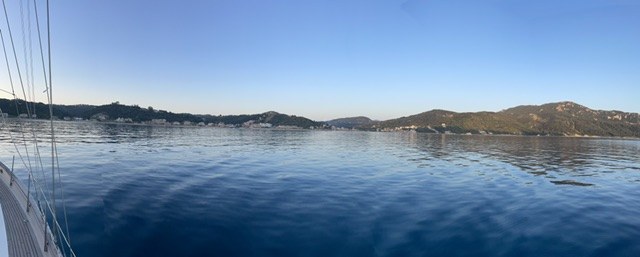
We finally reached our next destination only under sail: the large bay of Agios Georgios in the north-west of Corfu. We had already spent a week here 17 years ago, had a small apartment. Every evening we sat on the beach and imagined what it would be like when we anchored here with our own boat. That's what we did now, a quiet night at anchor with a little swell. When comparing our photos from 2007 with now, we realised that many houses and hotels have been added since then. But it is still a very beautiful and rather quiet bay.

Pictures of Agios Georgios
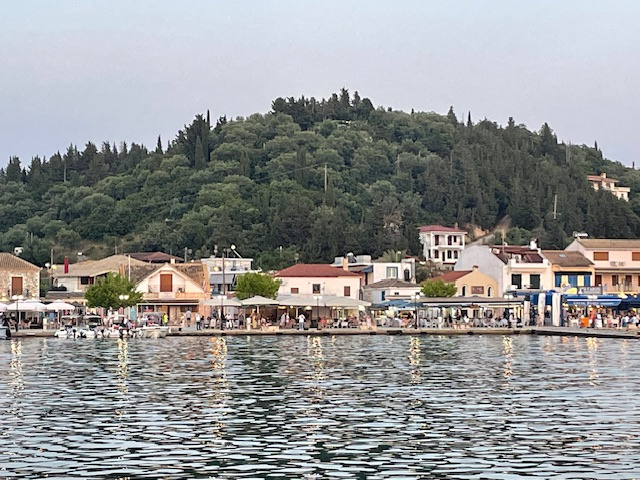
And then the next day another long distance. We travelled along the entire beautiful west coast of Corfu, first under motor again and then with a nice sailing wind. At the southern tip of Corfu we could say ‘Corfu round after all!’. However, we then sailed to the Greek mainland and moored in the port of Sivota. The harbourmaster Petros not only remembered our boat, but also our crew. The last time we visited Sivota a month ago, there were three of us with Claudia. Petros' first question was “Where's the other lady?” Yes, unfortunately she had to go back home to work.   

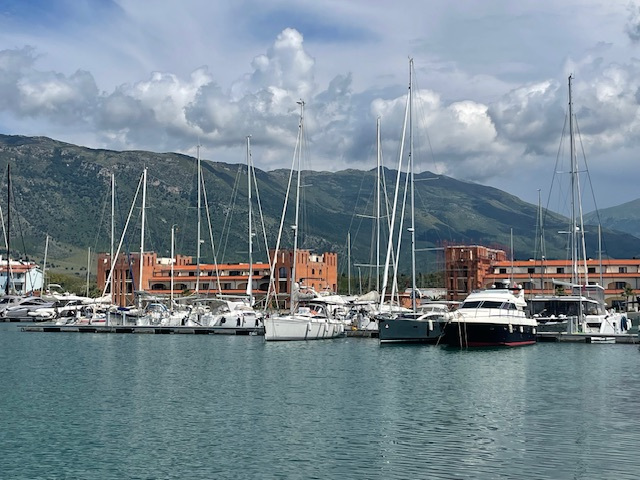
45 nautical miles north of our last stop at Porto Palermo lies the Orikum marina in the deep bay of Vlora. The Italians had started building it, but then construction stalled and there were reports of smuggling going on there. That time is probably over. Even today, the marina is not quite finished, but it already looks very respectable. Floating jetties, good mooring lines, clean showers and toilets. And very friendly harbour staff. But also typically Albanian: 1000PS powerboats, extremely weird-looking large motor yachts, lots of SUVs in the car park.
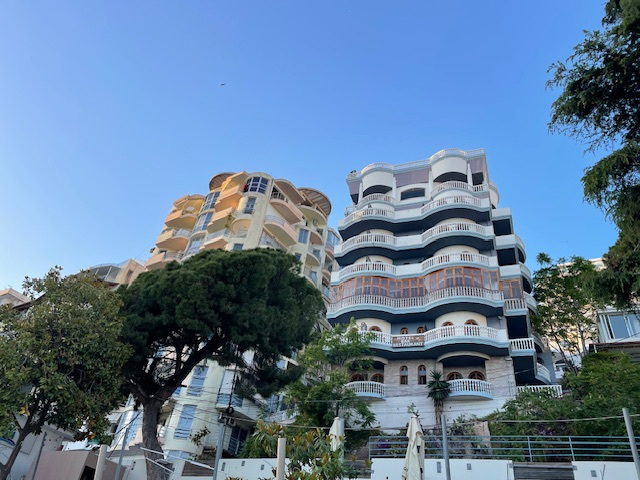
But otherwise there's not much going on. We stayed for a week in total because we wanted to explore the interior from here, waited for better winds - and because it was really cosy here. The town is a 20-minute walk away, small supermarkets, a long beach, some of the hotels and restaurants still look a little socialist - which has its charm.
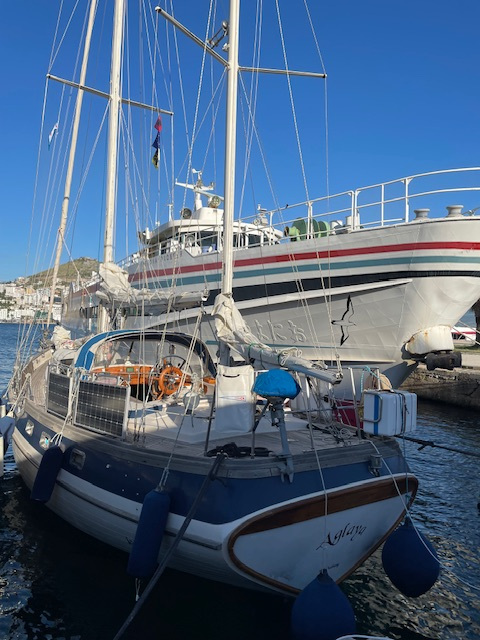
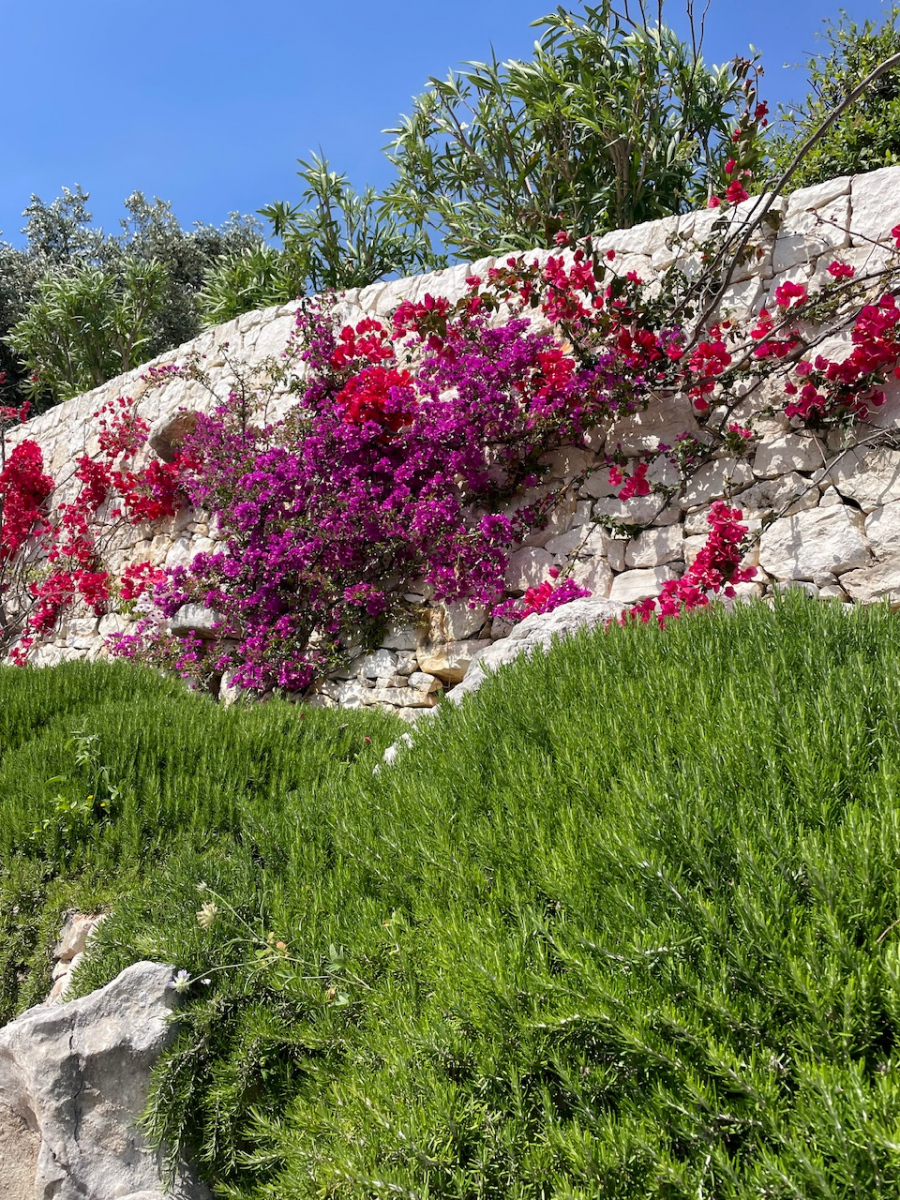
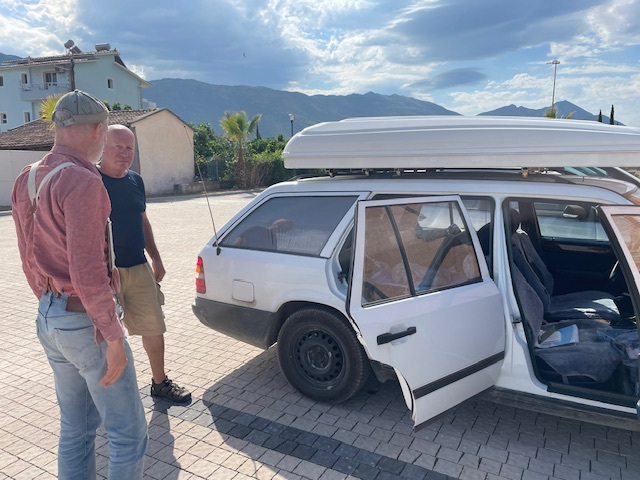
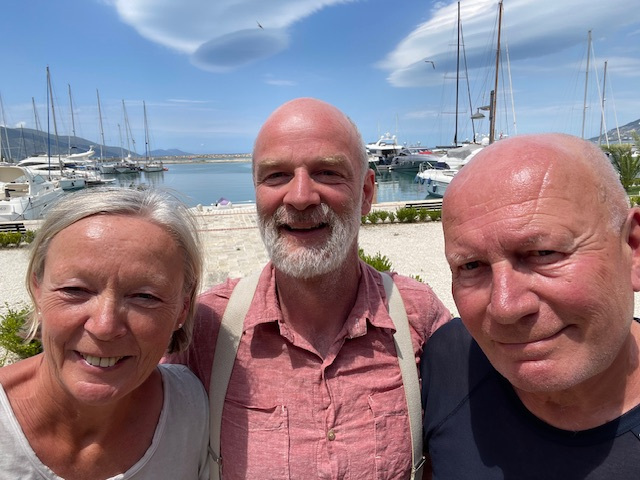
Here visited us Gisela‘s cousin Michael. He is on his way south with his camper-car. Destination: Armenia.

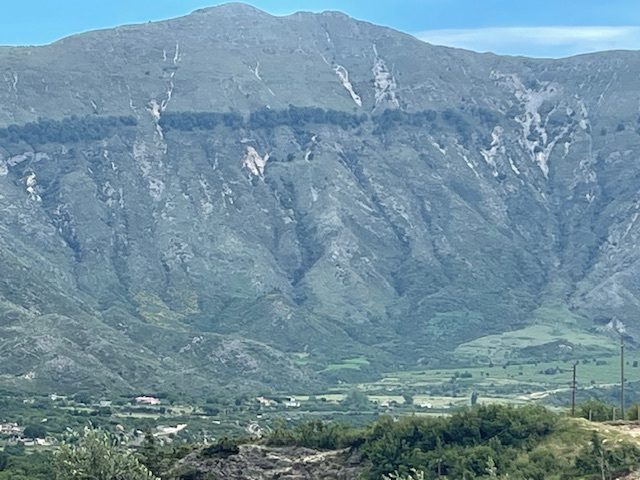
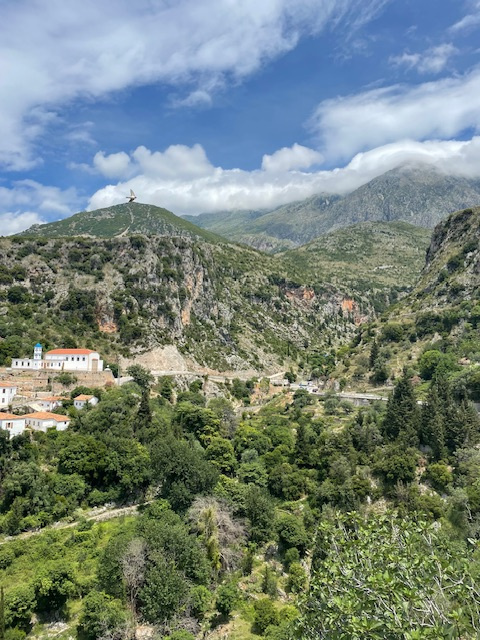
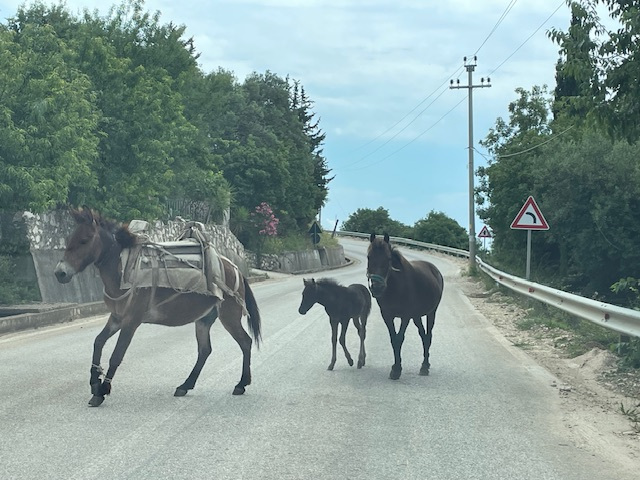
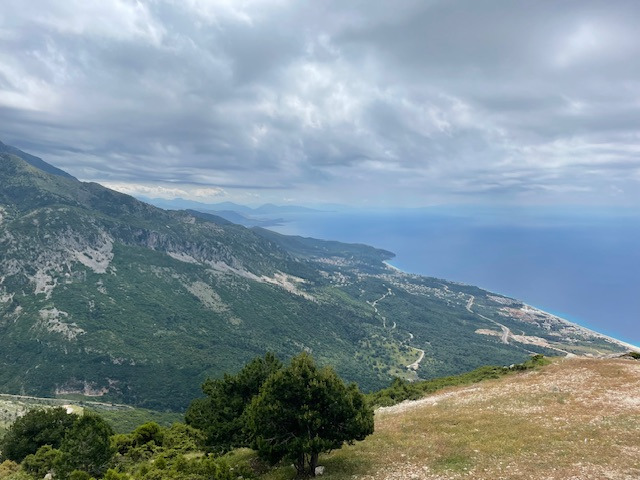
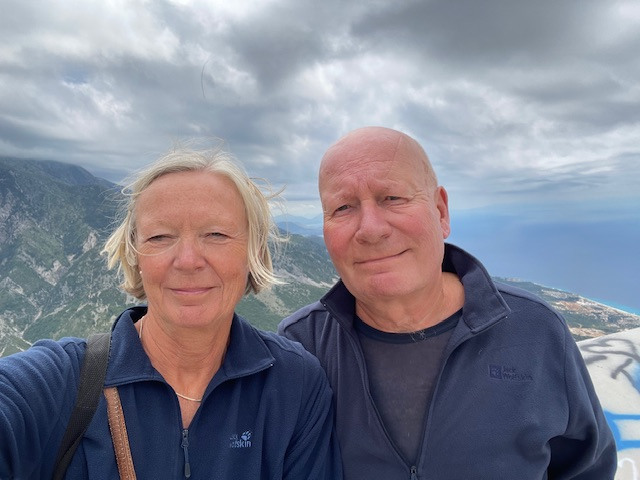
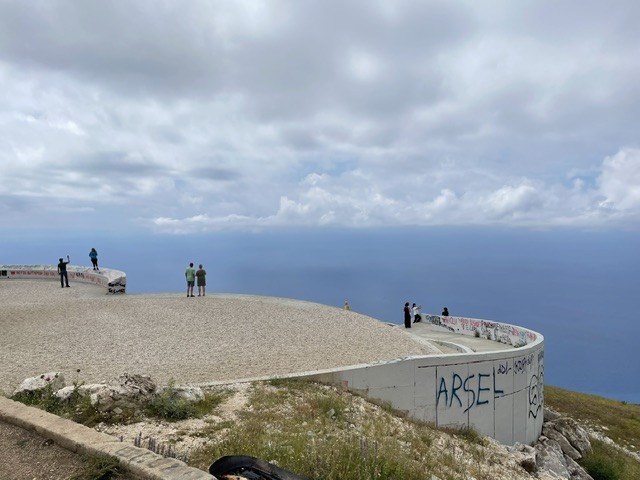
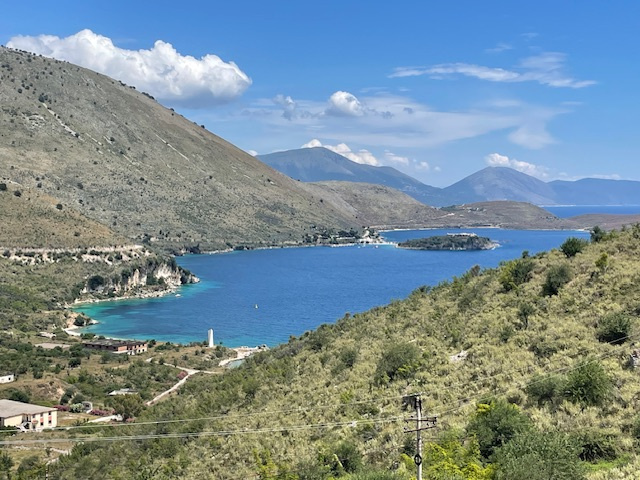
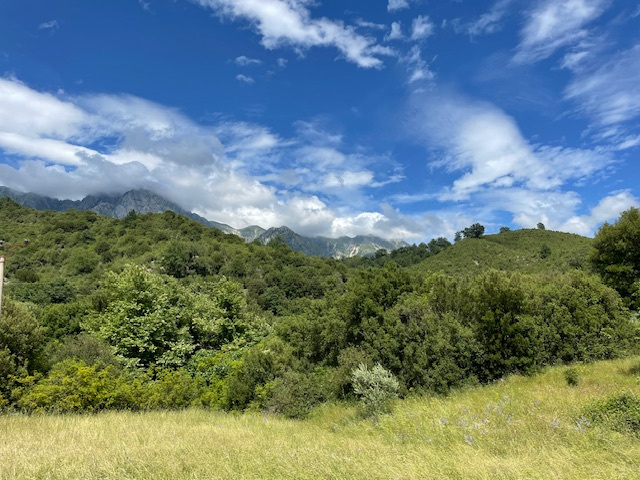
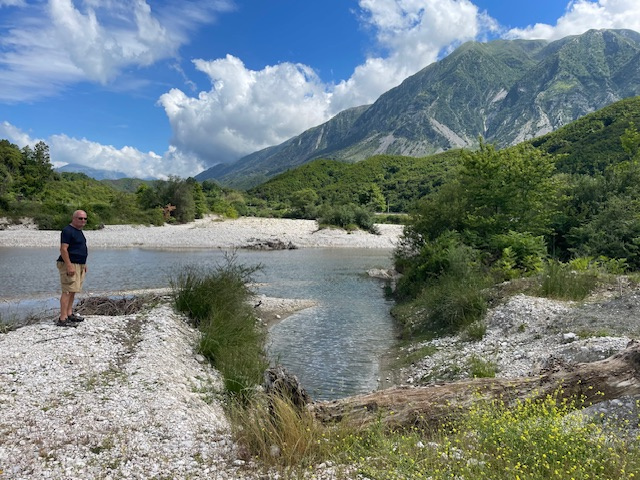
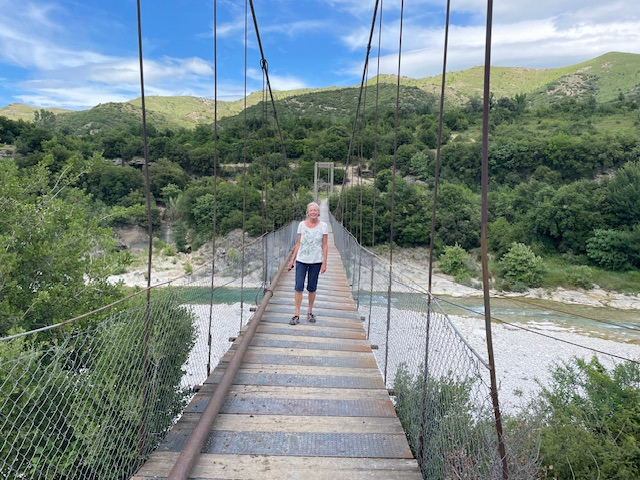
With a hire car, we drove over the Llogara Pass, then above the coast to Port Palermo and then back through the Shushica Valley. An incredibly wild and beautiful landscape, partly like the Allgäu/Alps. Then after the pass, a gigantic winding road with a view of the sea from high above, impressive. The return journey through a wide valley with a mountain stream that has a huge gravel bed - lots of somewhat scary, wobbly suspension bridges. 

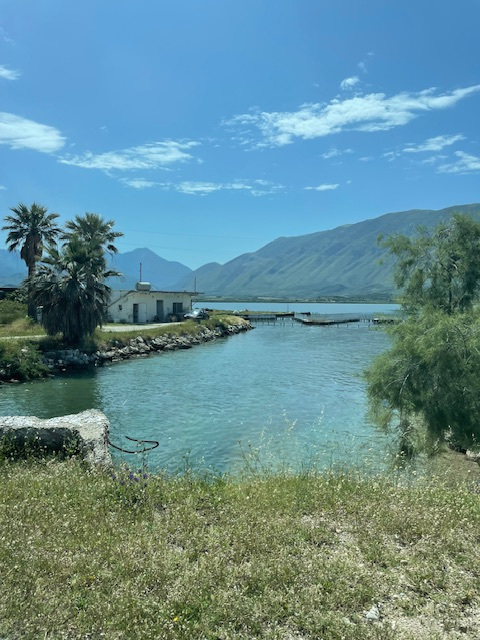
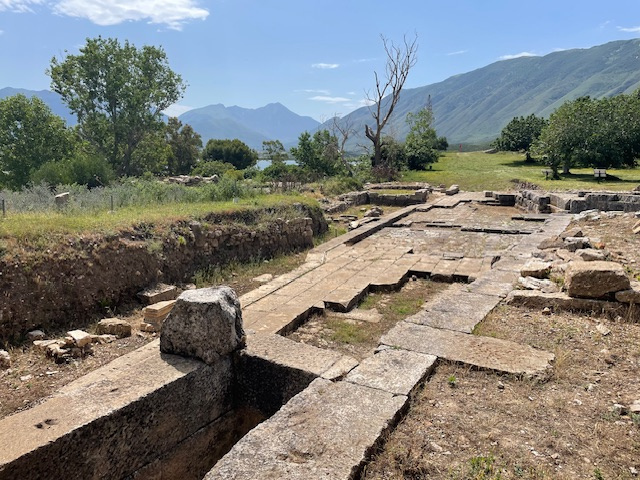
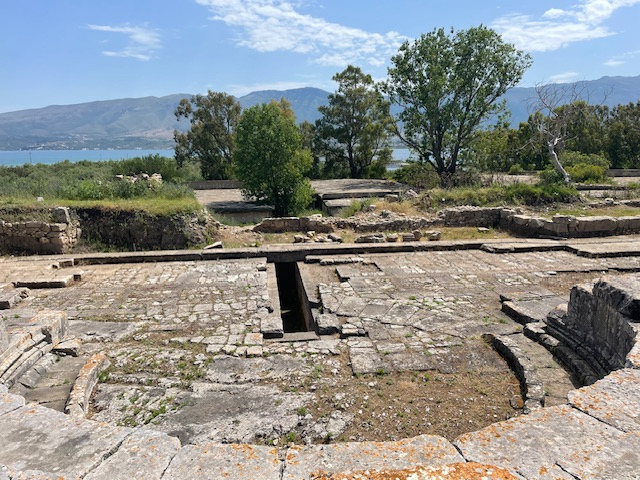
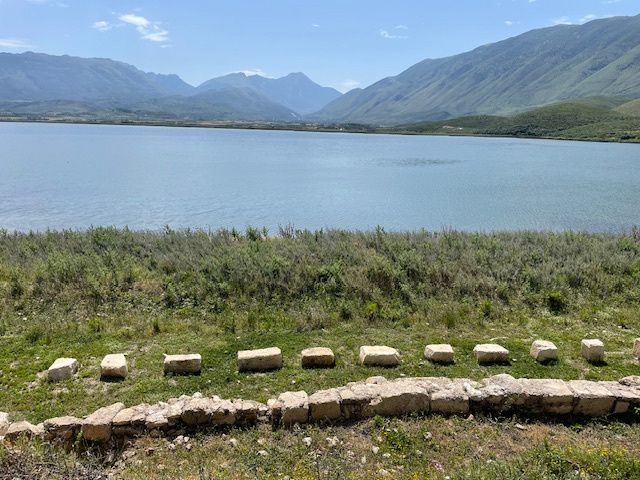
We were also able to visit the highlight of Orikum: Ody, one of the marineros, drove us into the restricted military area (hundreds of small bunkers, broken vehicles and ships), where we had to hand in our ID cards, and then through completely overgrown terrain to the archaeological site, a Greek/Illyrian city from the sixth century BC, which is now largely under water.

The entire Karaburun peninsula, 16 kilometres long and 5 kilometres wide, is a restricted military area; nothing has changed in nature here for 30 years, and the flora and fauna are correspondingly exotic. However, Ody, who gave us a bottle of his home-made olive oil on the way back, told us that there are plans to build a NATO base in the restricted military area.

When we paid at the end of the week, we were given a substantial discount. We are now leaving Albania, a wild and beautiful country with very friendly people.

After a day sailing, when we head for our destination for the night, a slight inner anxiety spreads: What will the conditions in the harbour or bay actually be like? Of course, we have checked the harbour guide, Navionics and Navily beforehand, but still: how much space will there be, will a sudden strong wind make it difficult for us to moor, will someone be standing at the pier to take our ropes? Will our anchor hold on the first try? This inner anxiety is immediately forgotten, when we are well moored and even more so, when we receive a friendly welcome in a harbour. That has always been the case so far.

We don't have to set off again the very next day. After all, we have time to get to know the places we have travelled to a little. Our experience: it's often worth staying. Some of the places we visited were so beautiful, that as soon as we arrived, we said ‘We won't stay here just one night’ (e.g. in Port Palermo, Albania). But even if a place doesn't seem very inviting to us at first glance, we can usually win something over to it bit by bit. This often happens through our experience with the people we meet: our ‘agent’ Jelja for clearing in in Saranda, who said goodbye to us with a handshake after two nights. It wasn't just a formal gesture, it came from the heart. Or the people we meet by chance, working on a building site, who we simply greet or ask for directions. Their faces always become friendly, they greet us back or if we have a question, they want to help us. Or the Albanian woman in the shop with the yellow dress and straw hat, who worked in Switzerland for 50 years and has now returned to her home country in her retirement. We buy a loaf of bread, she stands next to us and says ‘There's also bread made from cornflour. That's very good.’ No question, we buy the bread.

At some point we want or have to leave again. After all, Aglaya is not a holiday bungalow. So we say goodbye. And hopefully we have a nice sail with the right wind to our next destination. Then comes the good feeling of travelling again.

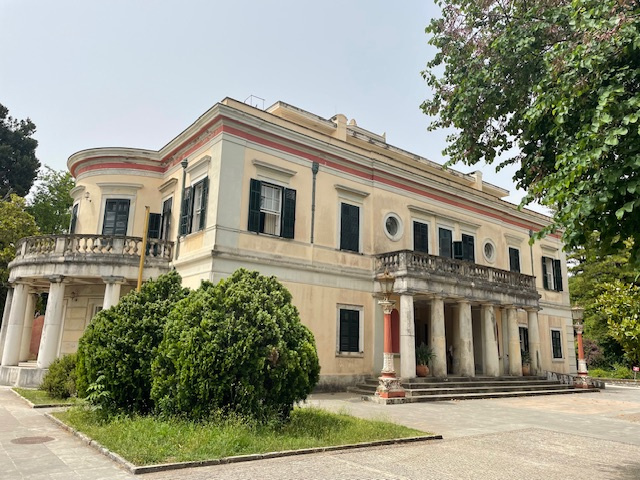
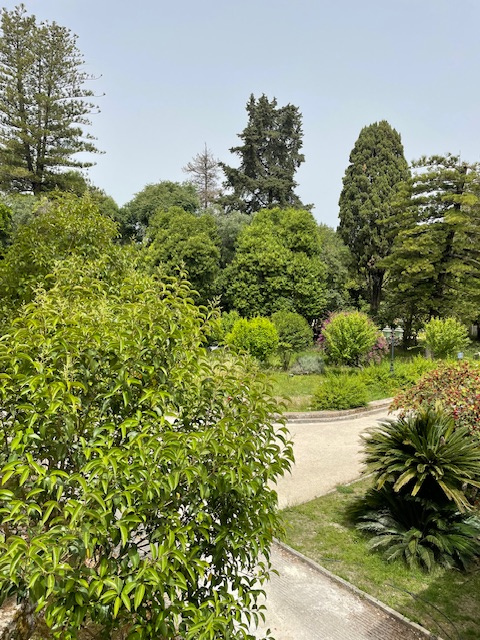
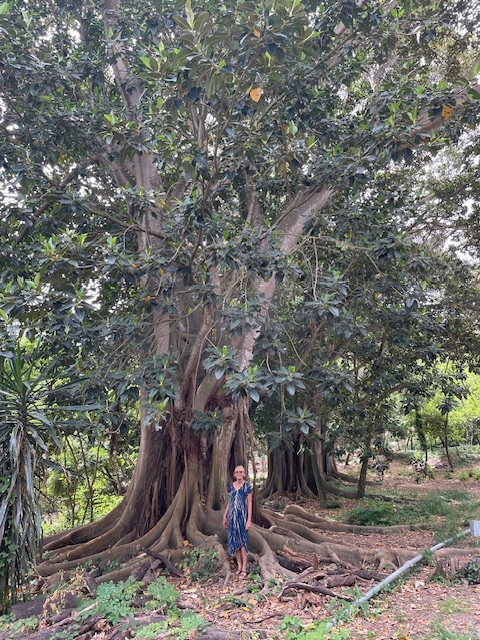
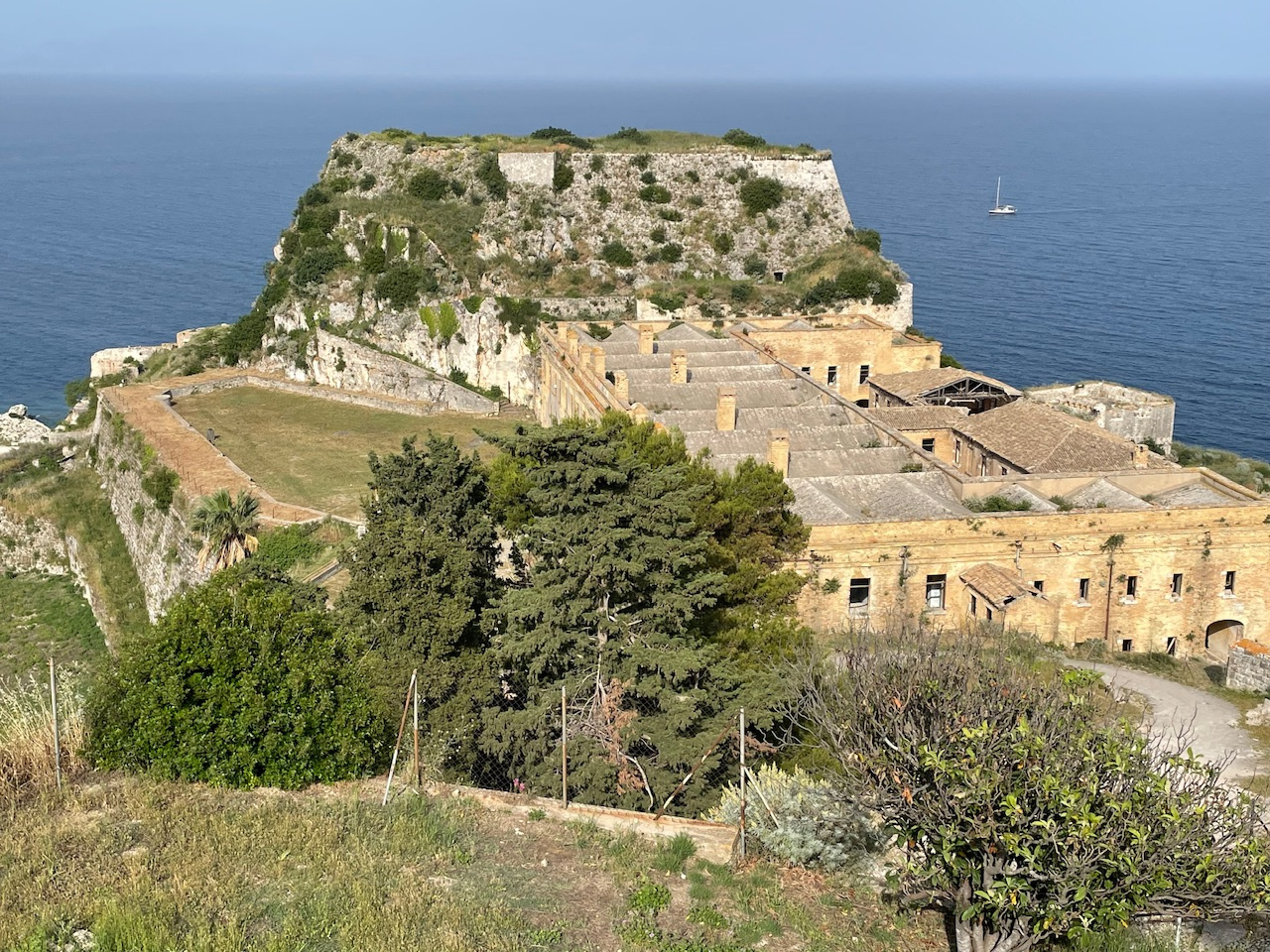
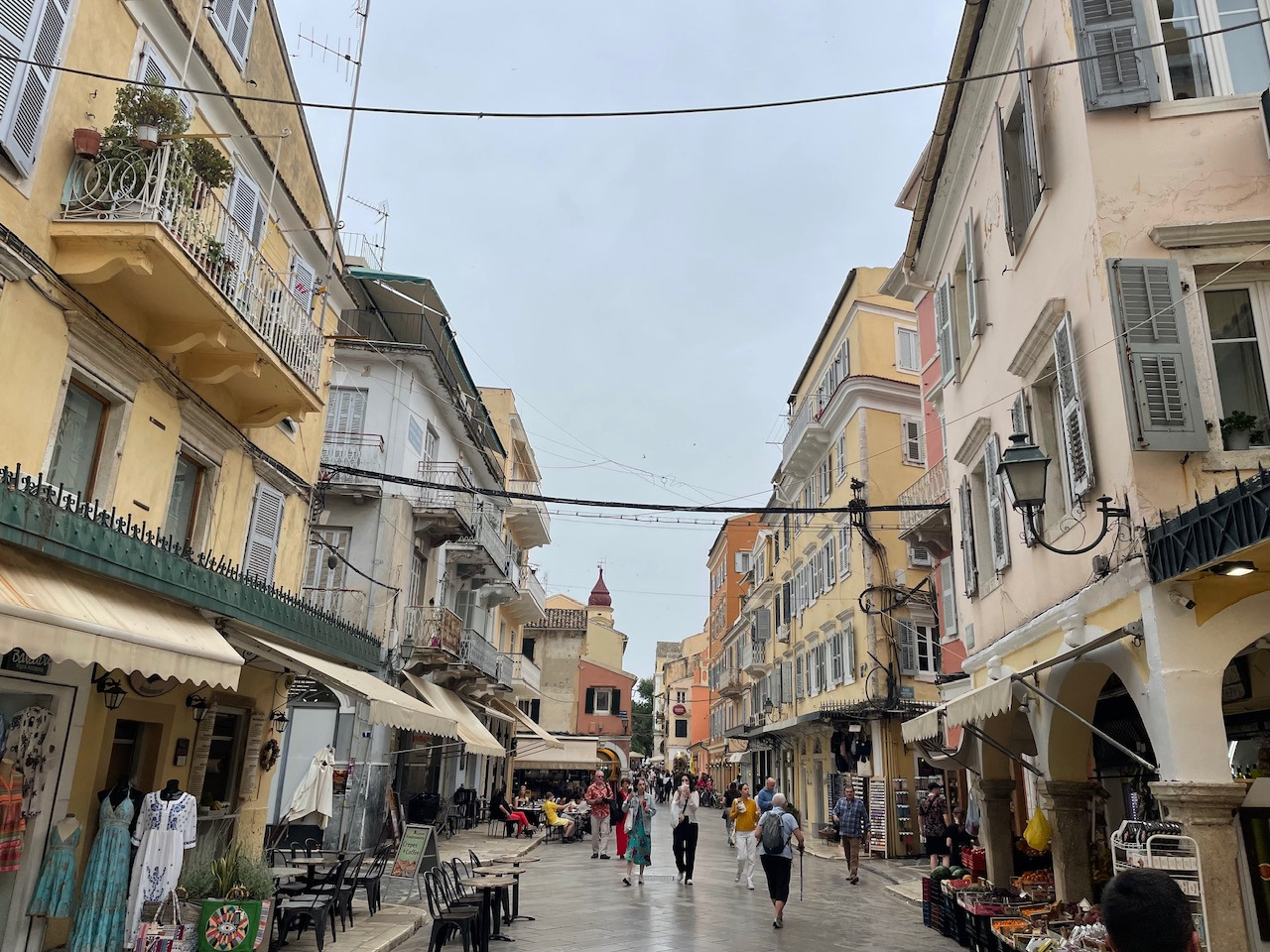
We took a few days to see Kerkyra and visit the beautiful park and Monrepos Castle on the outskirts of the city. 

On 23 May, we made our way north. We had already seen Saranda, the southernmost city in Albania, from our boat over the last few weeks. It is only a few nautical miles away from the northern tip of Corfu.

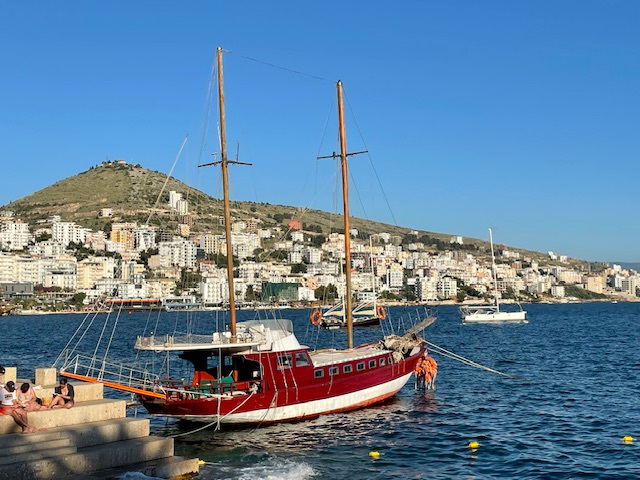
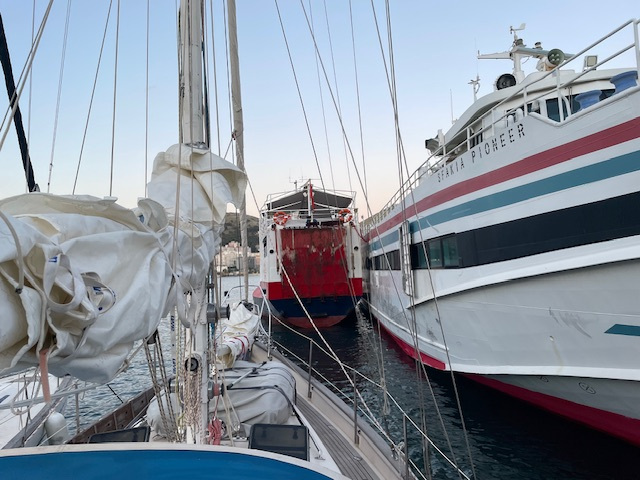
When travelling to Albania, you have to register with the authorities and clear in. Albania is not part of the EU, but is a candidate country. You need an "agent" to clear in. Sounds a bit like James Bond. We had already contacted Jelia from Corfu the day before we arrived in Saranda. She got us a place at the customs pier and took care of all the formalities for us. Very pleasant. And we were even allowed to stay for two nights. However, our berth took a bit of getting used to: right next to a large ship that was being repaired. And a ferry moored directly over our anchor chain overnight. It manoeuvred very carefully, so we didn't have to worry.

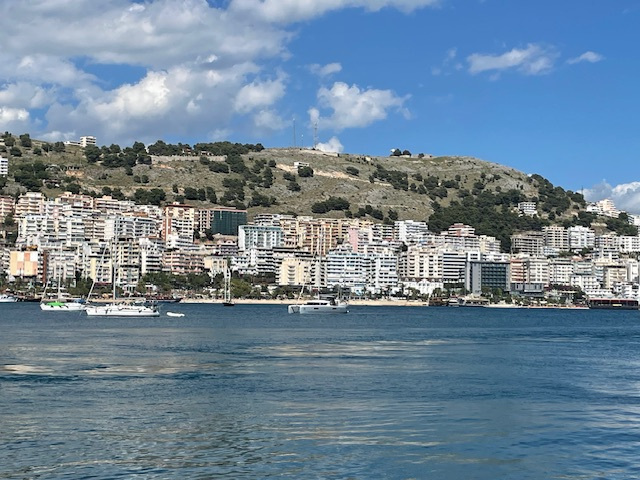
Saranda is a lively, large town, totally built up, with lots of bars and restaurants on the waterfront. Jelia got us a hire car for the day. This meant we could visit Butrint and drive through the mountains to Gyrokaster.

Butrint and Gyrokaster

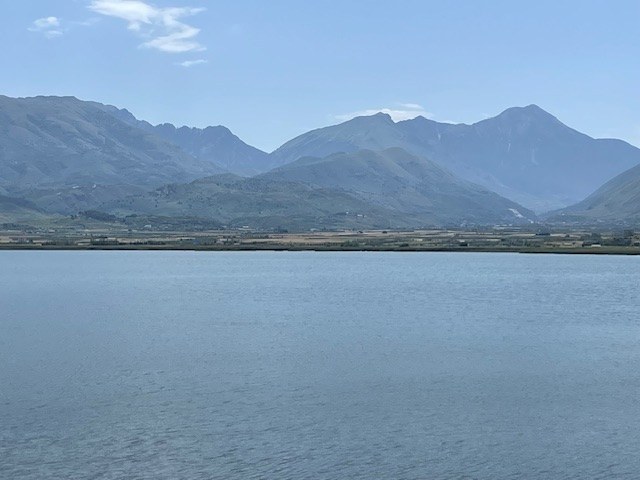
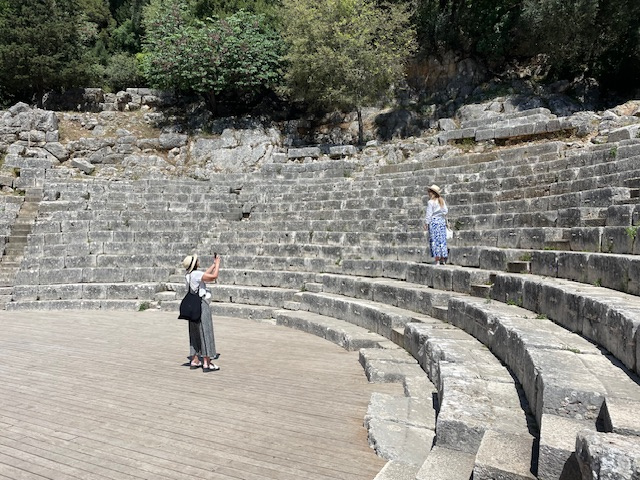
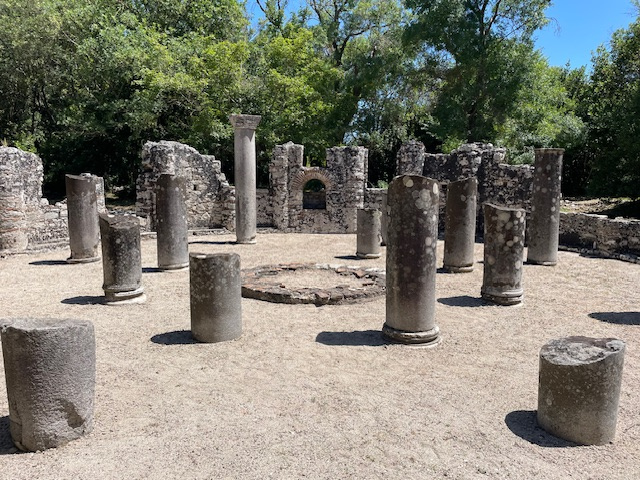
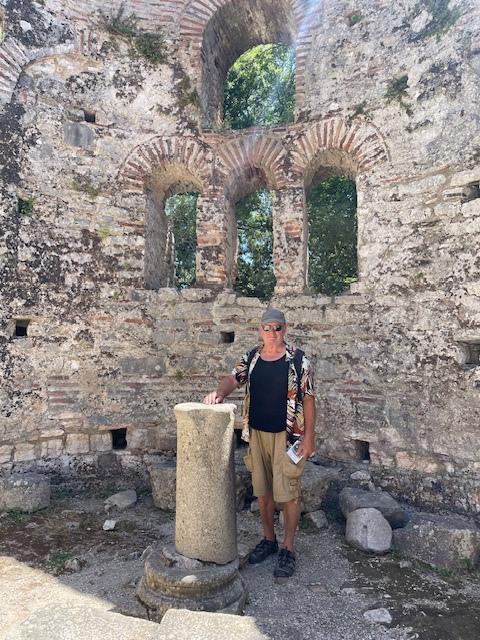
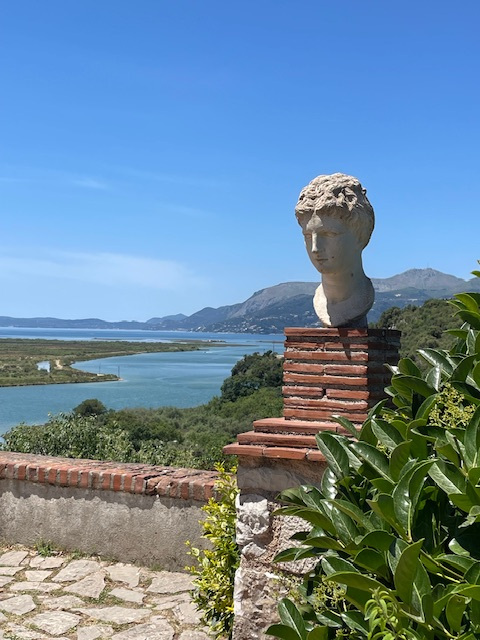
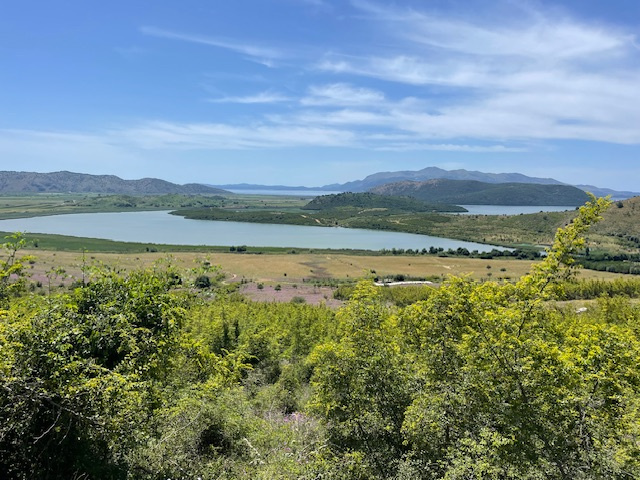
Ancient Butrint is the most visited archaeological site in Albania and is a UNESCO World Heritage Site. We were not only impressed by the walls and buildings dating back almost 2500 years (from the Greek colonists to Ali Pasha). We were also impressed by its location on a small peninsula between Lake Butrint and the Vivar Canal. A fantastic lagoon landscape with views as far as Corfu and the mountains.

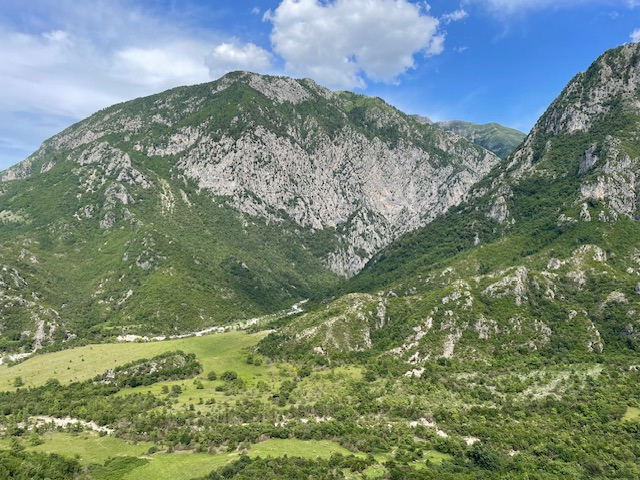
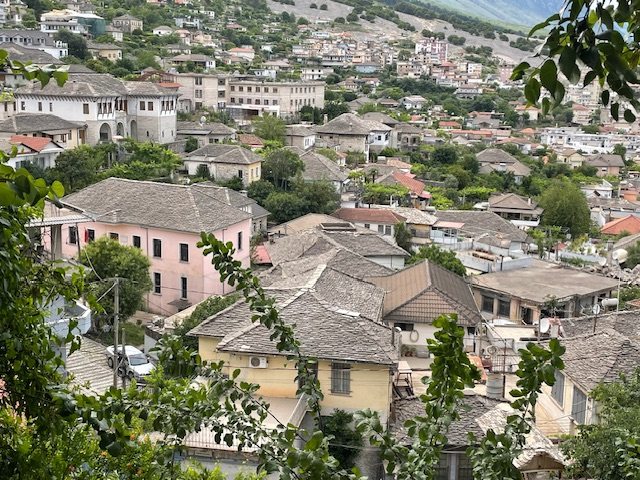
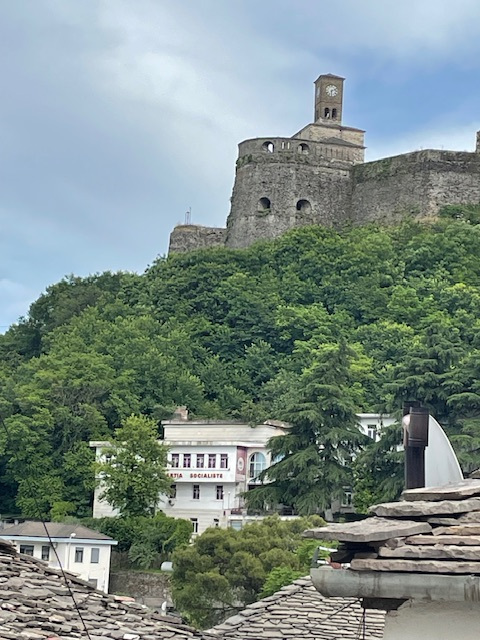
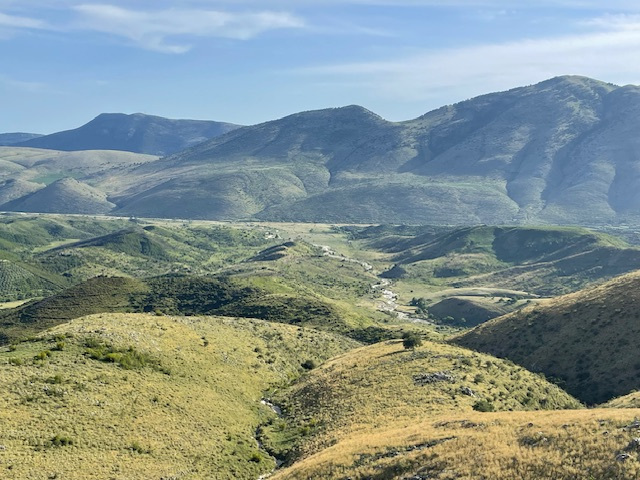
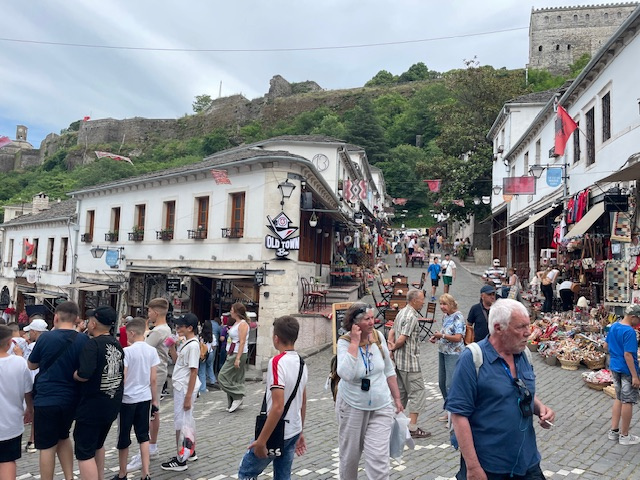
We drove over a spectacular pass road into the Drino Valley to the Ottoman town of Gyrokaster. This is also a UNESCO World Heritage Site. The town with its narrow, steep alleyways is built on three mountain ridges. The former dictator Enver Hoxha was born here. Back from all the sightseeing, a little bit tired we sat in our cockpit in the evening, parked between the ferries.

A brief excursion into history: Ali Pasha

Ali Pasha (probably 1740-1822) is often encountered in Greece and Albania. He came from Albania and was the head of a gang of thieves for 20 years, which he then betrayed to Sultan Mahmut II. This earned him the Sultan's favour and he was entrusted with ruling (what is now) northern Greece, Albania and northern Macedonia for the Ottoman Empire.

He was known and infamous for his extremely brutal rule and the execution of thousands of Greeks and Albanians who refused to convert to Islam.

Ali Pasha was also a power-conscious politician who attempted to mould the area he ruled into a state of his own. His army comprised 100,000 men at times. He ruled over Epirus, southern Albania, Thessaly and south-western Macedonia, which ultimately proved to be his undoing: He was murdered by order of the Sultan, his head was taken to Constantinople, preserved with salt and exhibited there.

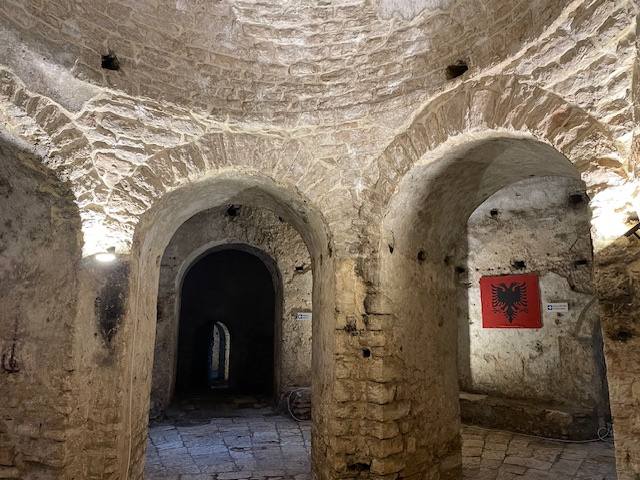
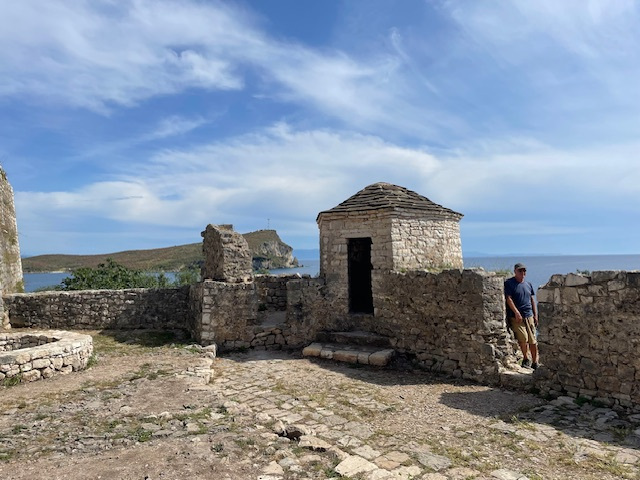
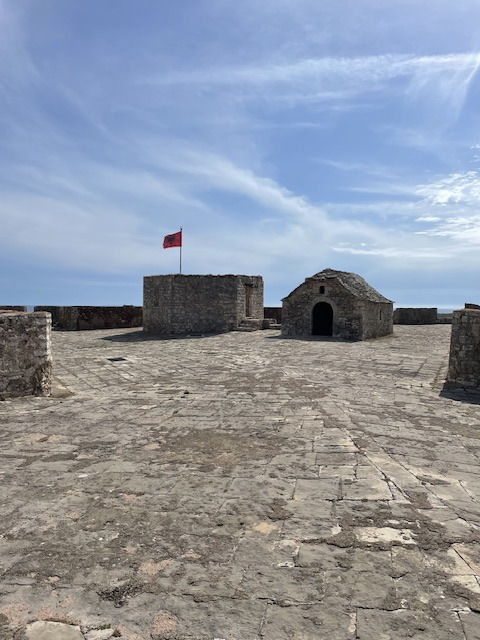
What you can still see of him today are many fortifications in exposed locations, often built on Venetian foundations and displaying impressive, state-of-the-art military architecture for the time.

Port Palermo

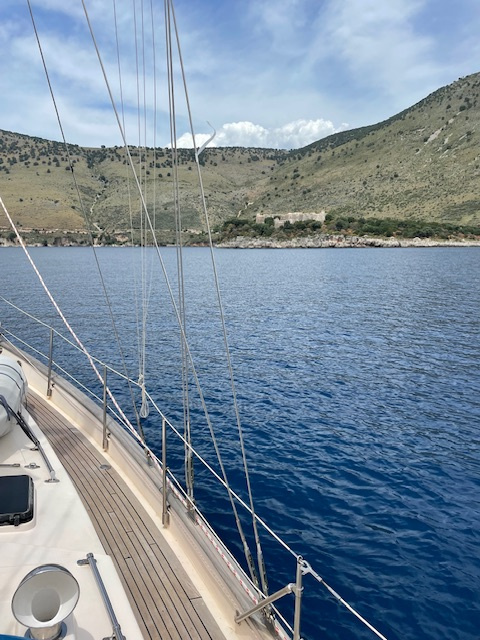
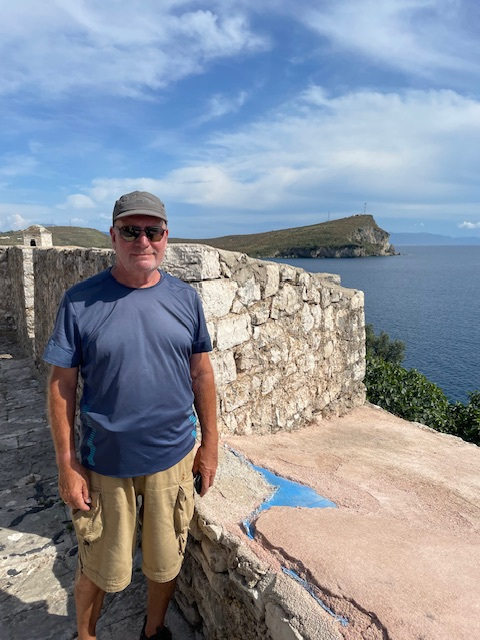
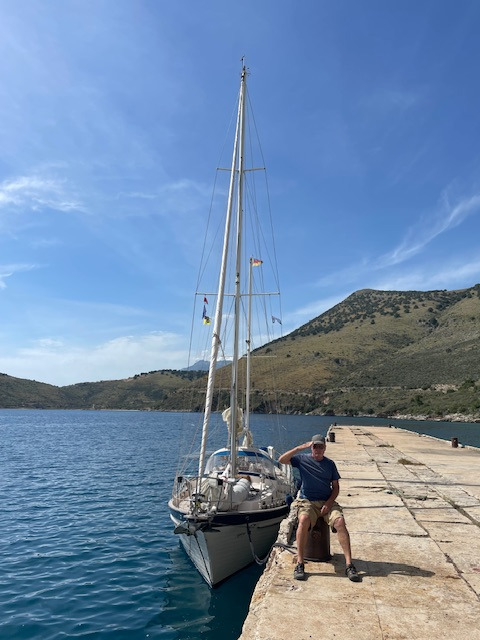
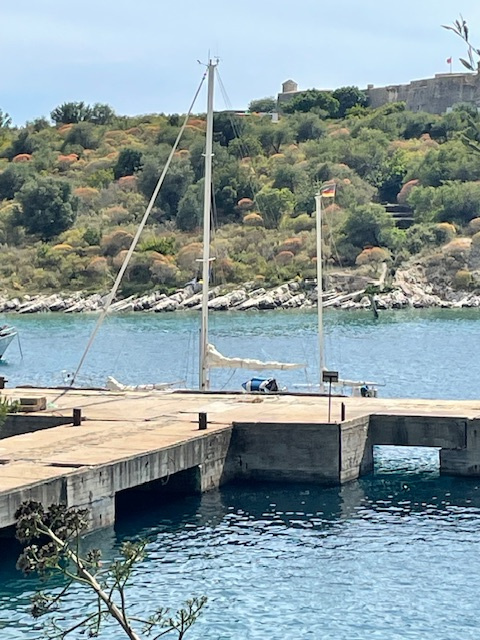
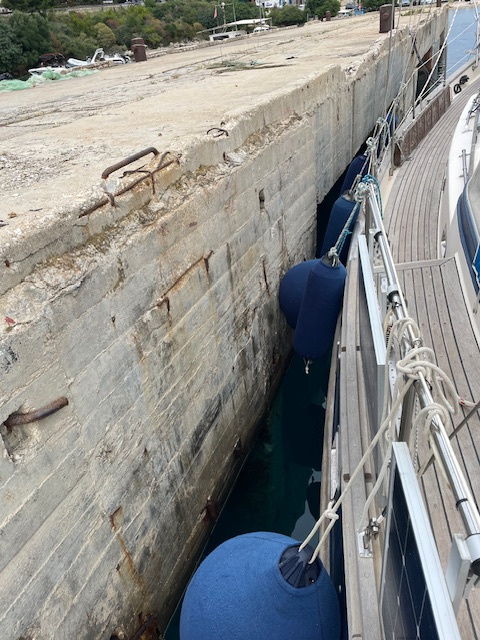
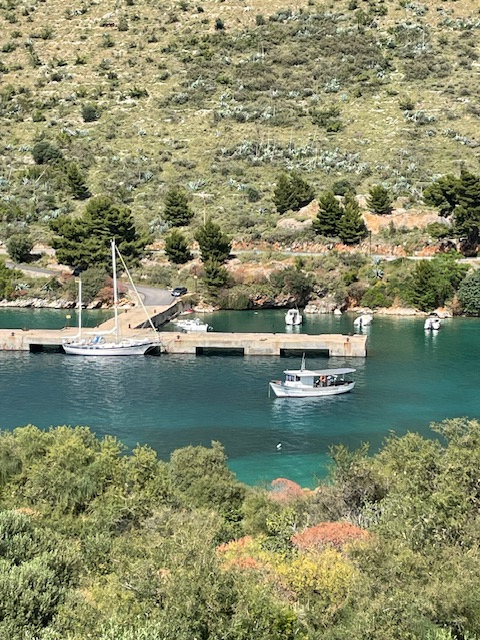
Port Palermo, 17 nautical miles north of Saranda, was our next destination. As we entered the well-protected bay, we were curious to see whether we would even be allowed to moor at the very high concrete pier. Port Palermo used to be a military base with a submarine bunker. The northern part is still a military area. In the southern part, you can anchor in very deep water or go to the old pier. However, we had read from other sailors that they were sent away again. Mooring at the pier was not easy at all and only worked with a very sporty climb to the top. And fixing the boat wasn't easy either, as there are very few bollards. But we managed it. And we were lucky: the police allowed us to stay after they had photographed all our documents and inspected our boat.

There is a beach, a restaurant and an Ali Pasha castle in the beautiful bay. A great place and also really well protected. We realised this when a thunderstorm raged over us during the night. We will stay another night.

After celebrating Walter's birthday on Rabitts wildly romantic pontoon, we set off on 5 May. Northwards through the channel from Lefkada to Preveza. Here we were able to experience the Greek Orthodox Easter. Until now, we thought this was always a week after our Easter. But that's not true. The date for Easter in Greece is calculated according to the Julian calendar and always takes place on the weekend after the first full moon after the beginning of spring. Our friend Claudia came on board for 10 days on Easter Monday. On the Tuesday after Easter we wanted to buy groceries for the next few days and set off. We were very surprised that all the shops were still closed. A local explained the situation to us: As 1 May (also a public holiday in Greece) had fallen on Good Friday this year, it was made up for on the Tuesday after Easter. Very pragmatic, the Greeks.

Between the Greek mainland and Corfu, we then zigzagged northwards, first for a night anchoring in the South of the island at Mongonisi, then to Sivota. Always beautiful. The next day there was no favourable wind for our course north. So we took a look at the beautiful bays and exclusive apartment complexes by foot.

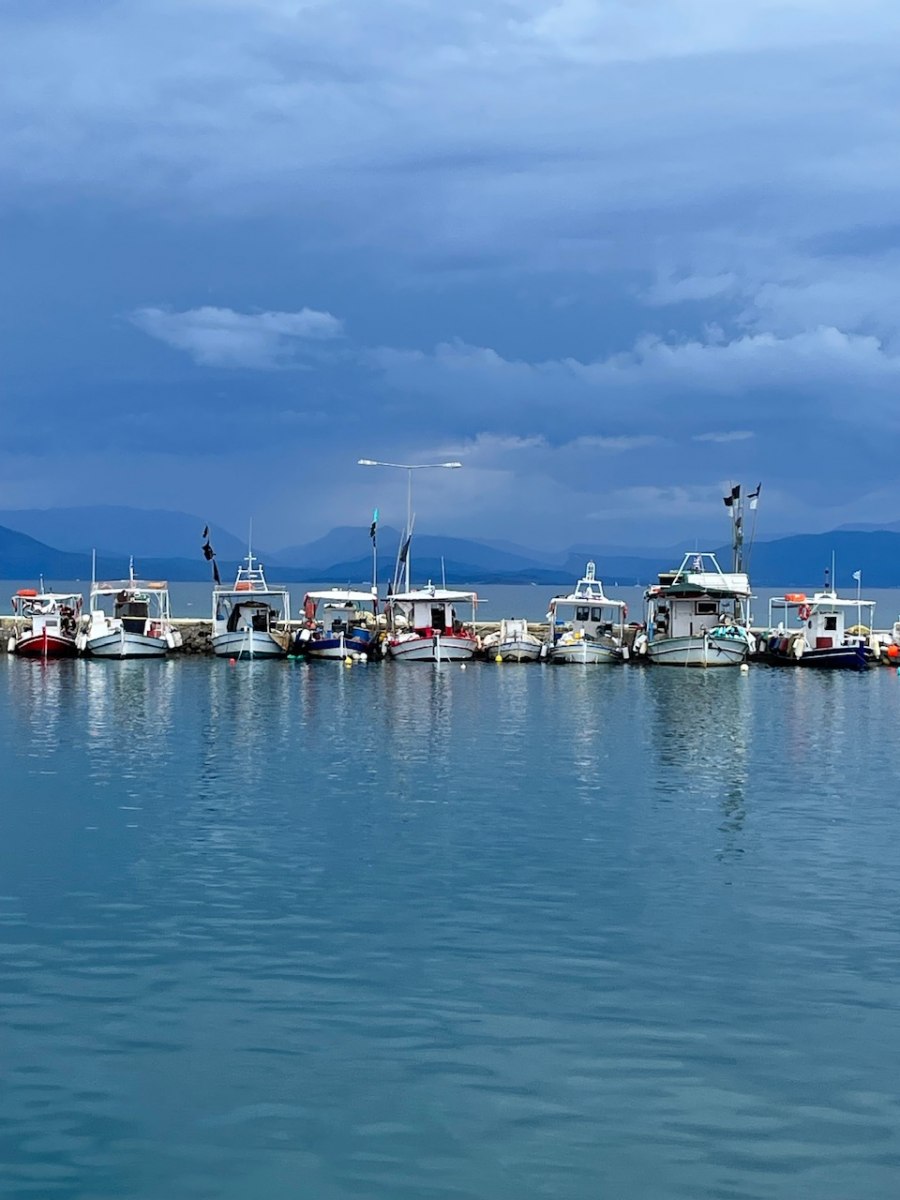
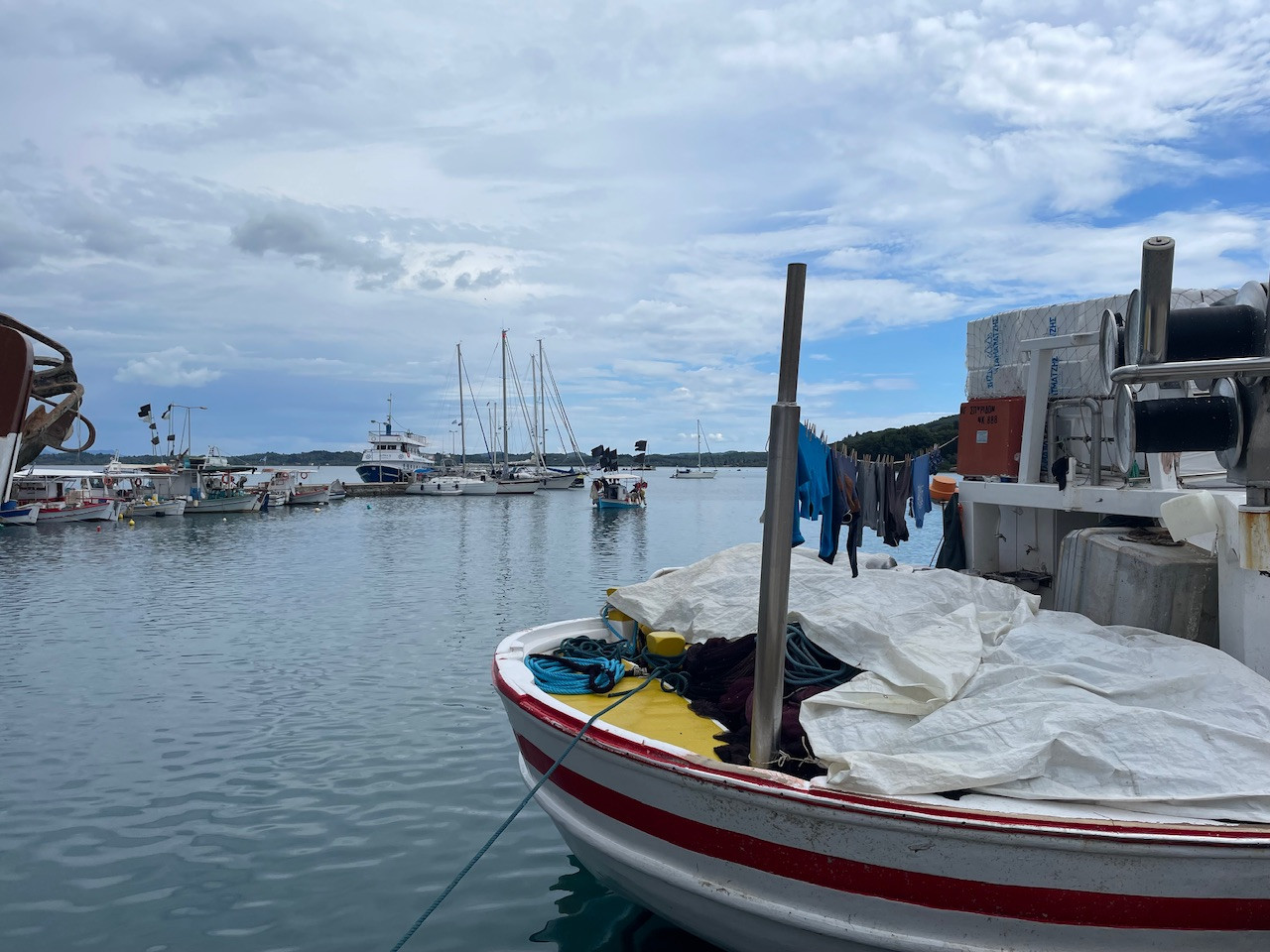
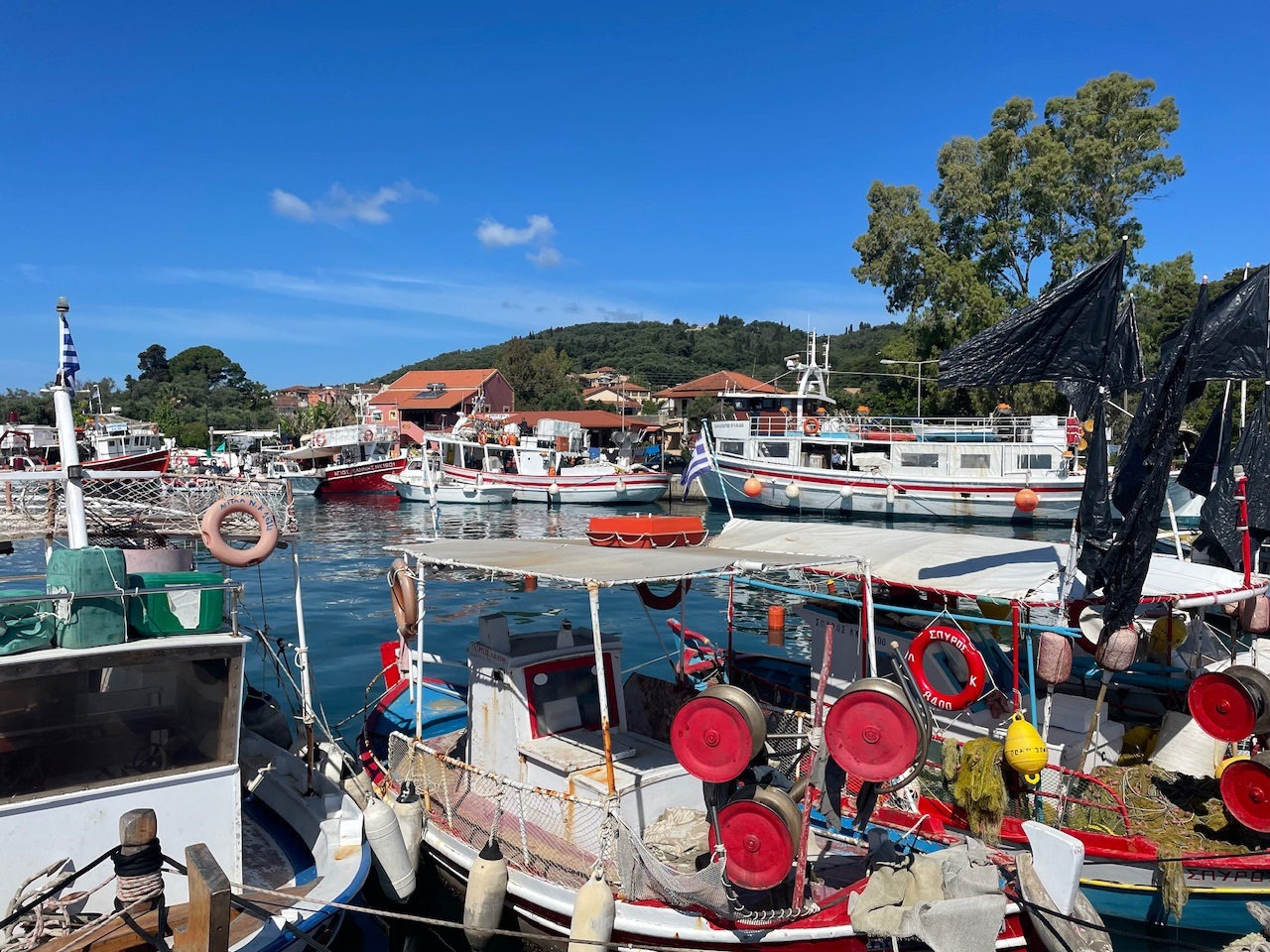
Next stop: Petriti on Corfu. The nice little fishing harbour that we already knew from last year. While looking for a rubbish bin, we found out that the harbour is not yet open for sailors. No problem for us with our full water tanks and solar panels.

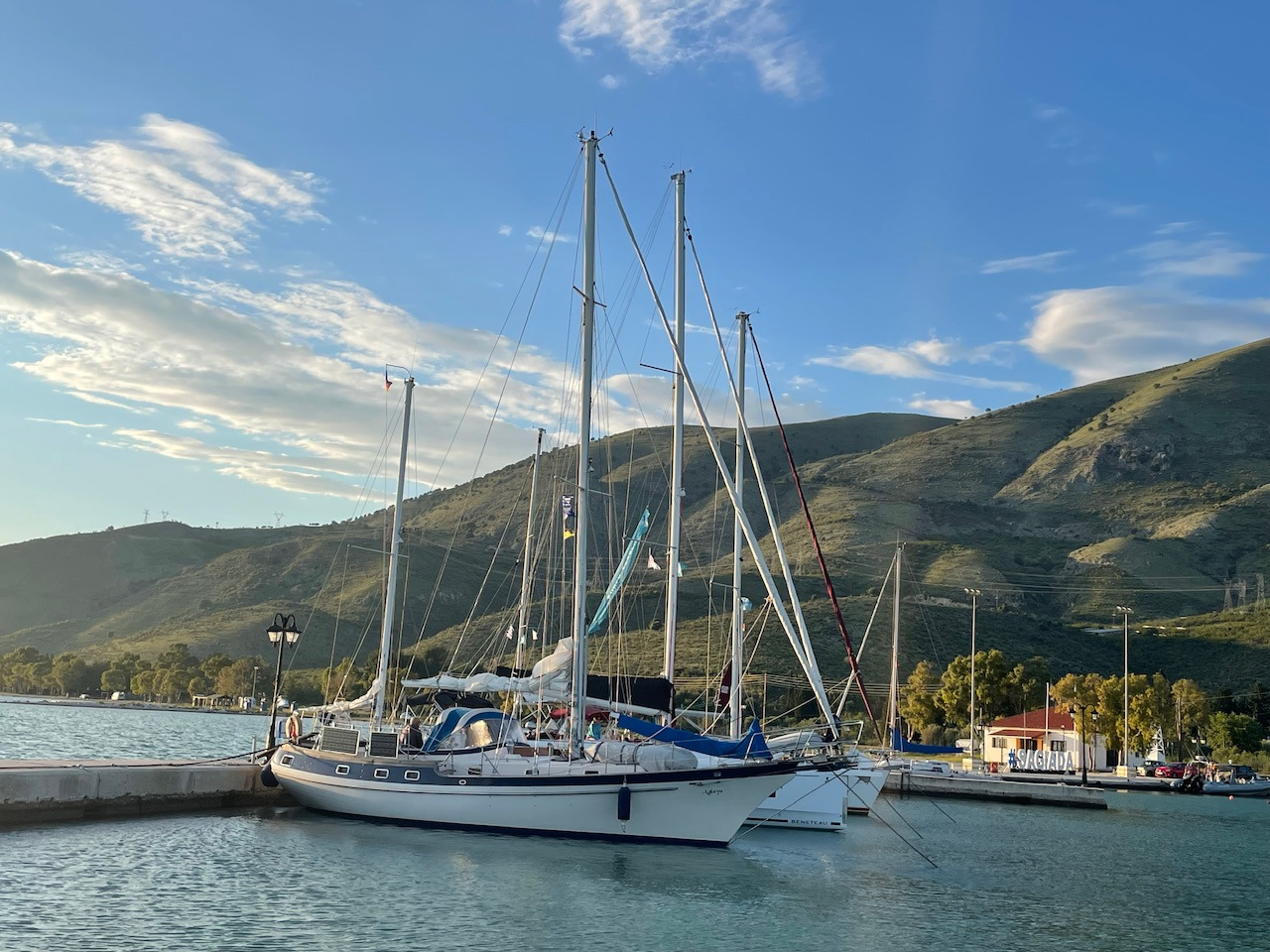
Then back to the mainland, to Sagiada, which is only four kilometres from the Albanian border. The harbour guide says that the entrance to the small harbour is only six metres wide. That's right. You have to aim well to get through the centre with our four-metre-wide boat. With only three other sailing boats, it was quite nice there. And there are good fish restaurants. A nature reserve with lagoons and an estuary begins south of the harbour. Maybe we'll come back again and do some hiking there.

We spent the next night anchoring almost in the far north on the east side of Corfu in Agios Stefanos bay. In the dark, we saw the big ferries passing by on their way from Igoumenitsa to Italy. Walter had set the anchor alarm on his mobile phone for the first time. We wanted to know if it really worked. As he had set the Schwojenkreis very tightly, the alarm woke us up at half past five in the morning. Very reassuring in this case. Our anchor didn't slip, but we now know that the alarm works.

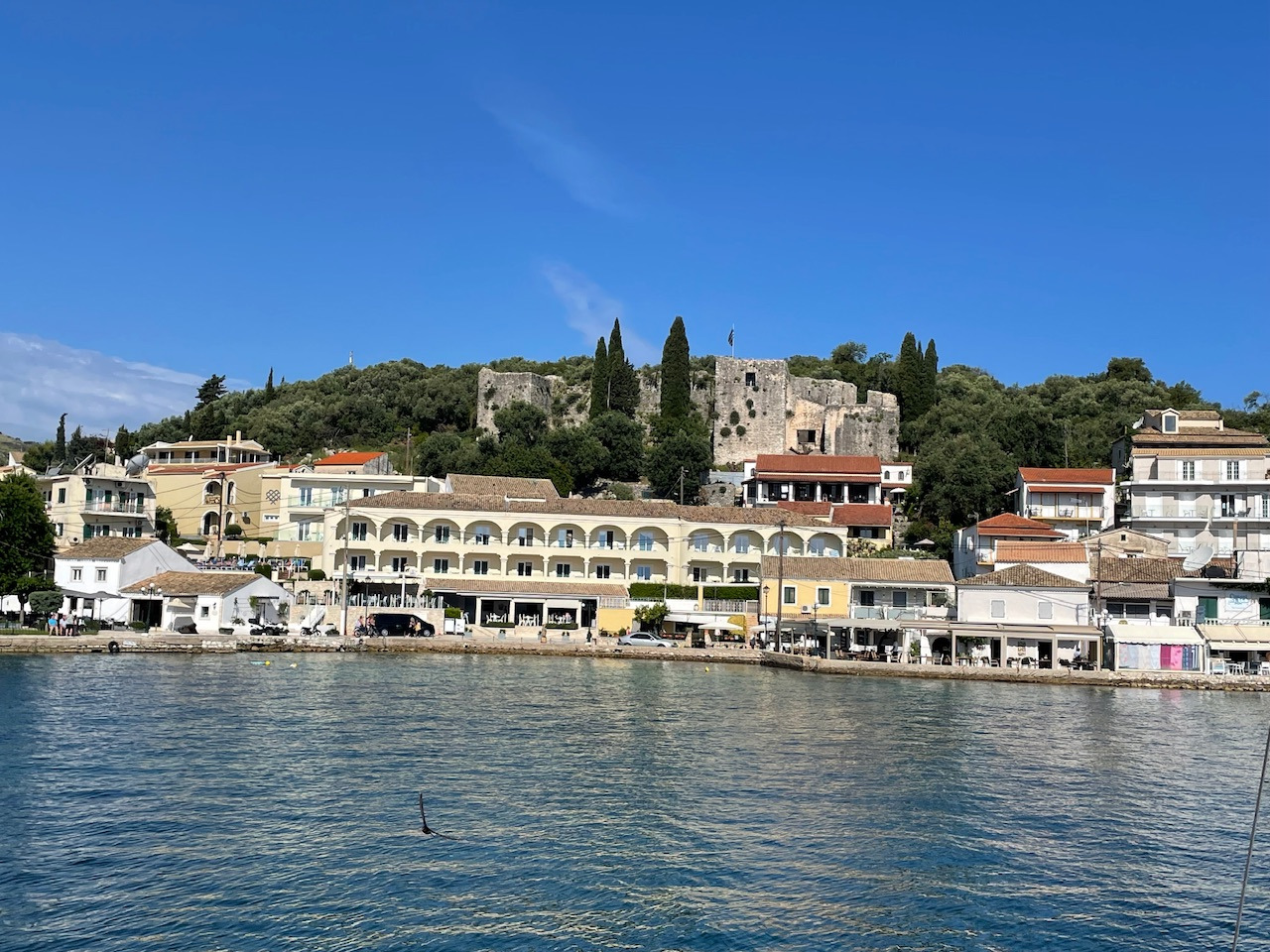
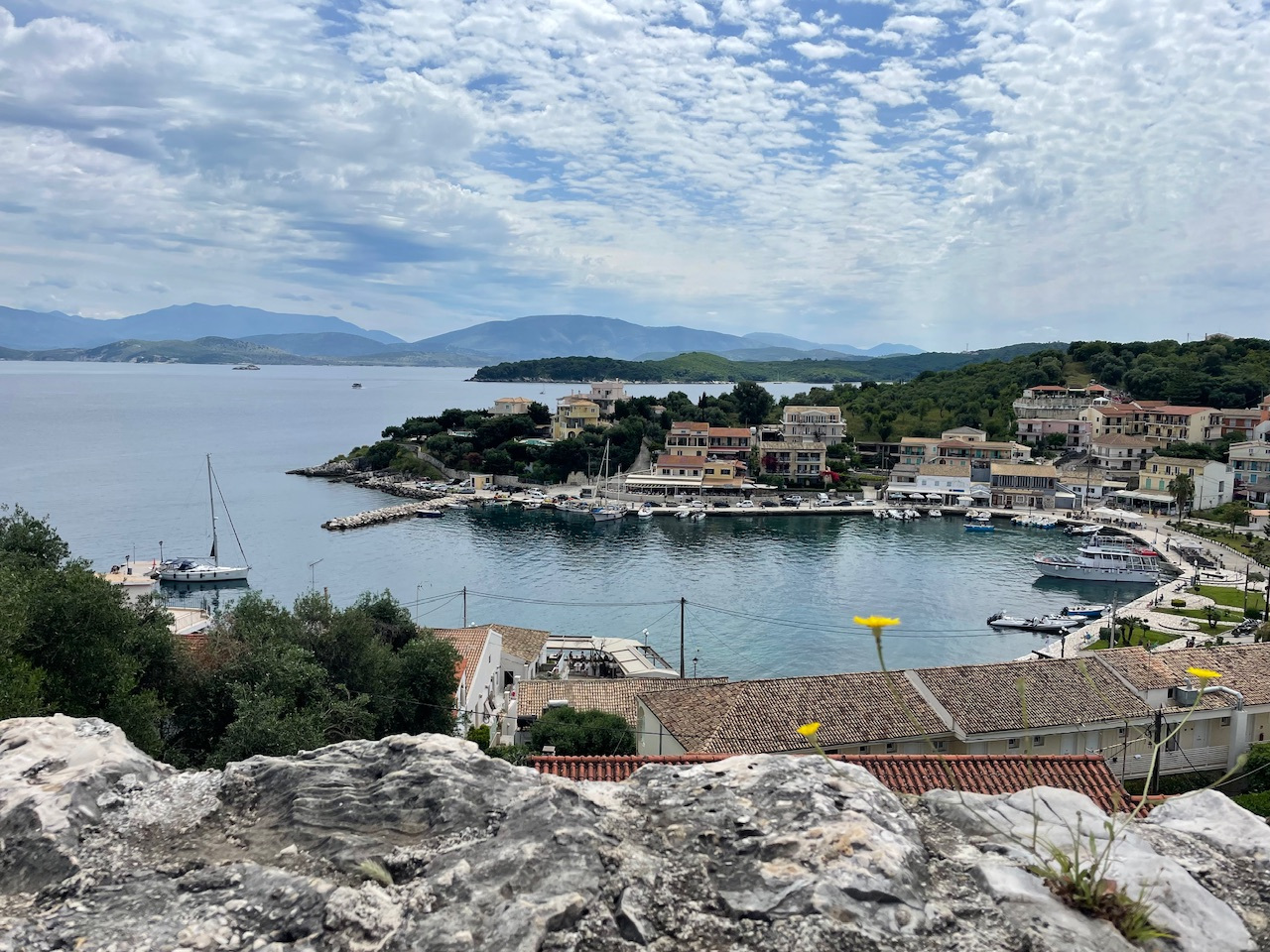
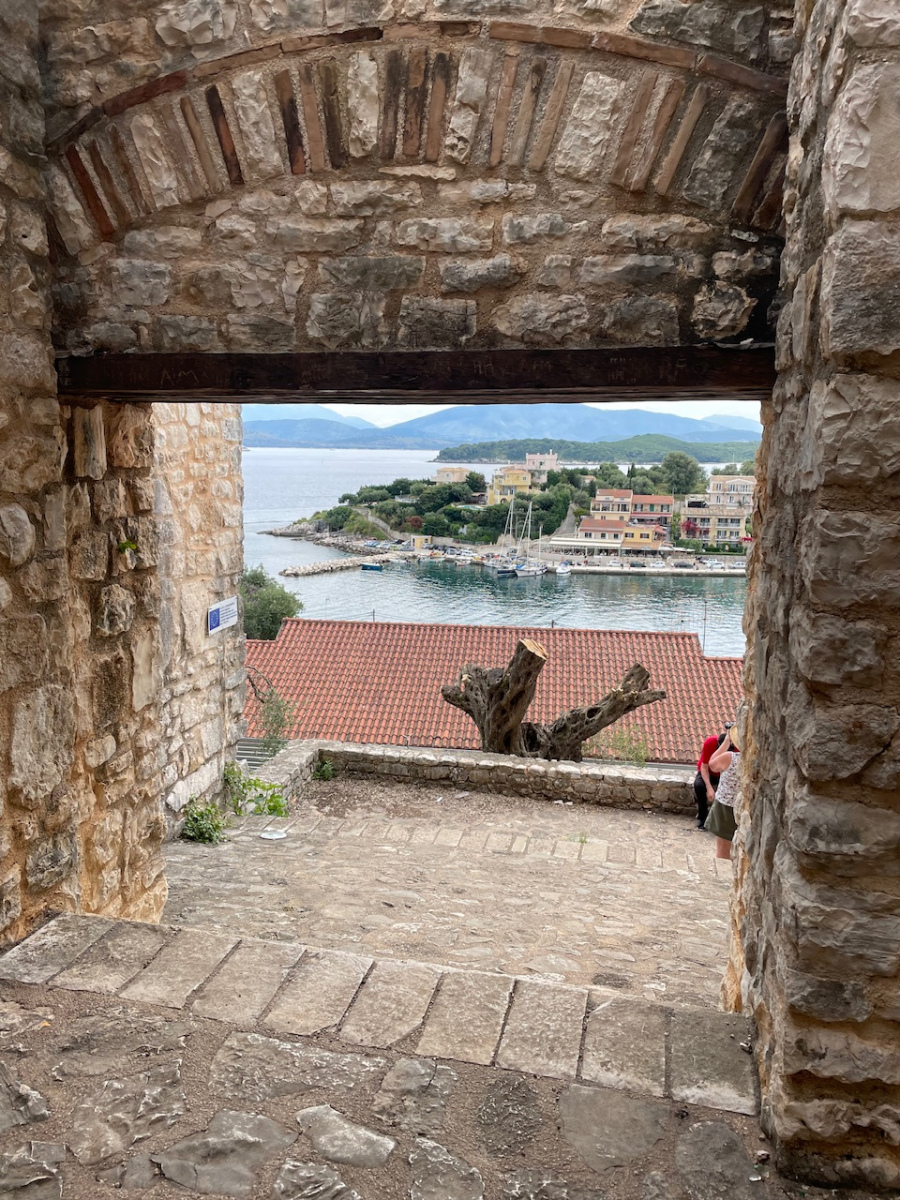
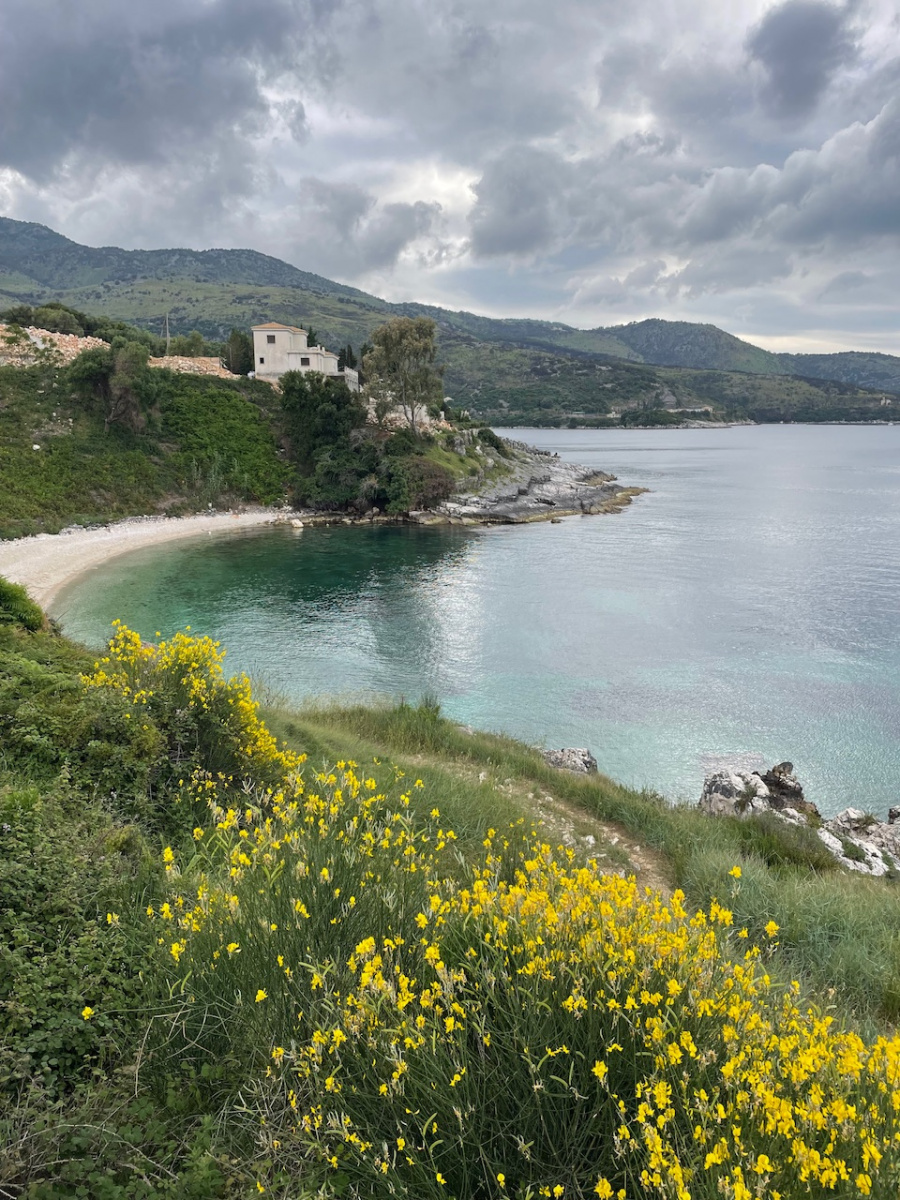
The next day there was only a short trip around the corner to the north coast to Kassiopi. We already knew this harbour and also the fit, energetic and very nice harbour master woman. Here we wanted to decide whether to sail all the way round Corfu. However, the wind had already shifted to the south two days earlier and was getting stronger every day, especially on the west side of Corfu. We didn't want to force it, so we cancelled our plans. The wind was too strong to cross against the wind and motoring is no fun. Staying in Kassiopi, we took a look at the Kastro and looked for a nice bay for a swim. The water was still quite cold, but crystal clear.

The next day, the harbour master urged us to leave the harbour as soon as possible, as strong winds of up to seven Beaufort were forecast. So we left the harbour and headed south again into the narrows between the mainland and the island. The wind wasn't quite as strong. With a boom jib and mizzen we were able to cross nicely.

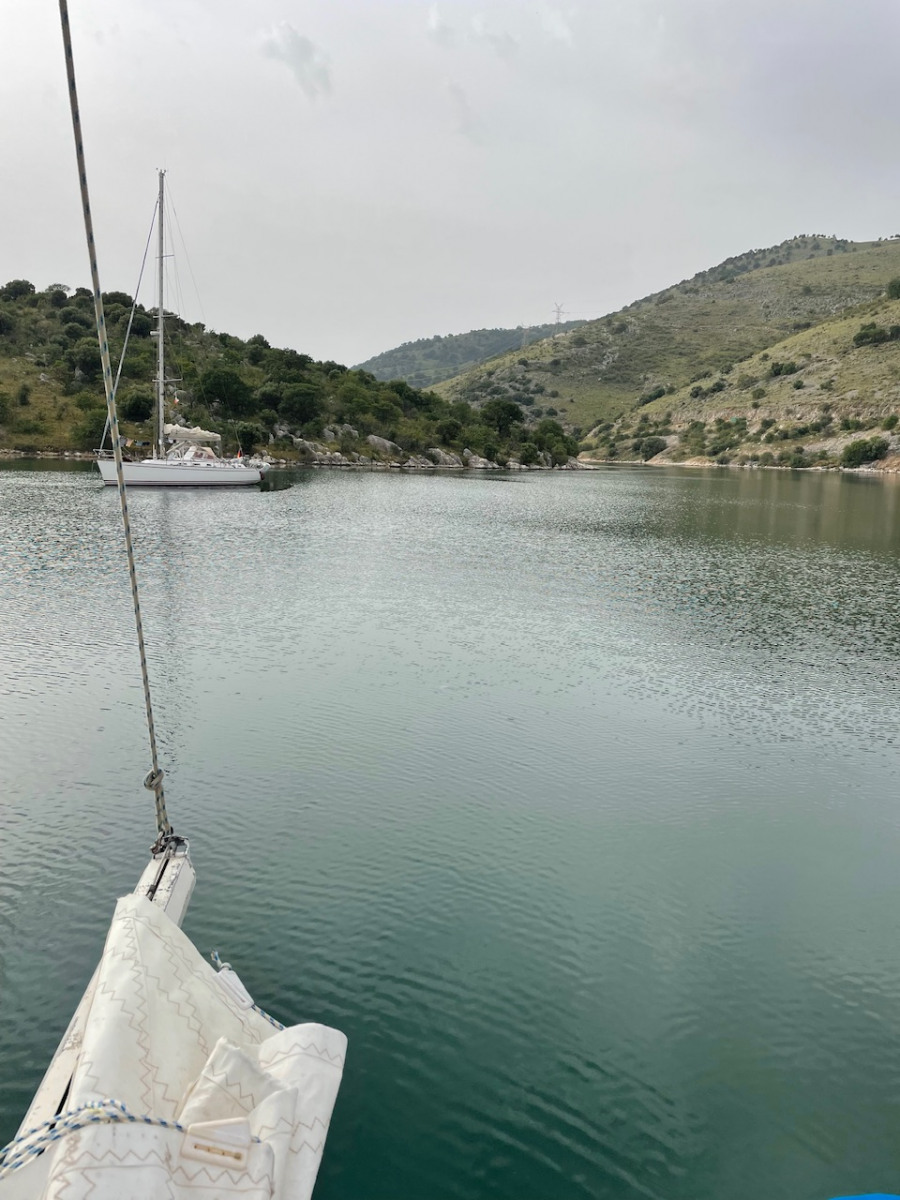
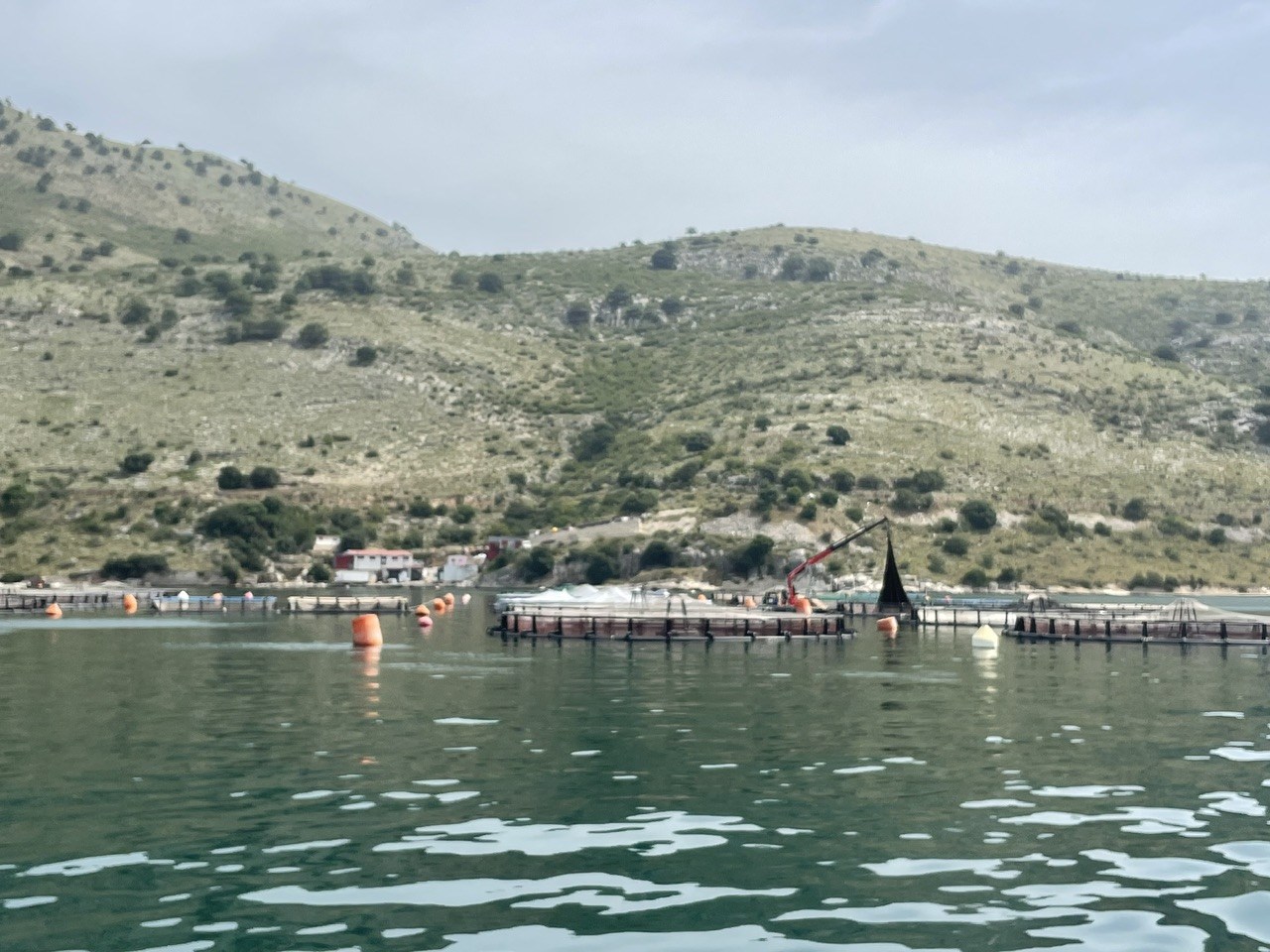
And then we ended up behind the fish farms. With the cows. Coming from Kassiopi in the north, we needed a berth for the night on the mainland. The harbour guide says that Panagia Bay is not only well protected from the wind from all directions, but is definitely unlike any other place in the Ionian Islands. Of course we wanted to check it out. 10 miles opposite Corfu Town, you sail past endless fish farms, circular nets with a diameter of 10 to 20 metres. The land is barren, uninhabited, scrubland, bushes. Albania is just a few hundred metres behind.

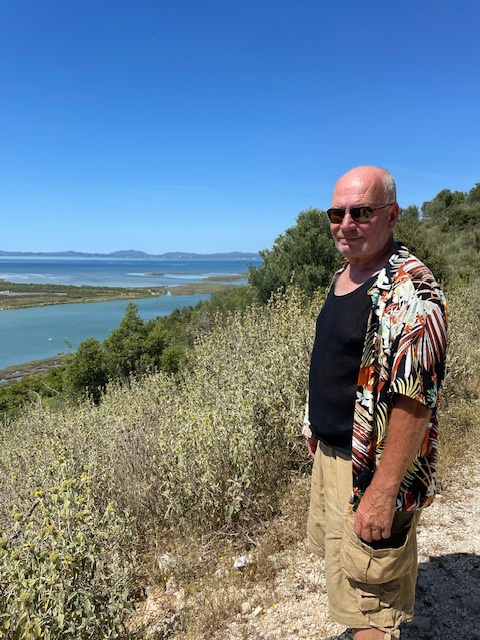
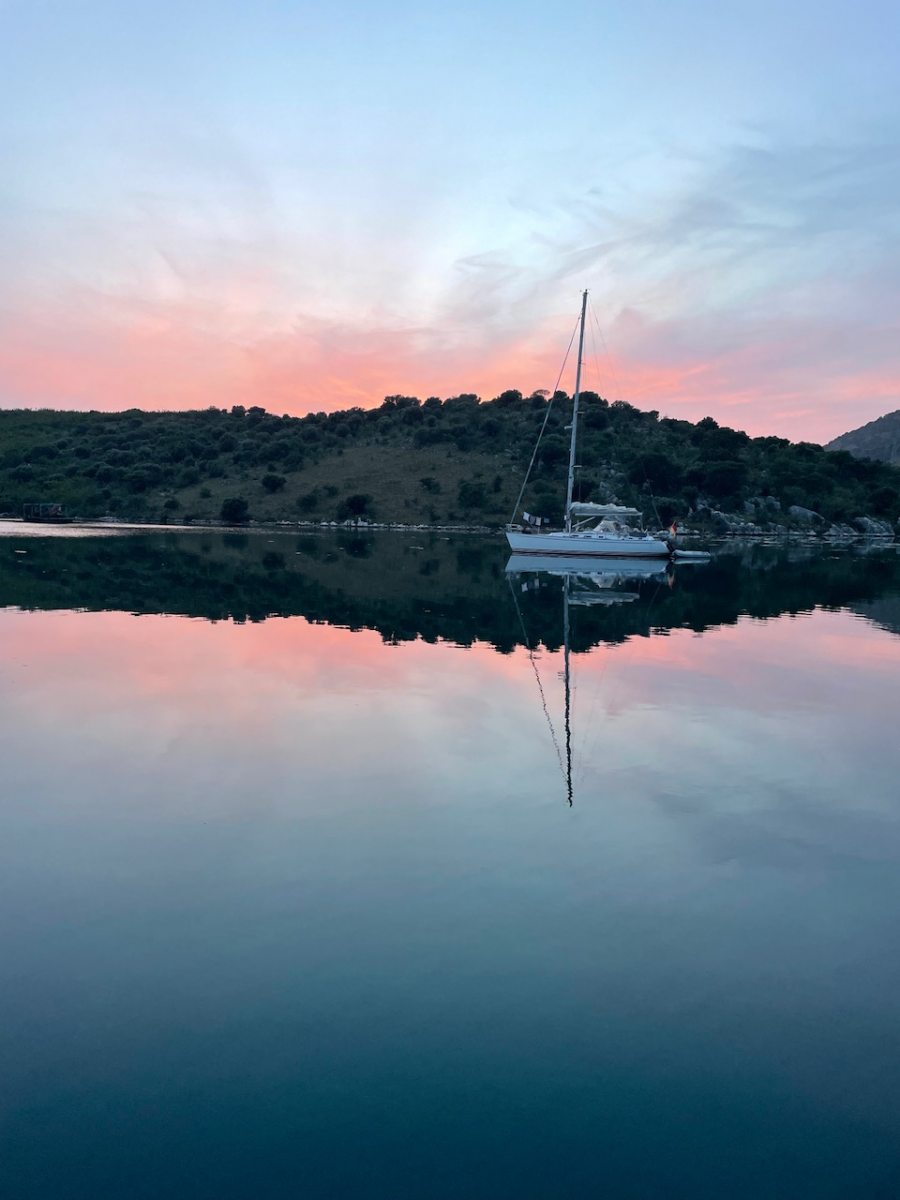
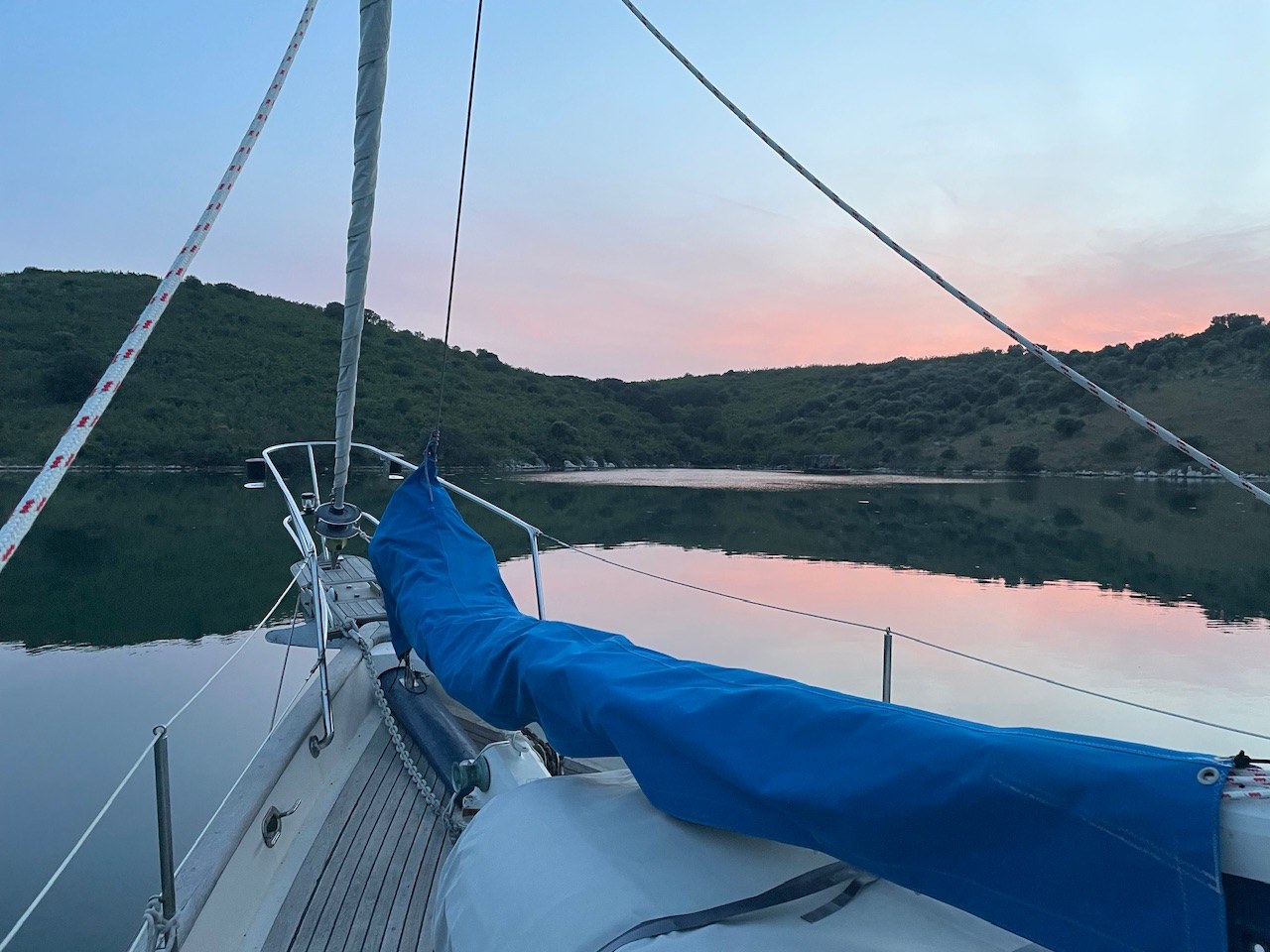
You curve around the farms and are suddenly alone (with only one other boat) in a mirror-smooth bay, surrounded by bushes, windless, you hear nothing - except the cows grazing here. Complete silence and solitude - marvellous.

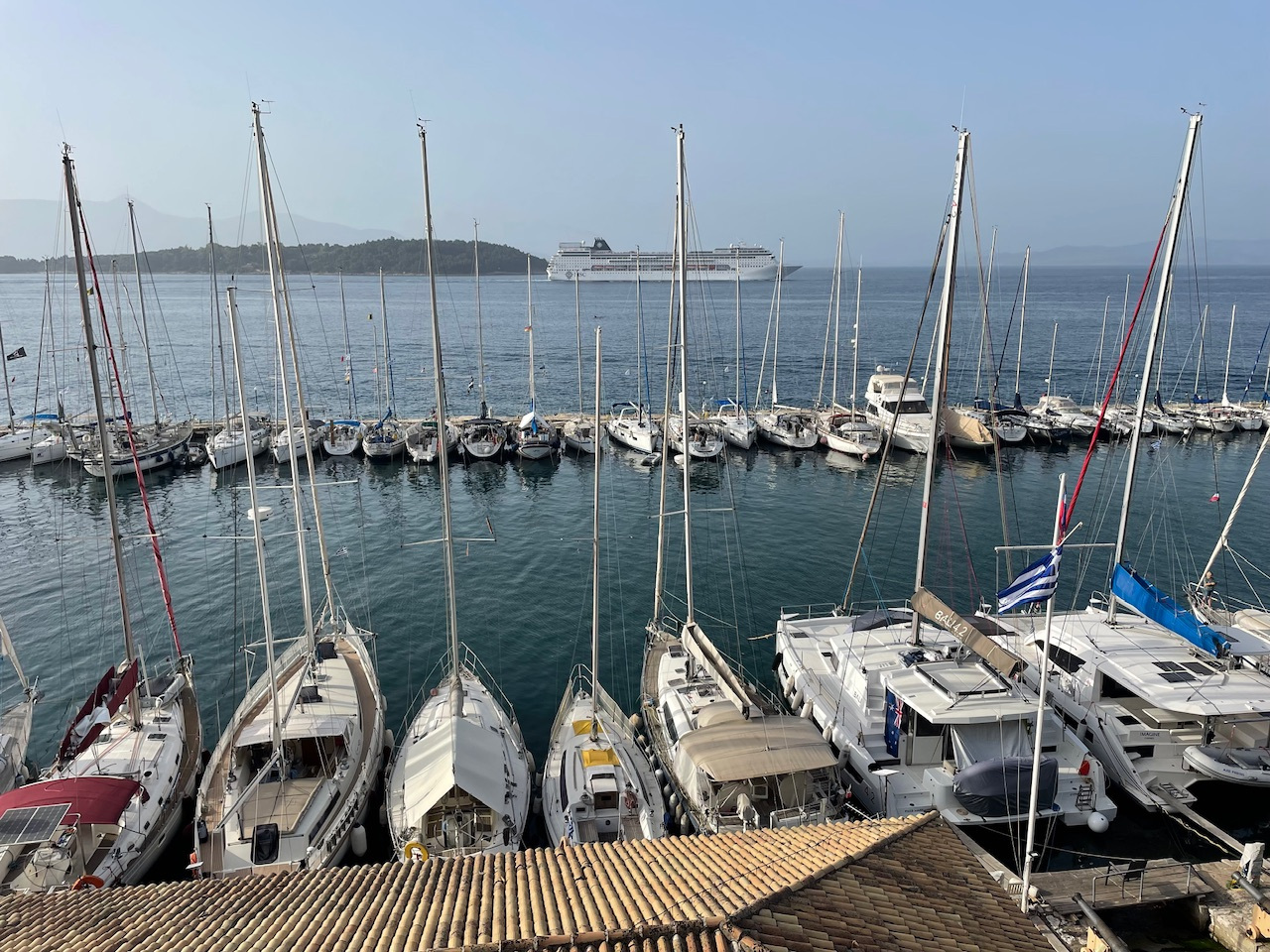
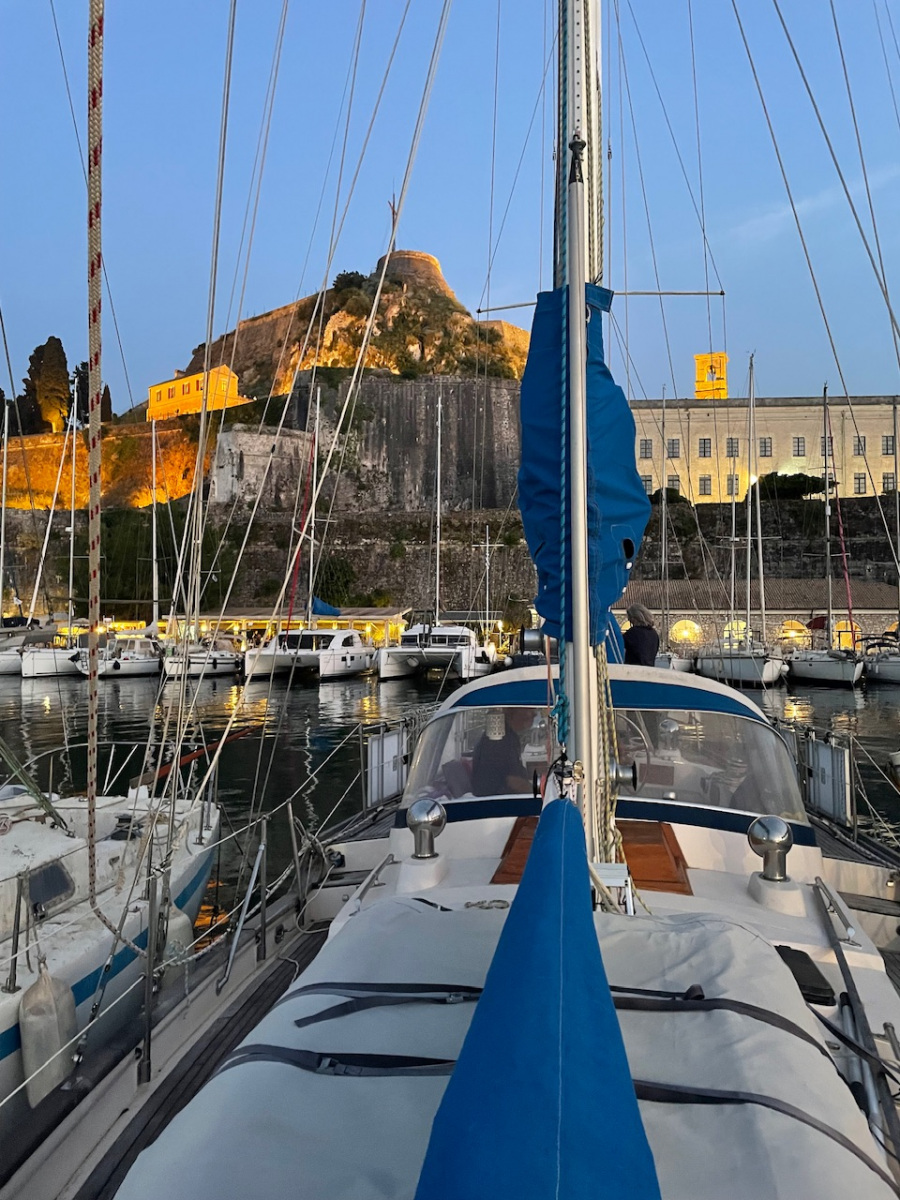
From this quiet idyll, we put our bow out into the sea between the mainland and Corfu the next day. We set a westerly course with winds of up to 32 knots and plenty of swell from the south-east. The mizzen and half the genoa were all we needed to get across to Kerkyra (Corfu Town) quickly. We are now moored in Mandraki Marina below the fortress, just like last year. Today, on 18 May, Claudia disembarked again to fly home. It was a lovely time for the three of us. We are staying until Tuesday in the hope that we can collect our postal voting documents for the European and local elections from the German Consulate General on Monday.   

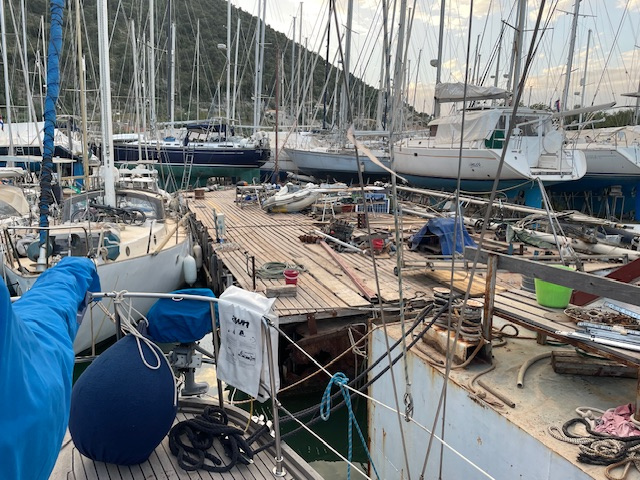
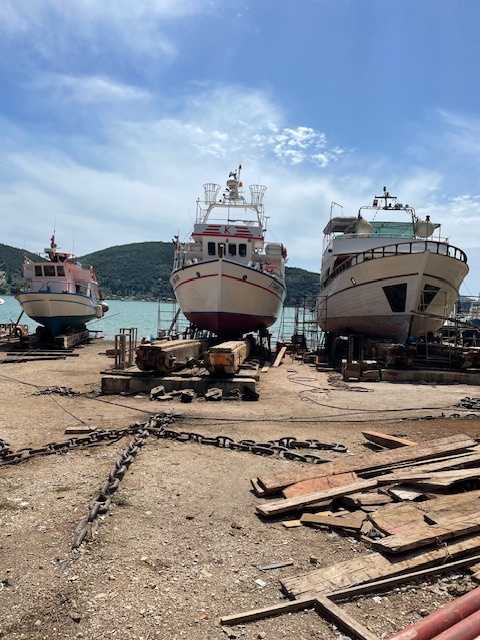
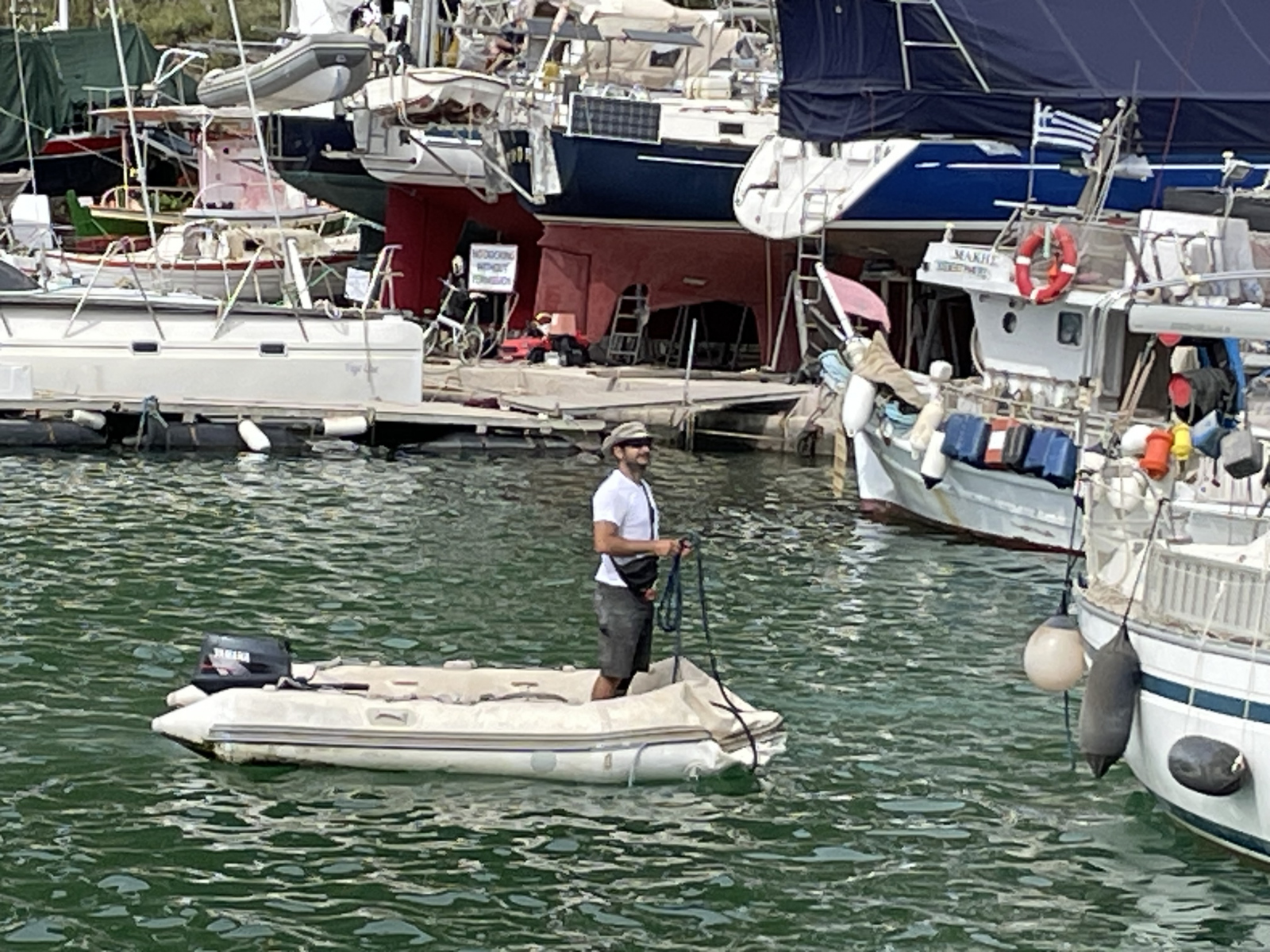
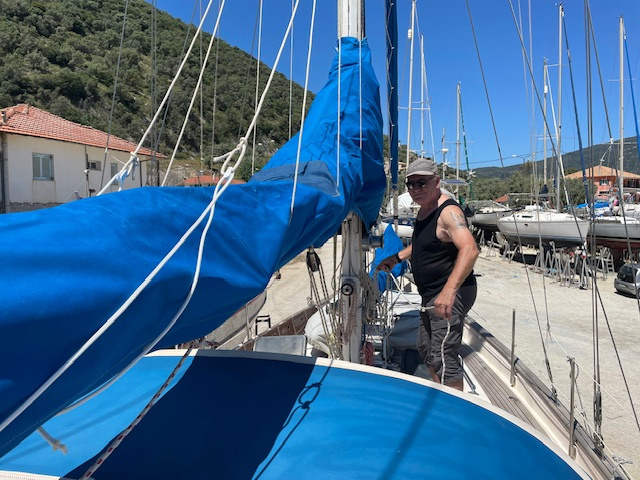
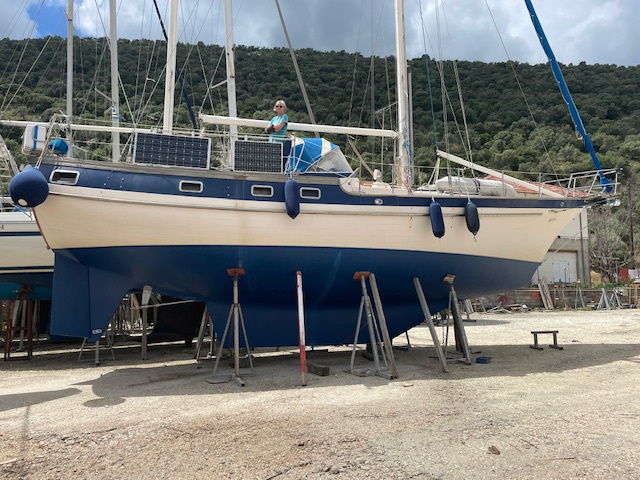
Once the heavy Deutz tractor had pushed us into the water - we were standing a little wobbly on Aglaya - we were due for an engine service, oil change, gearbox oil check, filter change and impeller change. Rabitt, the manager of the boatyard, towed us to his pontoon with his half-inflated rubber dinghy. He had already shown it to us last year with the words "this is my kingdom".

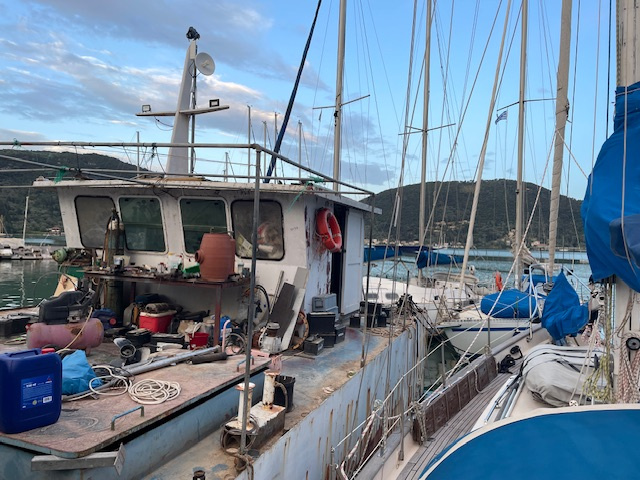
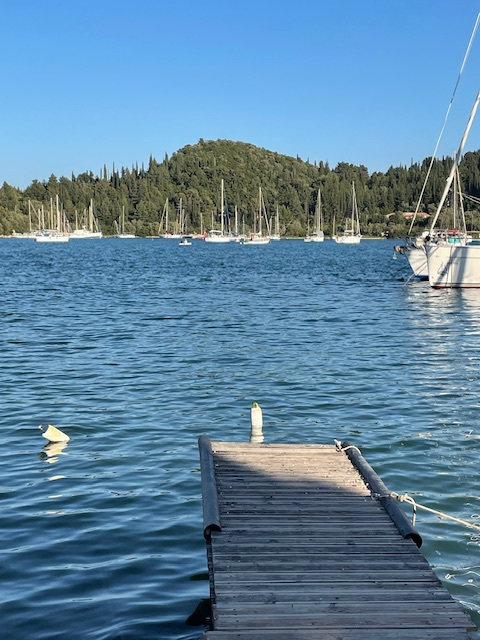
So now we were in his kingdom for three days. A completely rusty pontoon that looked like it would sink in the next few days. A gangway led from it to another pontoon, which looked a bit more stable, but also pretty run-down. Crankshafts, engine blocks, inflatable boats without air, deckchairs, dozens of car batteries, masts, wire ropes, rusty compressors, wooden slats, sledgehammers, cables - it looked unbelievable. But: electricity and water. One boat came and told us "they will leave on sunday", which of course wasn't true, but we wanted to leave on Sunday.

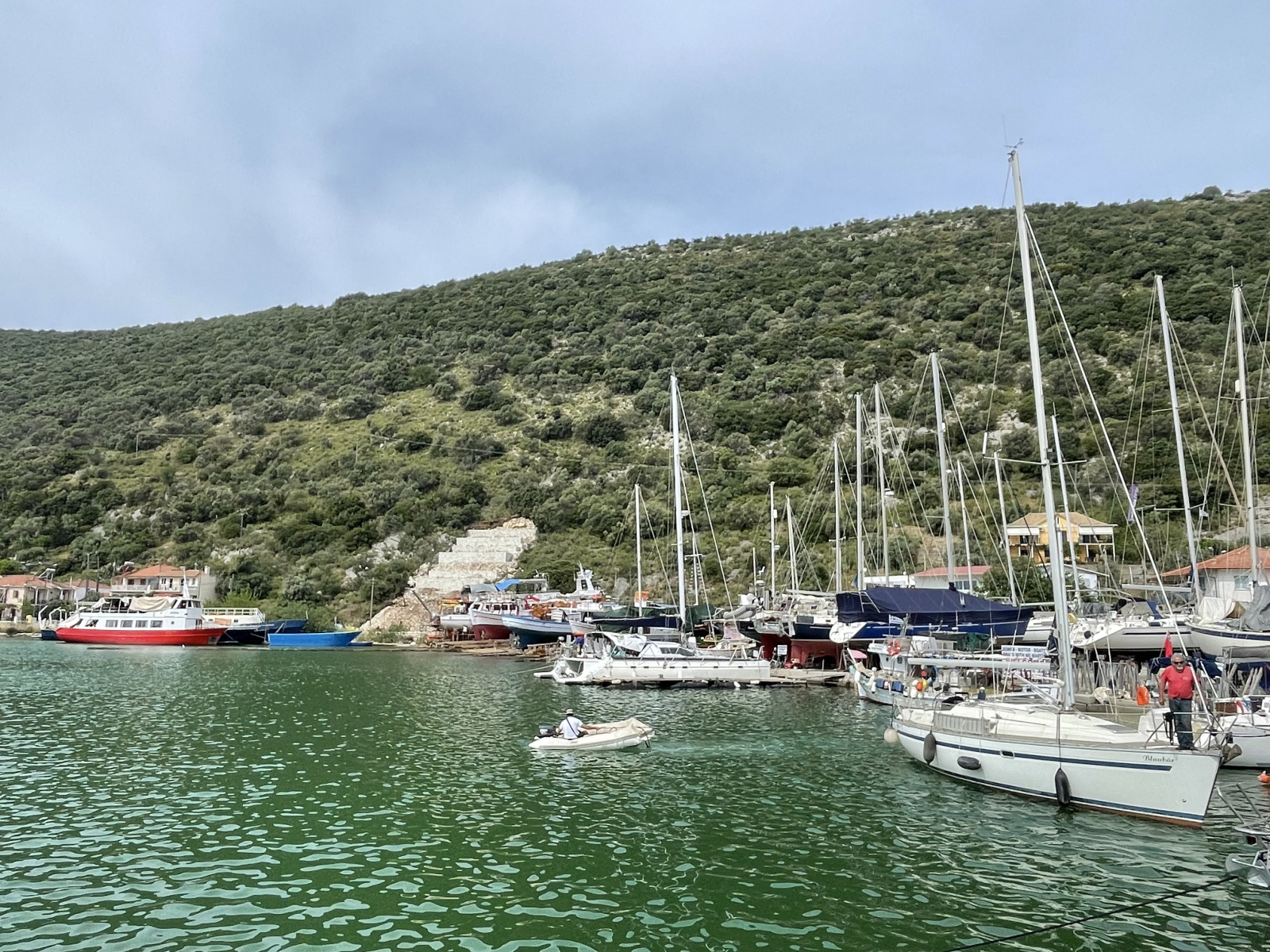
We had to climb a bit to get onto the pontoons and back onto the boat - no problem. The view to the west was of the Ukrainians and Finns working on their boats and the shipyard - to the east of the beautiful bay, turquoise green water, lush green mountains - wonderful.

And at least now 40cm of water under the keel instead of 30 when we went ashore - a little more than a hand's breadth.

And Rabitt is totally reliable, Easter Sunday at half past ten, as agreed, he was in his kingdom and helped us cast off. We'll be back for two months in the summer, and in the winter we'll be pulled ashore again - it was lovely here!

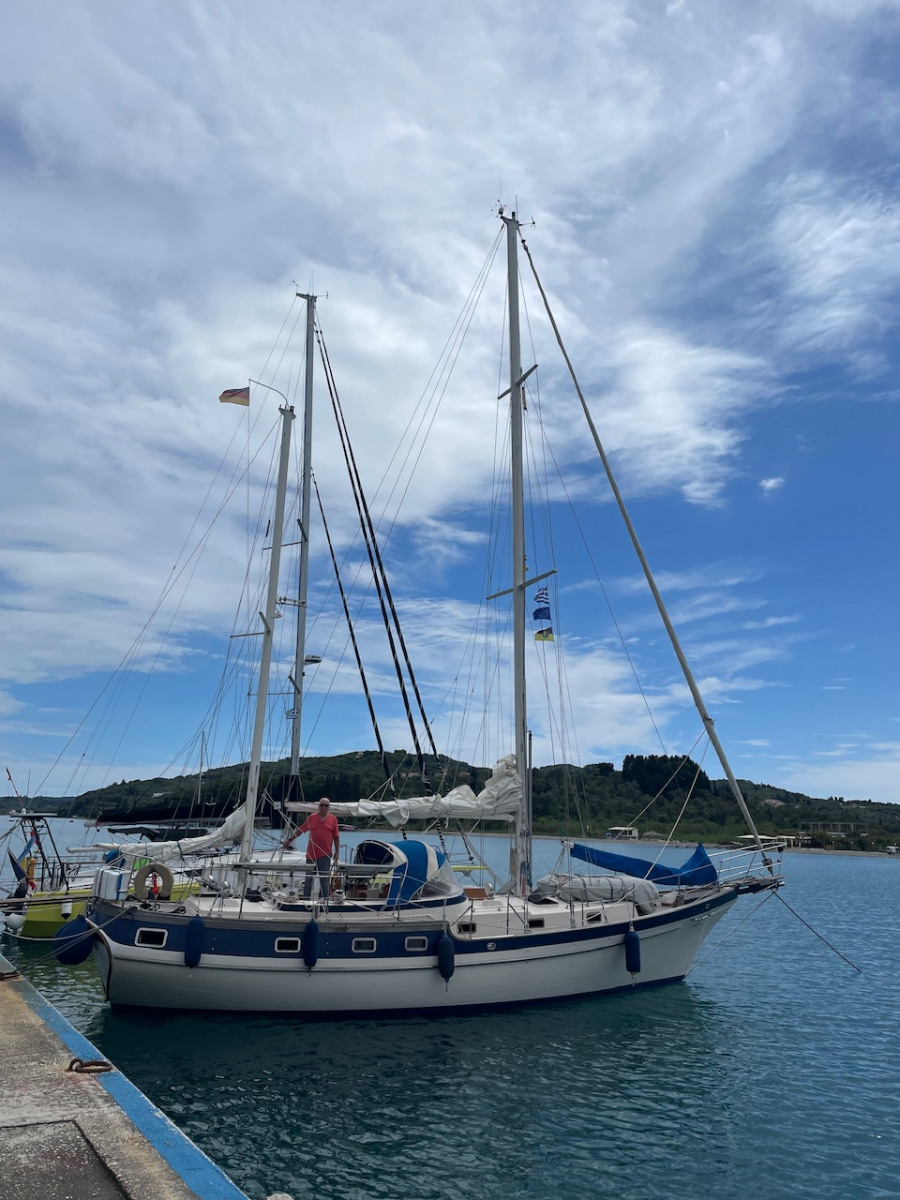
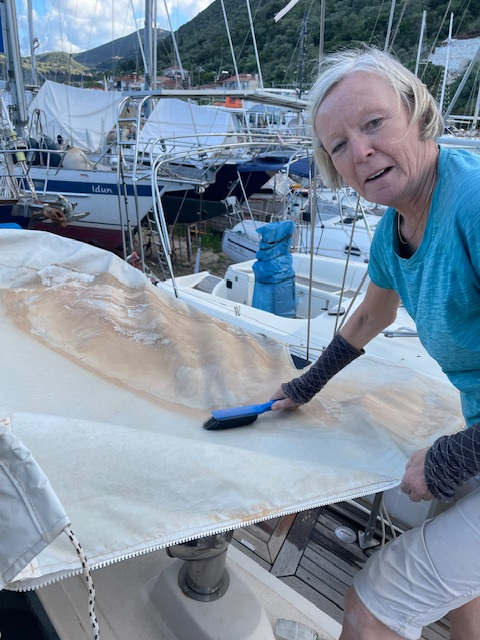
… and into the water. After cleaning our boat from Saharan dust and maintaining it over the last few days and having all four sails back on, we are ready to go. Aglaya is beaming with new antifouling and polished GFK, but above all because she can rock in the water again today as planned. We are now moored at Rabitt's pontoon (which he calls his kingdom) and the engine service is underway. Then we're ready to go.

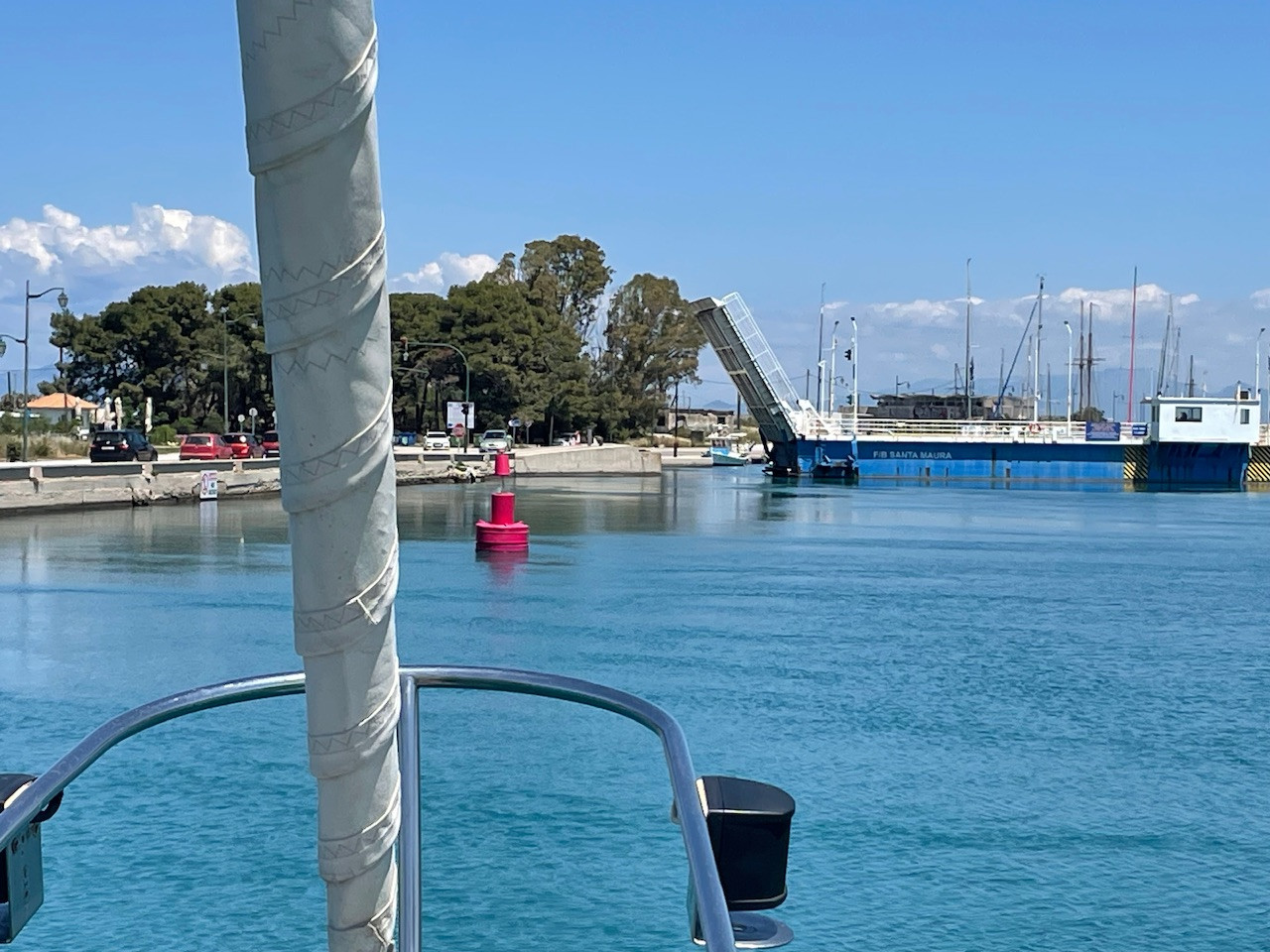
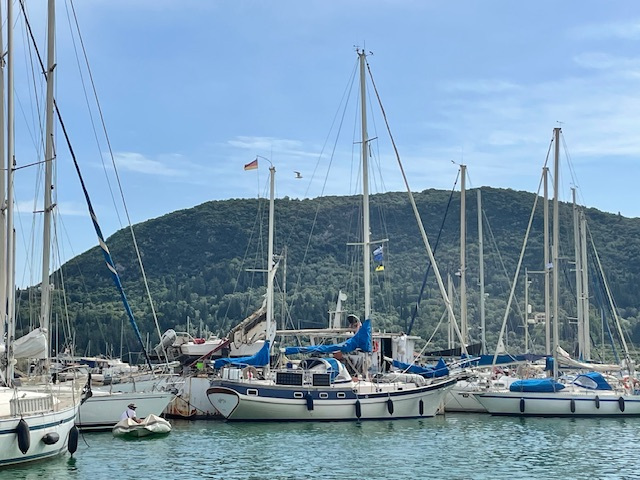
It's lovely here in Vlycho on Lefkas. Maybe we'll stay another two days after the busy period. Then we want to head north through the narrows at Lefkada, where the bridge was demolished by a ship a few days ago, but we'll probably still be able to get through. Just now, we get the information: the bridge is repaired. In Preveza we'll have a visitor for 10 days.

But now it's time for the Greek Orthodox Easter. Last year we experienced it at Monemvasia. Let's see what it's like here.