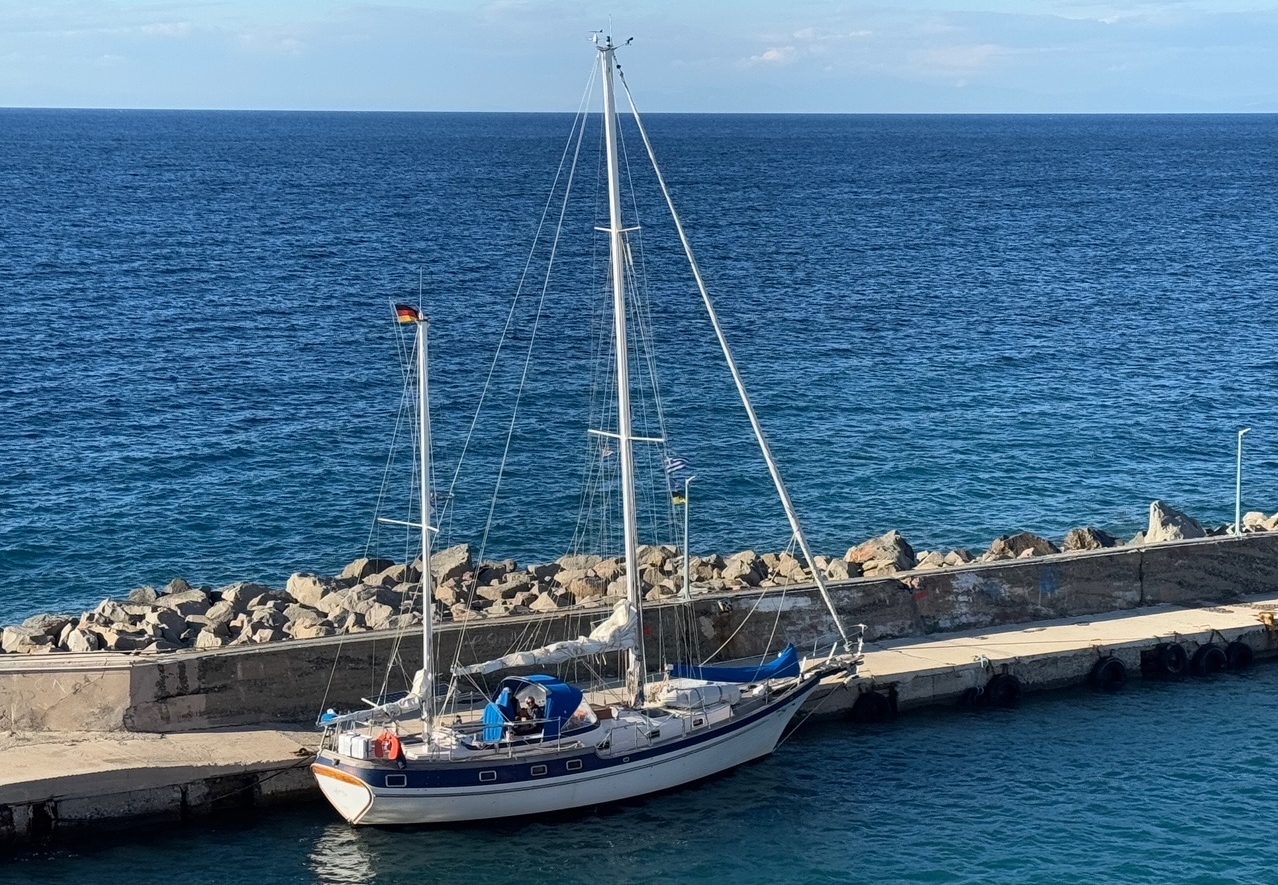
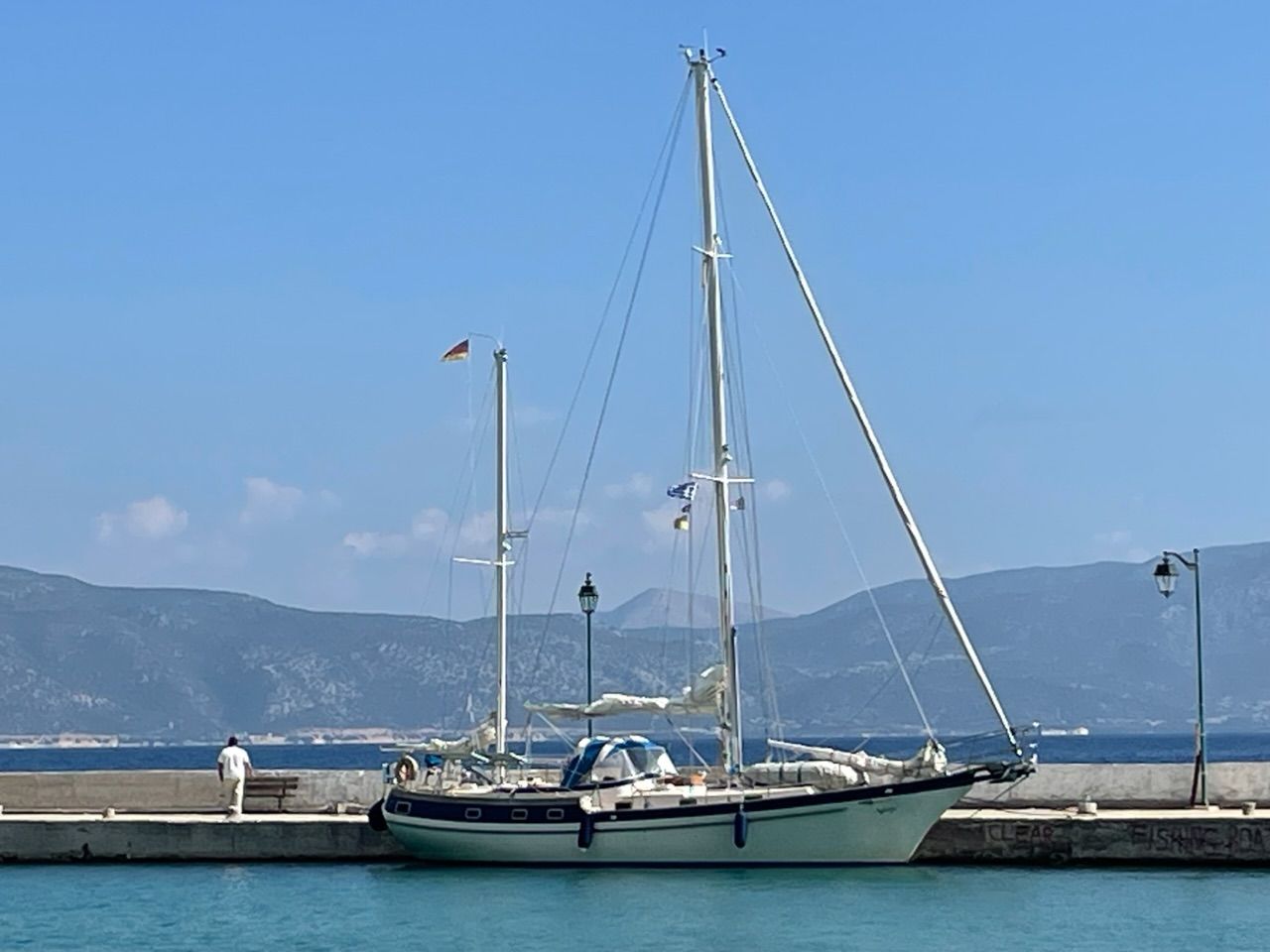
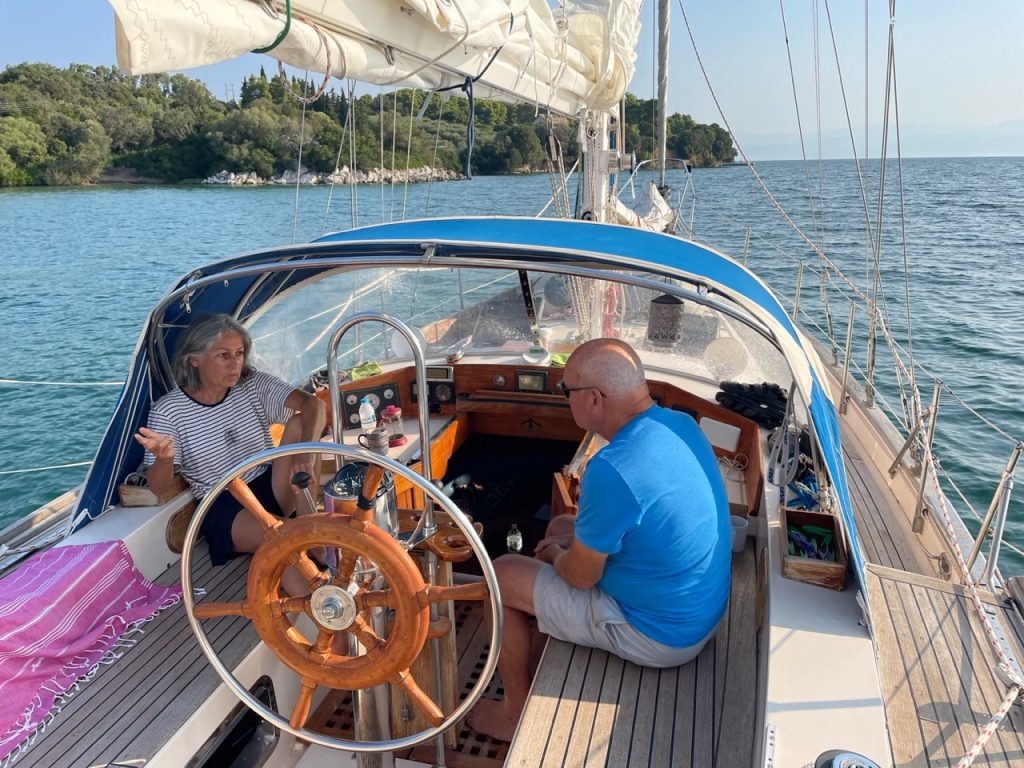
Willkommen! Dies ist die Website von Gisela und Walter Würfel. Hier berichten wir über die Reisen und das Leben auf unserer Segelyacht Aglaya. / Welcome! This is the website of Gisela and Walter Wuerfel. Here we report about the journeys and the life on our sailing yacht Aglaya.
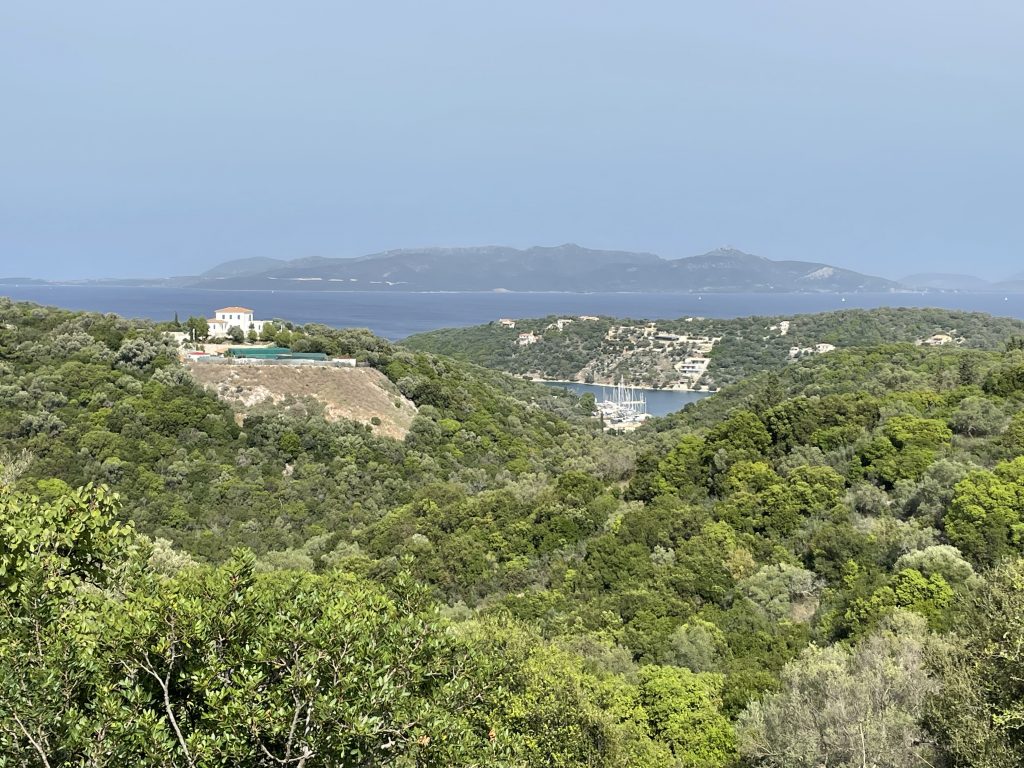
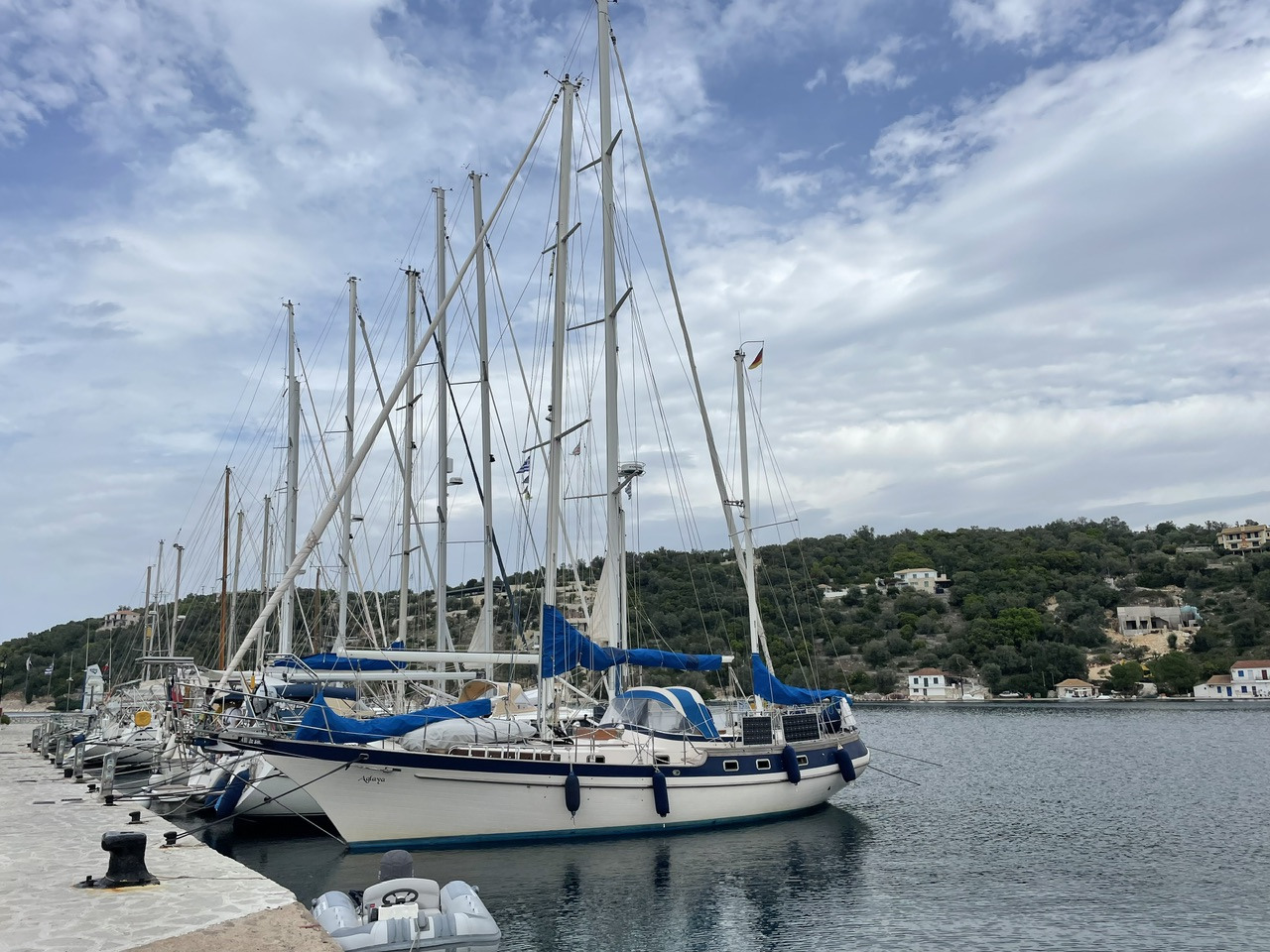
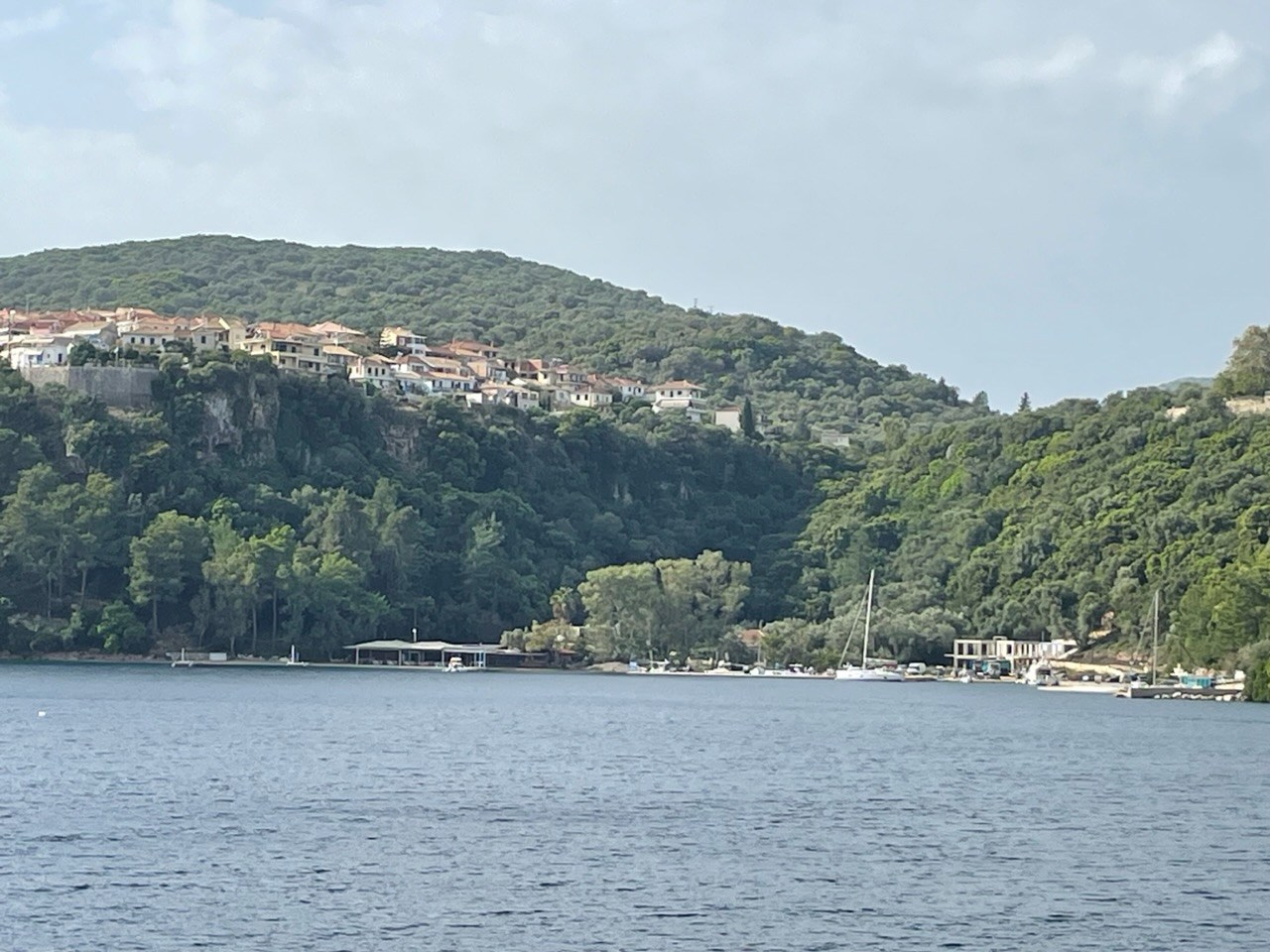
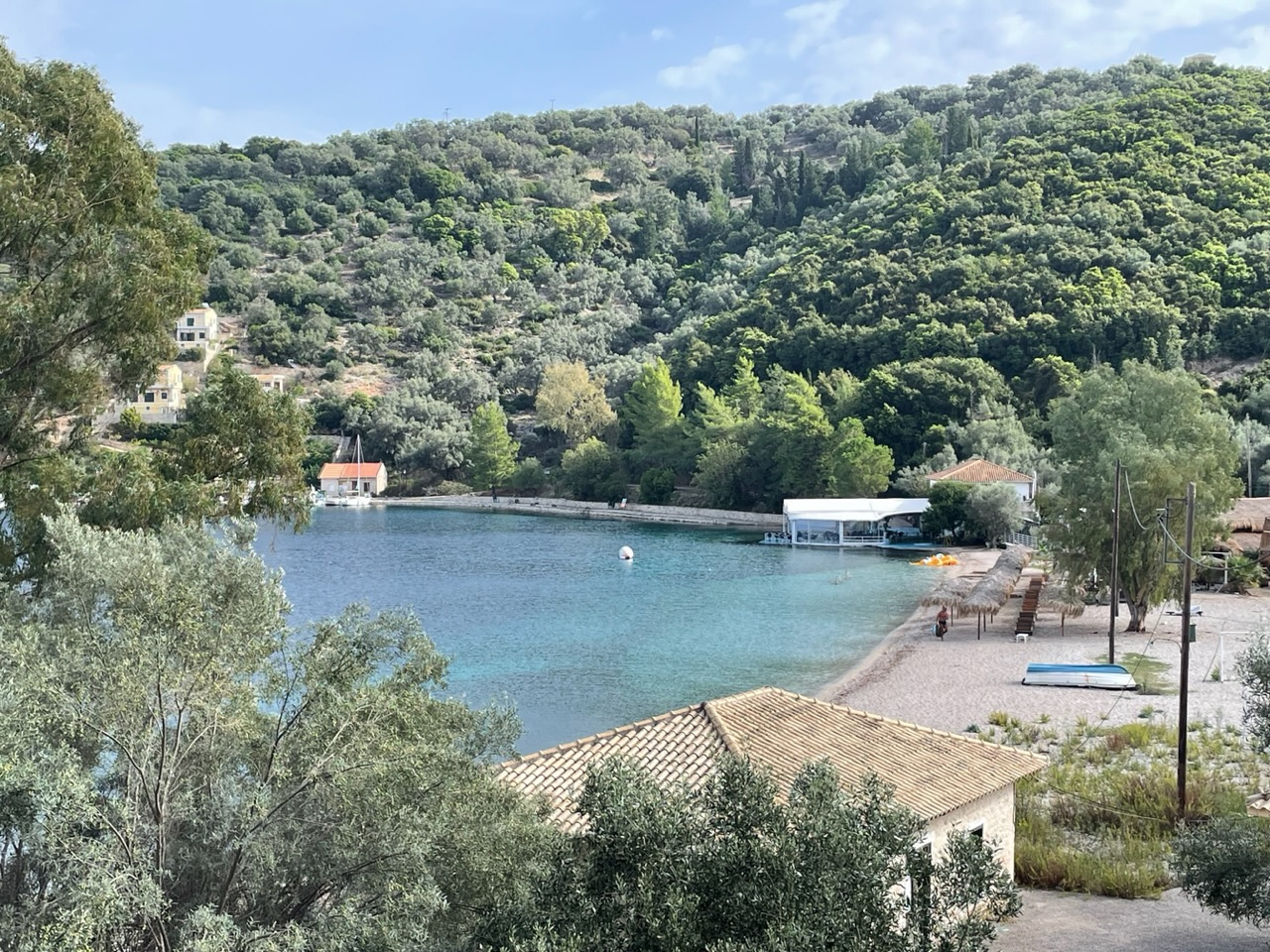
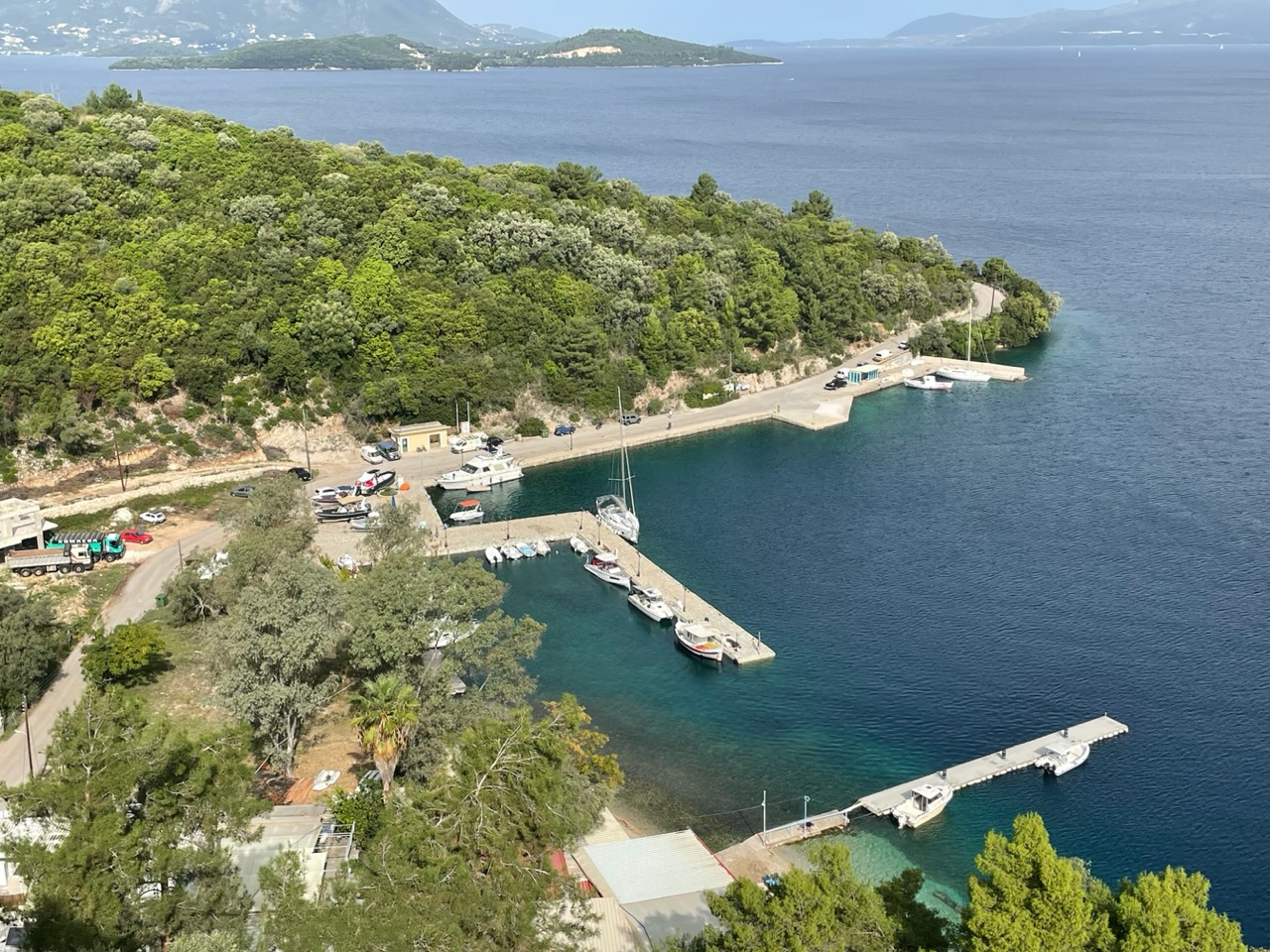
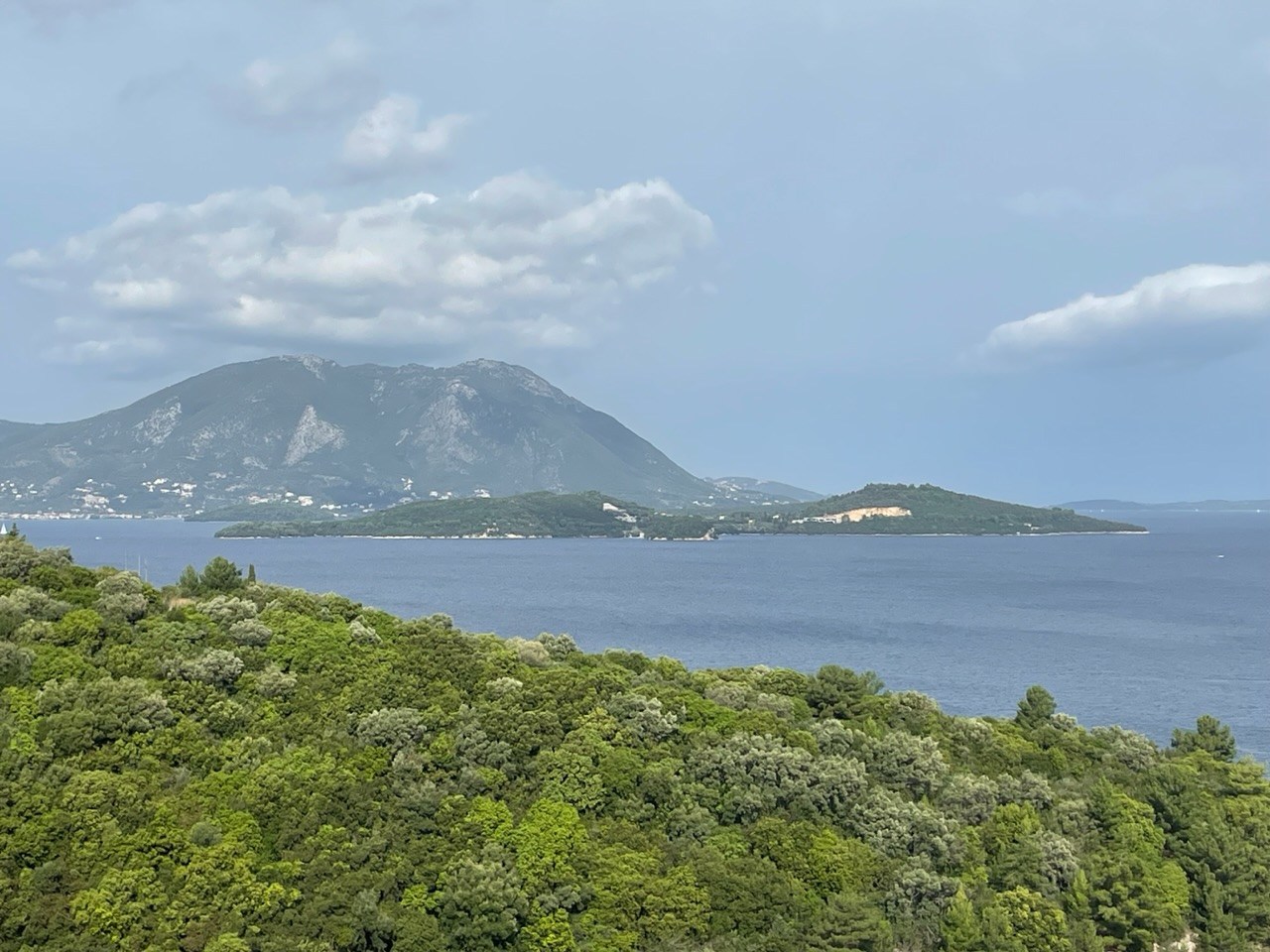
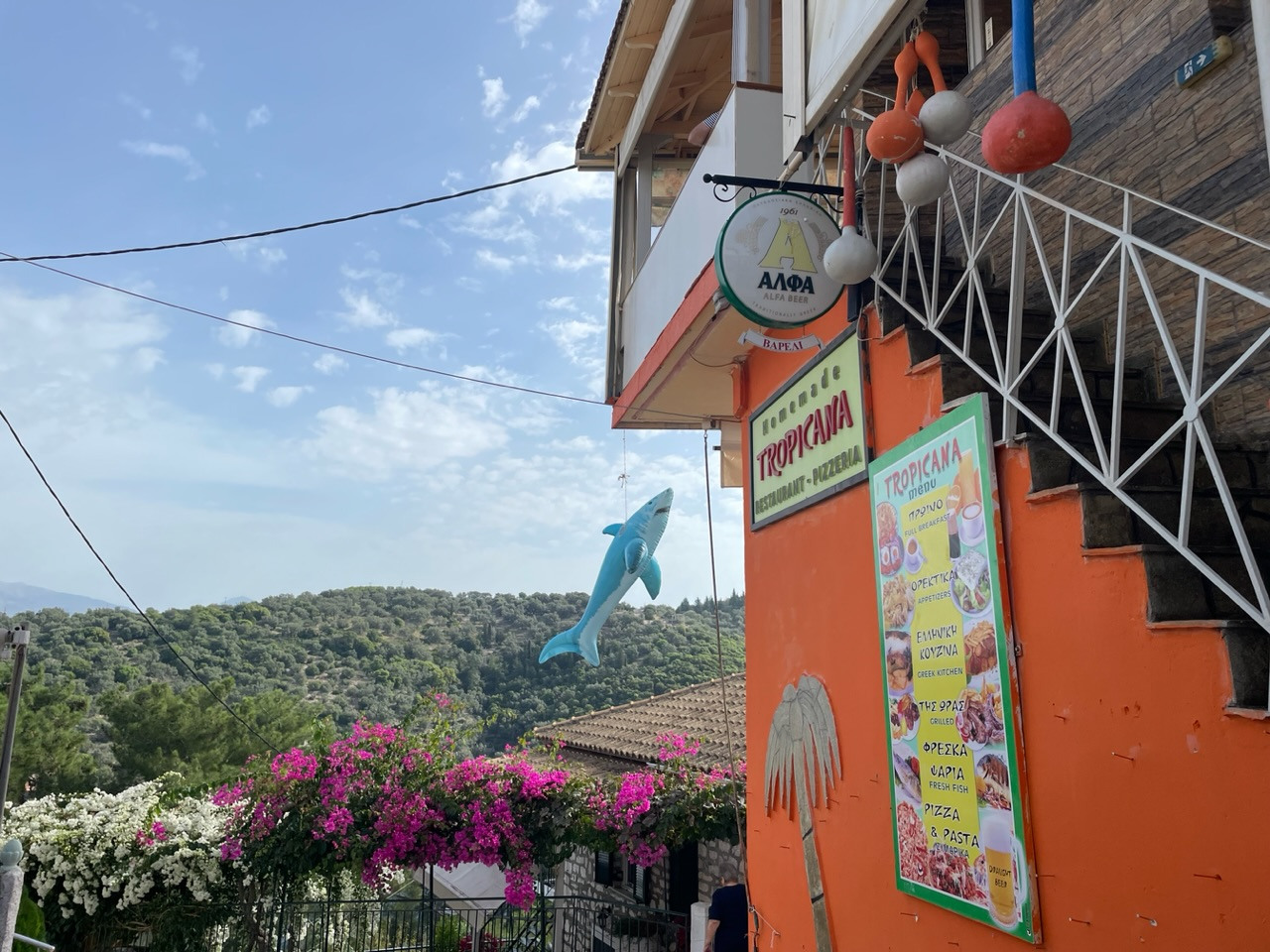
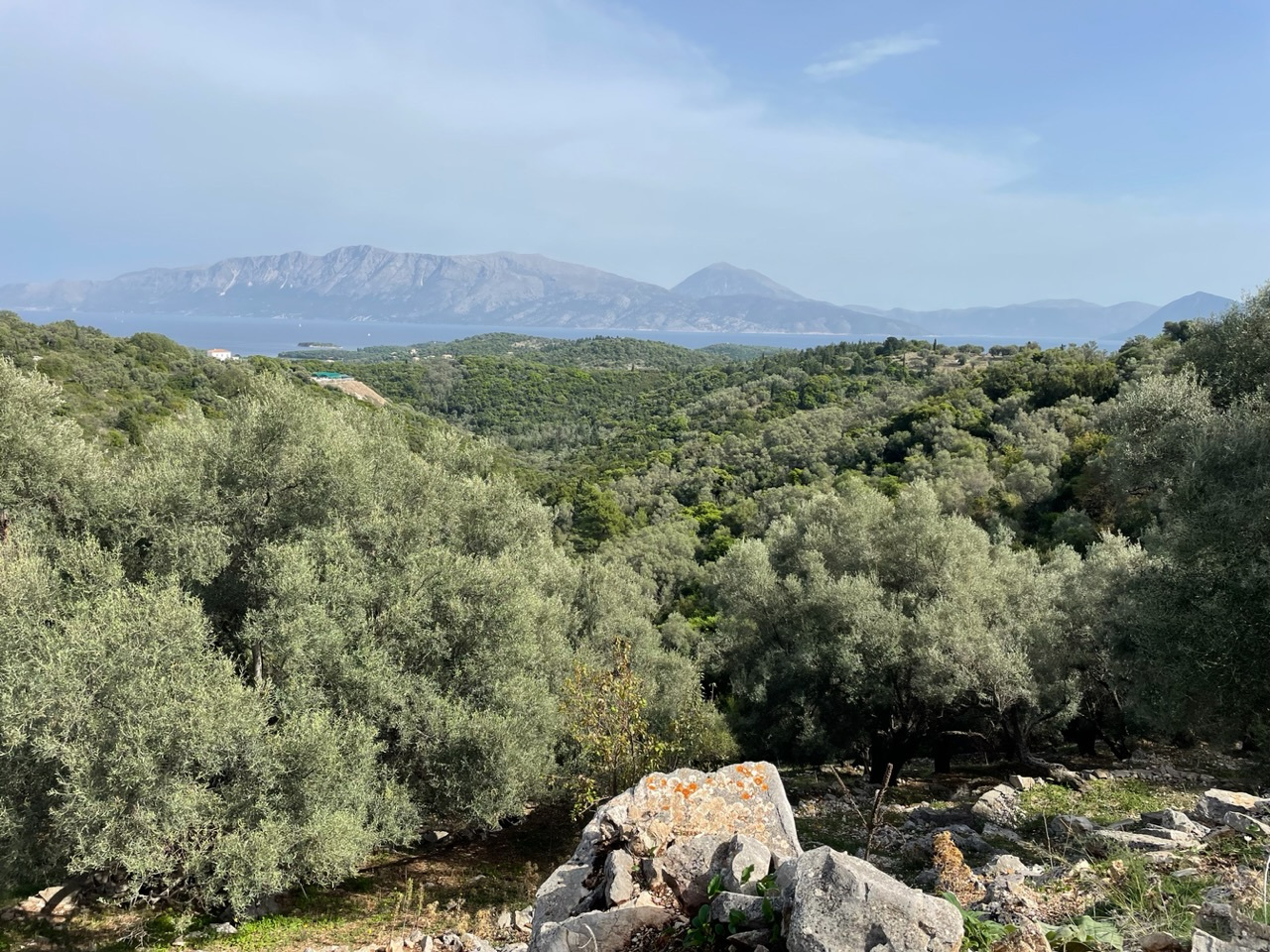
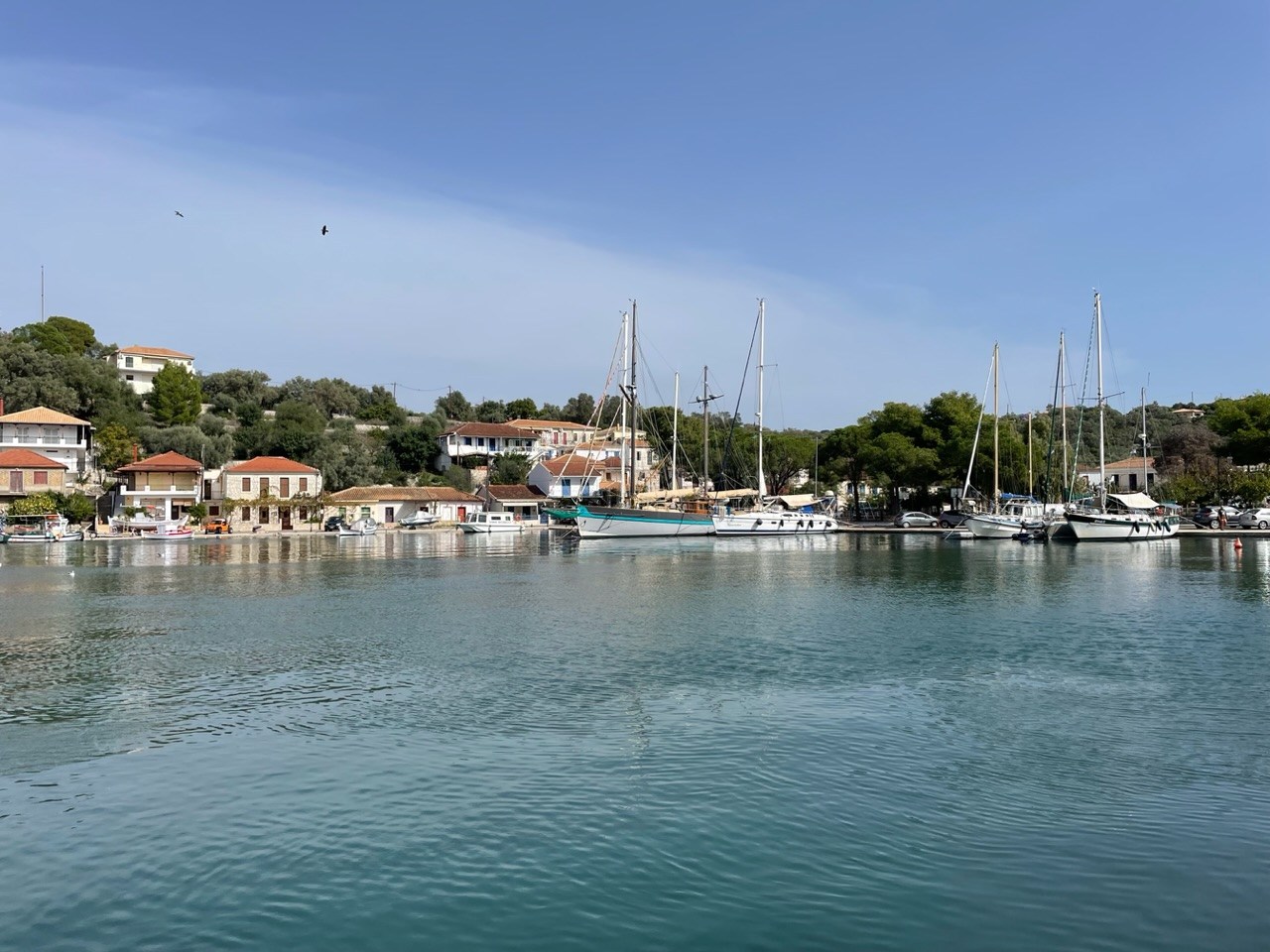
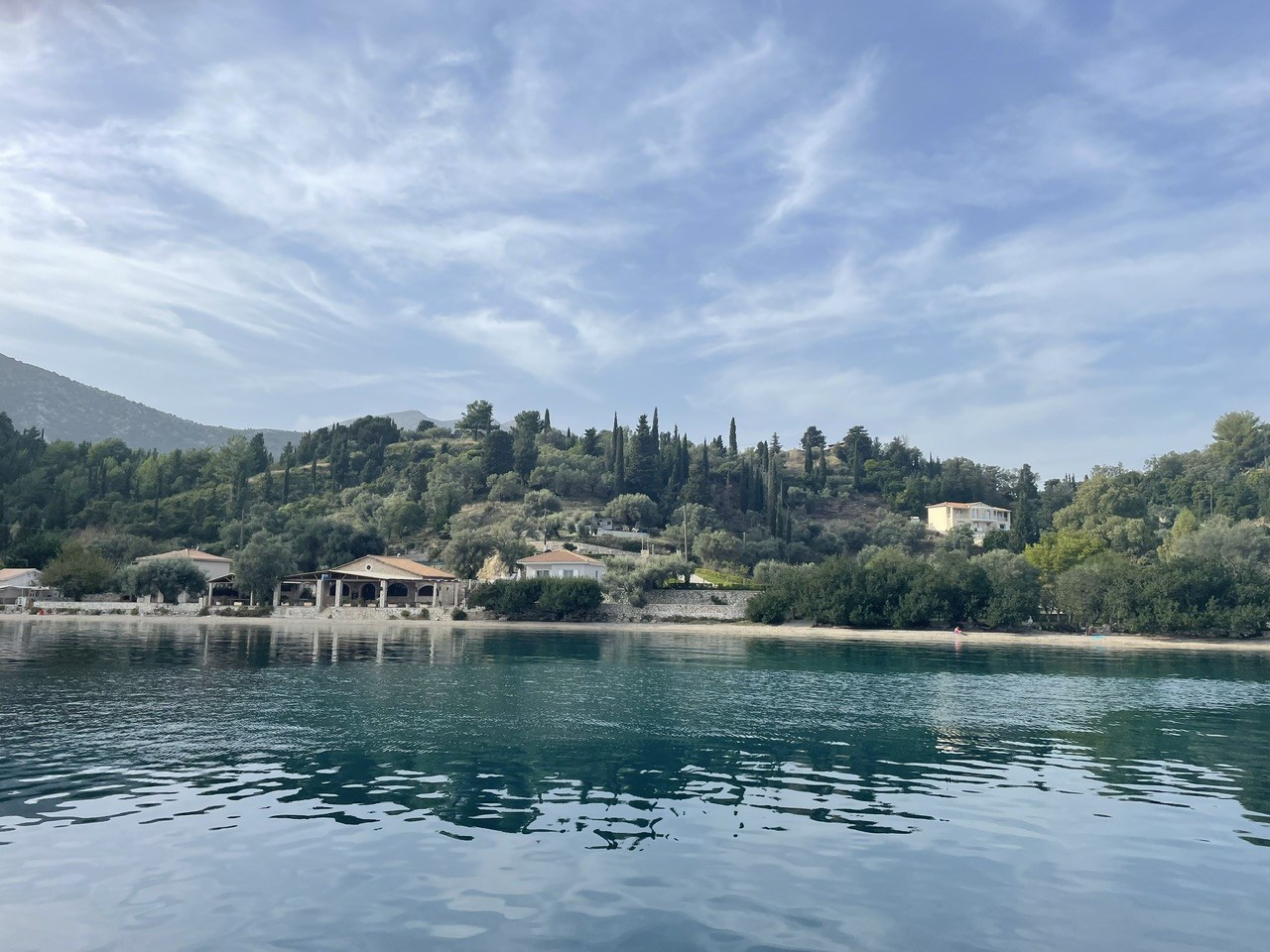
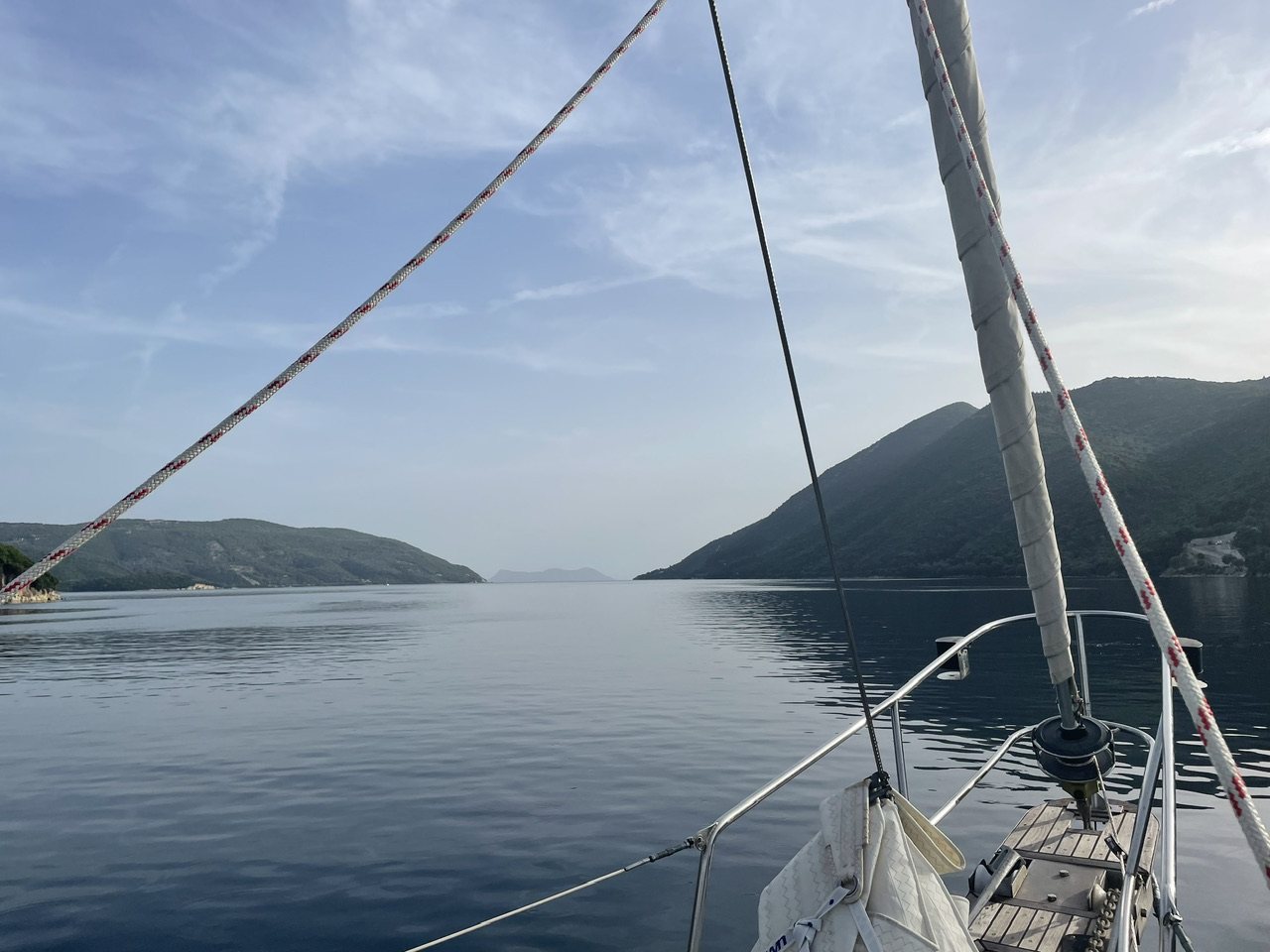
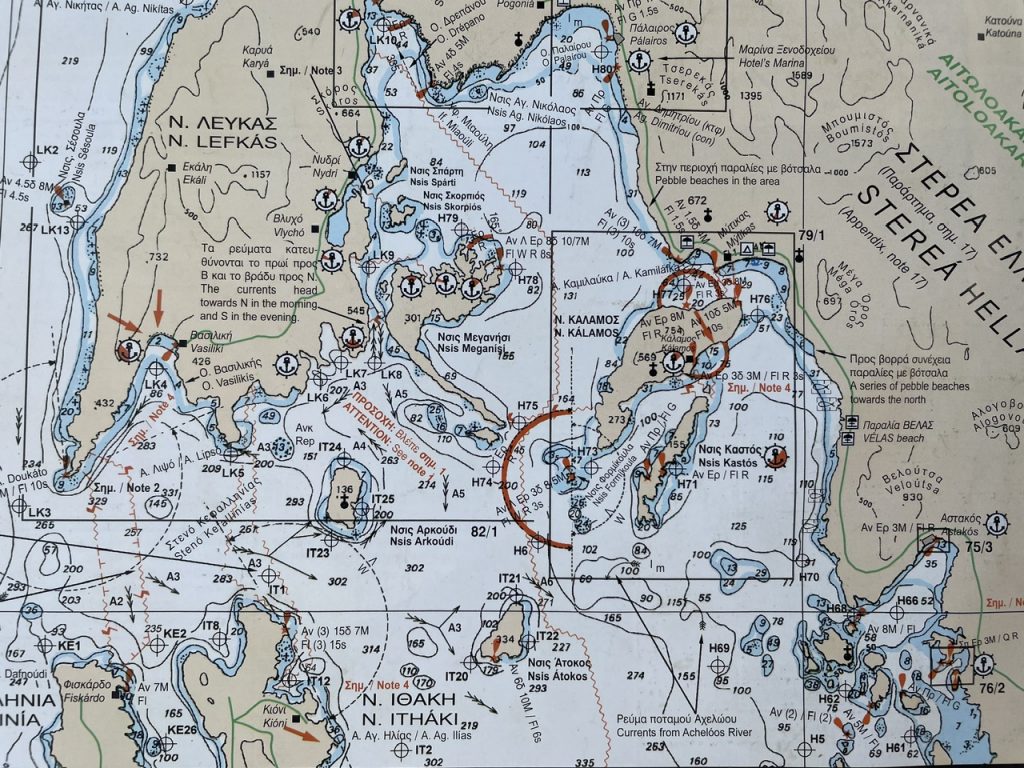
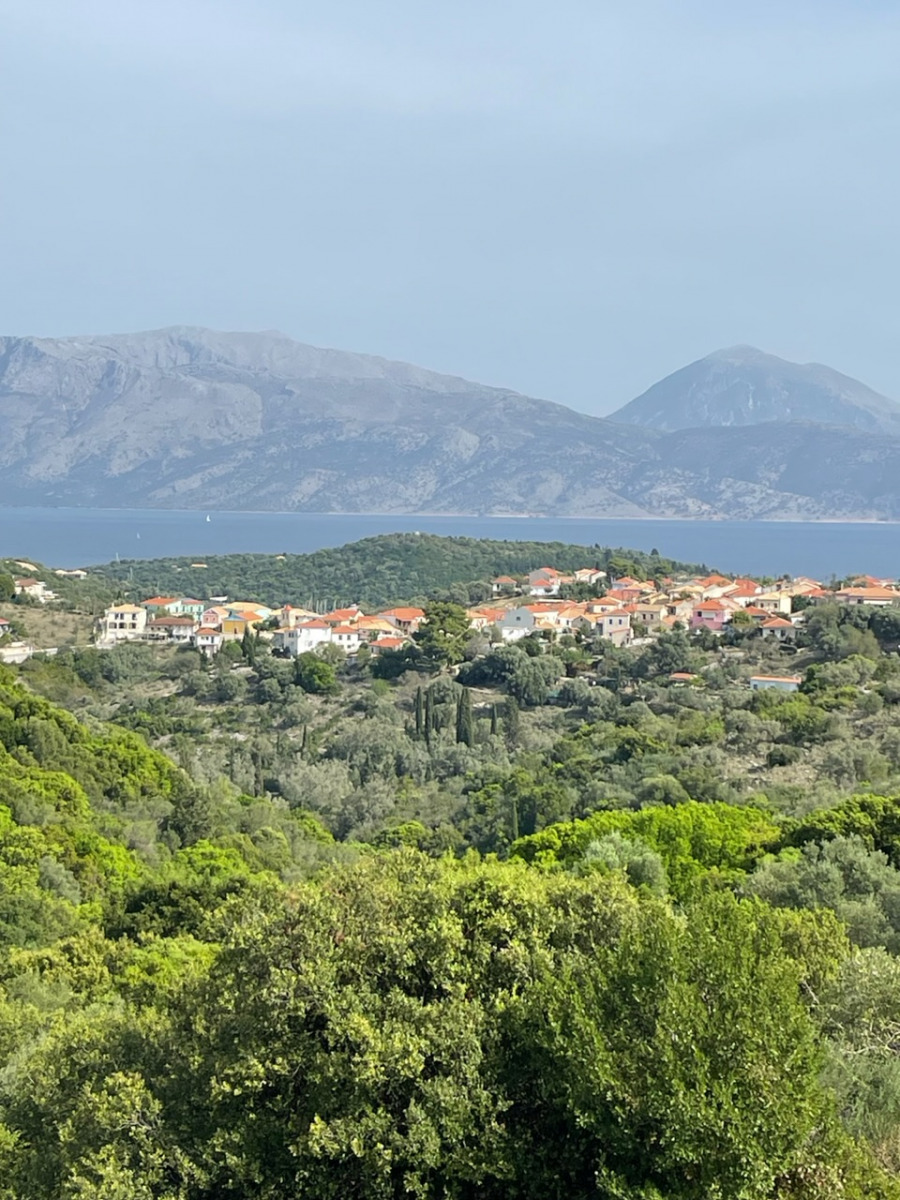
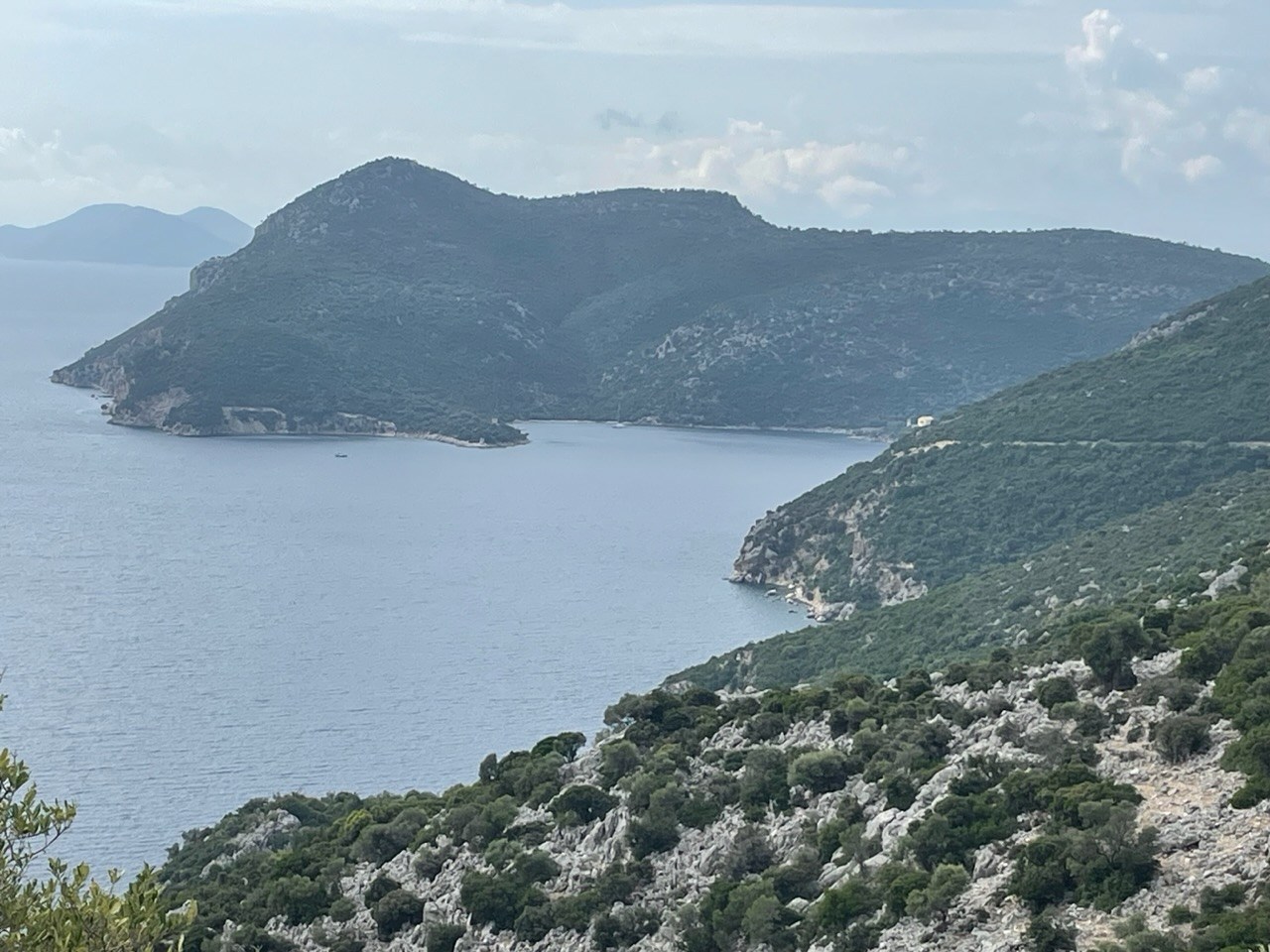
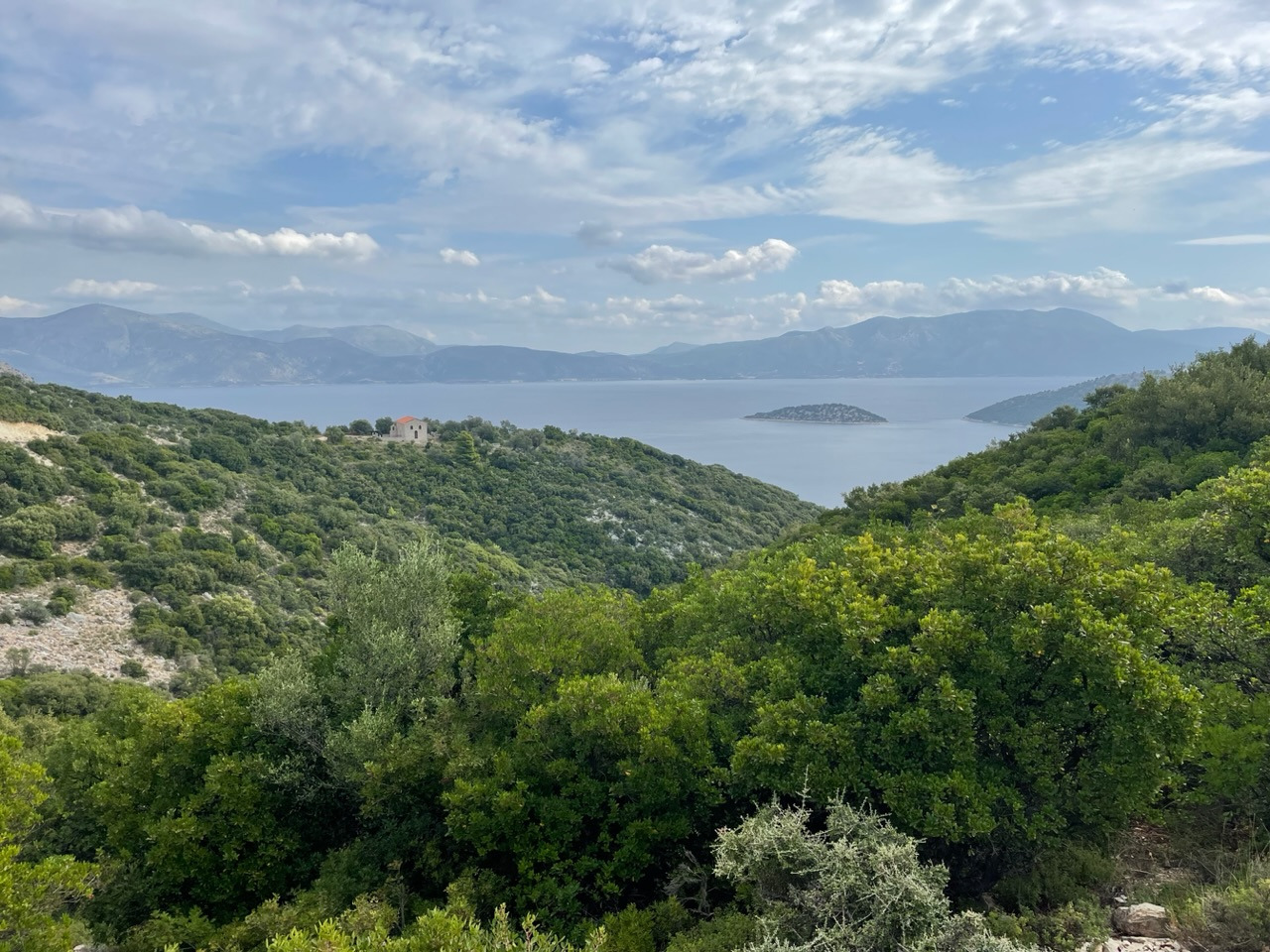
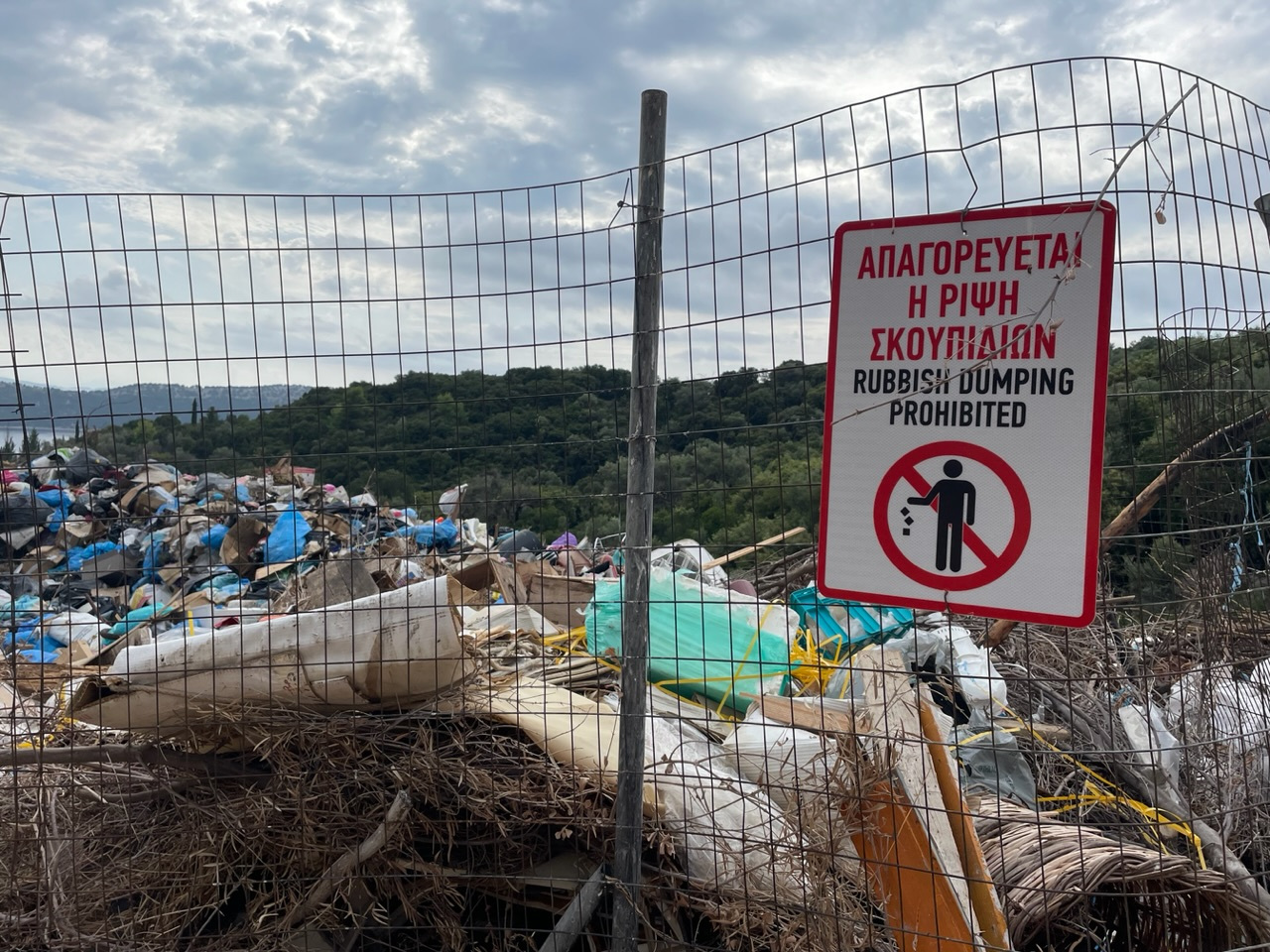
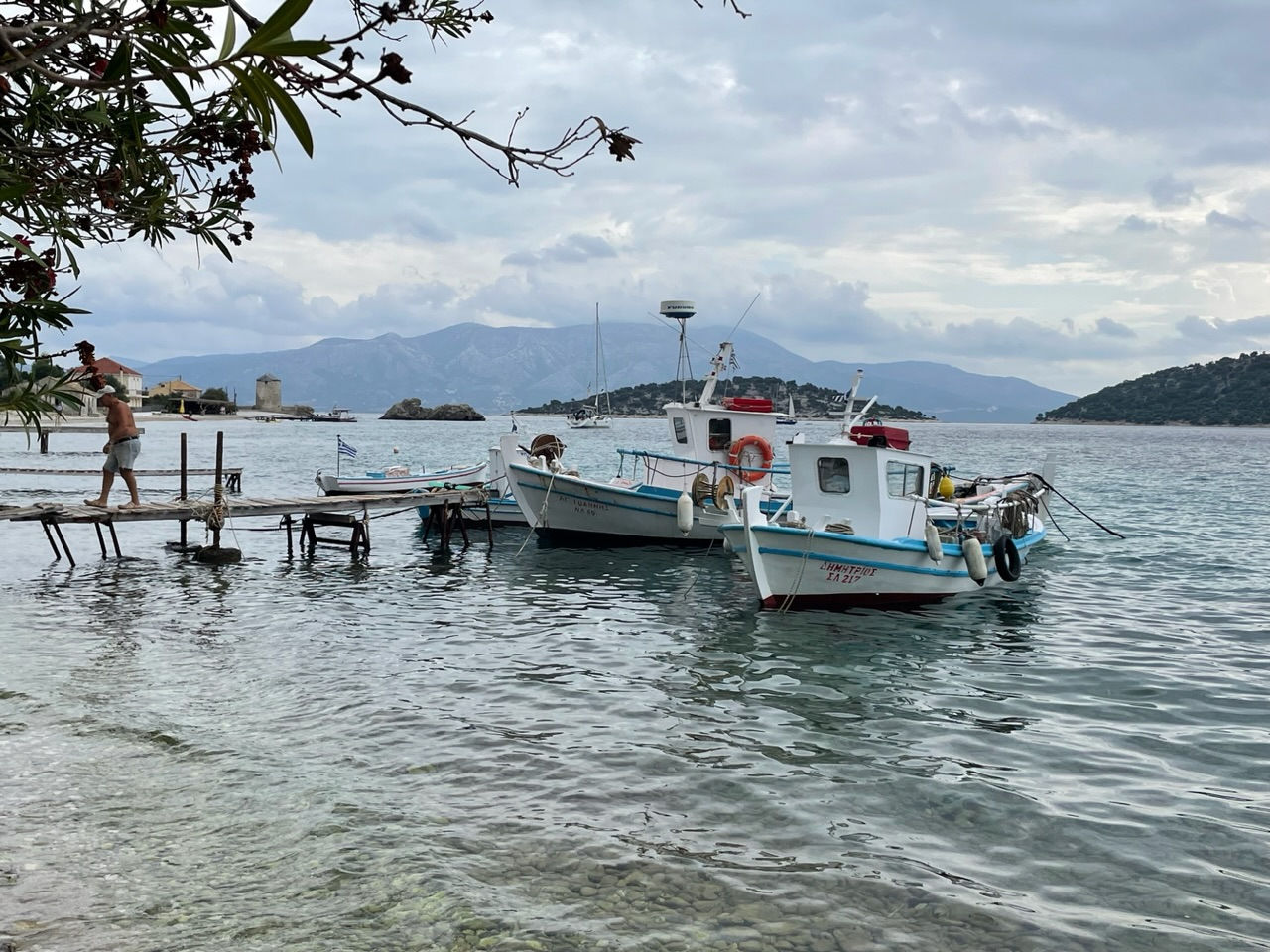
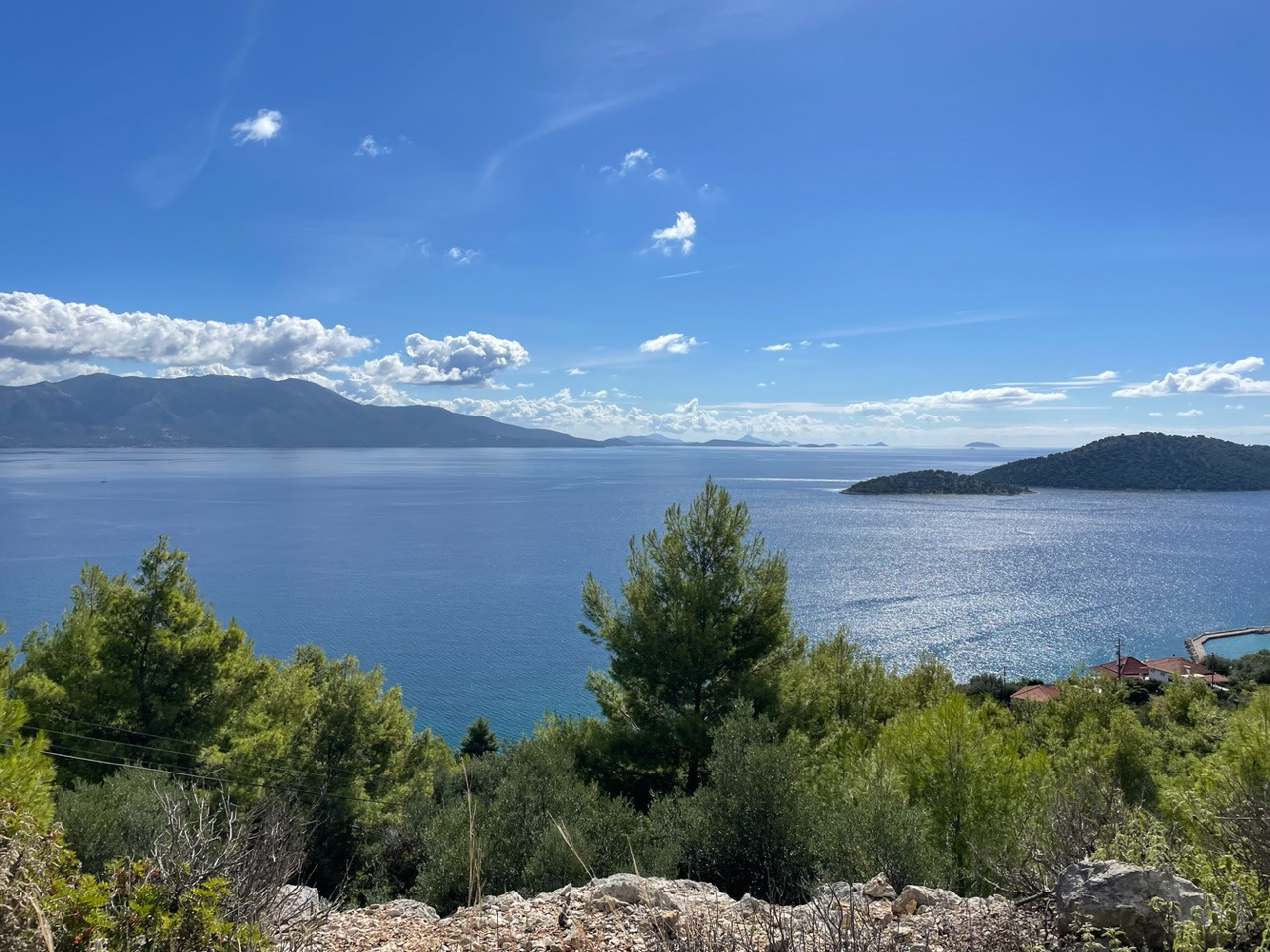
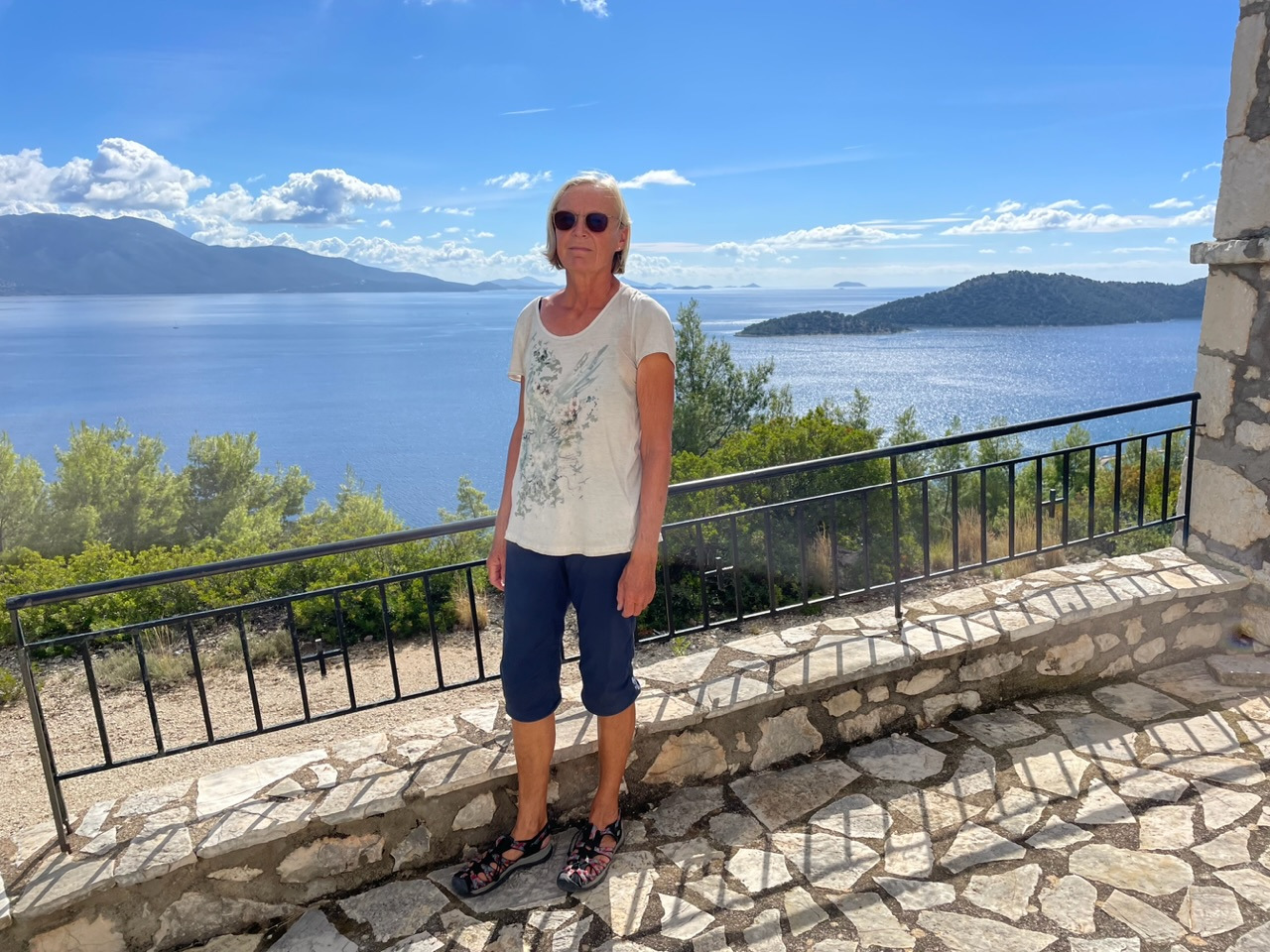
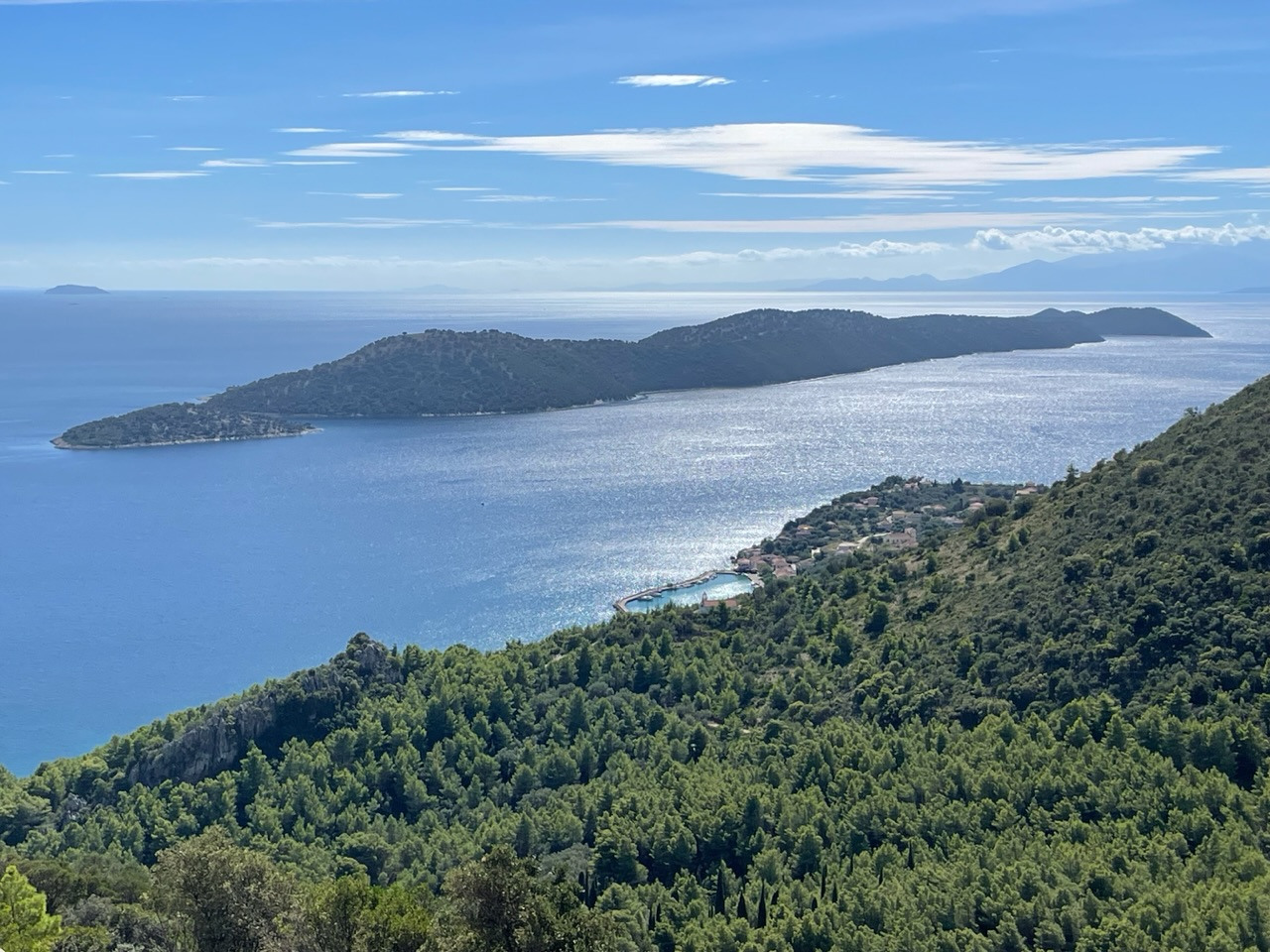
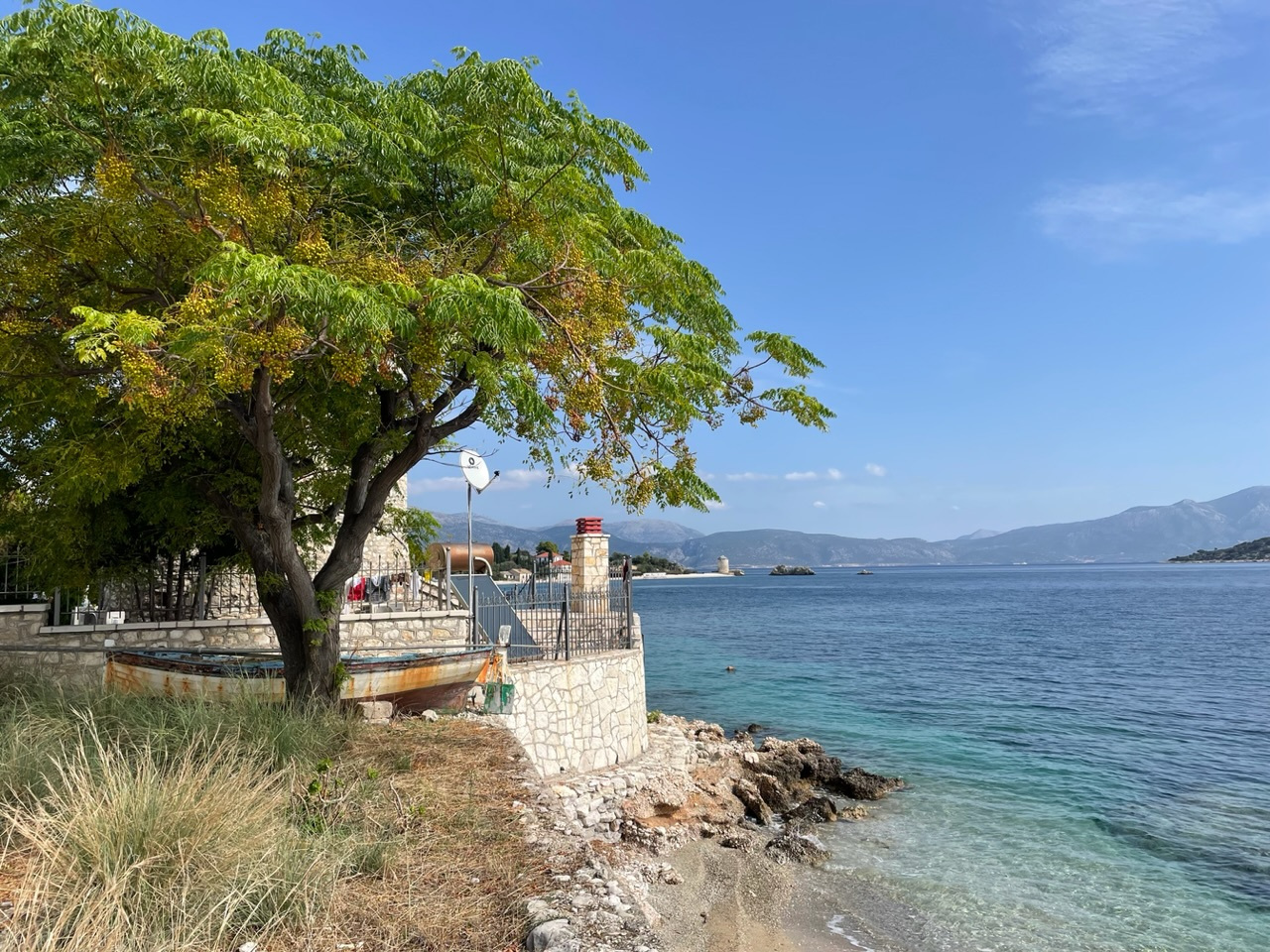
After staying two days longer on Kalamos so that Gisela could cure a lumbago, we set course for the west. Our destination: the green island of Meganisi with its many bays. We moored in the harbour of Vathi and set off again on foot to explore the island. In the beautiful neighbouring bay of Spartachori, which is overcrowded with boats in the season, it was very quiet. Even the tavernas had already closed. In the village above the harbour, however, we were able to have a drink at the Tropicana bar and talk to the owner. He told us how the island is changing. A few years ago, there were only two hotels on the island apart from the three villages. Now they are building everywhere, mostly luxurious big houses, unfortunately very ugly to look at. Most of them are private houses that are only occupied temporarily. Where does this boom come from? Is it the view of the nearby Onassis Island Skorpios?
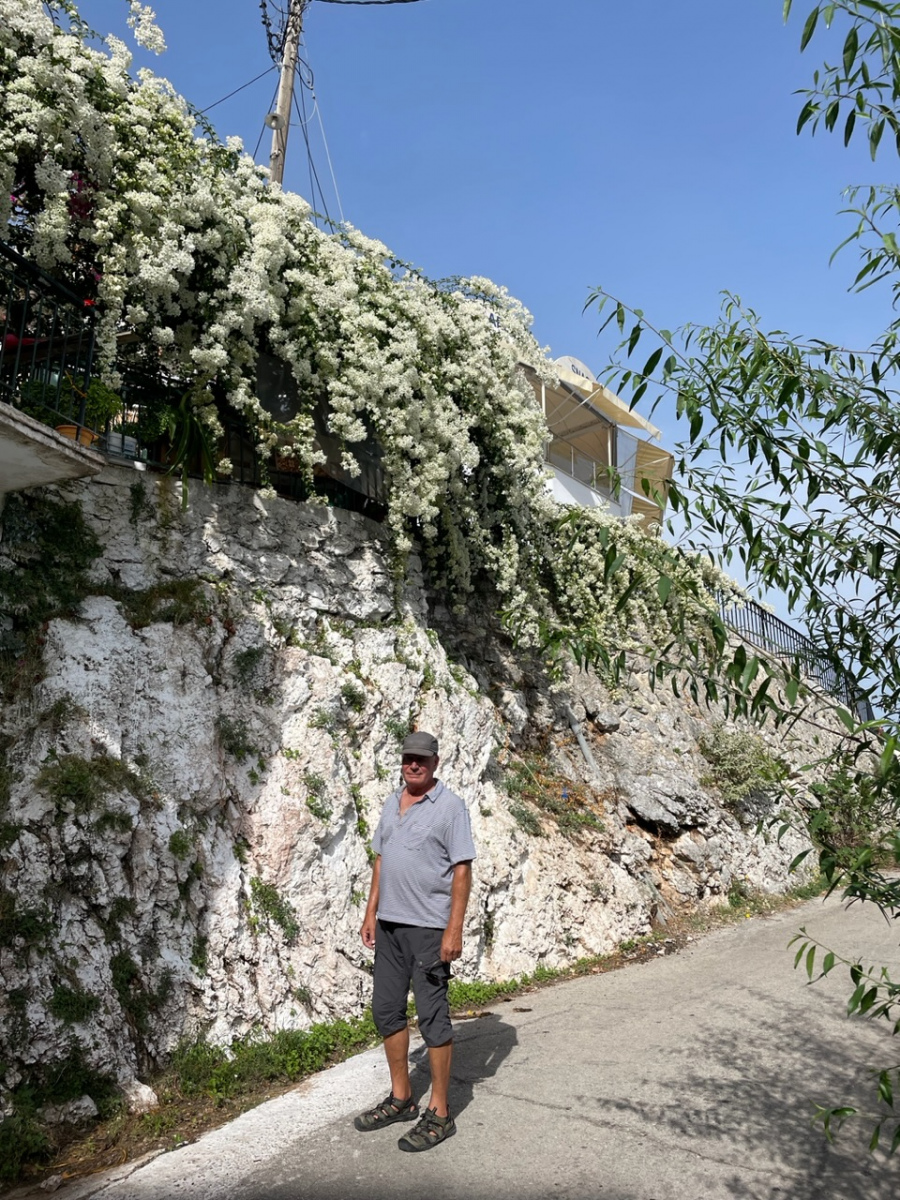
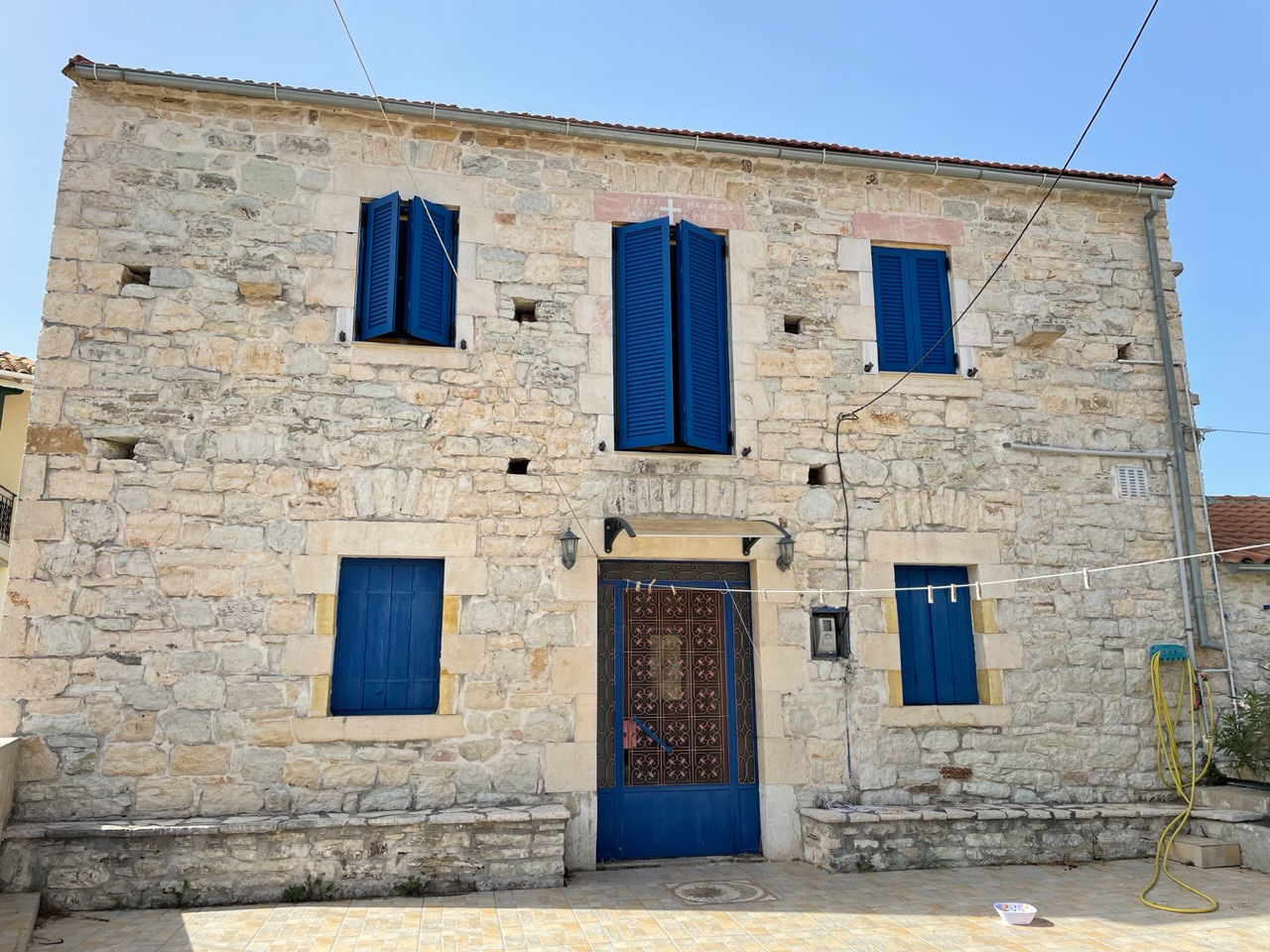
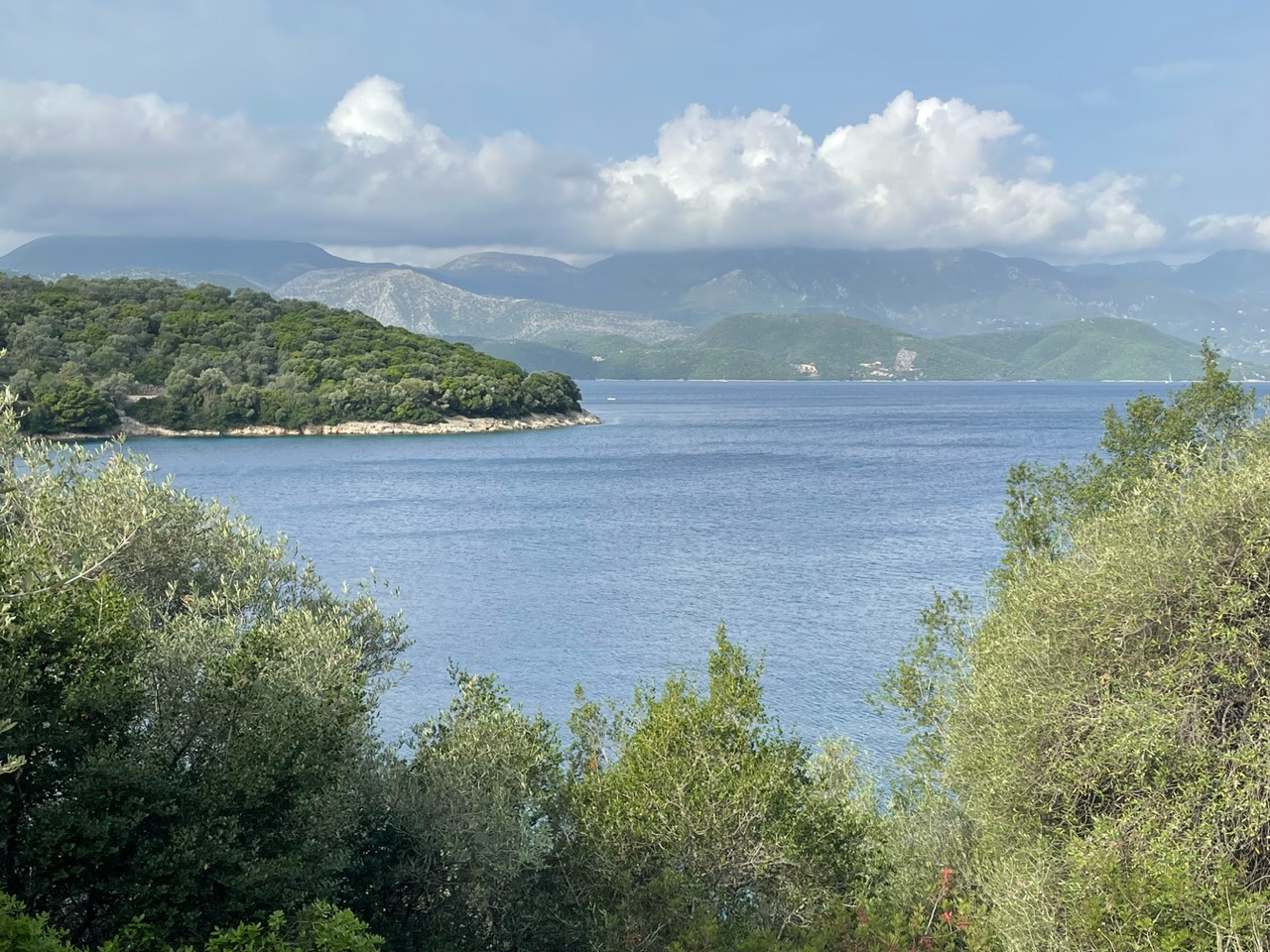
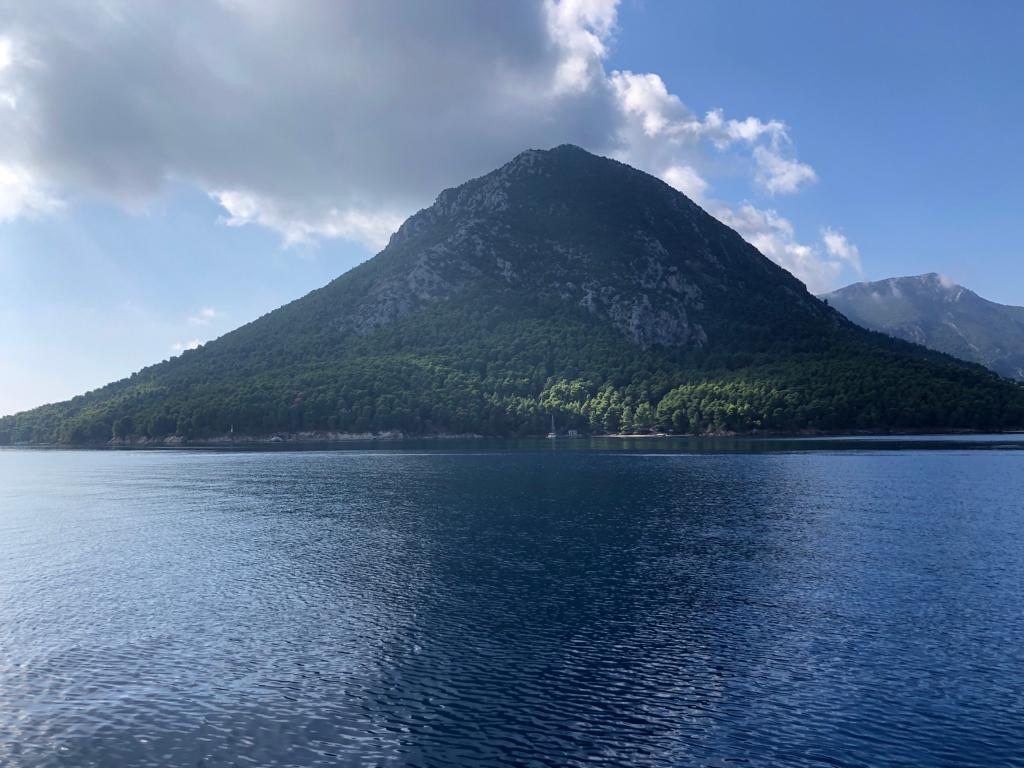
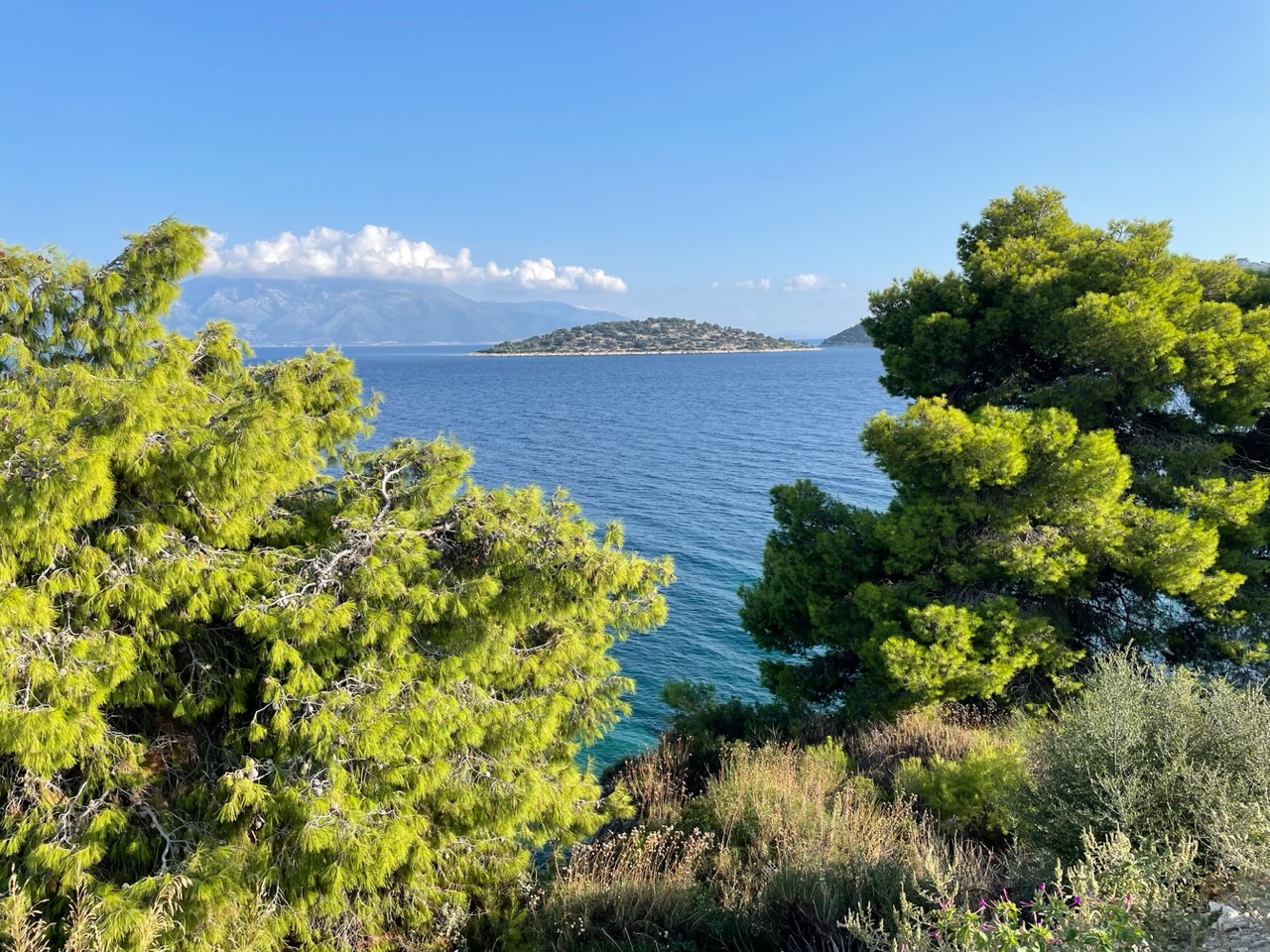
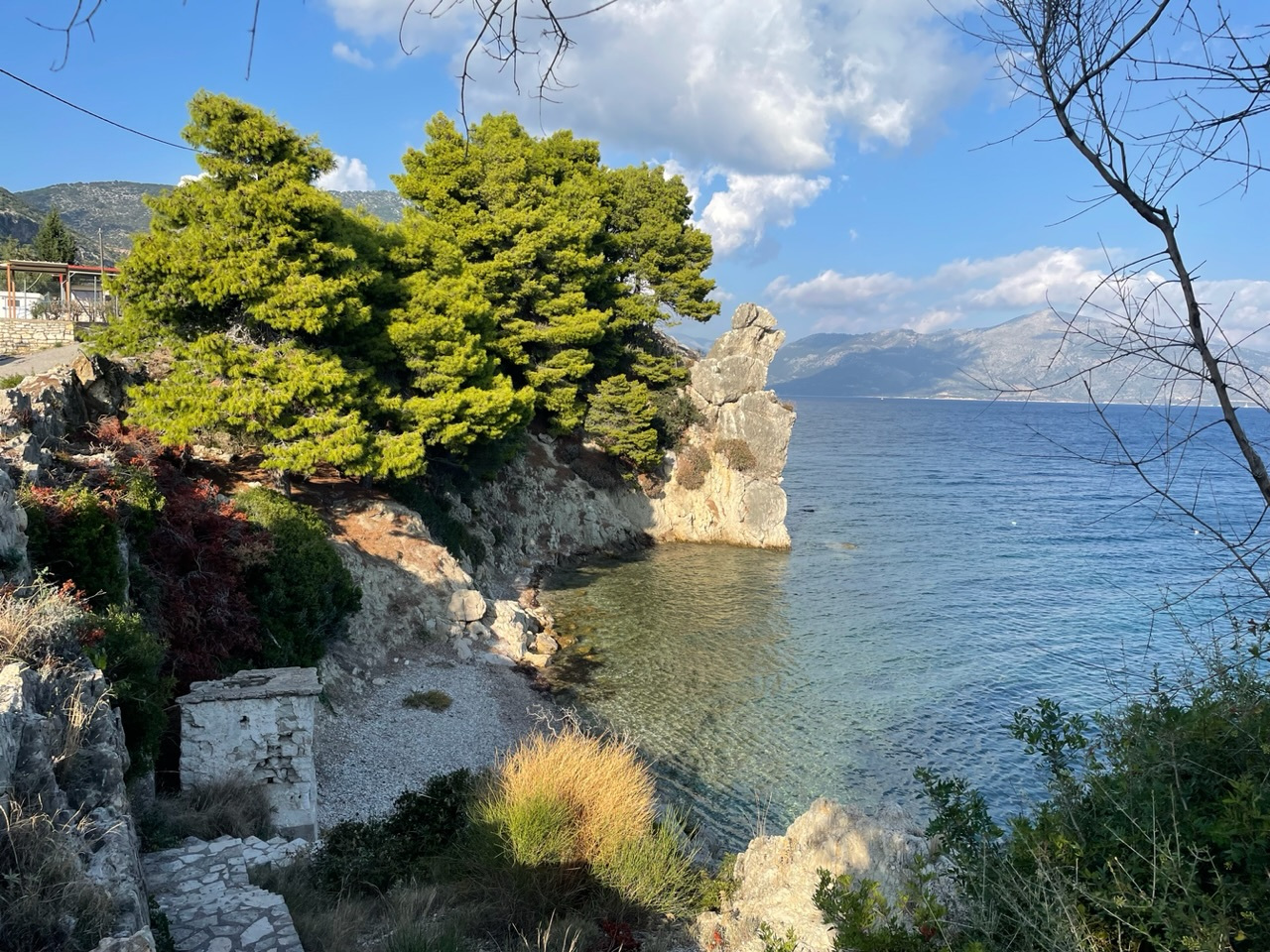
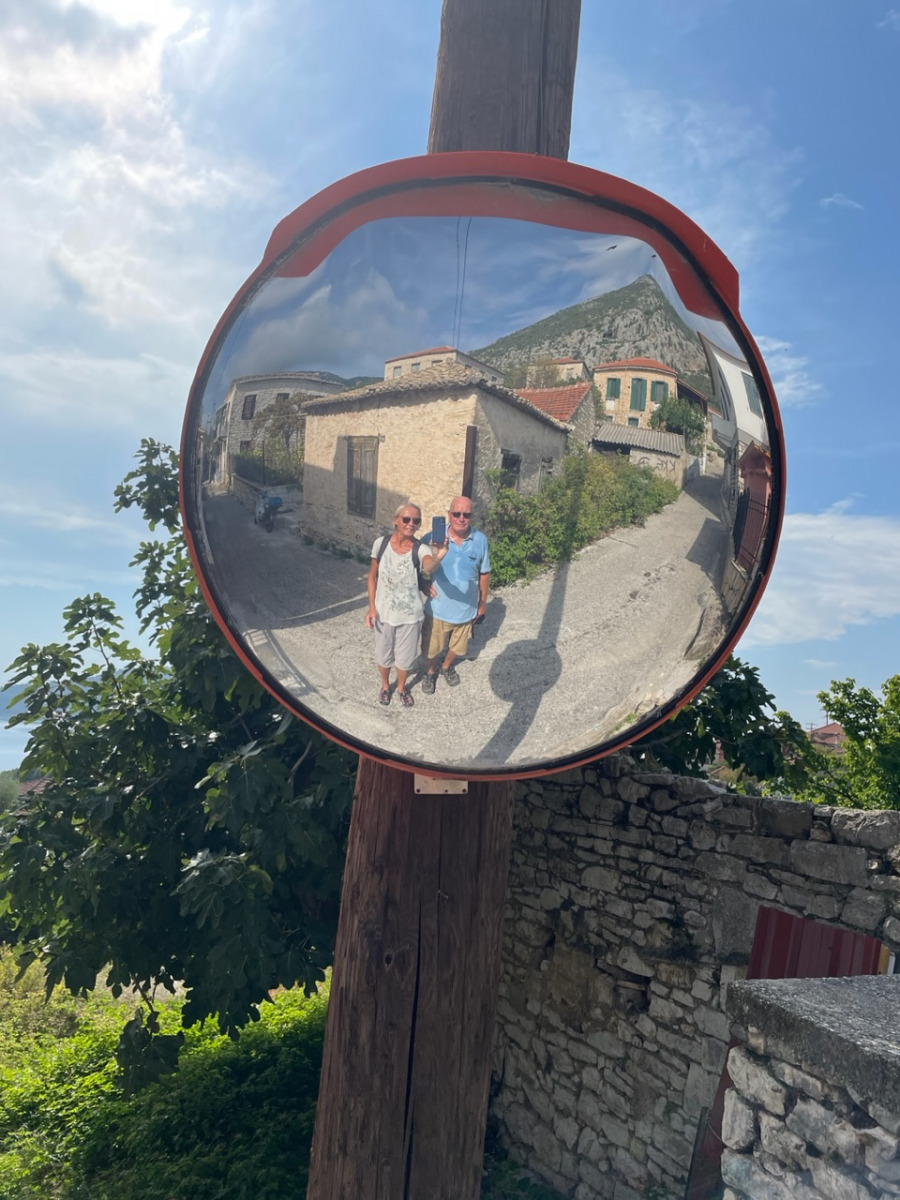
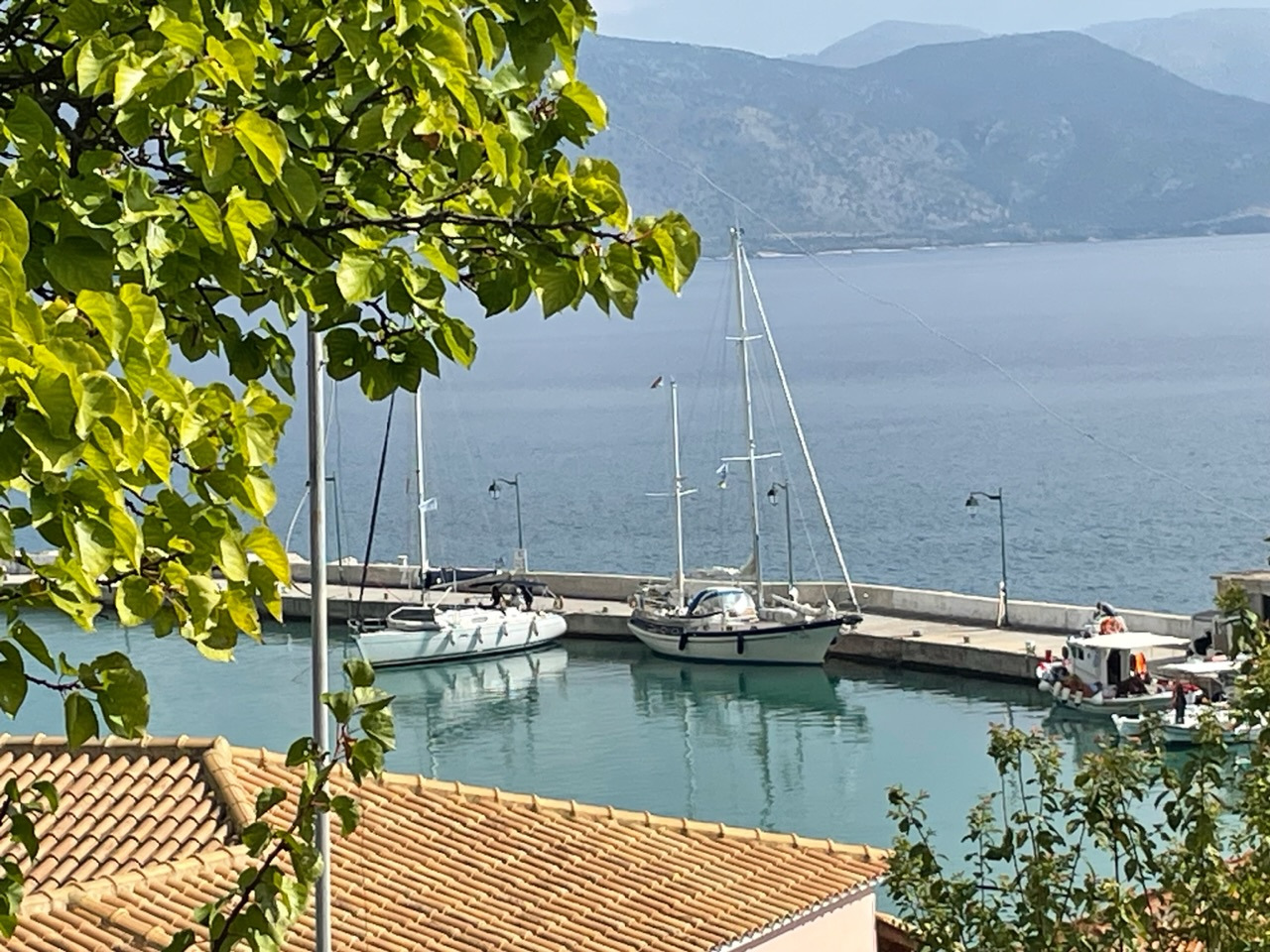
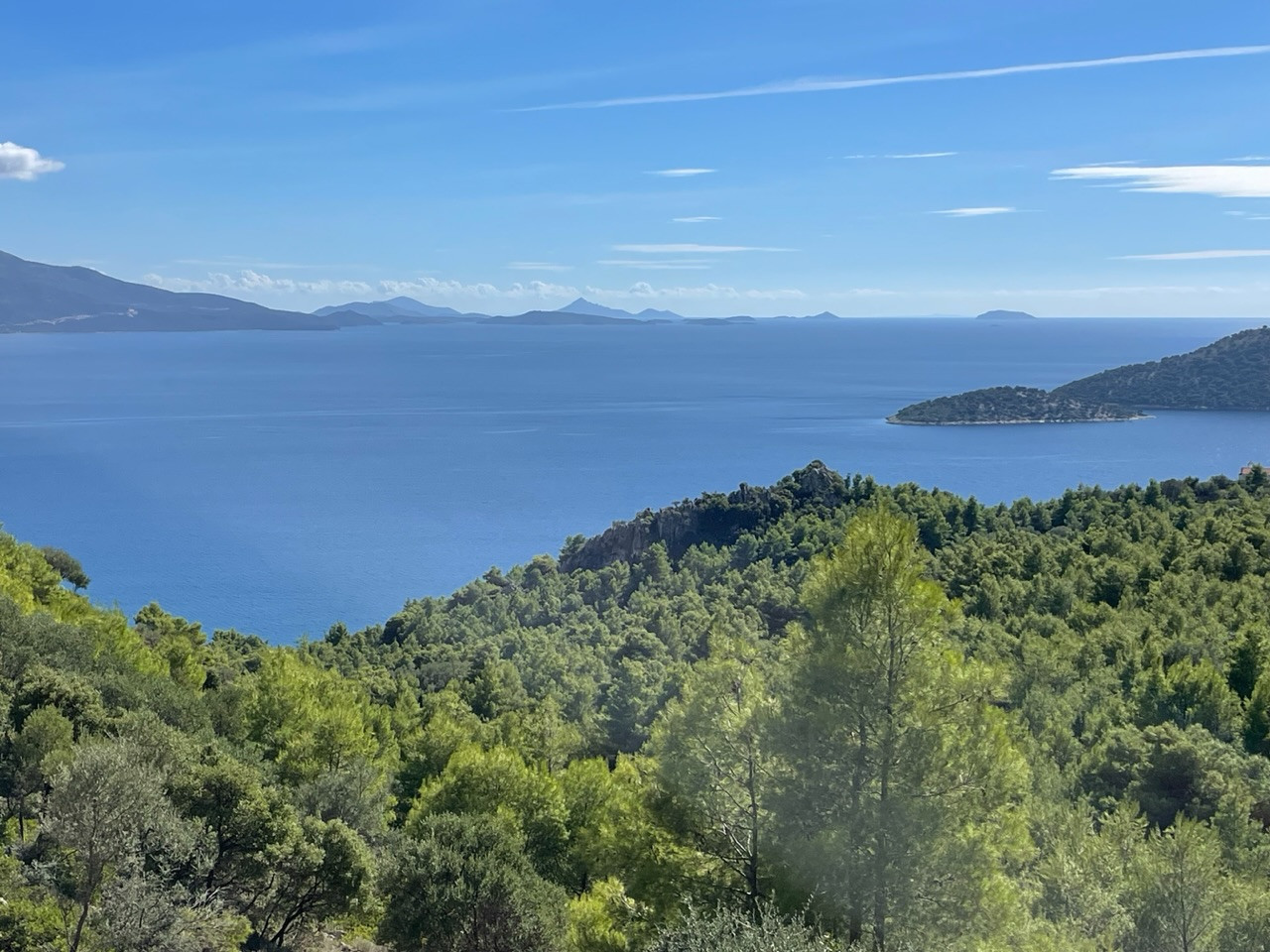
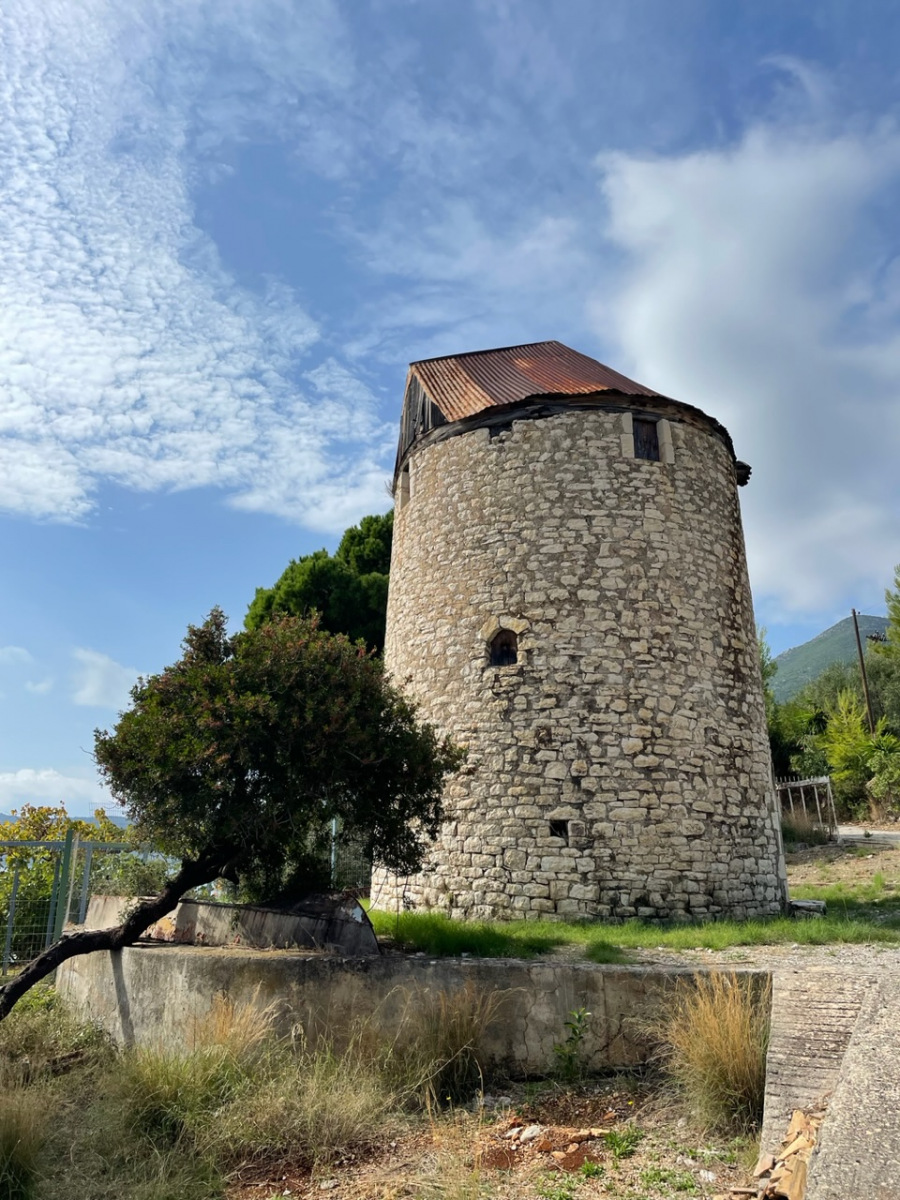
Pictures of Meganisi
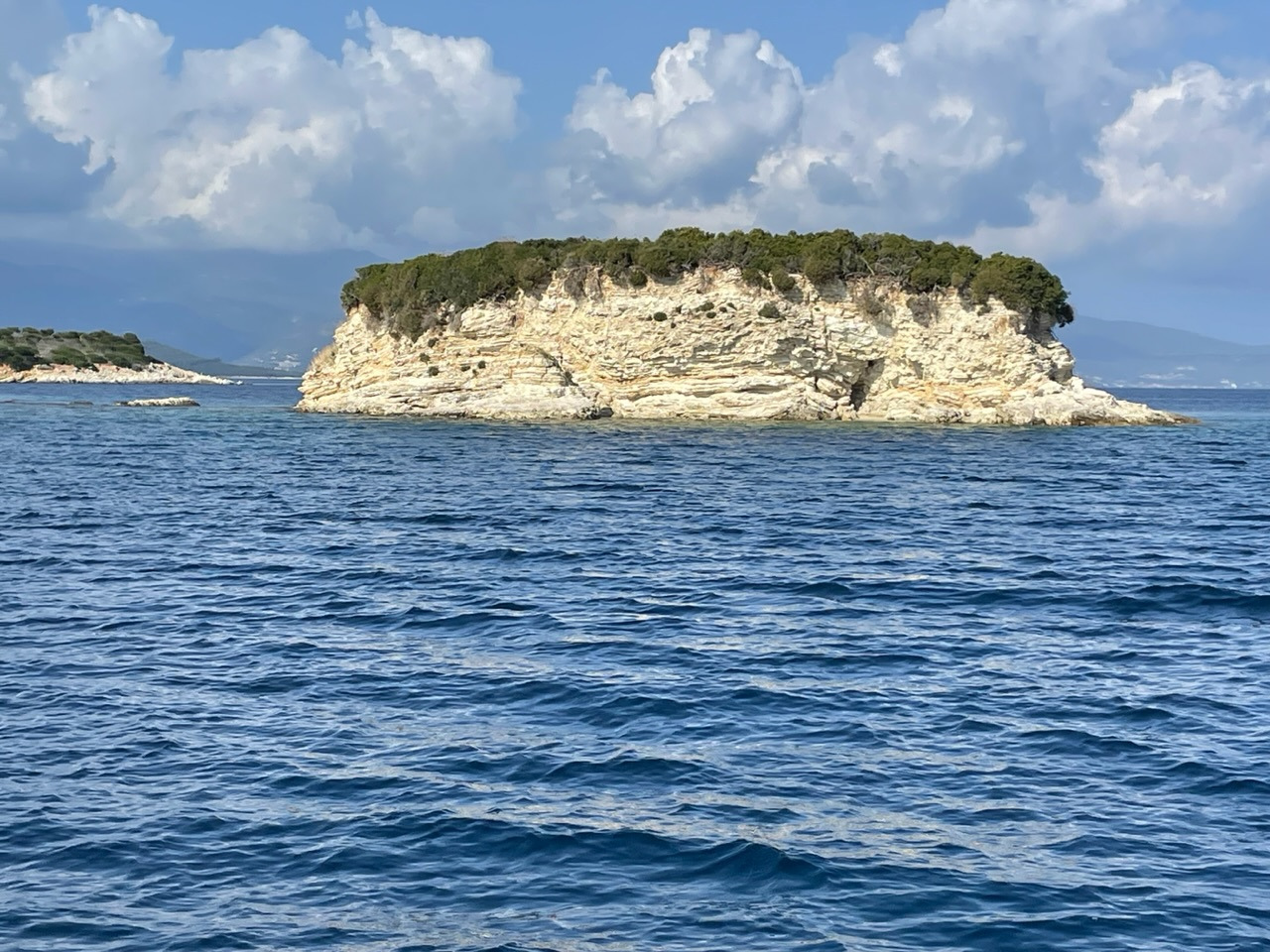
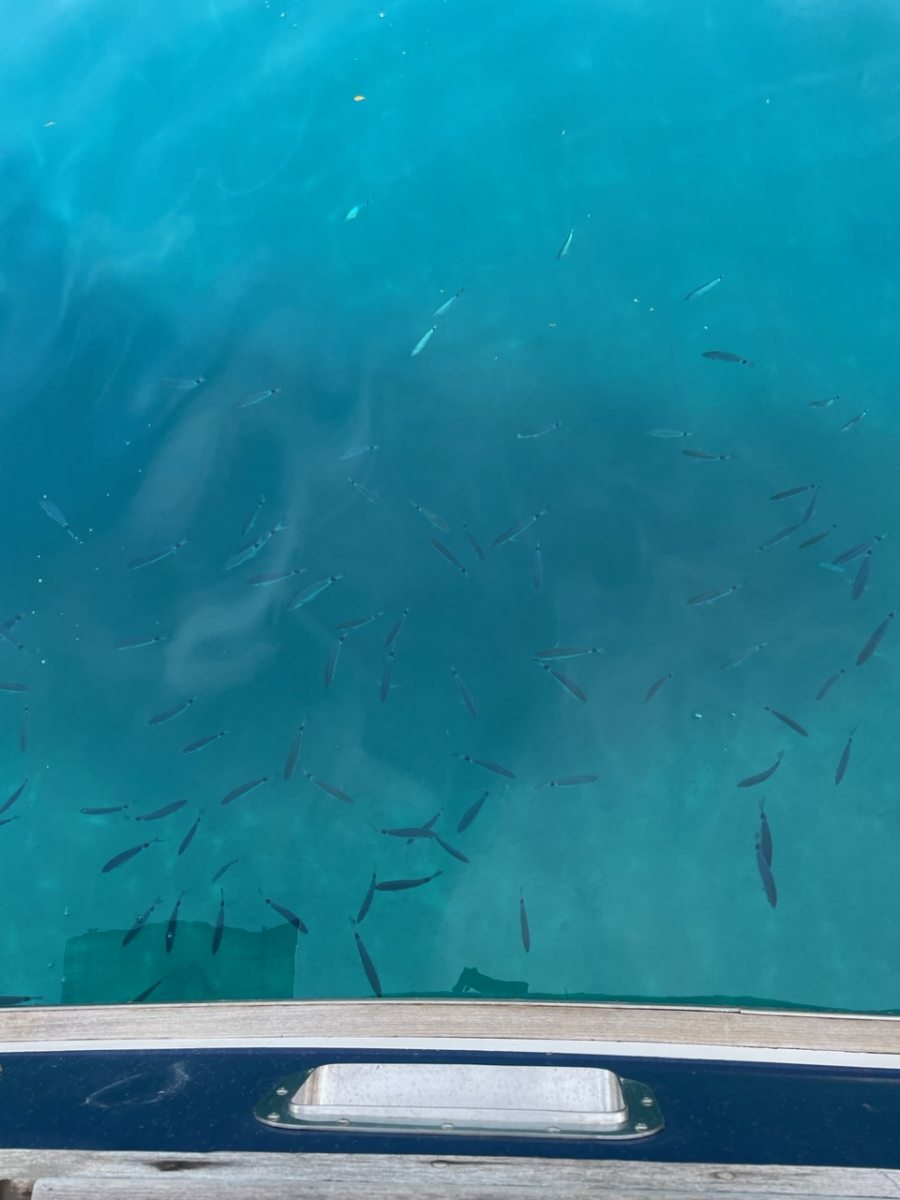
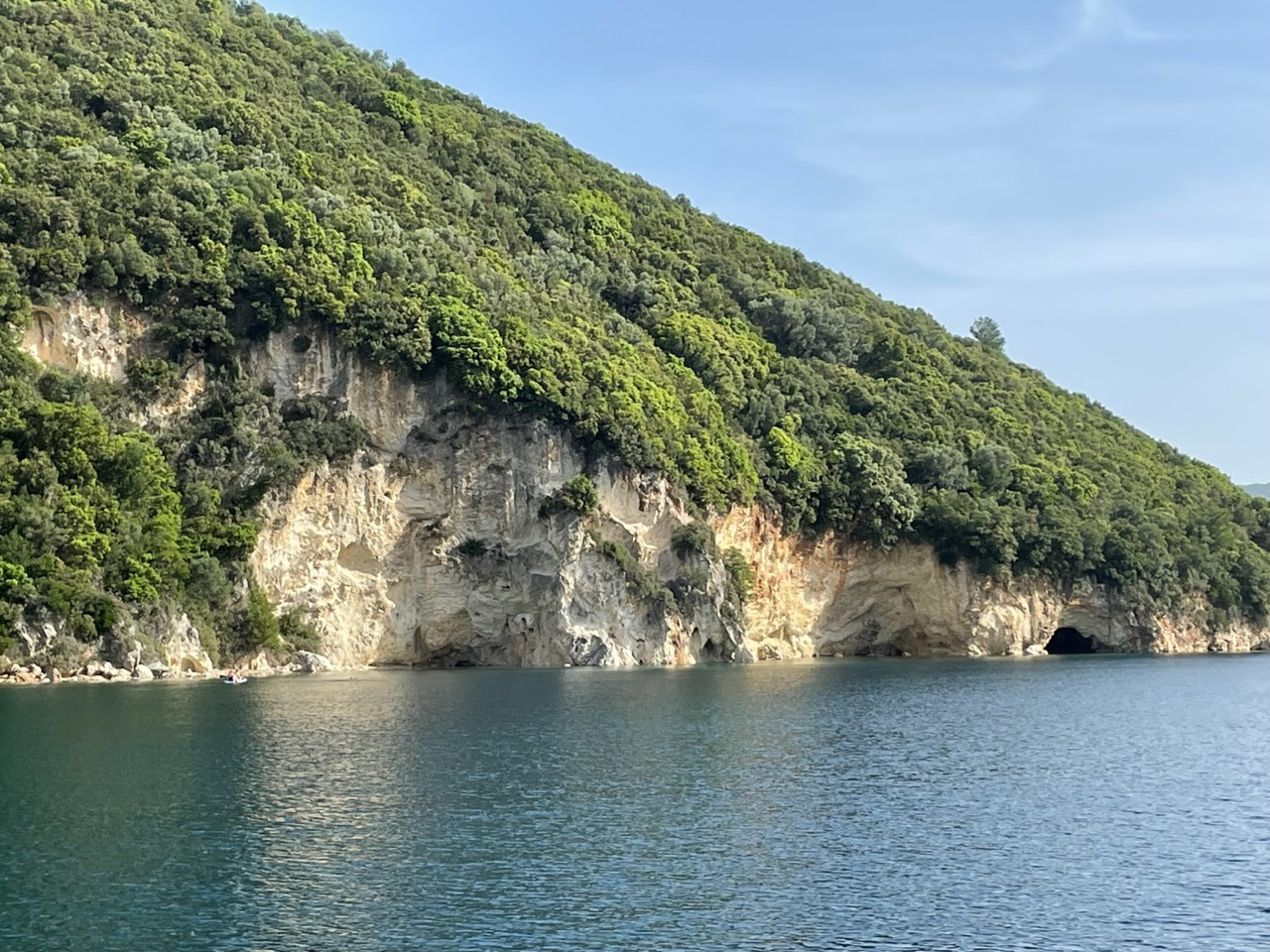
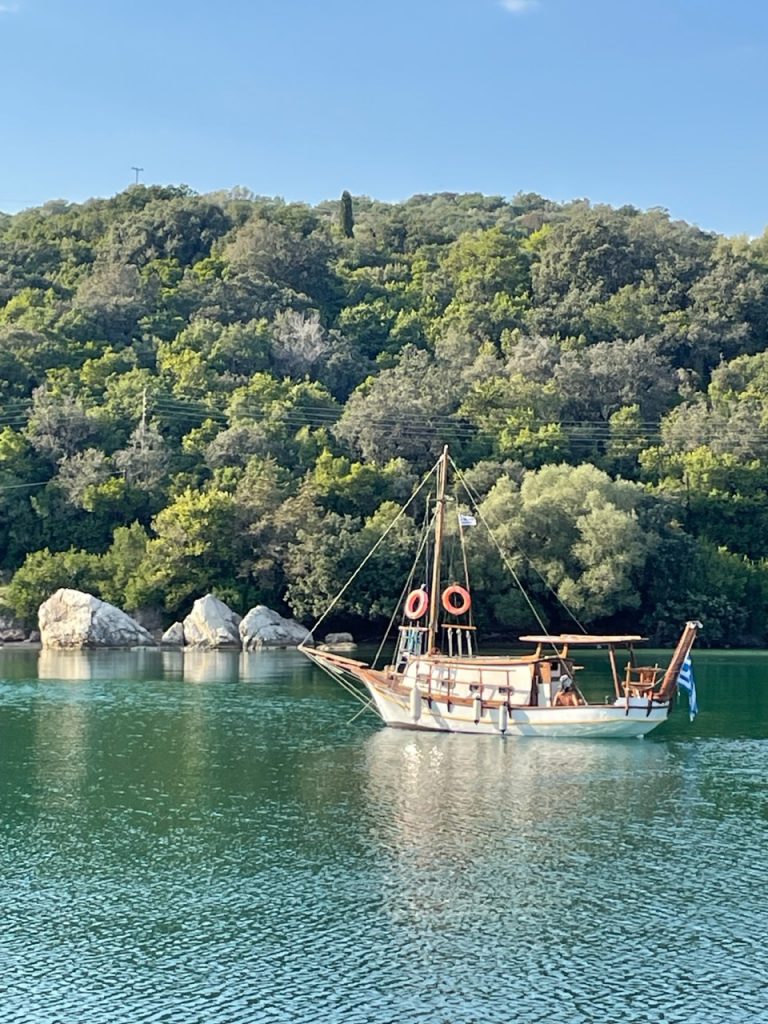
By boat we also explore the other bays on the north side of Meganisi, Abelaki and Atherinos. In the meantime we are anchored on Lefkas in the Ormos Dhésimou. Again a beautiful bay with clear water and a rock cave. Many fish swim around our boat. So we go into the water, too.
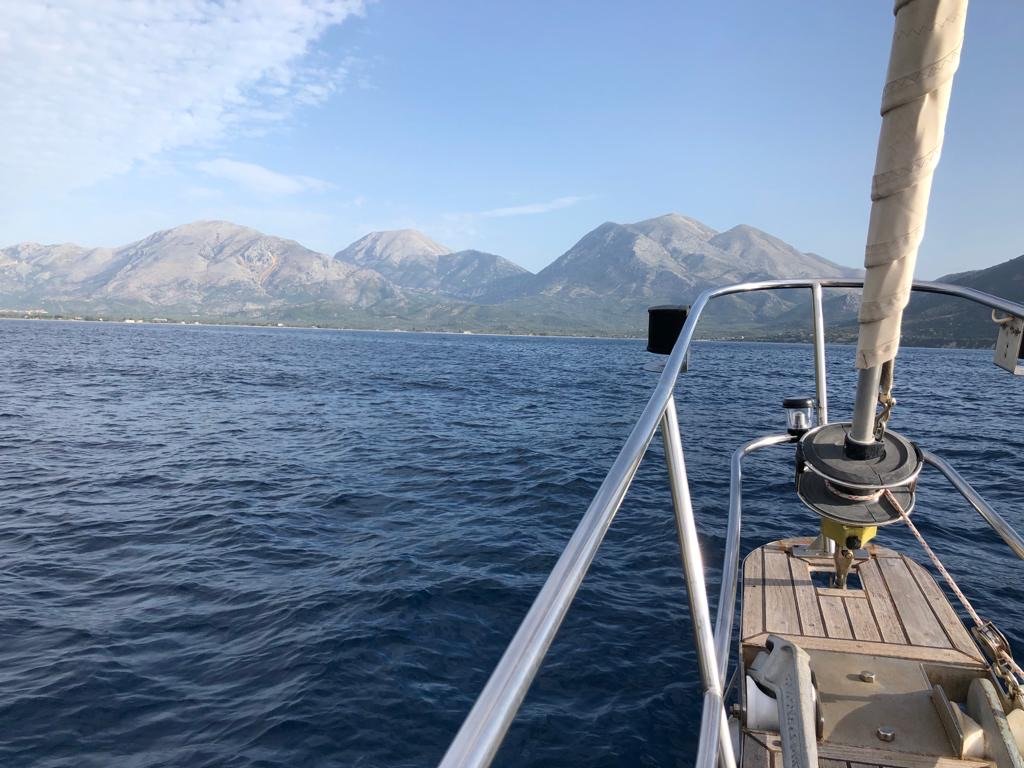
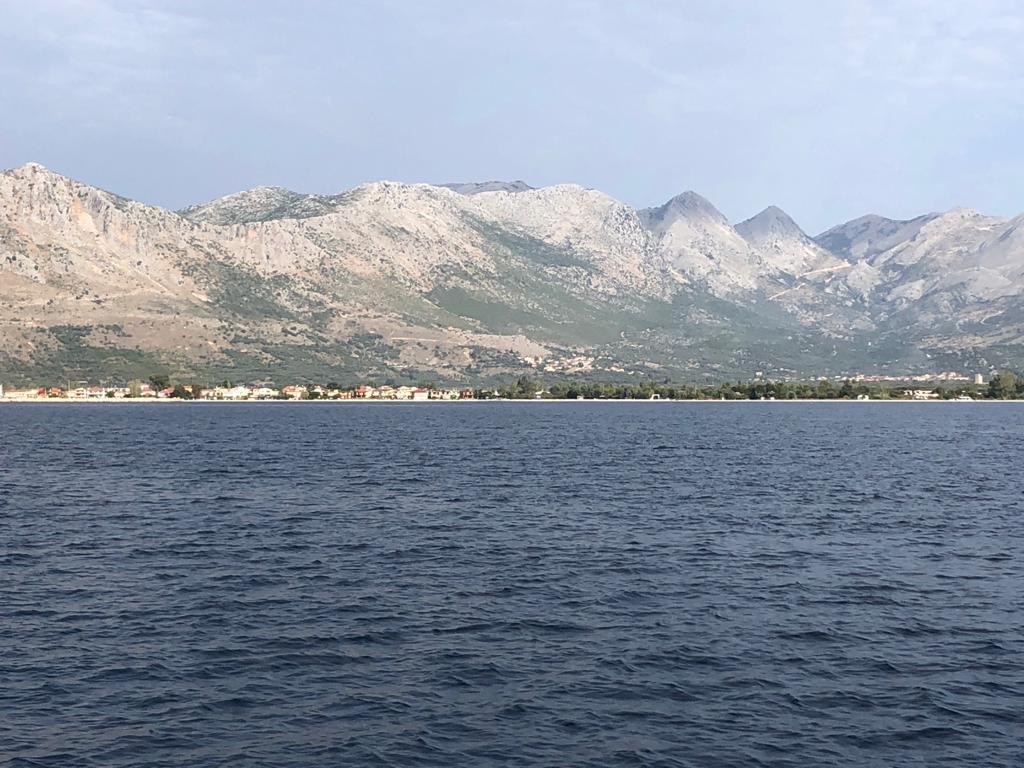
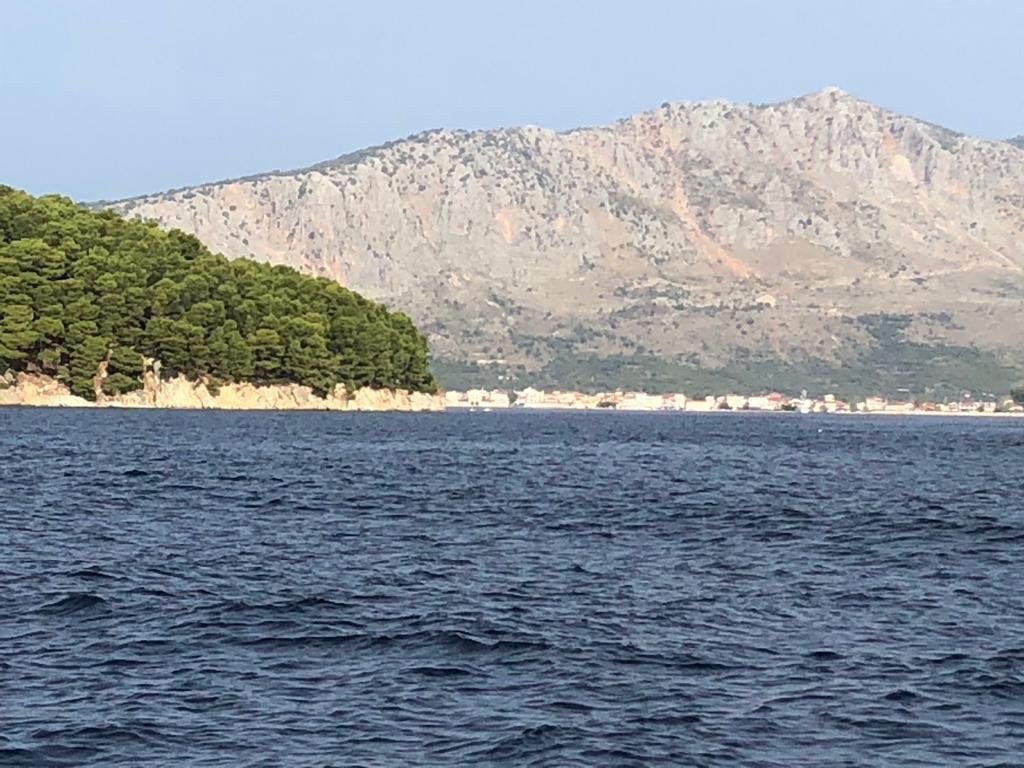
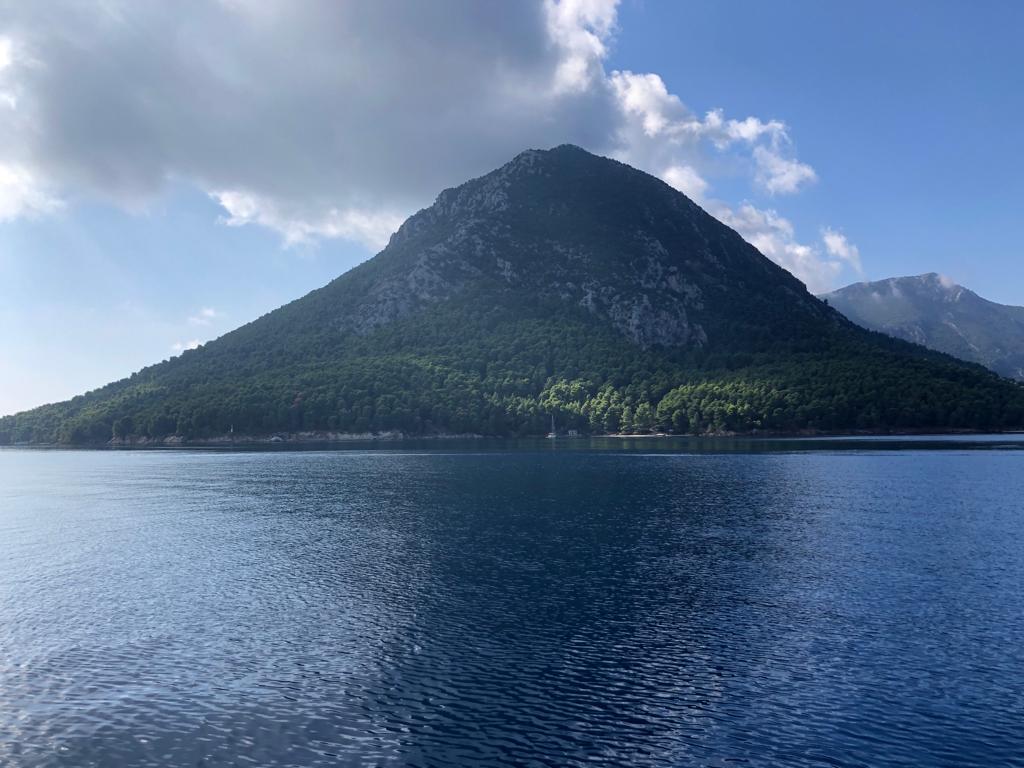
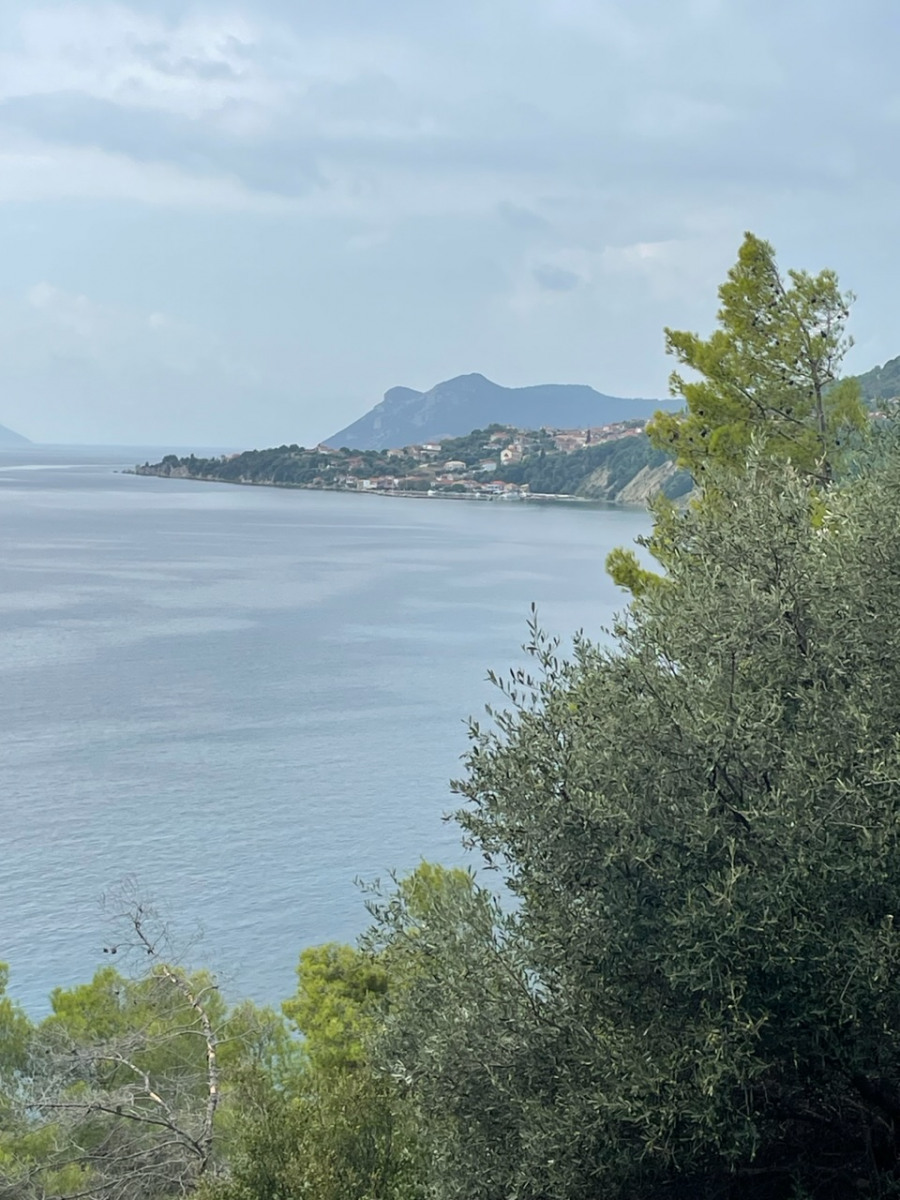
We sail through the Ionian Islands - but we also like the mainland with its beautiful fishing villages of Paleiros, Mytika, Sivota........and the wild and rugged barren mountains beyond. And the mainland has it all: not only scenically, but also historically and mythologically.
It has been inhabited for 22,000 years, as evidenced by archaeological finds from the Palaeolithic Age - says our wonderful sailing almanac, which not only has excellent maps and information on shoals, currents, weather phenomena and good fish tavernas, but also an appendix with historical information.
There were mountain lions in the wild mountains - the first task Hercules had to do was to kill a lion, that took place here. Achilles' ancestors came from here, as did the wife of Philip II of Macedonia and mother of Alexander the Great. The famous king Pyrrus also ruled here. The inhabitants provided soldiers and ships for the Trojan War, Homer mentions.
In "classical" Greek antiquity there were large cities and harbours, as far south as Messolonghi, now a large excavation site called Ancient Plevrona - Pleuron.
In the more northern area is Aktio, today the airport of Preveza. In the year 31 B.C. , the last naval battle between Mark Antony and Cleopatra and the Romans under Octavian took place here - Cleopatra lost. As a sign of victory, the city of Nicopolis was founded, which at times had up to 300000 inhabitants, today also an impressive archaeological site.
The Byzantines replaced the Romans and were the dominant culture and administration for a long time, until a phase of decay and various invasions by "barbarians" (Goths, Vandals.....) began - Völkerwanderung.
In the 12th century, the area fell to the "Franks", the Greek collective term for crusaders, whether Germans, English, French, Spanish, Venetians.....
With the fall of Constantinople in 1453, the rule of the Turks began in this part of Greece. The Turks kept alternating with the Venetians; trade routes and the flow of goods were at stake. Churches were used as mosques, then again as churches, Venetian fortresses were finished by the Turks and vice versa. It went back and forth, examples being Nafpaktos (naval battle at Lepanto in 1571, which, however, took place in the Ionian Sea and not in the Gulf of Patras) and Monemvasia in the Peloponnese.
"Armatoloi" (=armed men) and "Kleftes" ("thieves", the same root as kleptomaniacs), fought as partisans against Turkish rule, with varying success and also great massacres, until 1821 when the Greek struggle for independence began, which ultimately ended by 1912/1913 with the withdrawal of the last Turks from the Greek territories. There are monuments to fallen soldiers with the dates 1912/13, 1940/41 and 1948/49 on a single memorial stone.
So we get to know the impressive landscape from another side. And we get many insights into events that did not feature in our history lessons, or only marginally, but which in many cases still have an impact today and determine life here.
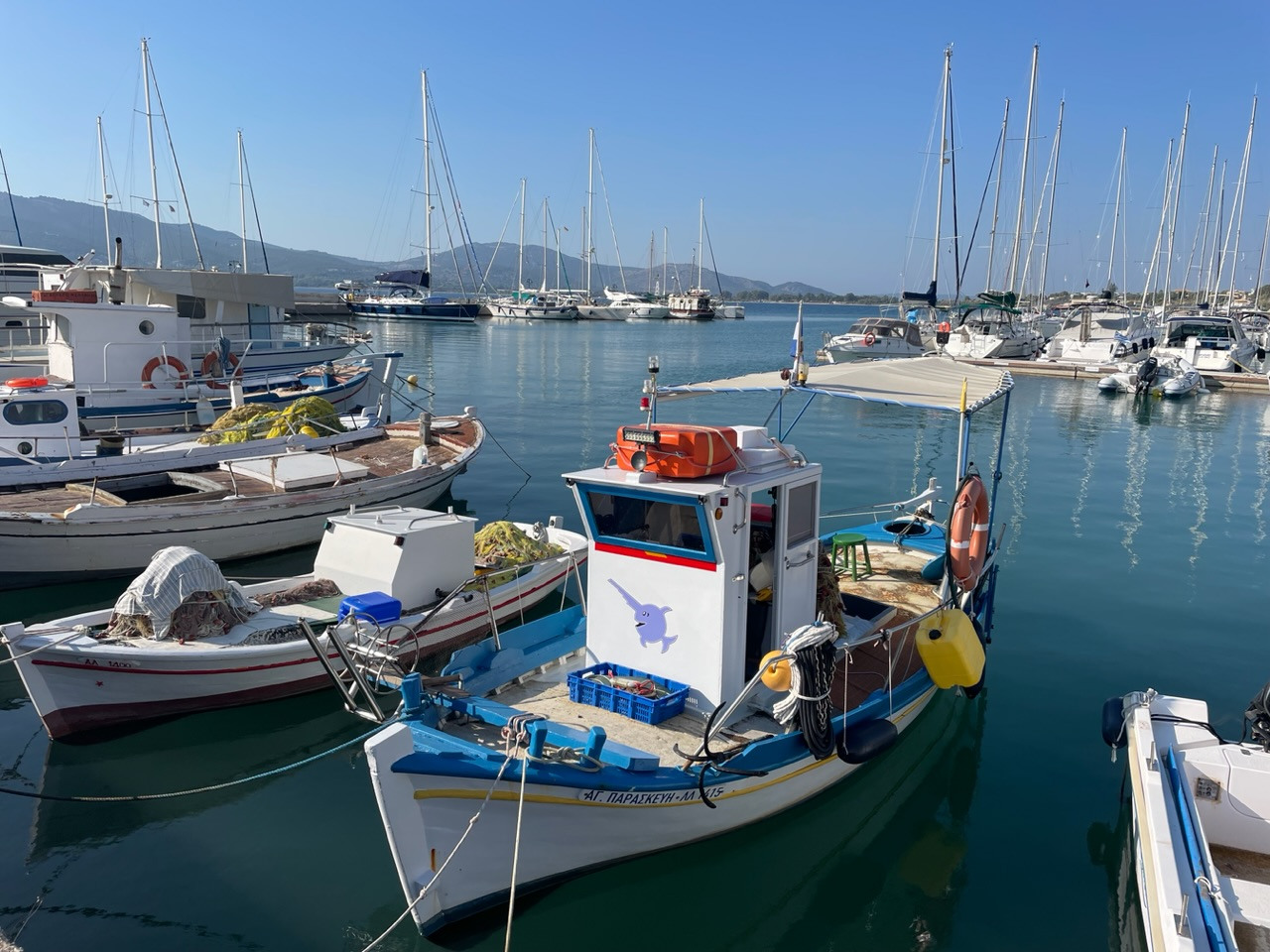
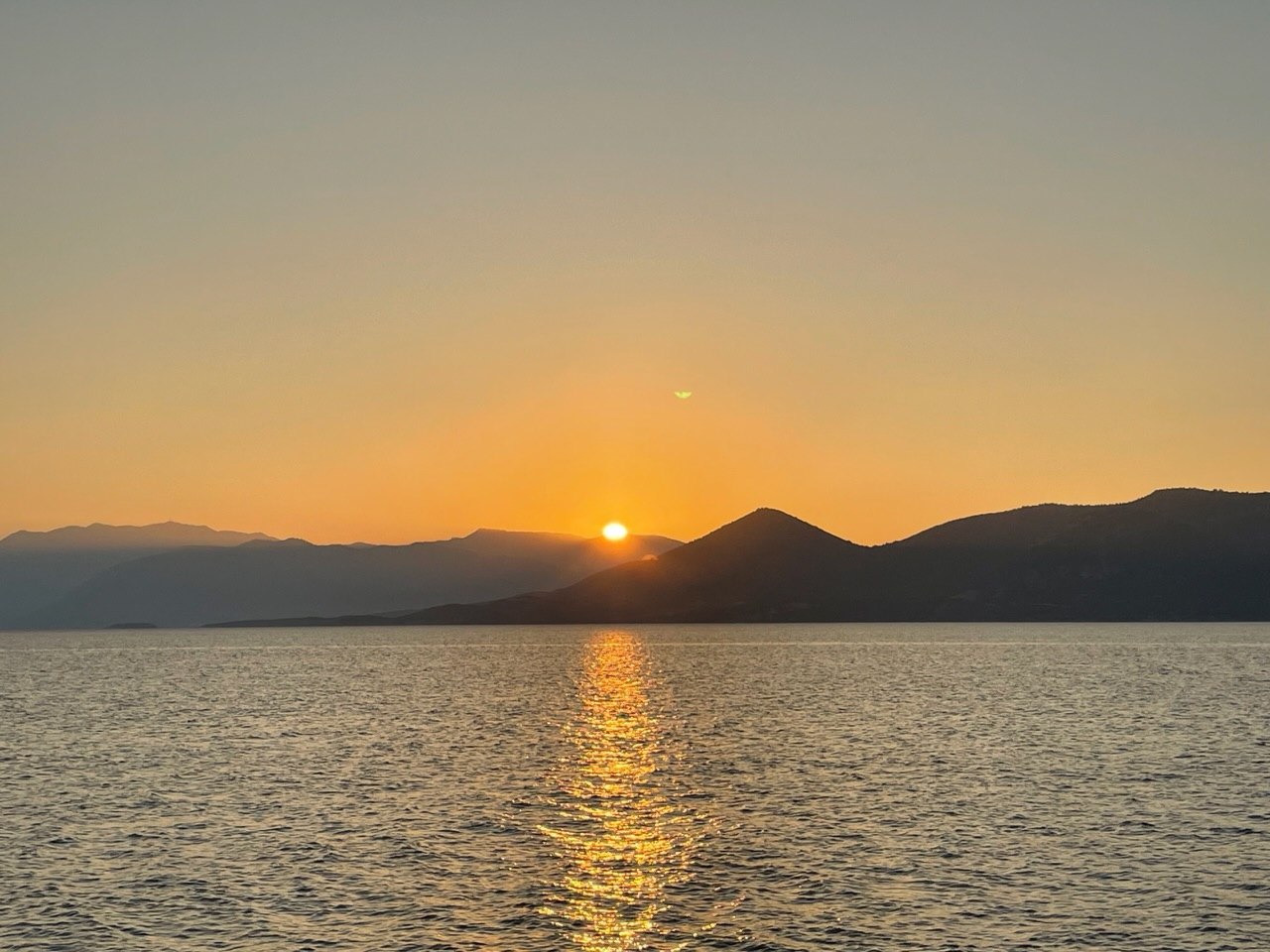
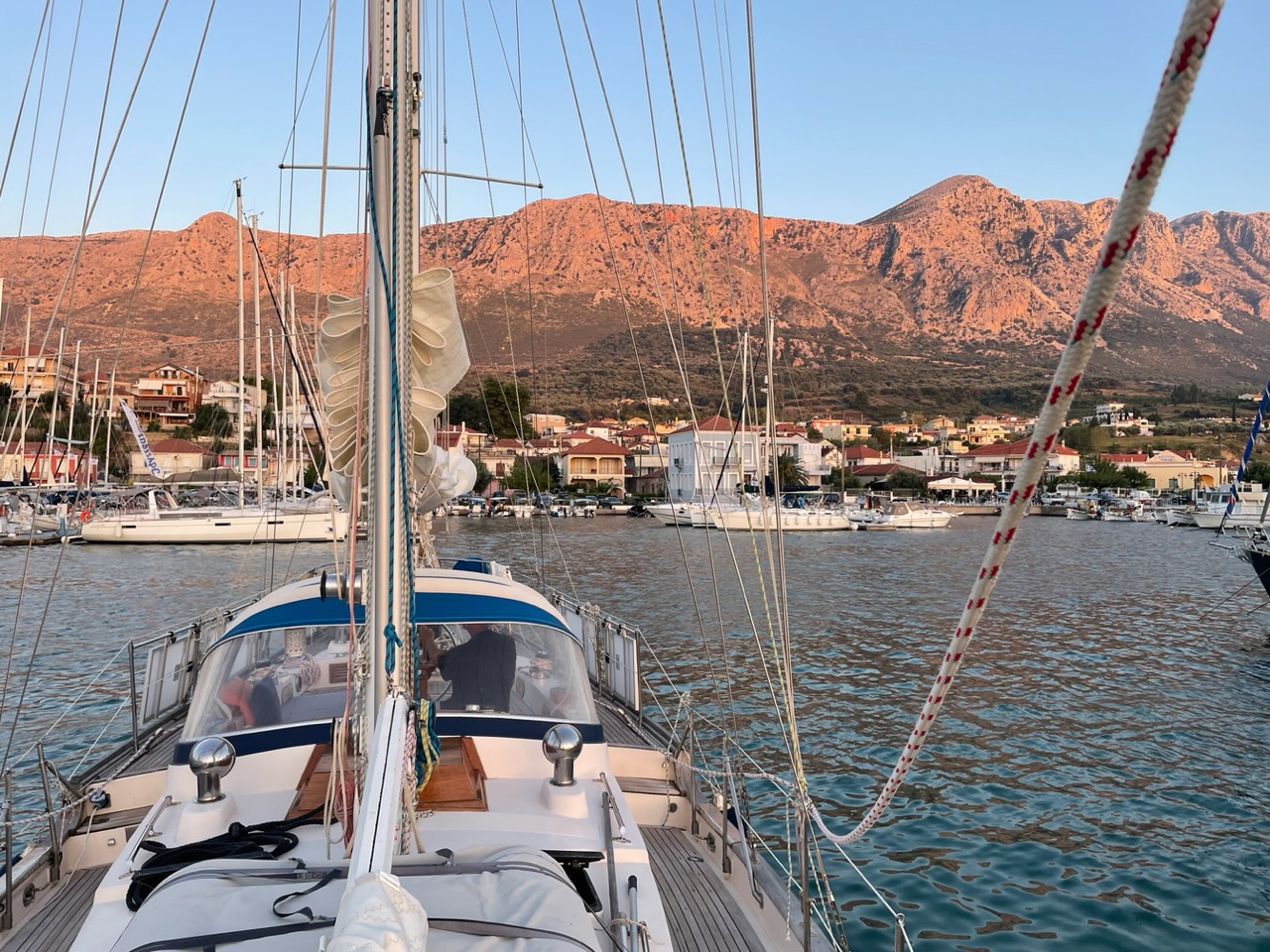
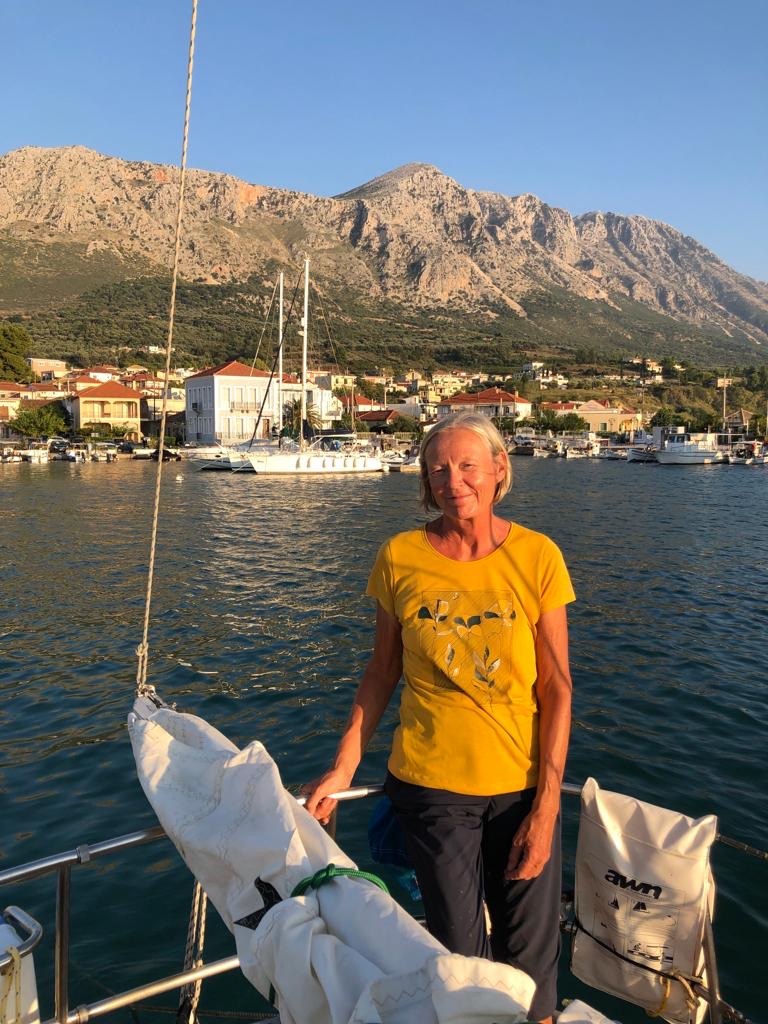
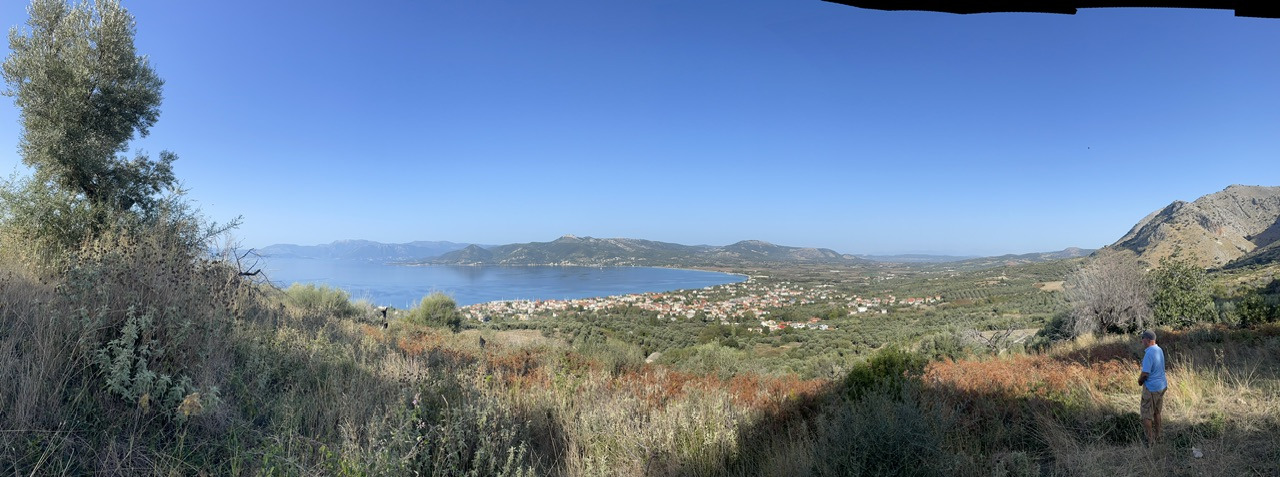
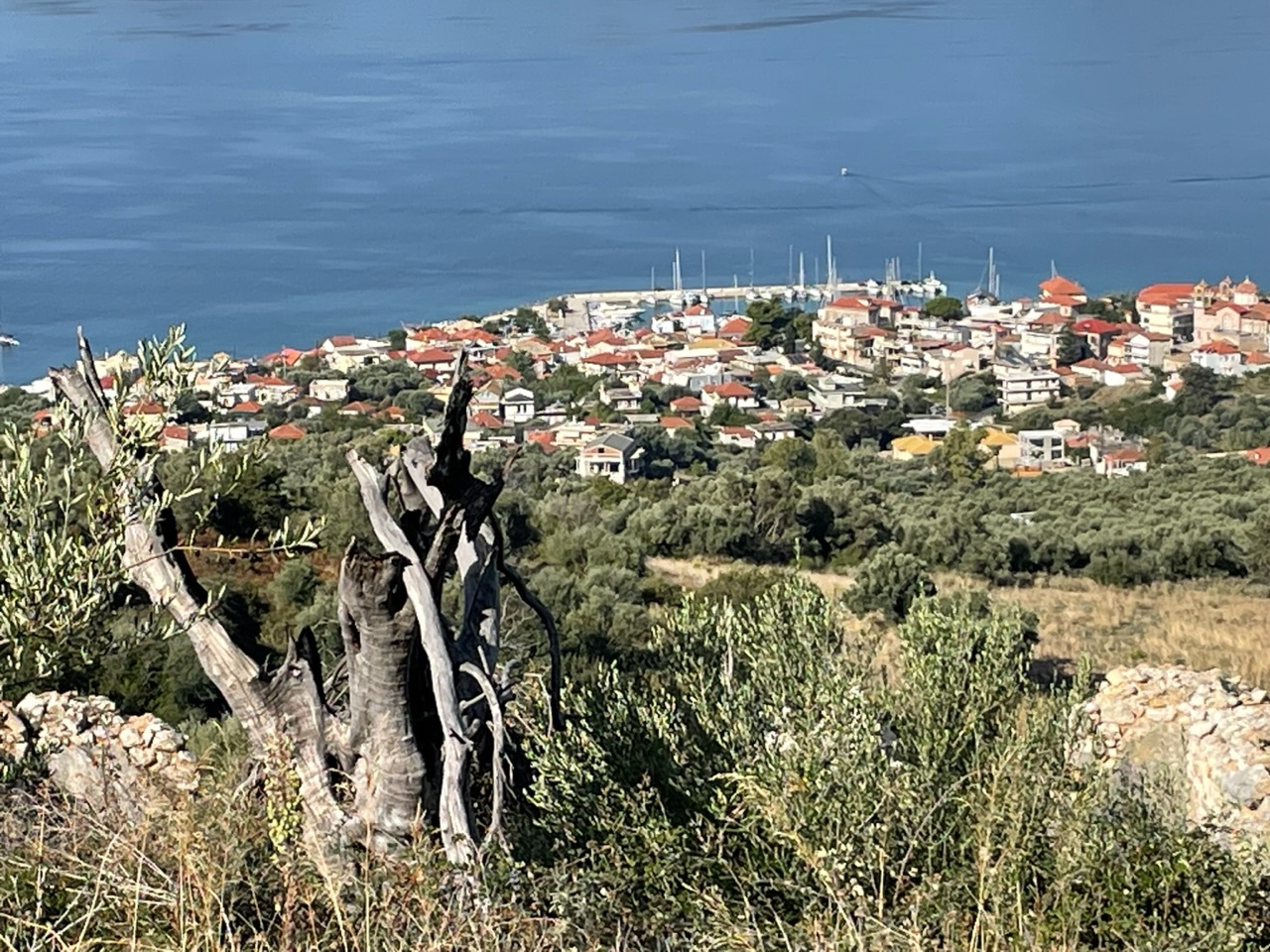
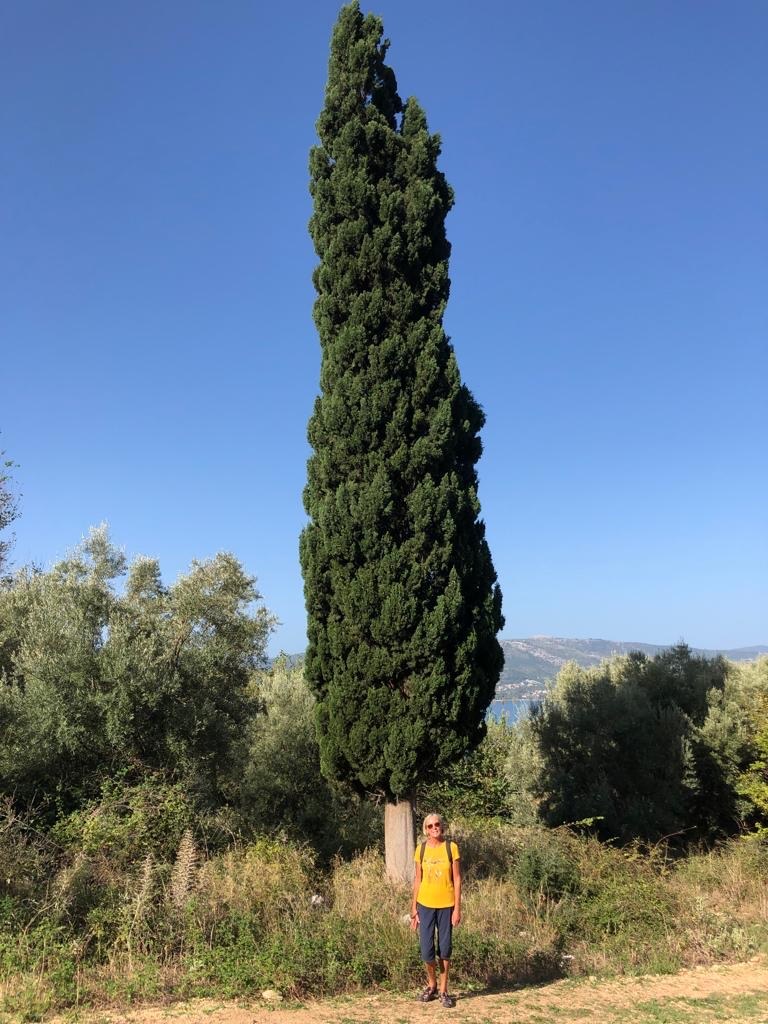
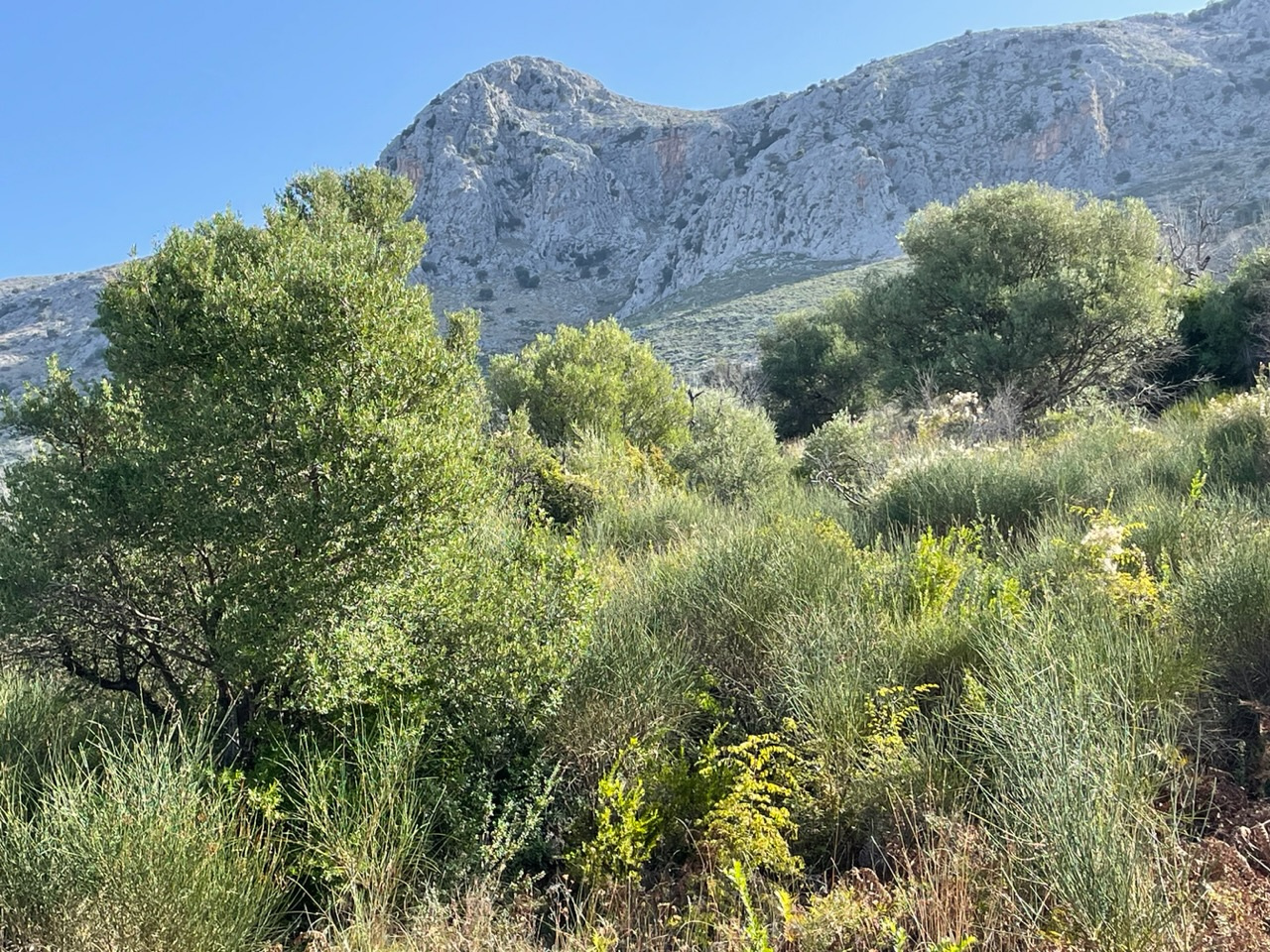
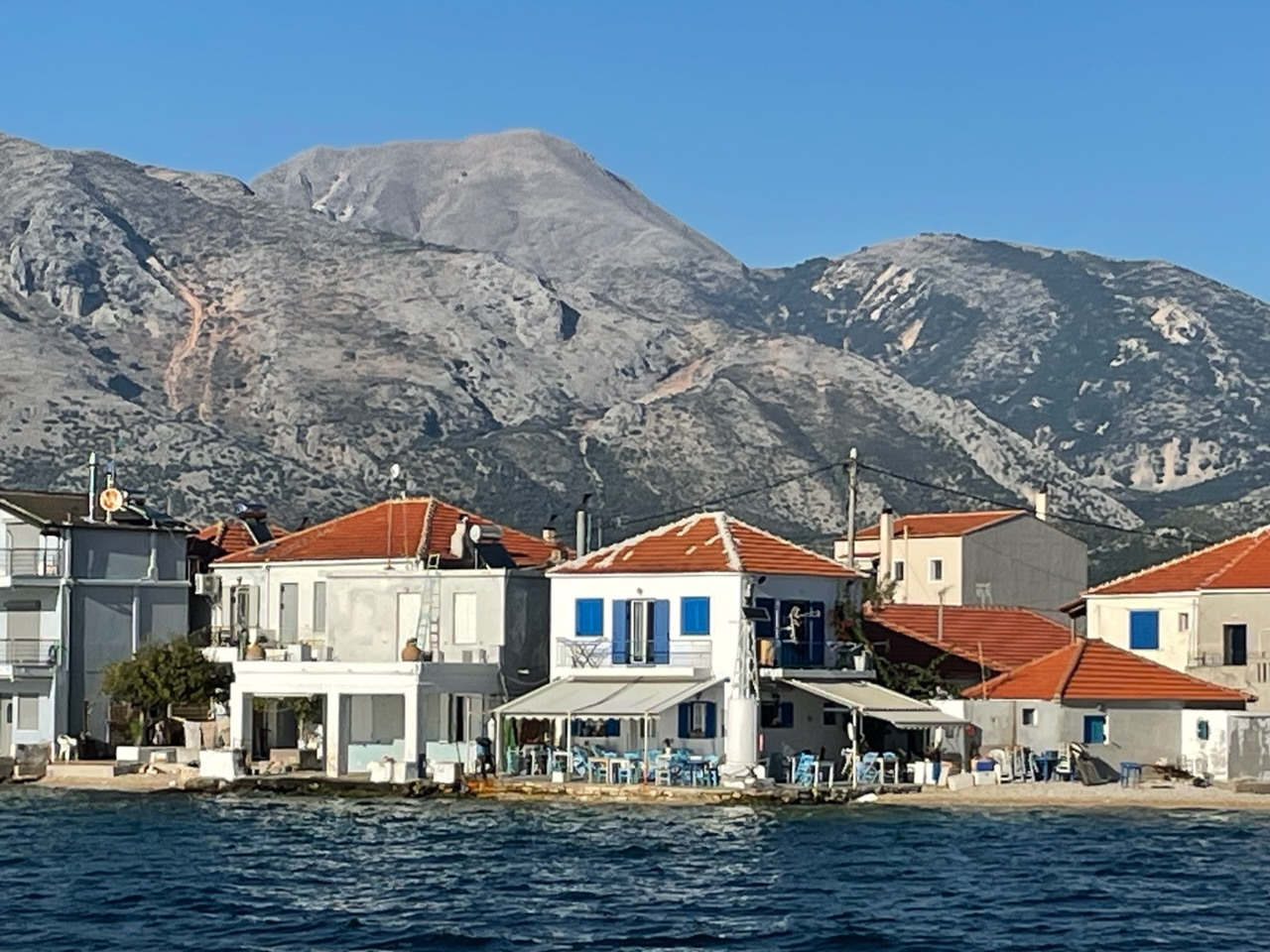
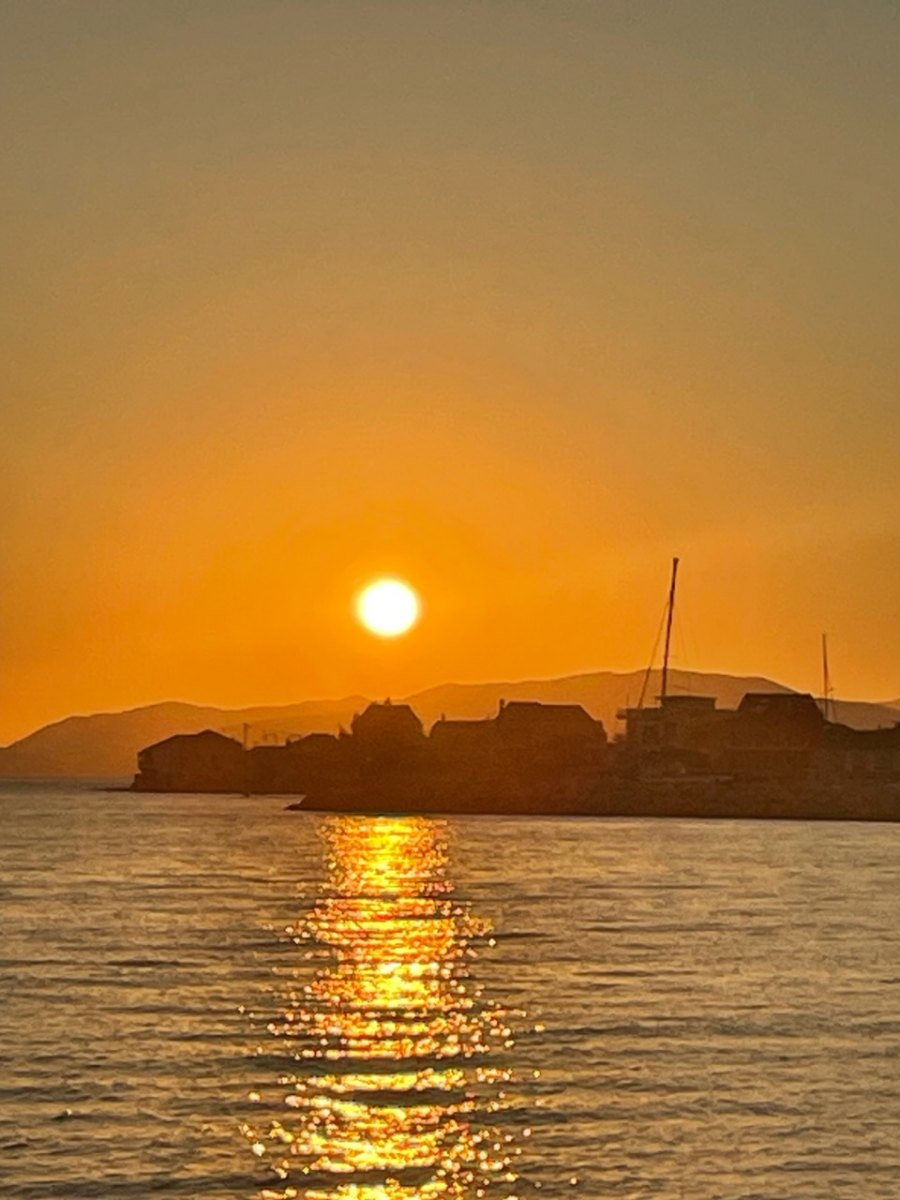
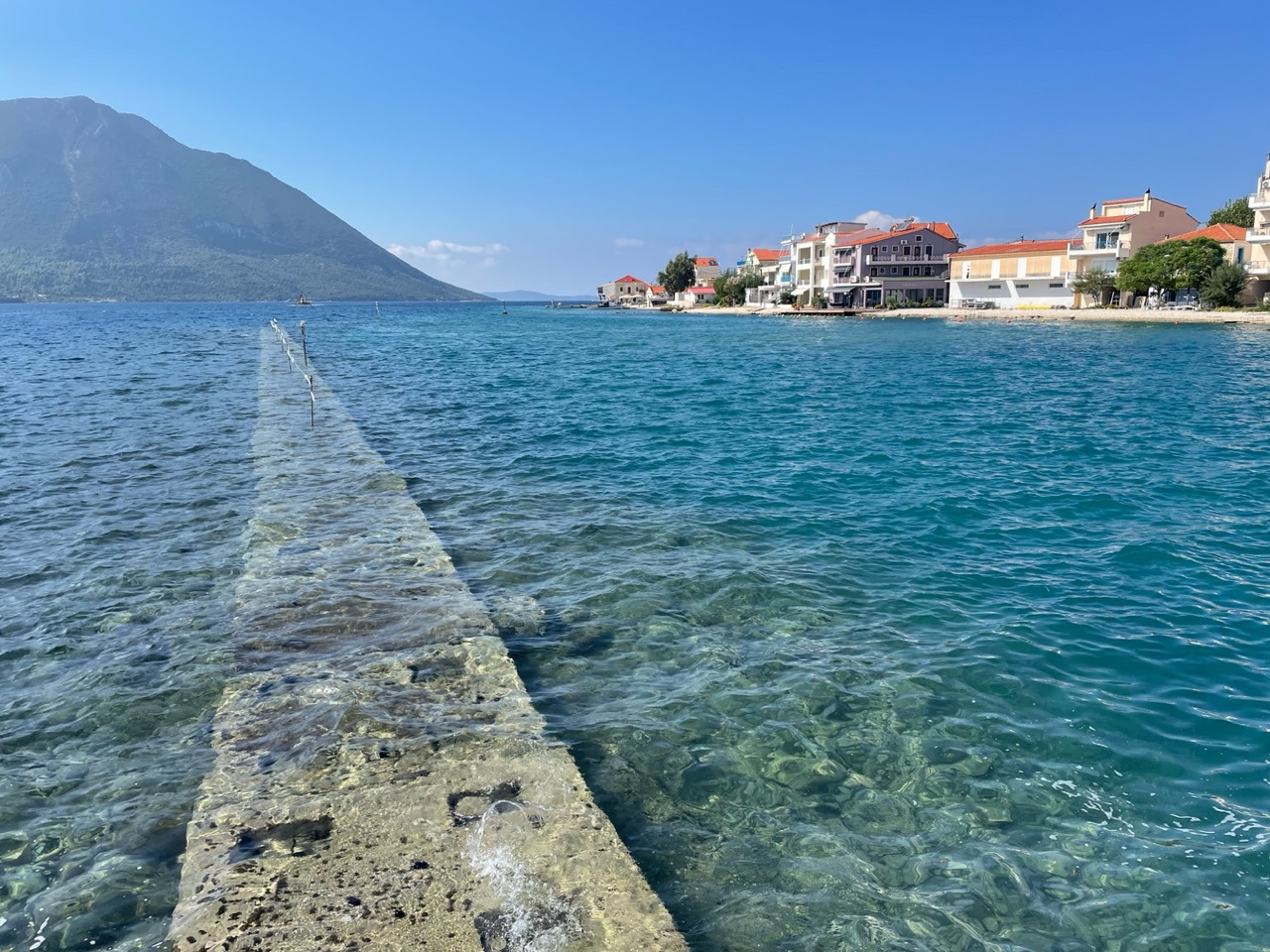
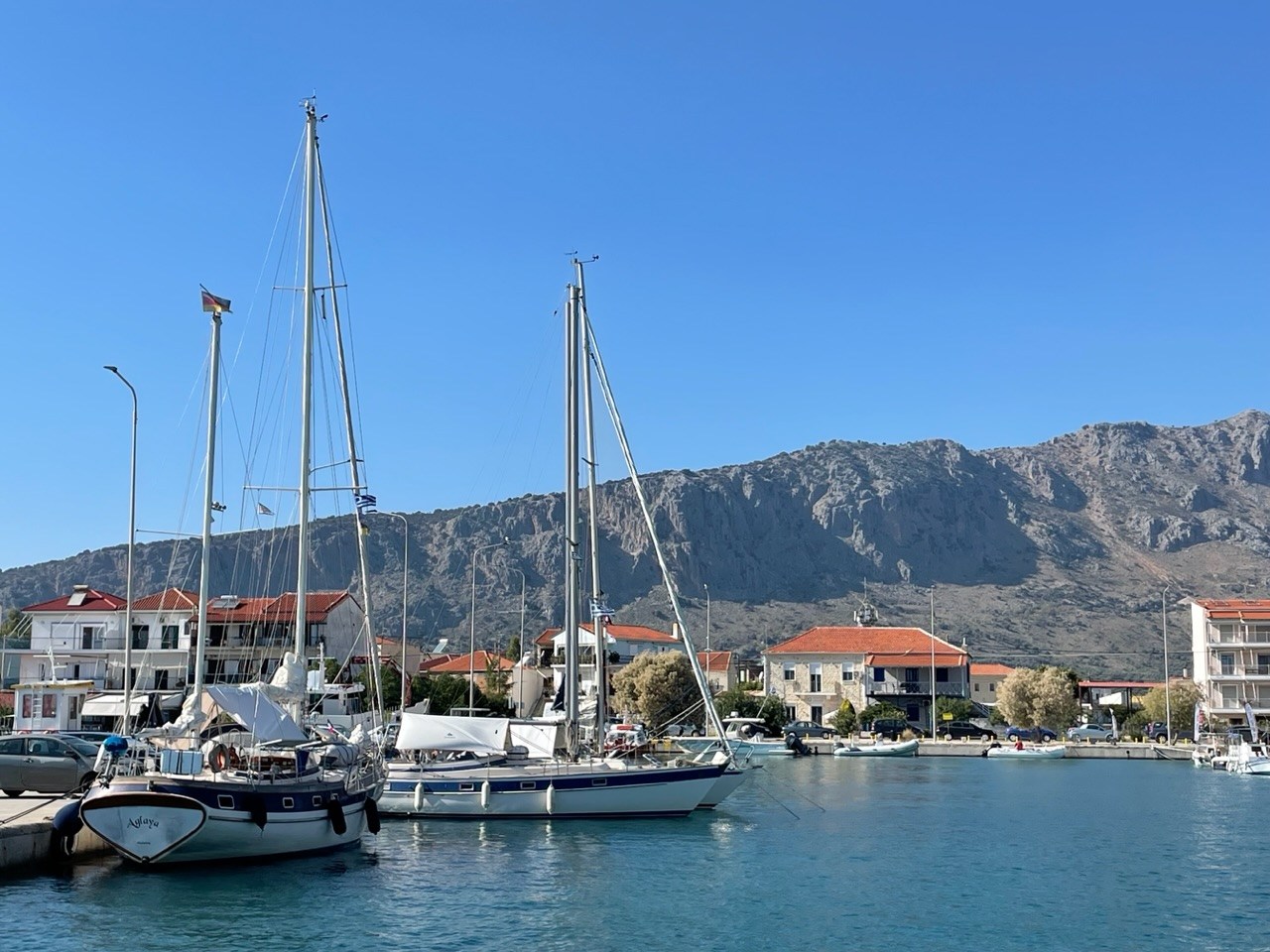
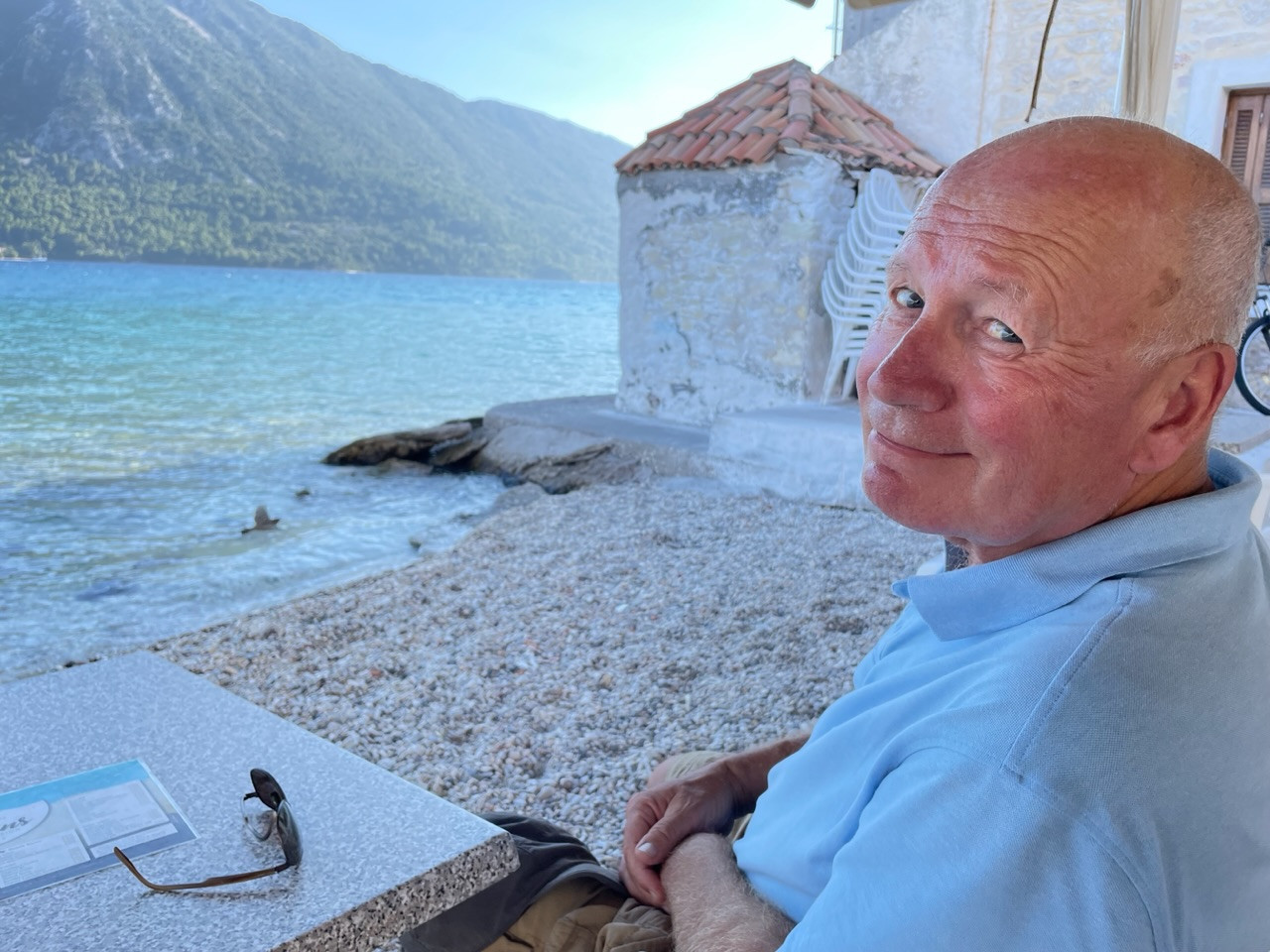
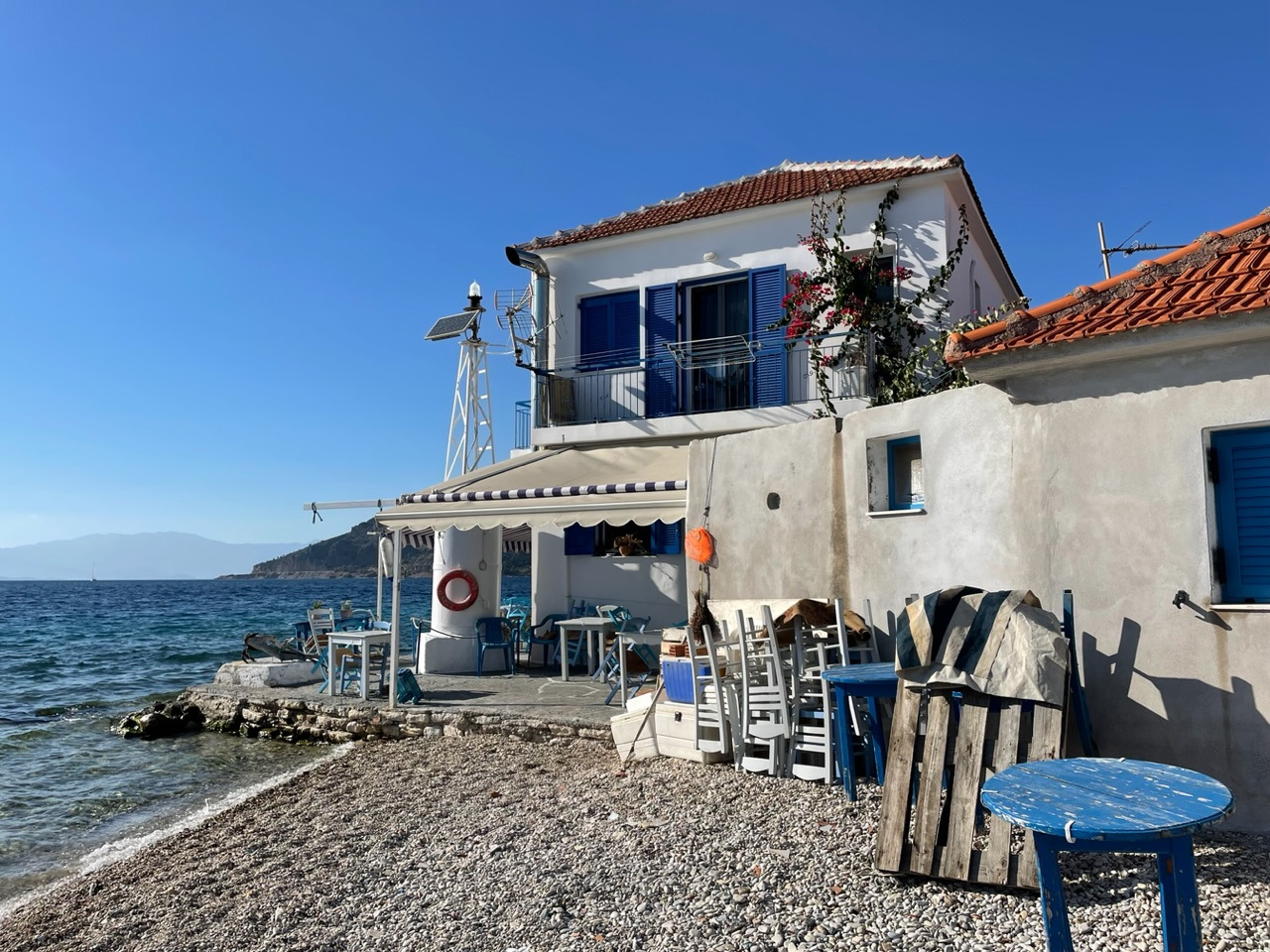
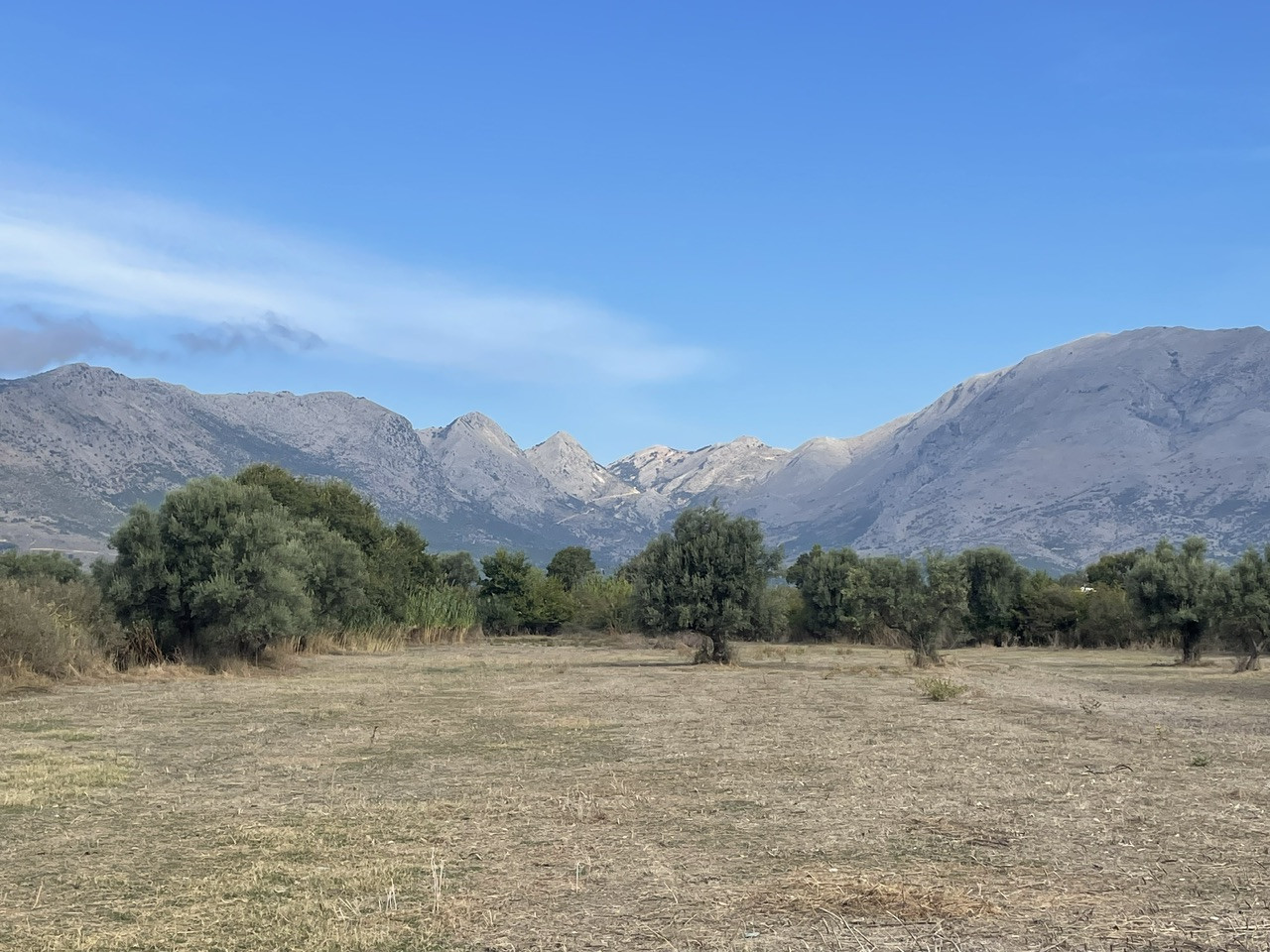
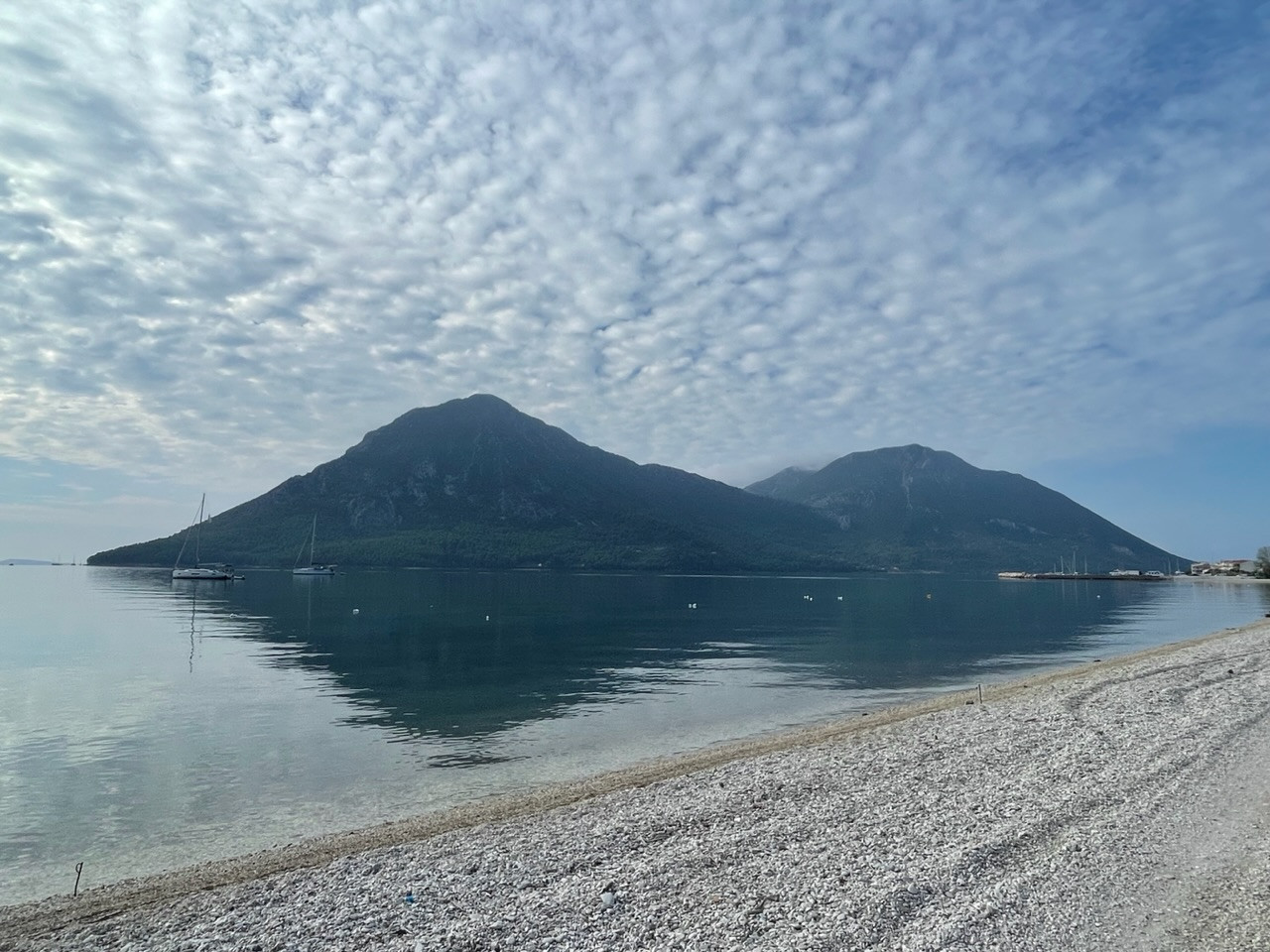
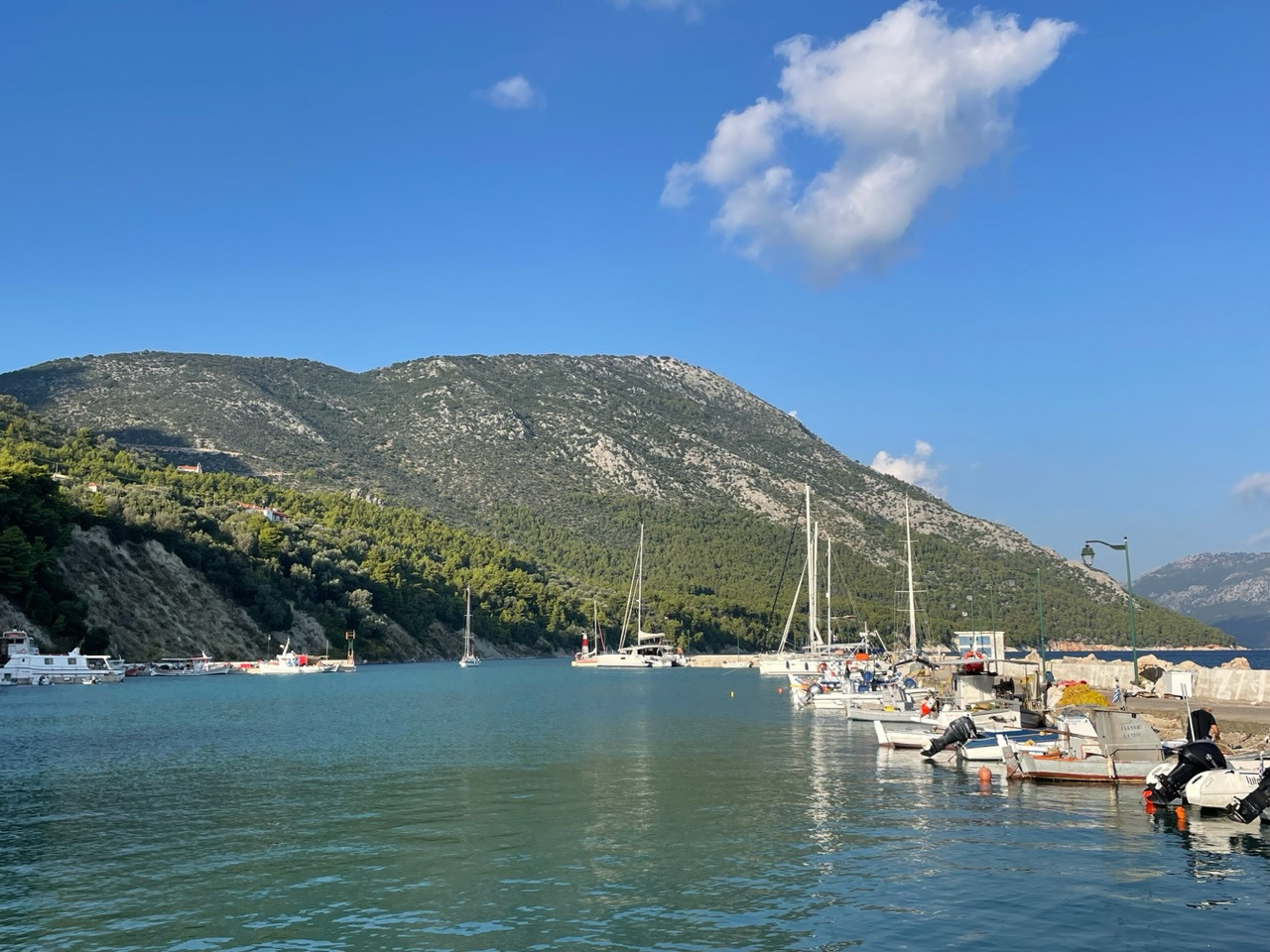
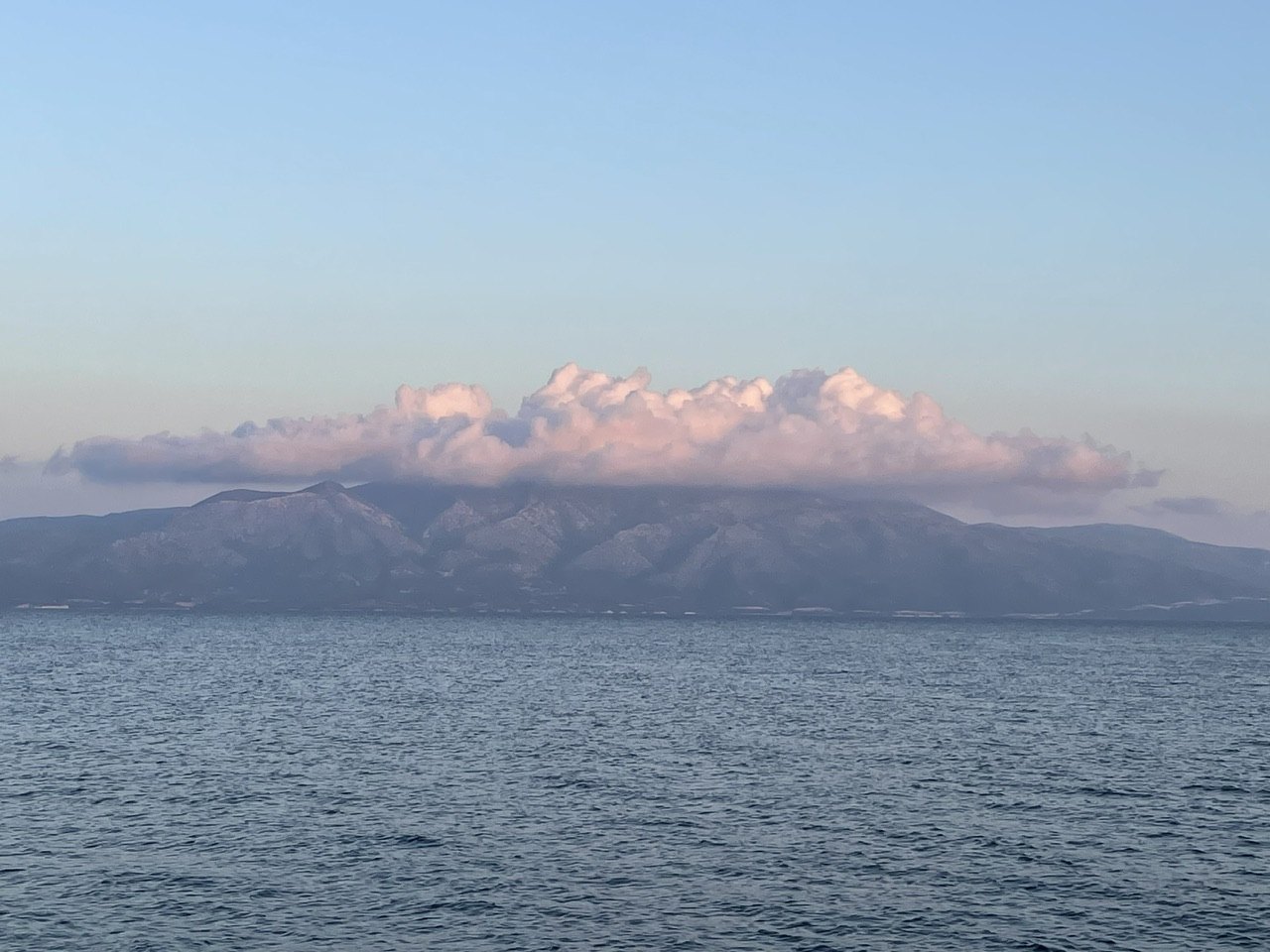
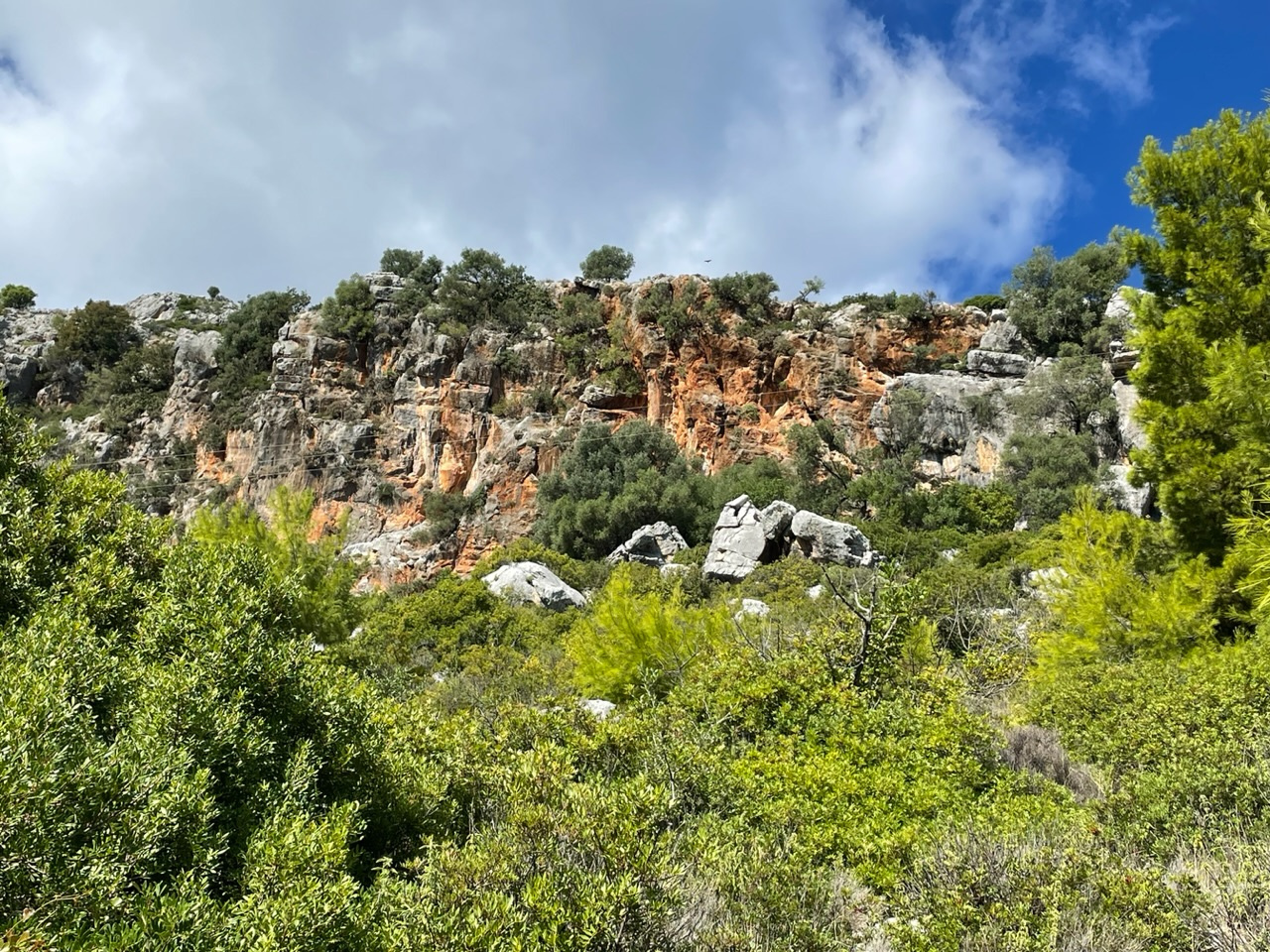
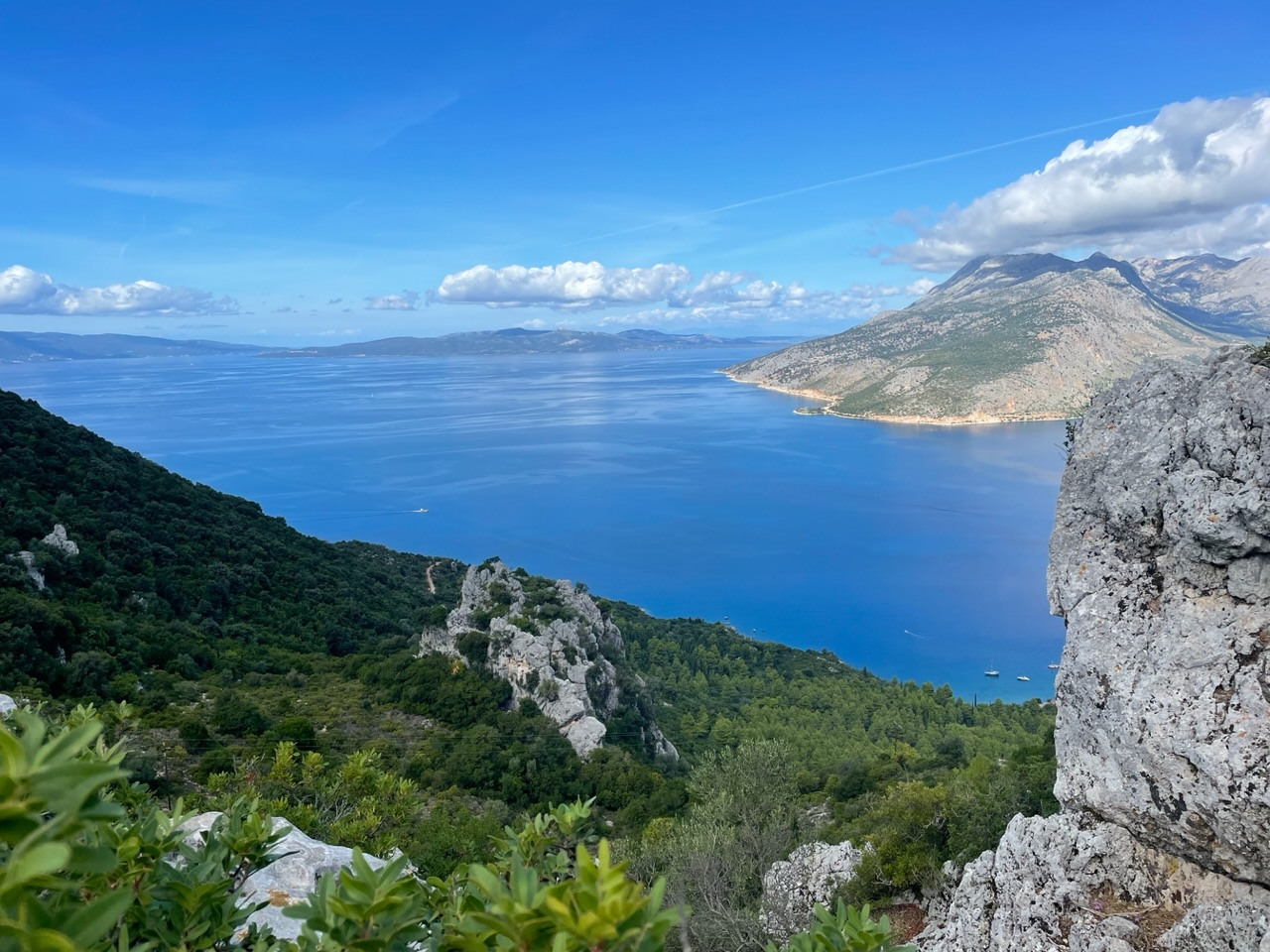
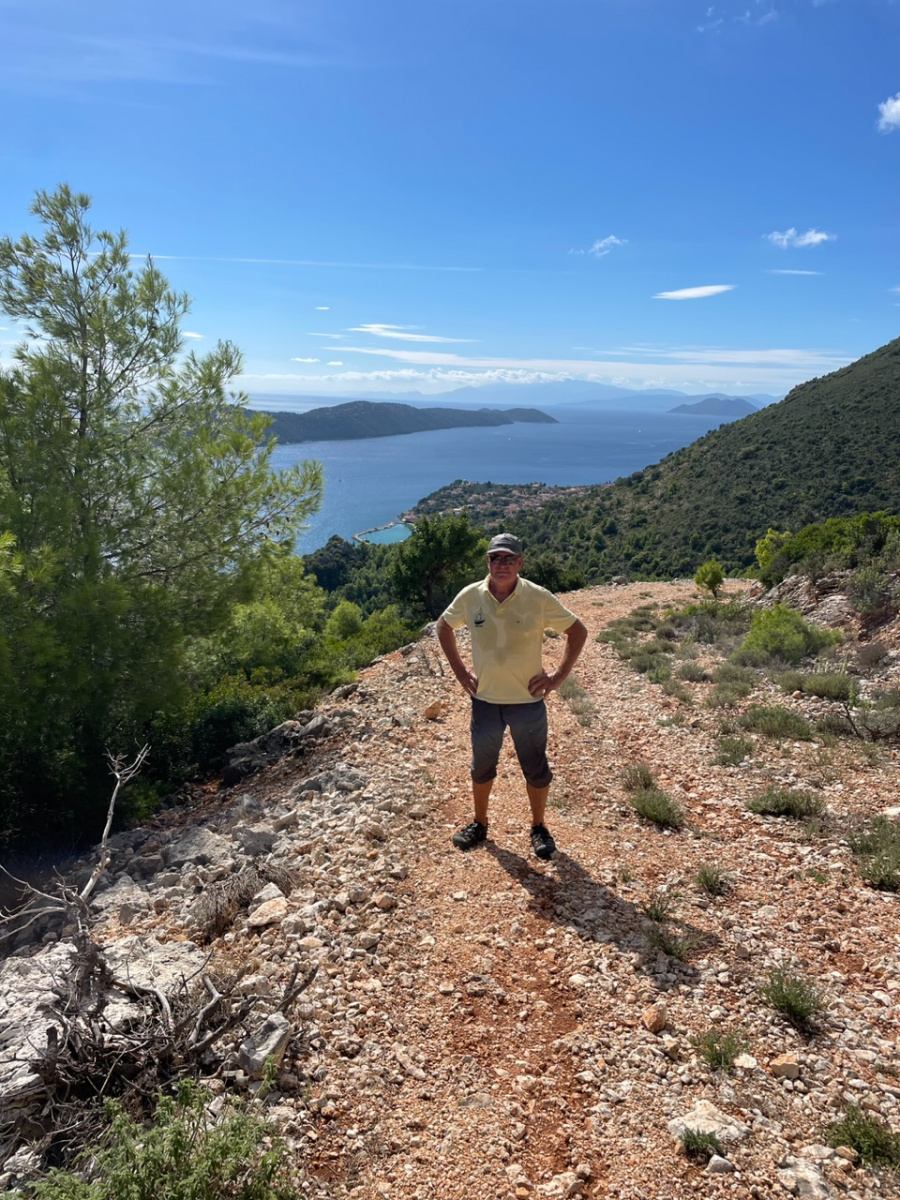
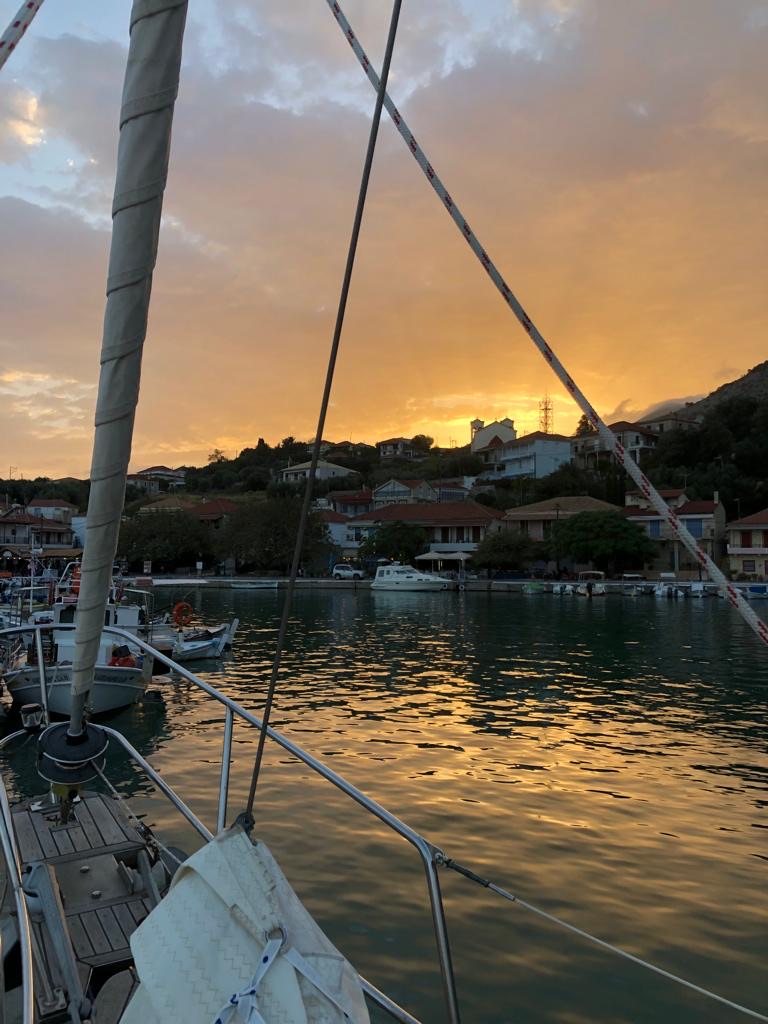
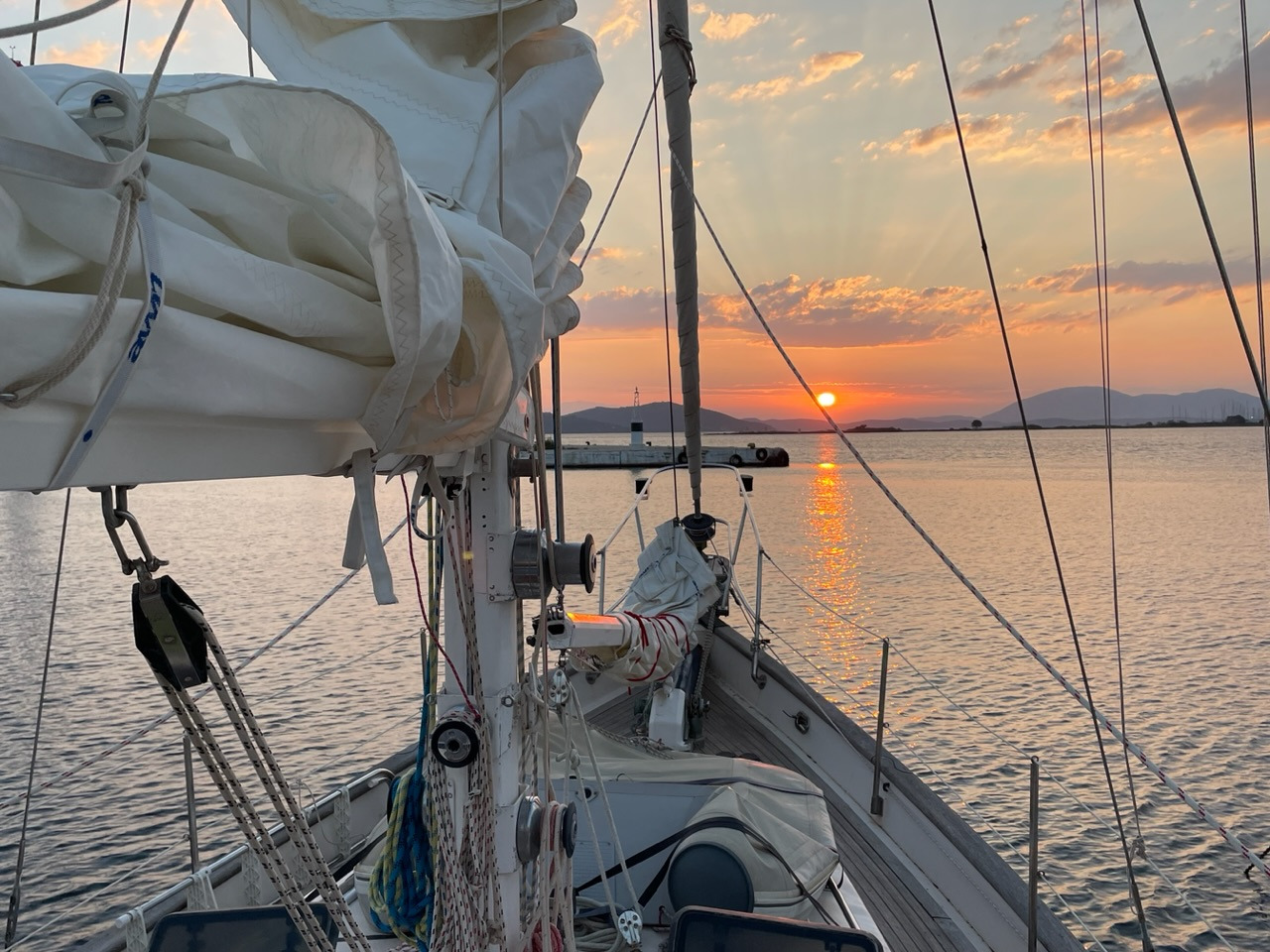
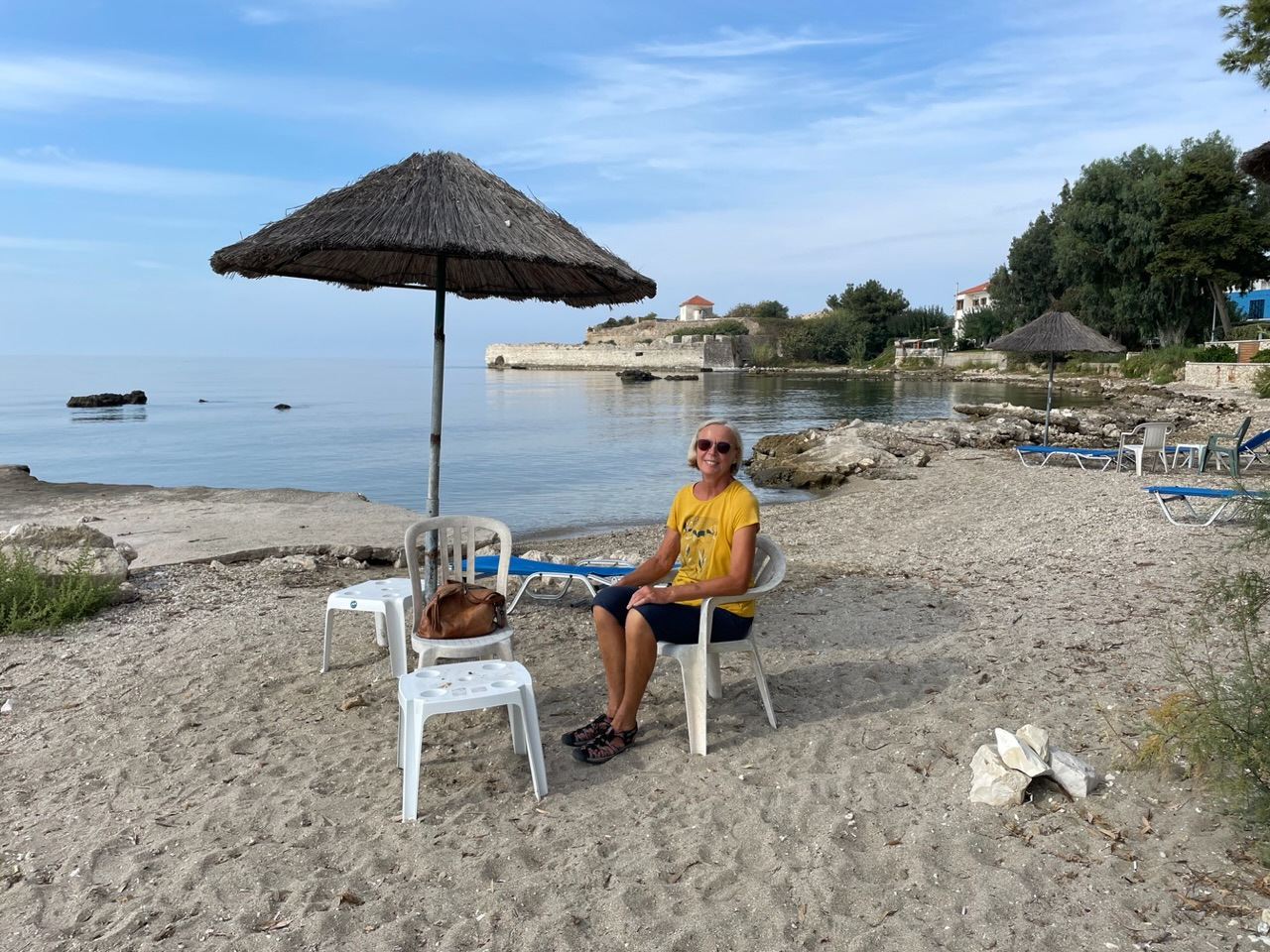
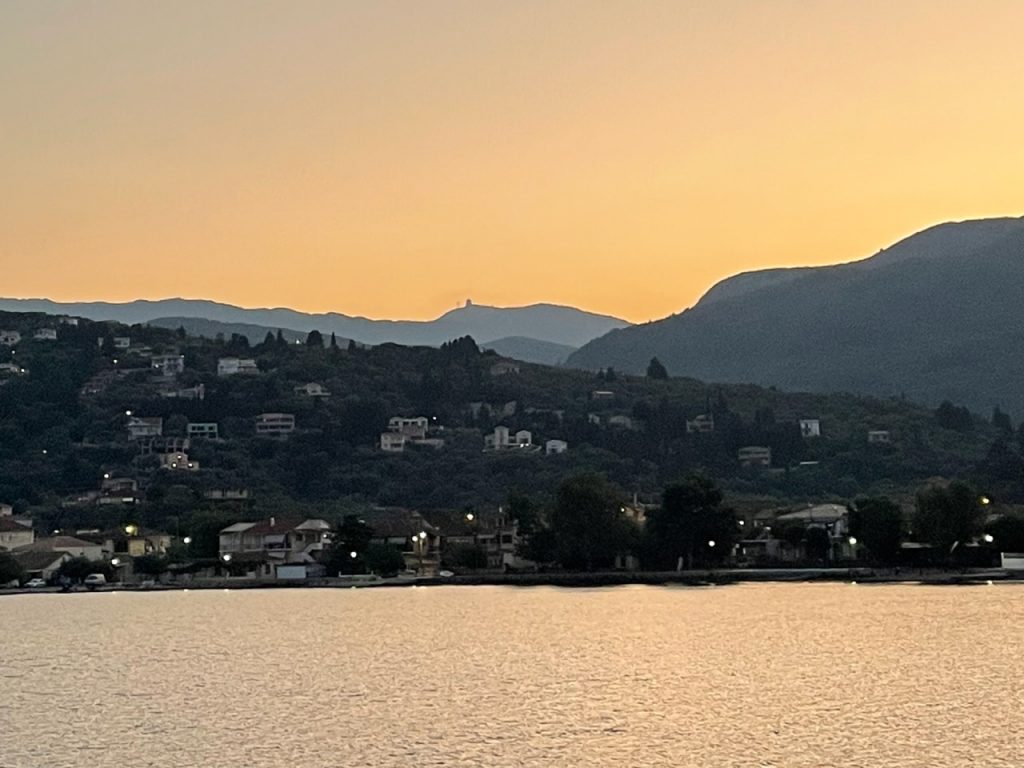
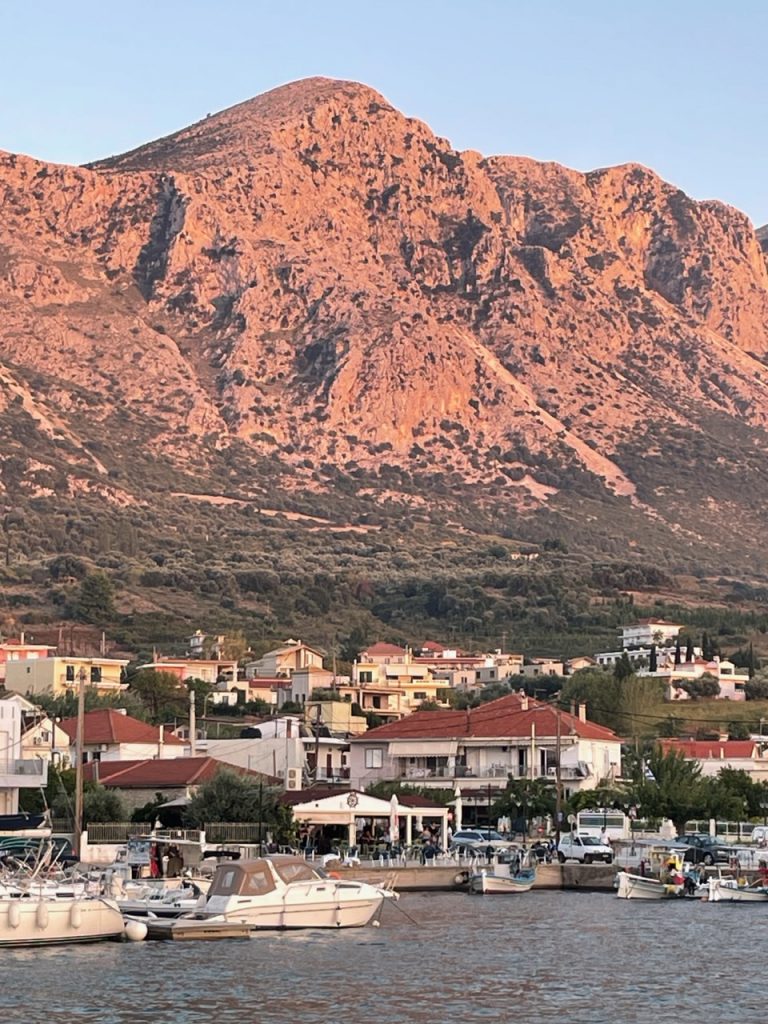
It was nice in Palairos. Well looked after by harbour master Christos, bathing beach right next to the harbour, yacht club with bar and view of the sunset behind the island of Levkas and the high mountains directly above the village with alpenglow every evening. One day we walked up there a bit and could see the whole scenery from above. However, it was difficult to make progress on the unmarked paths and goat tracks. A few times we got stuck in the "wilderness".
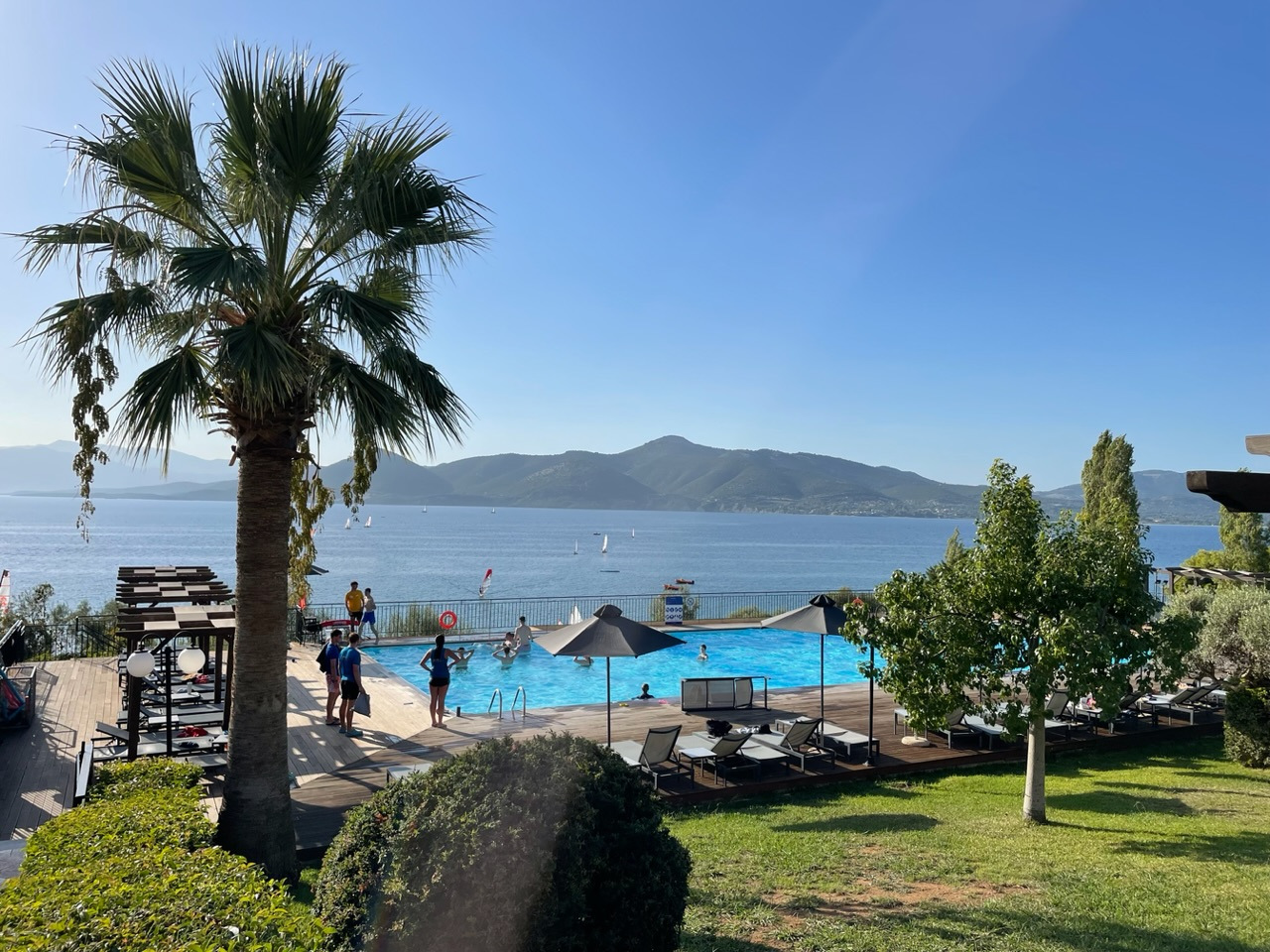
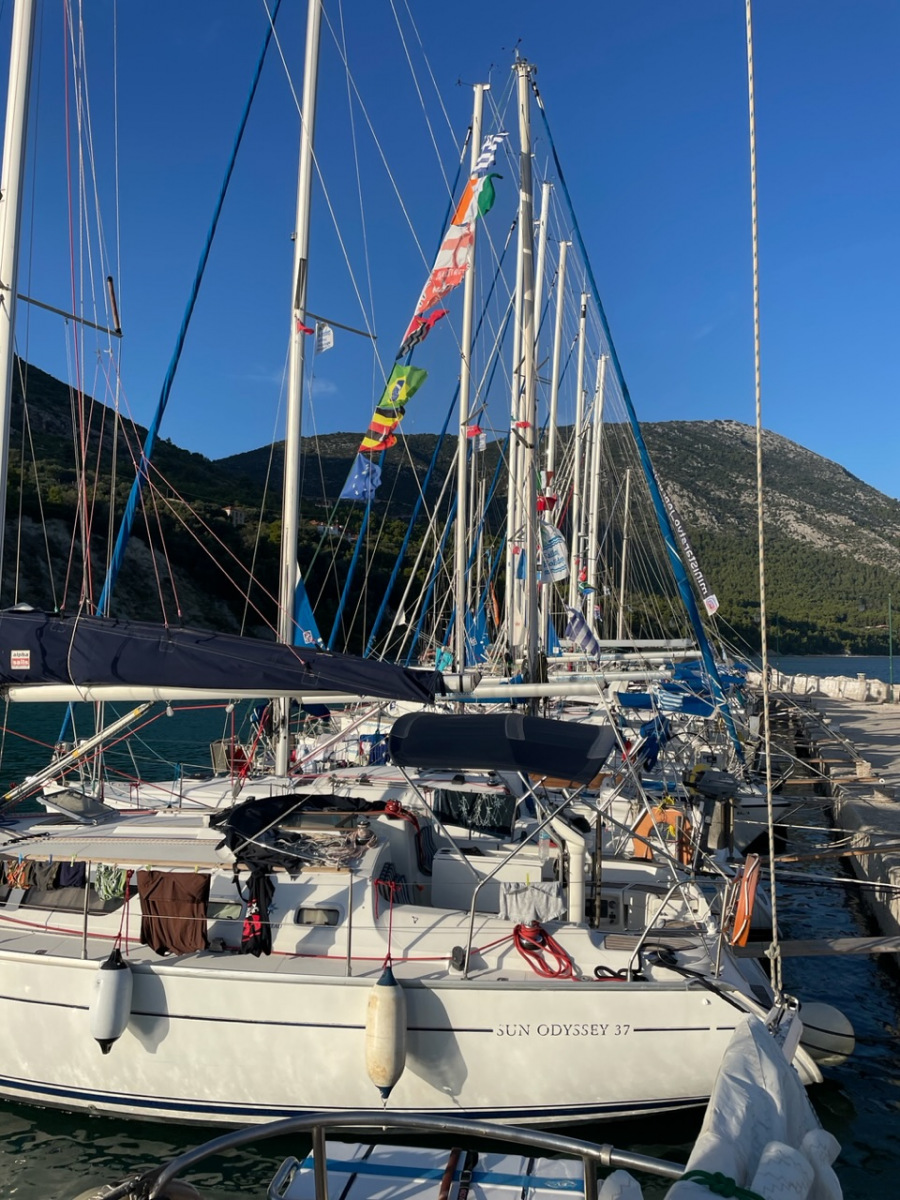
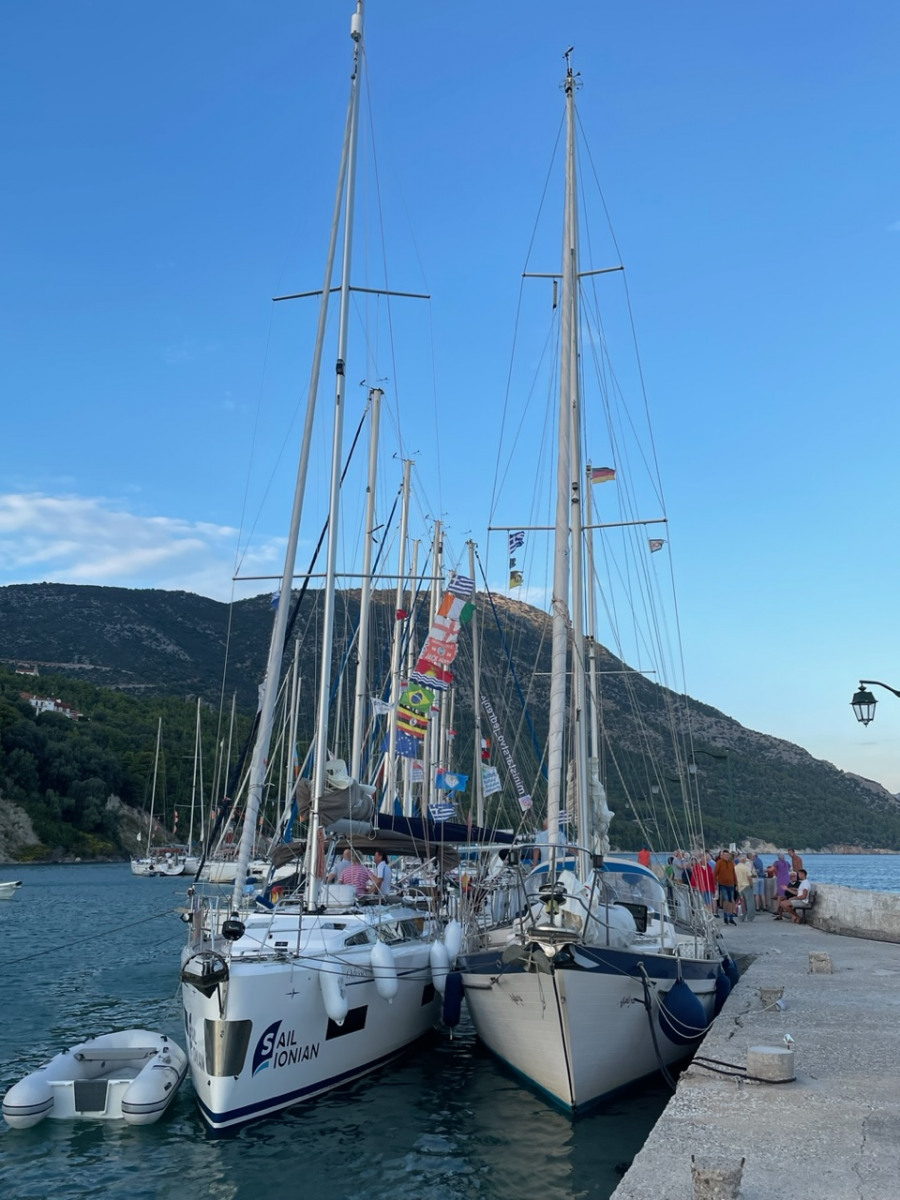
We also had a look at the port of Vounaki, one nautical mile away. It has a completely different flair than the town harbour of Palairos: an all-inclusive holiday resort with all the trimmings, from bicycle rental to sailing dinghies, swimming pools and charter boats from the Neilson agency. Nothing for us.
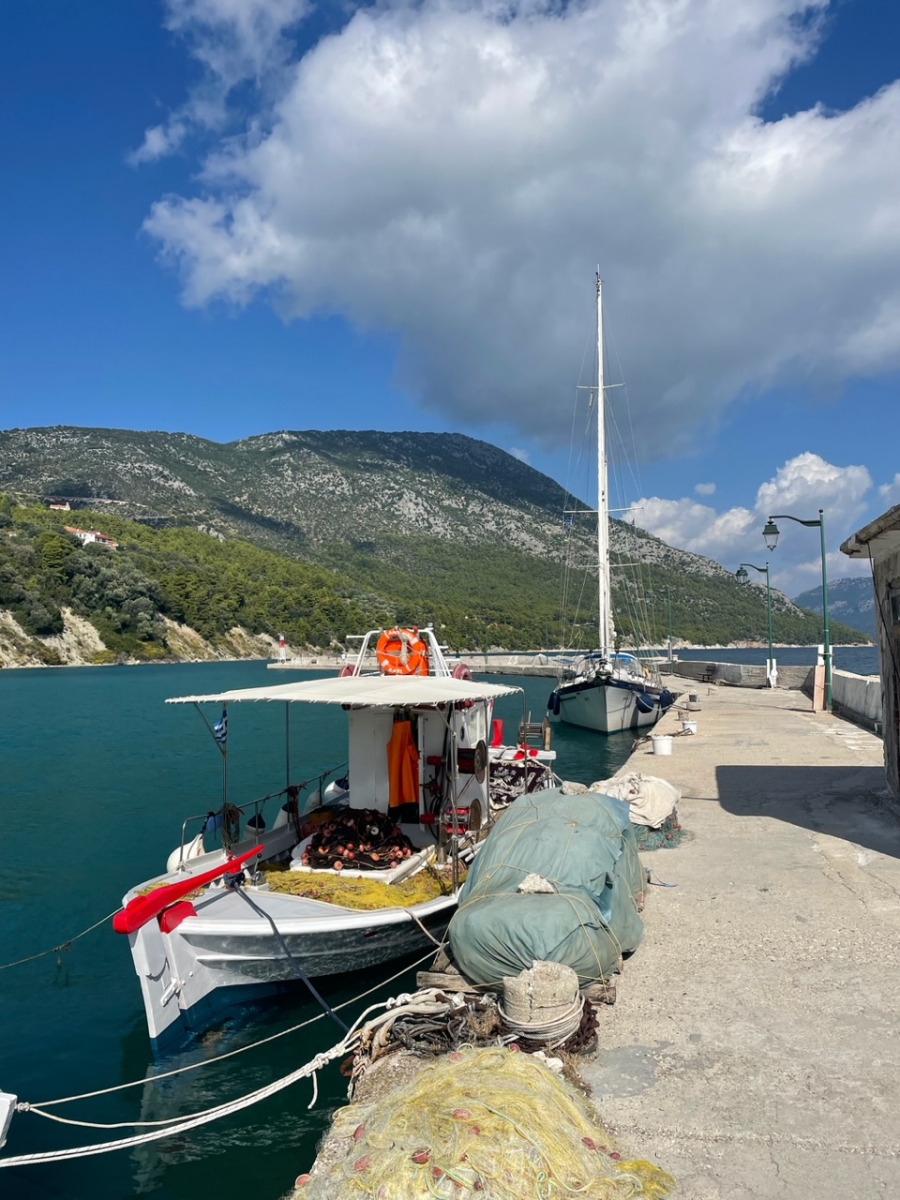
Pictures of Palairos
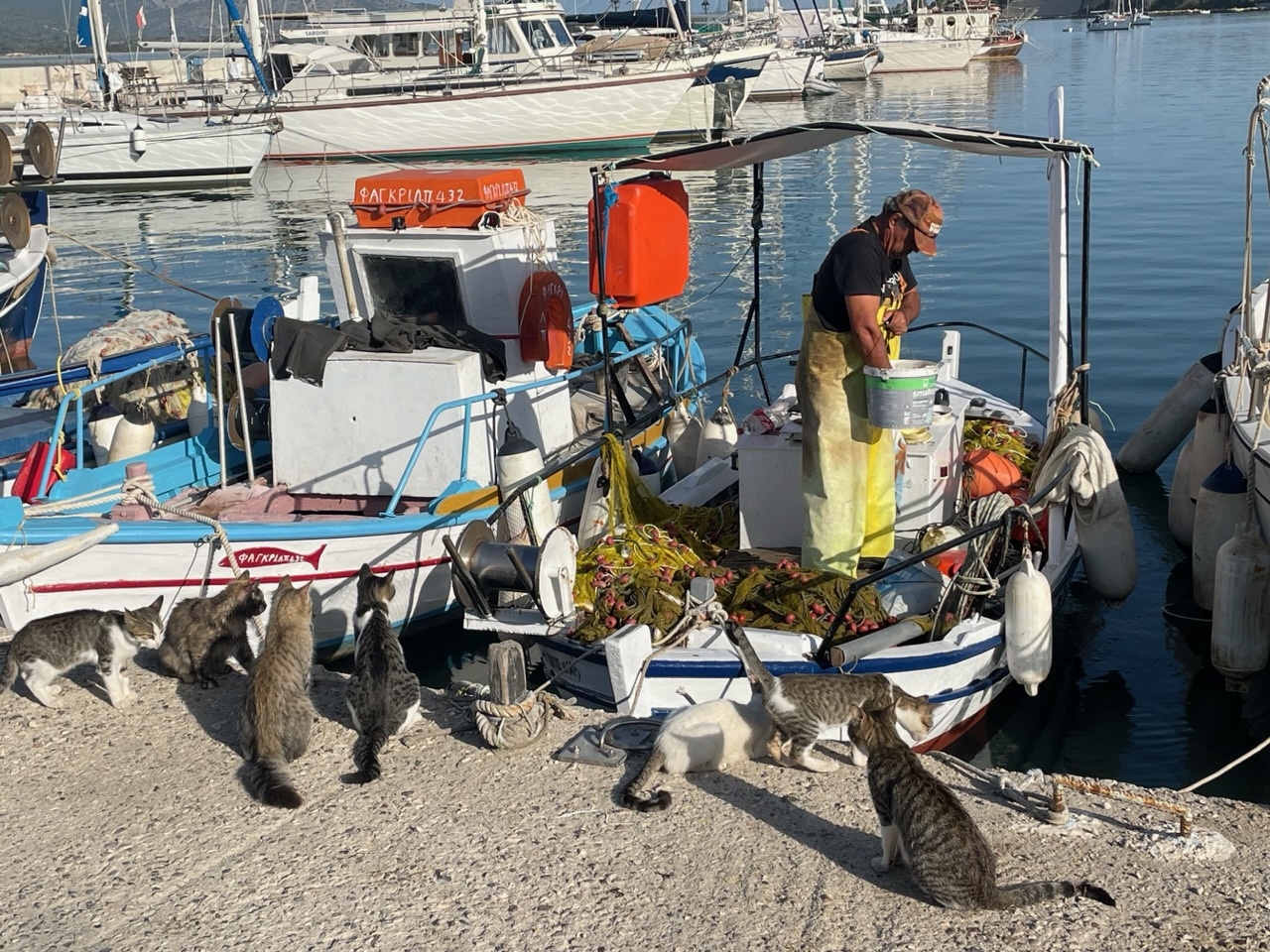
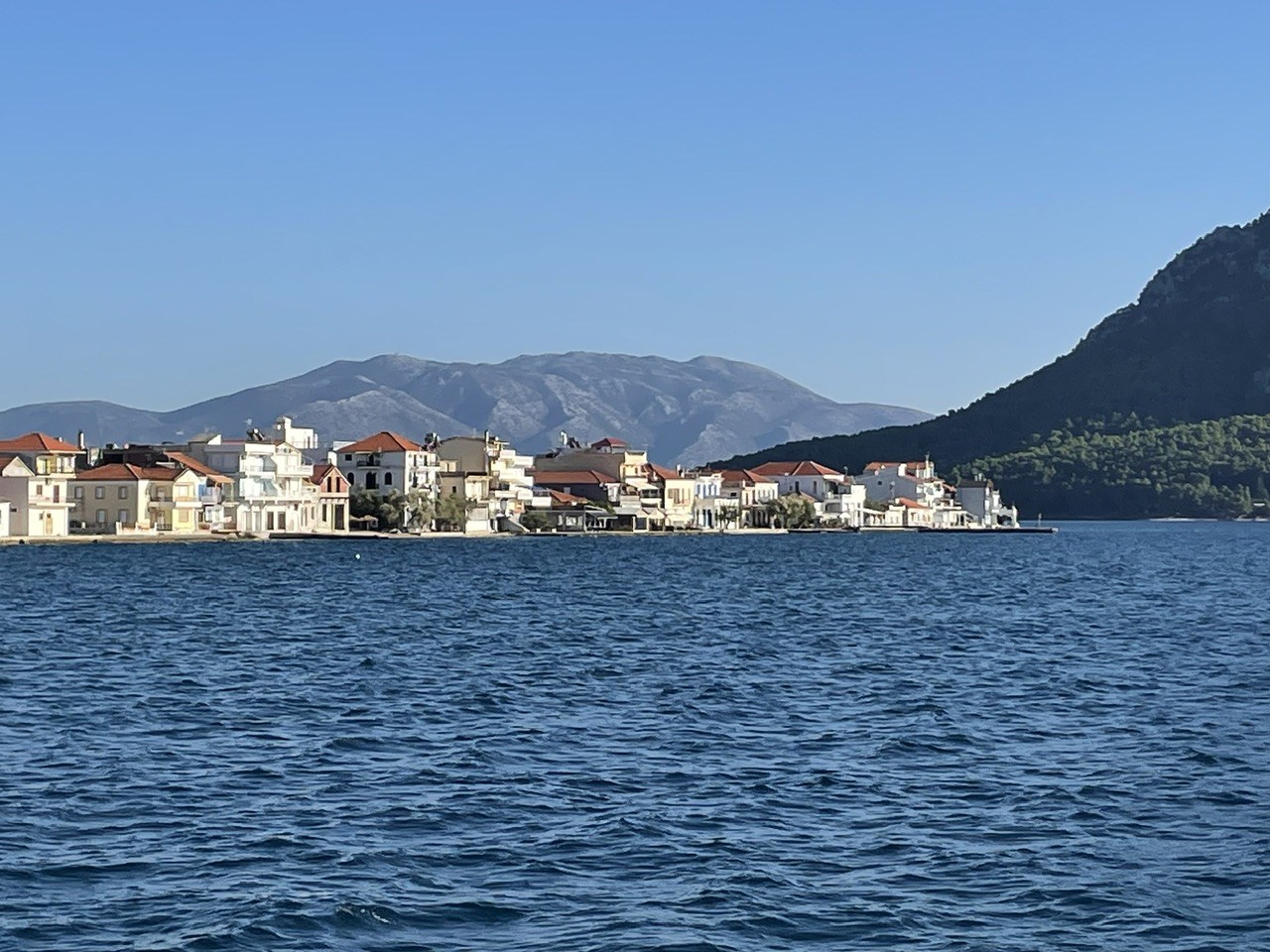
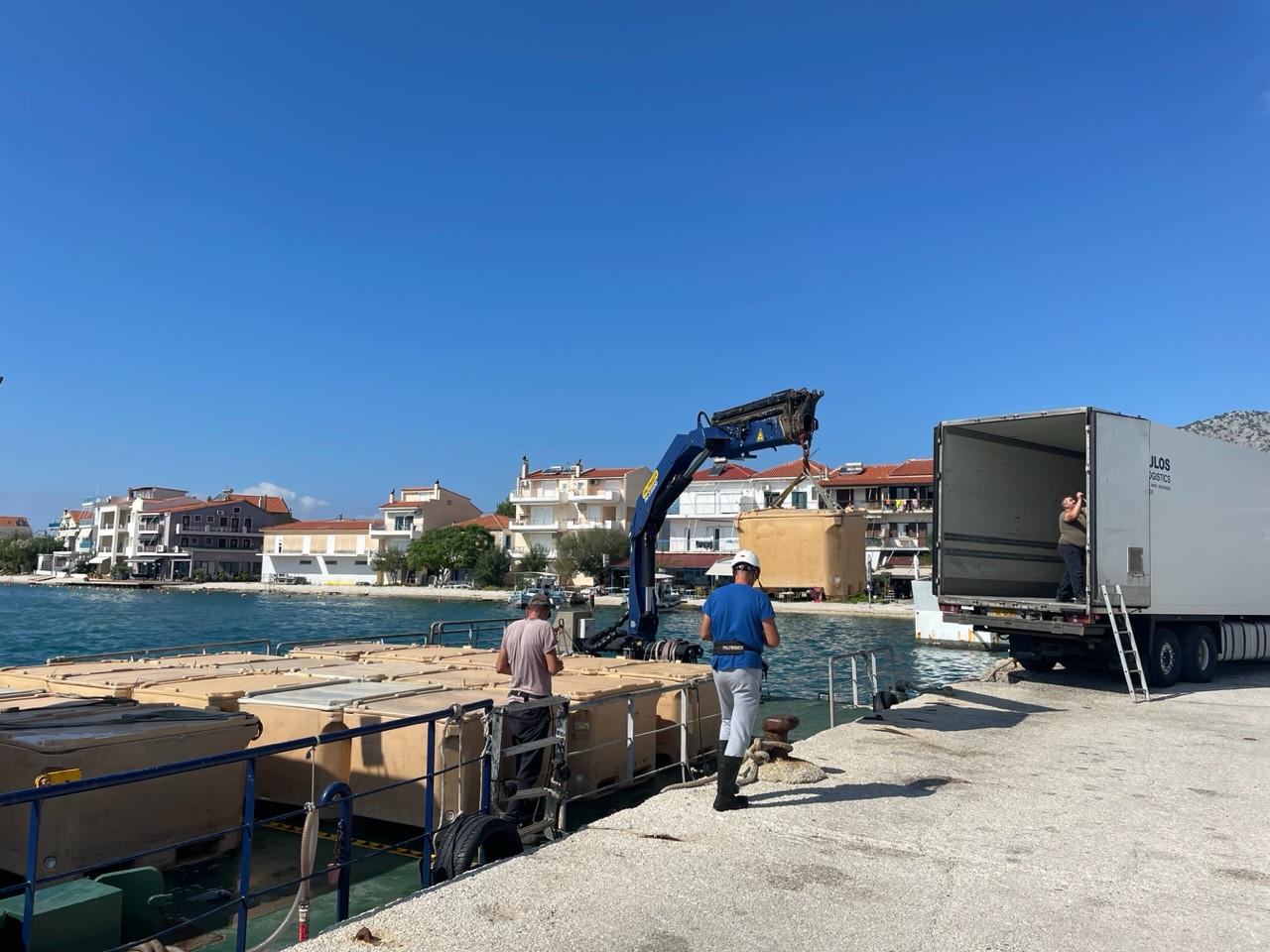
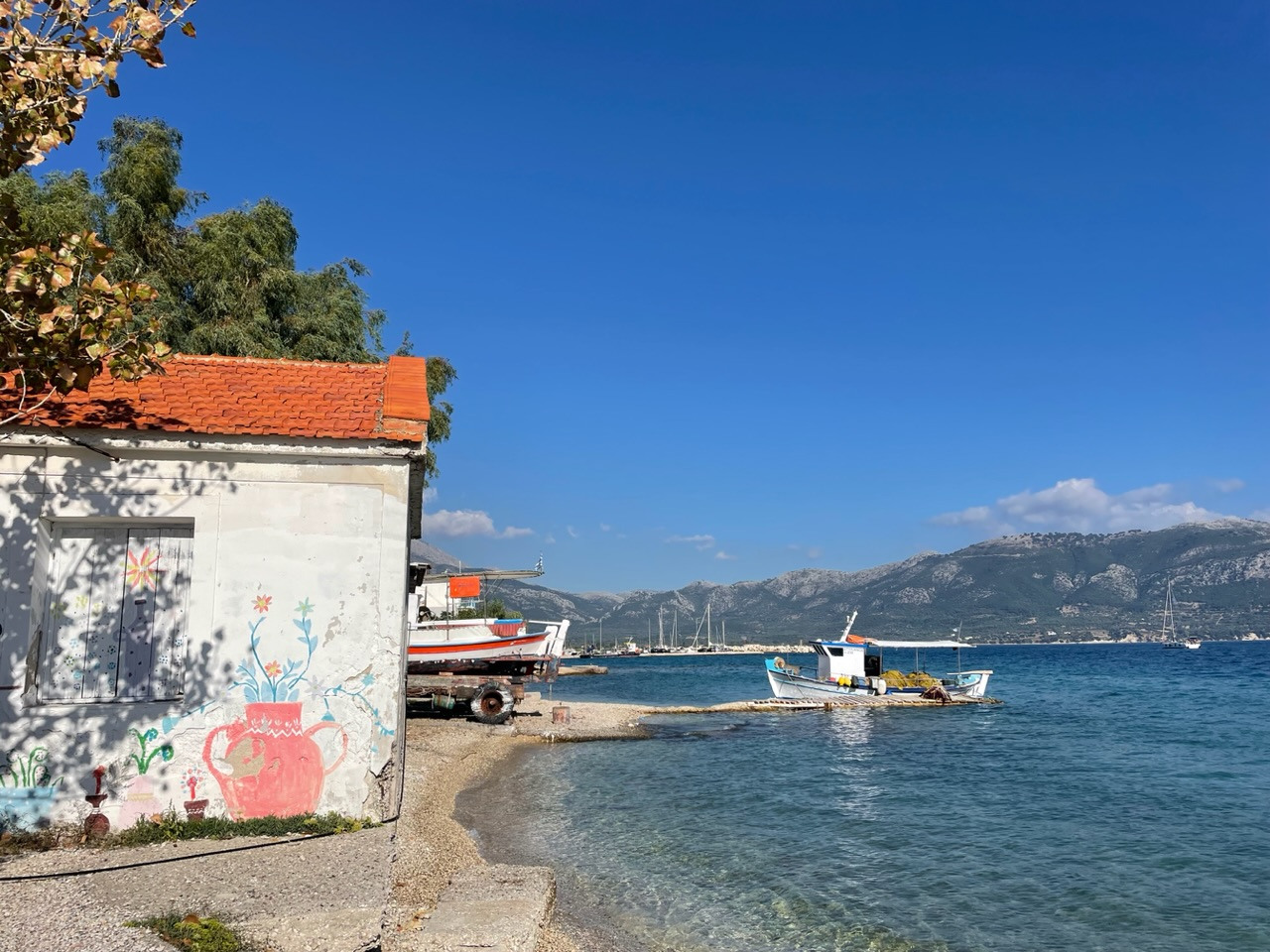
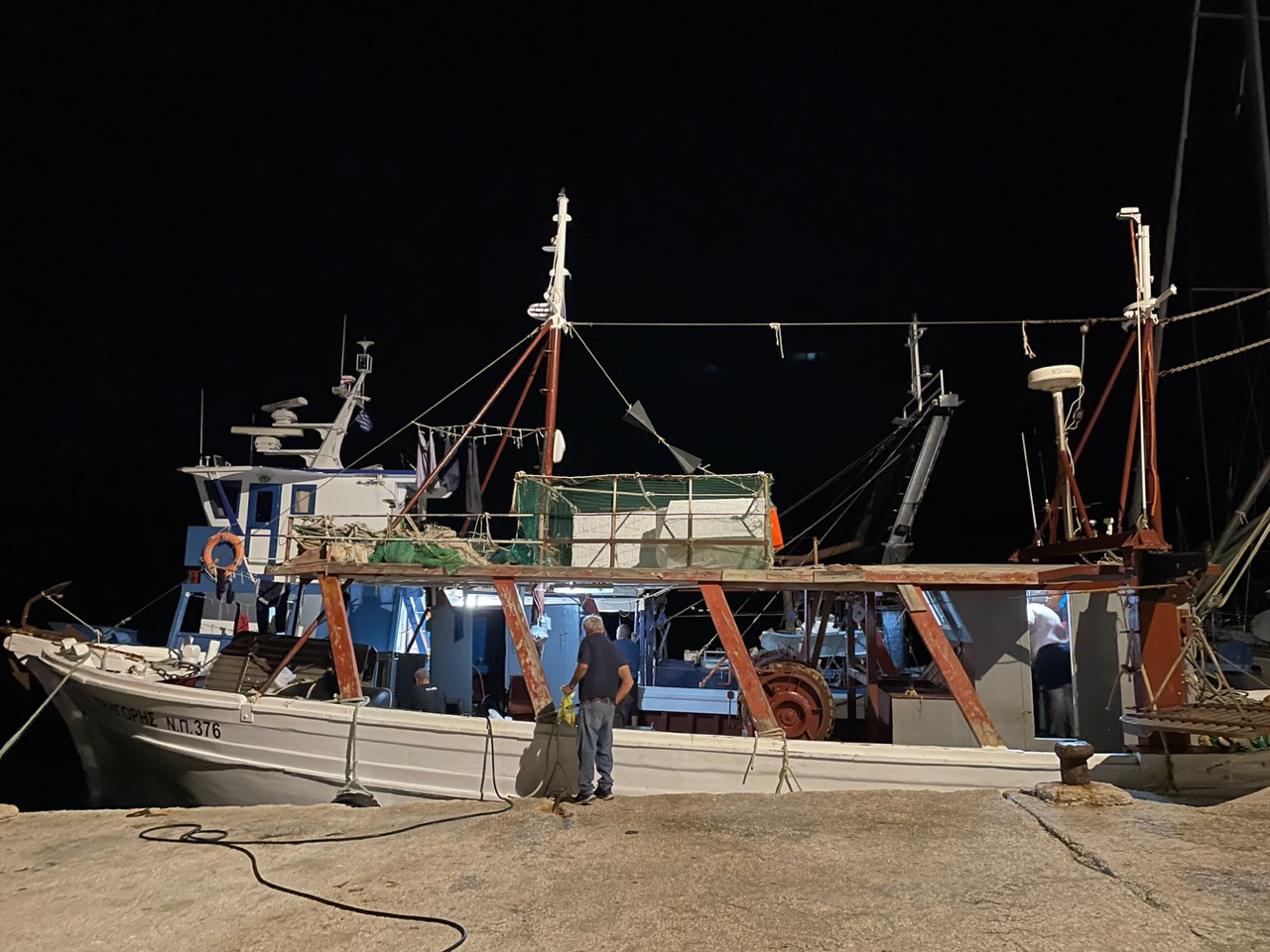
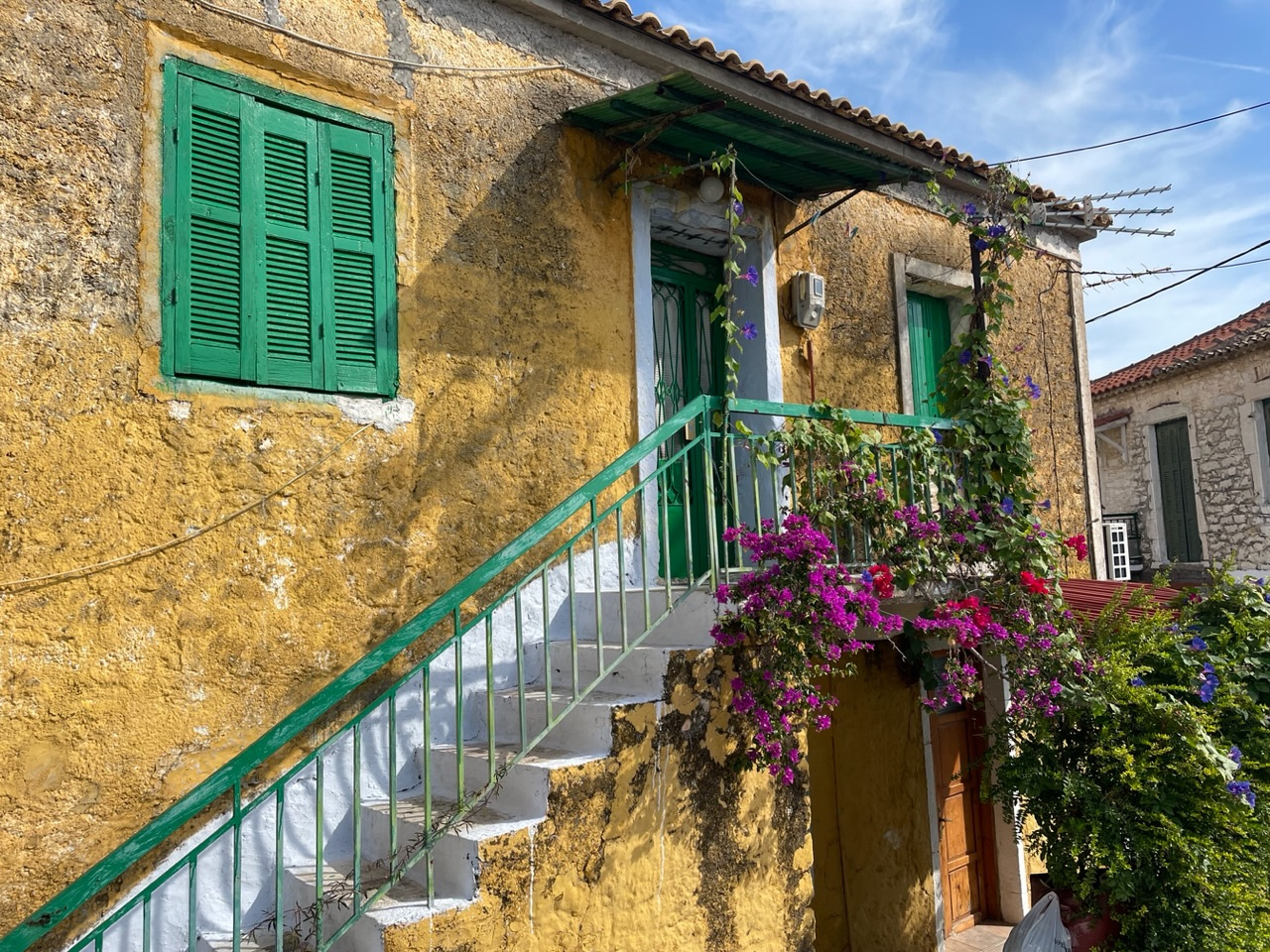
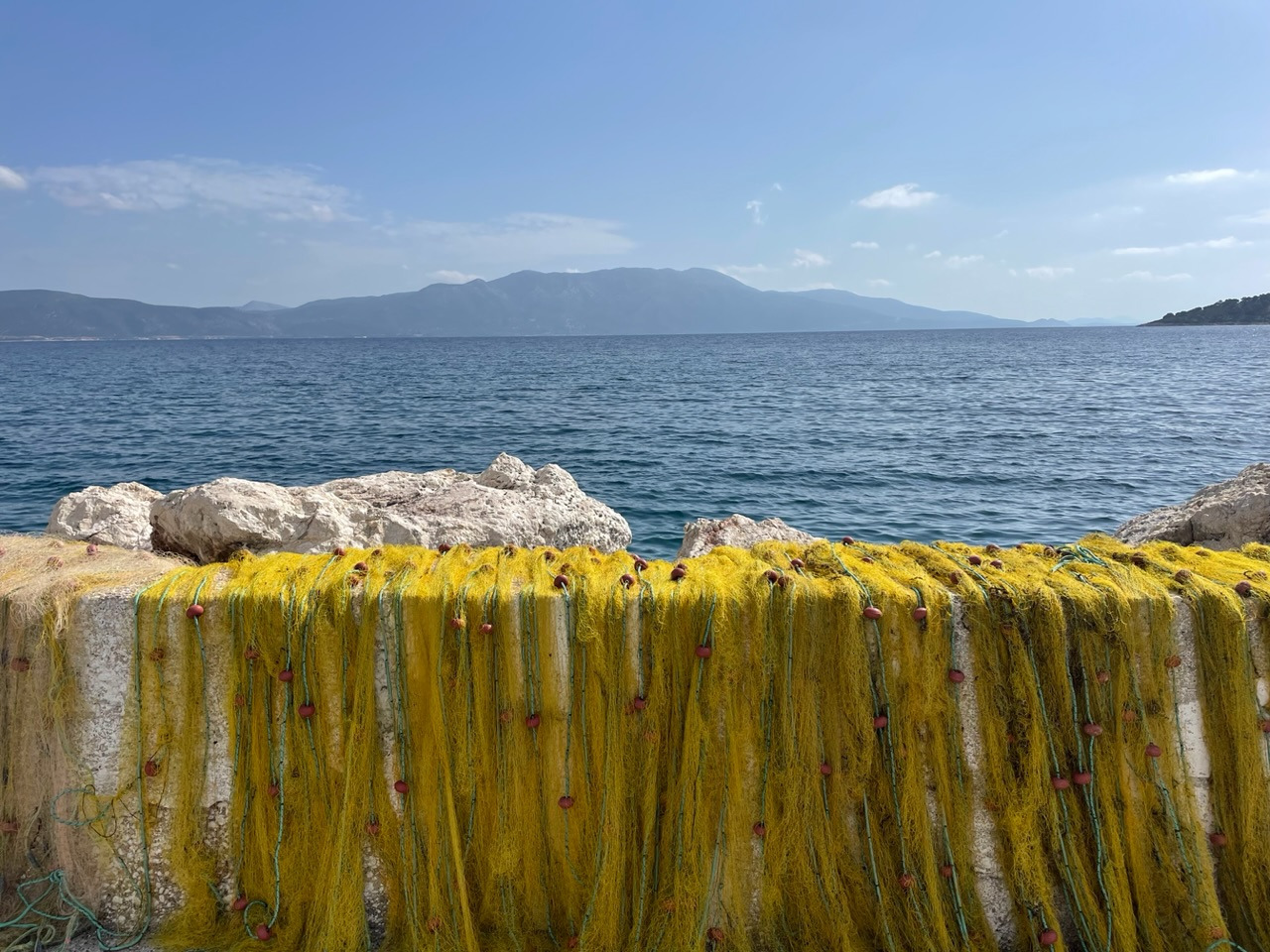
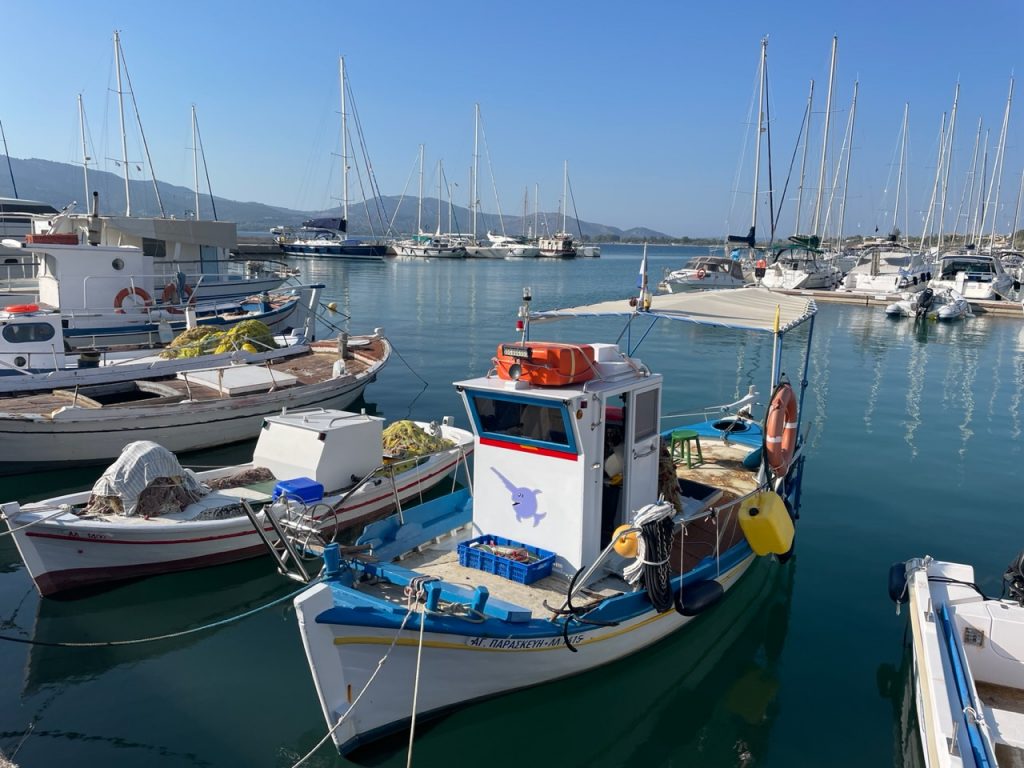
It was a „car jump“ to our next destination a little to the south, Mitiká (also on the mainland). But for this „cat jump“ we were on the move for several hours, once again beautiful light wind sailing. For anchoring, we did not choose the bay where the sunken city of Alyzia is located. We dropped our anchor in the bay right next to the harbour of the small fishing village. "A dirty, smelly fishing harbour you shouldn't go to," someone wrote on Navily. We are interested in the normal Greek ports without charter piers and flotilla visitors. So the next day we went to the harbour and watched the hustle and bustle: Small ferry boats sail to the neighbouring islands. The fishermen go out at dawn, live fish are delivered from the fish farms in large plastic containers and loaded onto trucks. And the place, which is built almost to the water's edge, also has beautiful corners.
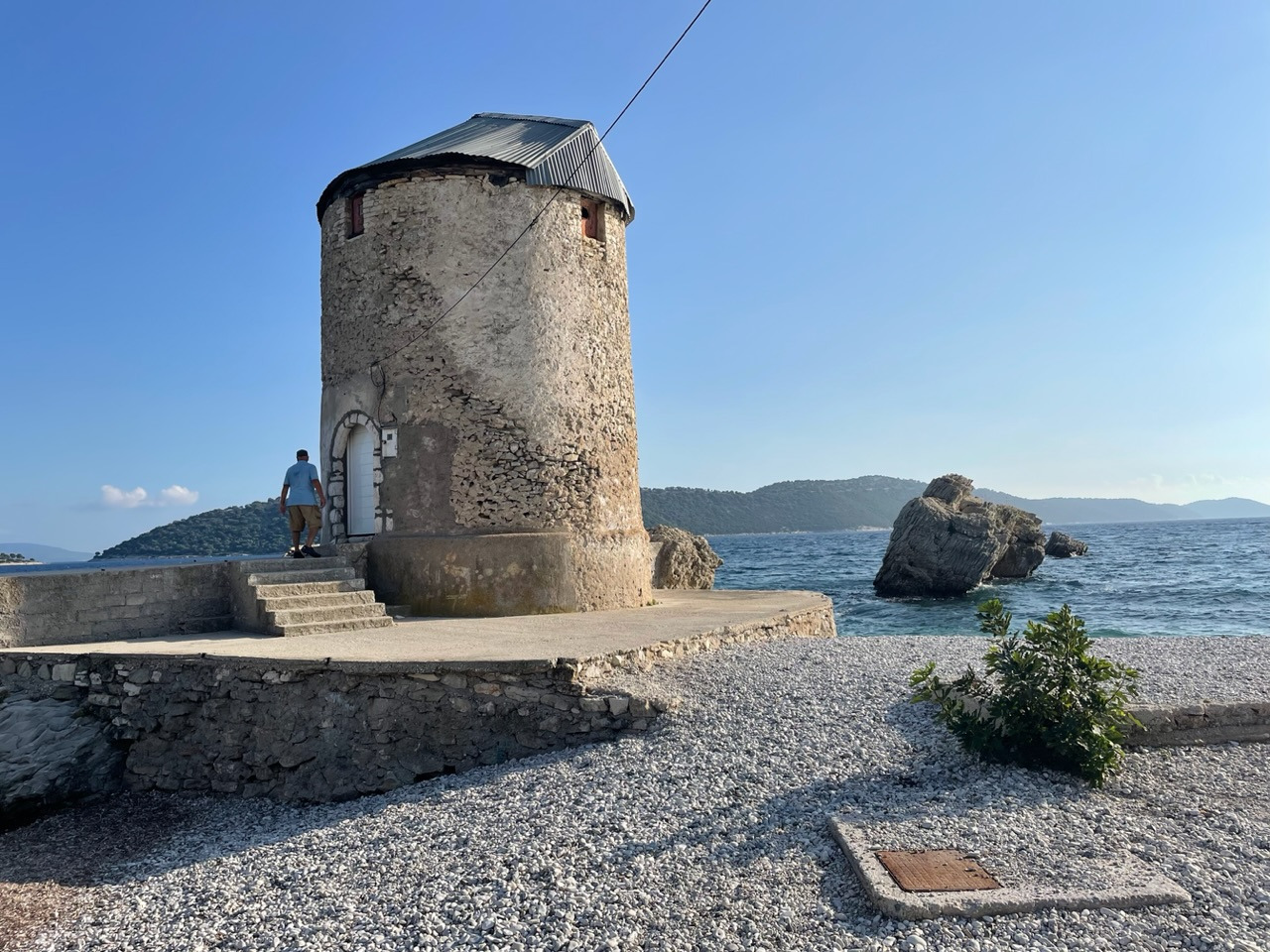
Pictures from Mitiká
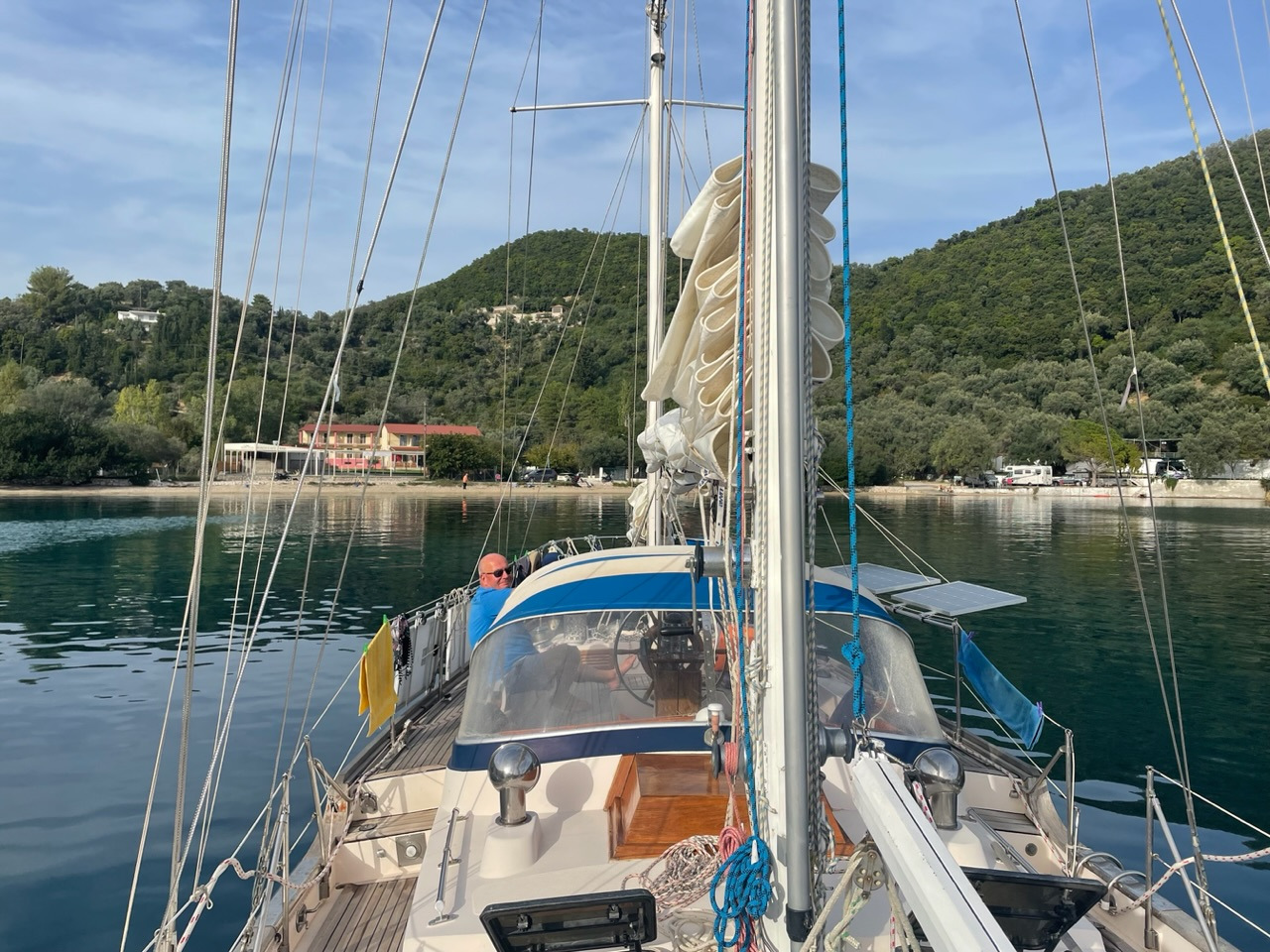
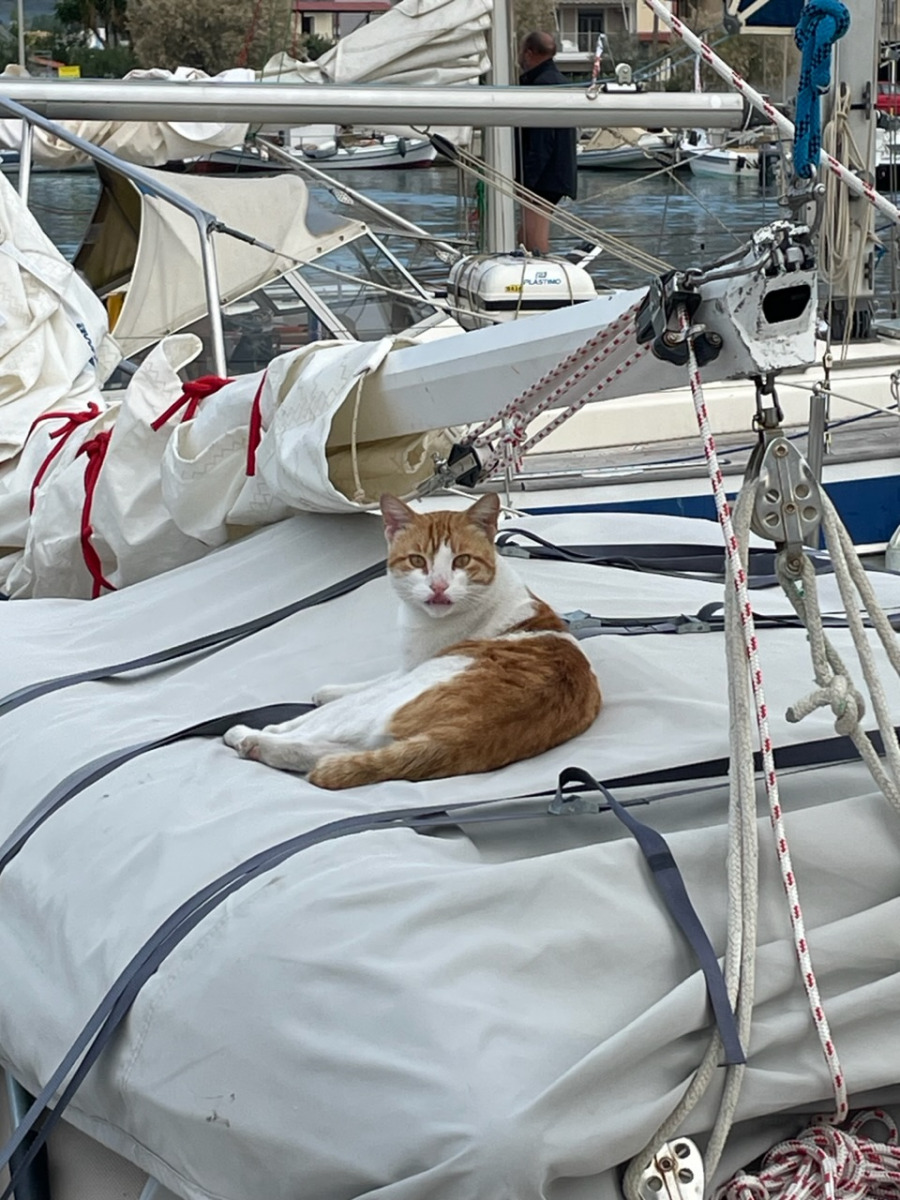
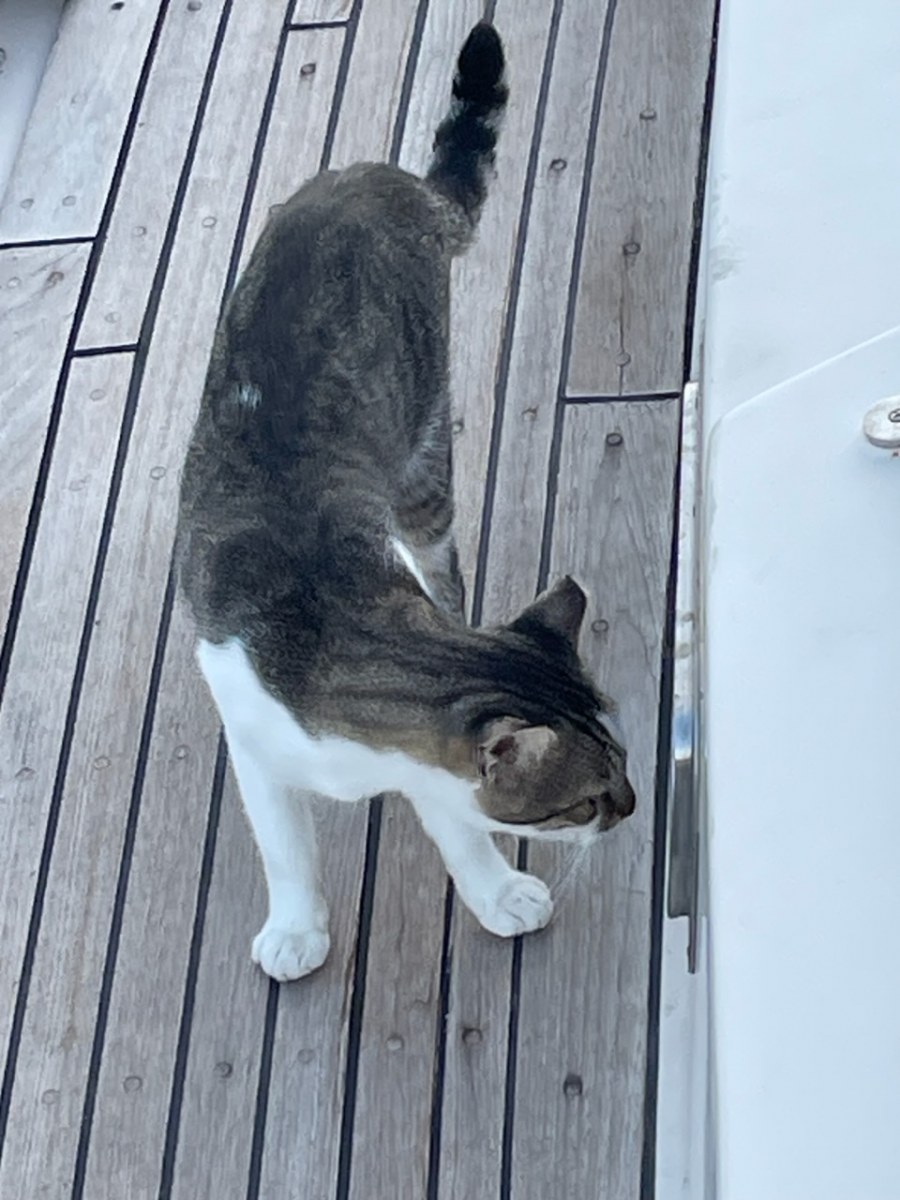
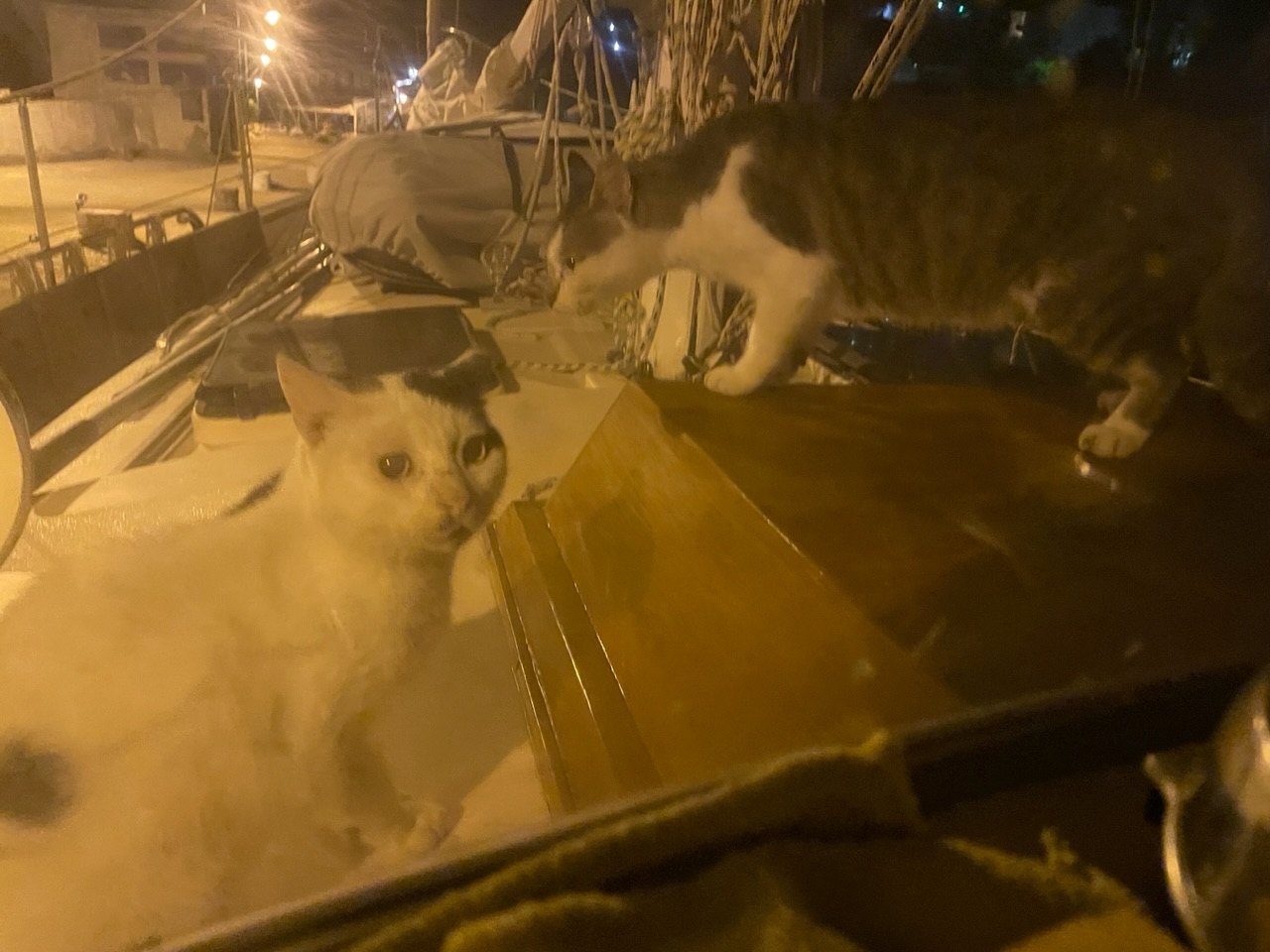
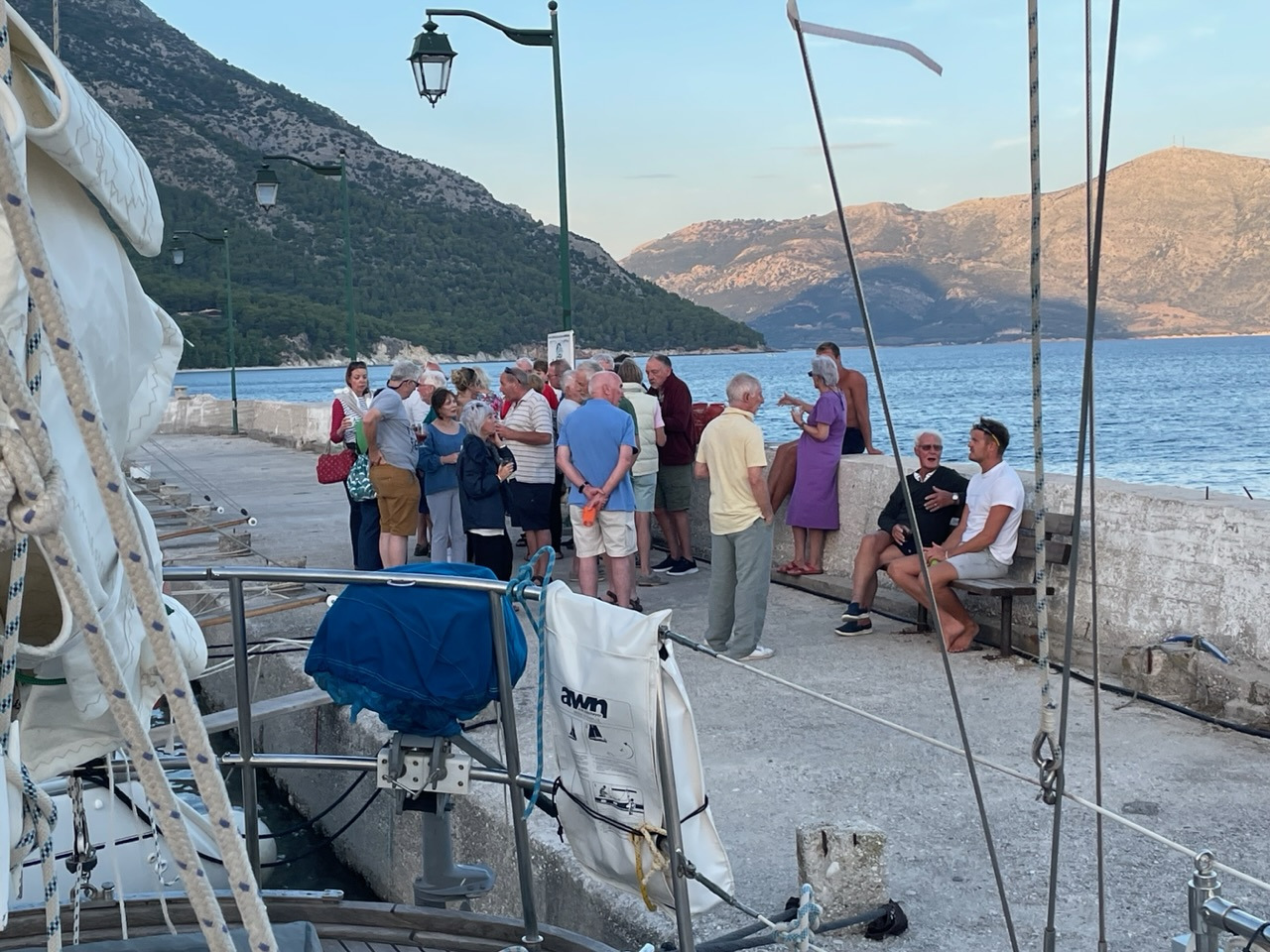
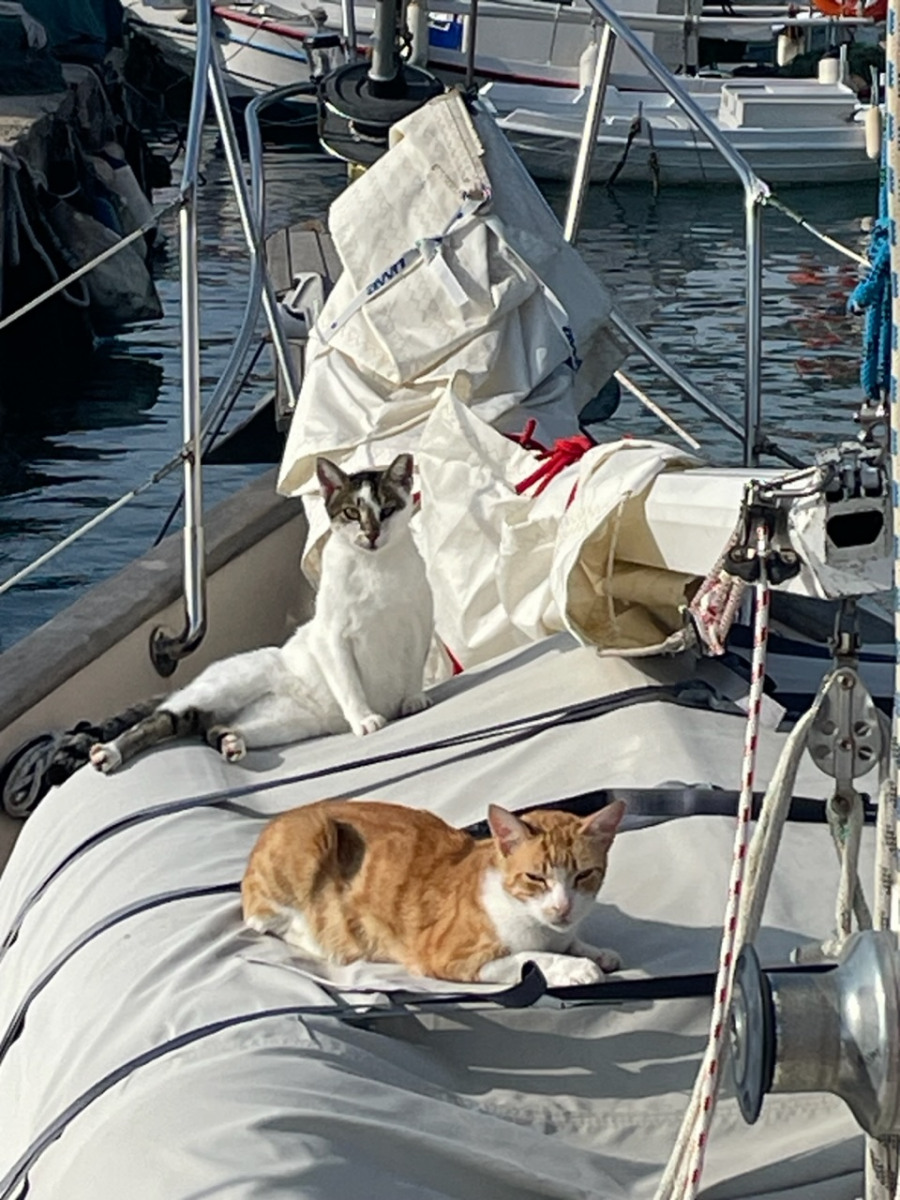
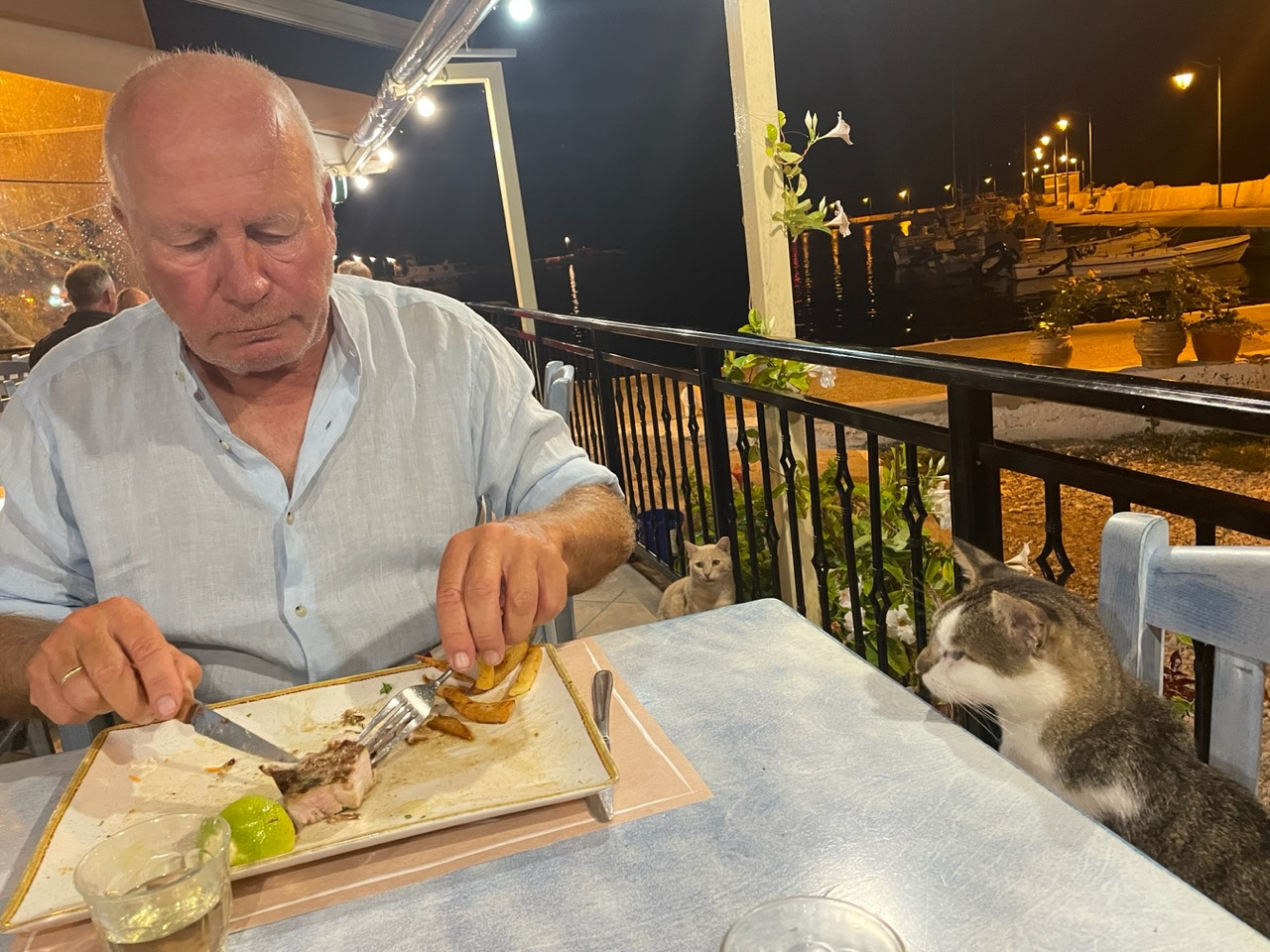
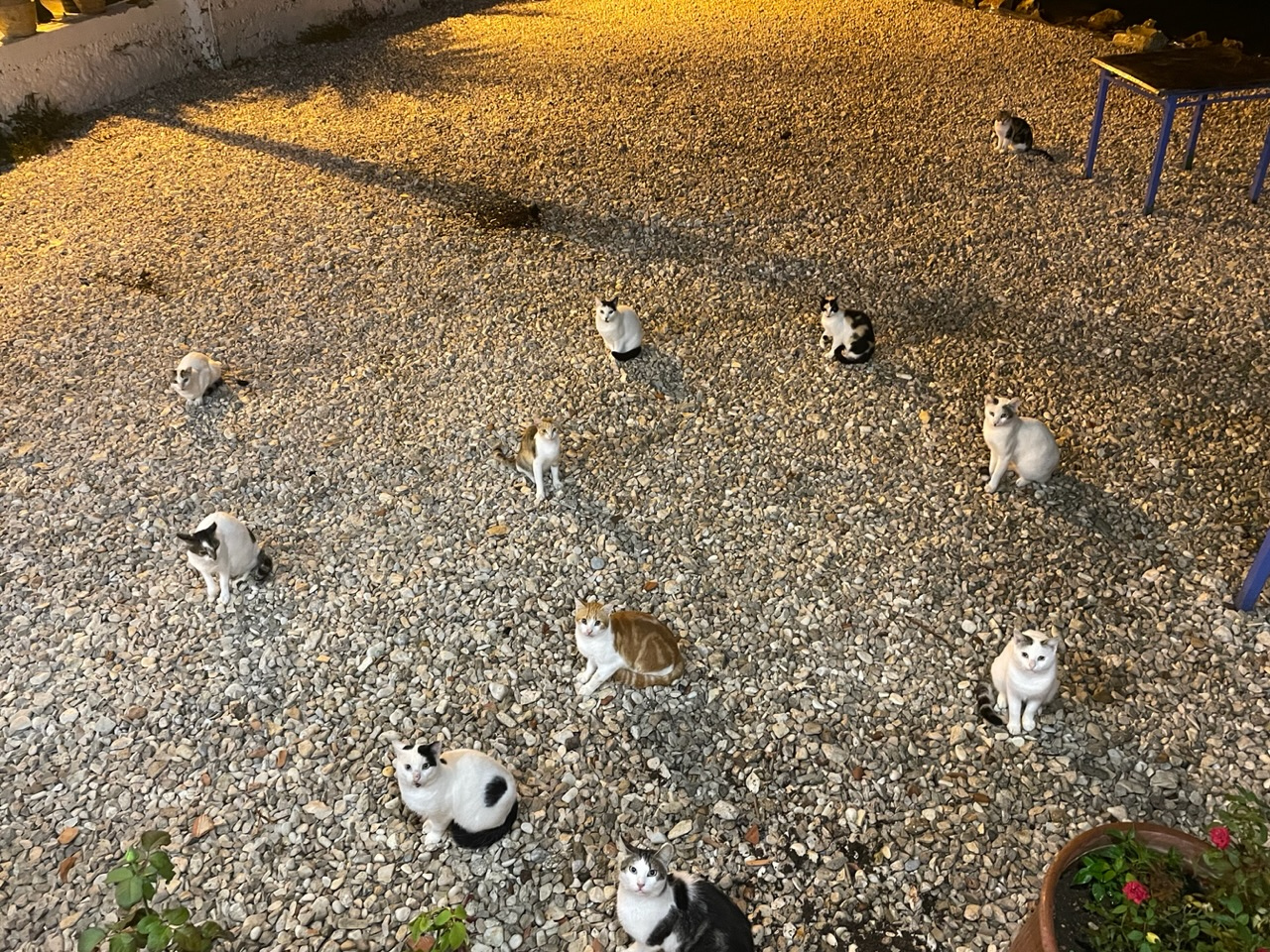
One more night at anchor outside the harbour for stargazing under the new moon, then the next day we're off to the nearby island of Kalamos. On the way north, we already spent a night here in the anchorage Port Leone. This time we moor in Port Kalamos. We have previously registered with the unofficial harbour master George. George, a soul of a man, one of the friendliest and fittest harbour masters we have met so far. Anyone who wants to observe how positive reinforcement works should pay him a visit ("Drop your anchor here, two metres more chain, please. Excellent 👍. I'm George. Welcome!). Even in heavy rain he goes out and helps people moor. We were exceptionally allowed to moor alongside and were thus able to bring a new 11 kg gas bottle on board without dislocating our backs. George knows our boat and the previous owners Peter and Trix. He likes the boat and the harbour cats obviously like it too. They like to sleep on or under our dinghy. George's taverna serves super tasty food. Of course we go there for dinner, especially since lying in the harbour doesn't cost anything. And we stay here for a few days, hike around the island and are now weathering a thunderstorm.
The exit from the port of Lygia worked well, we passed smoothly through the rocks. Along the mainland coast we headed south for 15 miles until we entered the narrow buoyed fairway to Preveza, once again without wind, motoring along endless sandy beaches, past Mytikas with its impossibly tiny fishing harbour. Past Preveza with its three huge marinas, where about 2000 boats are moored, in the water and on land, the centre of the charter bases in the Ionian Sea.
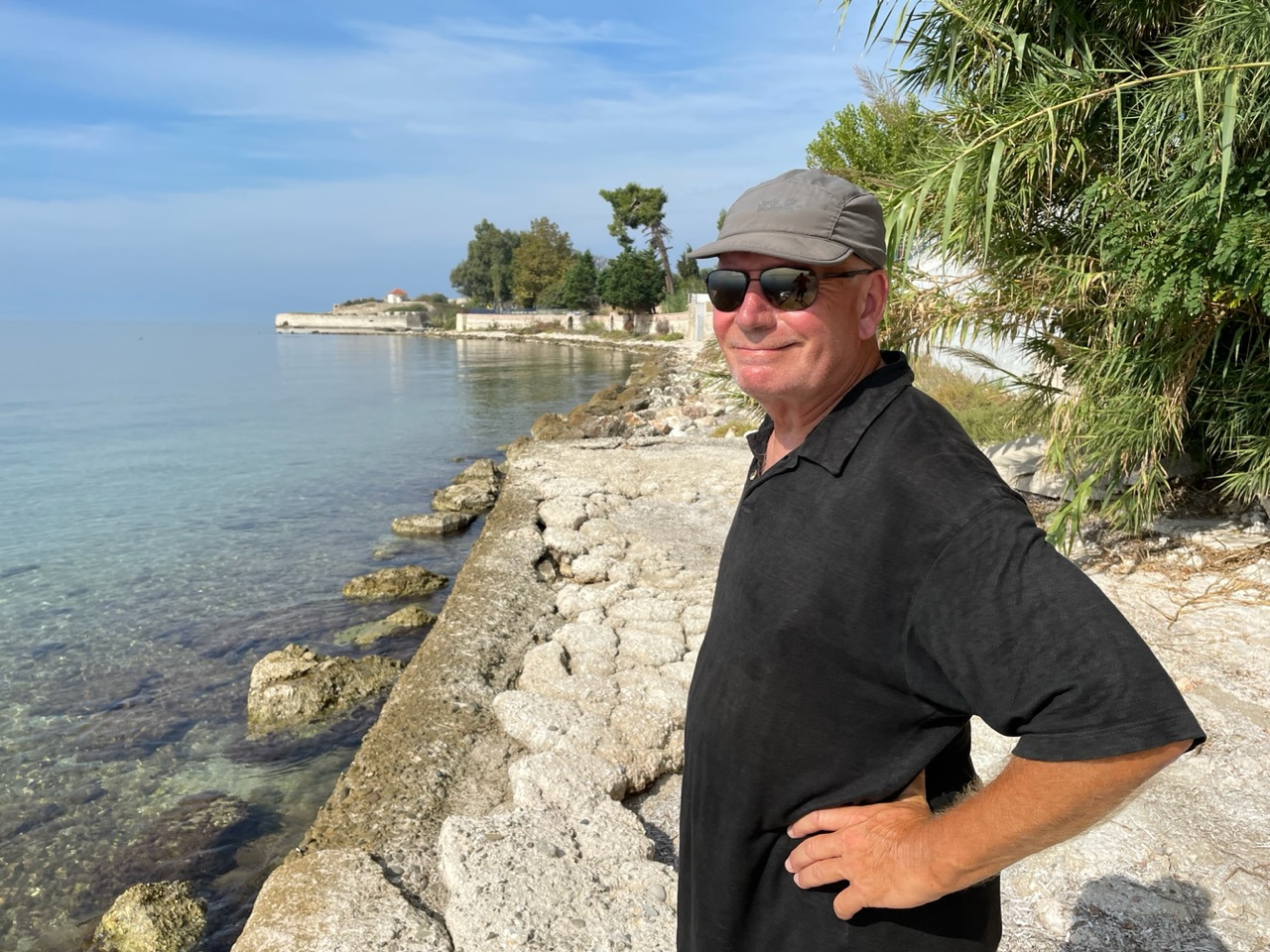
In Preveza we headed east into the Ambracian Gulf, a shallow water area with a great abundance of fish, also a migration area for countless birds on their way south - or north. Along the re-buoyed fairway between fish farms into the bay of Vonitsa, a beautiful little town that we had already explored by car. Two bays before Vonitsa we dropped anchor - idyllic with woods all the way to the shore, a single boat except for us, everything completely quiet - post-season. The little wind also fell asleep, so we were able to spend a cosy evening and a quiet night.
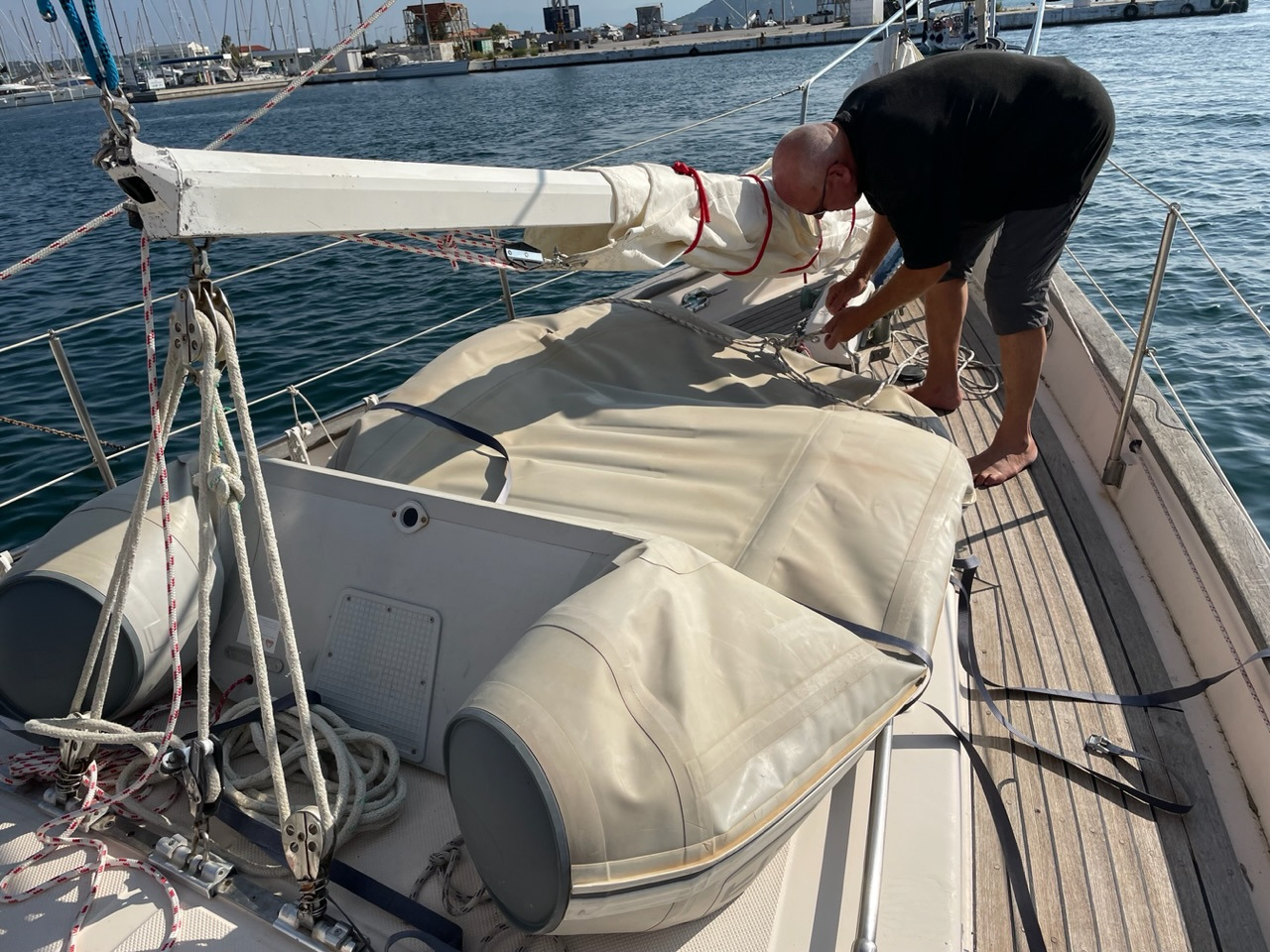
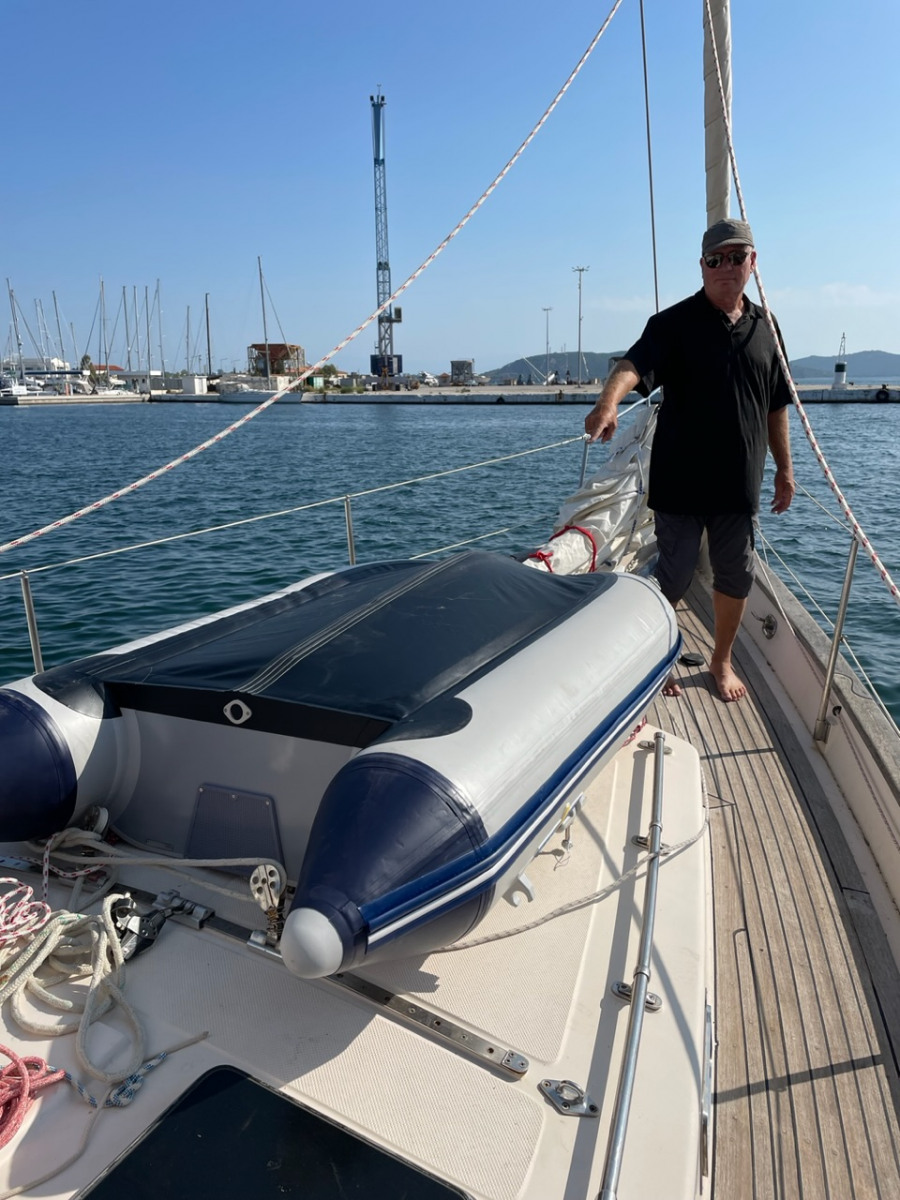
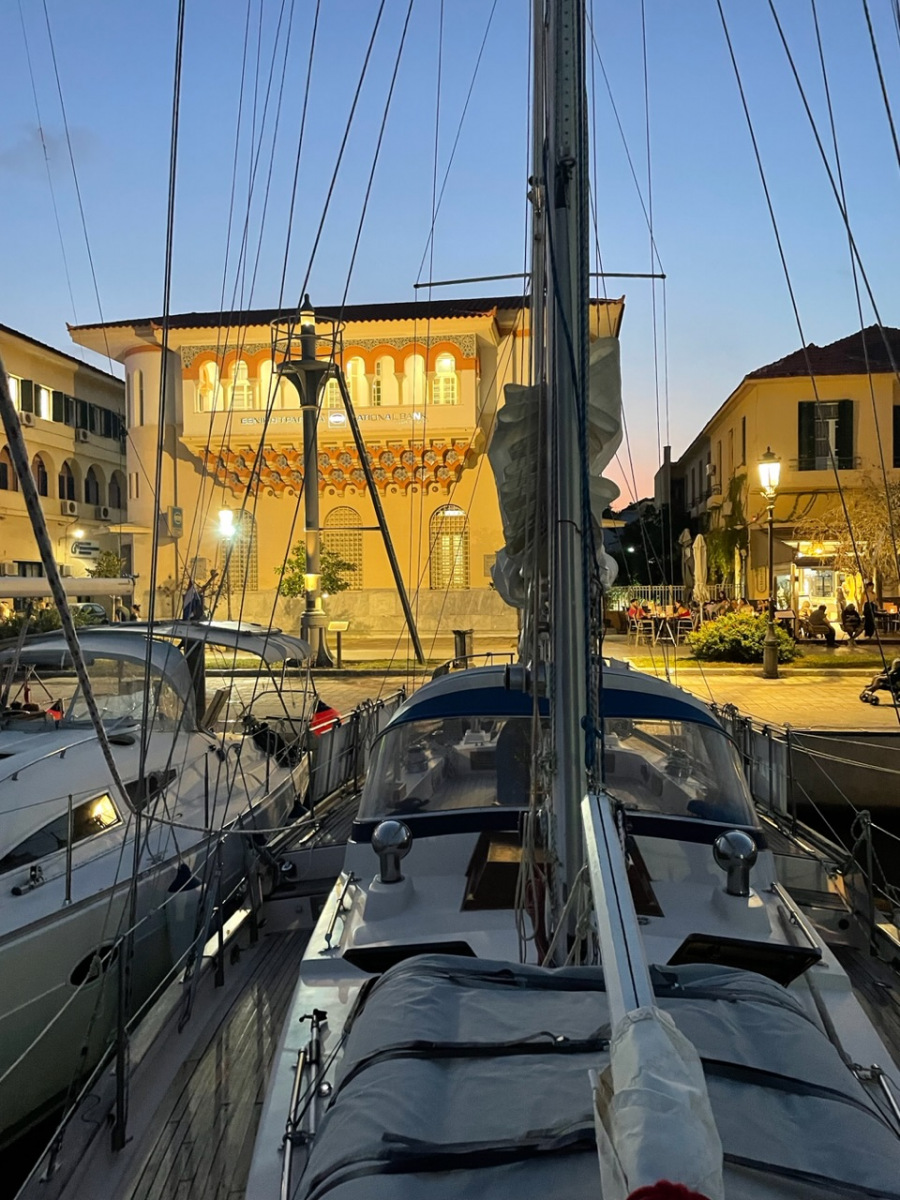
The next day we went back to Preveza, where we lay well on the second anchor attempt, at the city pier directly in front of the National Bank. Here Claudia had to disembark, as her plane for home was going from Preveza-Aktio airport, just a few kilometres away. It was a nice time with her! And we had to buy a new tender. We nearly got drowned, when we used the old one last time.
Pictures of Preveza
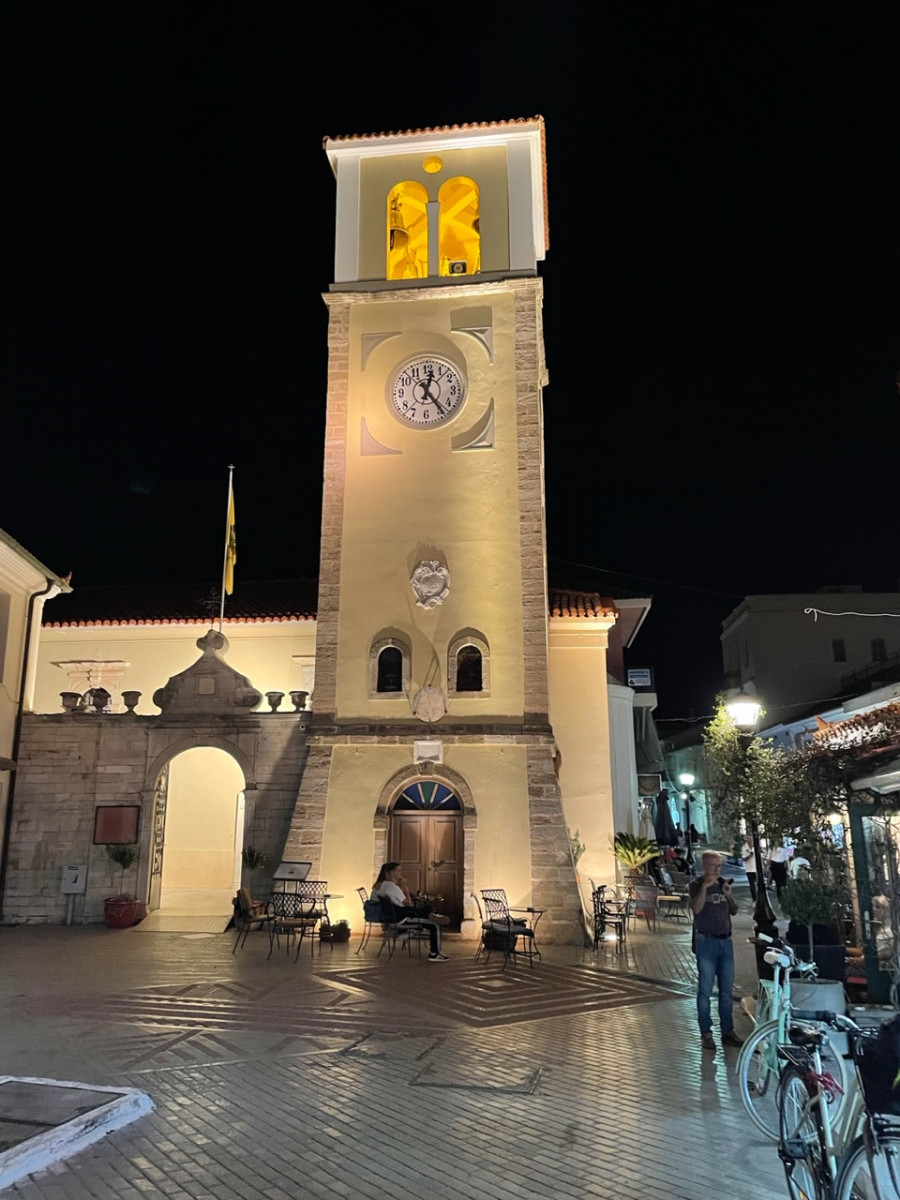
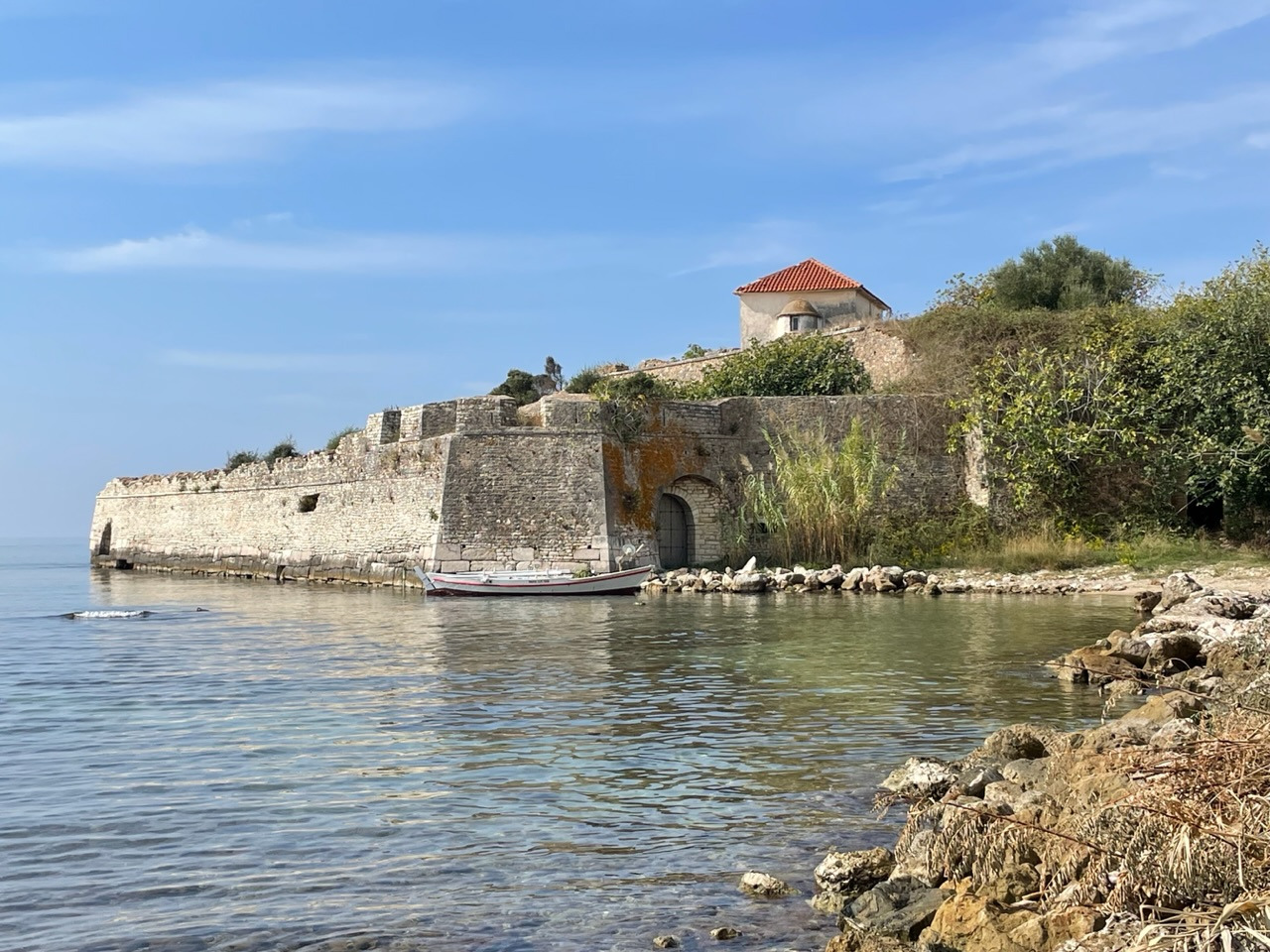
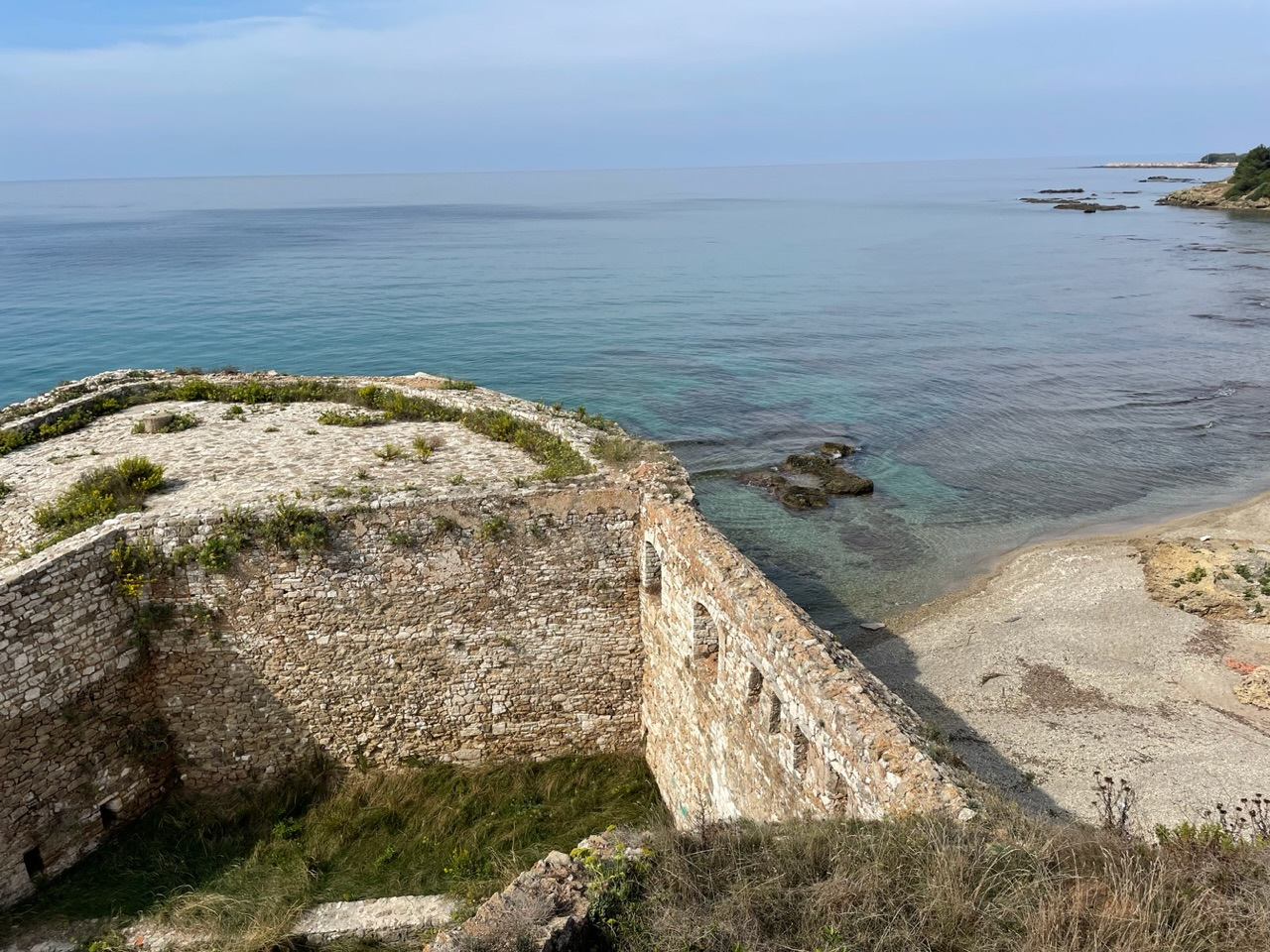
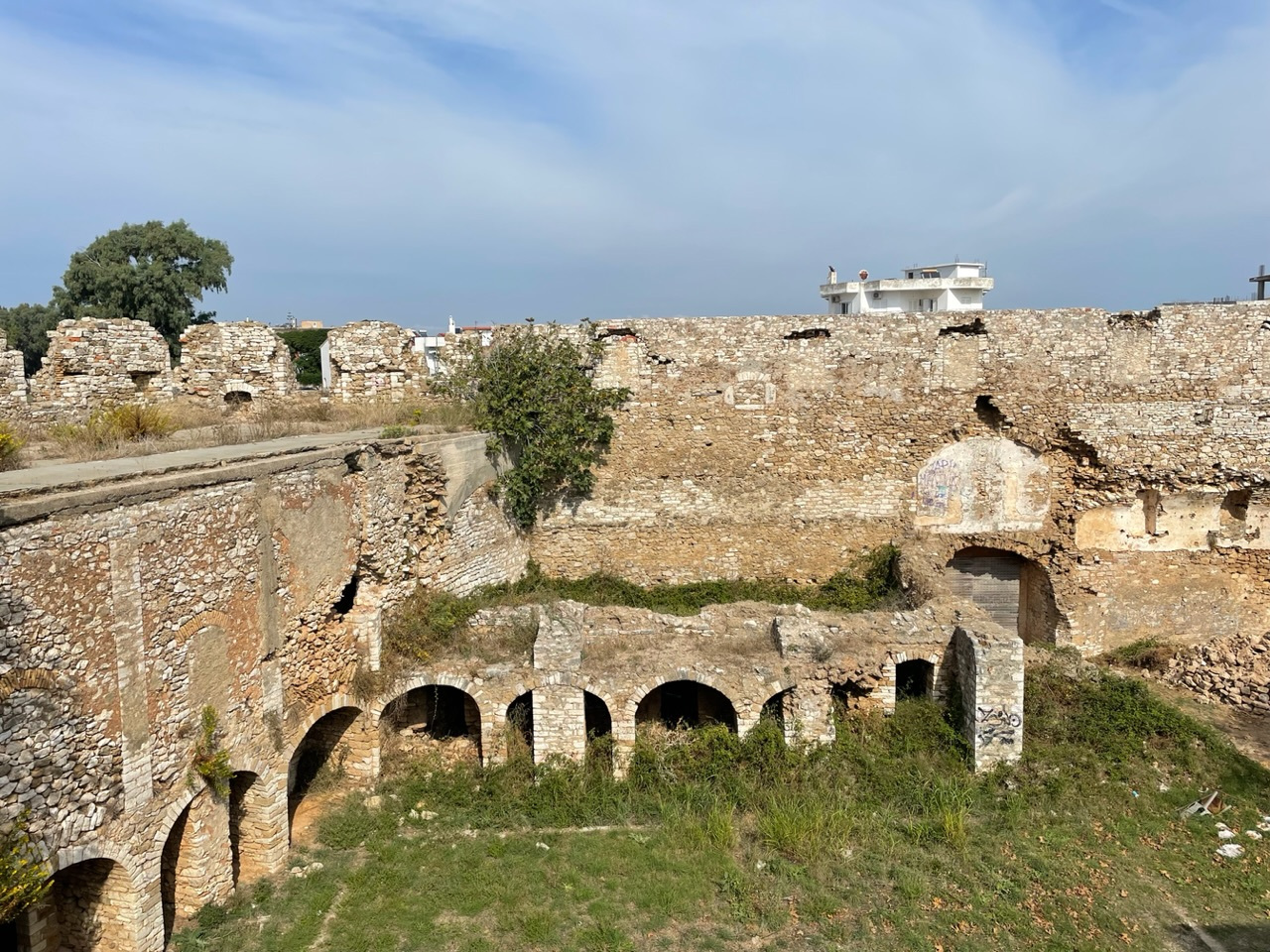
We liked Preveza so much, with its winding alleys and friendly, relaxed atmosphere, that we stayed for 5 days. We hiked to the Pantokrator Fortress of Ali Pasha, one of the lost places, a bit scary, but impressive with its thick walls and partly dilapidated walls and archways.
Pictures of Pantokrator-Castle
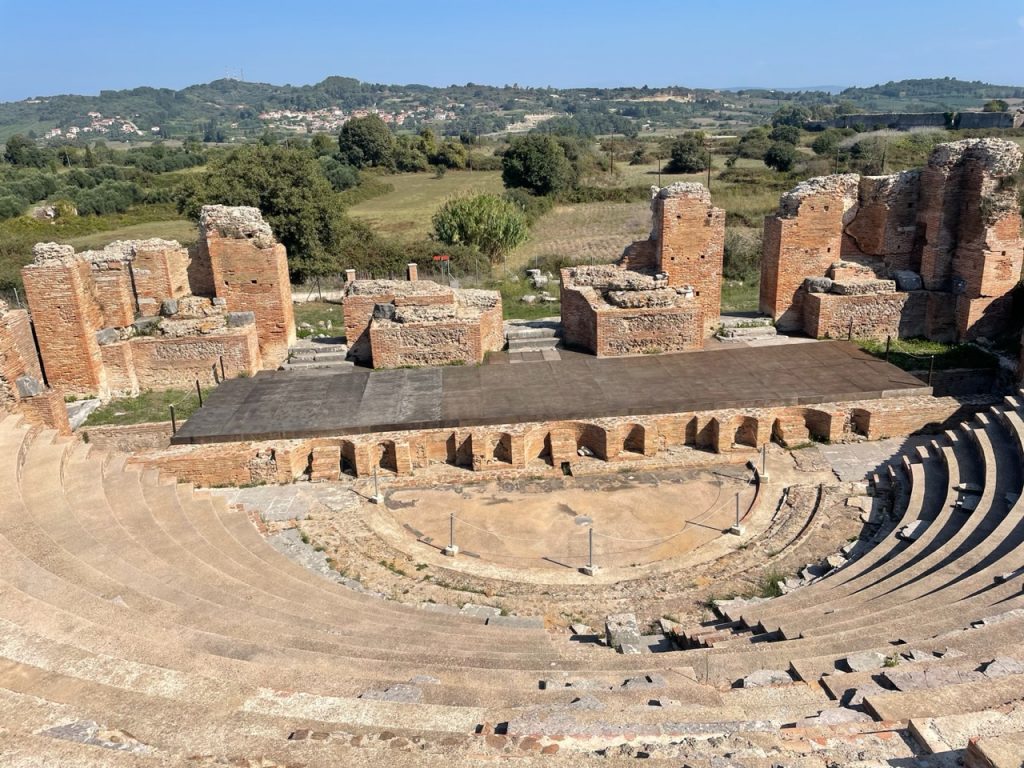
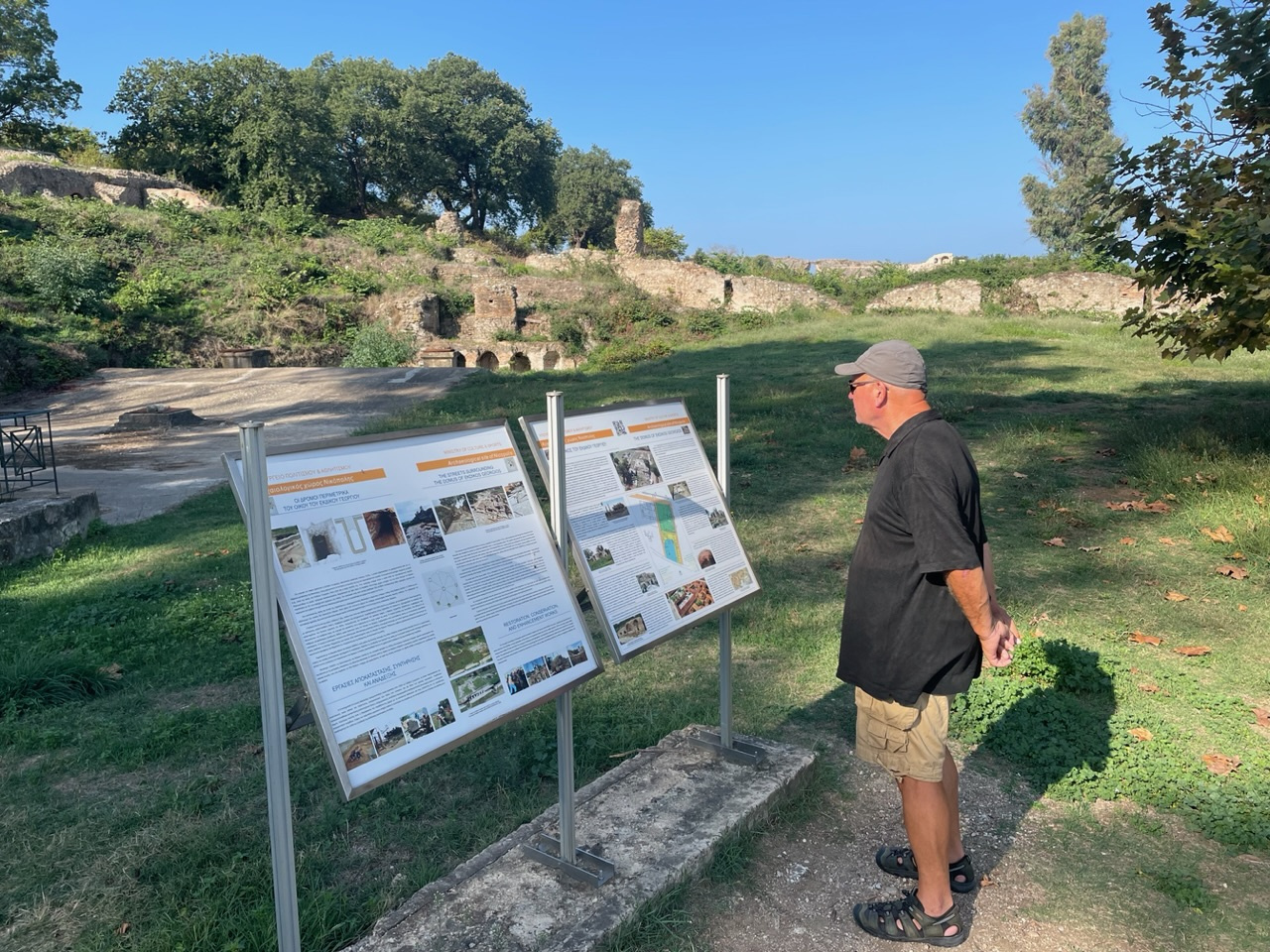
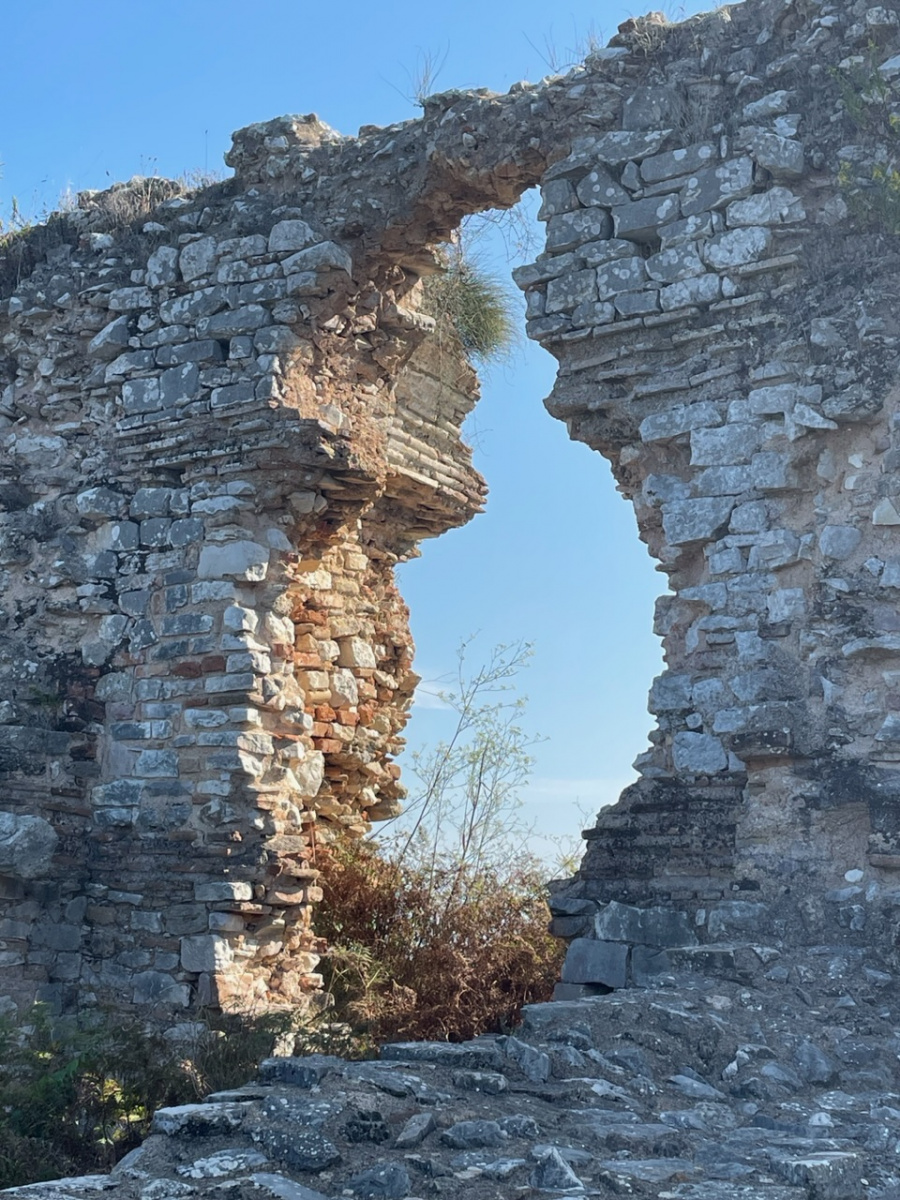
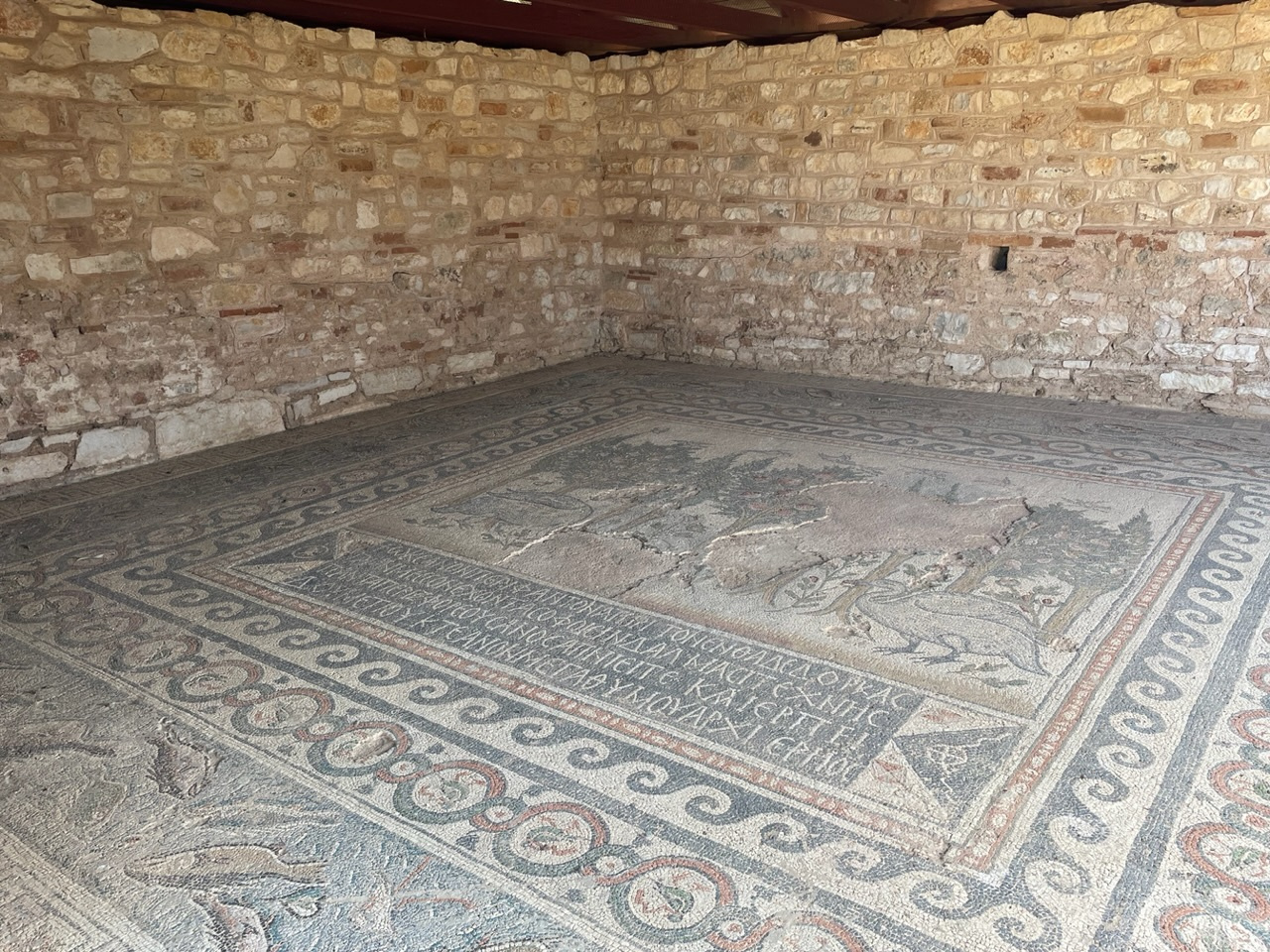
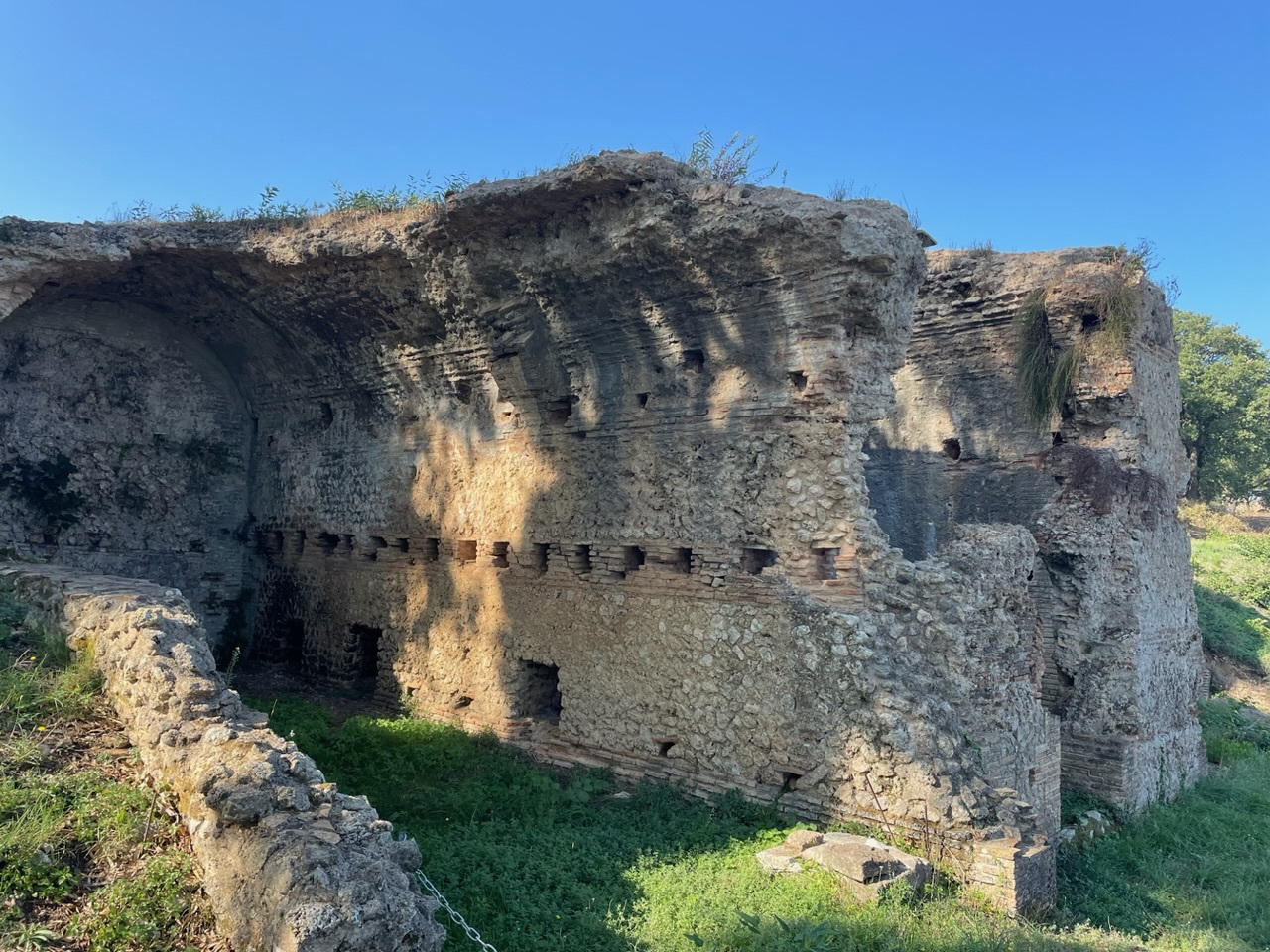
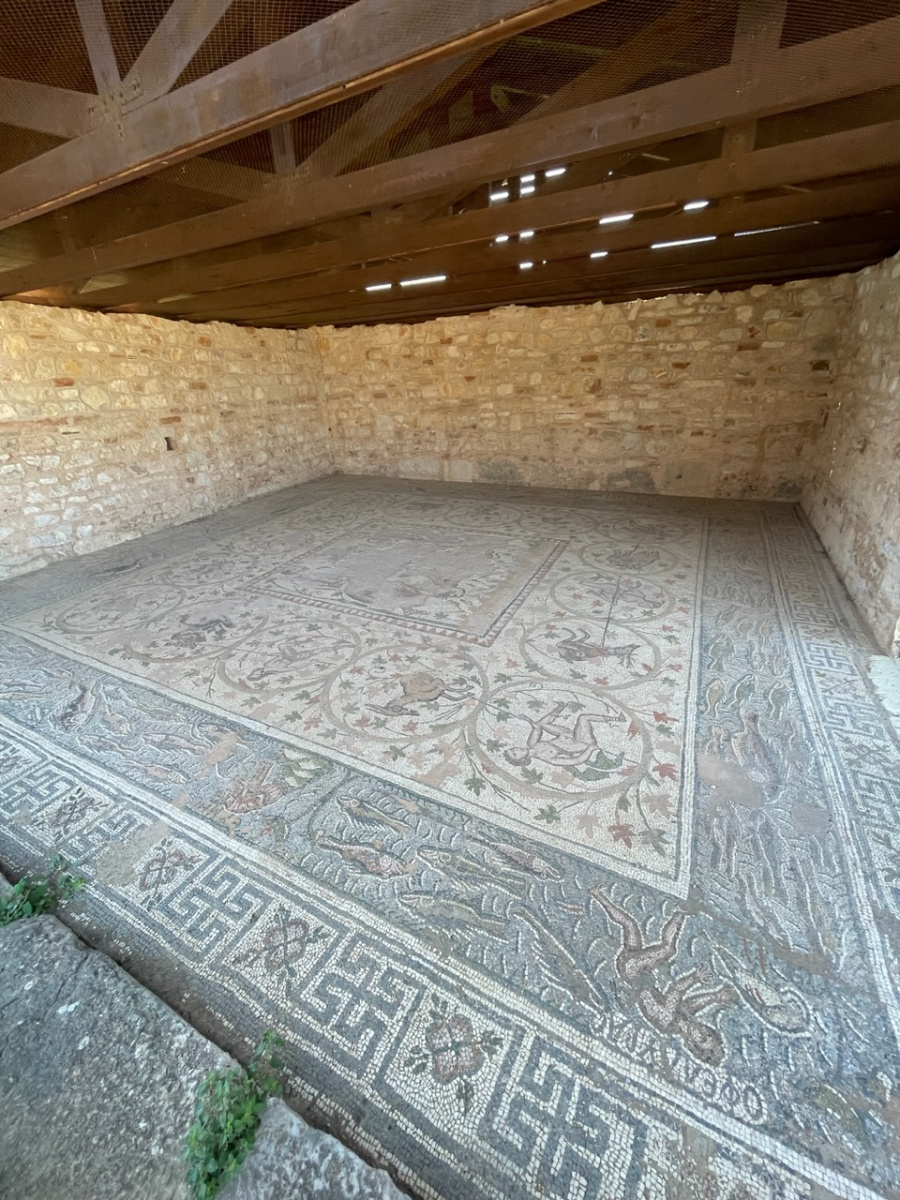
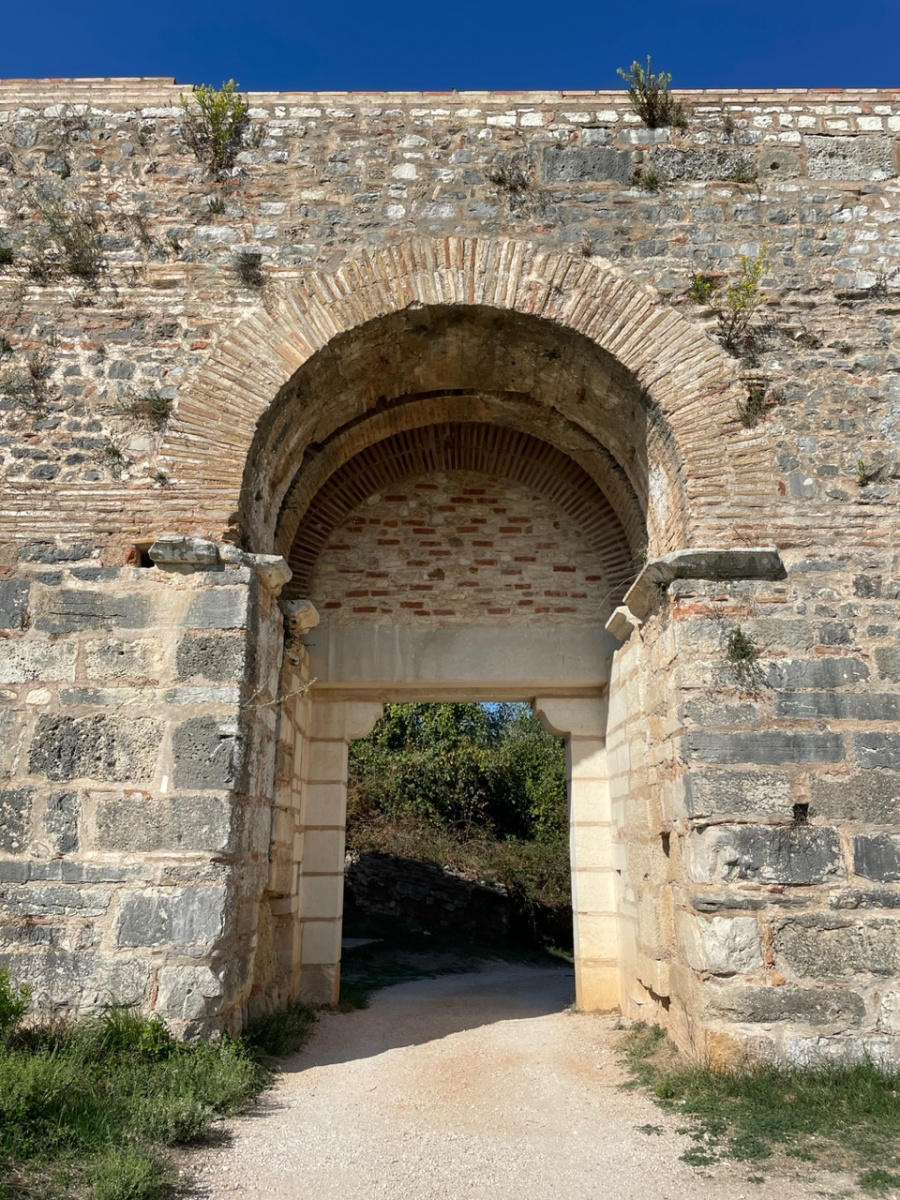
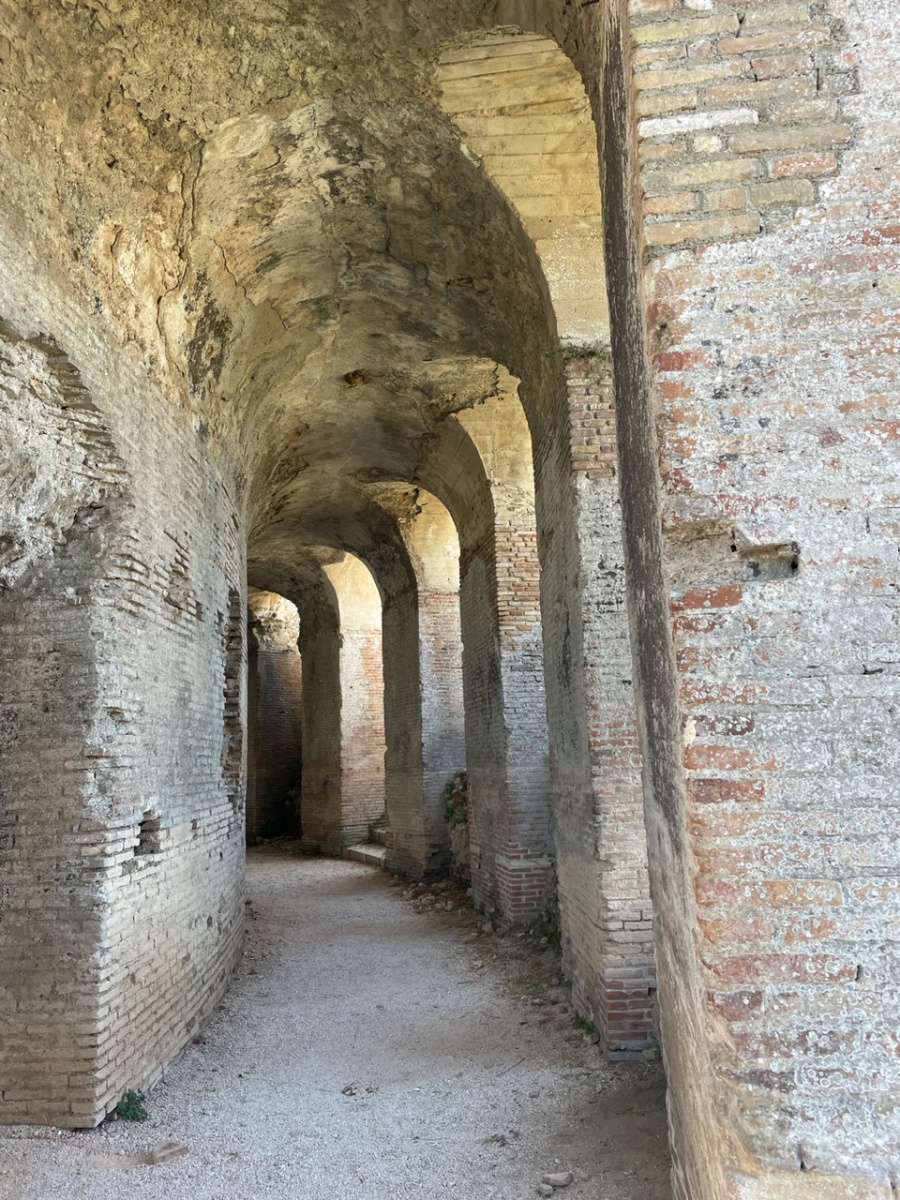
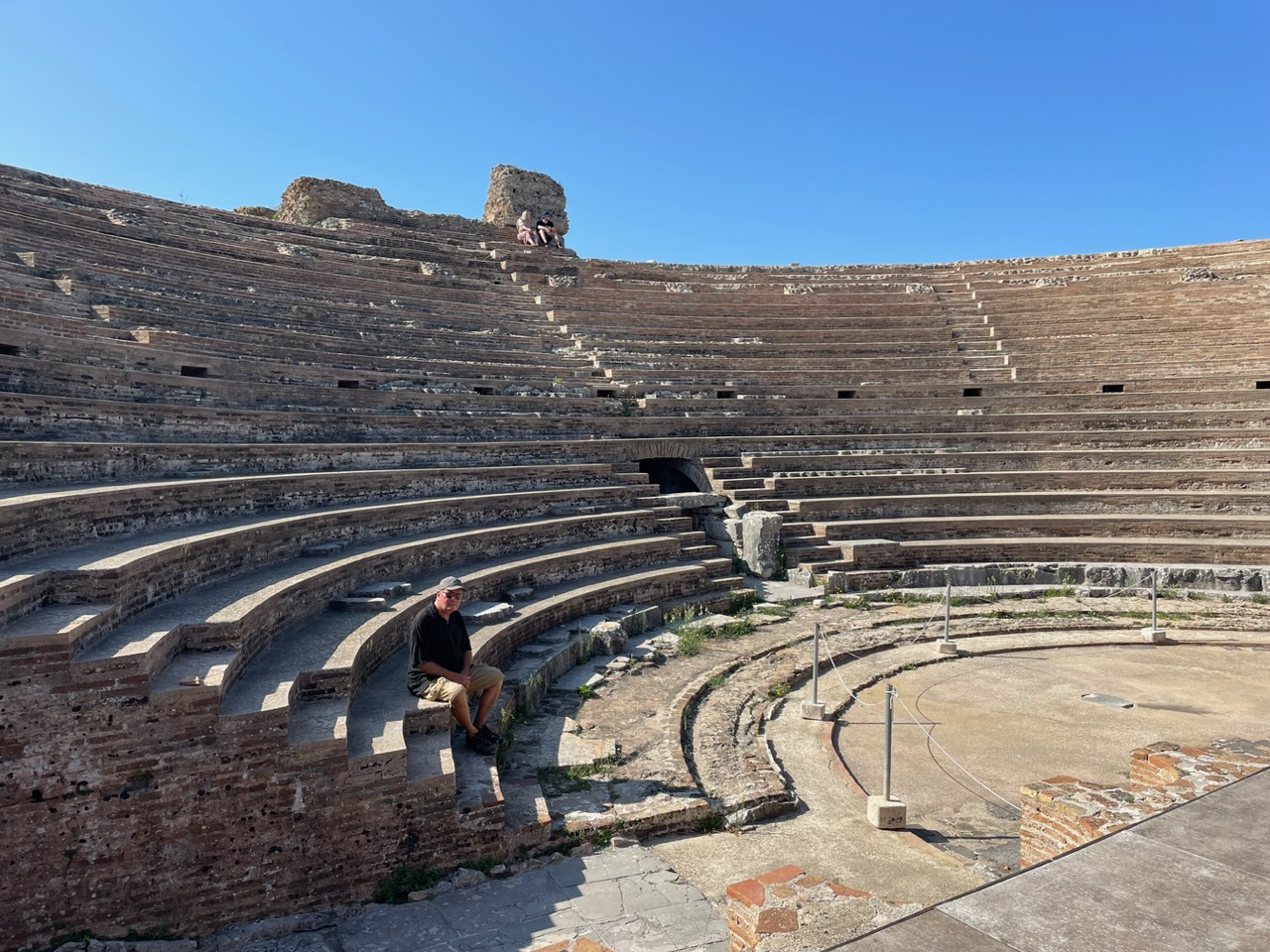
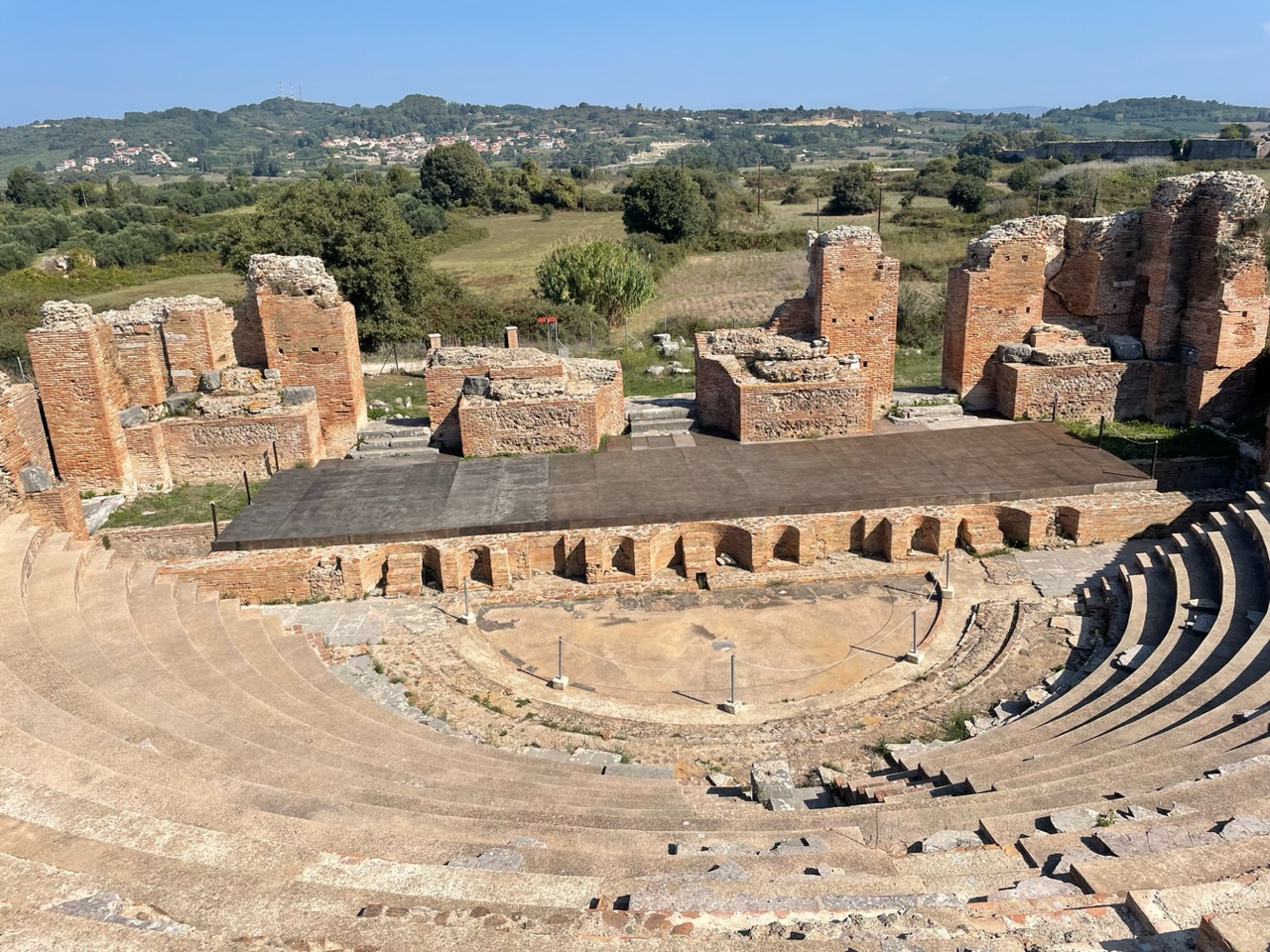
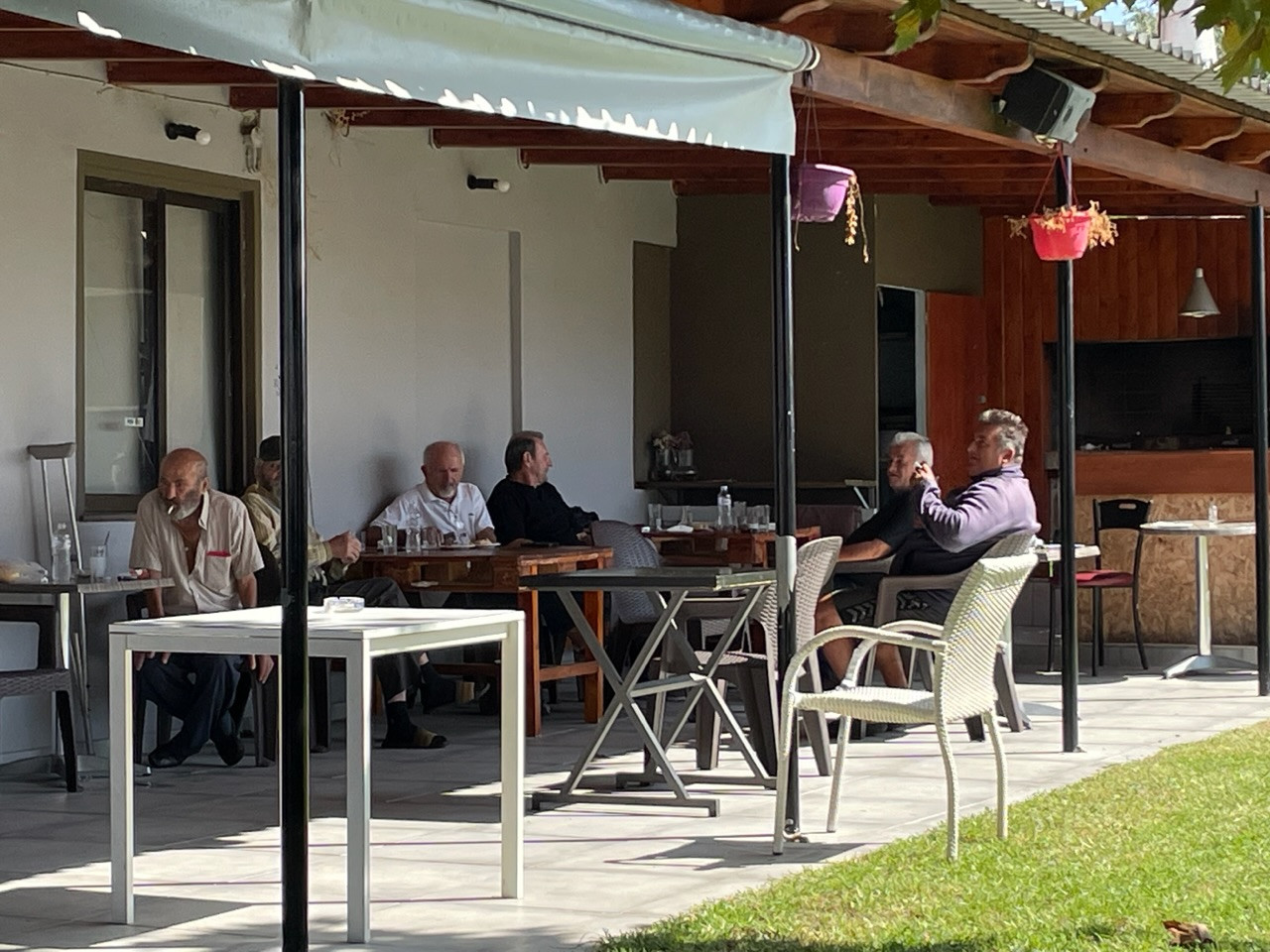
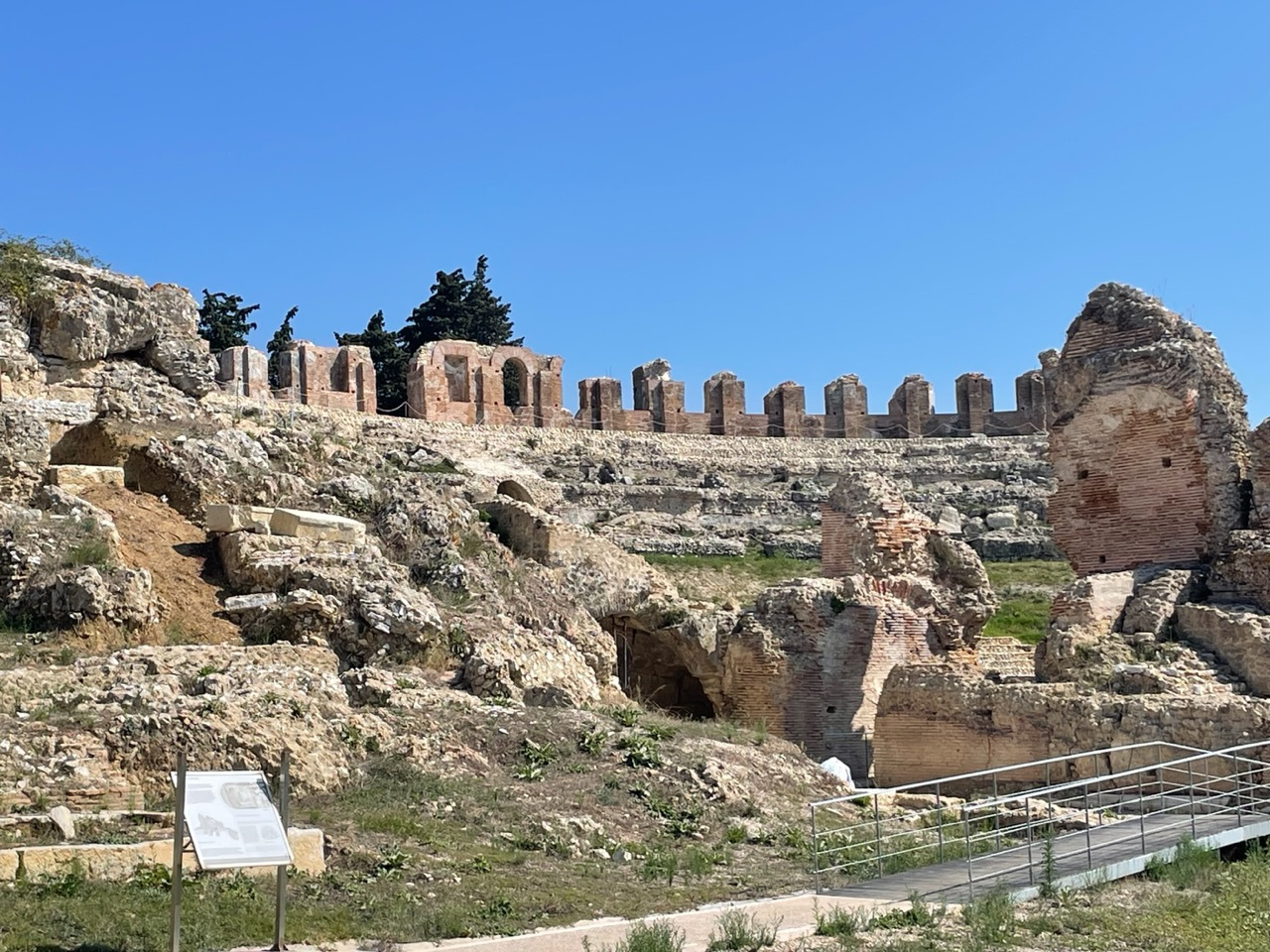
And then: Nicopolis. A gigantic city, the largest in the ancient world with 300,000 inhabitants. Founded by Octavian, later Augustus, on the occasion of the victory in the naval battle over Mark Antony and Cleopatra in 31 BC, which took place in Aktio. A huge city wall, excavations still in work everywhere, quite wonderful mosaics, a stylishly restored odeon in the shape of an amphitheatre and a large theatre (though not accessible). The small farming village of Nikopolis is situated above. We found a taverna, actually a green meadow with a few chairs and noisy men having coffee and tsiporou. With hands and feet we managed to order a Greek salad, beer and lemonade and later a taxi back to Preveza.
Pictures of Nicopolis
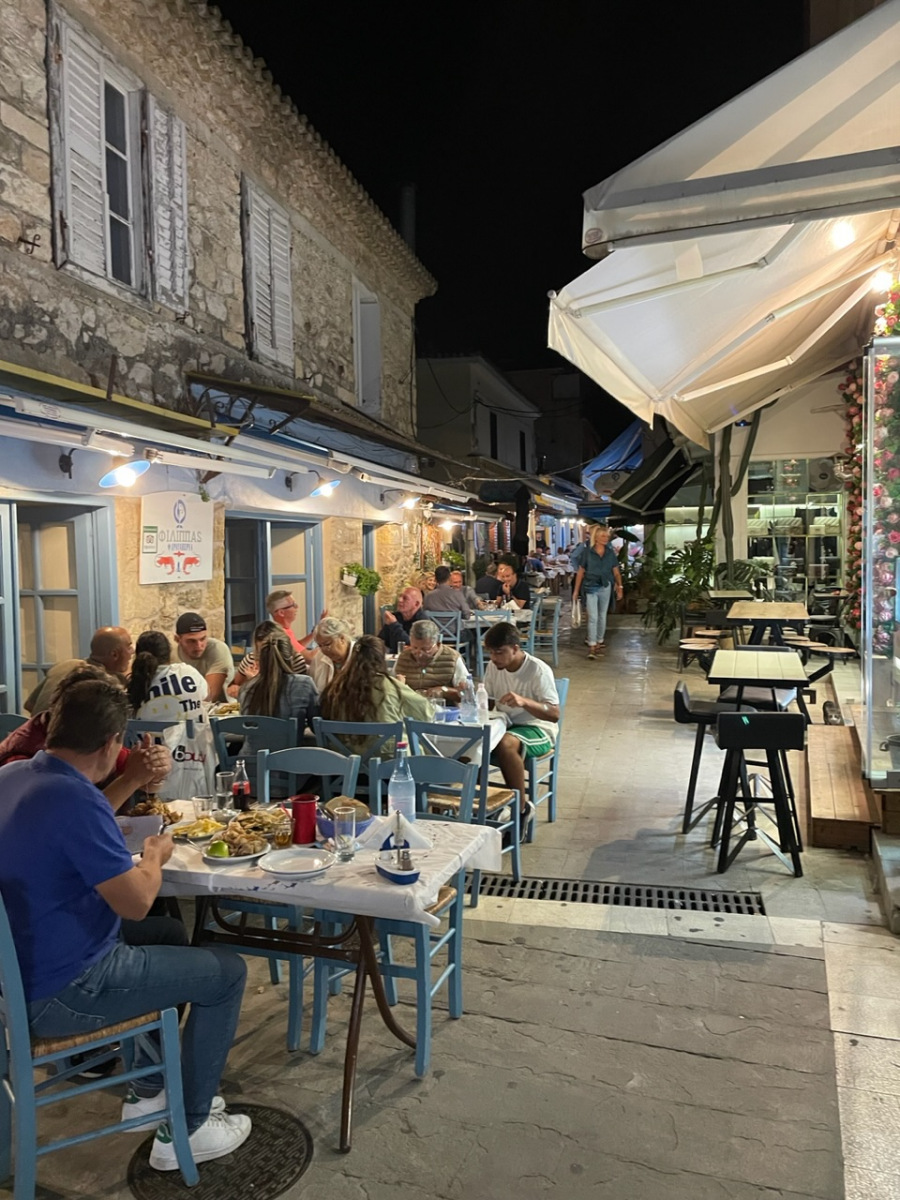
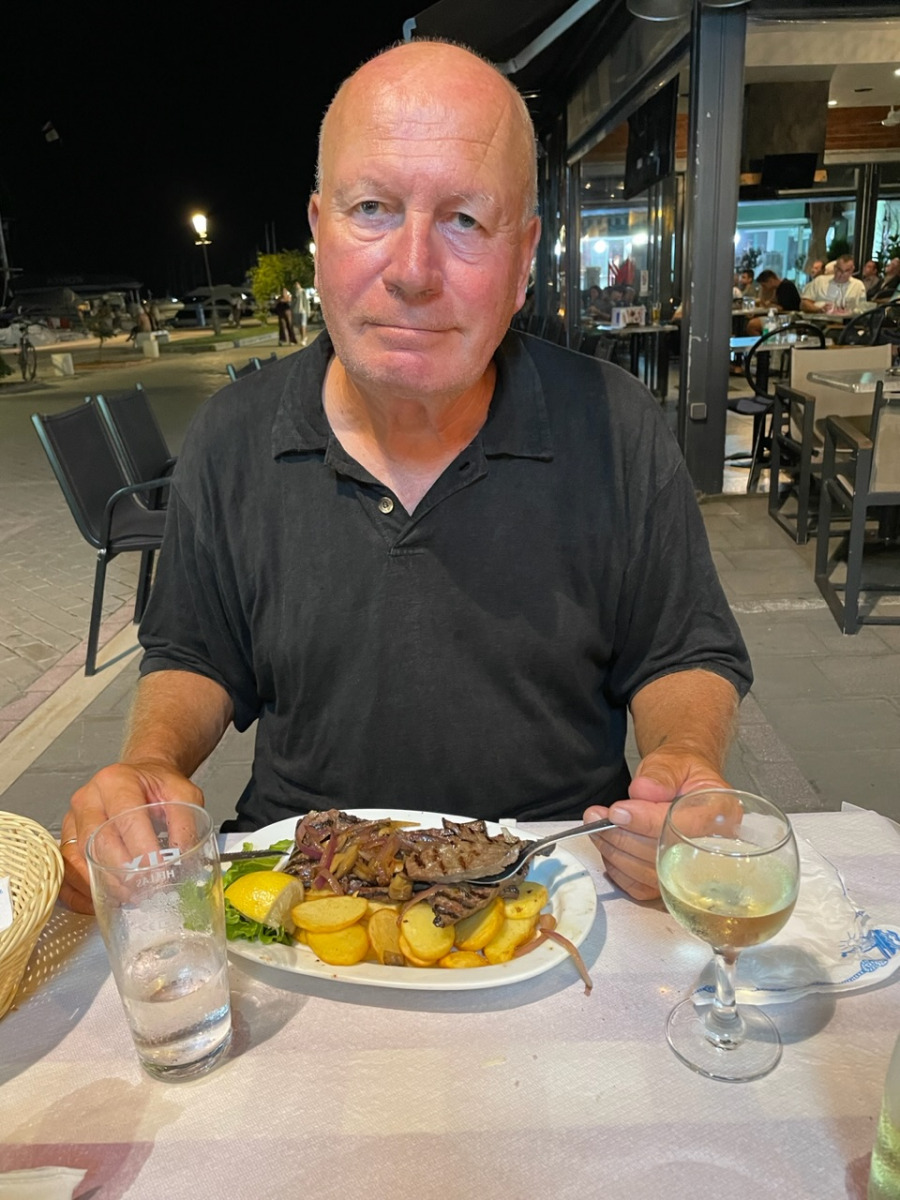
We liked Preveza very much, we will come back next year, and not only because of the excellent sykoti (liver) in the Mythos taverna directly at the pier.
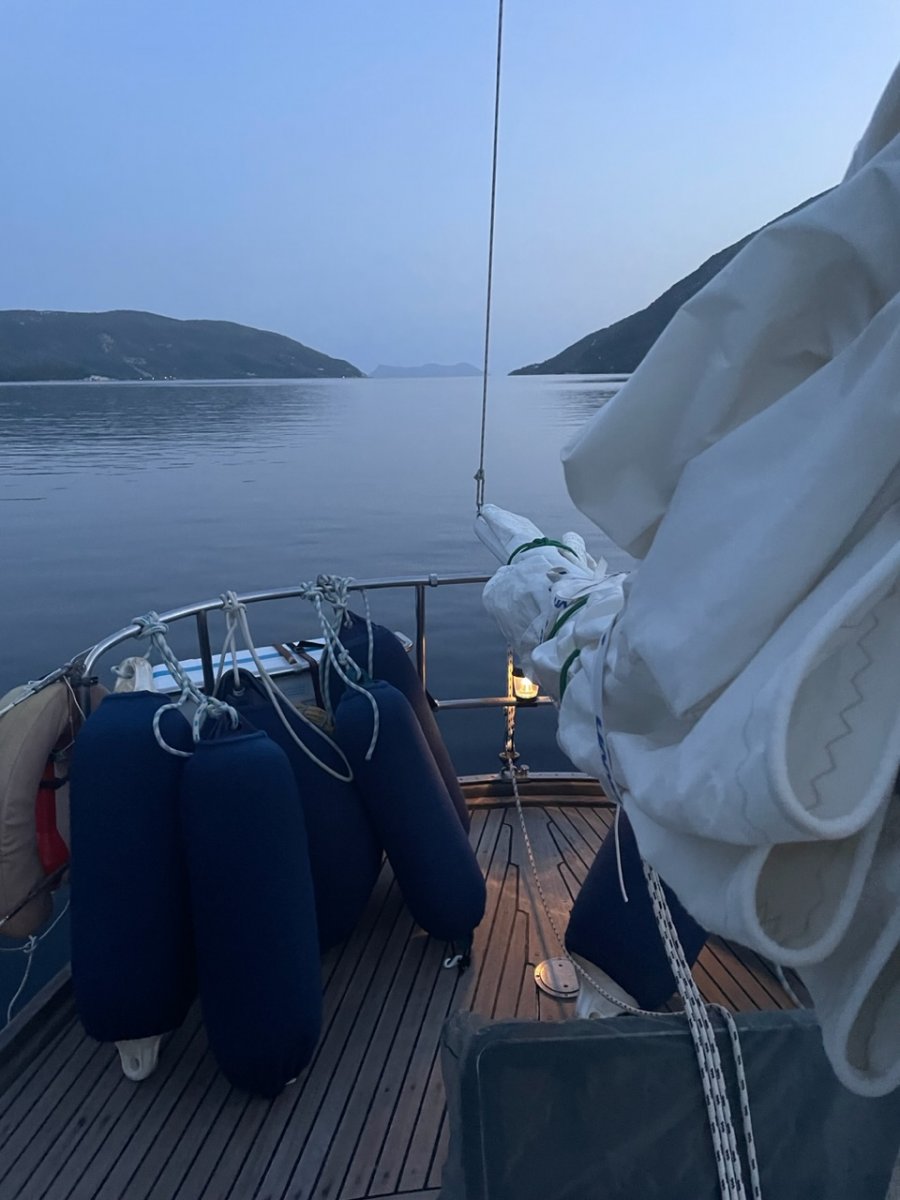
Then we set course south. We leave Preveza and sail through the buoyed fairway, setting course for the entrance to the fairway between Lefkas and the mainland. Here we meet the sailing yacht "Orca" on the way. We already know the Austrian couple on board from Messolonghi. Just in time for the opening of the bridge we are in front of the entrance, hoist the sails and go through the bridge. A short detour into the public harbour of Lefakada shows us: more new floating pontoons for charter boats, everything very narrow and crowded. Actually, we wanted to make a stop here. But we prefer to sail south through the channel and anchor in front of the small fishing port of Ligià directly after leaving the waterway. It is quiet here and we can enjoy the beautiful evening atmosphere.
In the meantime, we are back on the Greek mainland in the small harbour of Palairos, which is cosy in the off-season. We want to stay here for a while.
Diese Website benutzt Cookies. Wenn du die Website weiter nutzt, gehen wir von deinem Einverständnis aus. / This website uses cookies. If you continue to use the website, we will assume that you have given your consent.
Du kannst deine Zustimmung jederzeit widerrufen. / You can refuse the consent.