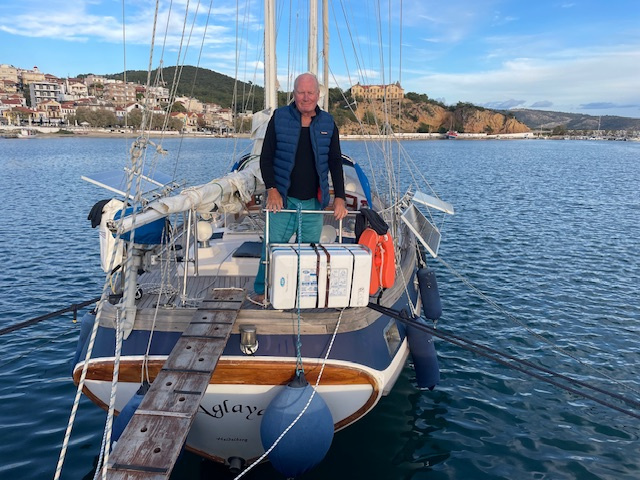
Willkommen! Dies ist die Website von Gisela und Walter Würfel. Hier berichten wir über die Reisen und das Leben auf unserer Segelyacht Aglaya. / Welcome! This is the website of Gisela and Walter Wuerfel. Here we report about the journeys and the life on our sailing yacht Aglaya.
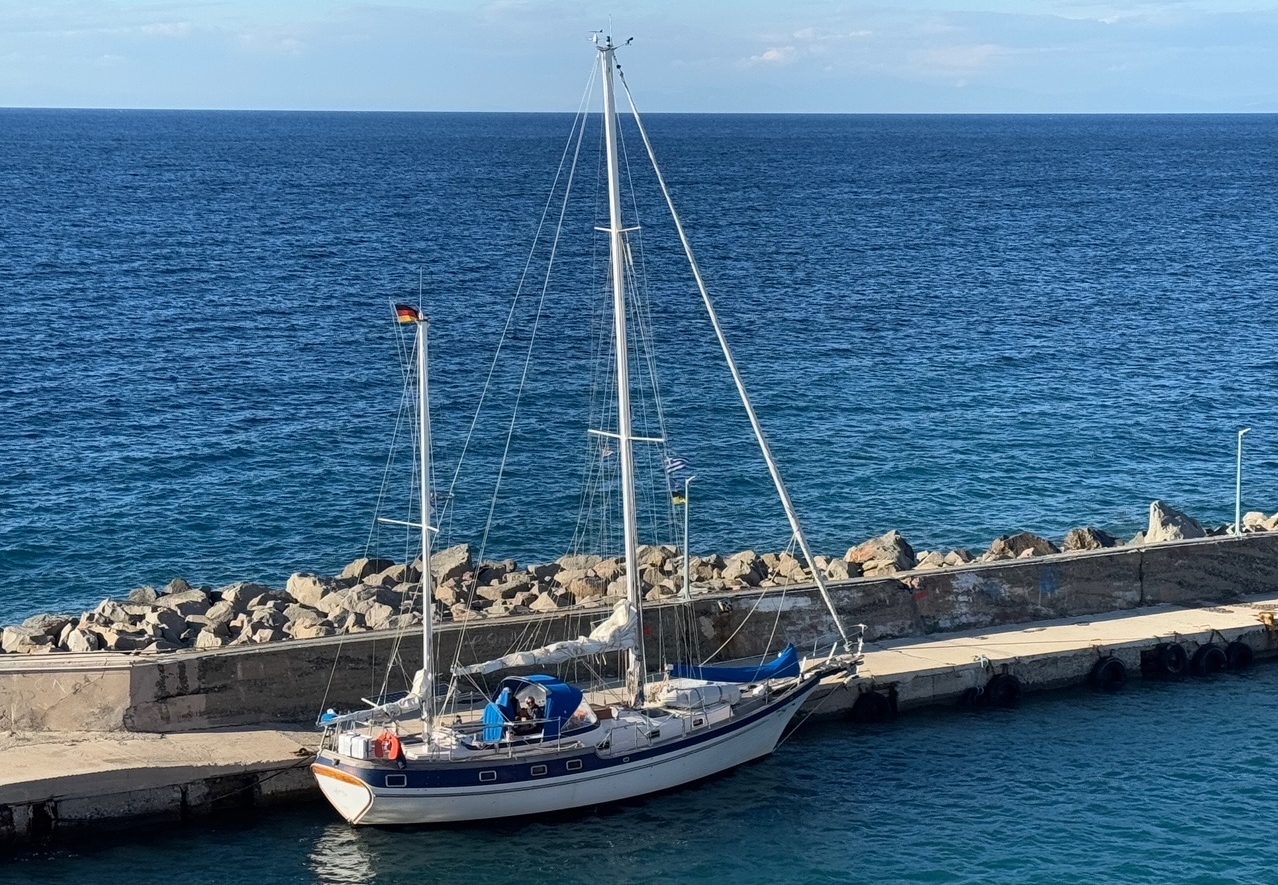
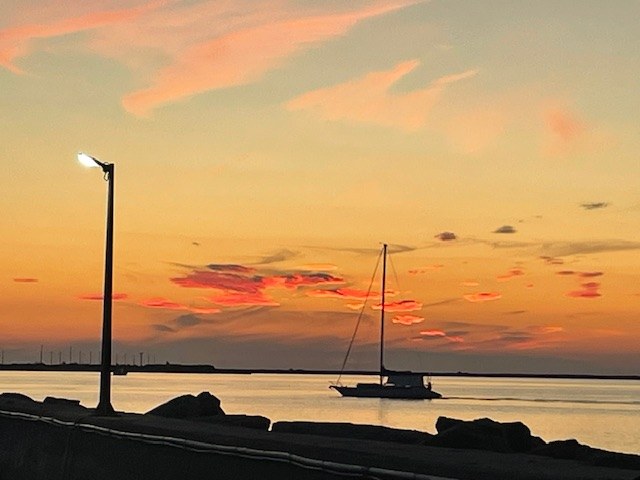
It's cold at home in Germany this winter. That's nice. Finally, snow and ice again. In Greece, too, it is quite cold at times in some regions. And there is extreme weather with lots of rain, flooding, strong winds, snow, and temperatures around zero degrees. “Usually we didn't have winter in Greece. But since we are in the EU, we have to follow Ursula,” comments our friend Stavros with a smiley. Our Aglaya is ashore in Nea Peramos. So far, she has been spared from storms. We hope it stays that way until we get back on board in mid-April.
Even though we like winter, we like to warm up from time to time and look back on the past season. We have now made two videos with lots of pictures. Take a look if you want to warm up a bit too.
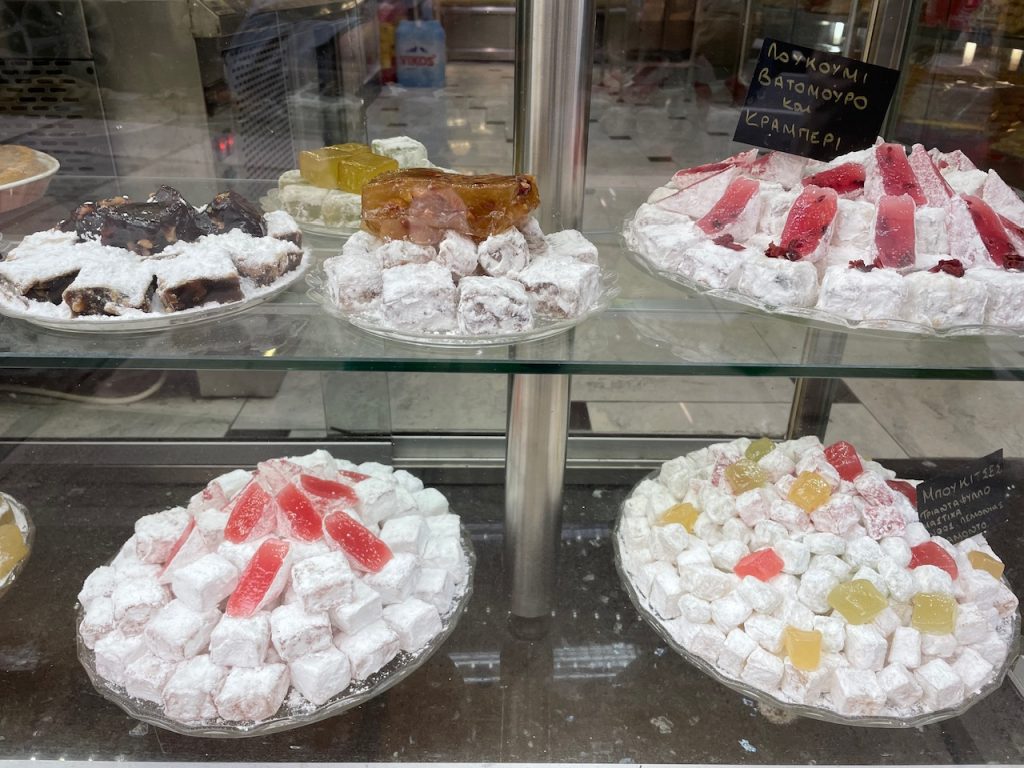
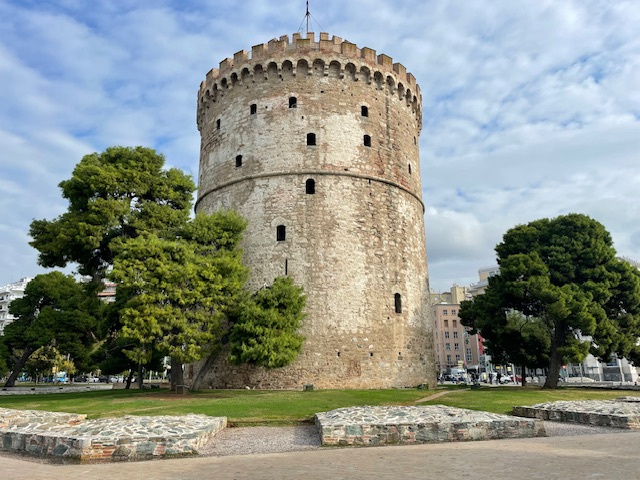
Now that Aglaya is safely moored in the boatyard, we treat ourselves to a dessert on land. Thessaloniki, the capital of Macedonia, where we recently spent so much time sailing, is Greece's second largest city with a population of around three million. It has always been the second largest city – even in the Byzantine Empire after Constantinople. We definitely wanted to visit this lively yet relaxed city, which has been shaped by an eventful history. We had left our boat in the Aretsou marina just outside the city for two months in the summer to go home, but it was far too hot for us to explore the city. Now, in the cool November weather, we are perfectly situated in a tiny flat very close to the harbour.
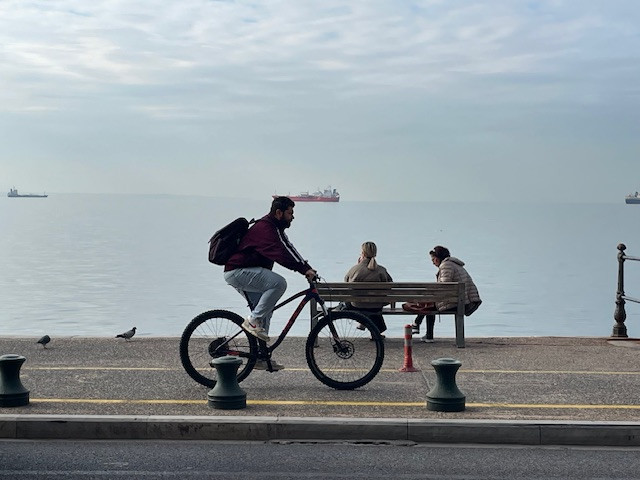
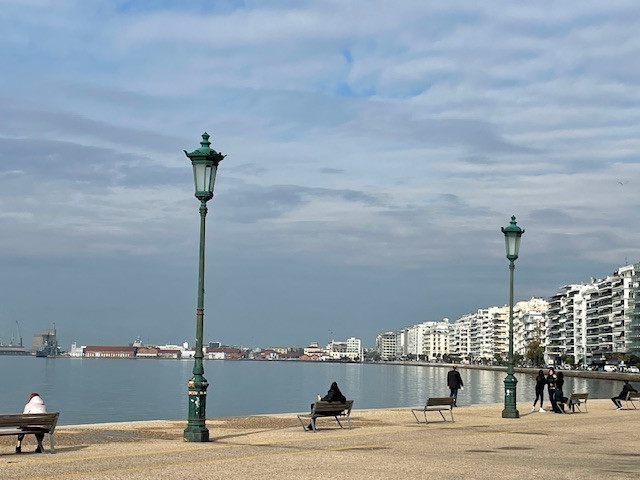
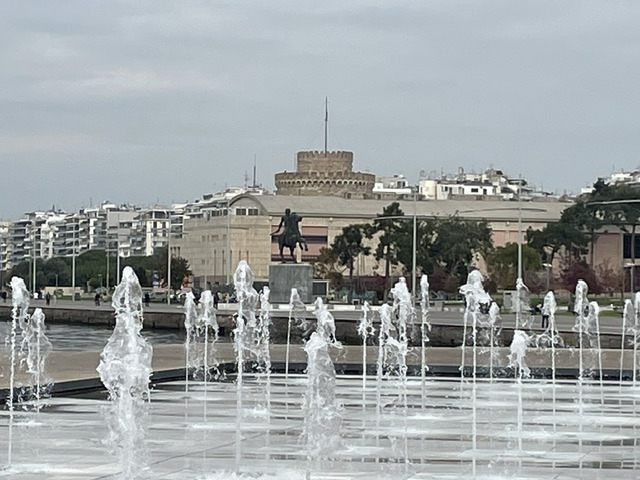
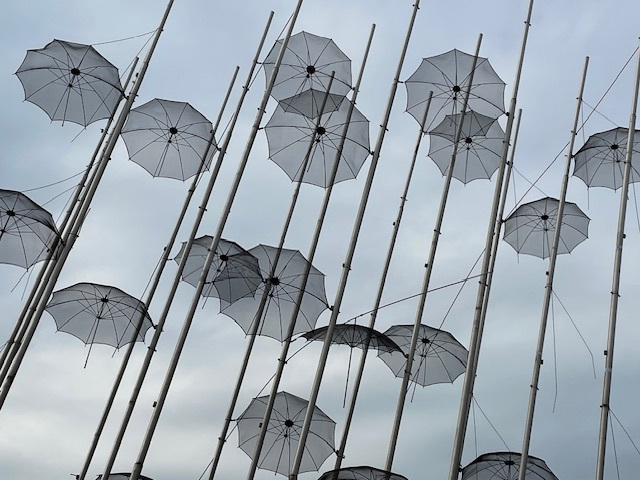
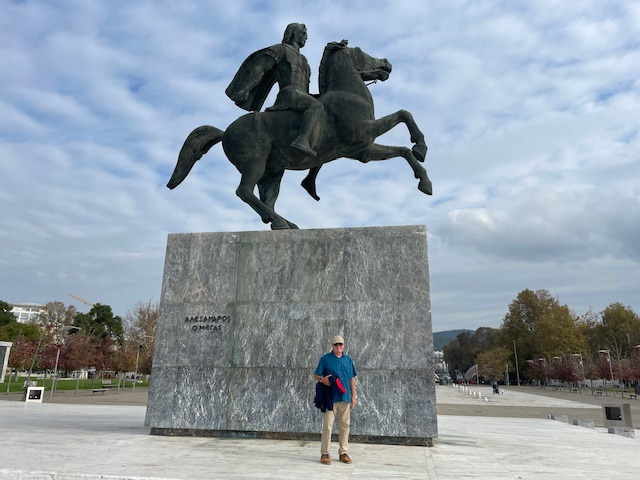
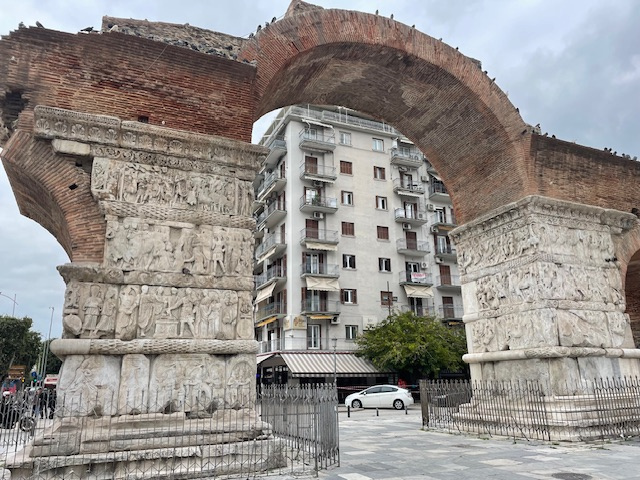
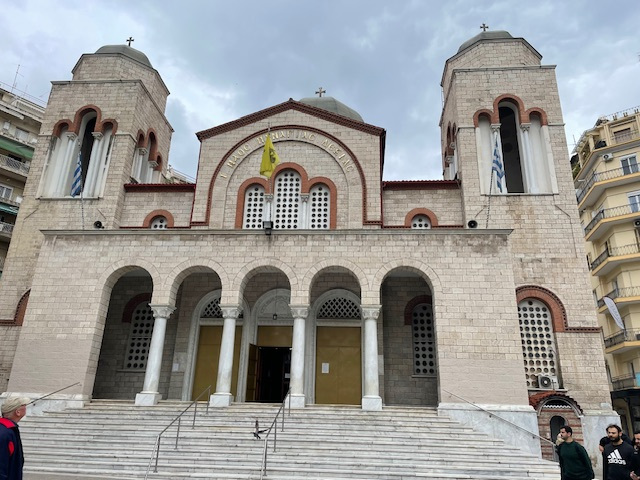
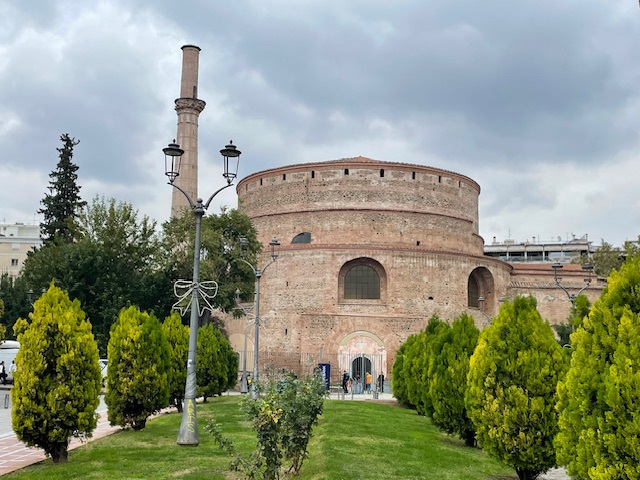
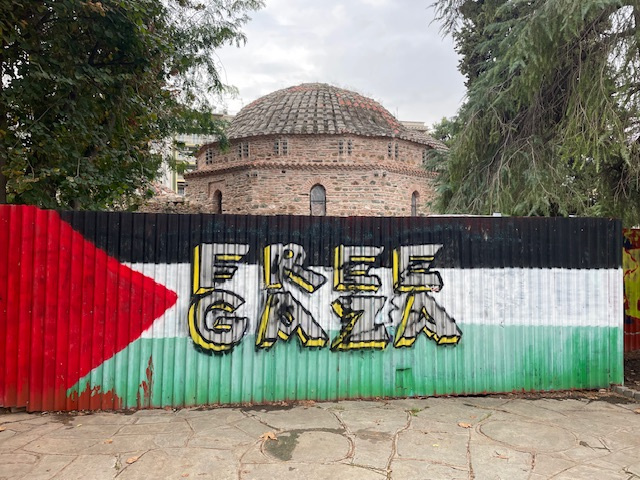
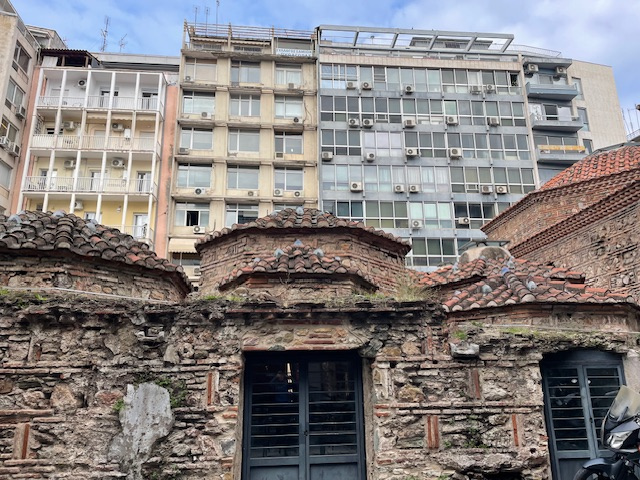
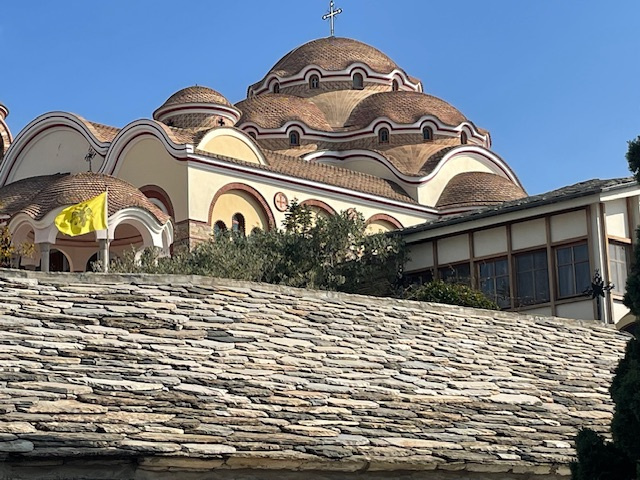
First, we got an overview of the city on a sightseeing tour, then visited many of the sights by foot: the long harbour promenade to the White Tower, the statue of Alexander the Great and the Umbrellas. In the city, you come across churches at short intervals, large and small, each with its own saint and its own history. The most famous is the large Agia Sofia. We were fascinated by the fact that they all stand in the middle of the tightly packed high-rise buildings. The remains of the Roman buildings are also impossible to miss in the middle of the city. The Arch of Galerius and the Rotunda of Galerius are particularly striking. Unfortunately, we could only view the Bey Hamam from the outside, as it is dilapidated and therefore closed. What a pity! A large part of the city was destroyed in a major fire in 1917, and an earthquake in 1978 caused a great deal of damage.
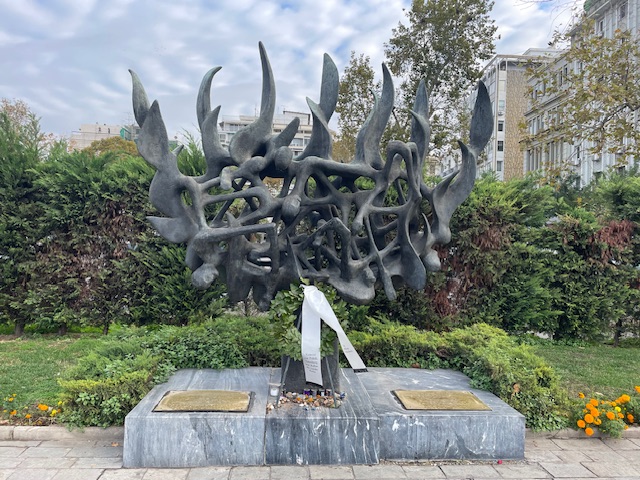
Here in Thessaloniki, it became clear to us once again how much the history of the Levant has been shaped by war, displacement and migration. For example, the history of the Jews has been closely intertwined with the history of Thessaloniki since its founding as the capital of the Macedonian kingdom. And although we know about the atrocities committed by the Nazis in Greece during the Second World War, we were once again deeply moved when we stood in front of the sculpture commemorating the Holocaust. Almost 50,000 Jewish citizens from Thessaloniki were deported in freight cars to the Auschwitz and Treblinka concentration camps.
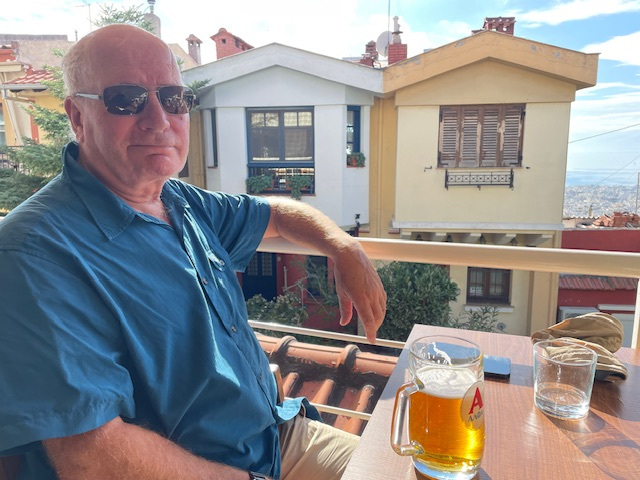
The Thessaloniki International Film Festival is currently taking place, which means there are a lot of visitors in the city. Many of the screening venues are located in the old harbour area. The warehouses also house museums. This was our favourite place to enjoy a draught beer in the evening, with a view of the Thermaic Gulf, where we also went sailing.
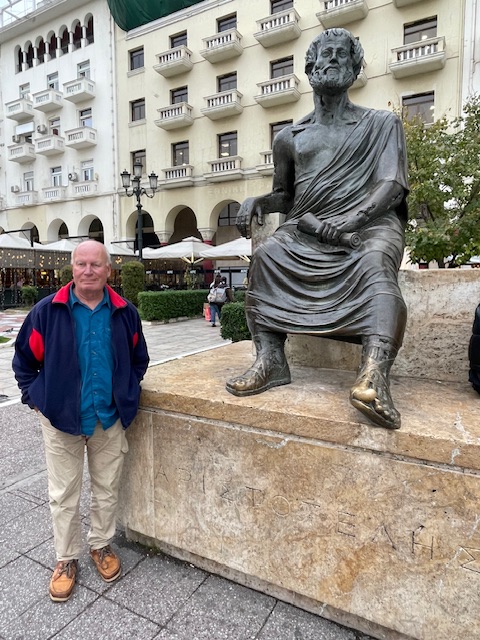
There are many young people in the city, certainly tourists, but mainly students. No wonder, as Aristotle University is the largest in the Balkans. The university's namesake lived here and has been immortalised with a statue.
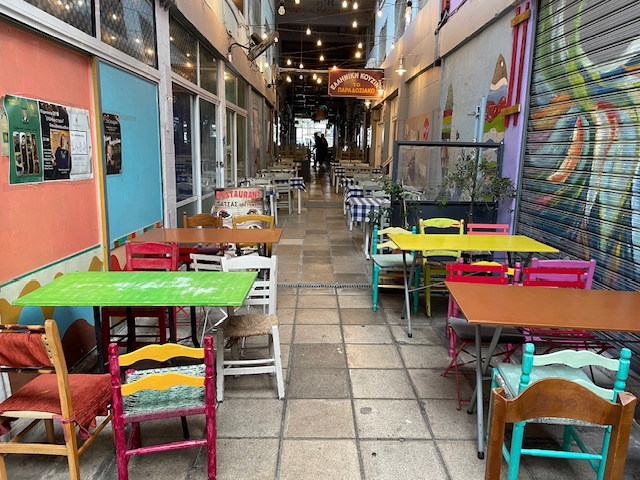
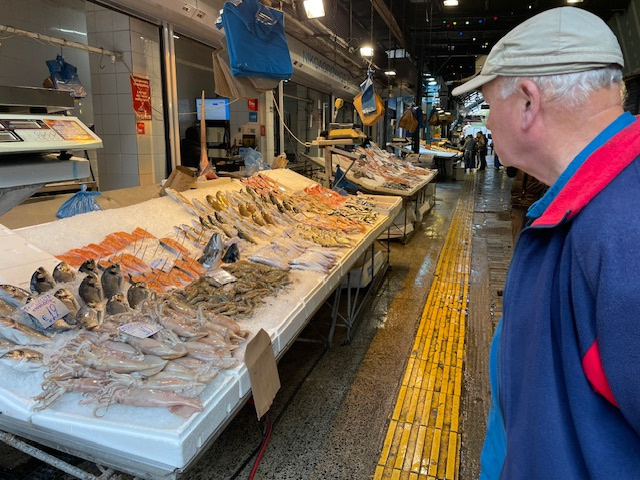
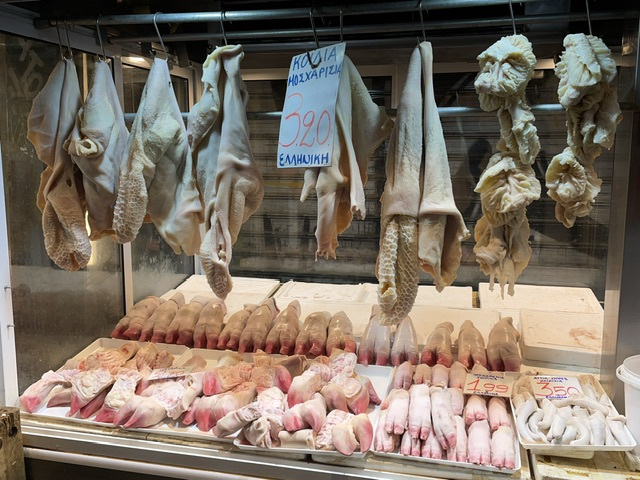
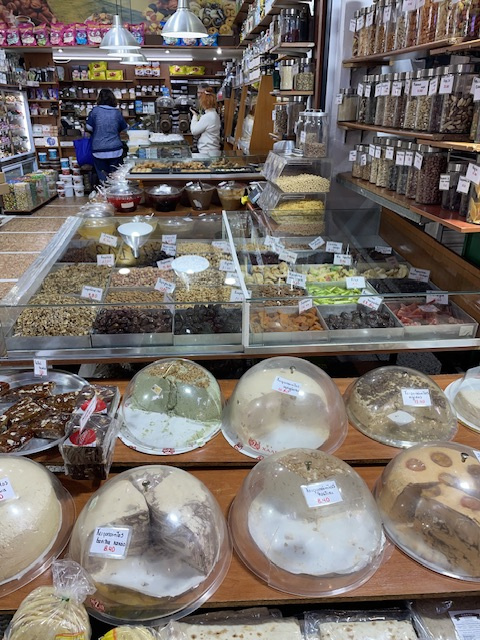
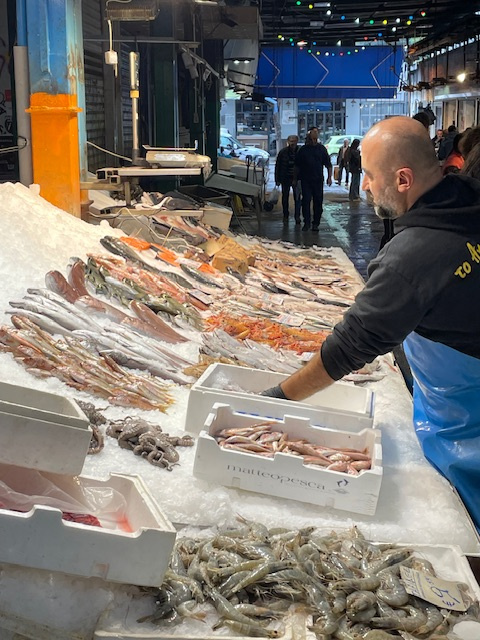
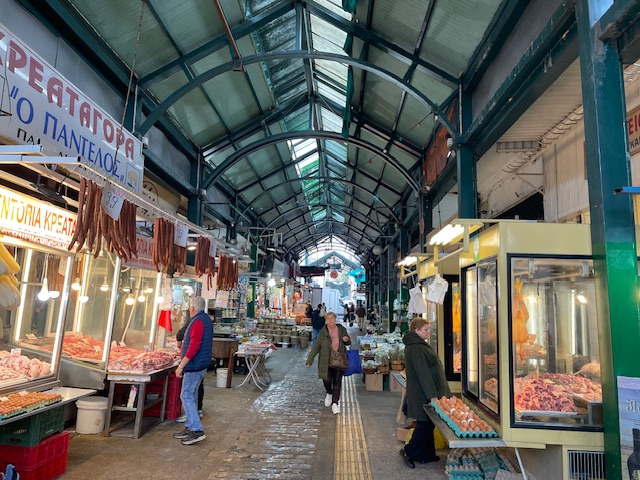
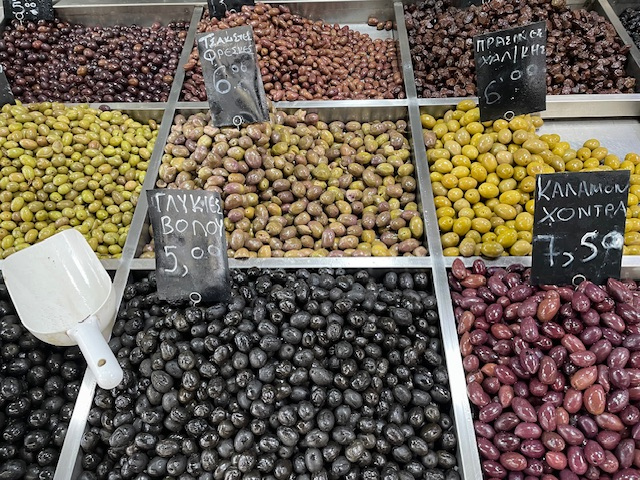
After morning coffee (‘two Greek coffees, medium sugar’), a walk through the market halls was a great start to the second day.
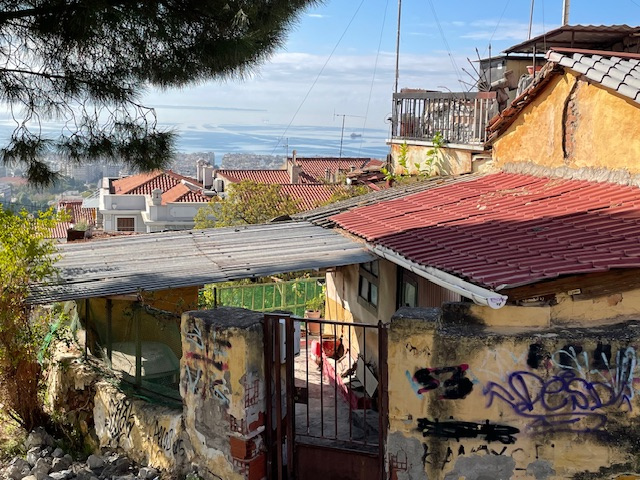
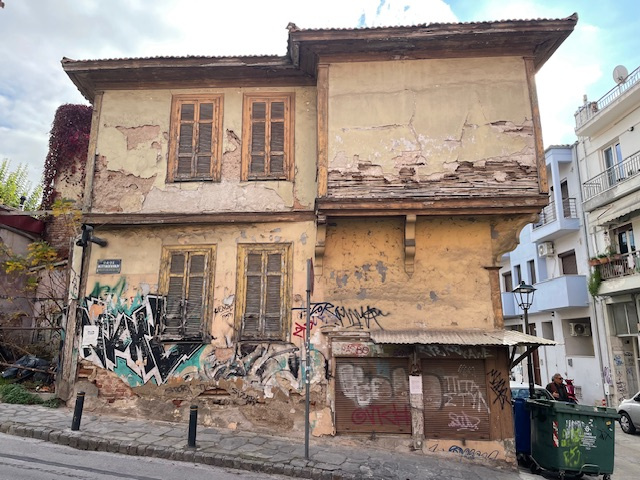
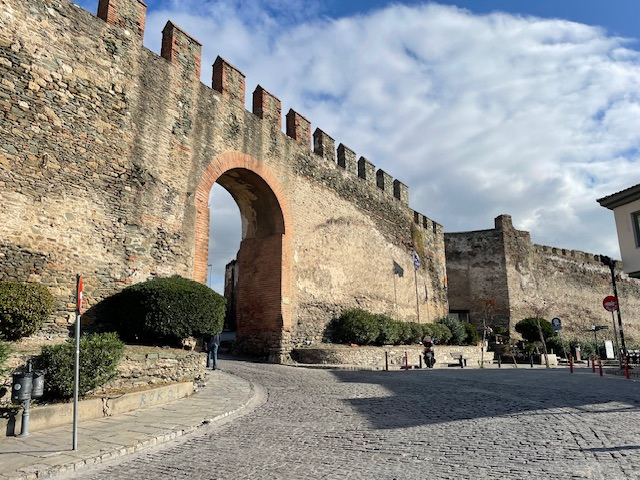
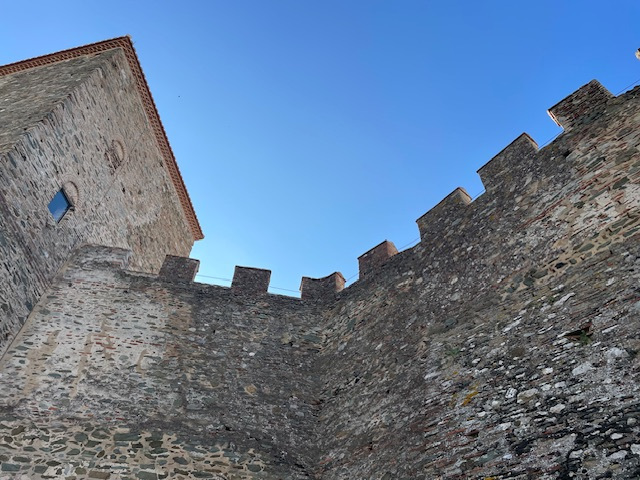
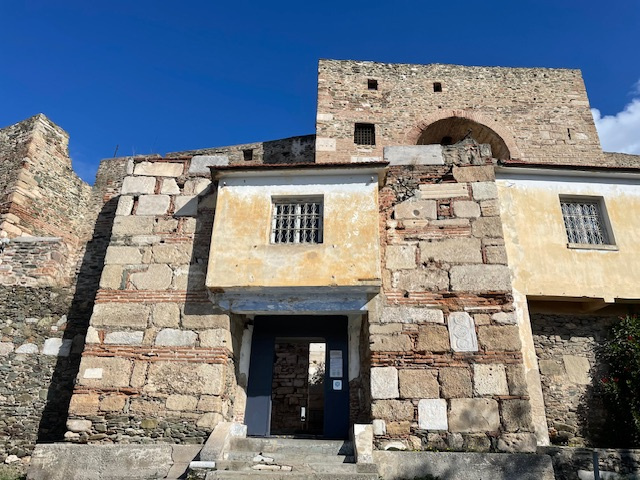
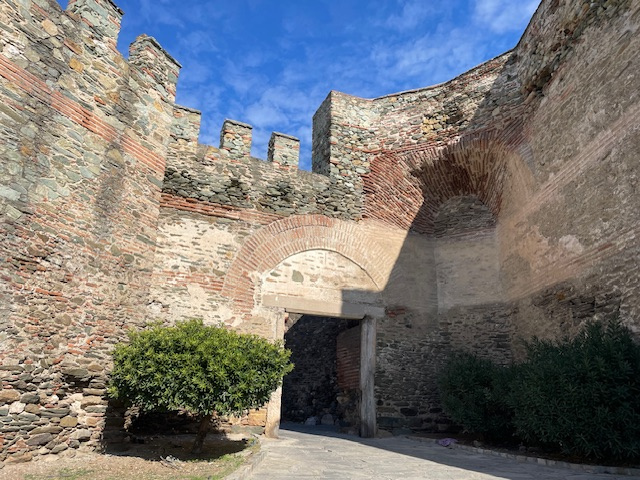
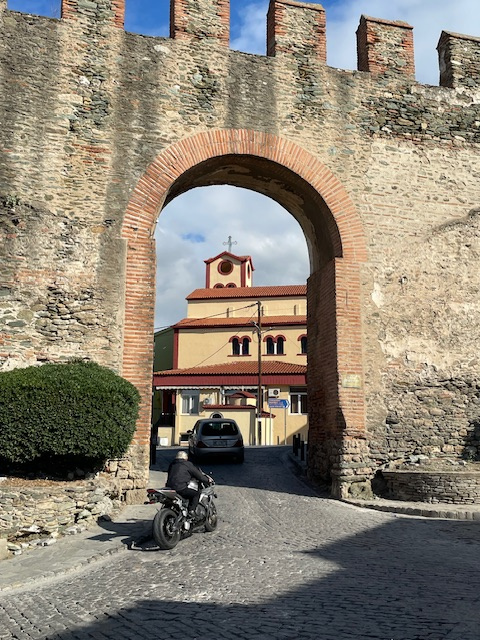
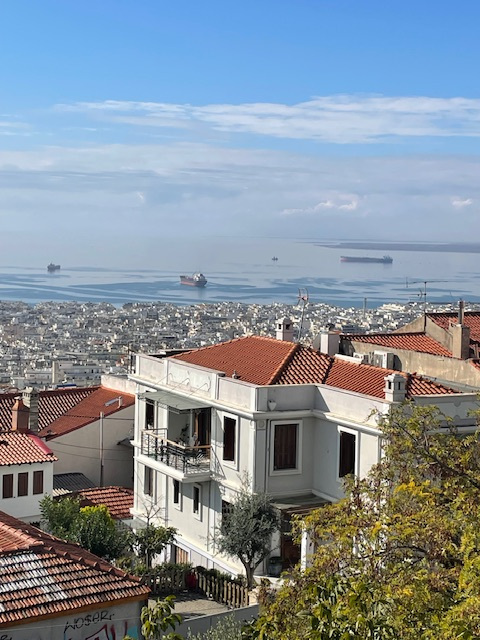
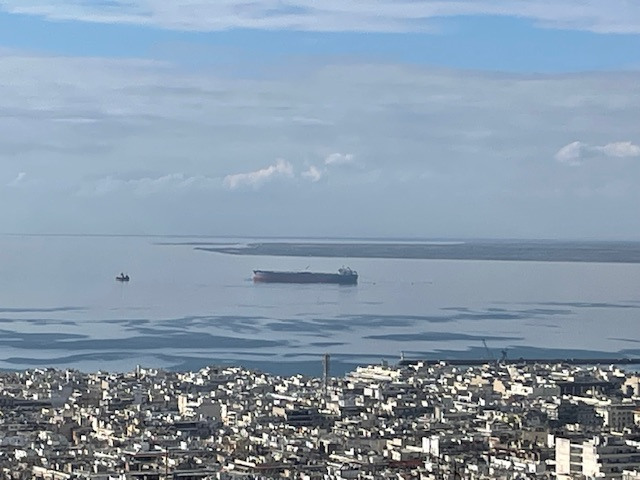
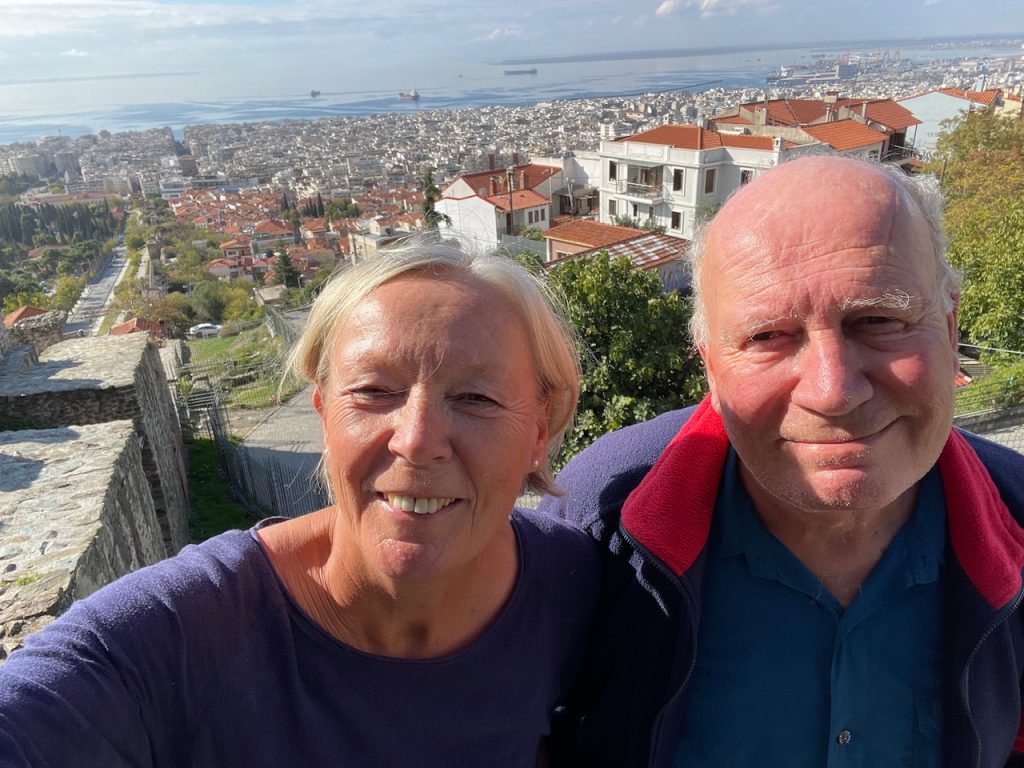
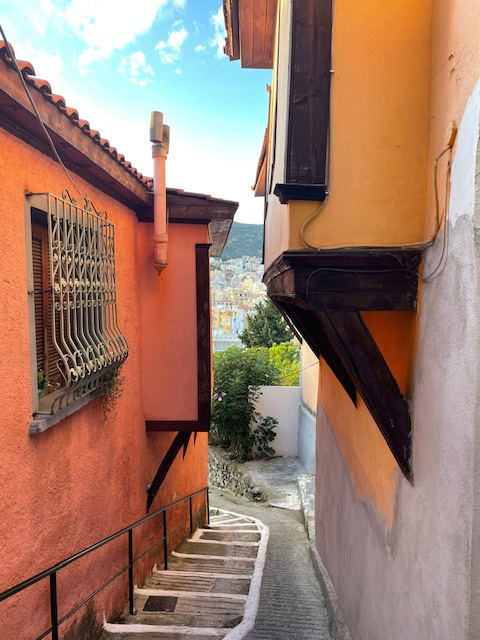
And then the more athletic part of the day: climbing up to the upper town with its densely packed little houses with red tiled roofs, the city walls and the castle. The view down to the city, the harbour and the gulf is magnificent. The sun is finally back, but Mount Olympus, which can be seen from here on a clear day, is shrouded in clouds.
We have one last evening ahead of us before we fly home tomorrow. Perhaps we'll go back to the market halls for a delicious Greek dinner.
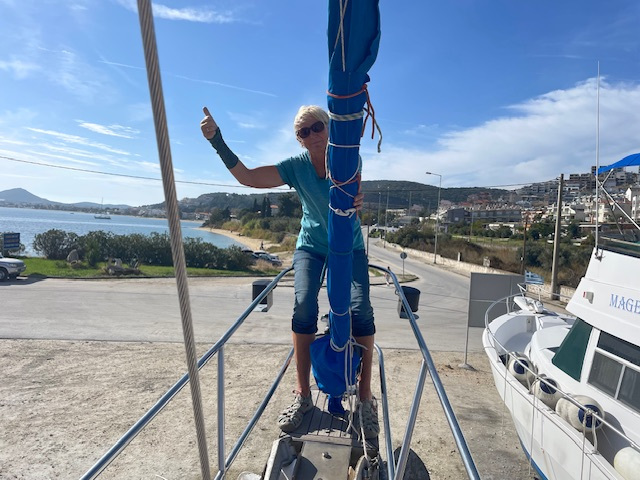
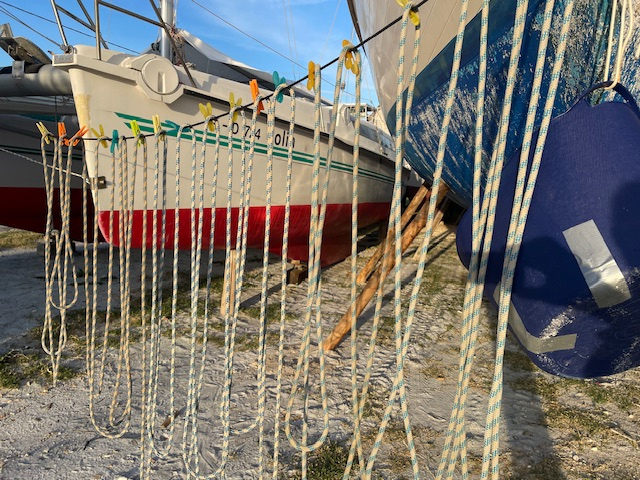
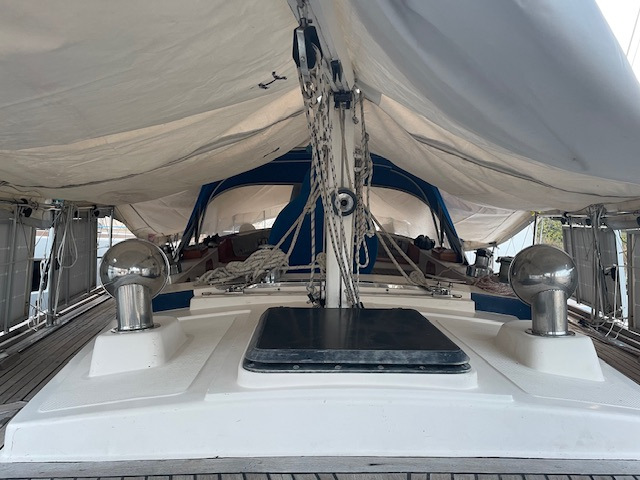
The 2025 sailing season is now over for us too. Aglaya is ashore and over the last few days we have completed all the necessary work for winter storage. As heavy rain was forecast for 4 November, we hurried to put the winter tarpaulin in place. After we leave, the mechanic from Manitsas Marine will come to flush the cooling system and do a thorough check of the entire engine. We will probably be in contact with him from time to time over the winter.
Stavros Manitsas is the owner of the boatyard. You have to take a little time to get to know him. Our first visit to his office lasted an hour – not only because we discussed everything concerning our boat with him in great detail. We came away with the impression that Aglaya is in good, experienced hands here. Stavros also told us a lot about his family's eventful history. Originally (more than 100 years ago), they lived in Crete. The family no longer felt safe there and moved closer to the Ottoman capital Istanbul, to a small island in the Black Sea. In 1922, after the founding of the Turkish state, the Greeks were expelled. So his family settled in Nea Peramos near Kavala. Many Greeks who were expelled from Turkey at that time founded new places, all of which begin with the term ‘Nea’, including Nea Peramos.
With a touch of sadness, we left our Aglaya behind in the pouring rain. Sleep well, Aglaya, we'll be back in the spring!
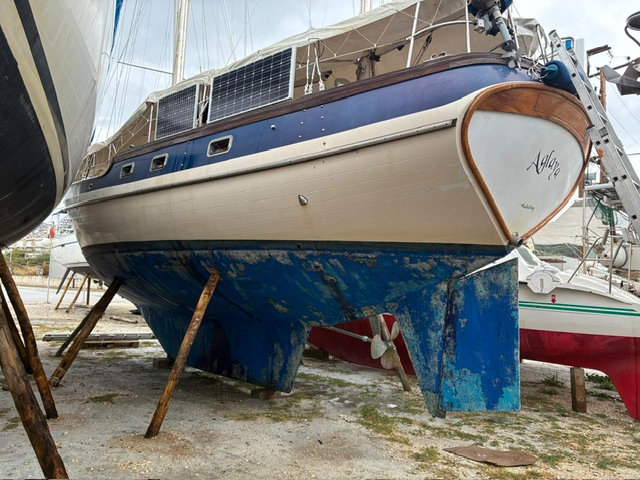
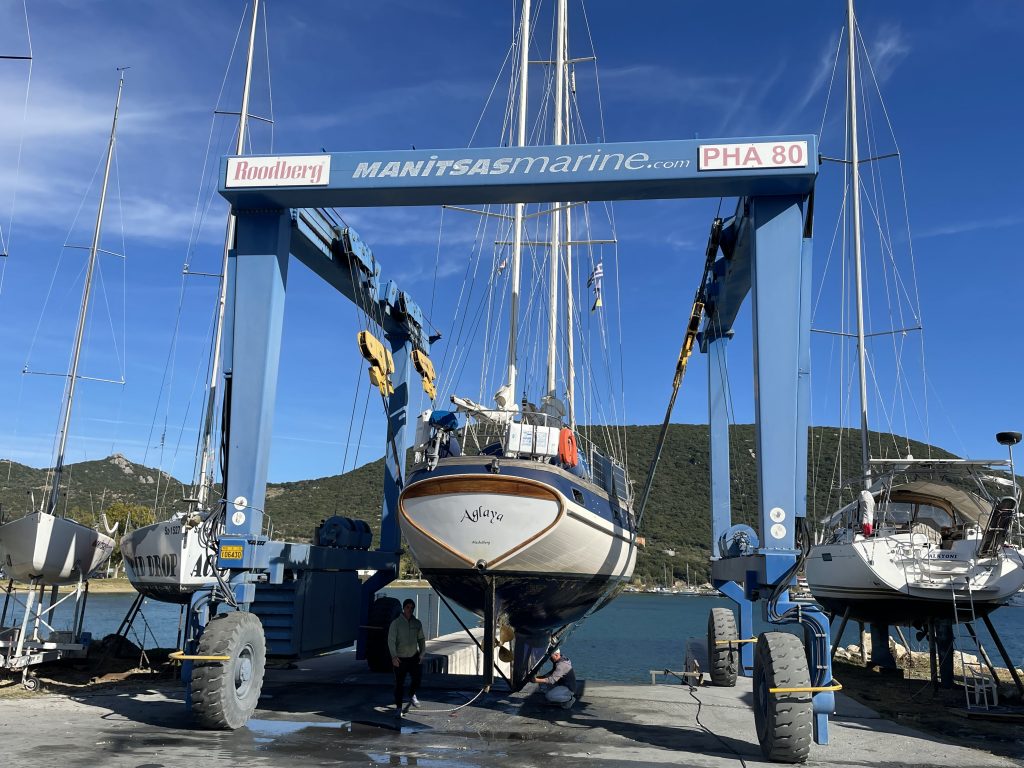
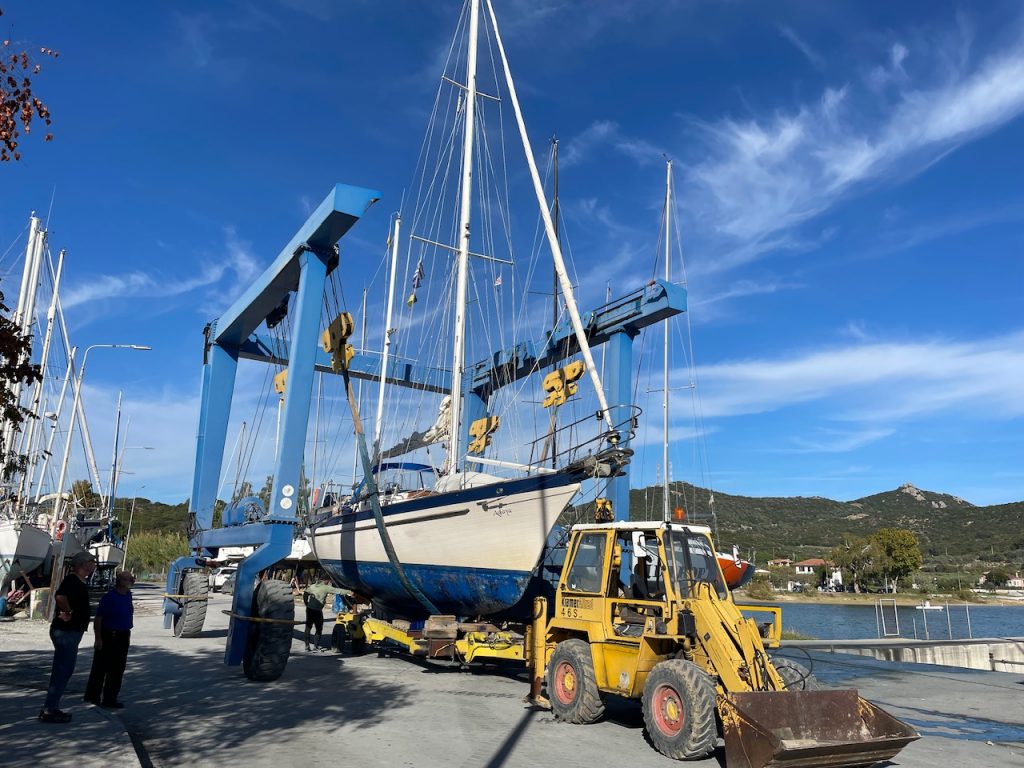
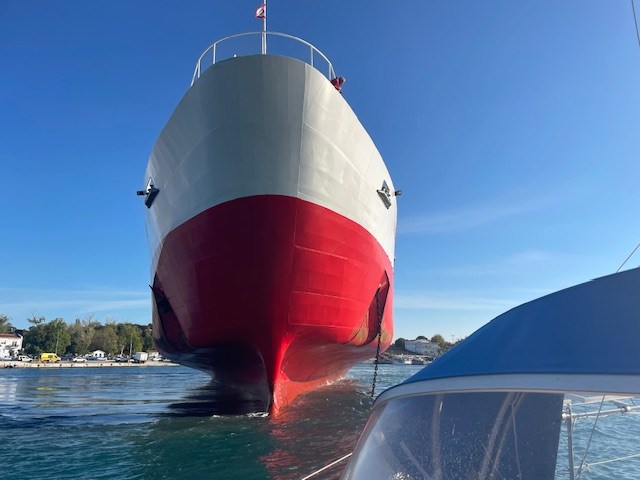
Yesterday, we performed a somewhat challenging manoeuvre in crosswinds and waves to enter the Manitsas Marine slipway in Nera Peramos. It was exciting to see whether we would fit into the travel lift with our two masts. It worked. It wouldn't have been possible to do it forwards because of the large distance between the forestay and the main mast. Our boat is completely different in terms of dimensions from standard charter boats. The Bulgarians who then pulled us out of the water with the travel lift did everything professionally, calmly, but with great attention and care. A photo of our underwater hull was also helpful. This allowed them to position the lifting straps correctly so that they did not rest on the keel and bend it. It was precision work, also when they stabilized the boat on land.
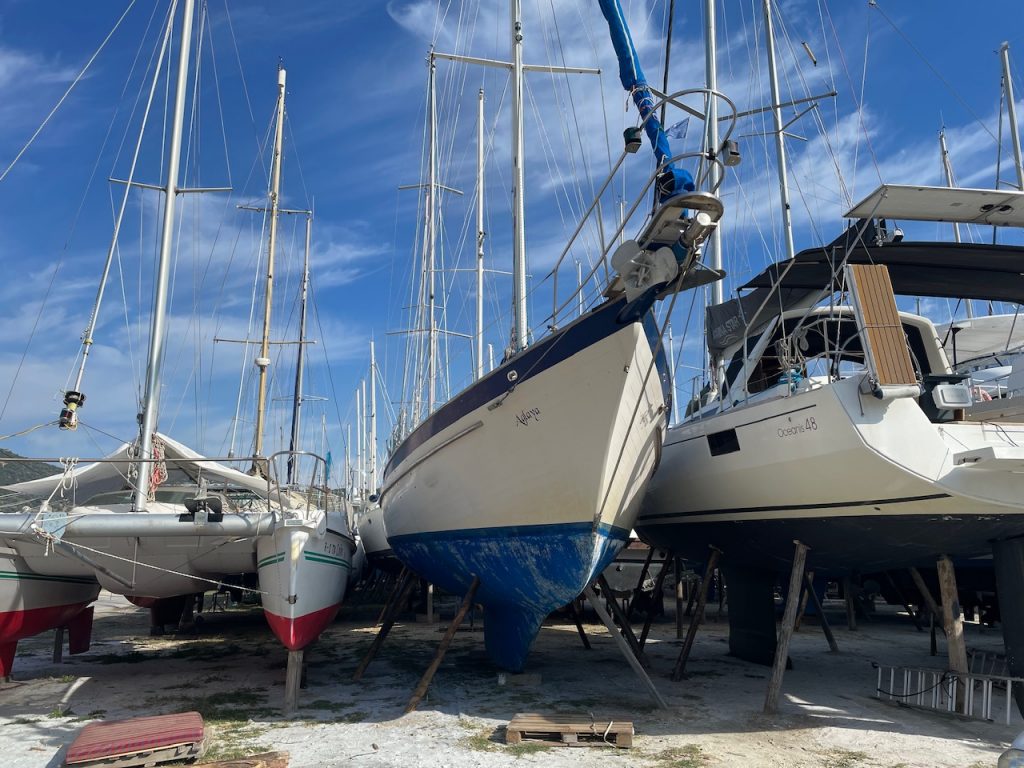
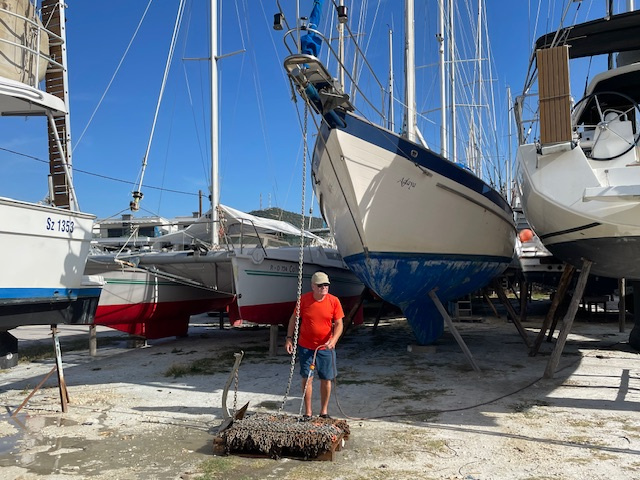
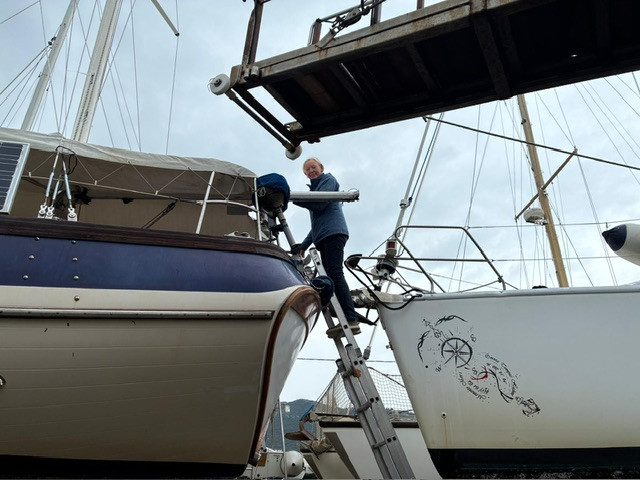
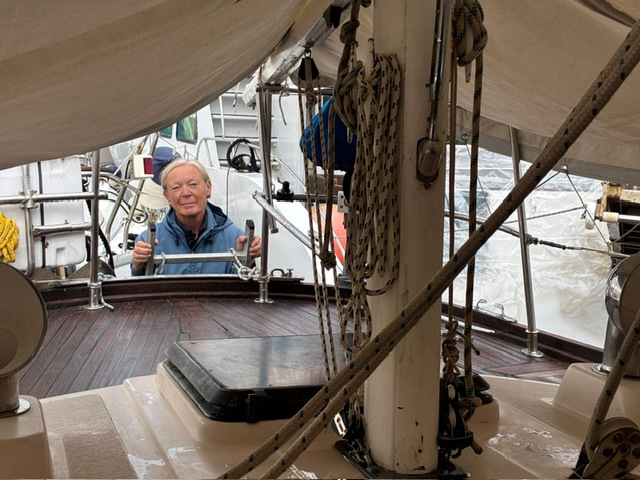
Now Aglaya is parked tightly between many other boats at the Manitsas Marine boatyard. We climb aboard using a long ladder and have to get used to the fact that our boat is no longer rocking, but that we are still ‘rocking’ with it. Our sense of balance is confused. However, we managed to pour the champagne into our glasses without any accidents. Over the next few days, Aglaya will be winterised, and then we will say goodbye to her for the winter break and look forward to being at home.
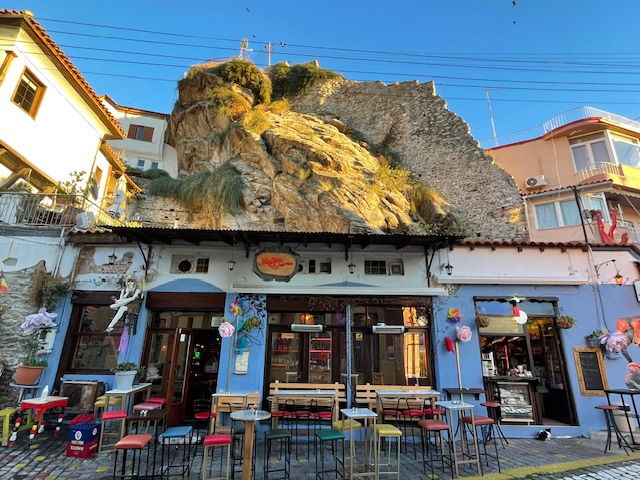
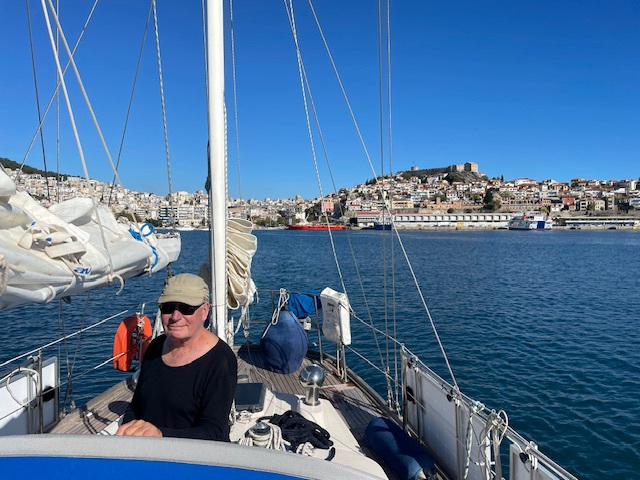
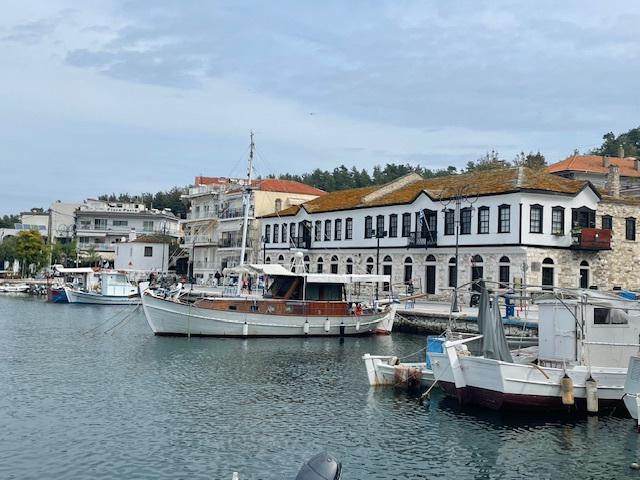
At first, we hesitated to reserve a berth in Kavala. For our boat, it was 81 euros per night without water and electricity, and no shower or toilet. But then the price went down in the off-season. So we were able to visit this great city with its impressive fortress, beautiful old town and lively atmosphere directly by boat. Natasha made up for the poor infrastructure for sailors by taking care of everything for us: mooring, bunkering diesel before winter storage... a wonderful, professional woman working on behalf of the Port Authority. We hope she gets a cut of the hefty mooring fees.
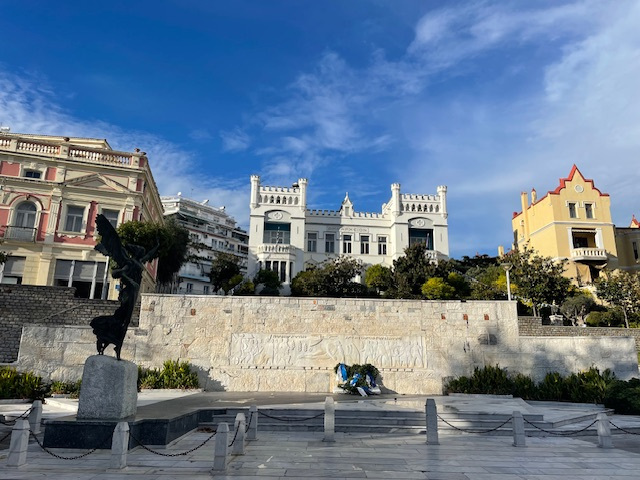
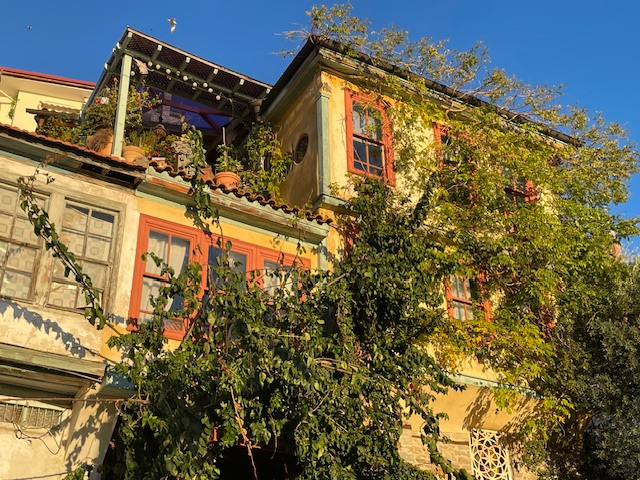
Kavala, the largest city in Eastern Macedonia, used to be a transshipment point for tobacco that came from Turkey, was stored here and then transported on to the Balkans. This was obviously a lucrative business, as evidenced by the villas of the tobacco barons that still stand today.
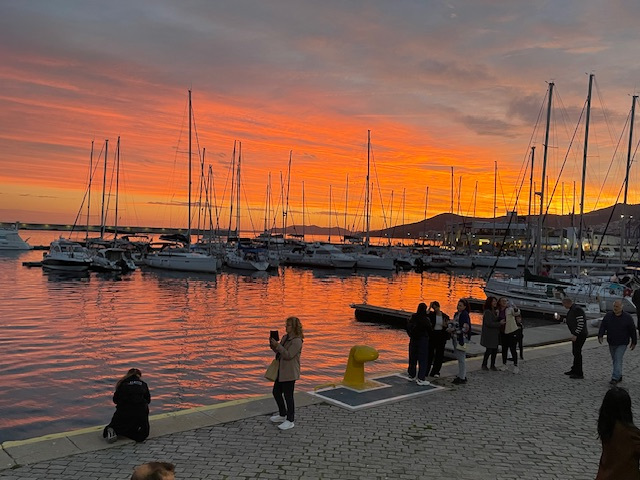
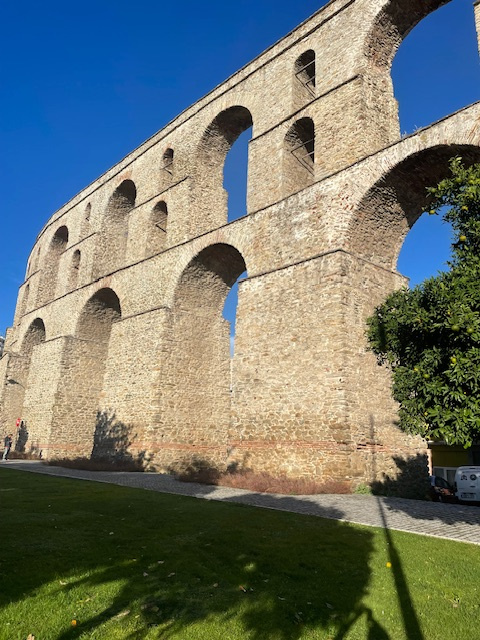
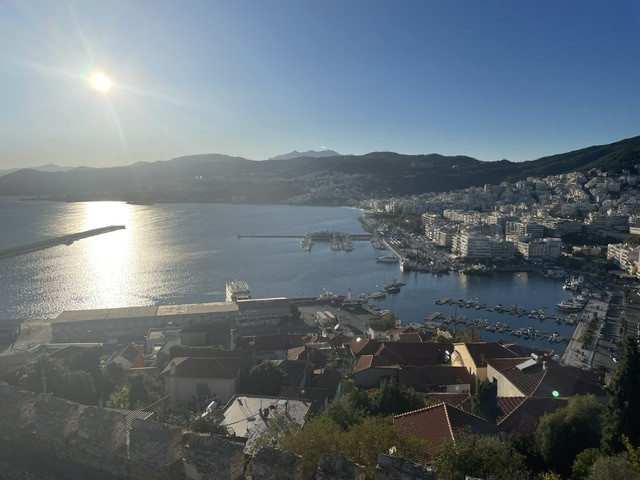
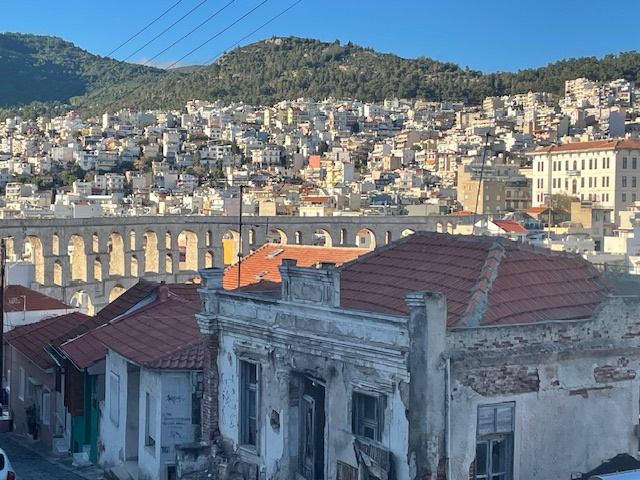
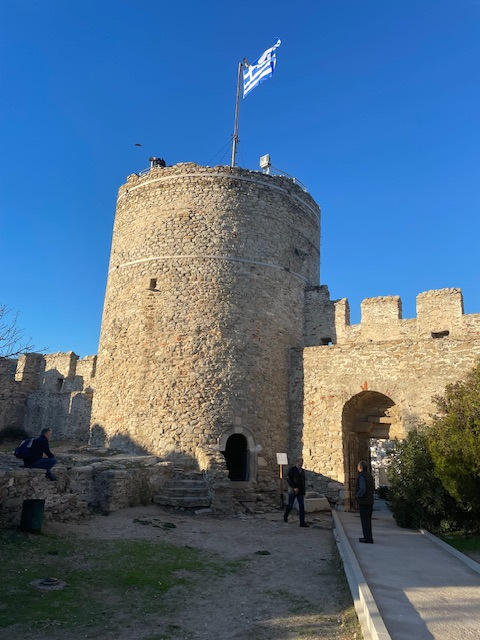
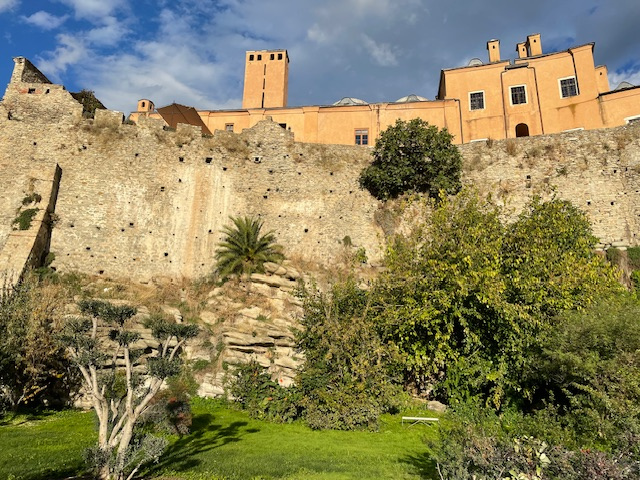
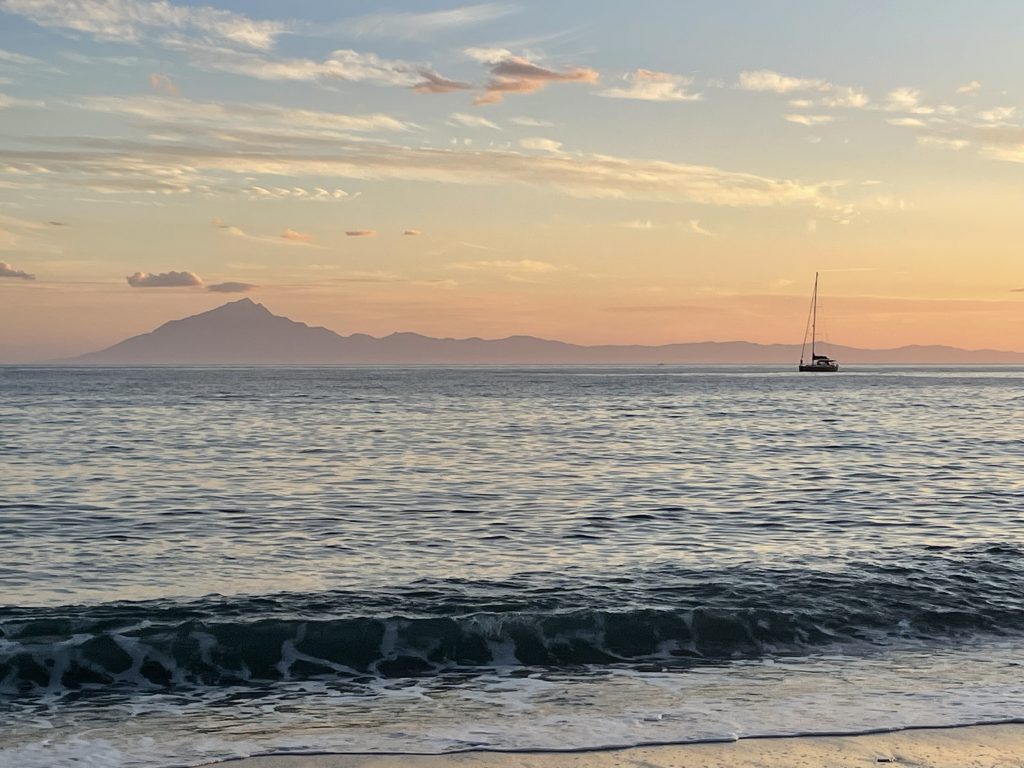
The fortress towers directly above the harbour. From the cockpit, we admired it in every light of day and night. Of course, we also climbed up. From the tower, there is a magnificent panoramic view over the city, the harbour, to Thassos and as far as Mount Athos. Another special eye-catcher is the two-storey viaduct, through which water was transported into the city in earlier times.
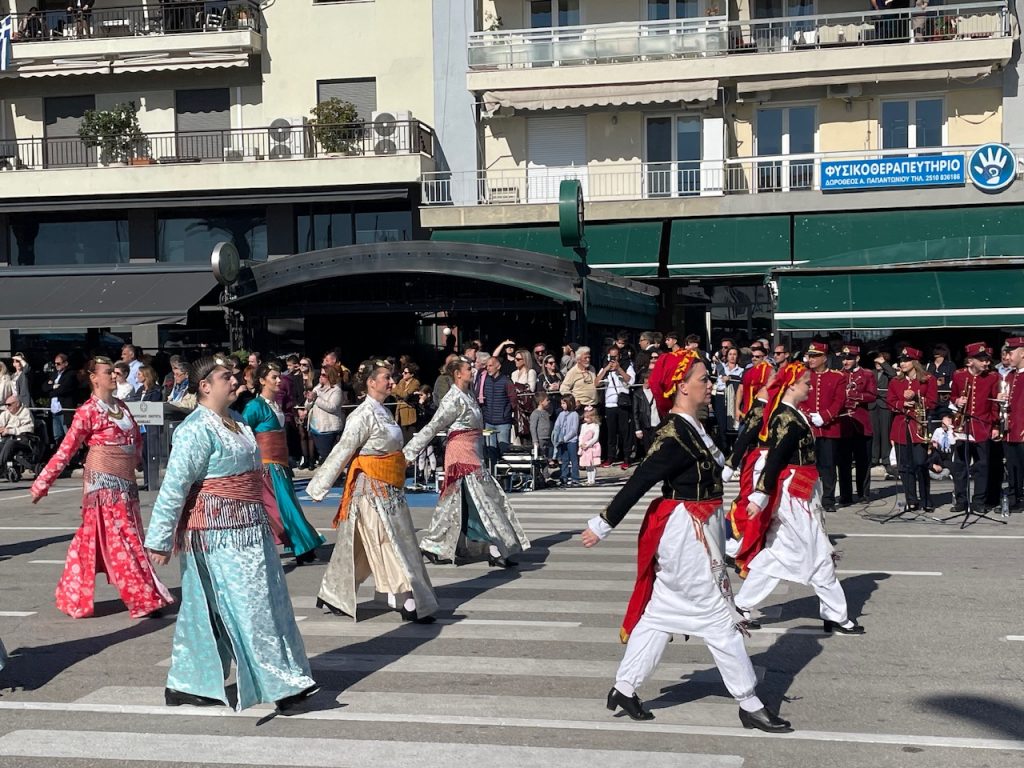
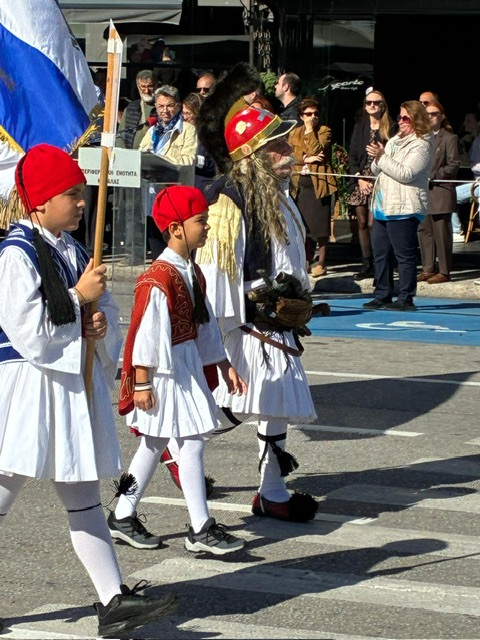
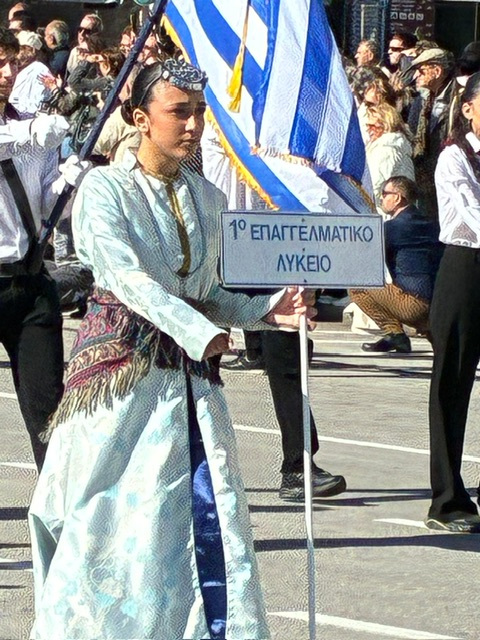
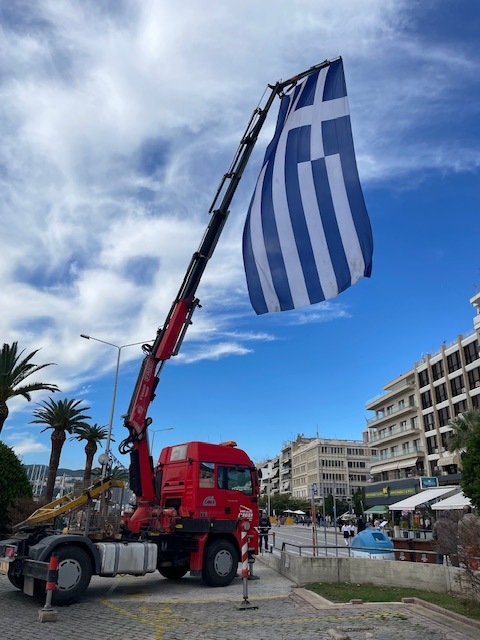
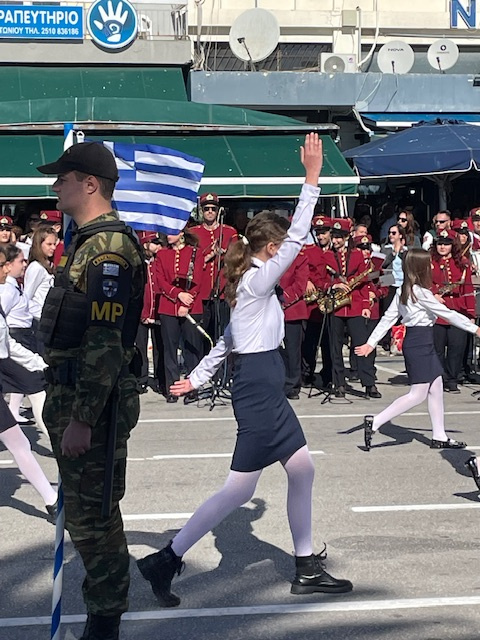
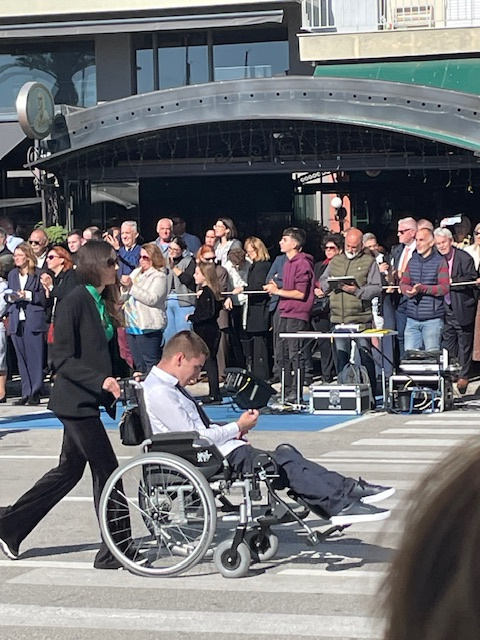
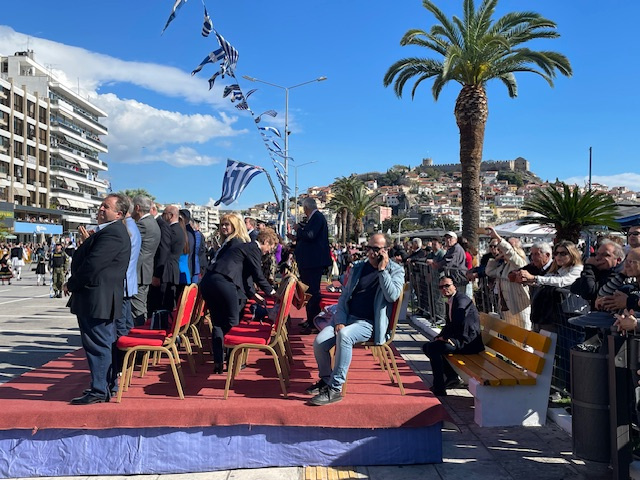
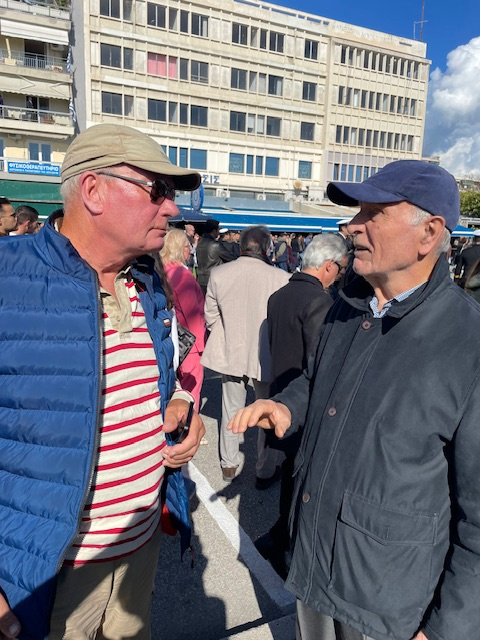
And then there was Oxi Day, Greece's national holiday on 28 October. We have experienced it several times in other places, and it is always a big spectacle, even though it has a serious and, for the Greeks, very painful origin (https://du-bist-grieche.de/28-oktober-der-tag-des-nein-in-griechenland-ochi-tag/19366781: speeches, music and a parade. This time we were in Kavala, delighted by the many children and young people in the parade and the women and men in their very different traditional costumes. So many young people and such diversity are visible here. Where can you see that at home? It's also nice to watch the people watching the parade. They gather for this big event, arrange to meet up and then usually find each other thanks to their mobile phones. Parents and grandparents who are proud that their children and grandchildren are taking part in the parade. Sometimes we also get into conversation with someone. And whenever the city's dignitaries pass by and a person raises their right hand (often wearing a white glove), we are reminded of the occasion of this day in 1940. We are so glad that, since we have been travelling in Greece, we have always been welcome everywhere as Germans.
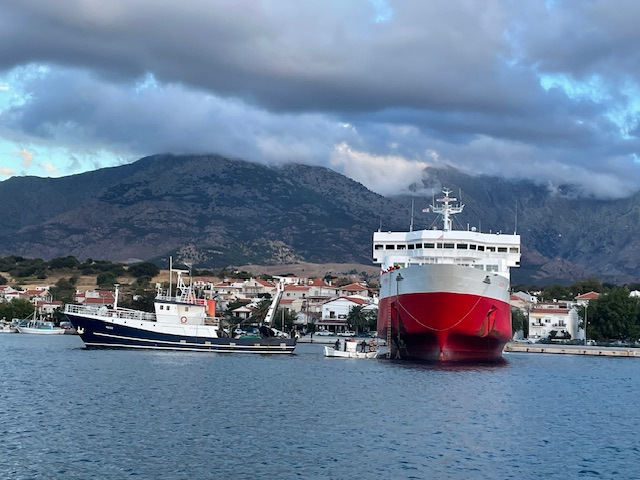
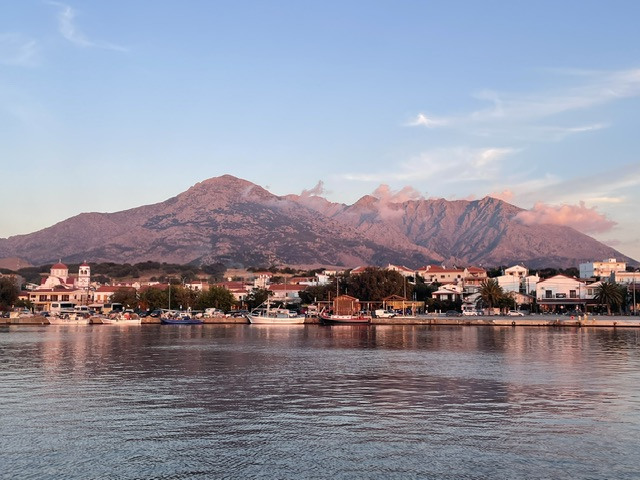
We have now arrived at our winter mooring for our boat, just west of Kavala in Nea Peramos. It's another new experience to go ashore here.
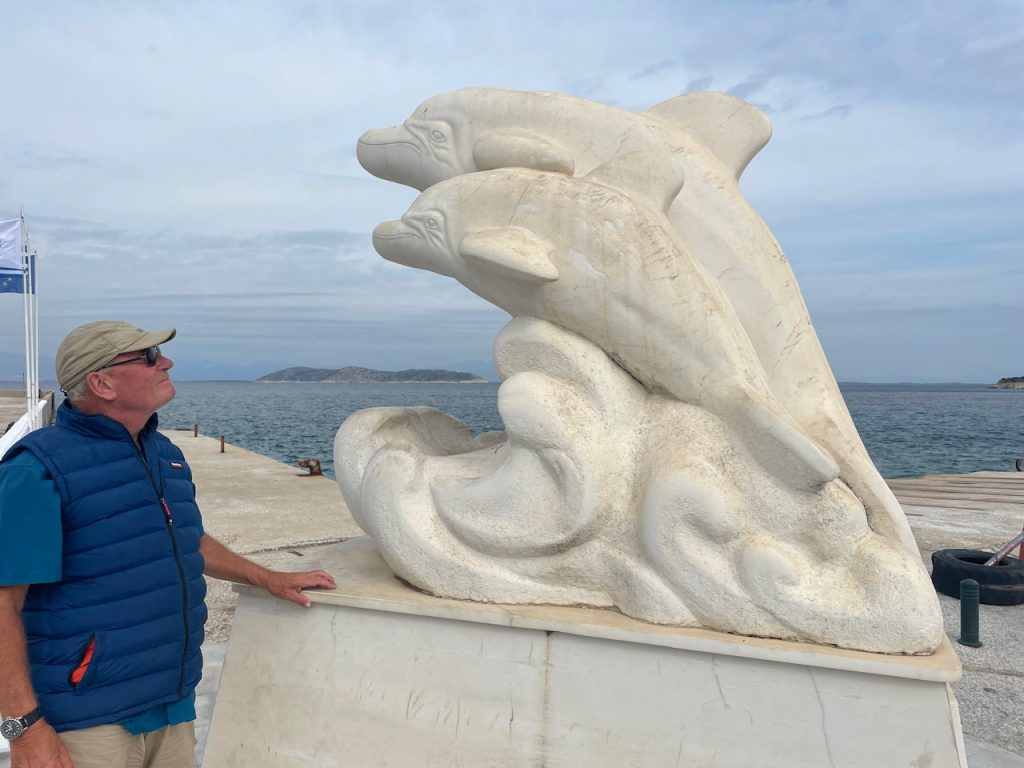
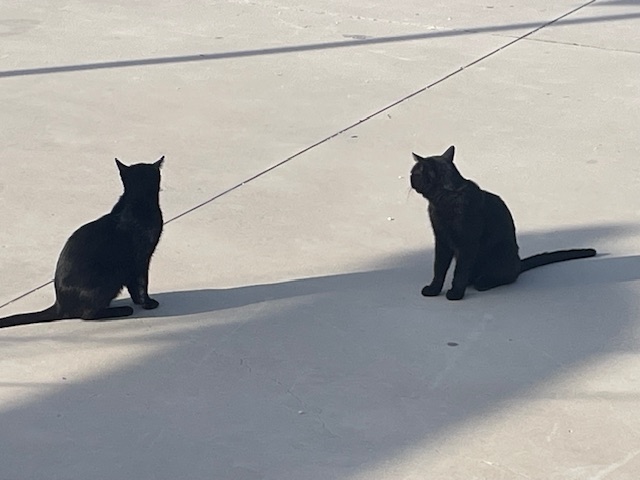
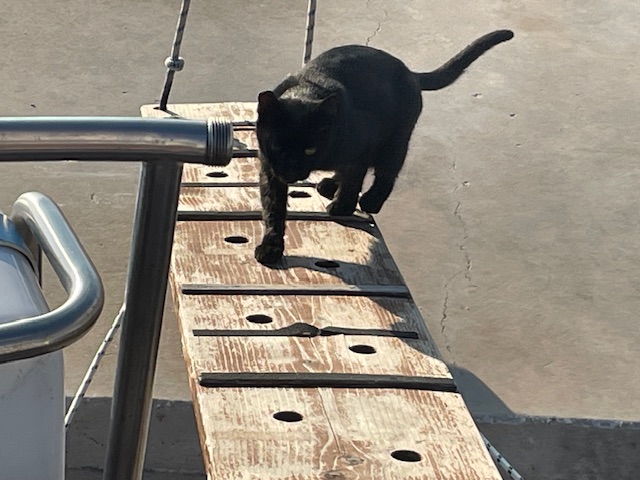
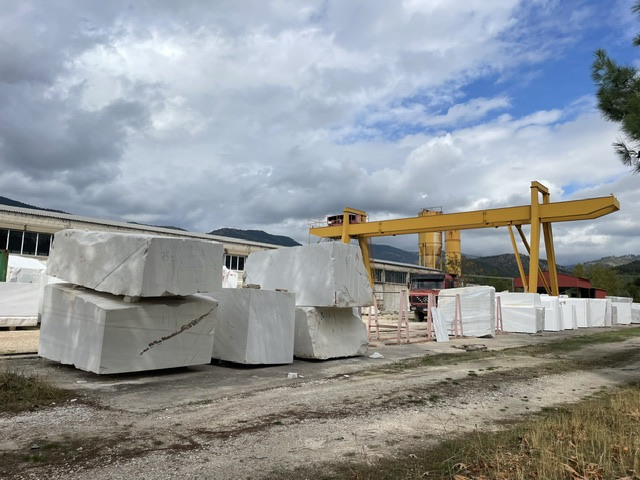
It is well known that marble has been quarried on Thassos since ancient times. Driving across the island in a hire car, we see quarries in the mountains, but also right by the sea. However, it is in the harbour of Limenária that we discover that there are also an unusually large number of black cats on this island. They are everywhere, coming on board with us and jumping onto our laps when we drink beer on the beach in the evening.
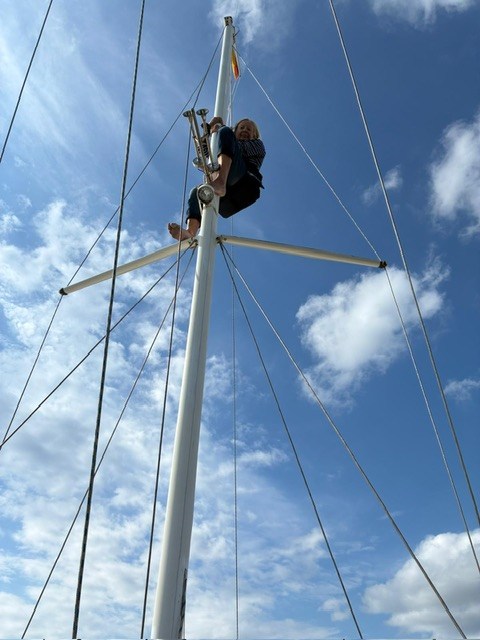
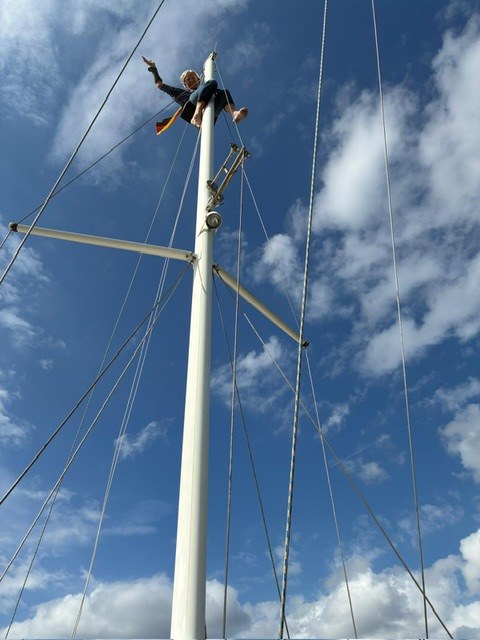
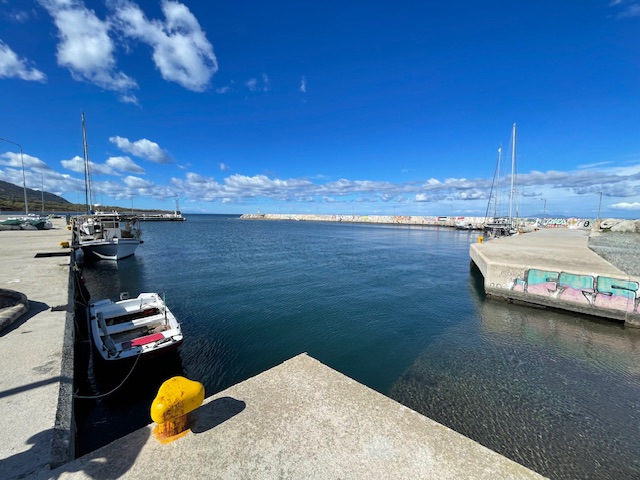
In the harbour of Limenária, we are protected by a bow anchor with our stern at the pier. It is a good place to leave the boat to explore the island. There is no harbour authority, no shore power and no other infrastructure for sailors. But there is water at the pier, so we can thoroughly clean our deck of sand, Posidonia and salt from the breakers of Samothraki. Here we finally free our ‘Adenauer’, which had become stuck at the top of the besan mast.
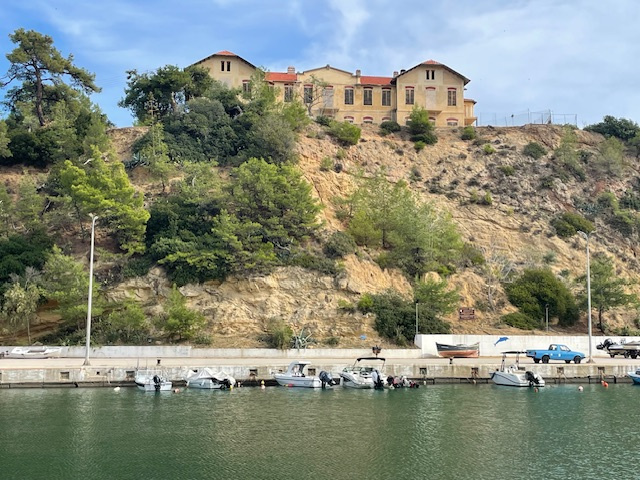
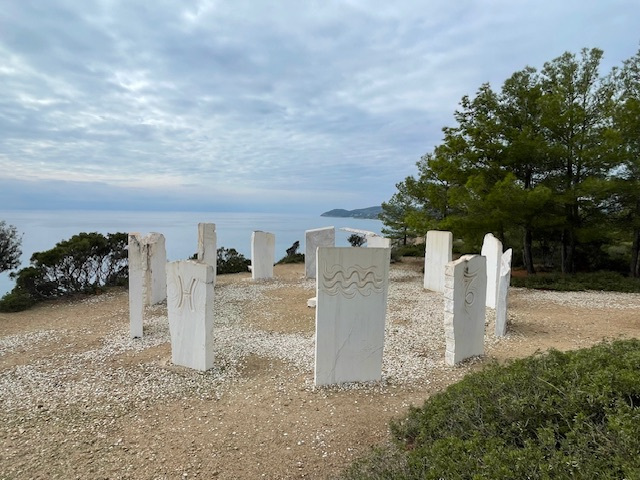
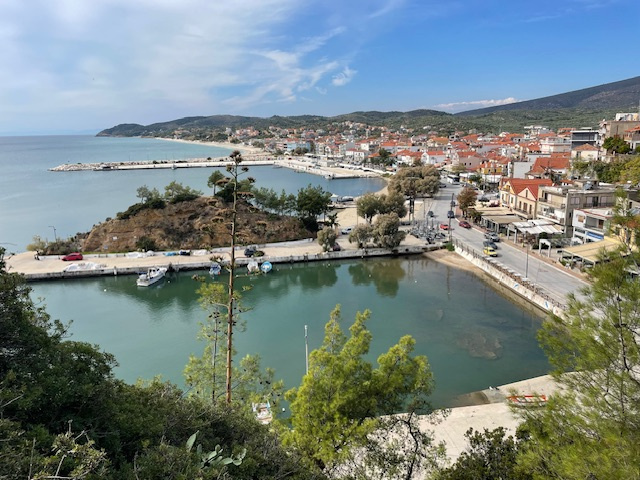
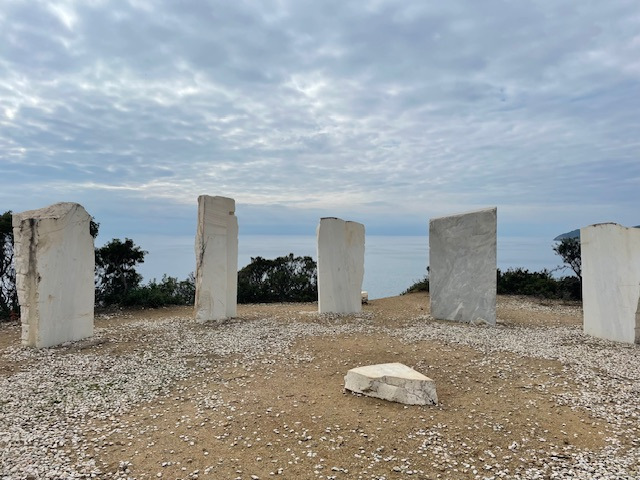
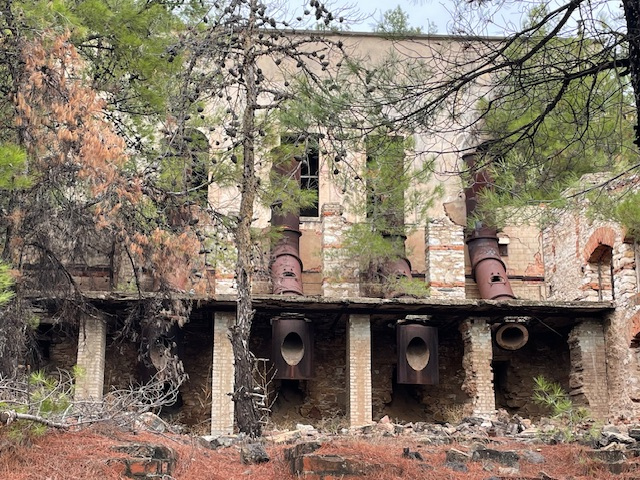
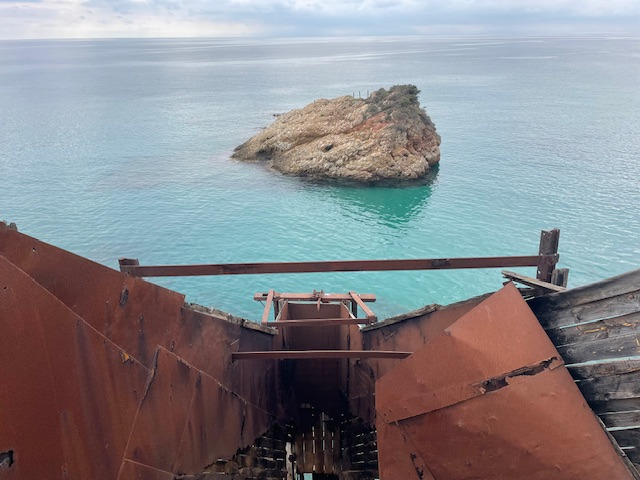
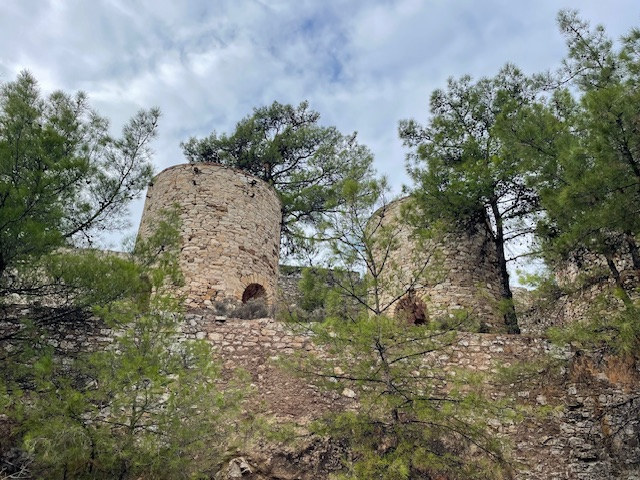
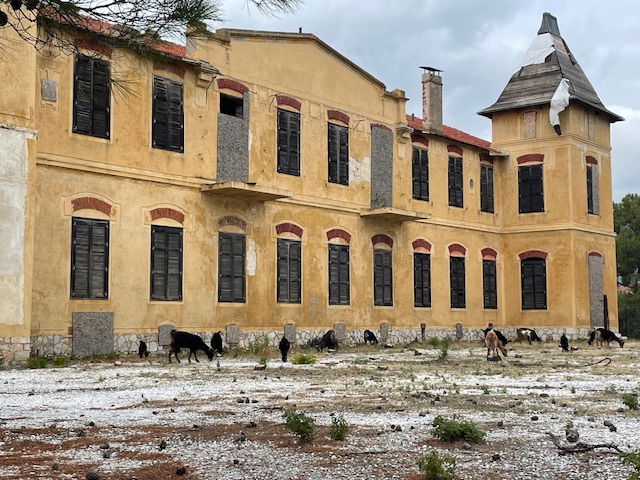
Limenária is an old mining town. The first official rights to mine iron, zinc, lead and silver ore were granted to the Speidel company from Pforzheim in 1903. At that time, the island was still under Turkish administration. The Speidelschlösschen, which has been uninhabited since 1964, towers directly above the harbour. Unfortunately, it is not being maintained. We took a look at the old mining facilities and also at the ‘Crown of Limenária’, twelve marble slabs arranged in a circle, which were designed by pupils from the Stuttgart Waldorf School.
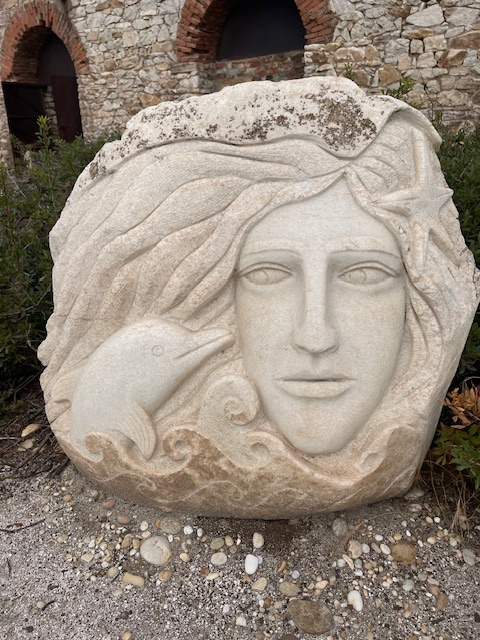
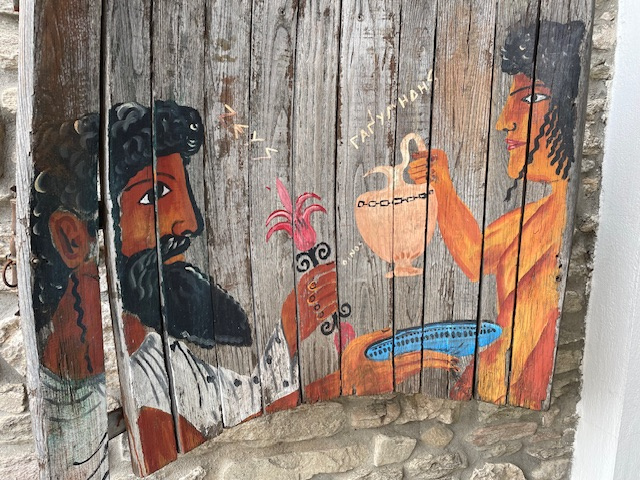
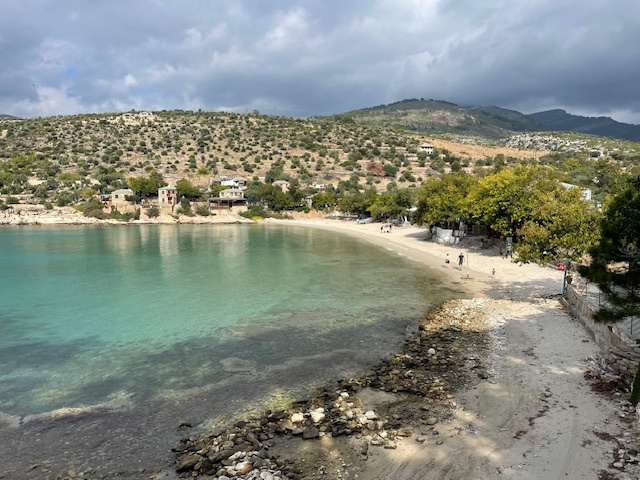
Pictures of Limenária and the surrounding area
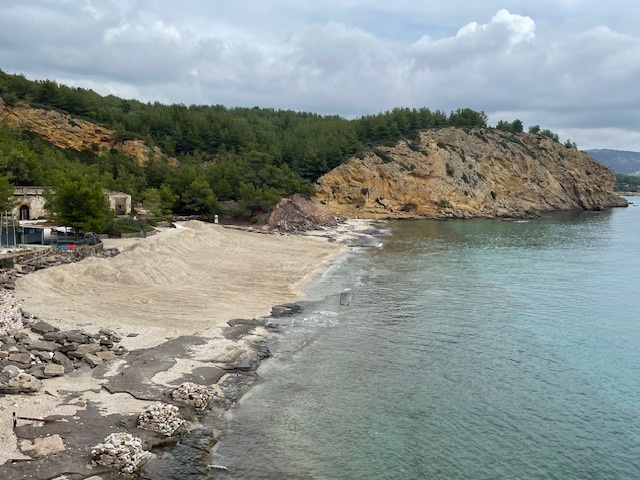
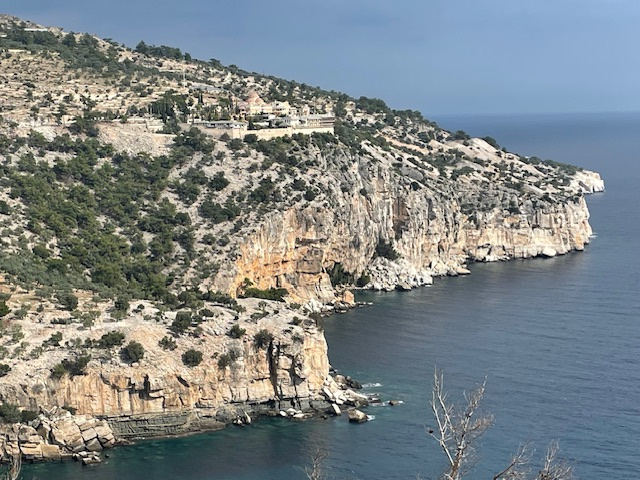
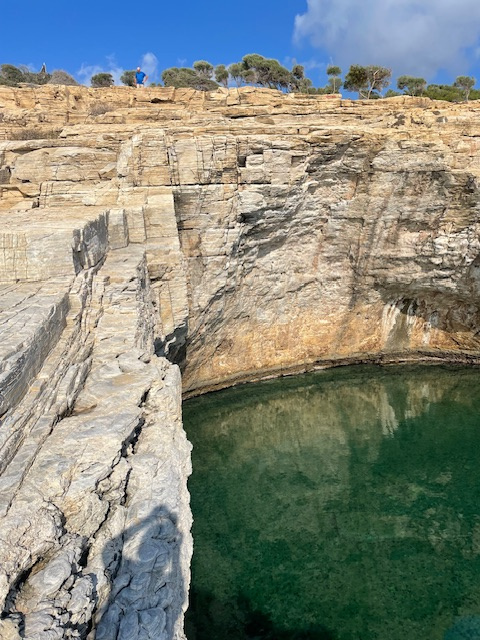
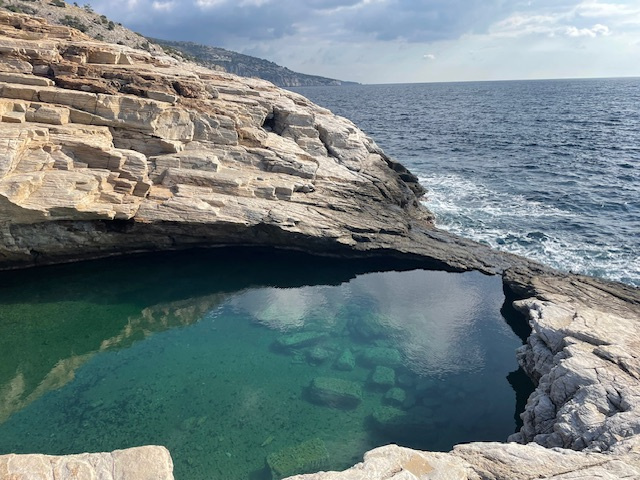
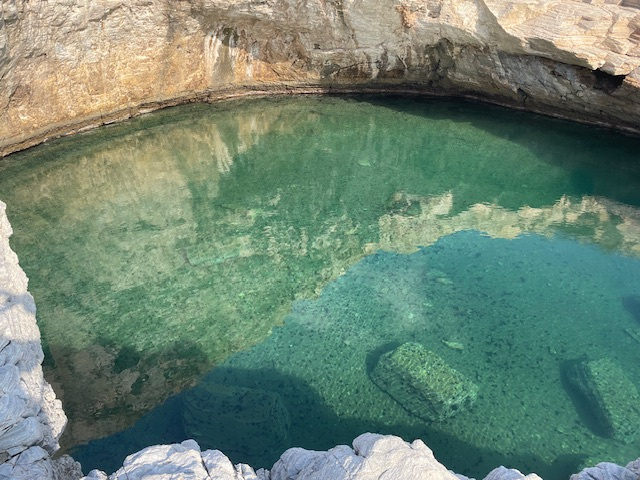
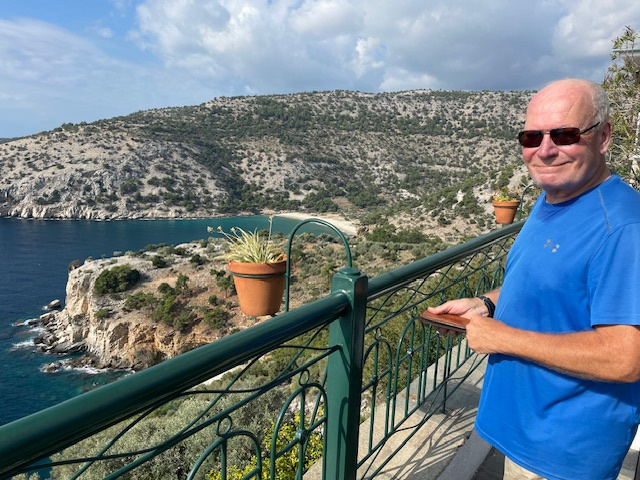
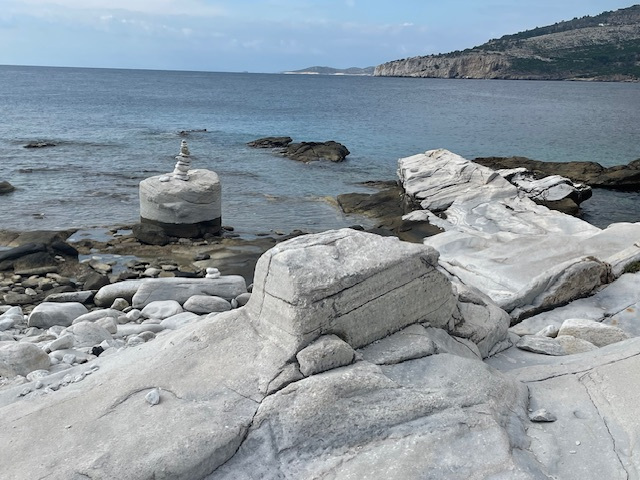
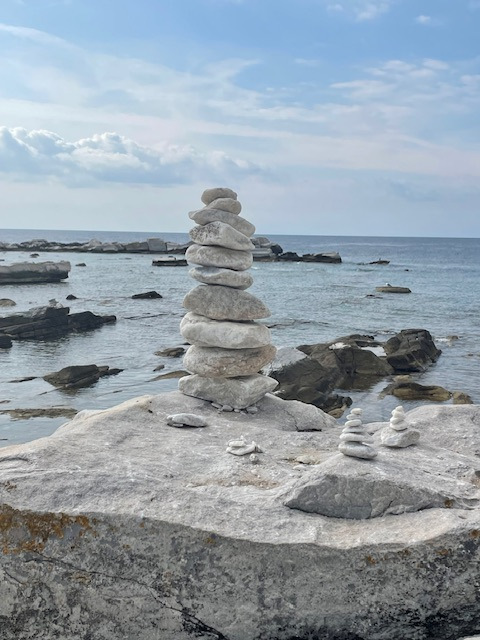
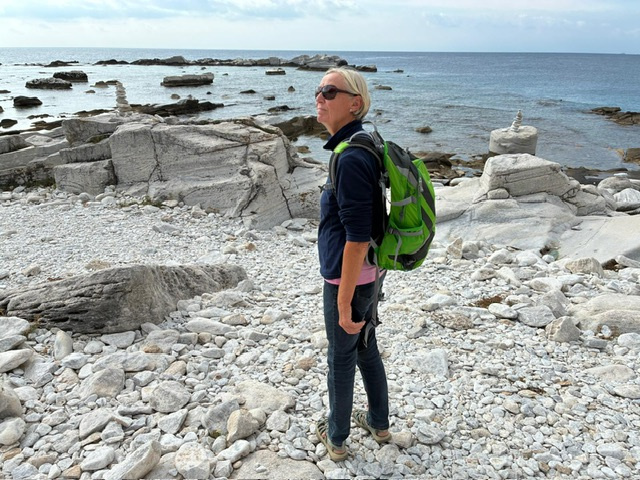
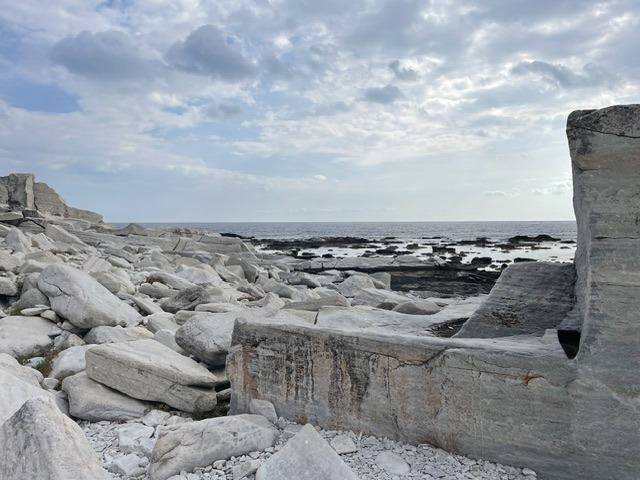
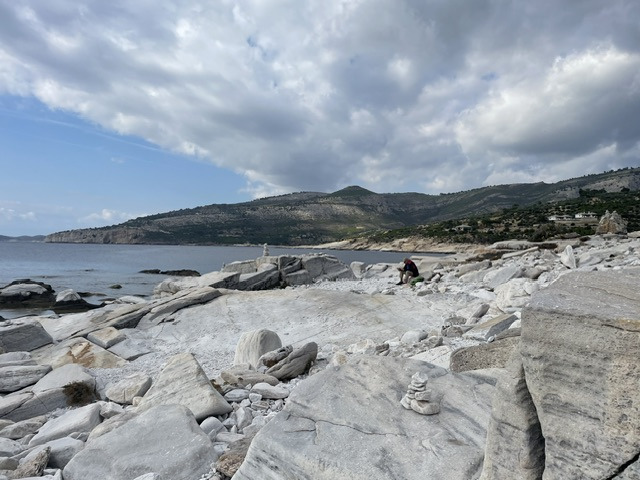
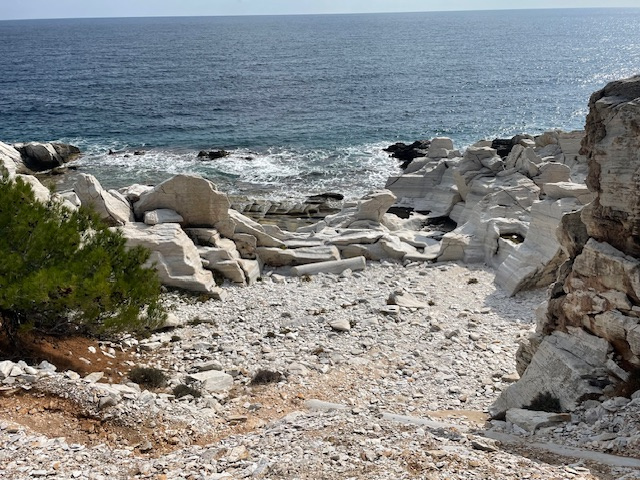
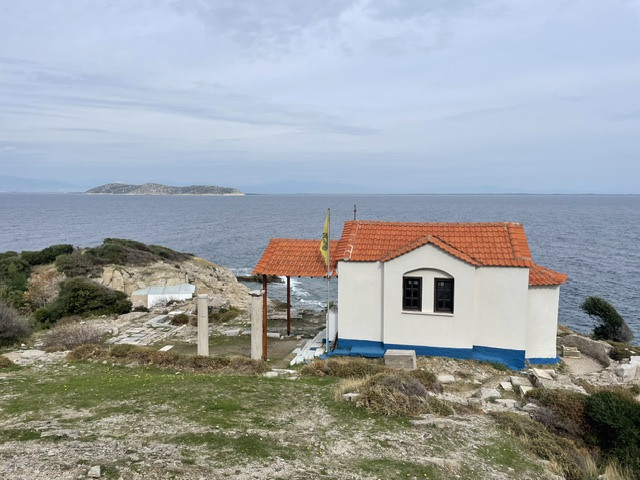
The weather continues to be very changeable, cool, cloudy and rainy at times. But that didn‘t stop us from exploring the island further. We drive along the south coast in a hire car for a day, climbing down the steep rocks to a special bathing spot (Gióla) between the cliffs. Along the rugged marble coast and beautiful sandy beaches, we continue past the Archangélou monastery to the Alikí peninsula. We walk around it and admire the large marble blocks right by the sea and the remains of the sacred sites from Byzantine and Roman times.
Pictures of Gióla an Alikí
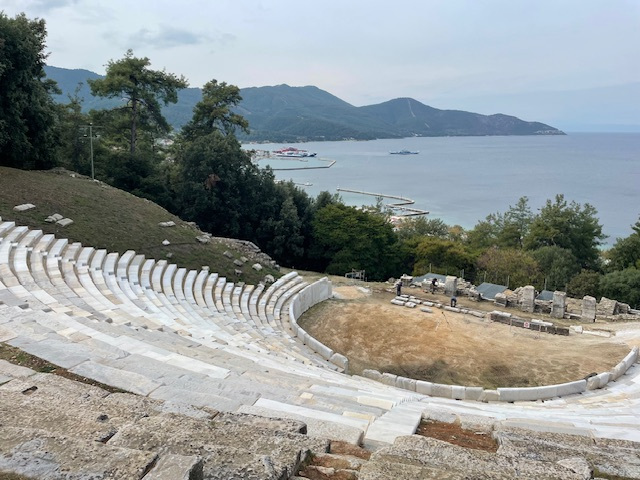
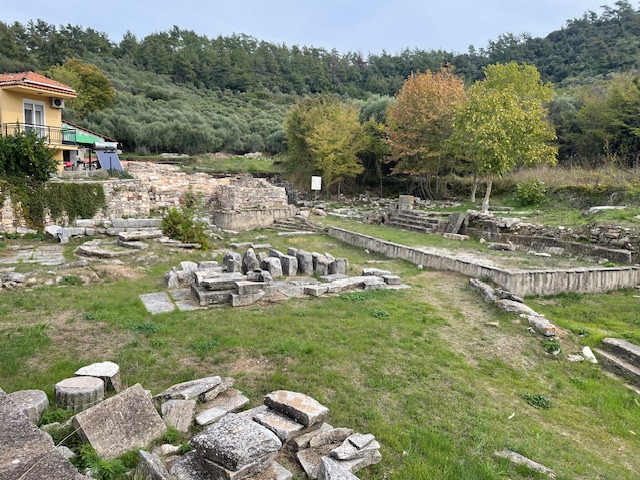
We take the local bus for a day trip to Liménia/Thassos on the north side. There is a busy ferry service here to Keramoti on the mainland. In the old naval port, where fishing boats are now moored, we enjoy the breakfast we brought from the baker (spinach pies and tomato and cheese pies). There are many ancient ruins to discover right in the town. And up in the forest above the town, we marvel at the amphitheatre, made entirely of white marble, which is currently being restored.
Pictures of Liménia
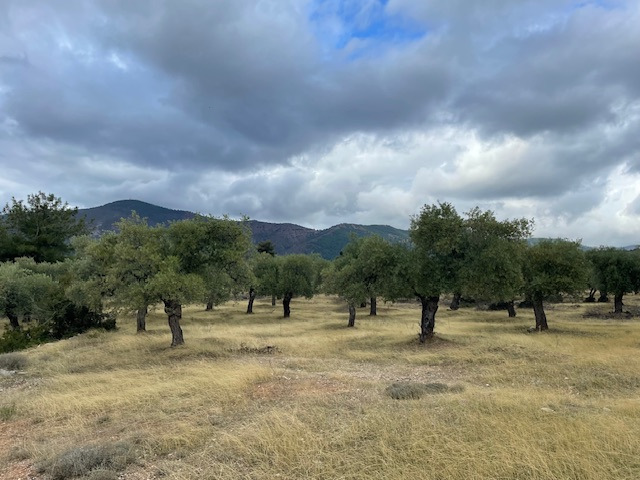
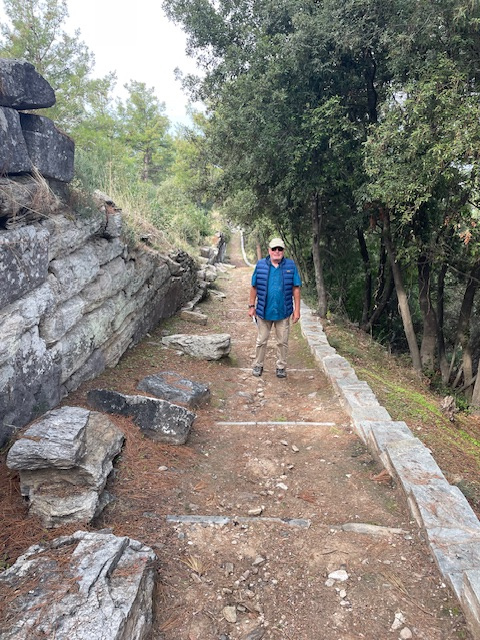
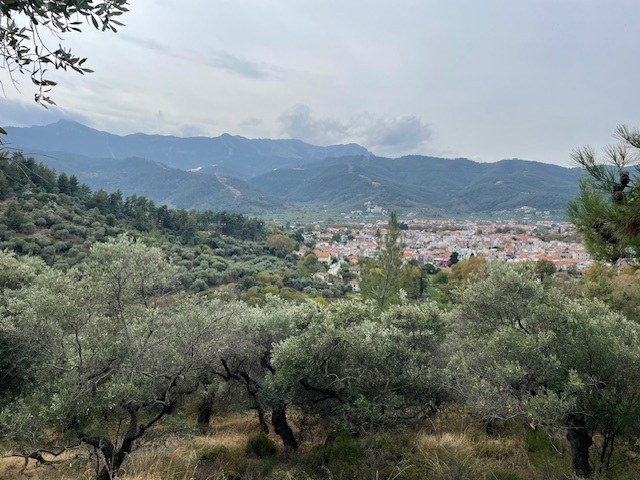
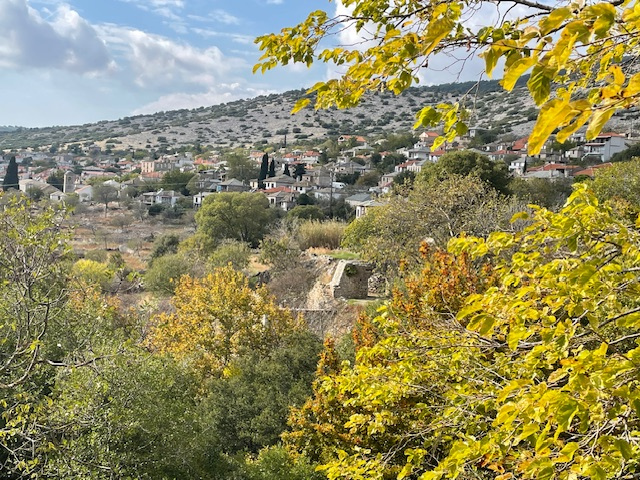
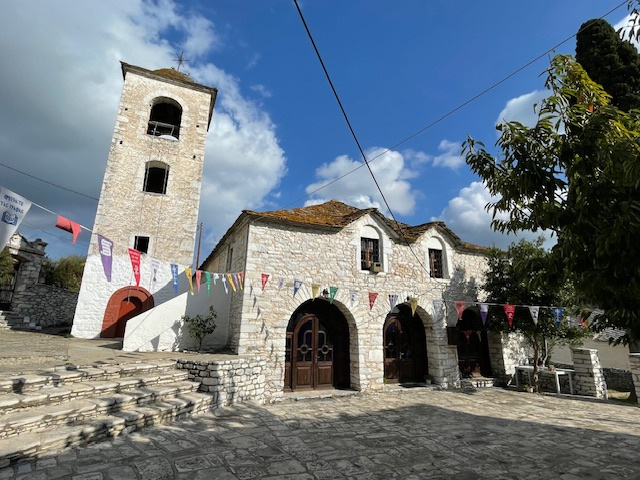
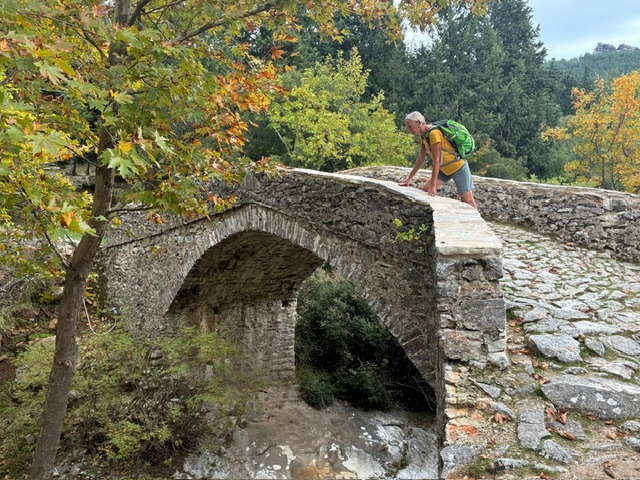
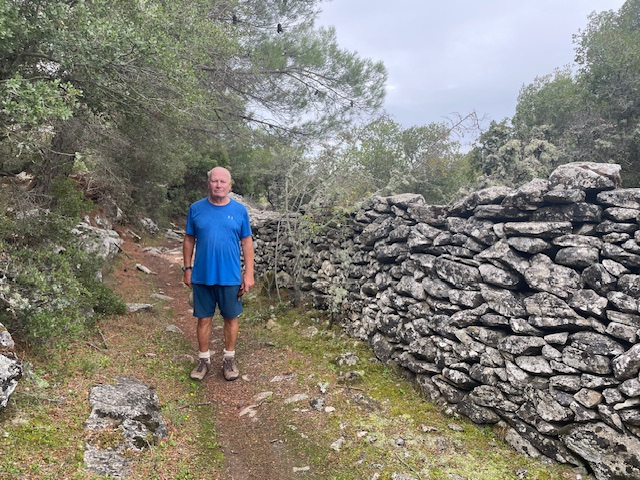
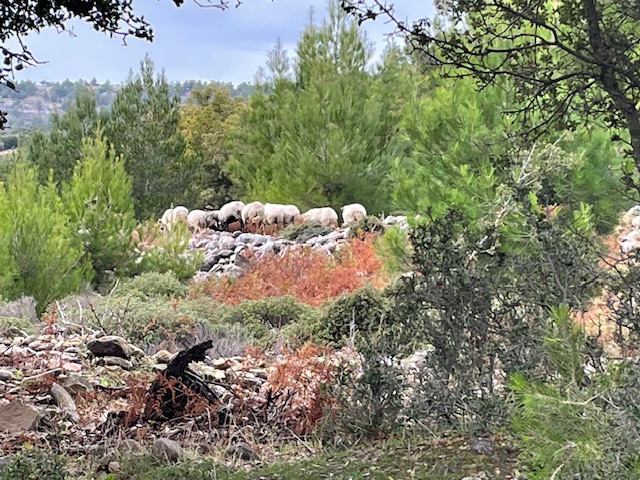
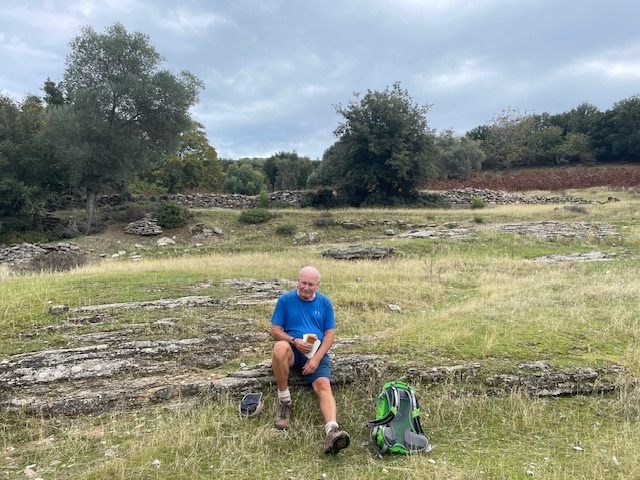
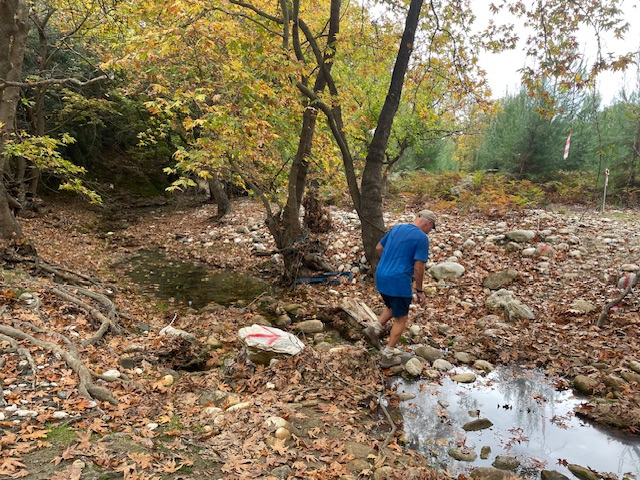
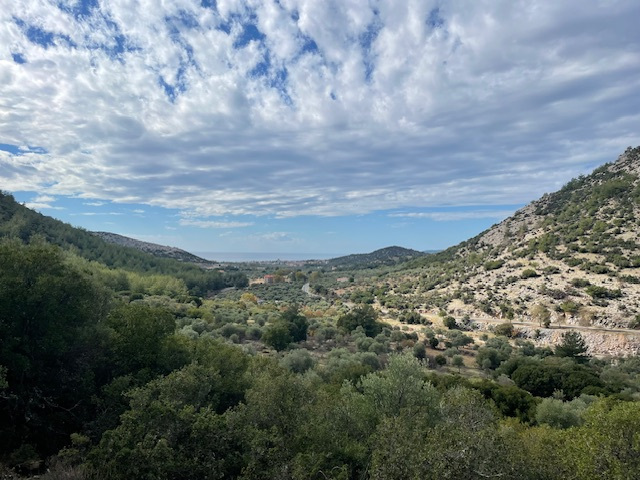
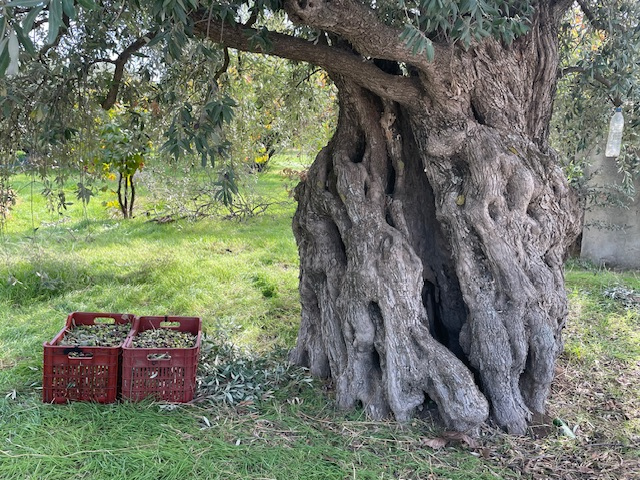
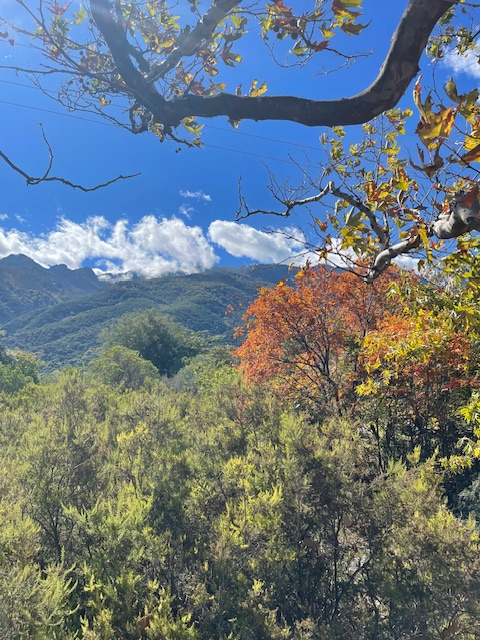
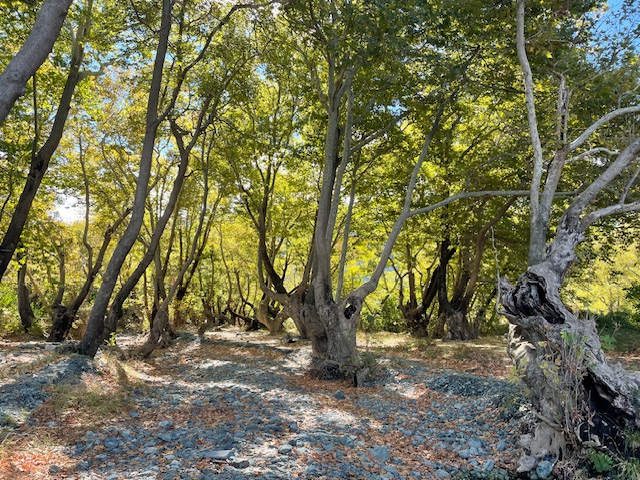
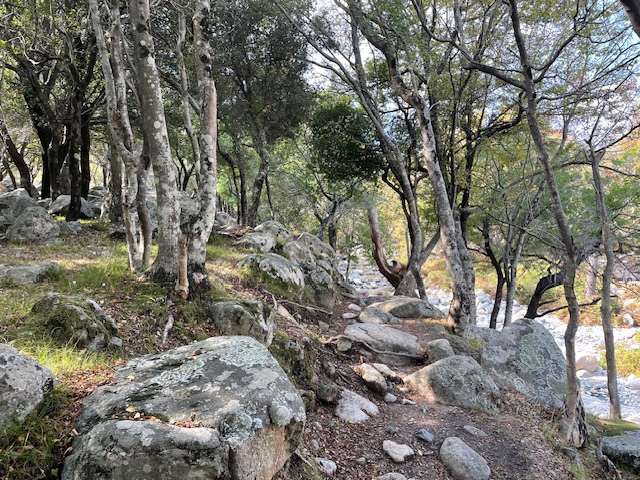
When it becomes sunnier and warmer again, we put on our hiking boots, take the bus to the mountain village of Theológos and walk along the Dipótamos stream bed down to the coast. A very well-marked trail takes us almost eleven kilometres through varied terrain, sometimes along stone walls through olive groves, then through oak and plane tree forests and through pine trees and heather. In Germany, such a well-maintained, beautiful trail would be classified as a ‘premium hiking trail’. Apart from goats and sheep, we didn't meet anyone here.
Pictures of Theológos and hiking
Today we are treating ourselves to another day in the harbour before setting sail for Kavala on the mainland tomorrow.
After the island initially welcomed us with strong winds and breakers that washed sand and Posidonia over our boat, we were able to discover many interesting and impressive things on the island over the following days. For example, we watched the large ferry that comes from Alexandroupoli every day manoeuvre cautiously. There was hardly any swell for our boat. And the ‘anchor manager’ at the bow waved to us every time the bow almost reached our boat. Once, however, the ferry's two bow anchors became entangled with each other. It took an hour and the help of a large fishing boat to resolve the problem.
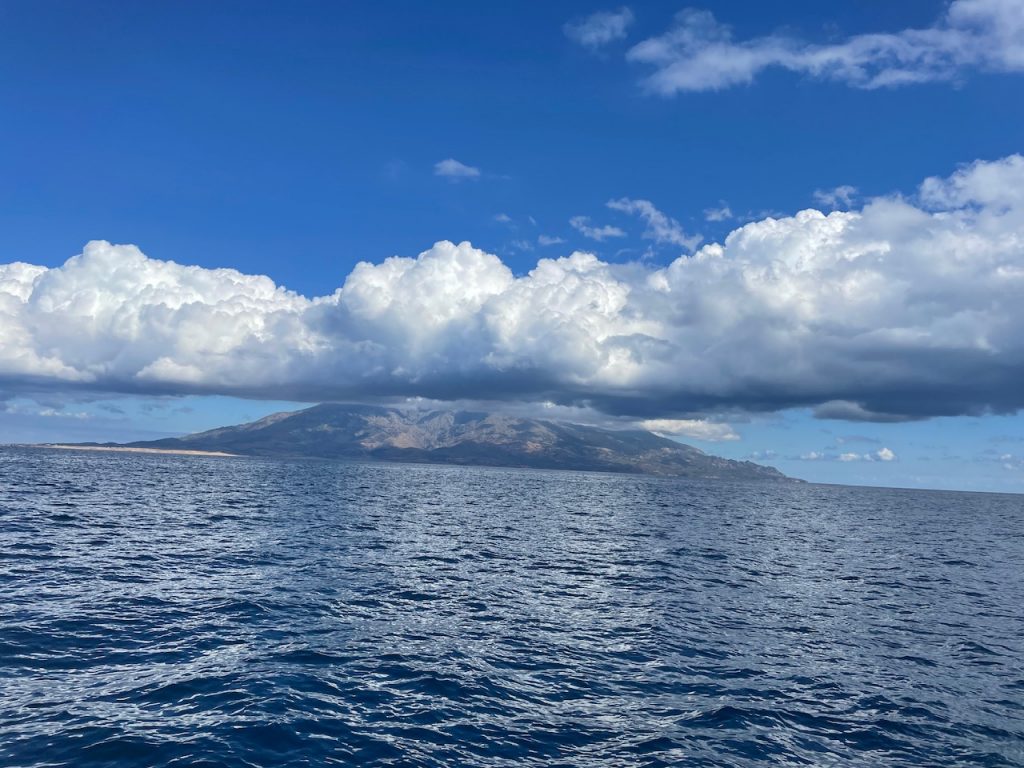
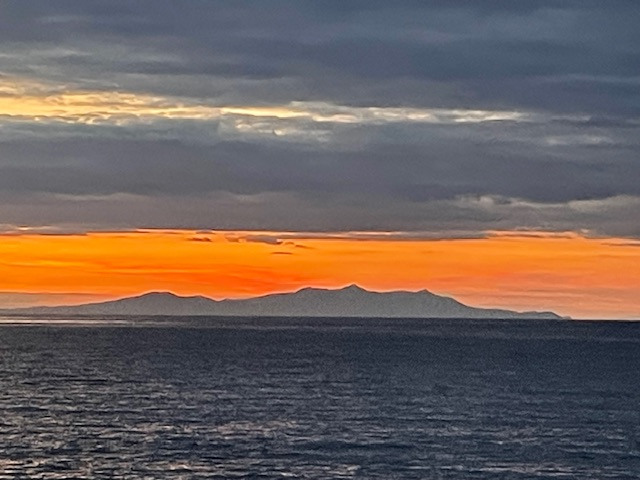
Samothraki, located in the far north-east of the Aegean Sea, is different from the more southerly Aegean islands. High mountains with rugged cliffs that plunge directly into the sea, bizarre rock formations. At 1600 metres, Fengari is the highest mountain. The north side of the island is green. Here you can hike through plane tree and oak forests to various waterfalls.
There is always something going on in the main town of Kamariotissa when the ferry arrives.
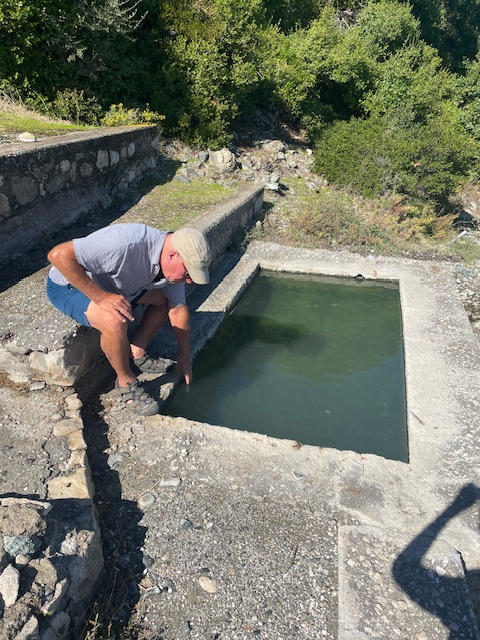
We travelled by bus and on foot. We visited the town of Therma with its sulphur springs, looked at the small harbour and decided not to go there with our boat. The harbour entrance is extremely narrow and the harbour quite shallow.
Pictures of Therma
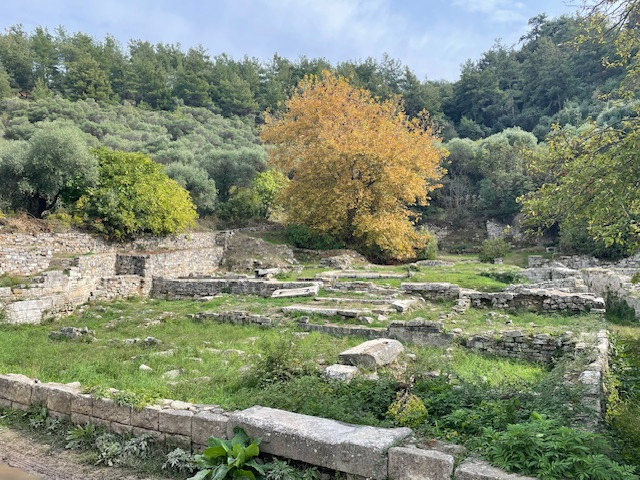
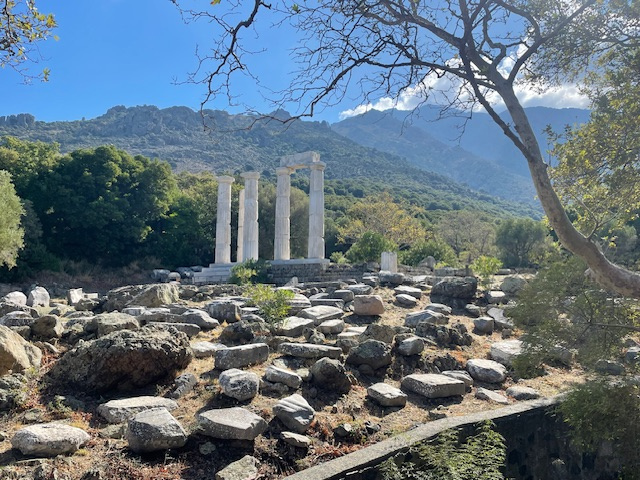
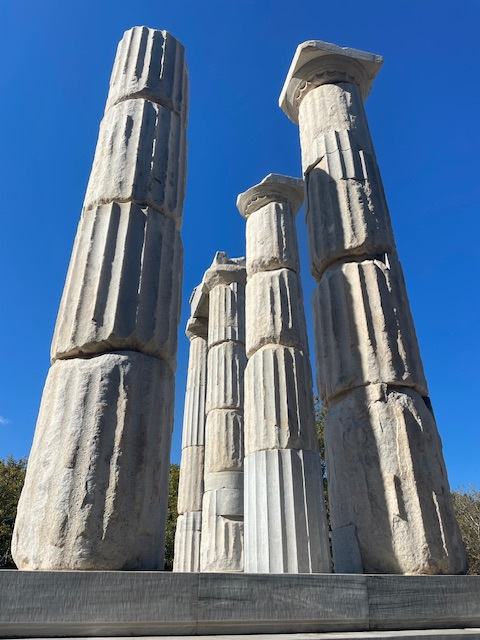
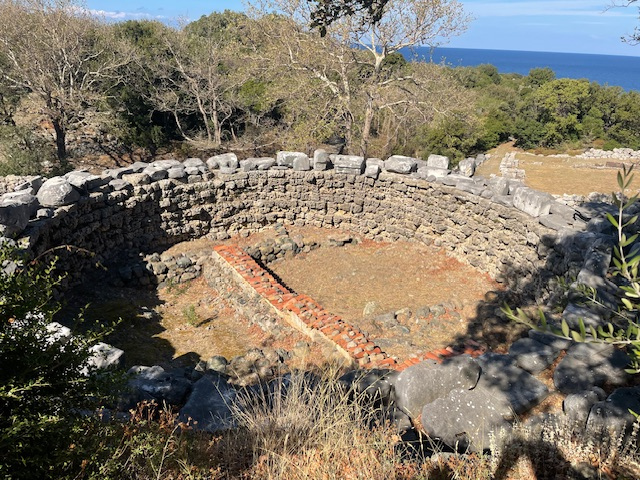
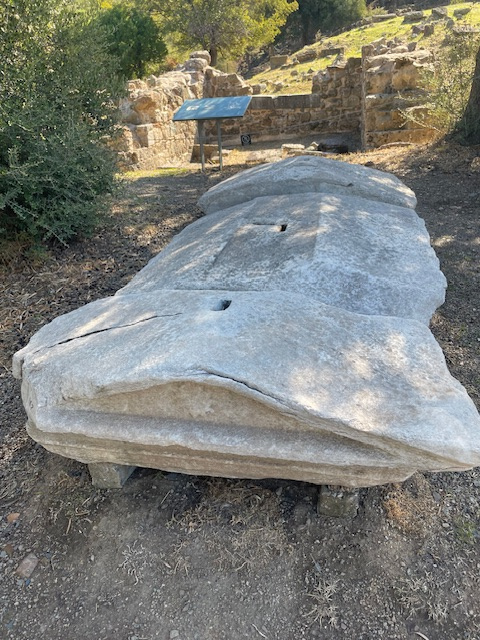
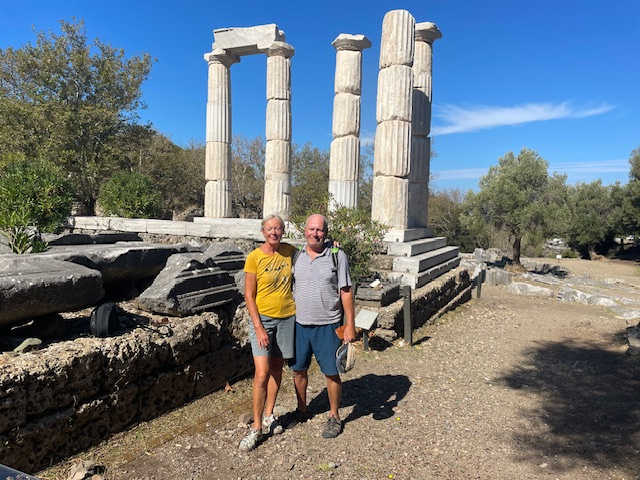
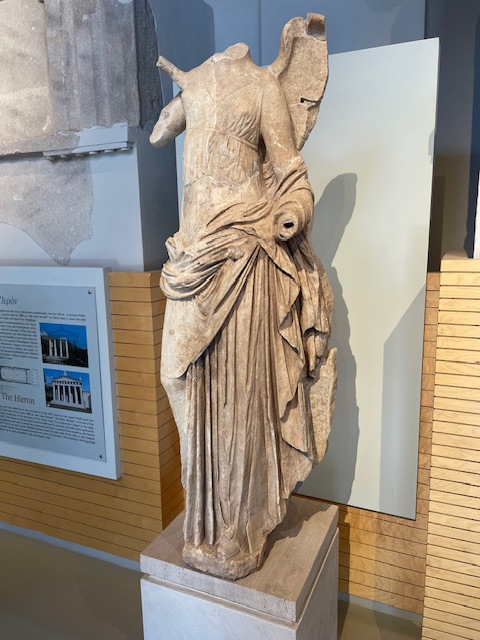
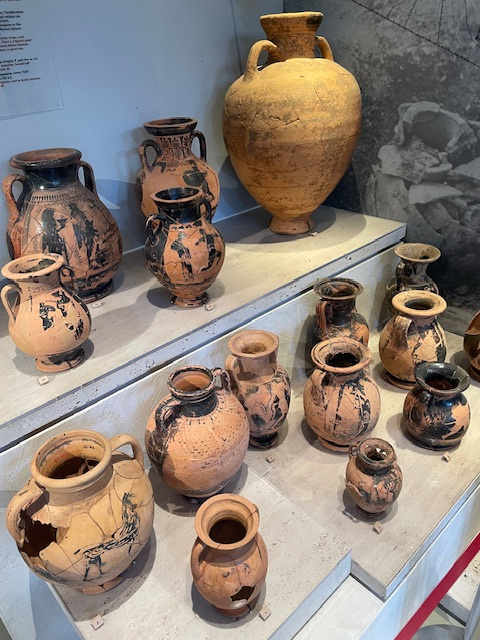
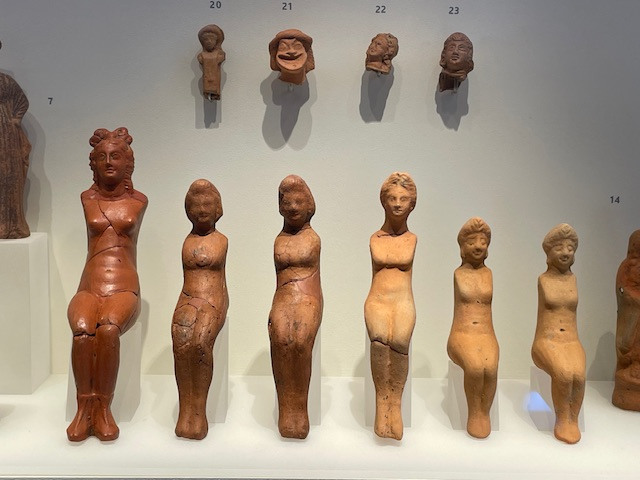
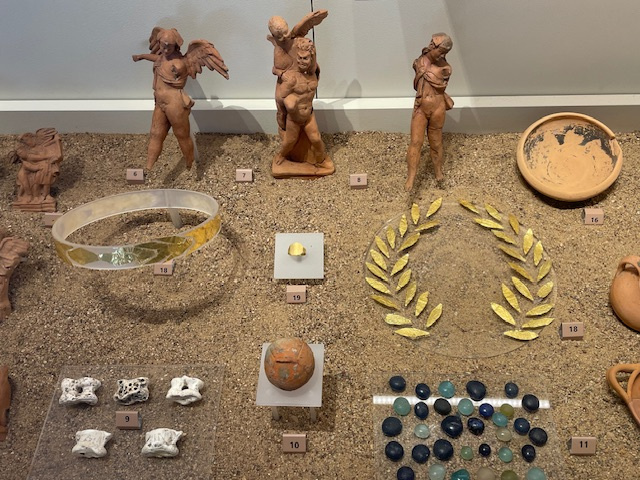
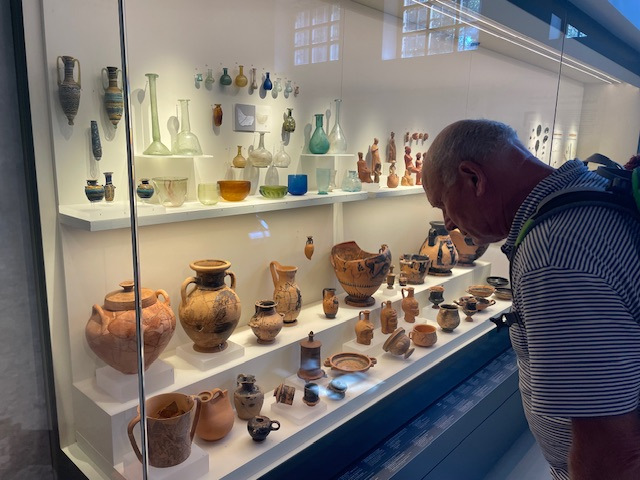
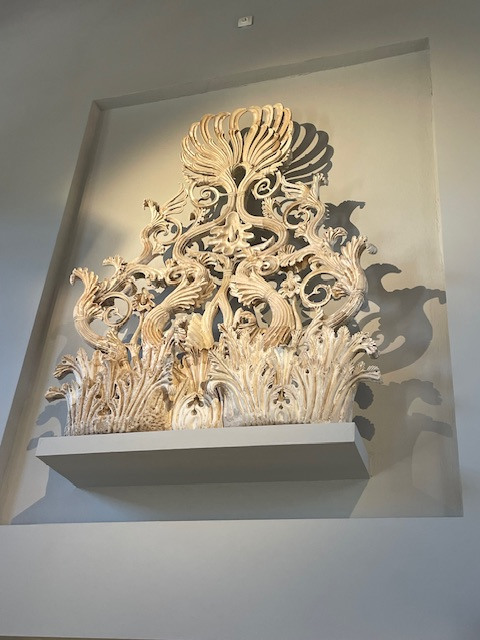
We were particularly impressed by the sanctuary of the Great Gods. In the third century BC, the great gods met here and performed mystical rites to make the world a better place and ensure divine protection at sea. It takes time to walk around the large complex and reach the spot where the Nike of Samothrace was found. In the beautifully designed museum, we were able to marvel at many well-preserved finds.
Pictures of the Sanctuary of the Great Gods
The old capital, Chora of Samothrace, is located in the mountains. Almost everything is closed here: the season is over.
Pictures of the Chora
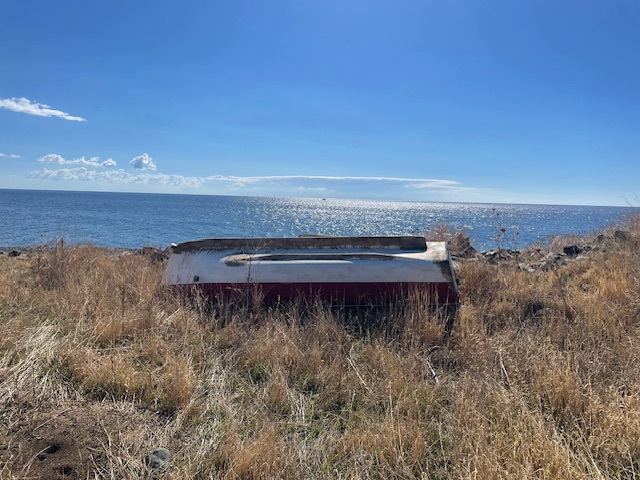
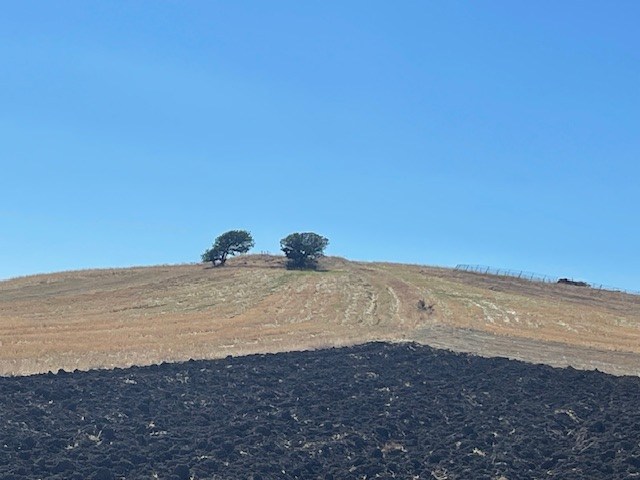
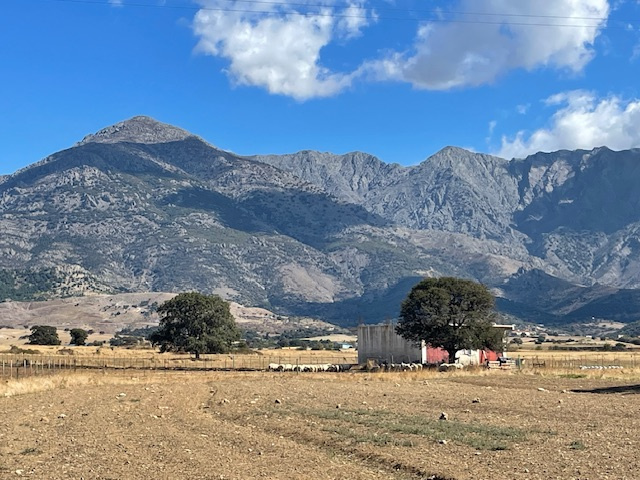
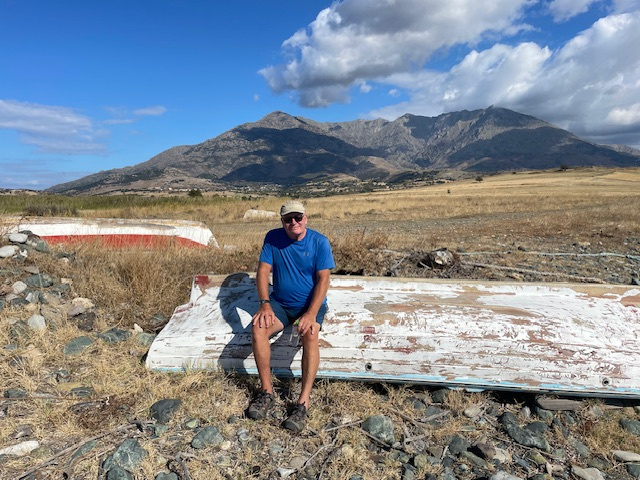
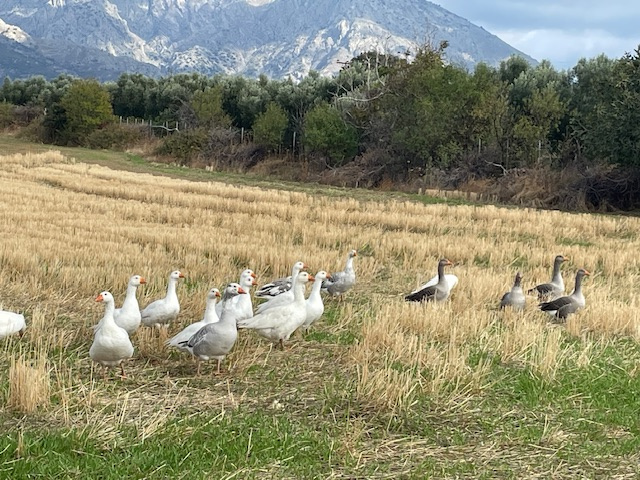
The southwest of the island is rural. With a view of the high mountains, we walked through mown fields, past small farms with goats, sheep and geese, and sometimes military installations. Turkey is not far away.
Pictures from the southwest
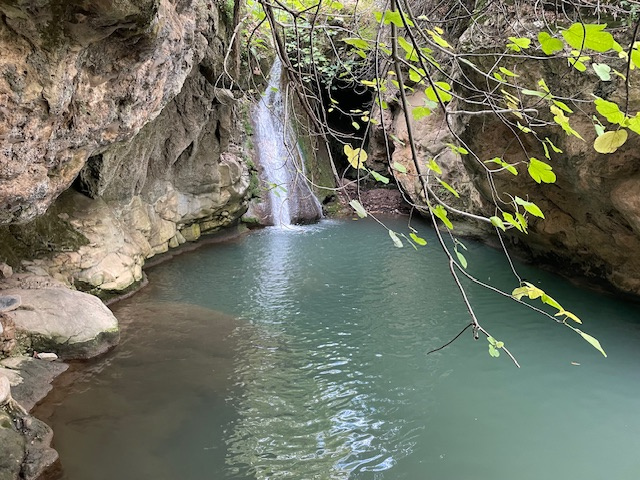
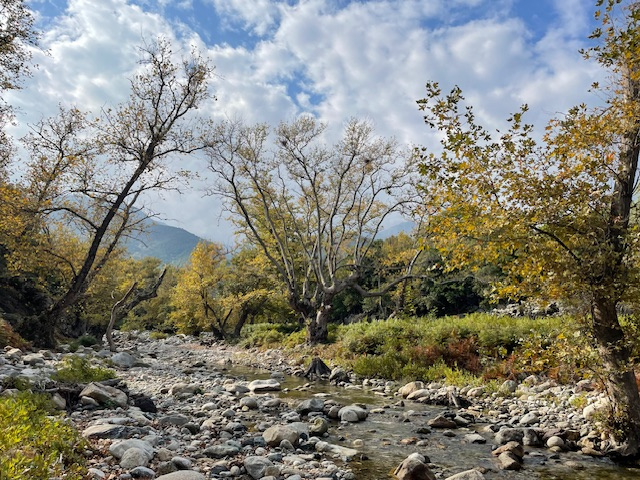
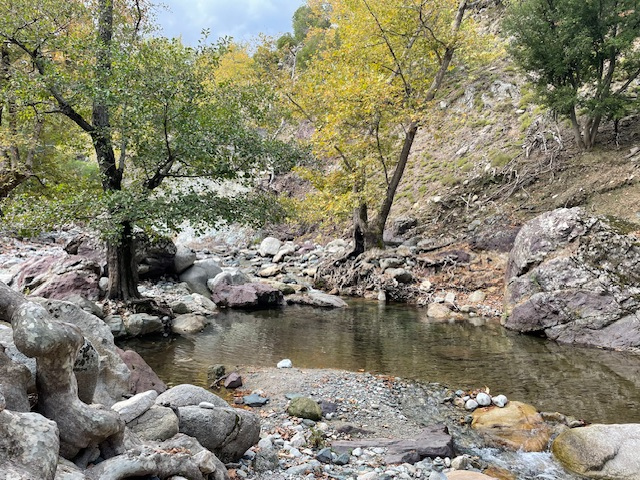
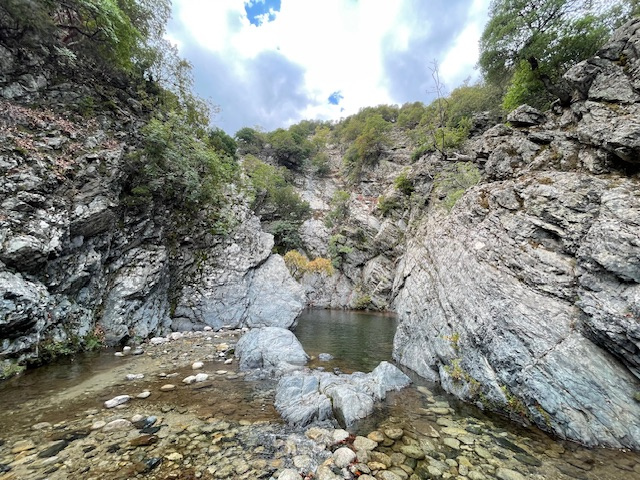
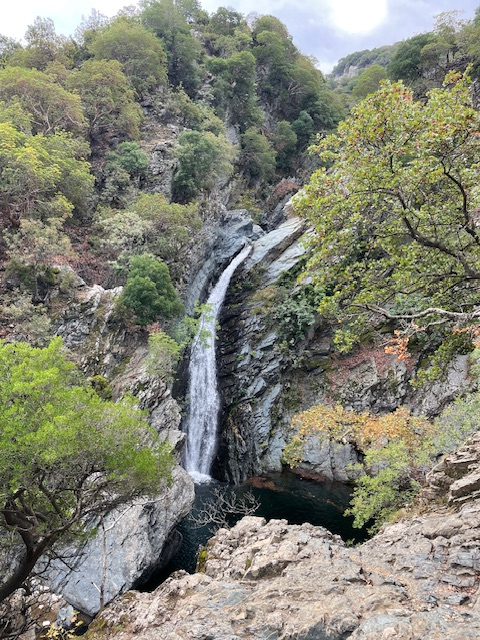
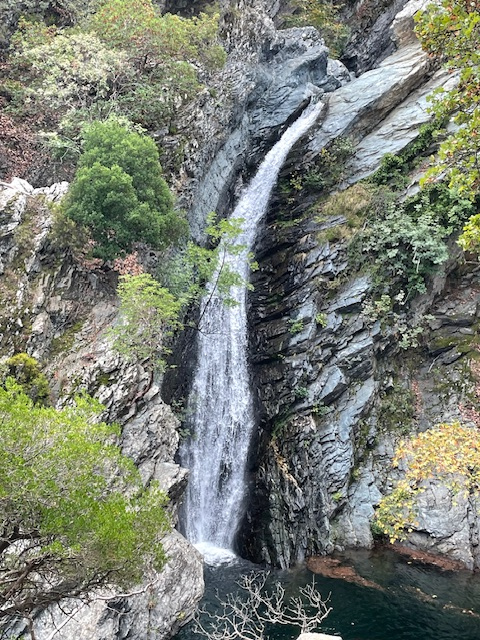
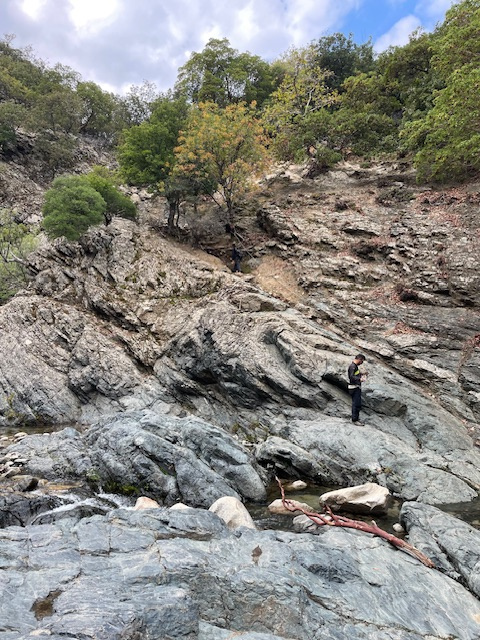
To say goodbye, Gisela took a beautiful hike to the Fonias waterfalls, always along the stream bed and finally with a bit of climbing on a fixed rope.
Pictures of Fonias
Yes, Samothraki has hardly any tourist infrastructure and everything is very informal. Everyone greets everyone else. So that's what we did too. The bus driver even waved to us, when he drove past in his bus.
We are now on Thassos, having made a long journey of 44 nautical miles to the west, and are currently moored in the harbour of Limenária.
Diese Website benutzt Cookies. Wenn du die Website weiter nutzt, gehen wir von deinem Einverständnis aus. / This website uses cookies. If you continue to use the website, we will assume that you have given your consent.
Du kannst deine Zustimmung jederzeit widerrufen. / You can refuse the consent.