Skip to content

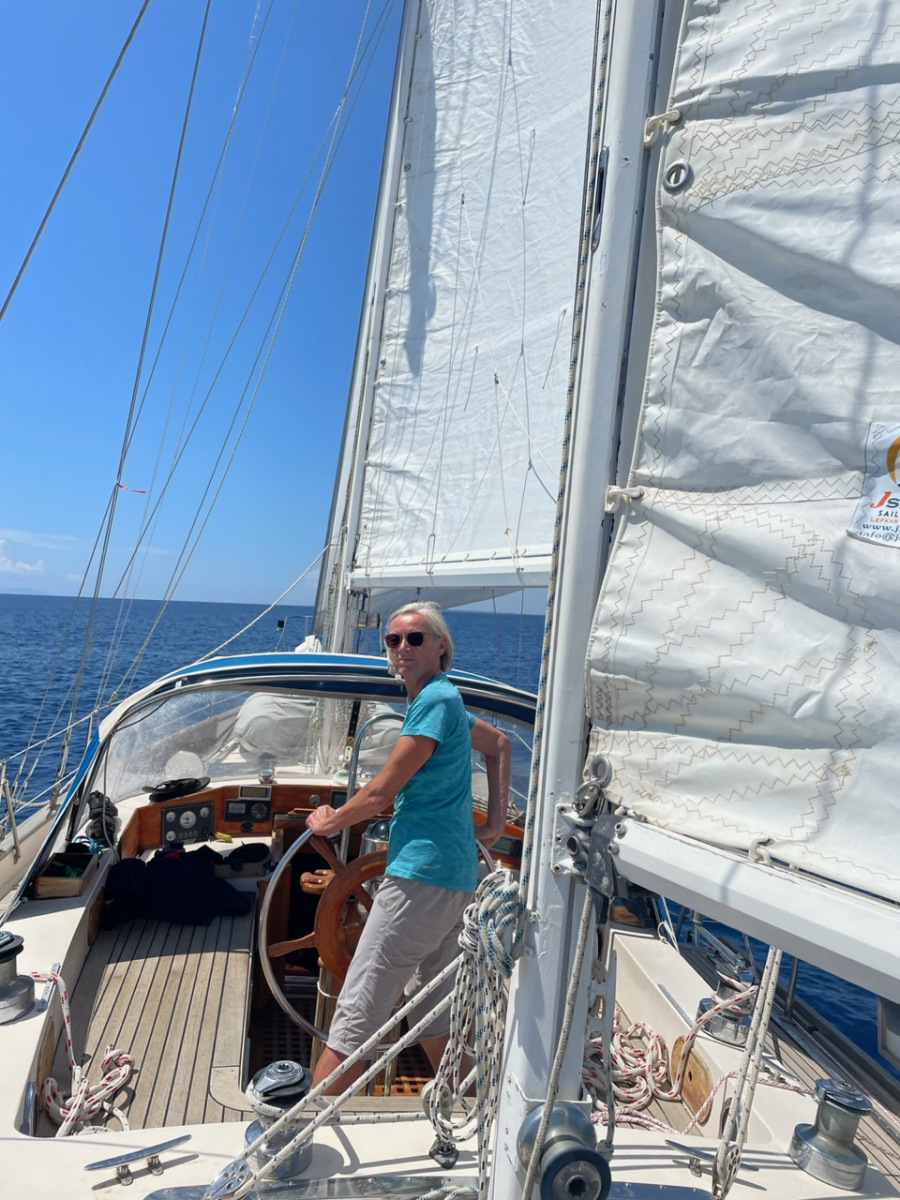
We had been thinking back and forth about sailing to Crete. It is a very interesting island and we have friends who live there. From the Peleponnes it is two long trips. The wind conditions in Crete are demanding and the safe harbours and anchorages are rare. To Crete you usually get quite well, but back you often have to cross against the prevailing north wind, which blows quite strongly as Meltemi on the north side of Crete. "Crete is a wind hole, I don't go there with my boat, but with the ferry", told us a boat neighbour in Astros, who is sailing with his catamaran all year round. We did it now anyway, looking out for a weather window.
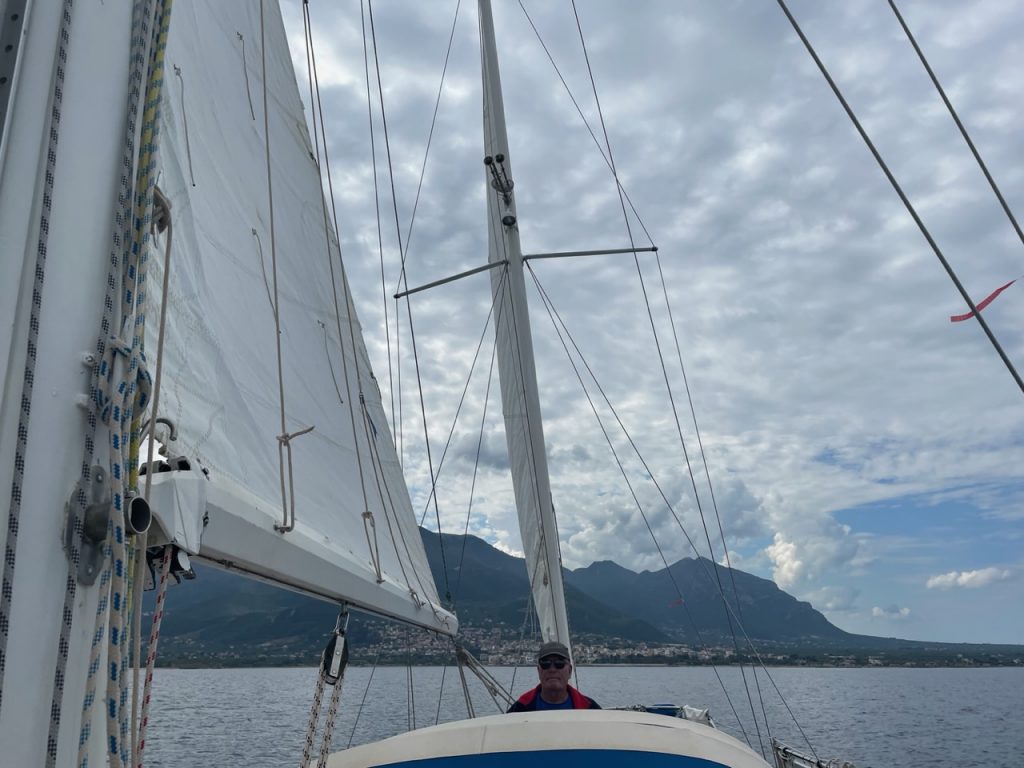
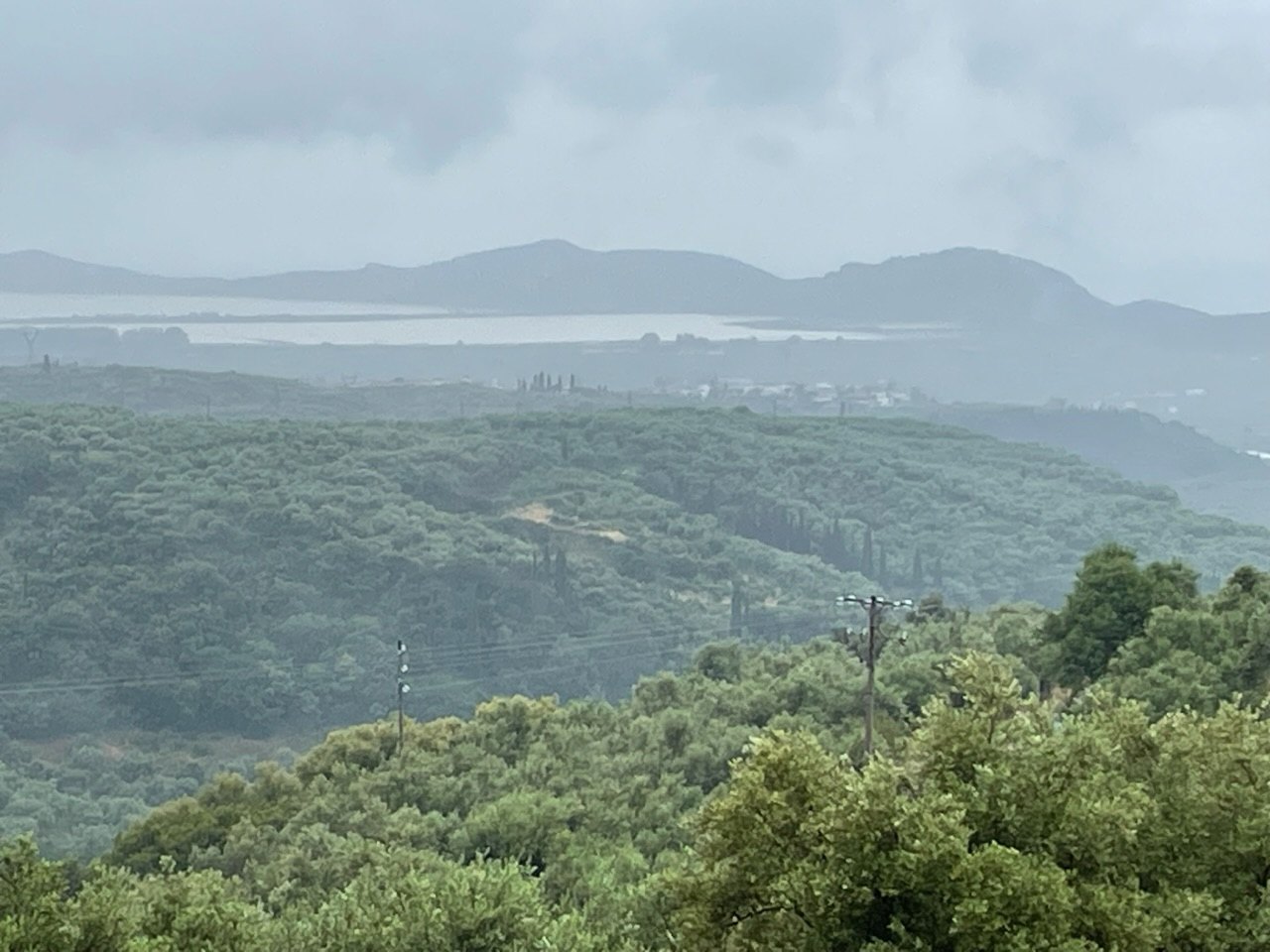
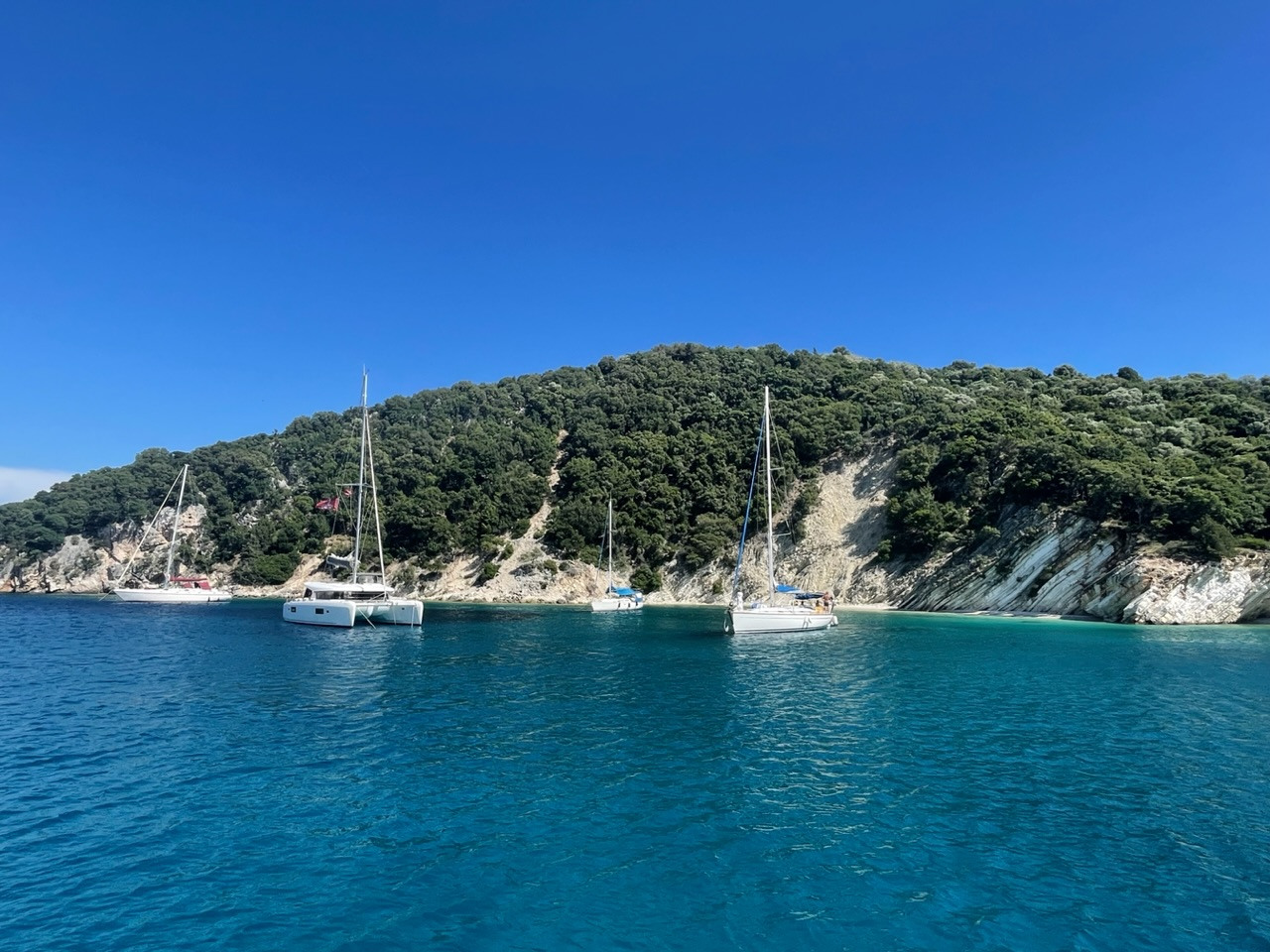
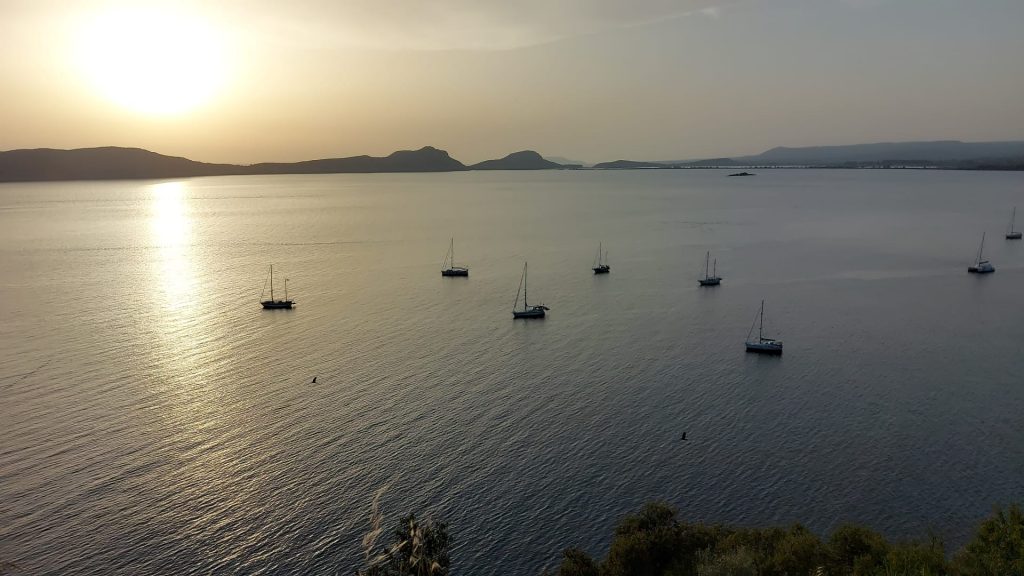
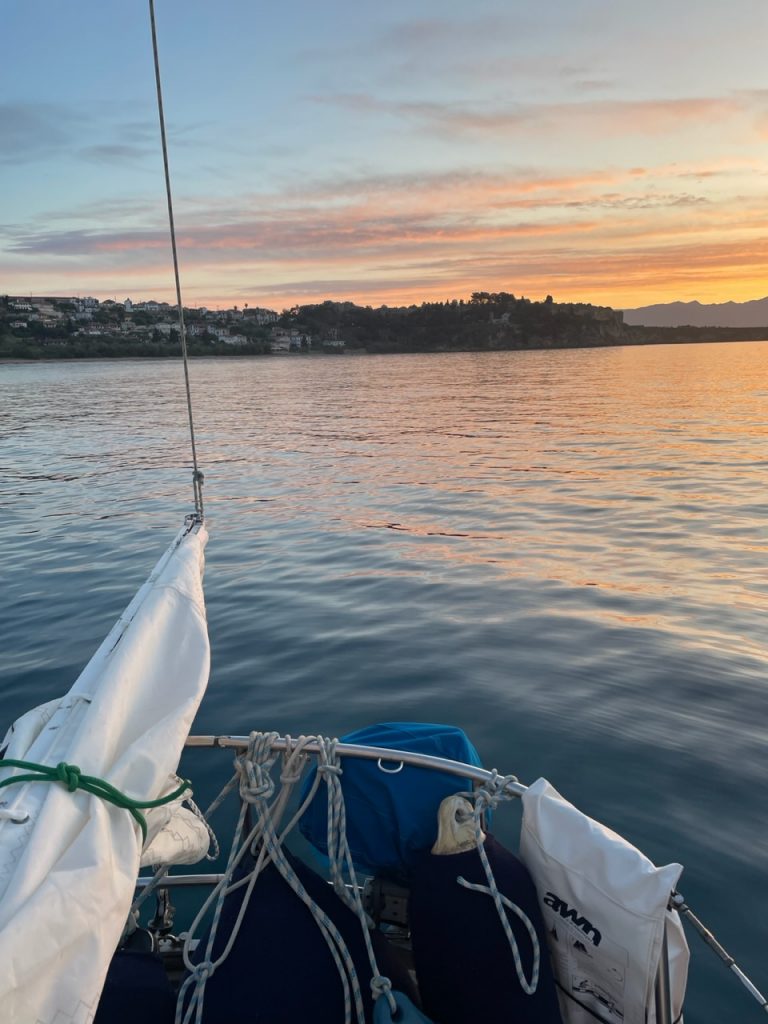
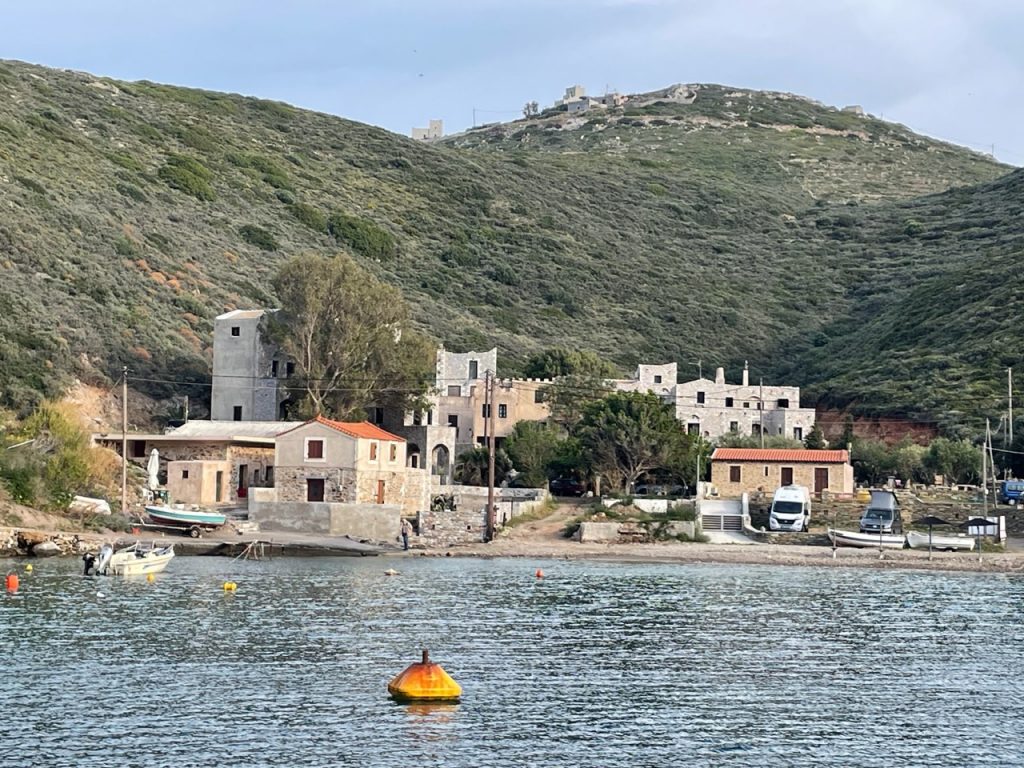
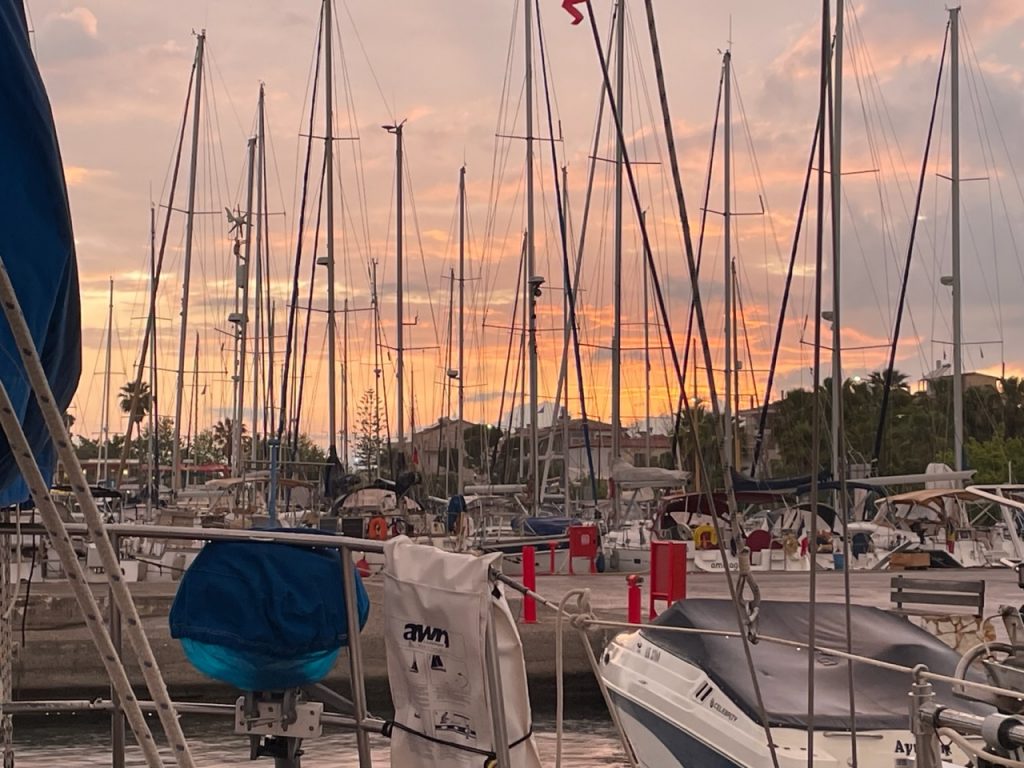
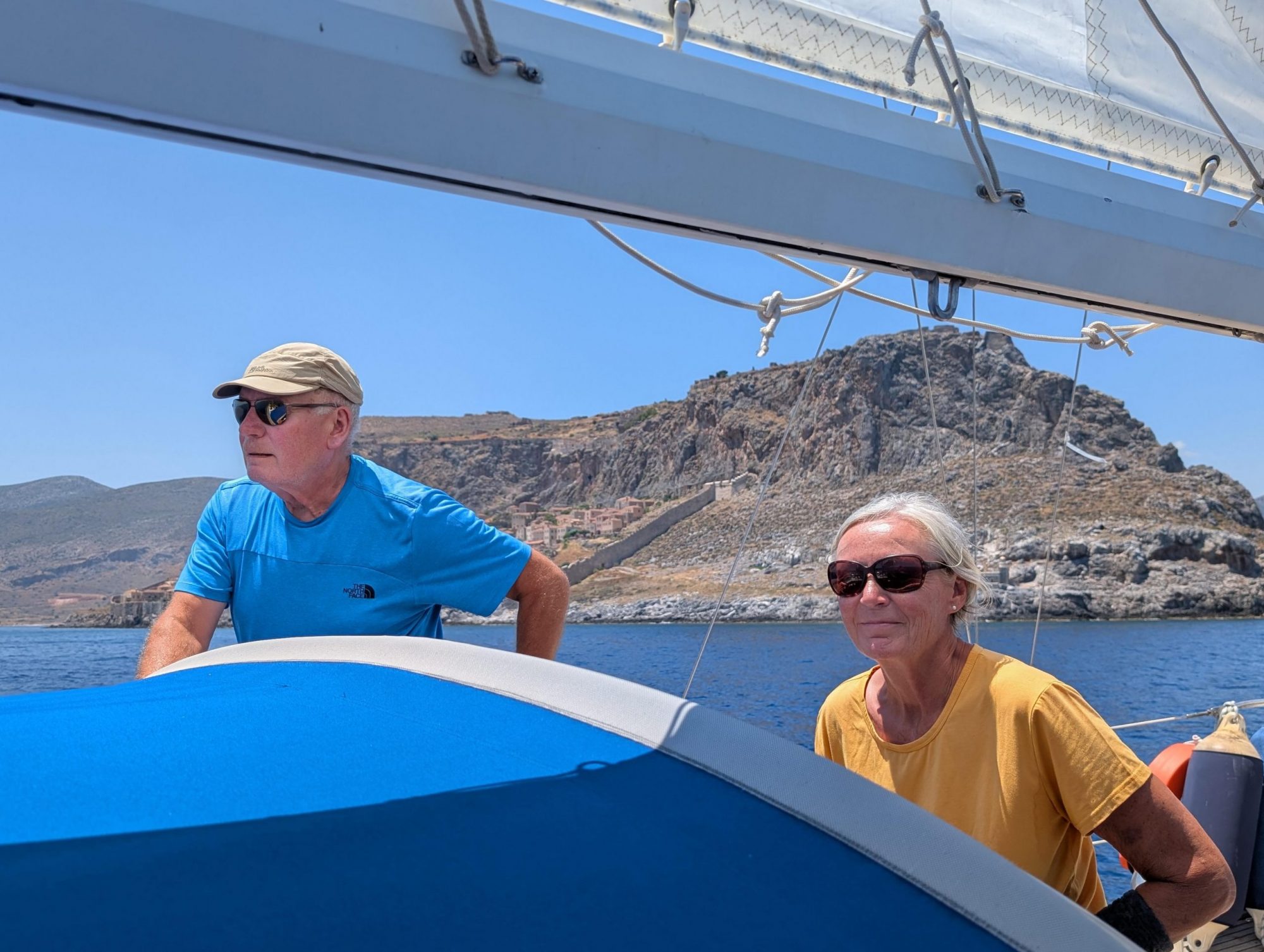
Three days ago we cast off our ropes in Monemvasia and set course for Cape Maleas, which is well known for its chaotic strong winds. There it was rather calm, as also in the passage between the Peloponnese and the island of Kythira. Here it is important to watch out for commercial shipping. Our depth gauge did not tolerate the proximity to a freighter very well and did not give a correct depth anymore. With the attempt of a reset it has said goodbye then completely. So further without depth gauge and tightened navigating with Navionics. There a slight restlessness, especially when entering the anchorage Avlemonas on the island of Kythira and when anchoring could not stay away. But it worked out well and we had a relatively quiet night in the beautiful large bay in front of the long sandy beach all alone. And a nice morning red with the coffee before leaving.

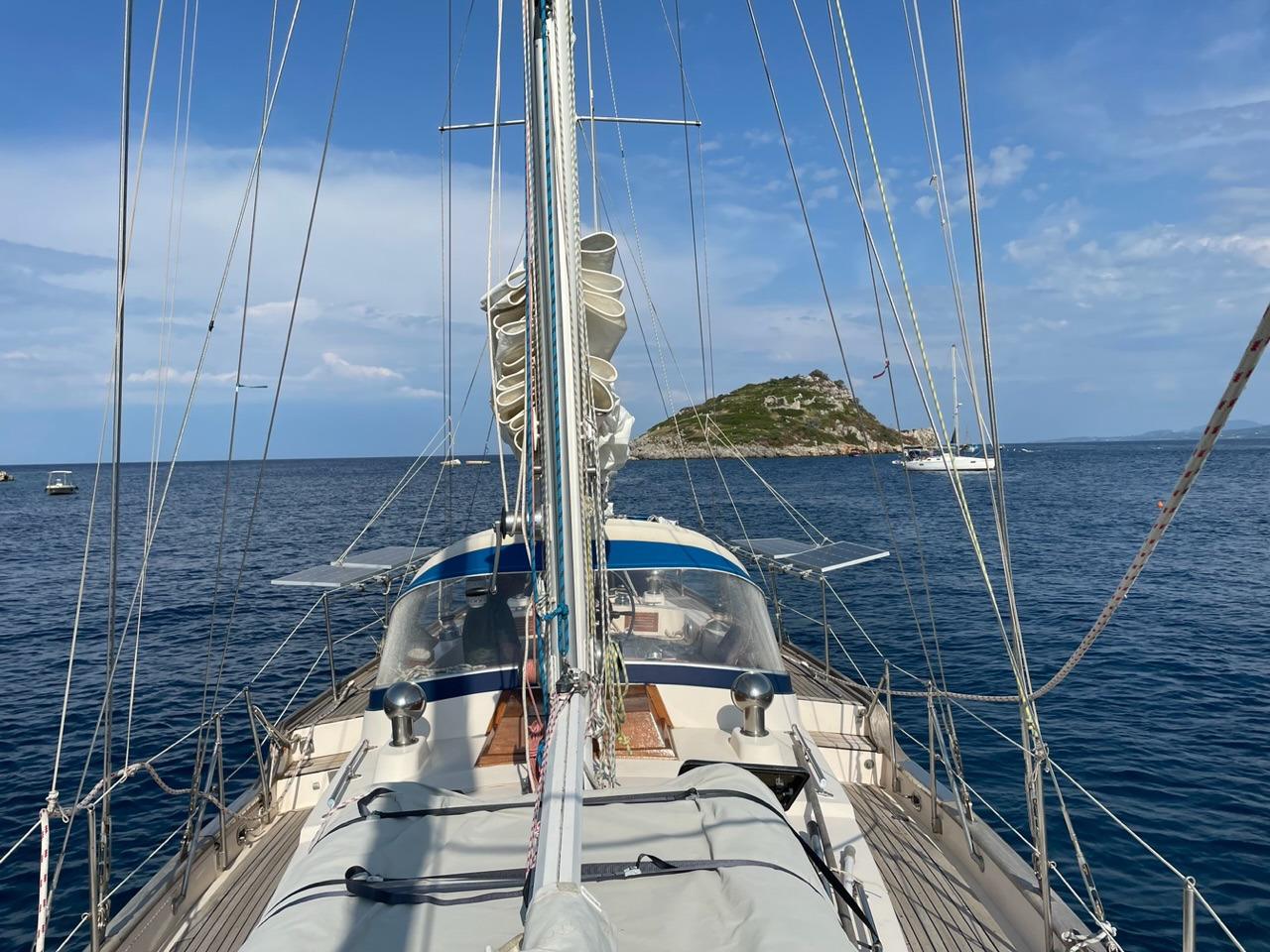
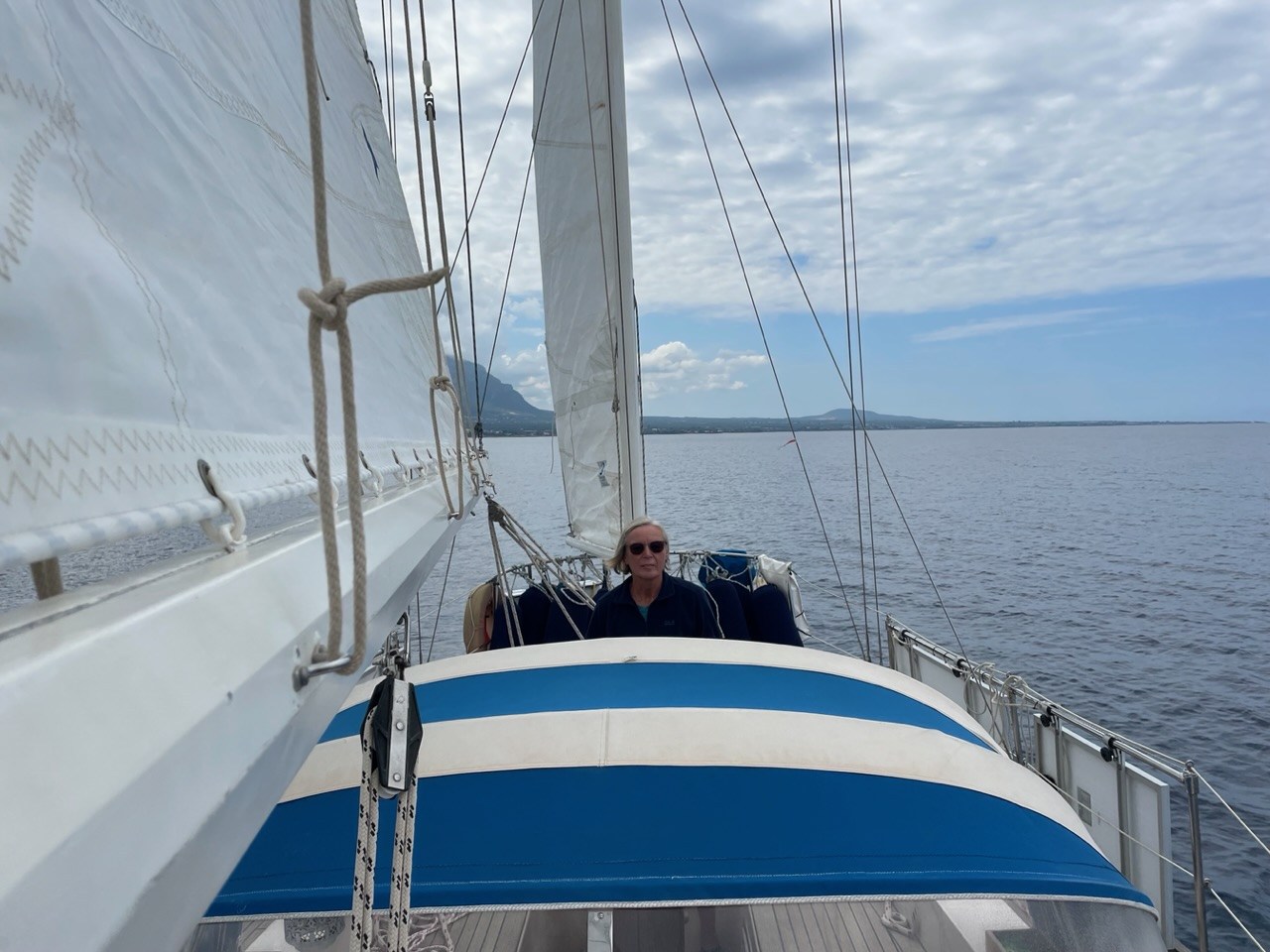
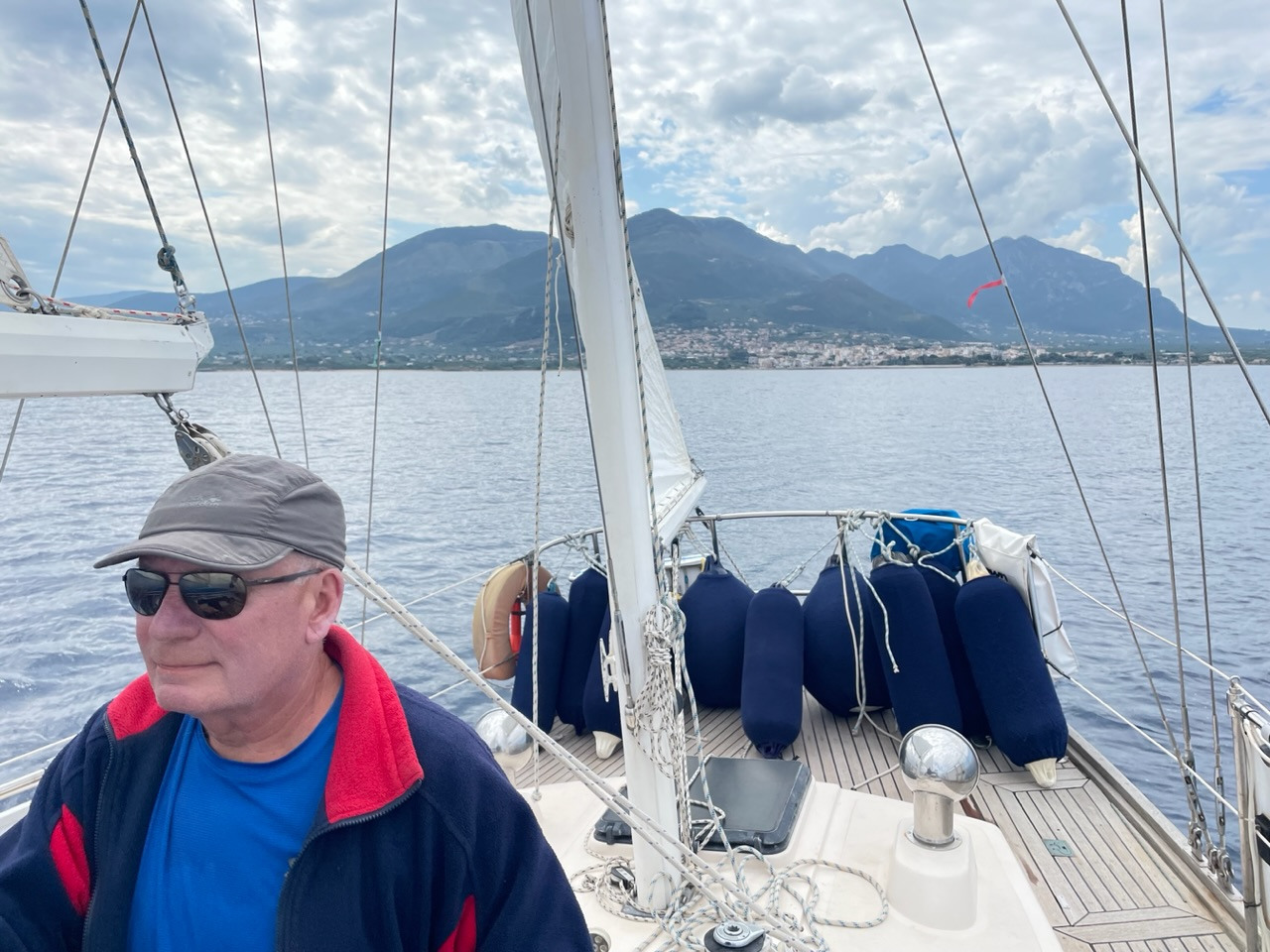
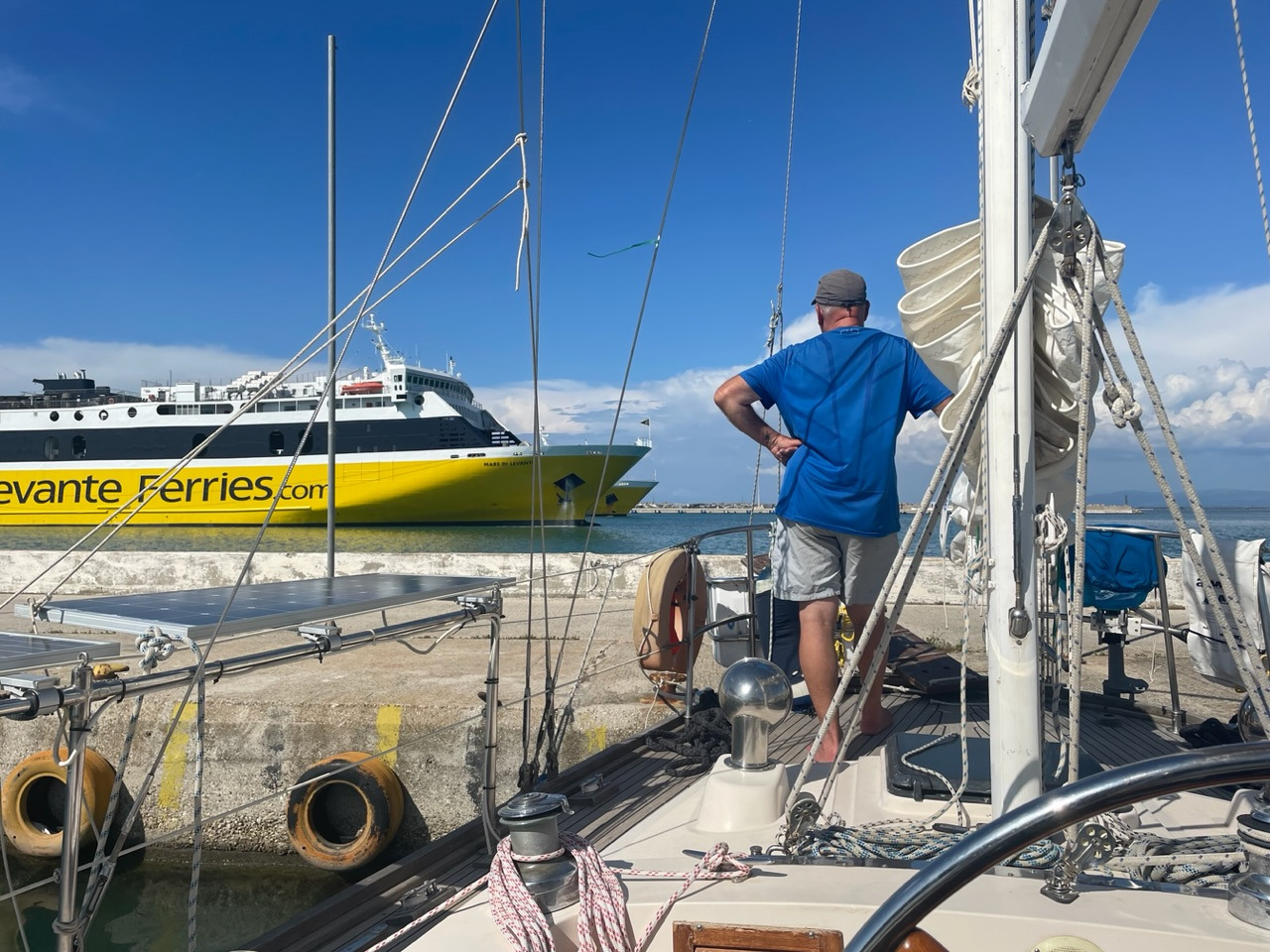
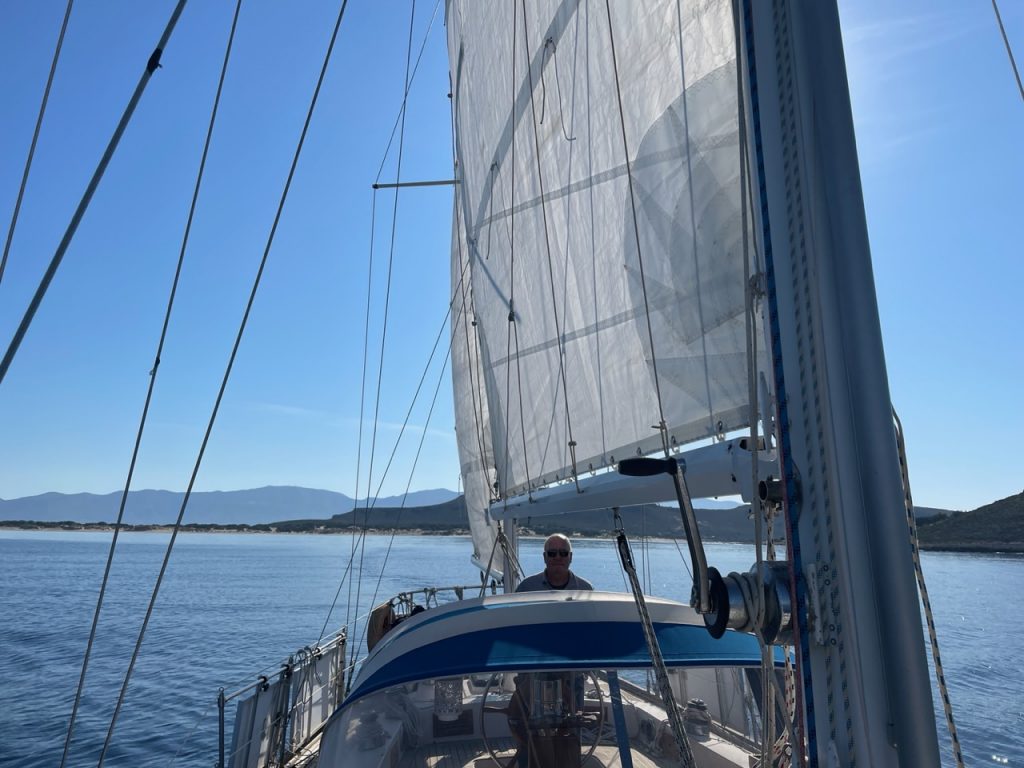
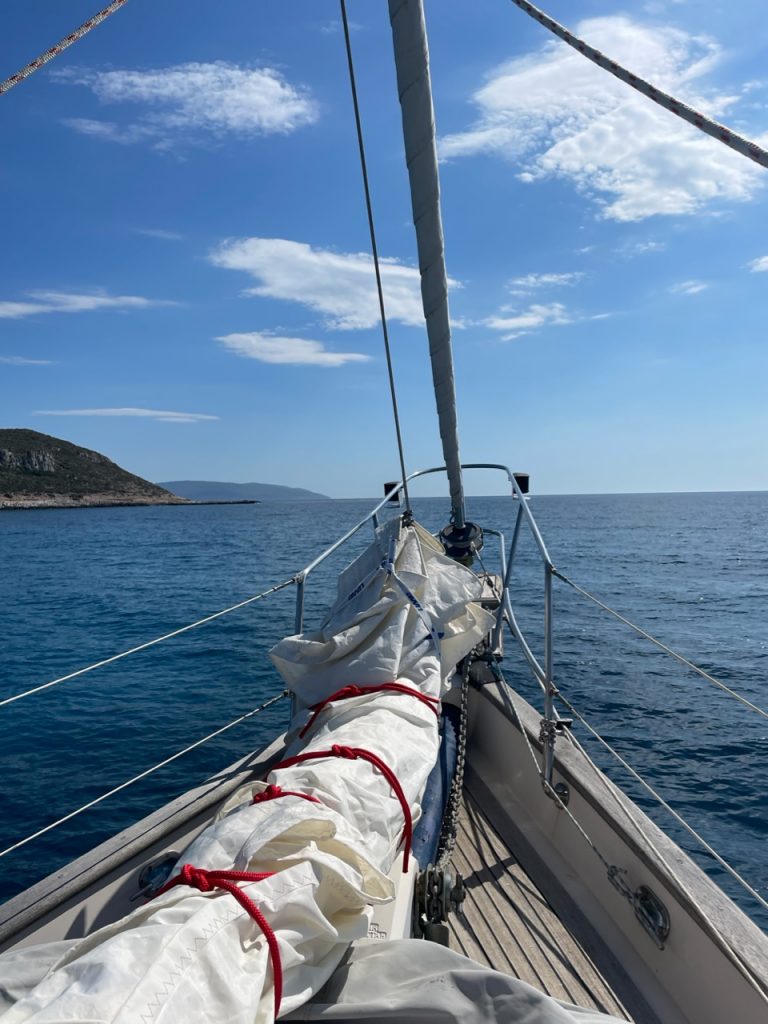
On the next island on the way to Crete, on Antikythira, there are no sheltered bays to spend the night and the only port is very small. When the 96 meter long ferry turns, there is a lot of swell. It does not have to be. So we decided to take the long way of 56 nautical miles directly to Crete into the bay of Chania. After the beautiful morning red then cloudy sky, cold wind sometimes from the east, then from the west, then too little to sail. And on the sea around us no other ship or boat in sight. A feeling like at the end of the world, if we had not seen the snow-covered high mountains of Crete soon and would know: There we want to go.

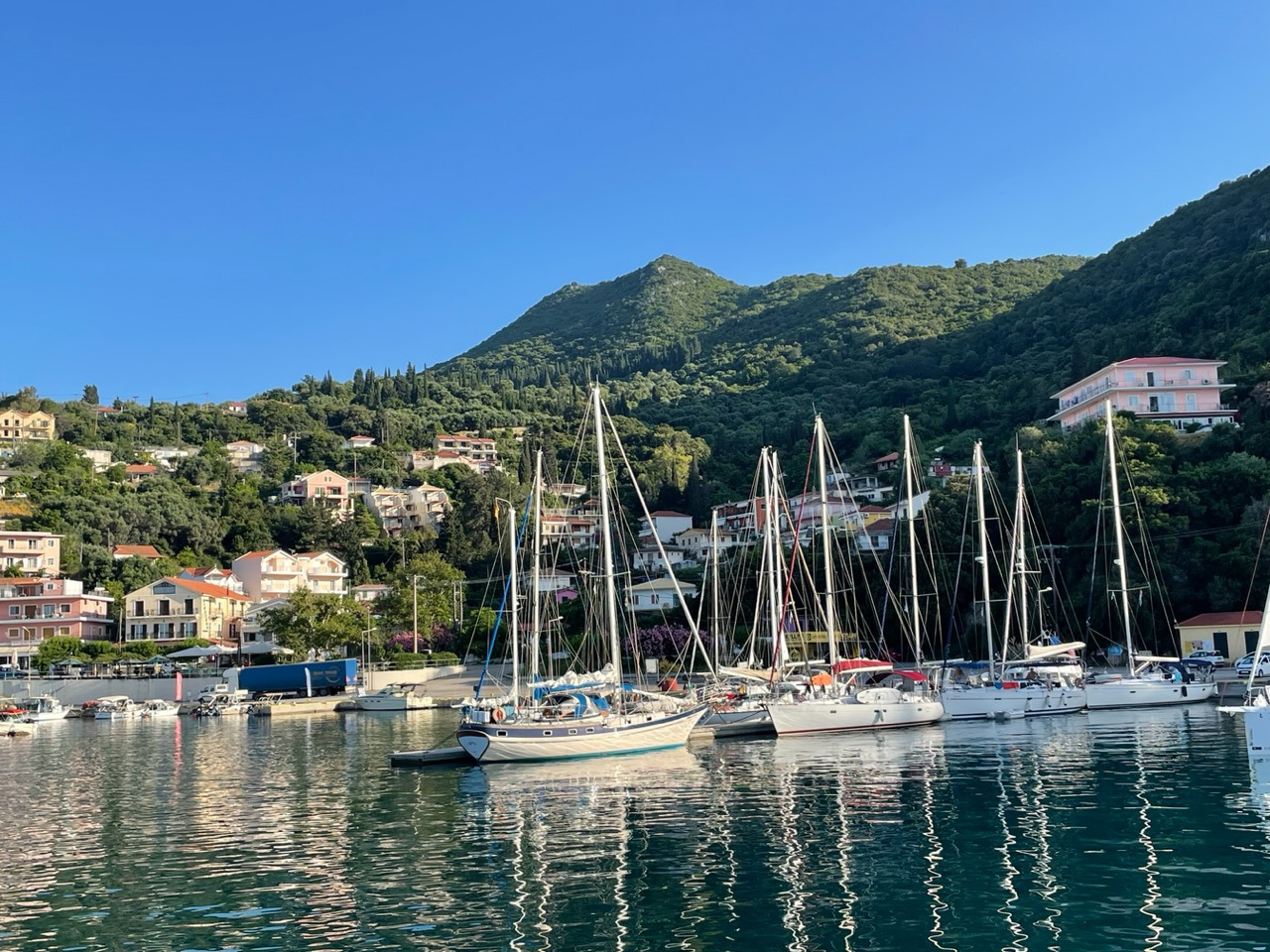
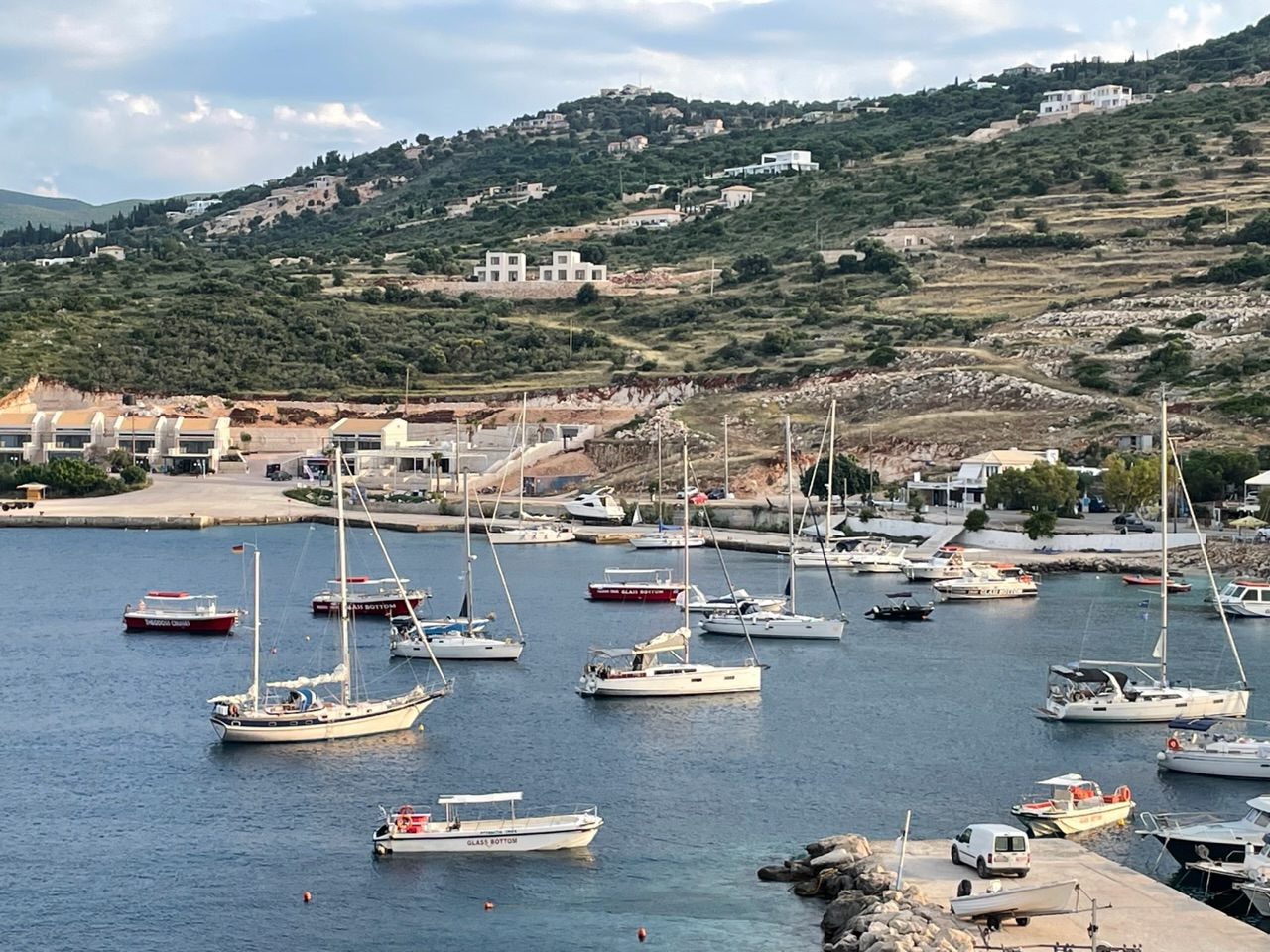
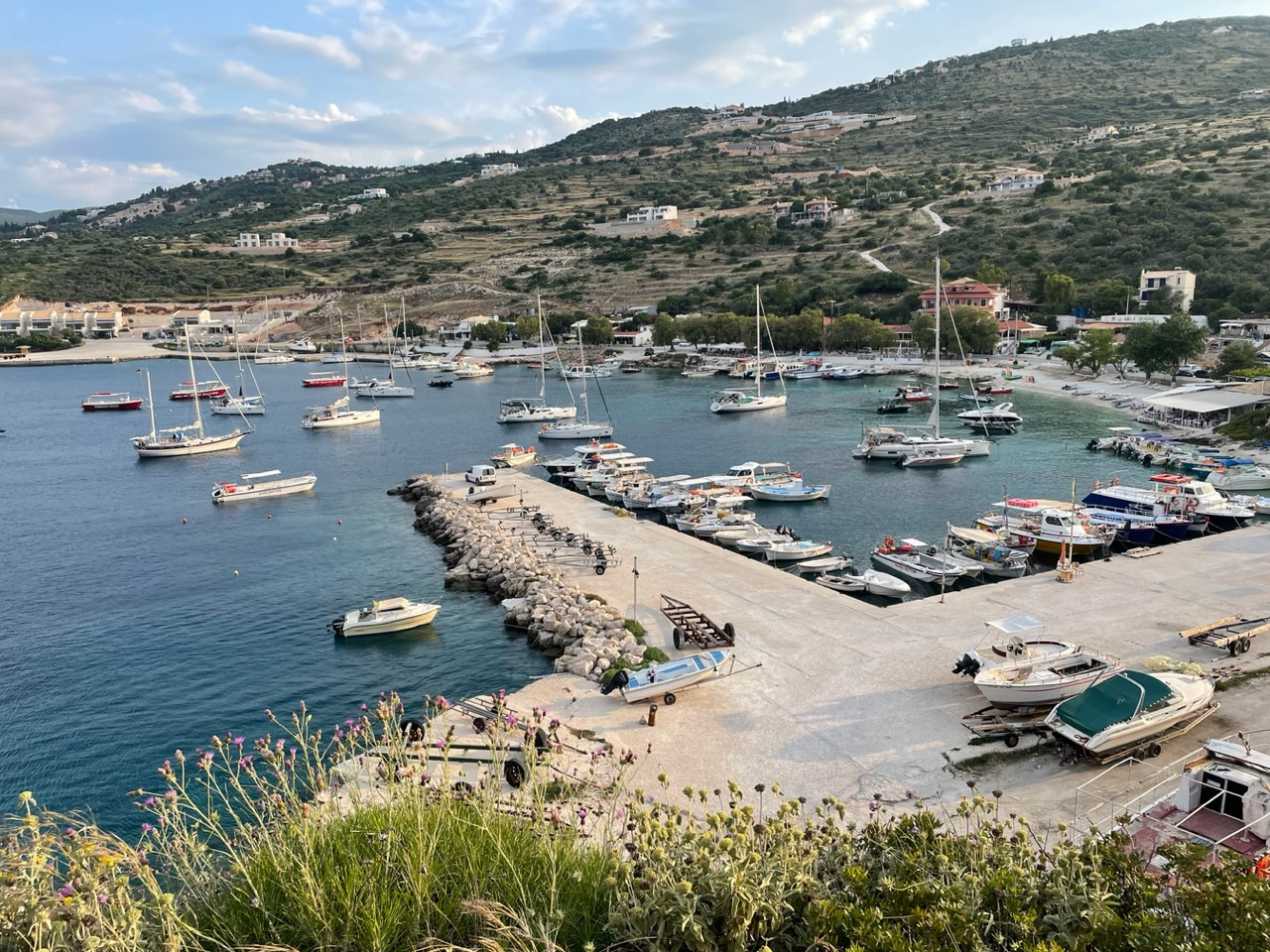
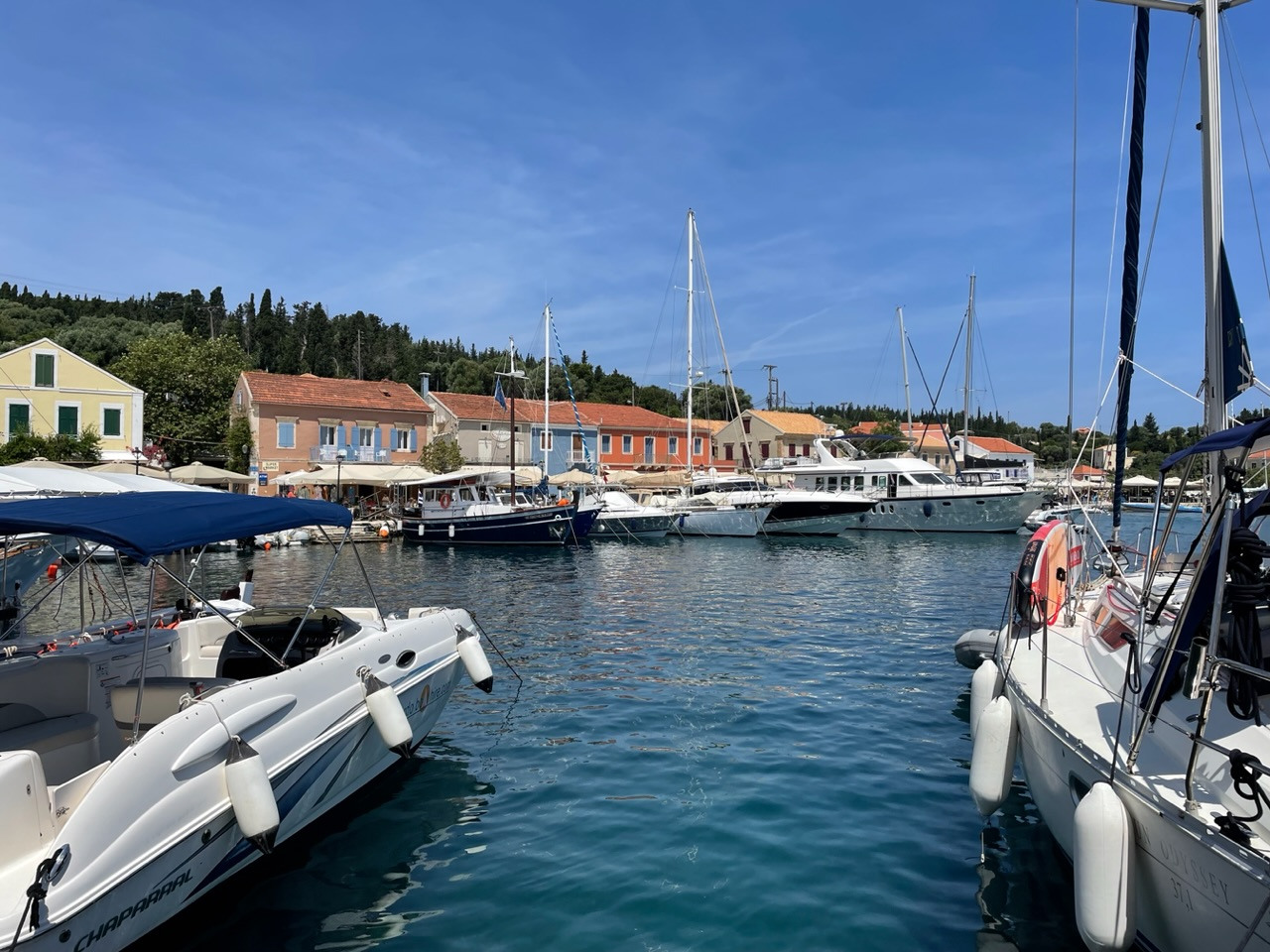
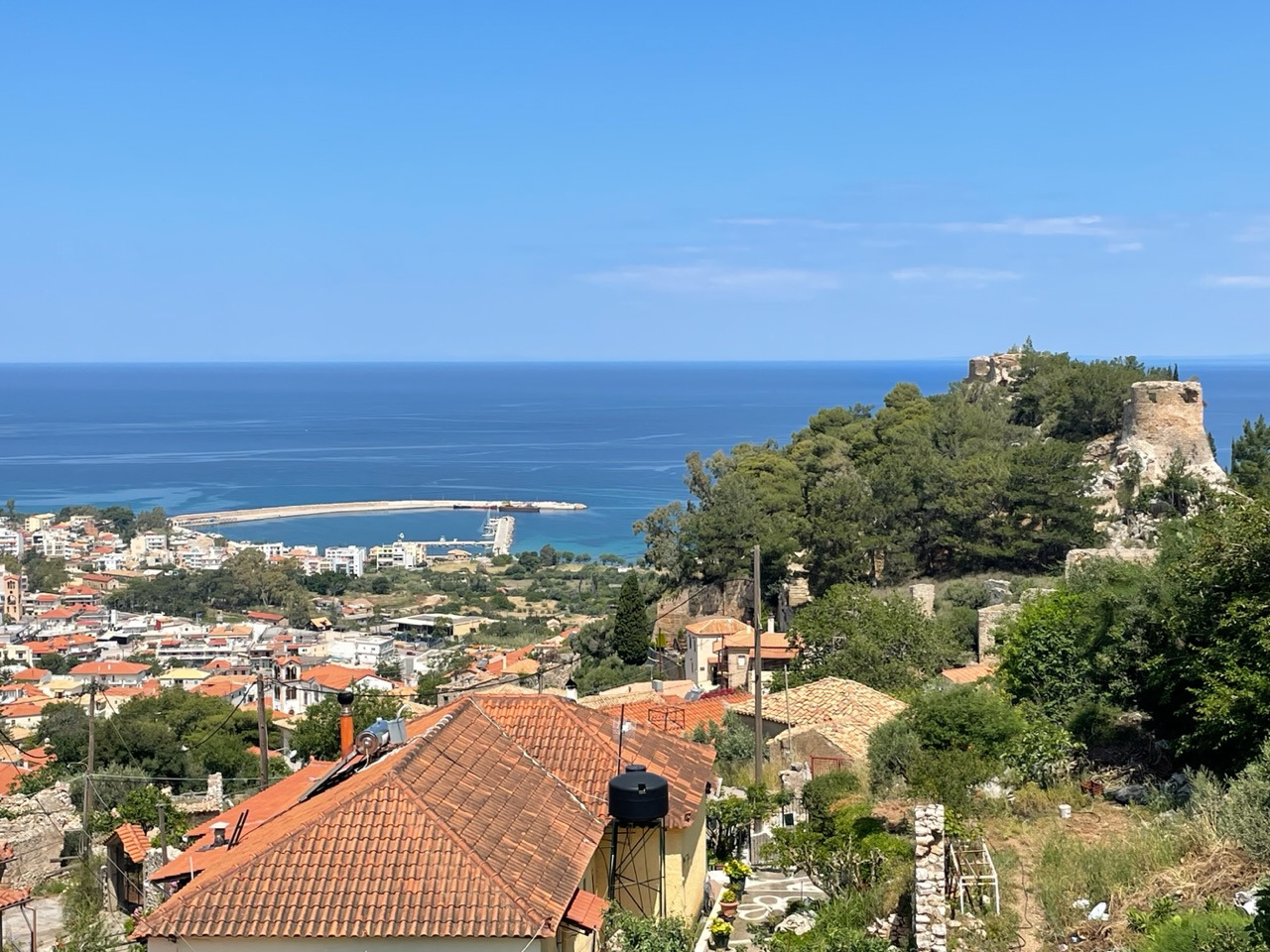
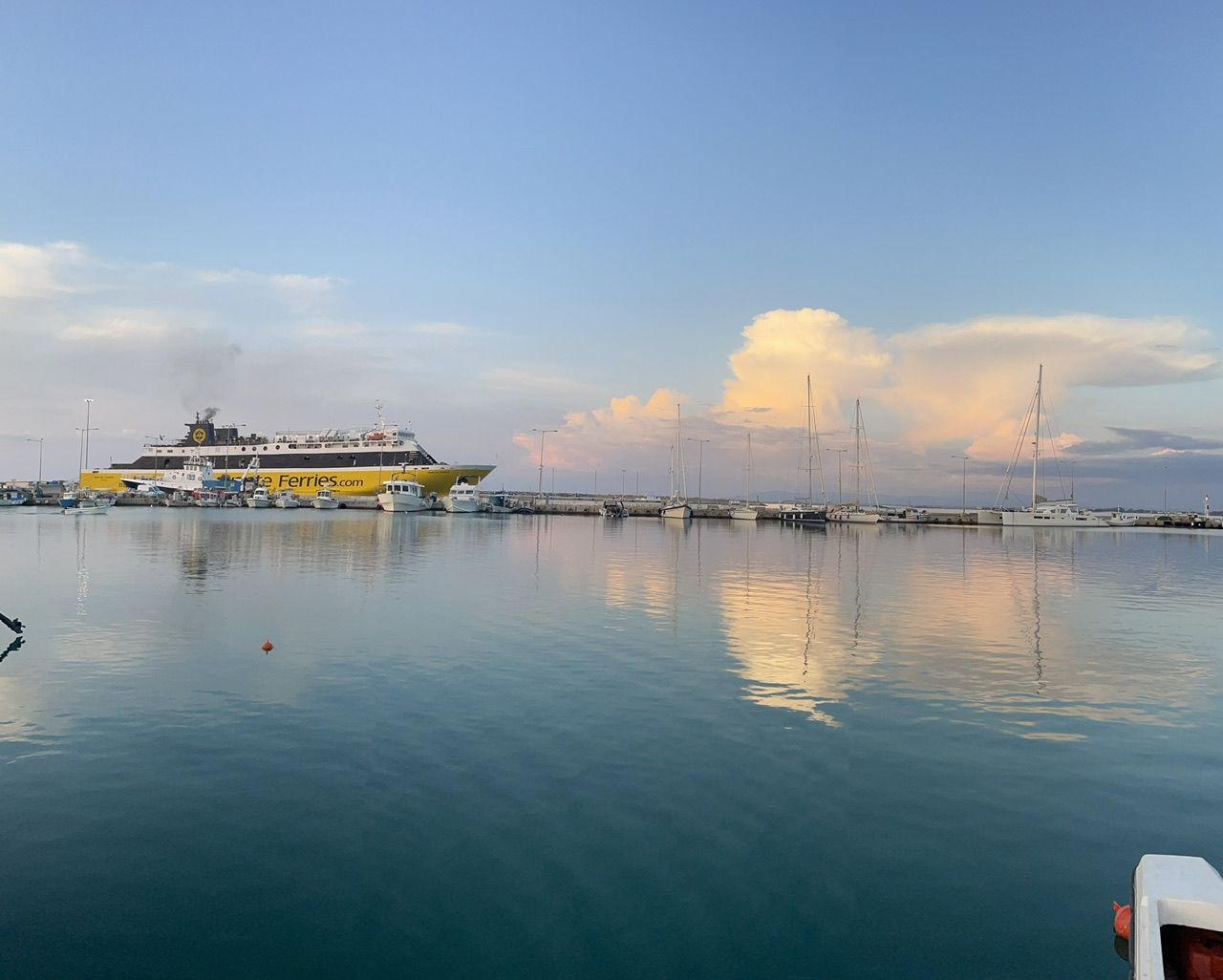
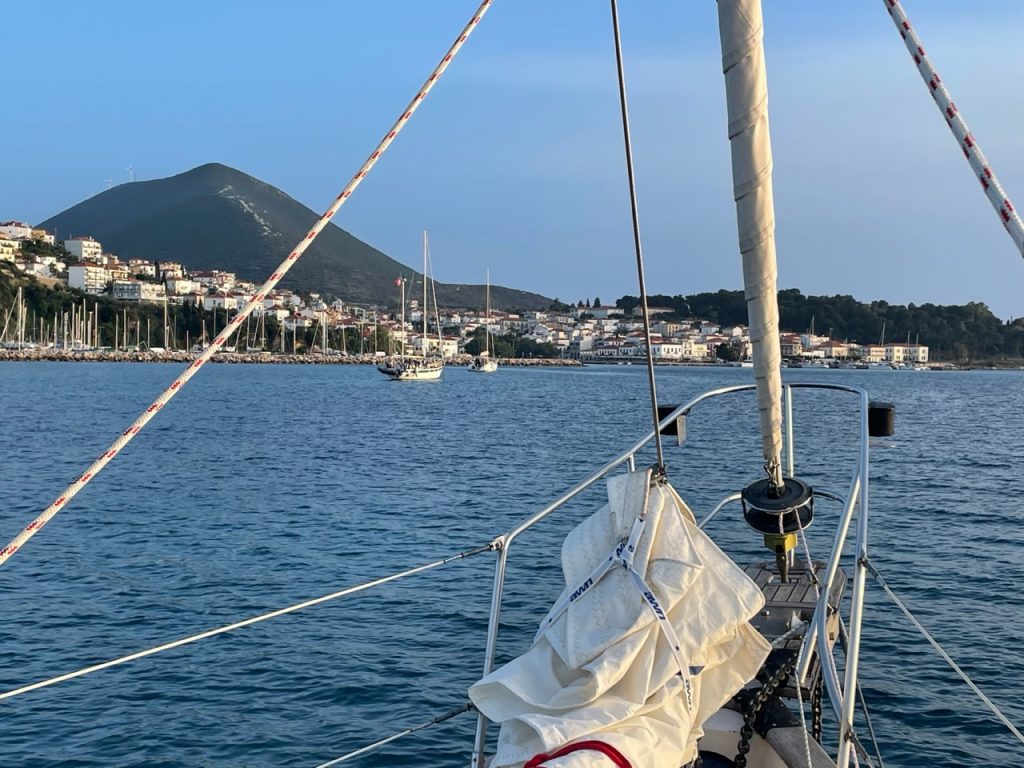
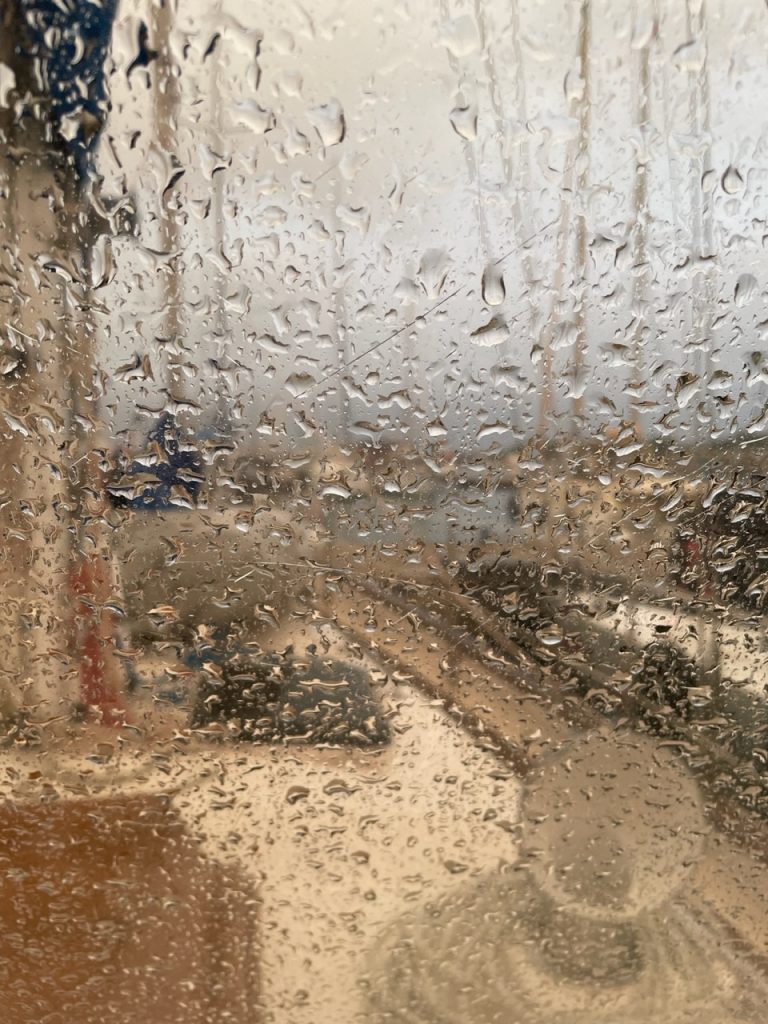
We reached our destination Port Kolimvari (in the very west in the bay of Chania) quite relaxed even without our depth gauge. Originally a pure fishing port, there are works going on - also with EU funds. A marina is to be built. There is not much to see yet. No water and electricity, but plenty of space. We are the only guest boat. So ropes out and moored. Crete welcomes us with clouds and rain. Kalispera Kriti!

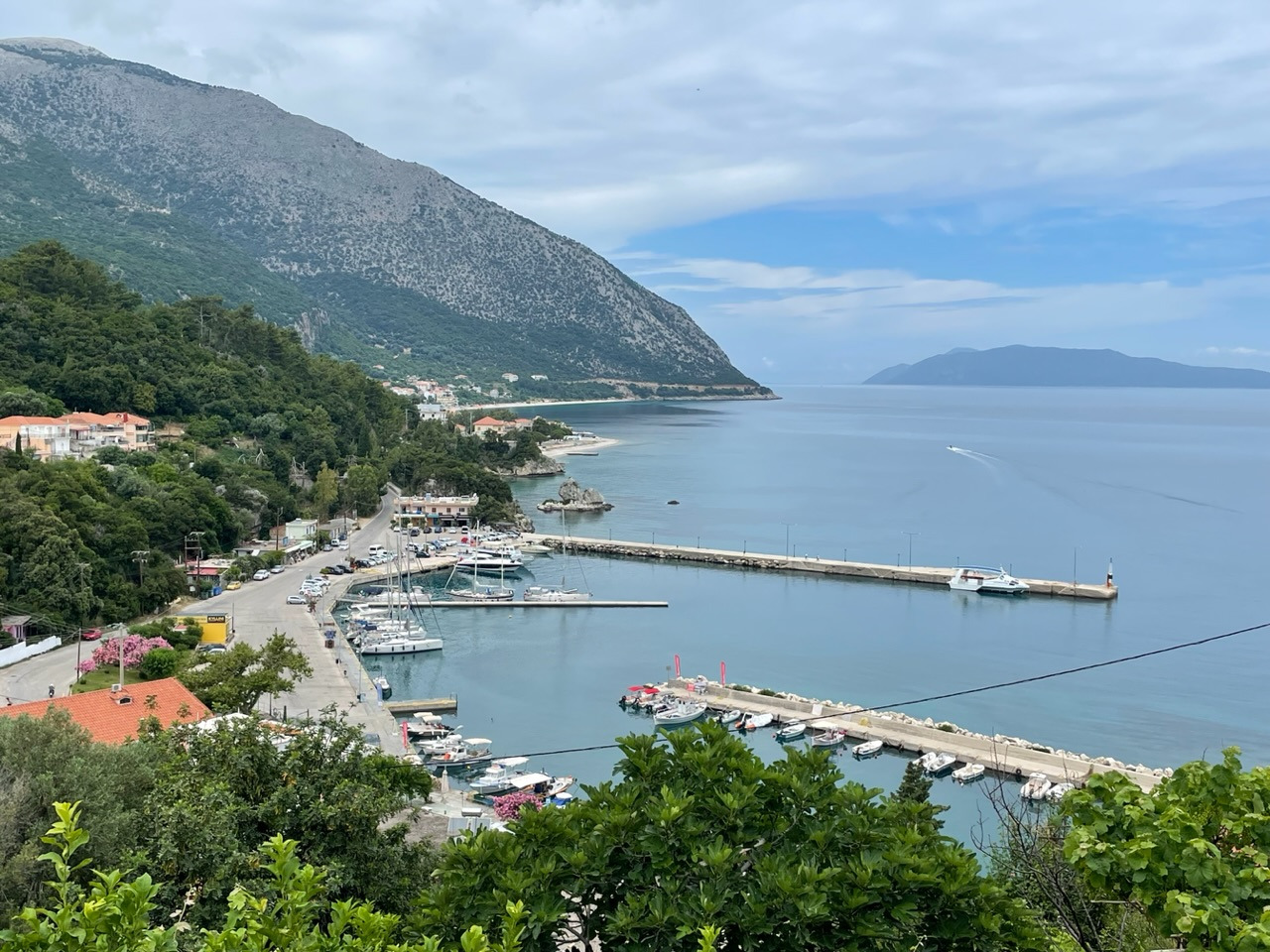
Astros has pleased us again, but then we cast off on April 11, although the wind continues to blow from southern directions. We want to sail along the coast 30 nautical miles into the bay of Kiparissi. One third of the distance we can actually sail nicely. Then again the engine. This time we anchor on the north side of the bay surrounded by high mountains. At the small pier in the village, where we had already moored twice in the last years, we suspect swell. Good choice! We spent a nice evening and a quiet night in this beautiful scenery.

The next day we continue 13 nautical miles, into the Gulf of Gerakas, which we can see much better coming from the north than during our visit last year, when we approached from the south. With two other boats we are anchored in front of bow anchor with the stern to the pier. All nice and calm. But in the afternoon the wind suddenly blows with gusts of almost 40 knots from the valley onto our boats. The anchor of the neighboring boat slips. We are moored, but all bring out long springs to secure their boats. In the evening the gusts are over.

The next morning we continue. Destination Monemvasia. But first we have some stress, because our anchor winch does not work. 60 meters of chain to haul in by hand. Oh dear! But fortunately it works electrically. The next day we clean the contacts in the archaic system our boat has and dream of a remote control operated via Bluetooth. But: all is well again after we crawl into the anchor locker in Monemvasia.

Monemvasia! Here we were last year also in April, experienced a storm with dangerous breakers in port. And last year in October it was the first port in the Peloponnese that we called at on our way back from the Aegean.

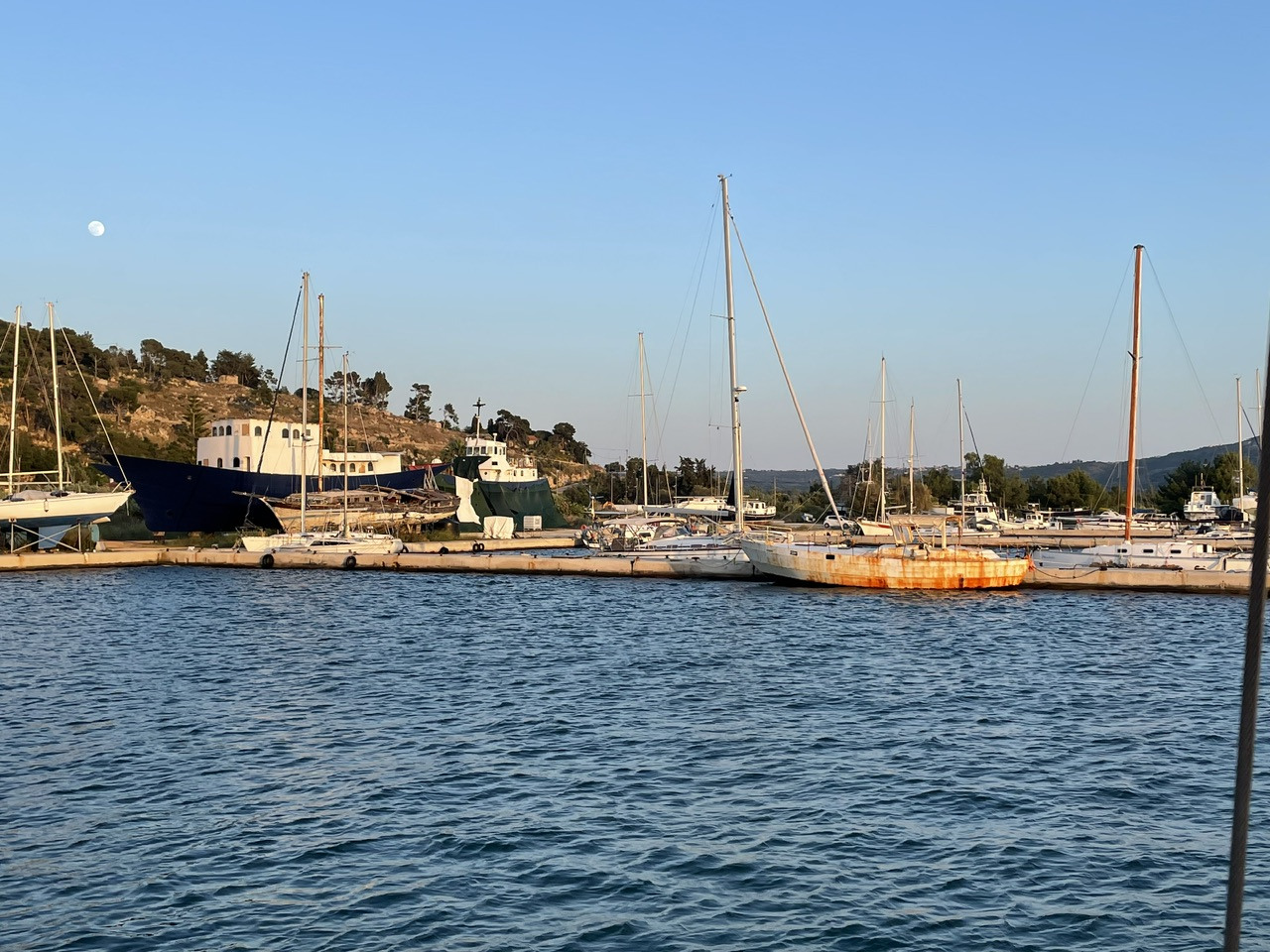
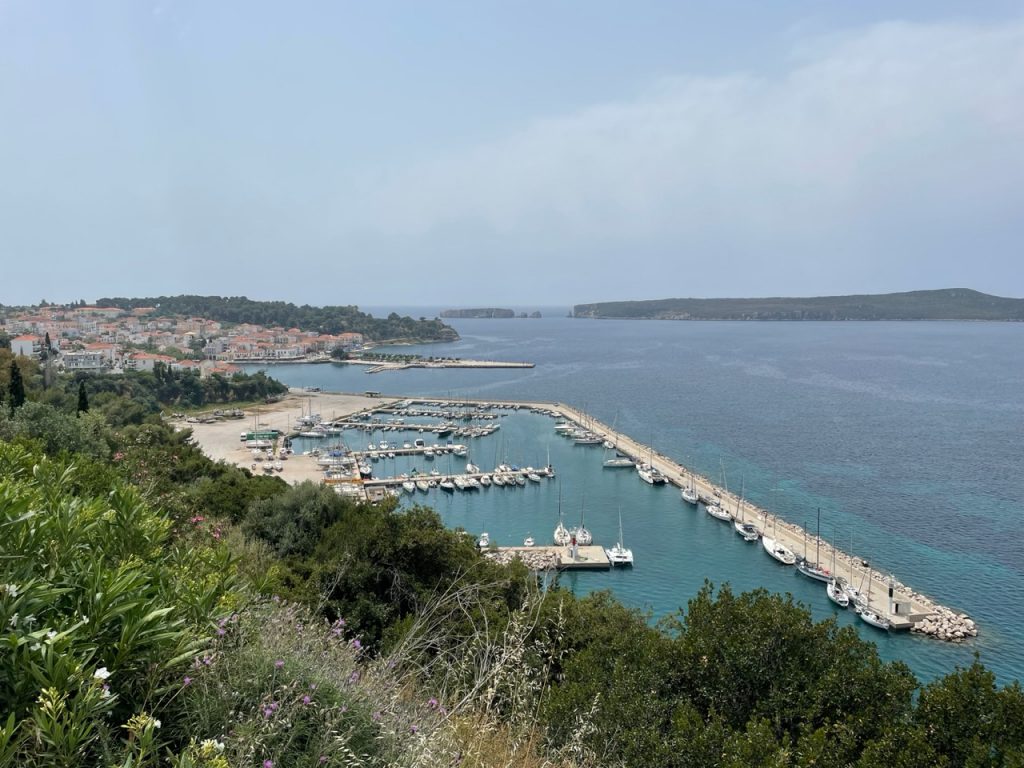
The crane is still in the harbor, they poured concrete for the new marina. But it will probably take another two years until everything is finished. The floodlights on the pier are already in place. We wouldn't have needed them. We prefer to look at the stars. Only a few sailboats are moored here these days. But there are many motor homes. How will it be in summer? There is no infrastructure for this kind of mass tourism. But it would be a good source of income for the municipality.

We experienced the Greek Easter (one week later than at home) here. Greek Orthodox, the highest festival in the annual calendar.  Above all, a festival of families celebrating with friends and neighbours. Church service, procession, at midnight on Easter Sunday the churches open, everyone lights their Easter candle, greets each other and wishes each other a happy Easter. Large balloons with candles inside rise into the air and are driven out to sea by the wind. And then everybody celebrates and eats, because before that it was Lent: at night the ragout from the lamb, red colored Easter eggs are diced, Easter cakes, and on Easter Sunday there's lamb on the spit. That's how we experienced it in Monemvasia. Beautiful and impressive, especially the social gathering of families and friends. 

Now Easter is over. We walked here again beautifully through the sea of flowers and rocks. Now we look south to Cape Maleas. Past it we want to sail with favourable wind along Kythira and Anti-Kythira to Crete.

We are not yet on our way south. The weather continues to be quite unsettled and cold with rain. And the wind often blows from the south. So we have not yet made our way south. But almost a week ago we left our anchorage in the bay of Kilada. Our water tanks were empty. We didn't want to fill them with the murky, somewhat salty water of Kilada. So we sailed across the Argolic Gulf to the west and moored in the harbor of Paralio Astros. This is also where we were last year on our way to winter break. And here we have good fresh water from the mountains.

Paralio Astros is a nice little place with the ruins of a castle towering over it. At this time of the year the town has a few hundred inhabitants, in summer it becomes over 10,000. Many Greeks come here for a seaside vacation. And there are people who spend a longer time here every year. So we made a nice acquaintance with Ulrike and Jörg from Berlin. They have an apartment here for years, also work from here at times and know many of their Greek neighbours. They know the town an the environment and could also tell us, where to find good wine, the best olive oil and the most delicious eggs.

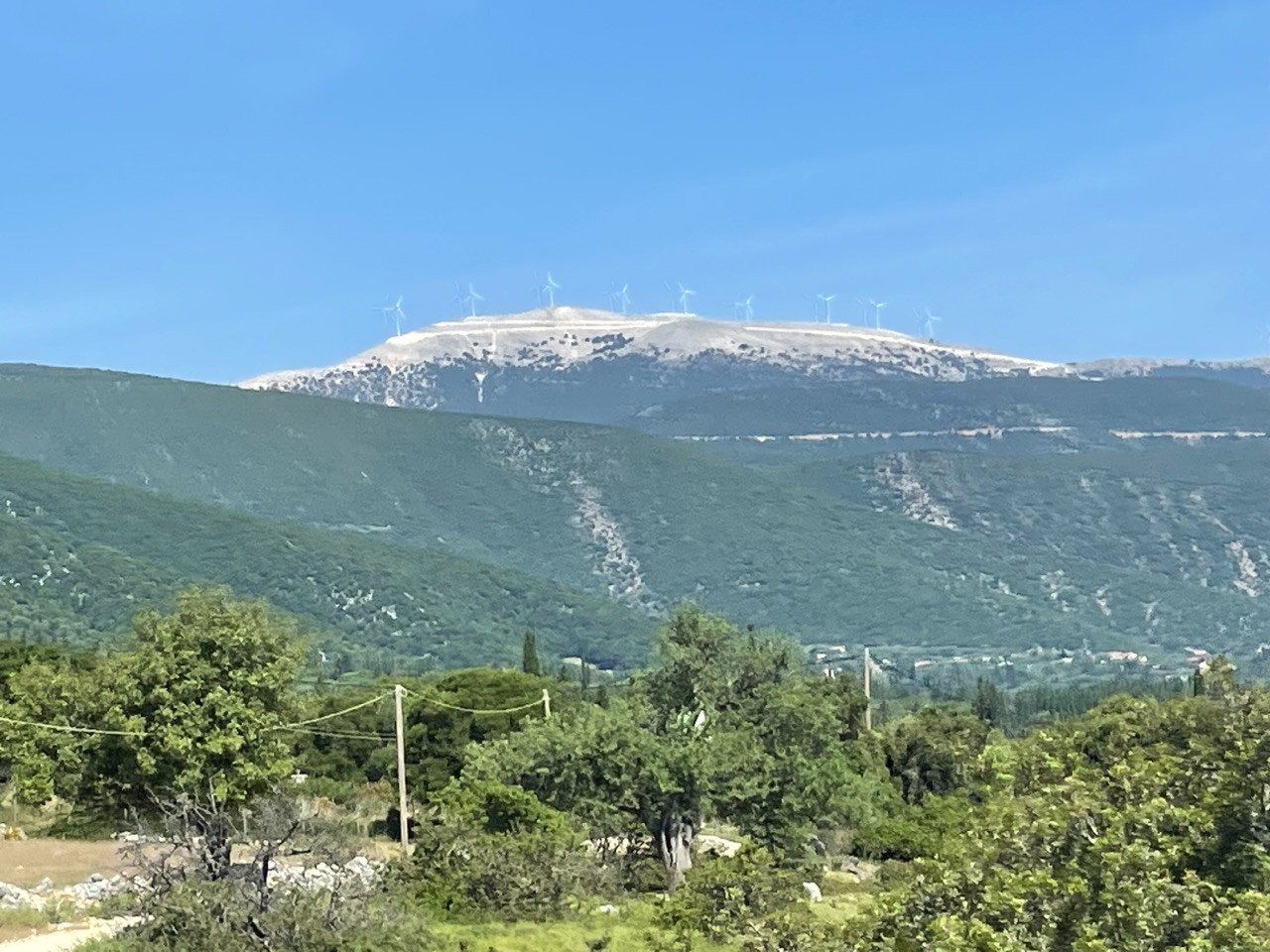
From our boat we can look at the Parnon mountains. The highest peak is over 1900m. Last small snow fields we could already make out up there when we arrived. But a few days ago everything was really white there again in the morning. Fresh snow!

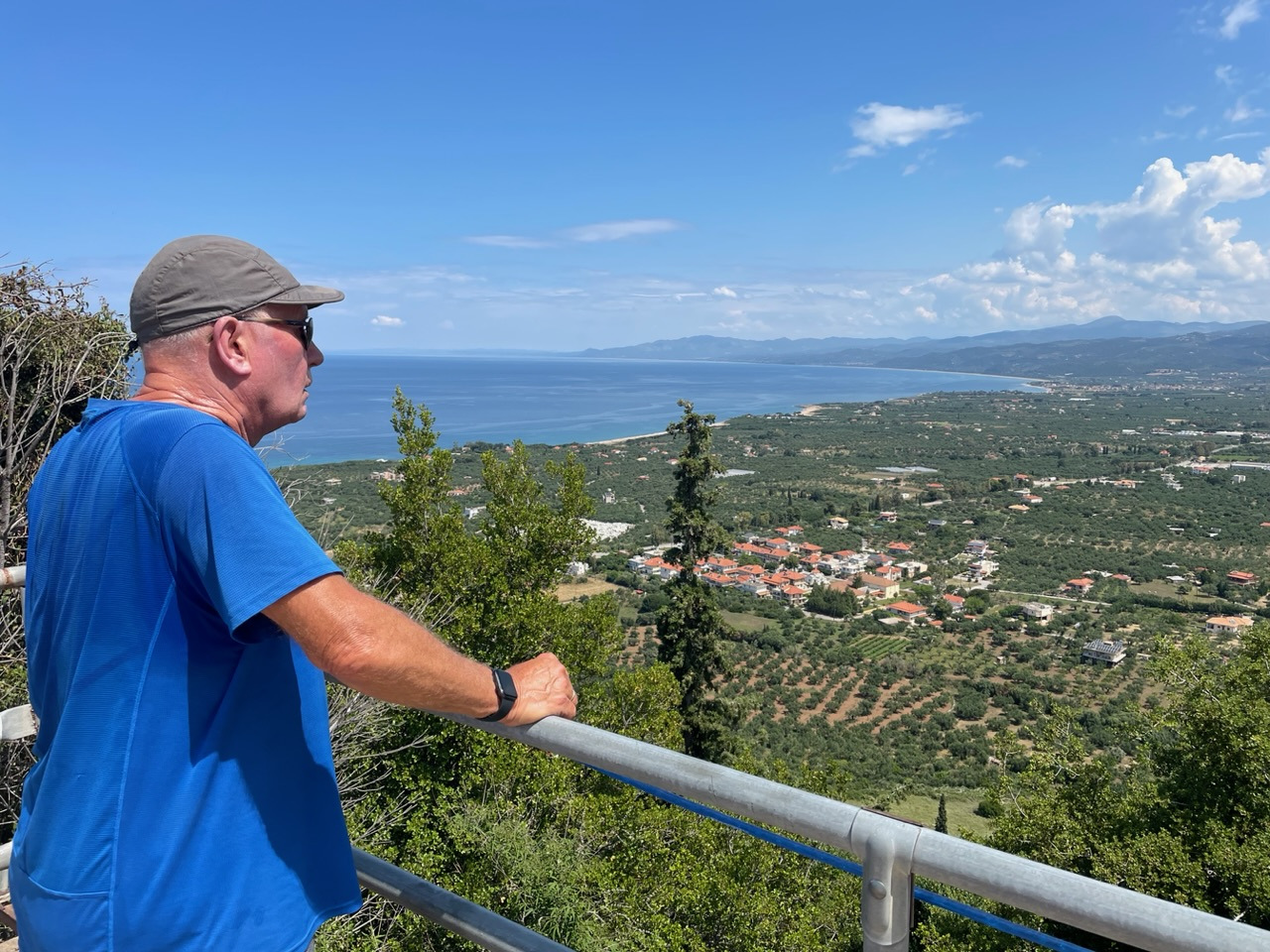
The mountains always attract us and we like to hike. So on a dry day we drove 25km into the mountains to the village Platanos. There are waterfalls, caves and chestnut trees. You can hike from here along a creek bed 15km to the sea. However, in the creek there is currently still so much water that the path was not possible. So we hiked back over the mountains - a long tour with great views into the mountains and wide views over the Argolic Gulf.

We also celebrated a bit of Easter here - with delicious strawberries, which are just ripe, and of course with breakfast eggs, which we have not had on board before. Easter decorations are also provided. Karli and Annie (just under four and two years old) blew out eggs at home in Heidelberg with their dad and painted them for our boat. They survived the journey to the boat in one piece. The Greek Easter is coming next weekend.

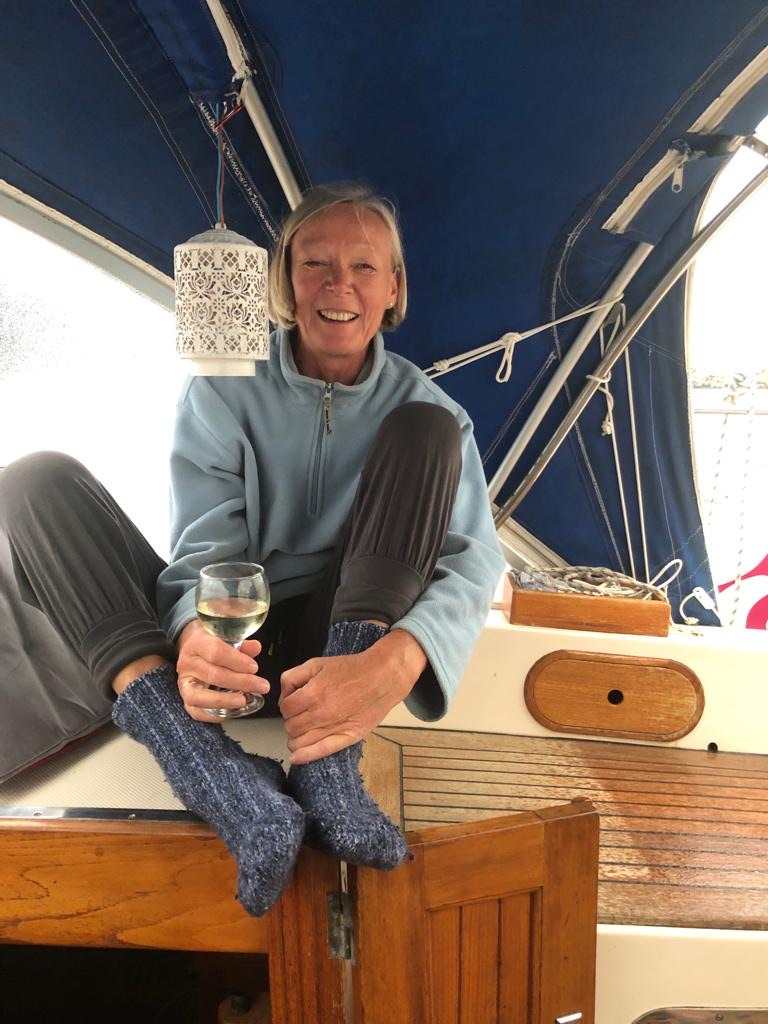
Now we have been here in the harbour for almost a week and continue to wait for favourable wind and dry weather. Right now it is raining again, but tomorrow it should stay dry and the wind should turn to north.

On March 22nd we found our boat in good condition at the boatyard of Kilada (at the southeast corner of the Peloponnese, a bit north of Porto Heli). Together with about 600 other boats it had spent the winter there. Some minor repairs to the deck and some minor woodwork had been done in our absence. 

Before the 2023 sailing season can begin, we spent a good week doing care, maintenance and preparation work. We had some assistance with the engine from Ermioni Marine Service. A cheerful, fit female mechanic came aboard ("I love my job!"). Today, March 31, the professional staff of Basimakopouloi got us into the water in no time.

Now we are anchored in the beautiful sheltered bay of Kilada, getting used to the fact that it is rocking again, repairing a few more small things and checking the weather before heading west across the Argolic Gulf. The last few days it was nice and warm during the day, but overnight it got quite cold. Unfortunately, more unsettled, colder weather is announced for the next week.

Our plan for the next weeks: along the west side of the Argolic Gulf to the south and then further to Crete. Here we plan to visit friends. The anticipation of sailing is rising.

Well, we have finally managed to sift through our many photos and videos of our life on Aglaya over the past year. We have selected a few and compiled six videos from them. In doing so, we re-did our trip from the Peloponnese around the Aegean Sea. We have seen and experienced a lot. And we can say: All in all it was a windy season.

Here you can watch the videos: Sailing 2022

We are already looking forward to the next season. Towards the end of March we will go on board again.

This report is a little bit late, because we had a problem with our website. Now it is OK. What were our experiences during the last days?

After the night journey from Milos, we landed in Monemvasia, the port we already know so well. It is located in the south of the Argolic Gulf, on the edge of Arcadia, the much-praised ideal landscape. Here we recovered from all the wind in the Cyclades, hiked around the rock and enjoyed the calm late summer weather.

After two days we set off for Gerakas, a little to the north, and lay alongside as we had done once before in April. An idyll, even more so now in the off-season. We bought fish from the boat and local wine from the barrel. 

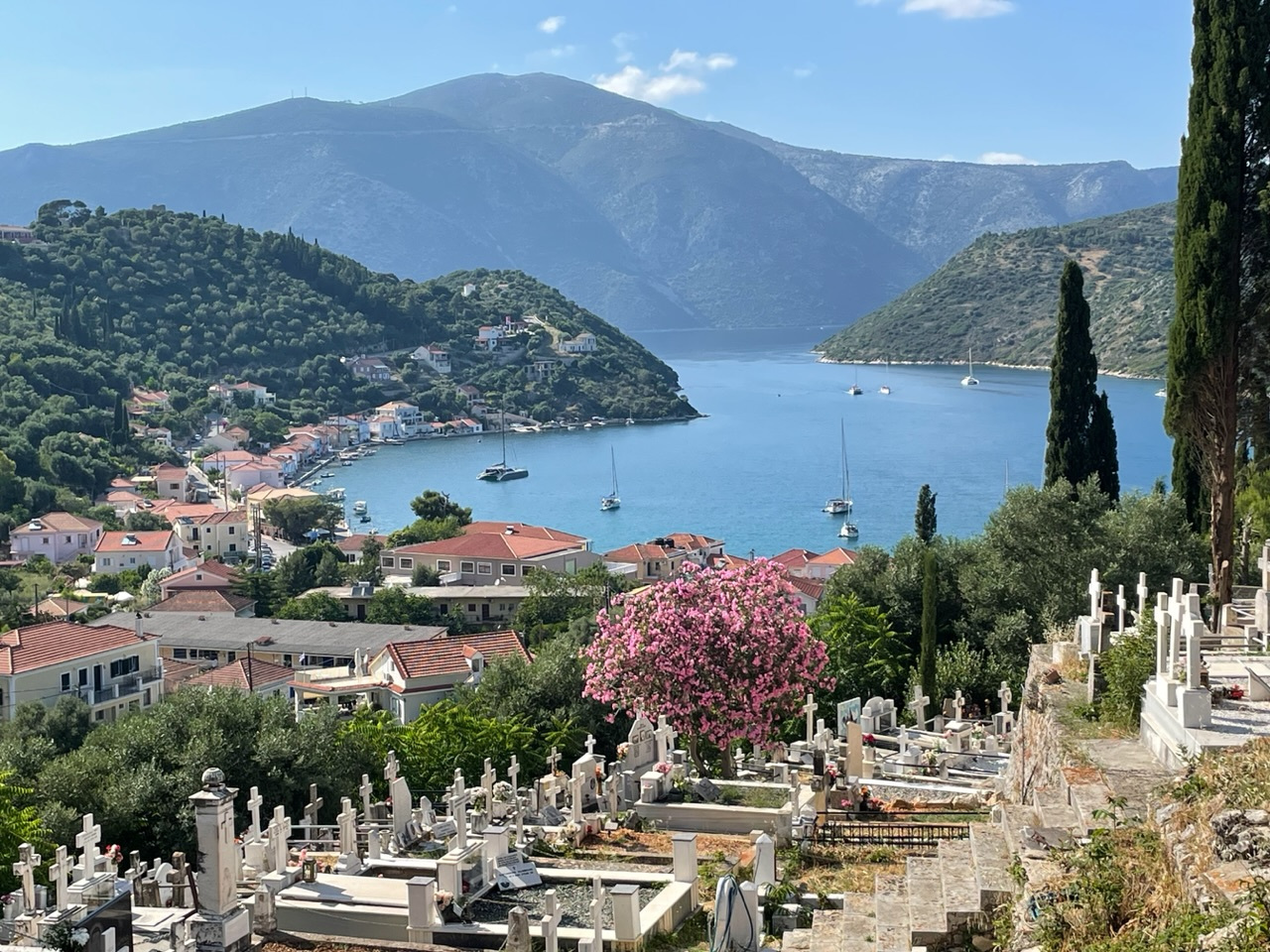
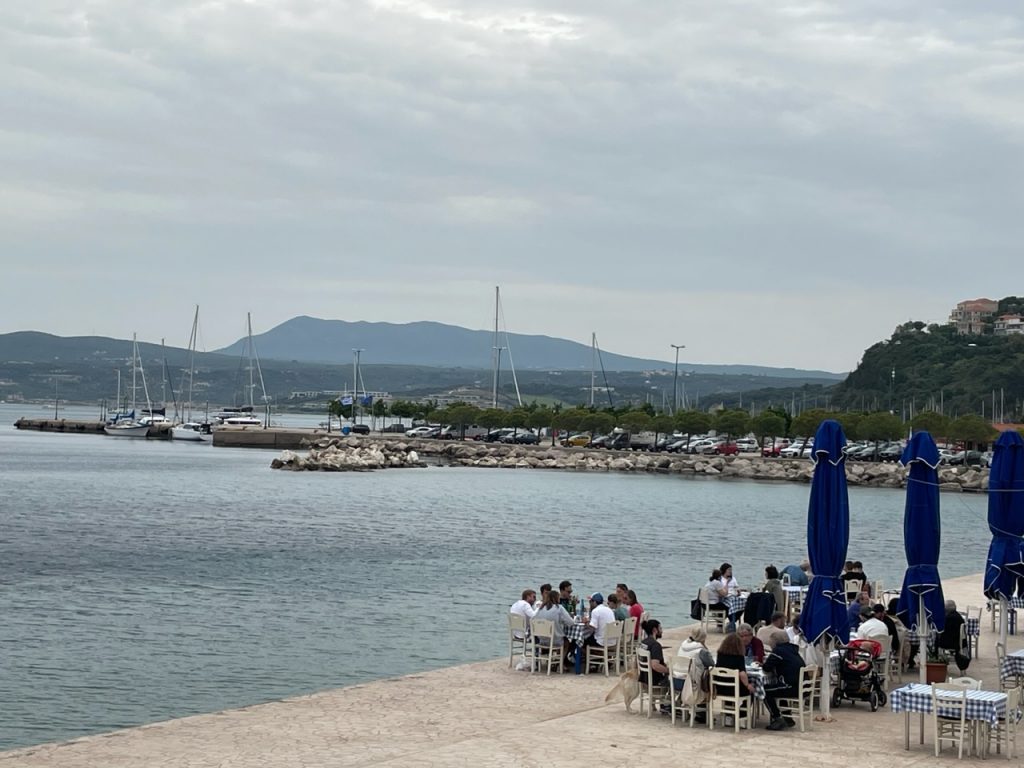
We continued to Kiparissi, an almost unreal village in a mountain landscape reminiscent of the Allgäu. The small pier was fully occupied with our boat and two others. We went swimming in the evening and walked around the bay during the day. And the bar at the harbour was still open, to celebrate we ordered a bottle of Monemvasia wine. 

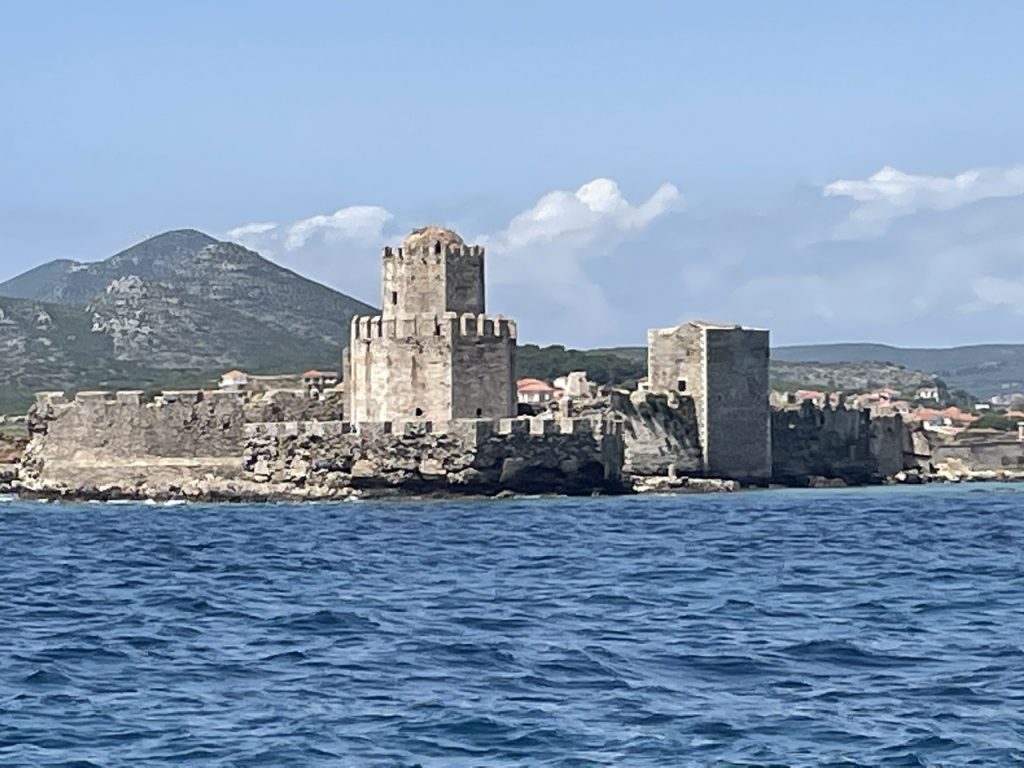
We skipped the harbour of Leonidi, where we didn't sleep a wink two years ago because of heavy swells and staying awake all night. So we continued to Astros, where we stayed for four days. Again to the beautiful ruins of the Frankish fortress, with a view as far as the castle of Nafplion at the northern end of the gulf. 

And one day we took the bus to Leonidi, an hour and a half drive through this beautiful landscape. Leonidi is a mountaineering village, with red dolomite-like rocks with vertical walls, where we saw quite a few climbers on the rope. An impressive rocky landscape, there is still a climbing festival here at the beginning of November. 

Across the Argoli Gulf to the east, we motored again to Kilada, our winter mooring. On the 1st of November Aglaya was lifted on the land. We needed a few days to prepare her for the winter. Now we are back at home in Heidelberg for winter break.

Pictures of Monemvasia

Pictures of Gerakas

Pictures of Kiparissi

Pictures of Leonidi

Pictures of Astros

Pictures of Kilada

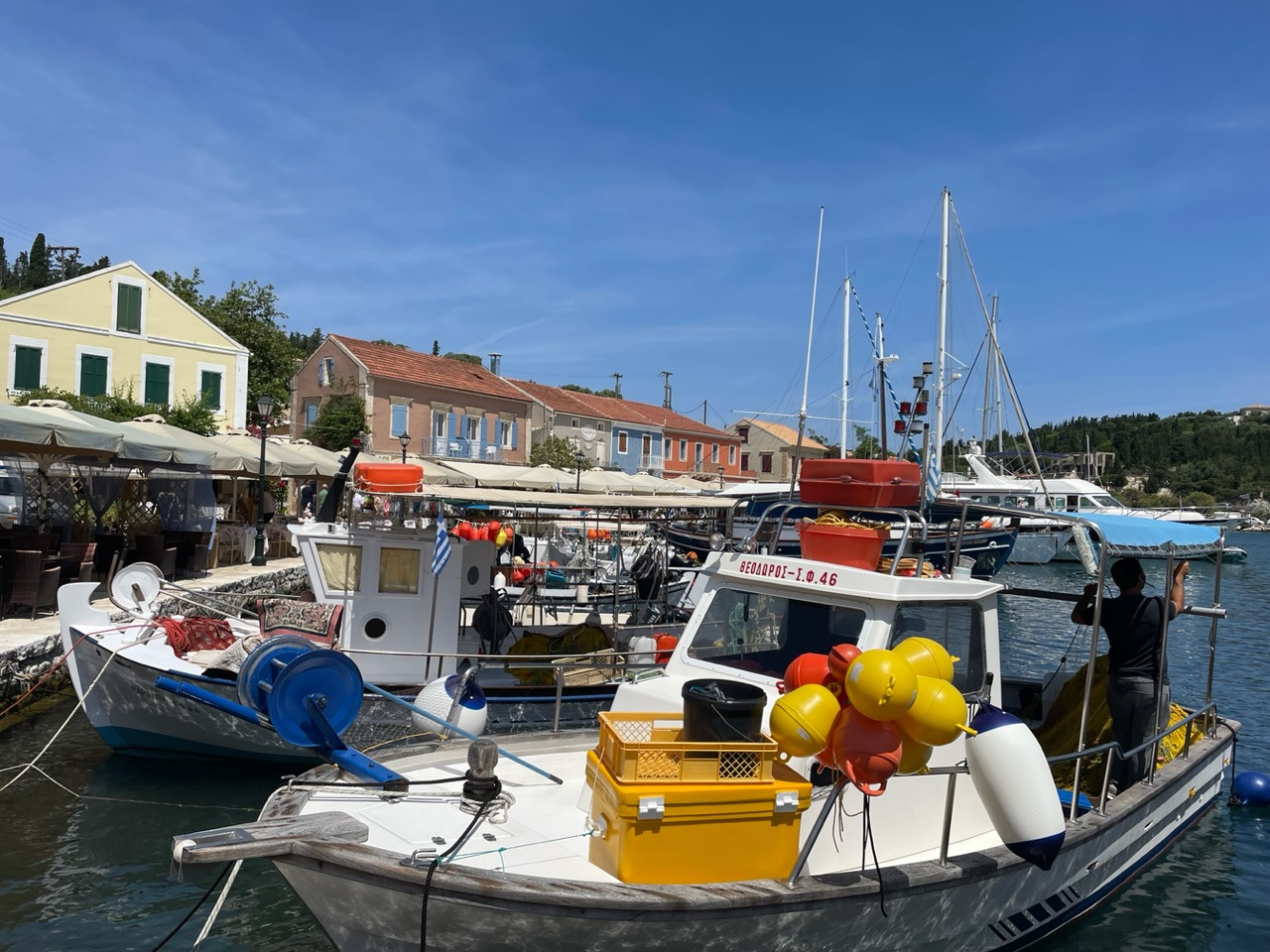
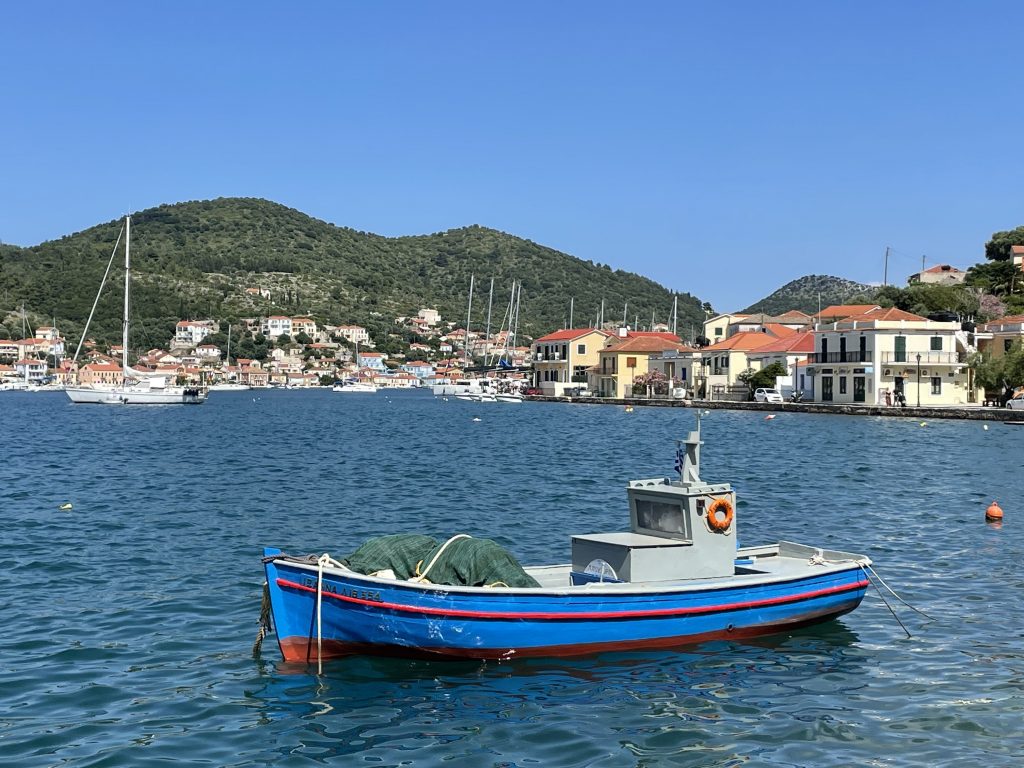
Walter likes to cook, I like to eat - especially when the food is finely prepared. That goes well together! Here in Greece we often moor in the small town harbours. There are always fishermen there. And we watch when they go out and when they come back. Fish bought directly from the boat: it doesn't get any fresher than that. The fish are not as big as those from the fish farms, but they are more aromatic. Dorado and other bream species, red mullets, merlane, small bonito, mackerel and various fish that we didn't even know what they were called - they have all ended up in our galley. 

Once Walter filleted a small bonito. A bloody affair. Ready for preparation, they stood on a plate in the galley. Suddenly we heard a grunt. A cat had actually ventured on board unnoticed by us. It had to jump up one and a half metres onto our pasarelle. We must have underestimated the jumping power of cats. Yes, we ate the delicious bonito without the cat.

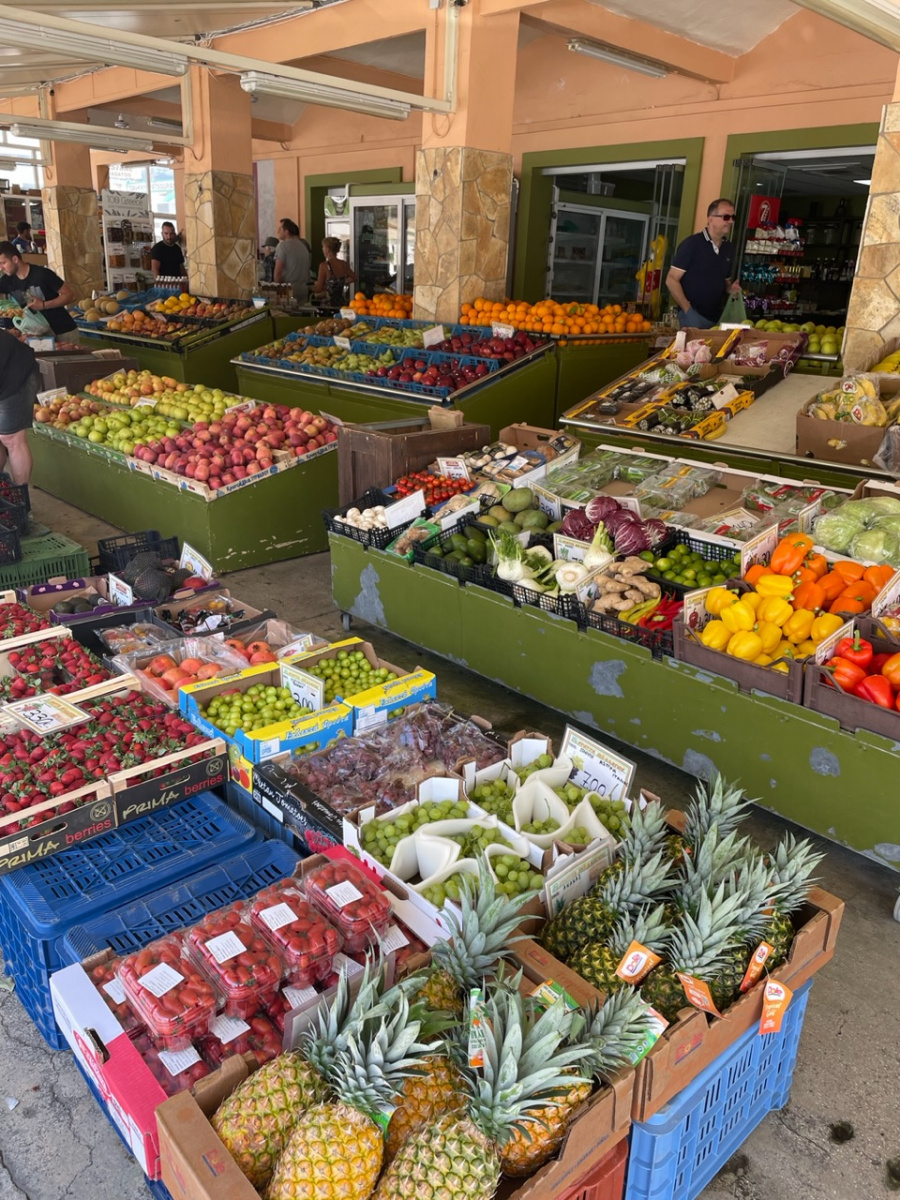
Of course, there is not always fish. Delicious fava (mashed split peas) with capers and spring onions or lemon potatoes with chicken or potato-zucchini casserole and everything you can make with tomatoes and peppers are also on the menu. All very tasty! And Walter, of course, also likes to eat what he has prepared.