Springe zum Inhalt

Many who sail know this: there are wonderful nights on board. For example in a beautiful bay. The boat lies quietly at anchor. You lie in the cockpit, look into the rig and into the beautiful starry sky, another glass of wine and then sleep until the sun comes back. Or: On a long trip across the Atlantic. You are at the helm and on watch. All others are sleeping. The rising stars above the horizon. They shine green, red and blue. You observe how they gradually become as white as we know them when they climb higher.
But there are also other nights: The wind turns and the anchor chain starts to jerk. Will the anchor hold? You are are alarmed and can‘t sleep anymore. Or: You have chosen a "safe" small harbour because strong wind is announced for the next day. So we did on the east side of the Peloponnese on the way from Monemvasia to the north. In Plaka/Leonidi, a good 20 nautical miles further north, we moored alongside at the pier. A nice little place where we were given a bag of tomatoes, cucumbers and peppers as a welcome present. Here we wanted to stay for two days to explore the surroundings, beautiful villages and impressive rocks.
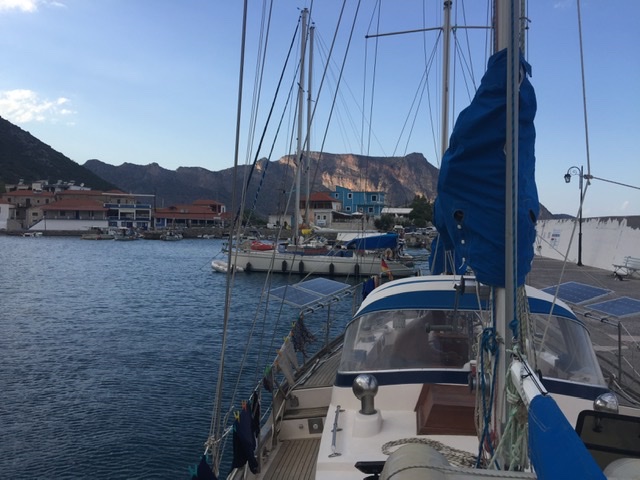
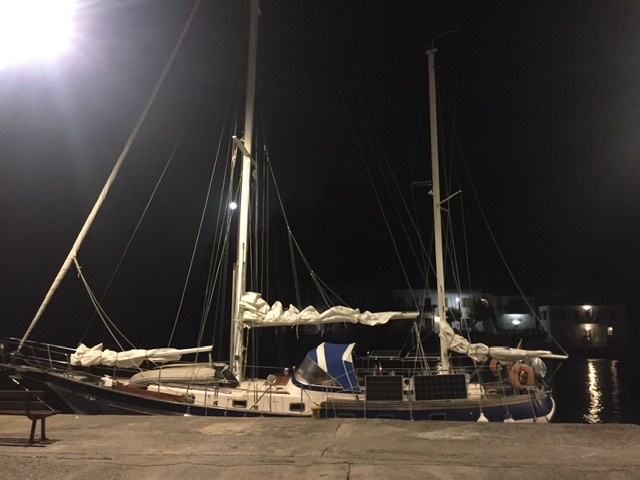
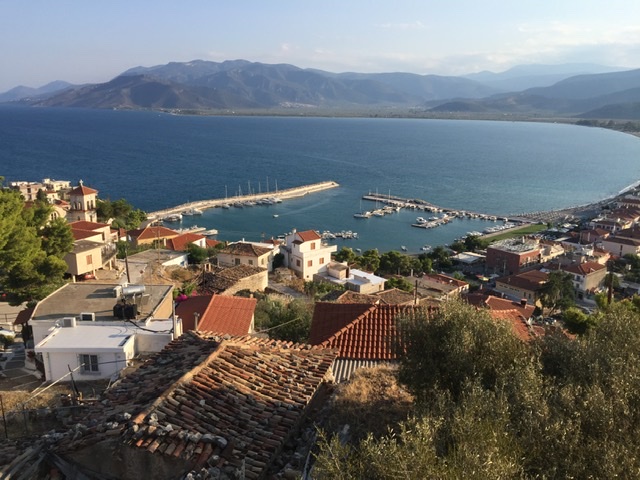
Then it turned out completely different: At midnight our many fenders scraped up and down the pier violently. No wind but an incredible swell in the harbor. The wind further east had built up this strong swell. It did not hit our boat directly, but it was reflected from the shore into the harbor. So we to make "fender watch", so that our boat was not not damaged. Our Austrian neighbors had the same situation. They know the small port for years and had never experienced such a heavy swell there. It stayed there the next morning as well. So no exploring the area in Leonidi. We fled a bit further north to the port of Astros. Here we now lie calmly in front of the bow anchor with a view of the fortress above the town. We also met our Austrian neighbors here again. And now: sleep and then explore the surroundings.
Viele, die segeln kennen das: Es gibt wunderbare Nächte an Bord. Zum Beispiel in einer schönen Bucht. Das Boot liegt ruhig vor Anker. Du liegst im Cockpit, schaust ins Rigg und in den wunderschönen Sternenhimmel, noch ein Glas Wein und dann schlafen bis die Sonne wieder da ist. Oder: Auf Langfahrt über den Atlantik. Du bist am Ruder und hast Wache. Alle anderen schlafen. Die Sterne steigen über dem Horizont auf. Sie leuchten grün, rot und blau. Du beobachtest, wie sie beim Höhersteigen allmählich so weiß werden, wie wir sie kennen.

Es gibt aber auch andere Nächte: Der Wind dreht und die Ankerkette fängt an zu rucken. Wird der Anker halten? Du bist in Hab-Acht-Position. Oder: Du hast dir einen „sicheren“ kleinen Hafen ausgesucht, weil für den nächsten Tag Starkwind angekündigt ist. 

So machten wir es auf der Ostseite des Peleponnes auf dem Weg von Monemvasia nach Norden. In Plaka/Leonidi, gut 20 Seemeilen weiter nördlich, machten wir längsseits an der Pier fest. Ein netter kleiner Ort, in dem wir als Willkommensgruß eine Tüte mit Tomaten, Gurken und Paprika geschenkt bekamen. Hier wollten wir zwei Tage bleiben, um die Umgebung zu erkunden, schöne Dörfer und imposante Felsen.

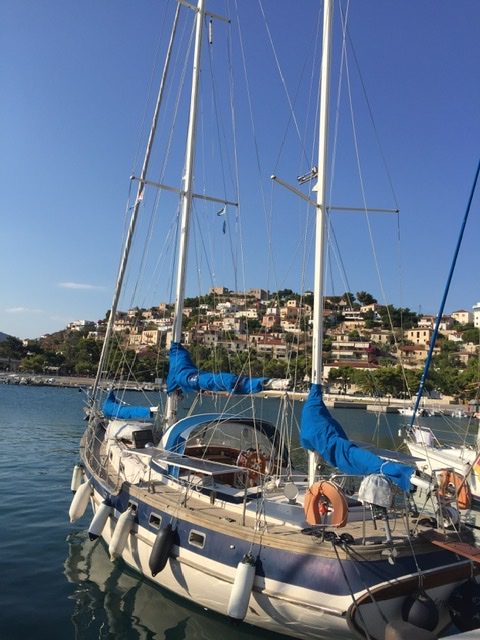
Dann kam es ganz anders: Um Mitternacht schrammten unsere vielen Fender an der Pier heftig auf und ab. Kein Wind aber ein unglaublicher Schwell im Hafen. Der Wind weiter im Osten hatte eine heftige Dünung aufgebaut. Die traf zwar nicht direkt unser Boot, sie wurde aber vom Ufer in den Hafen reflektiert. Also „Fenderwache“, damit unser Boot keinen Schaden nimmt. Unseren österreichischen Nachbarn ging‘s genauso. Sie kennen den kleinen Hafen seit Jahren und hatten einen so heftigen Schwell dort noch nie erlebt. Der blieb auch noch am nächsten Vormittag. Also kein Gegend erkunden in Leonidi. Wir flüchteten etwas weiter nach Norden in den Hafen von Astros. Hier liegen wir nun ruhig vor Buganker mit Blick auf die Festung über dem Ort. Auch unsere österreichischen Nachbarn trafen wir hier wieder. Und nun: ausschlafen und dann die Umgebung erkunden.            


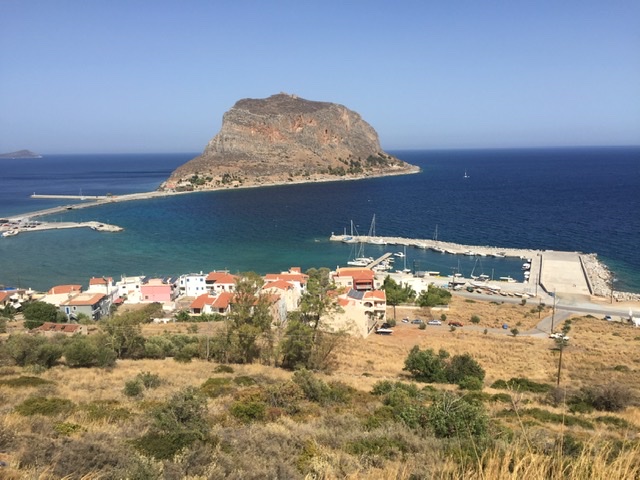
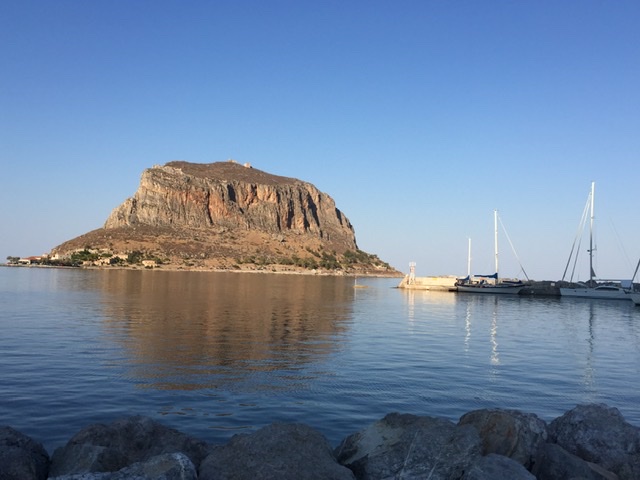
Unfassbar: Ein Felsen, direkt vor der Küste des östlichen Peloponnes, ragt 200 m hoch senkrecht aus dem Meer, 1,7 km lang. Assoziationen mit Ayers Rock sind nicht von der Hand zu weisen.
Seit dem 4. Jahrhundert besiedelt, uneinnehmbar, unbehelligt von dem dauerndem Wechsel zwischen venezianischer und osmanischer Herrschaft. Er wurde erst osmanisch, als die Venezianer ihn an die Osmanen verkauften. Damit war seine strategisch günstige Lage am Seeweg von Italien nach Konstantinopel obsolet geworden und sein langsamer Niedergang besiegelt.
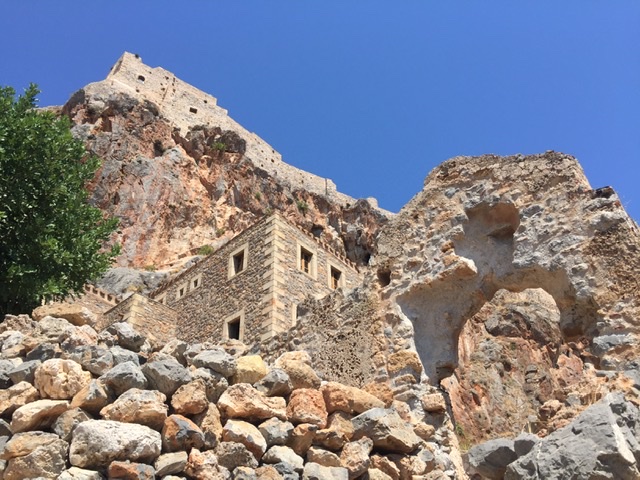
Oben auf der Spitze, einem großen Plateau, eine byzantinische Zitadelle mit allem, was dazugehört, die Oberstadt, davon sind heute nur noch Ruinen übrig, sie war übrigens bis 1911 bewohnt.
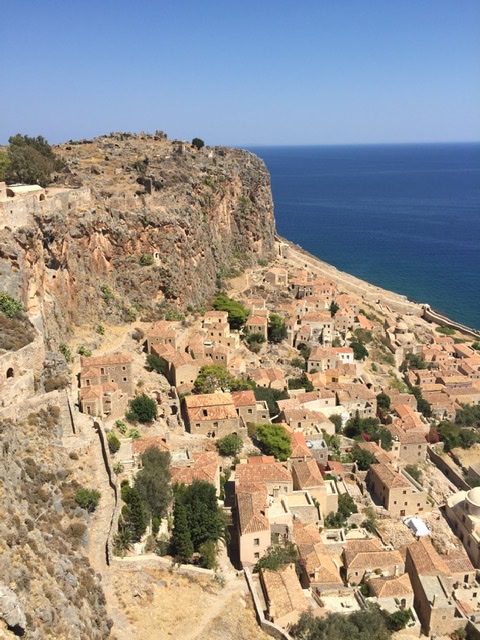
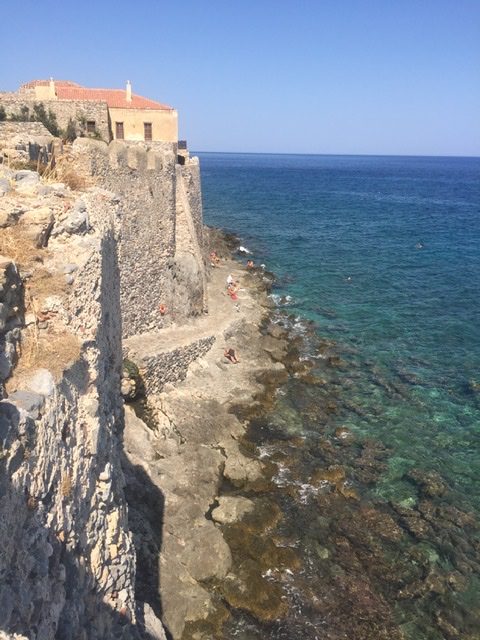
Am Südhang die ebenfalls byzantinische Unterstadt, fast komplett erhalten, vollständig von einer Stadtmauer umgeben, die sich den steilen Berg hinaufzieht. Ein Gewirr von Gässchen, Treppen, Terrassen, verwinkelt, ohne Autos, das wäre auch unmöglich wegen der Enge und der Steilheit. Und ein kleines „Portello“ in der südlichen Stadtmauer - man steigt durch und ist zwei Treppen tiefer an einer wilden Badestelle - mit Treppenstufen und Geländer, um im Felsufer sicher ins Wasser zu kommen.
Heute beherbergt die Stadt gehobenen Tourismus, sehr einfühlsam wurden die Häuser renoviert und werden als Hotels oder Ferienwohnungen genutzt.
Nicht zu vergessen: Von hier kommt der Malvasier Wein, den man in Kneipen, Tavernen, Bars, Vinotheken überall probieren kann.
Das beeindruckendste, was wir auf unserer bisherigen Reise gesehen haben.

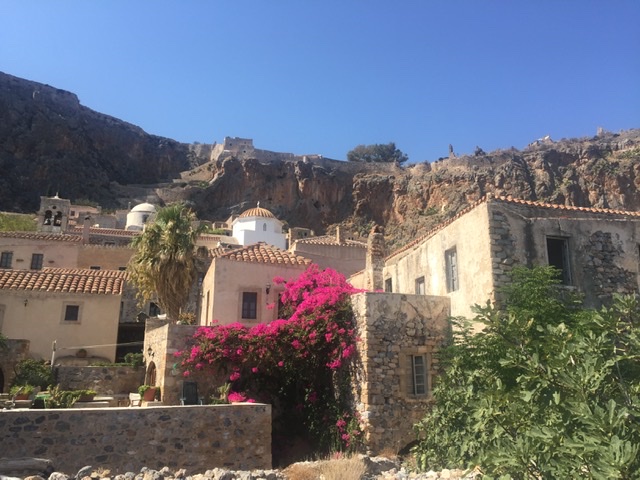
Oberstadt und Unterstadt
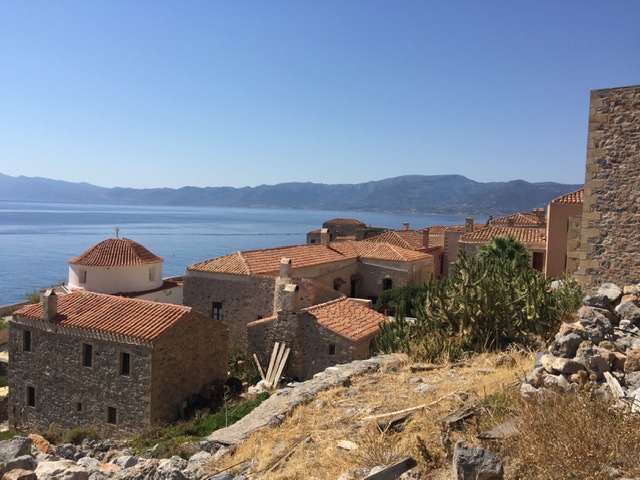
Blick zur Oberstadt
Die Dächer der Unterstadt
Exponierte Badestelle
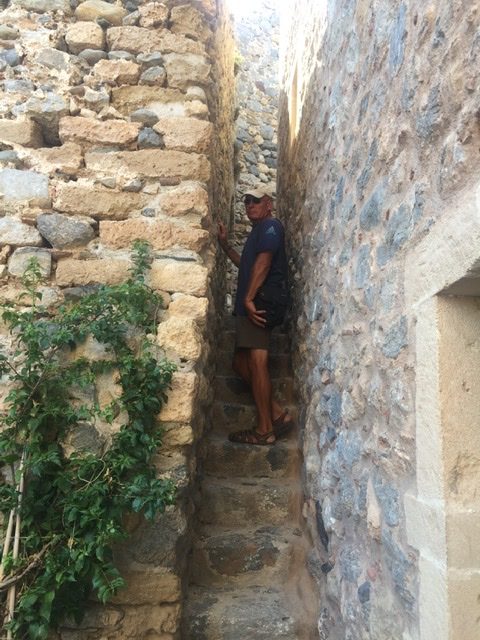
Schmale Gassen


Unbelievable: a rock, just off the coast of the eastern Peloponnese, rises vertically from the sea 200 m high, 1.7 km long. Associations with Ayers Rock cannot be denied.
Settled since the 4th century, impregnable, unaffected by the constant alternation between Venetian and Ottoman rule. It only became Ottoman when the Venetians sold it to the Ottomans. This made its strategic position on the sea route from Italy to Constantinople obsolete and sealed its slow decline.
At the top, a large plateau, a Byzantine citadel with everything that goes with it, the upper town, of which only ruins remain today, it was inhabited until 1911, by the way.
On the southern slope, the lower town, also Byzantine, almost completely preserved, completely surrounded by a city wall that stretches up the steep hill. A maze of alleys, stairs, terraces, winding, without cars, this would also be impossible because of the narrowness and steepness. And a small "portello" in the southern city wall - you climb through and are two steps down at a wild bathing spot - with steps and railings to get safely into the water in the rocky bank.
Today the town is home to upmarket tourism, the houses have been sensitively renovated and are used as hotels or holiday flats.
Not to forget: From here comes the Malvasia wine, which can be tasted in pubs, taverns, bars and wine shops everywhere.
The most impressive thing we have seen on our journey so far.

Lower An Upper town
Looking from lower town to upper town
The roofs of lower town
Exposed bathing spot
Narrow lanes

After we had successfully completed our little odyssey through this beautiful town, we thought maybe Kafka was Greek after all………
But one after the other: We came to Gythion and couldn't find a berth in the harbour itself, because it was so crowded that we had to moor outside, at the ferry pier, a 100 x 100 metres concrete slab - very romantic, but as it turned out, a very good, very safe place.
Hardly arrived and moored, two friendly officers of the Hellenic Coastguard came in a pickup SUV and asked for the papers. We handed over everything we needed: boat licence, Tepai (Cruising Tax), insurance policy. They kindly pointed out to us that before we leave, over there - they pointed to a house opposite the harbour - we had to pay the mooring fee.
The next day, in the afternoon, another pickup SUV of the Coast Guard arrived, with two other officers. They asked for our papers…….we said they could have them, but yesterday there were already two colleagues here who had already done all this. Ah, all right then, have a nice day……..
In the meantime we were already discussing whether we should really sign off.
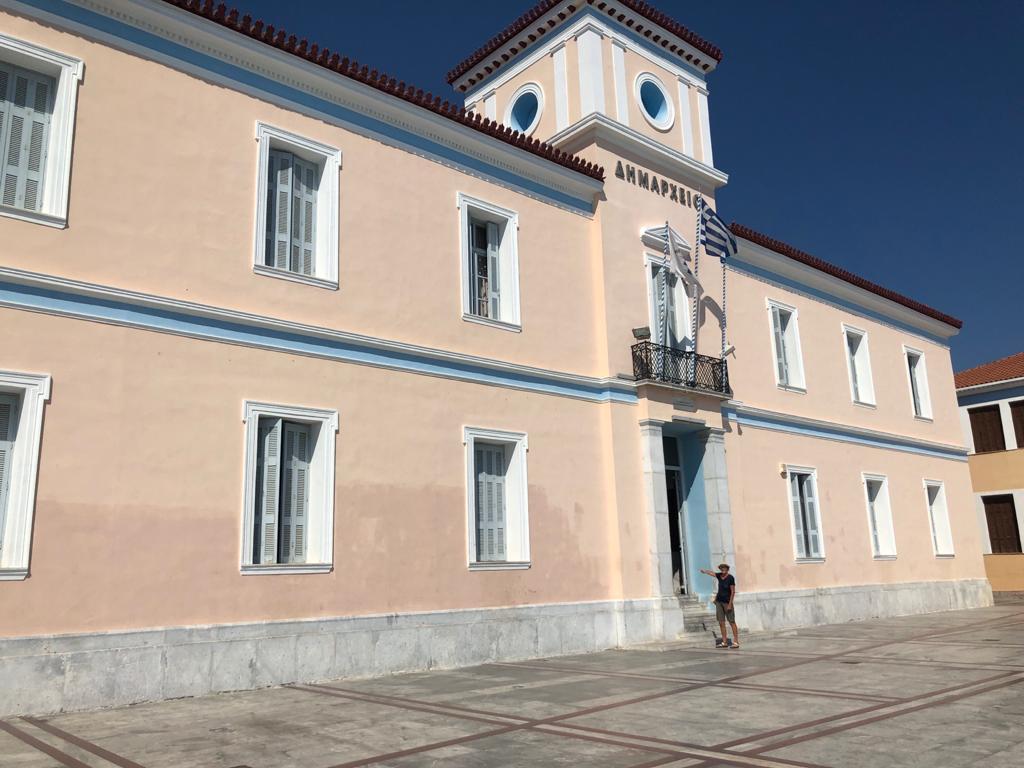
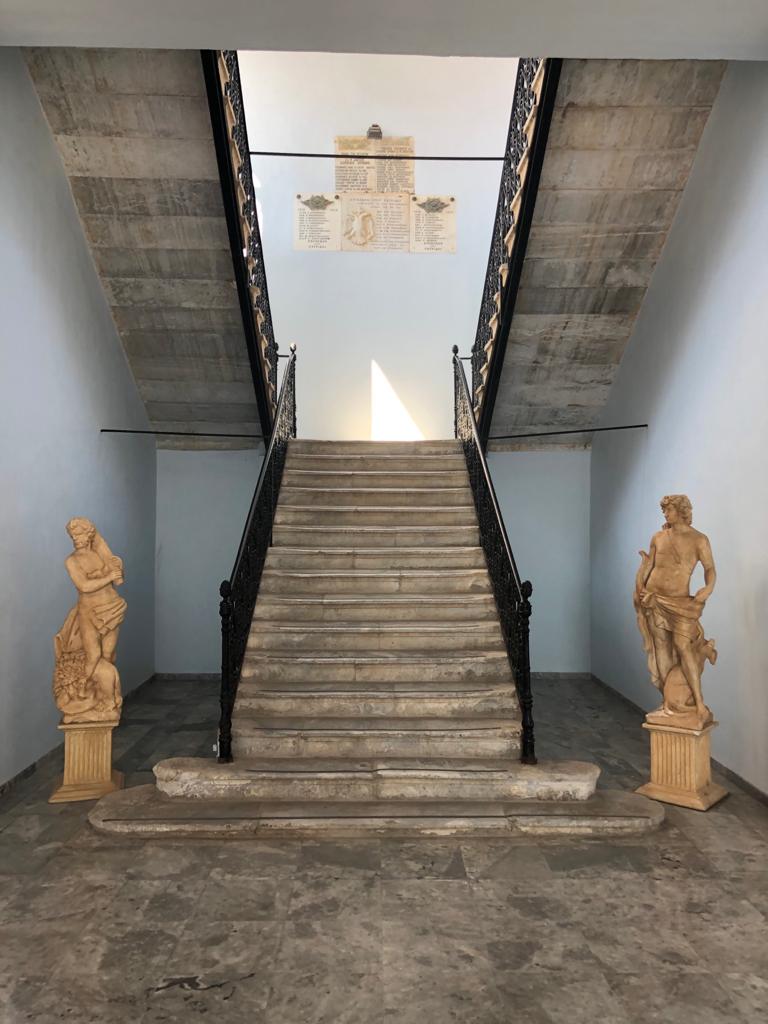
So after five days - Gythion and the surrounding area are really nice - we went to this office after we decided to pay after all. The officer looked at us in astonishment and said that this was the city police and we had to go to the Coastguard, pointing to the other end of the city. There we arrived after a 1.5km walk (35 degrees Celsius). There was a copy of our papers, after all. No, here we were completely wrong, they said. We would have to go to the city administration, they would collect the demurrage fees. That would be back there, the friendly officer pointed to the area we had just come from. So a little longer back to the other end, two buildings with Greek flags in front of them looked quite awe-inspiring. At the first one we were kindly told that this was a school. That we definitely wanted to go to the house next door. And indeed - that was the municipal administration. Everywhere the typical Greek offices: very cramped, very warm, a lot of officials per office for the square metres, shelves with files up to the rather high ceiling. But in the corridors and in the building dignified furnishings, antique figures and even a columned hall.
We had to go to Dimitra, we were told, after we had asked a lot of questions. Dimitra sat behind a glass wall and made a phone call. Quite long. Sometimes she tapped energetically with her hair clip on the desk.
When she had finished the conversation, she turned to us and was very friendly. She took a closely printed, shrink-wrapped DIN A4 sheet (looked like the small print in the insurance contract) and wrote various numbers among themselves in very precisely legible writing. Then she added them up with the help of a pocket calculator, which looked as if it could do the four basic arithmetic operations - but not any more, and that with rather large keys. The result: 18.04 € for five days. Not much, but there was no supply (electricity, water, showers…).
Then we made a crucial mistake: Dimitra asked if she should print out the receipt or if she should send it to us by e-mail. To this day we still don't know why we decided to use the mail variant. After a friendly farewell we went back to the boat.
The next day we received the mail from Dimitra with the receipt, but she apologised, she had made a calculation error and the amount would not be 18,04€, but 42,60. We should pay the difference to the account at the National Bank of Greece anyway, thank you very much.
We'll see when they sehe sends us a reminder.


Nachdem wir unsere kleine Odyssee durch dieses wunderschöne Städtchen erfolgreich beendet hatten, dachten wir: Vielleicht war ja Kafka doch Grieche……..
Aber der Reihe nach: Wir kamen nach Gythion und fanden im Hafen selbst keinen Liegeplatz, weil der so belegt war, dass wir außen anlegen mussten, an der Fährmole, einer 100 x100 Meter großen Betonplatte - sehr romantisch, aber wie sich zeigen sollte, ein sehr guter, sehr sicherer Liegeplatz.
Kaum angekommen und festgemacht, kamen im Pickup-SUV zwei freundliche Beamte der Hellenic Coastguard und baten um die Papiere. Wir rückten alles Nötige raus: Bootsschein, Tepai (Cruising Tax), Versicherungsschein. Sie wiesen uns freundlich darauf hin, dass wir vor unserer Abfahrt dort drüben - sie zeigten auf ein Haus gegenüber vom Hafen - die Liegegebühr zahlen müssten.
Am nächsten Tag, nachmittags, kam wieder ein Pickup-SUV der Coast Guard, mit zwei anderen Beamten. Sie baten um unsere Papiere……wir sagten, dass sie die gern haben könnten, aber gestern seien schon zwei Kollegen hier gewesen, die das alles schon erledigt hätten. Ah, alles klar, dann schönen Tag noch…….
Mittlerweile diskutierten wir schon, ob wir uns wirklich abmelden sollten.
Nach fünf Tagen - Gythion und Umgebung sind wirklich schön - gingen wir also zu diesem Büro, nachdem wir uns entschlossen hatten, doch zu bezahlen. Der Beamte sah uns ganz entgeistert an und sagte, dass dies hier die Stadtpolizei sei und wir müssten aber zur Coastguard und die wäre da hinten, er zeigte auf das andere Ende der Stadt. Dort trafen wir nach 1,5km Fußmarsch (35 Grad Celsius) ein. Es gab dort eine Kopie unserer Papiere, immerhin. Nein, hier wären wir ganz falsch, hieß es. Wir müssten zur Stadtverwaltung, die würde die Liegegebühren kassieren. Das wäre da hinten, die freundliche Beamtin deutete in die Gegend, aus der wir gerade gekommen waren. Also etwas länger zurück ans andere Ende, da sahen zwei Gebäude mit griechischer Flagge davor ziemlich ehrfurchtgebietend aus. Beim ersten wurden wir freundlich darauf hingewiesen, dass dies hier eine Schule sei. Dass wir bestimmt in das Haus daneben wollten. Und tatsächlich - das war die Gemeindeverwaltung. Überall die typischen griechischen Büros: sehr eng, sehr warm, für die Quadratmeterzahl sehr viele Beamte pro Büro, Regale mit Ordnern bis an die ziemlich hohe Decke. Aber in den Fluren und im Gebäude würdevolle Einrichtung, antike Figuren und sogar eine Säulenhalle.
Wir müssten zu Dimitra, sagte man uns, nachdem wir viel gefragt hatten. Dimitra saß hinter einer Glaswand und telefonierte. Ziemlich lange. Dabei klopfte sie manchmal energisch mit der Haarspange auf den Schreibtisch.
Als sie das Gespräch beendet hatte, wandte sie sich uns zu und war sehr freundlich. Sie nahm ein eng bedrucktes eingeschweißtes DIN A 4 Blatt (sah aus wie das Kleingedruckte im Versicherungsvertrag) und schrieb in sehr exakter leserlicher Schrift verschiedene Zahlen untereinander. Dann addierte sie sie mit Hilfe eines Taschenrechners, der aussah, als könne er die vier Grundrechenarten - aber nicht mehr, und das mit ziemlich großen Tasten. Das Ergebnis: Für fünf Tage 18,04 €. Nicht viel, allerdings gabs ja auch keine Versorgung (Strom, Wasser, Duschen….).
Dann machten wir einen entscheidenden Fehler: Dimitra fragte, ob sie uns die Quittung ausdrucken solle oder ob sie sie uns per Mail schicken solle. Wir wissen bis heute nicht, warum wir uns für die Mail-Variante entschieden haben. Nach einer freundlichen Verabschiedung gingen wir wieder zum Boot.
Am nächsten Tag erhielten wir die Mail von Dimitra mit der Quittung, allerdings entschuldigte sie sich, sie hätte einen Rechenfehler gemacht und der Betrag wäre nicht 18,04€, sondern 42,60. Wir sollten den Differenzbetrag bitte auf das Konto sowieso bei der National Bank of Greece einzahlen, vielen Dank.
Mal sehen, wann sie eine Mahnung schickt.

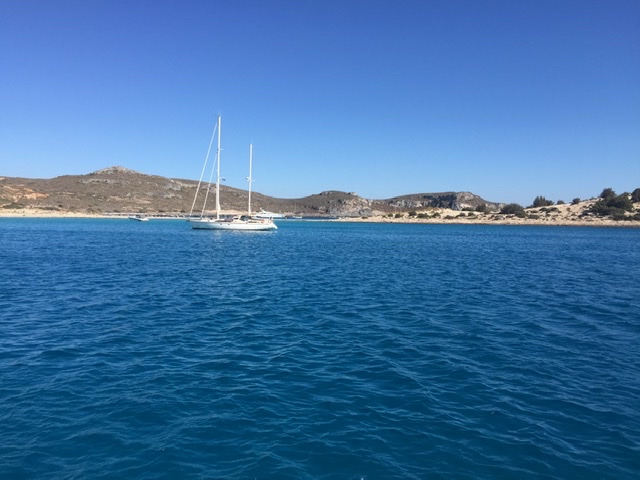
Anchoring in front of Simon Beach, Elafonisos

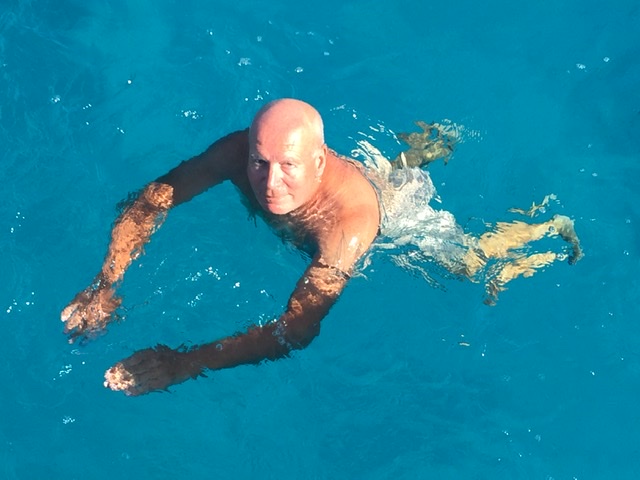
It is said that Elafonisos is the Greek Ibiza. We couldn't find out, at least as far as pubs and discos etc. are concerned. But the beaches and bays are fantastic, fine sand, turquoise sea, picturesque rocks in the background. We spent two days and nights in one of these bays, went swimming from the boat and enjoyed ourselves. However, with a small downer: The bays are mostly open to the southwest, and the swell, the swell that forms during the day due to the constant wind, runs straight into the bay. With the result that the boat rocks, especially when the wave is quite big: always up and down, because it lies at anchor across the waves. That was a bit uncomfortable, one could not sleep so calmly. But because there is almost no light from houses or villages in the bays at night, the starry sky was incredibly beautiful.

Morning bath
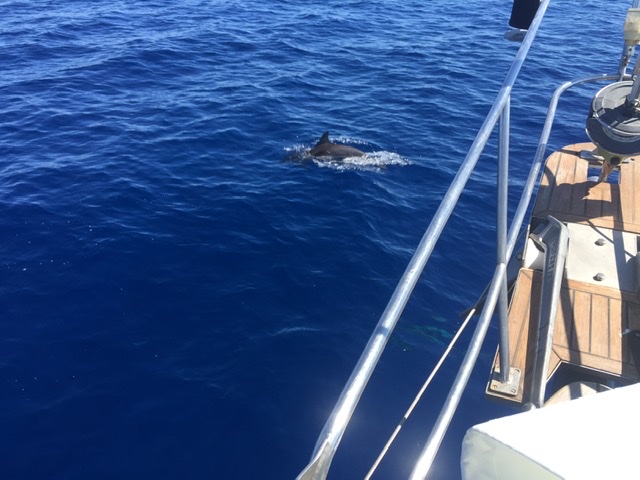
Dolphins visting our boat

Then we wanted to go to Neapoli, opposite Elafonisos on the mainland. But there it was impossible to go ashore: a very small pier was already occupied by Coast Guard and High Speed Ferry, and the open spaces were too shallow, even though we had a draft of 1.68 m. A slight panic broke out, because we didn't want to be anchored so restlessly again.
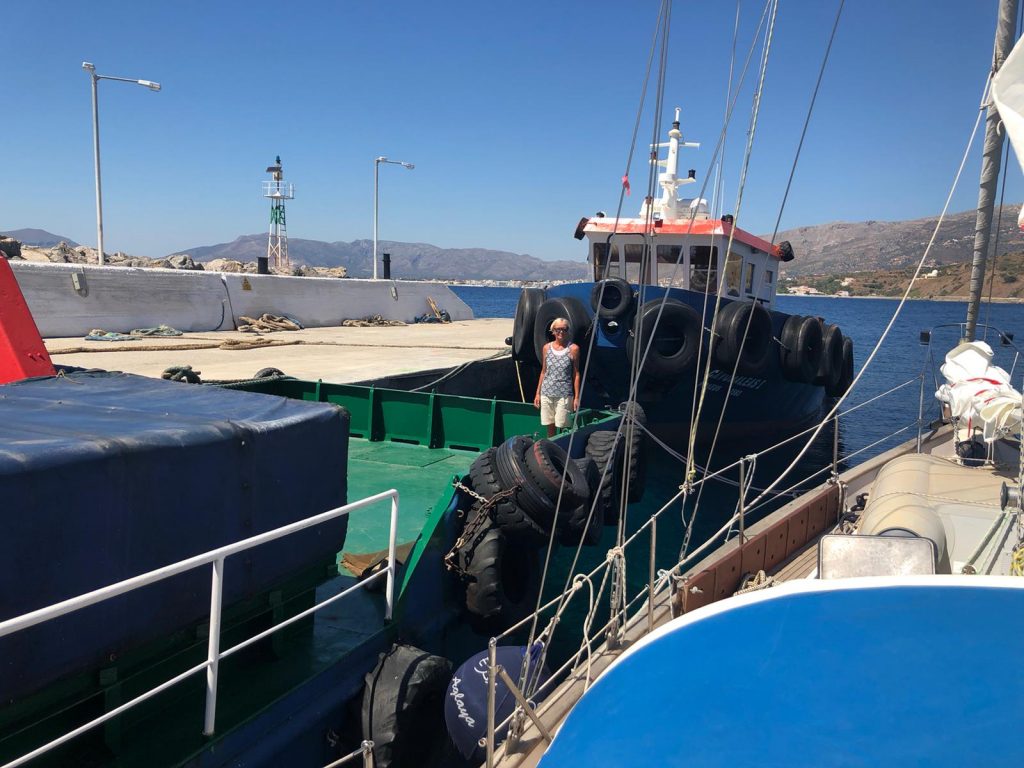
2 km east of Neapoli there is the tiny port of Palaiokastro, which looks more like a ship graveyard, at least as far as a few bumbling sailboats are concerned, partly lying on the land and already tipped over. At the much too short pier there was a somewhat rusty, but still functional working ship, estimated to be 20 m long. Two men were fishing and we asked if We Couleur fix our boat at this workboat. Yes yes, was the answer, in two hours another ship would come, but that would be fine. So we moored ourselves to this steel colossus and, although a bit grotesque in appearance, we were all the safer and calmer. The working ship came and maneuvered up to 5cm towards us - the captain was a real professional. Suddenly the owner of the ship we had moored to came and asked when we wanted to leave, we said after one or two nights. No problem was the answer, but he had to go out tomorrow at noon. So it was clear: we would stay one night.
We have hardly ever had a berth before that was as exotic, but also as quiet as the one between the truck and the work ship.

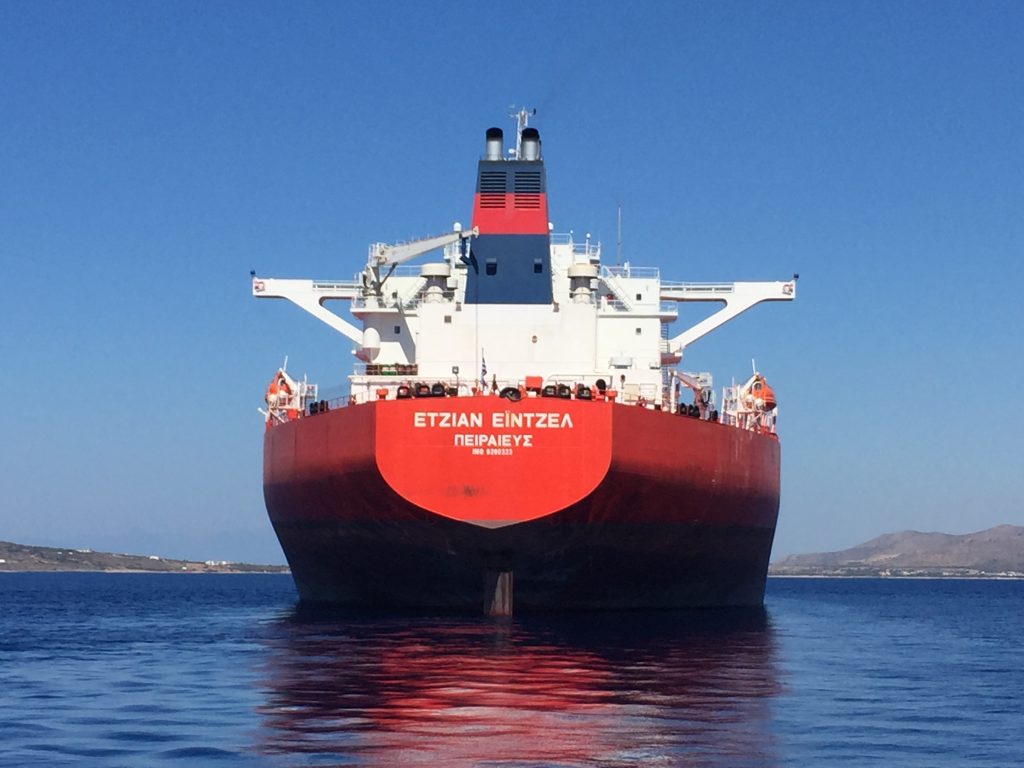
Big cargo ships lie in the road in the Baby of Neapoli
At least we came to Neapoli für a cool beer by foot