Willkommen! Dies ist die Website von Gisela und Walter Würfel. Hier berichten wir über die Reisen und das Leben auf unserer Segelyacht Aglaya. / Welcome! This is the website of Gisela and Walter Wuerfel. Here we report about the journeys and the life on our sailing yacht Aglaya.
It's cold at home in Germany this winter. That's nice. Finally, snow and ice again. In Greece, too, it is quite cold at times in some regions. And there is extreme weather with lots of rain, flooding, strong winds, snow, and temperatures around zero degrees. “Usually we didn't have winter in Greece. But since we are in the EU, we have to follow Ursula,” comments our friend Stavros with a smiley. Our Aglaya is ashore in Nea Peramos. So far, she has been spared from storms. We hope it stays that way until we get back on board in mid-April.
Even though we like winter, we like to warm up from time to time and look back on the past season. We have now made two videos with lots of pictures. Take a look if you want to warm up a bit too.
Now that Aglaya is safely moored in the boatyard, we treat ourselves to a dessert on land. Thessaloniki, the capital of Macedonia, where we recently spent so much time sailing, is Greece's second largest city with a population of around three million. It has always been the second largest city – even in the Byzantine Empire after Constantinople. We definitely wanted to visit this lively yet relaxed city, which has been shaped by an eventful history. We had left our boat in the Aretsou marina just outside the city for two months in the summer to go home, but it was far too hot for us to explore the city. Now, in the cool November weather, we are perfectly situated in a tiny flat very close to the harbour.
First, we got an overview of the city on a sightseeing tour, then visited many of the sights by foot: the long harbour promenade to the White Tower, the statue of Alexander the Great and the Umbrellas. In the city, you come across churches at short intervals, large and small, each with its own saint and its own history. The most famous is the large Agia Sofia. We were fascinated by the fact that they all stand in the middle of the tightly packed high-rise buildings. The remains of the Roman buildings are also impossible to miss in the middle of the city. The Arch of Galerius and the Rotunda of Galerius are particularly striking. Unfortunately, we could only view the Bey Hamam from the outside, as it is dilapidated and therefore closed. What a pity! A large part of the city was destroyed in a major fire in 1917, and an earthquake in 1978 caused a great deal of damage.
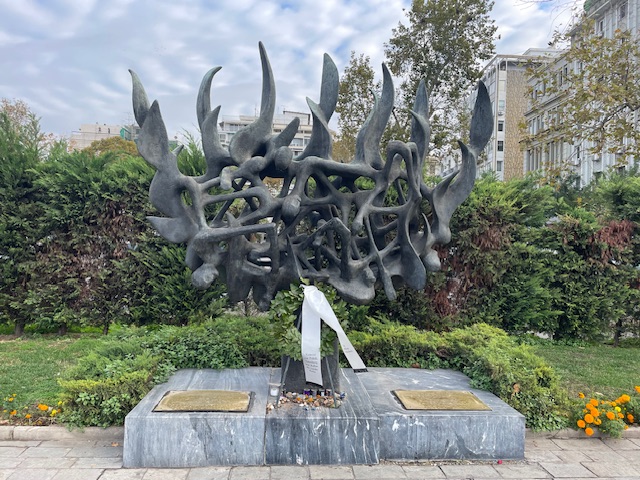
Here in Thessaloniki, it became clear to us once again how much the history of the Levant has been shaped by war, displacement and migration. For example, the history of the Jews has been closely intertwined with the history of Thessaloniki since its founding as the capital of the Macedonian kingdom. And although we know about the atrocities committed by the Nazis in Greece during the Second World War, we were once again deeply moved when we stood in front of the sculpture commemorating the Holocaust. Almost 50,000 Jewish citizens from Thessaloniki were deported in freight cars to the Auschwitz and Treblinka concentration camps.
The Thessaloniki International Film Festival is currently taking place, which means there are a lot of visitors in the city. Many of the screening venues are located in the old harbour area. The warehouses also house museums. This was our favourite place to enjoy a draught beer in the evening, with a view of the Thermaic Gulf, where we also went sailing.
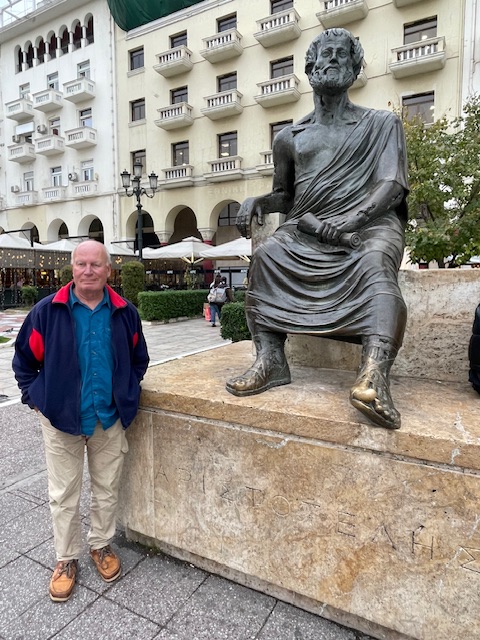
There are many young people in the city, certainly tourists, but mainly students. No wonder, as Aristotle University is the largest in the Balkans. The university's namesake lived here and has been immortalised with a statue.
After morning coffee (‘two Greek coffees, medium sugar’), a walk through the market halls was a great start to the second day.
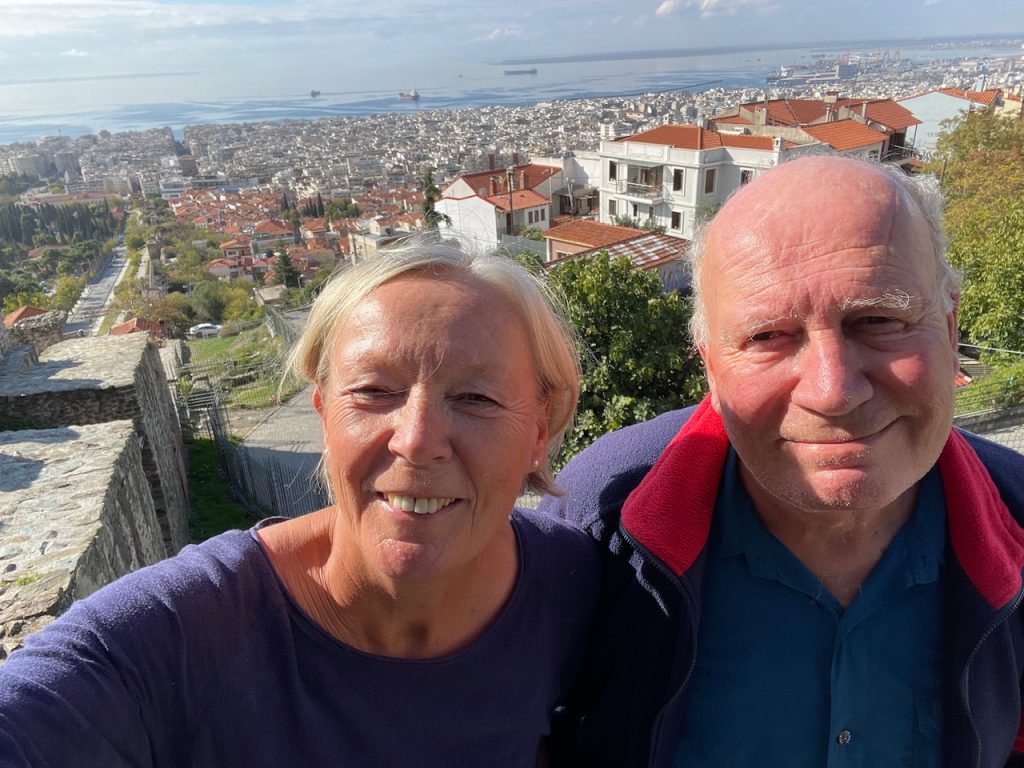
And then the more athletic part of the day: climbing up to the upper town with its densely packed little houses with red tiled roofs, the city walls and the castle. The view down to the city, the harbour and the gulf is magnificent. The sun is finally back, but Mount Olympus, which can be seen from here on a clear day, is shrouded in clouds.
Nachdem Aglaya nun aufgepallt im Boatyard steht, genehmigen wir uns noch einen Nachtisch an Land. Thessaloniki, die Hauptstadt von Makedonien, wo wir zuletzt so viel mit dem Boot unterwegs waren, ist mit rund drei Millionen Einwohnern die zweitgrößte Stadt Griechenlands. Sie war immer die Zweitgrößte - auch schon im byzantinischen Reich nach Konstantinopel. Diese durch eine bewegte Geschichte geprägte, quirlige und gleichzeitig entspannte Stadt wollten wir auf jeden Fall besuchen. Zwar hatten wir unser Boot im Sommer für zwei Monate in der Marina Aretsou etwas außerhalb der Stadt gelassen, um nach Hause zu fahren, aber da war es uns viel zu heiß für eine Stadterkundung. Nun also bei kühlem Novemberwetter, bestens platziert in einem winzigen Apartment ganz nah am Hafen.
Erst mal haben wir uns mit einer Stadtrundfahrt einen Überblick verschafft, dann zu Fuß viele der Sehenswürdigkeiten besucht: die lange Hafenpromenade bis zu dem Weißen Turm, zur Statue von Alexander dem Großen und zu den Umbrellas. In der Stadt stößt man in kurzen Abständen immer wieder auf Kirchen, groß und klein, jede mit ihrem eigenen Heiligen und ihrer eigenen Geschichte. Die bekannteste ist die große Agia Sofia. Fasziniert hat uns, dass sie alle mitten zwischen den eng stehenden Hochhäusern stehen. Auch die Überreste der römischen Bauten sind mitten in der Stadt nicht zu übersehen. Besonders markant sind der Galeriusbogen und die Rotonde des Galerius. Das Bey Hamam konnten wir leider nur von außen anschauen, denn es ist baufällig und daher geschlossen. Schade! Ein großer Teil der Stadt wurde bei einem großen Brand 1917 zerstört und ein Erdbeben 1978 richtete viele Schäden an.
Hier in Thessaloniki ist uns wieder einmal ganz besonders deutlich geworden, wie sehr die Geschichte in der Levante von Krieg, Vertreibung und Migration geprägt ist. So ist zum Beispiel die Geschichte der Juden mit der Geschichte Thessalonikis seit ihrer Gründung als Hauptstadt des makedonischen Königreichs eng verwoben. Und obwohl wir ja von den Greueltaten der Nazis während des Zweiten Weltkriegs in Griechenland wissen, waren wir, als wir vor der Skulptur zum Gedenken an den Holocaust standen, wieder ganz betroffen. Fast 50.000 jüdische Bürger aus Thessaloniki wurden in Güterwaggons in die Konzentrationslager Auschwitz und Treblinka deportiert.
Gerade findet das Internationale Filmfestival Thessaloniki statt. Dadurch sind besonders viele Besucher in der Stadt. Viele Vorführungsorte sind im Gelände des alten Hafens. In den Speicherhäusern sind auch Museen untergebracht. Hier war unser Lieblingsplatz für ein Faßbier gegen Abend, mit Blick auf den Thermaischen Golf, auf dem wir ja auch gesegelt sind.
In der Stadt sind viele junge Menschen unterwegs, sicher auch Touristen, aber vor allem Studenten. Kein Wunder, die Aristoteles-Universität ist die größte auf dem ganzen Balkan. Der Namensgeber hat hier gelebt und wurde mit einer Statue verewigt.
Nach dem dem Morgenkaffee („two Greek coffee medium sugar“) war am zweiten Tag ein Spaziergang durch die Markthallen ein toller Tagesbeginn.
Und dann der etwas sportlichere Teil des Tages: Aufstieg in die Oberstadt zu den dicht gedrängten kleinen Häusern mit den roten Ziegeldächern, zur Stadtmauer und zum Kastell. Der Blick hinunter auf die Stadt, den Hafen und den Golf ist grandios. Die Sonne ist endlich wieder da, aber der Olymp, den man von hier bei klarem Wetter sehen kann, hüllt sich in Wolken.
Einen letzten Abend haben wir noch vor uns, bevor wir morgen nach Hause fliegen. Vielleicht gehen wir nochmal in die Markthallen zu einem lecken griechischen Abendessen.
The 2025 sailing season is now over for us too. Aglaya is ashore and over the last few days we have completed all the necessary work for winter storage. As heavy rain was forecast for 4 November, we hurried to put the winter tarpaulin in place. After we leave, the mechanic from Manitsas Marine will come to flush the cooling system and do a thorough check of the entire engine. We will probably be in contact with him from time to time over the winter.
Stavros Manitsas is the owner of the boatyard. You have to take a little time to get to know him. Our first visit to his office lasted an hour – not only because we discussed everything concerning our boat with him in great detail. We came away with the impression that Aglaya is in good, experienced hands here. Stavros also told us a lot about his family's eventful history. Originally (more than 100 years ago), they lived in Crete. The family no longer felt safe there and moved closer to the Ottoman capital Istanbul, to a small island in the Black Sea. In 1922, after the founding of the Turkish state, the Greeks were expelled. So his family settled in Nea Peramos near Kavala. Many Greeks who were expelled from Turkey at that time founded new places, all of which begin with the term ‘Nea’, including Nea Peramos.
With a touch of sadness, we left our Aglaya behind in the pouring rain. Sleep well, Aglaya, we'll be back in the spring!
Jetzt ist auch für uns die Segelsaison 2025 beendet. Aglaya steht an Land und in den letzten Tagen haben wir alle nötigen Arbeiten für das Einwintern erledigt. Da starker Regen für den 4.11. angekündigt war, haben wir uns beeilt, die Winterplane anzubringen. Für den Motor kommt nach unserer Abreise noch der Mechaniker von Manitsas Marine, spült die Kühlung und macht einen ausführlichen Check des gesamten Motors. Mit ihm werden wir wohl auch über den Winter ab und zu Kontakt haben.
Stavros Manitsas ist der Inhaber des Boatyards. Man muss sich ein bisschen Zeit nehmen, um ihn kennenzulernen. Unser erster Besuch in seinem Büro dauerte eine Stunde - nicht nur, weil wir mit ihm sehr gründlich alles, was unser Boot betrifft, besprochen haben. Da haben wir den Eindruck gewonnen, dass Aglaya hier in guten, erfahrenen Händen ist. Stavros hat uns auch viel von der bewegten Geschichte seiner Familie erzählt. Ursprünglich (vor mehr als 100 Jahren) lebte sie auf Kreta. Dort hat die Familie sich nicht mehr geschützt gefühlt und ist näher an die osmanische Hauptstadt Istanbul auf eine kleine Insel im Schwarzen Meer gezogen. 1922 wurden die Griechen nach Gründung des türkischen Staates vertrieben. So siedelte sich seine Familie in Nea Peramos in der Nähe von Kavala an. Viele Griechen, die damals aus der Türkei vertrieben wurden, gründeten neue Orte, die alle mit dem Begriff „Nea“ anfangen, so auch Nea Peramos.
Etwas wehmütig haben wir unsere Aglaya dann bei strömendem Regen verlassen. Schlaf gut, Aglaya, wir kommen im Frühjahr wieder!
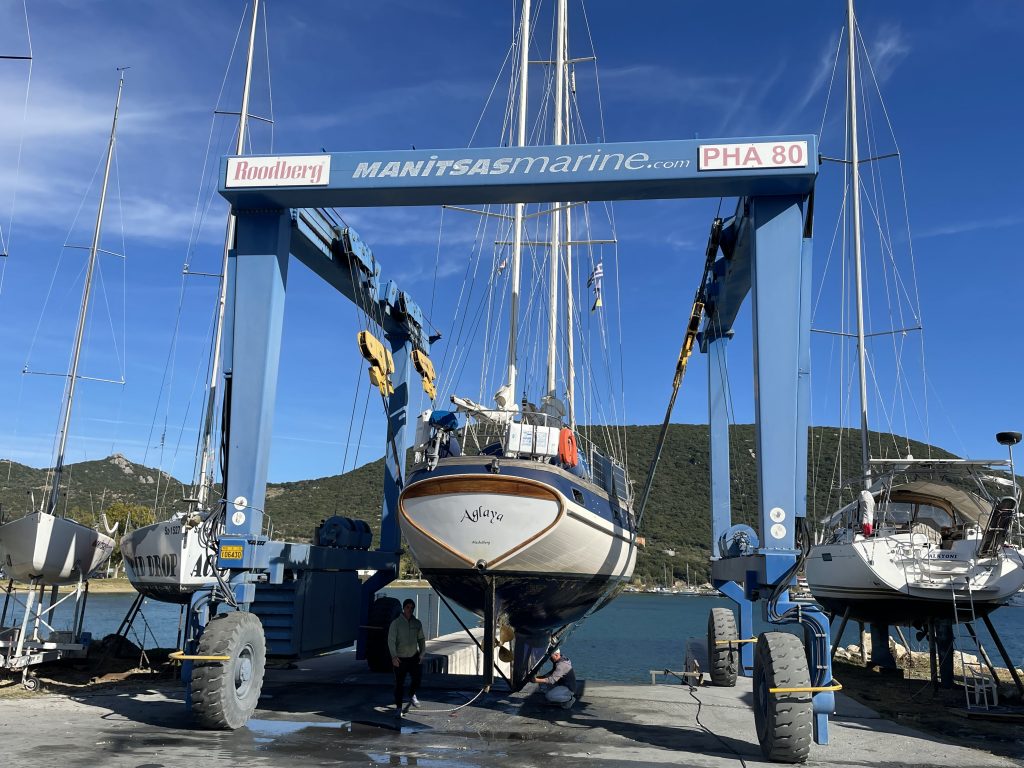
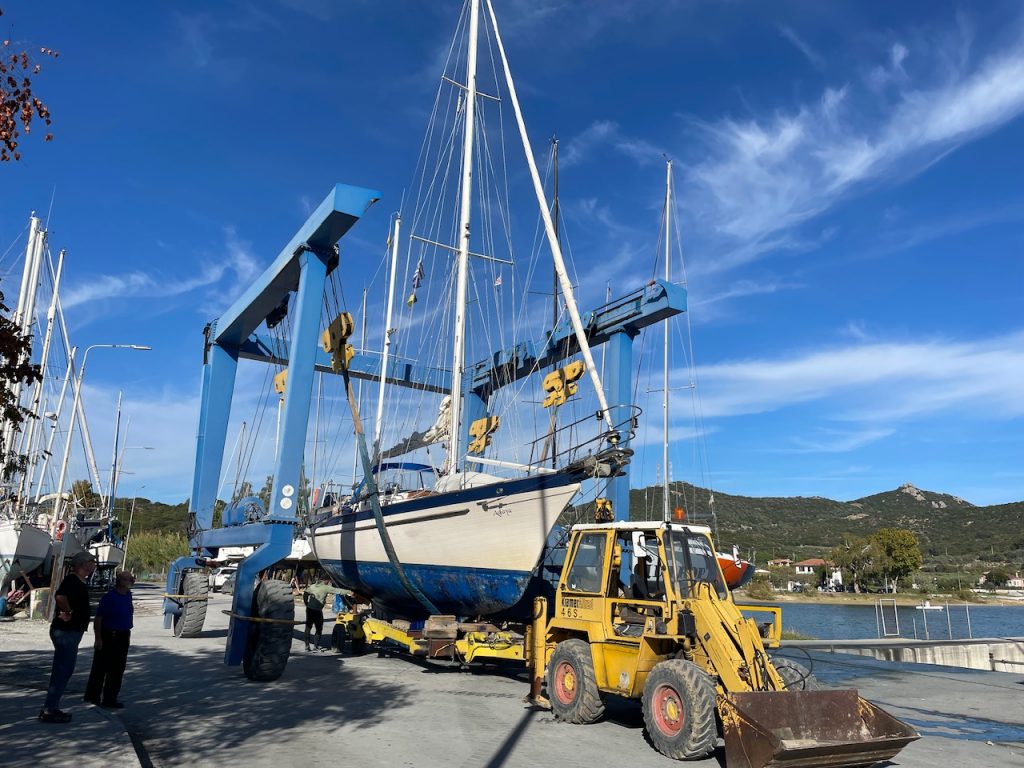
Yesterday, we performed a somewhat challenging manoeuvre in crosswinds and waves to enter the Manitsas Marine slipway in Nera Peramos. It was exciting to see whether we would fit into the travel lift with our two masts. It worked. It wouldn't have been possible to do it forwards because of the large distance between the forestay and the main mast. Our boat is completely different in terms of dimensions from standard charter boats. The Bulgarians who then pulled us out of the water with the travel lift did everything professionally, calmly, but with great attention and care. A photo of our underwater hull was also helpful. This allowed them to position the lifting straps correctly so that they did not rest on the keel and bend it. It was precision work, also when they stabilized the boat on land.
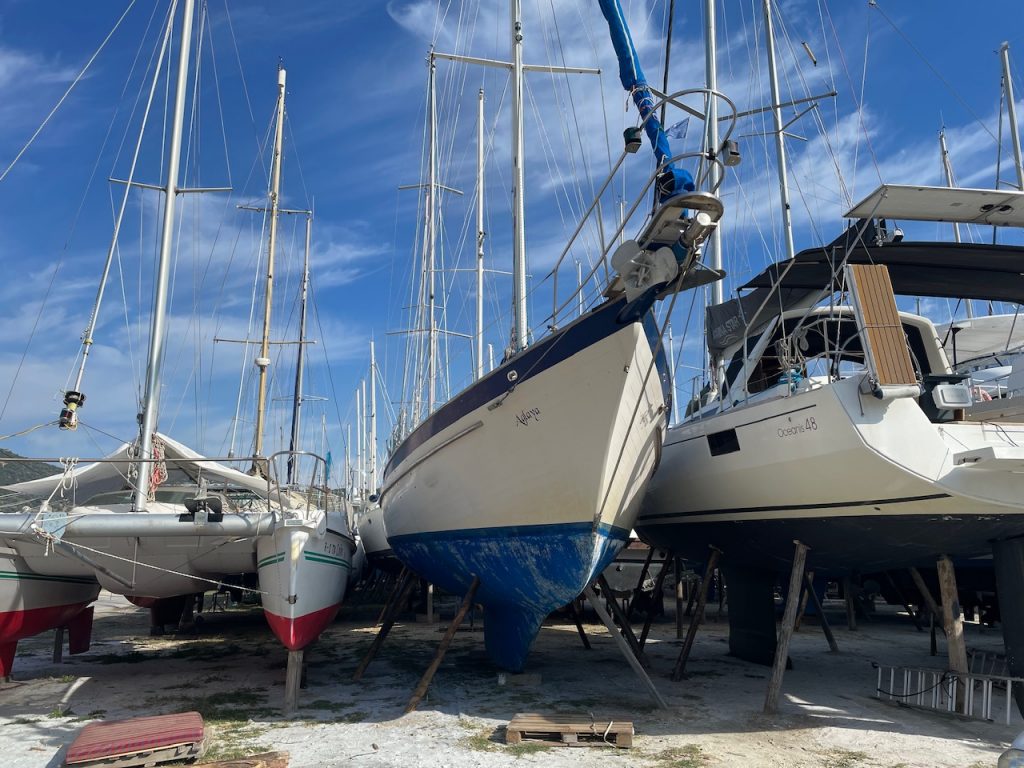
Now Aglaya is parked tightly between many other boats at the Manitsas Marine boatyard. We climb aboard using a long ladder and have to get used to the fact that our boat is no longer rocking, but that we are still ‘rocking’ with it. Our sense of balance is confused. However, we managed to pour the champagne into our glasses without any accidents. Over the next few days, Aglaya will be winterised, and then we will say goodbye to her for the winter break and look forward to being at home.
Gestern sind wir mit einem etwas anspruchsvollen Manöver bei Seitenwind und Welle von der Seite in die Box von Manitsas Marine in Nera Peramos gefahren. Spannend war, ob wir so mit unseren zwei Masten in den Travellift passen. Hat geklappt. Vorwärts wäre das nicht gegangen wegen des großen Abstandes zwischen Vorstag und Großmast. Unser Boot ist halt völlig anders von den Maßen her als die Standard-Charterboote. Die Bulgaren, die uns dann mit dem Travellift aus dem Wasser gezogen haben, haben das alles professionell, entspannt, aber mit viel Aufmerksamkeit und Vorsicht hinbekommen. Hilfreich dafür war auch ein Foto von unserem Unterwasserschiff. So konnten sie die Gurte zum Liften gut platzieren, sodass sie nicht auf der Welle lagen und diese dann verbogen hätten. Präzisionsarbeit, auch dann beim Stabilisieren des Bootes an Land.
Nun steckt Aglaya eng eingeparkt zwischen vielen anderen Booten auf dem Boatyard von Manitsas Marine. Wir klettern mit einer langen Leiter an Bord und müssen uns erst wieder daran gewöhnen, dass unser Boot nicht mehr schaukelt, aber dass es bei uns noch „nachschaukelt“. Der Gleichgewichtssinn ist verwirrt. Wir haben es aber geschafft, den Sekt zum Landgang unfallfrei in die Gläser zu gießen. In den nächsten Tagen steht das Einwintern von Aglaya an und dann verabschieden wir sie in die Winterpause und freuen uns auf zu Hause.