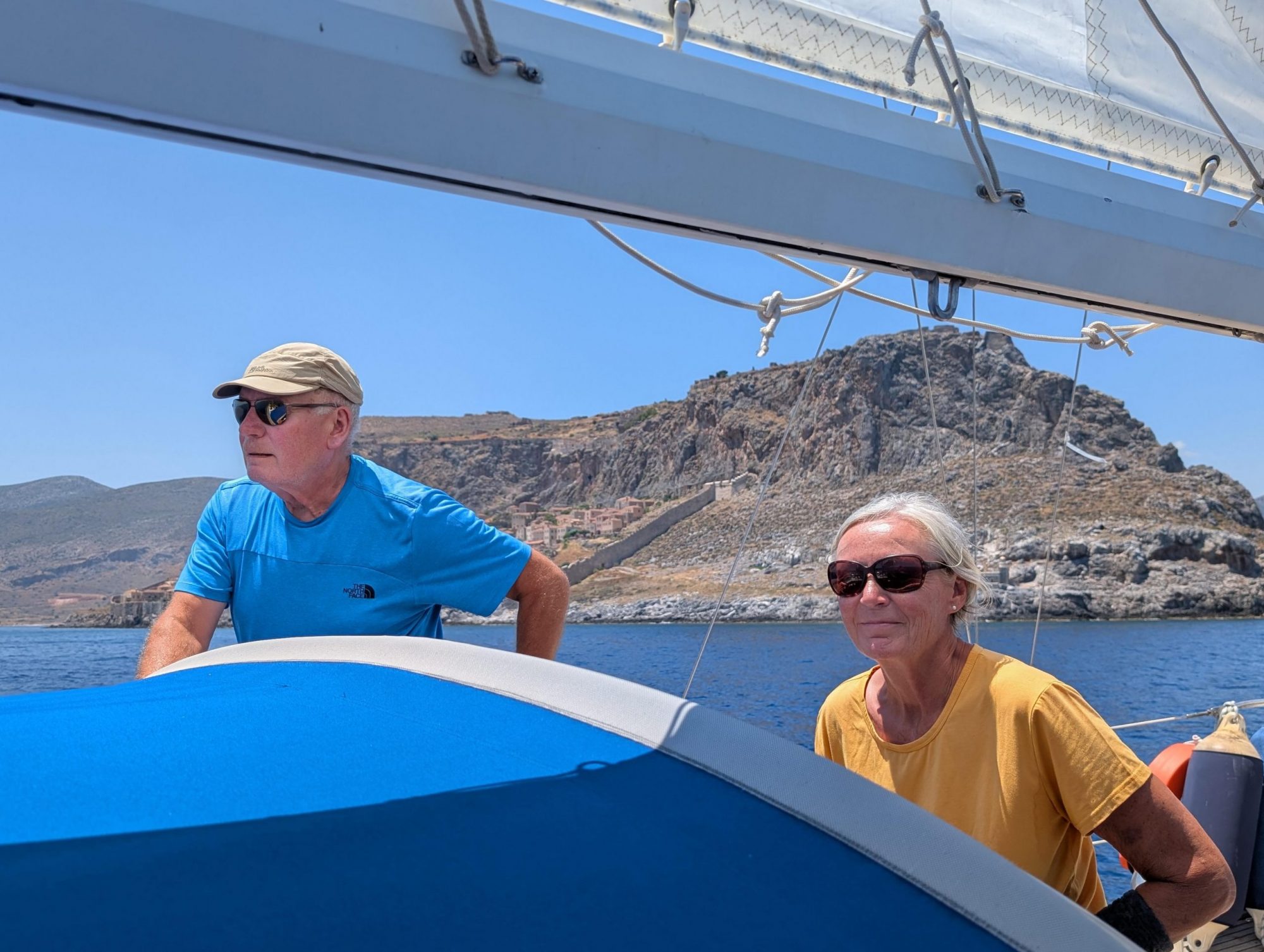
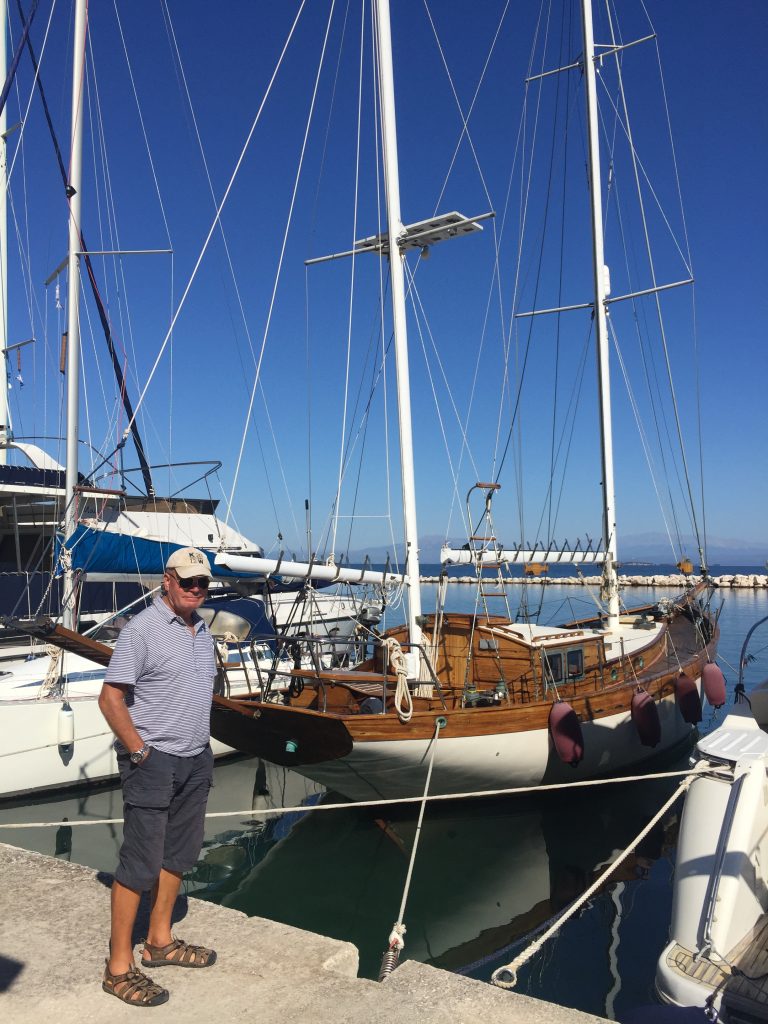
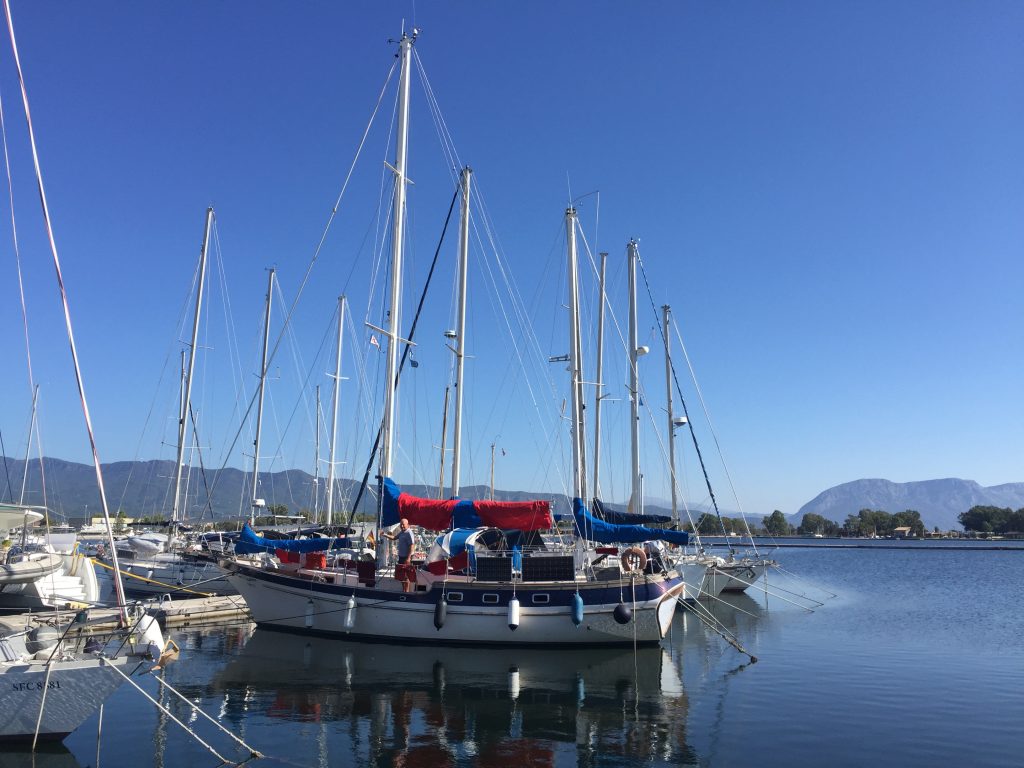
Willkommen! Dies ist die Website von Gisela und Walter Würfel. Hier berichten wir über die Reisen und das Leben auf unserer Segelyacht Aglaya. / Welcome! This is the website of Gisela and Walter Wuerfel. Here we report about the journeys and the life on our sailing yacht Aglaya.
From our current mooring in Messolonghi we see the 916-metre-high Varasova every day - in different weather and light. In the evening at sunset it often shows itself in red - alpenglow.
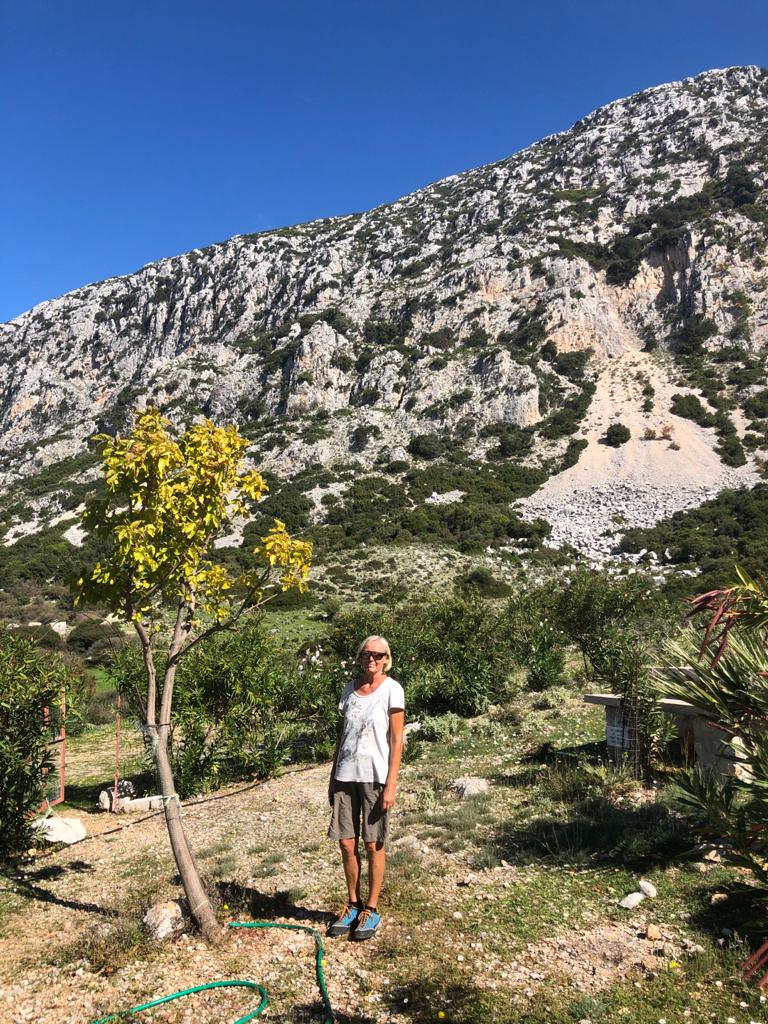
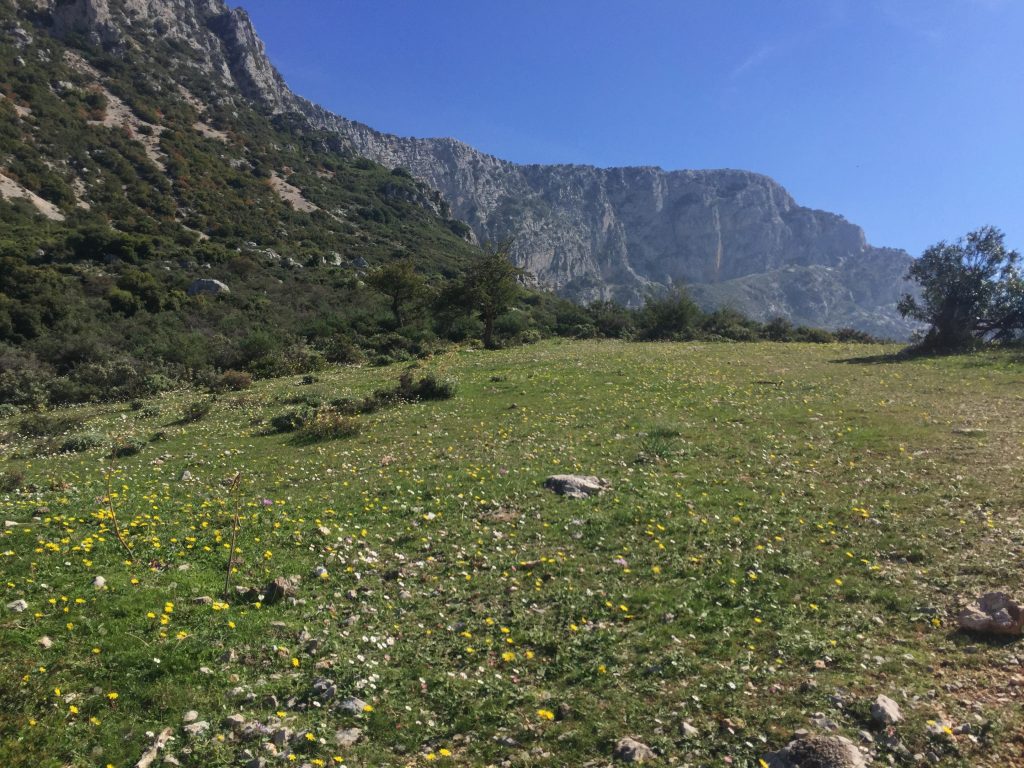
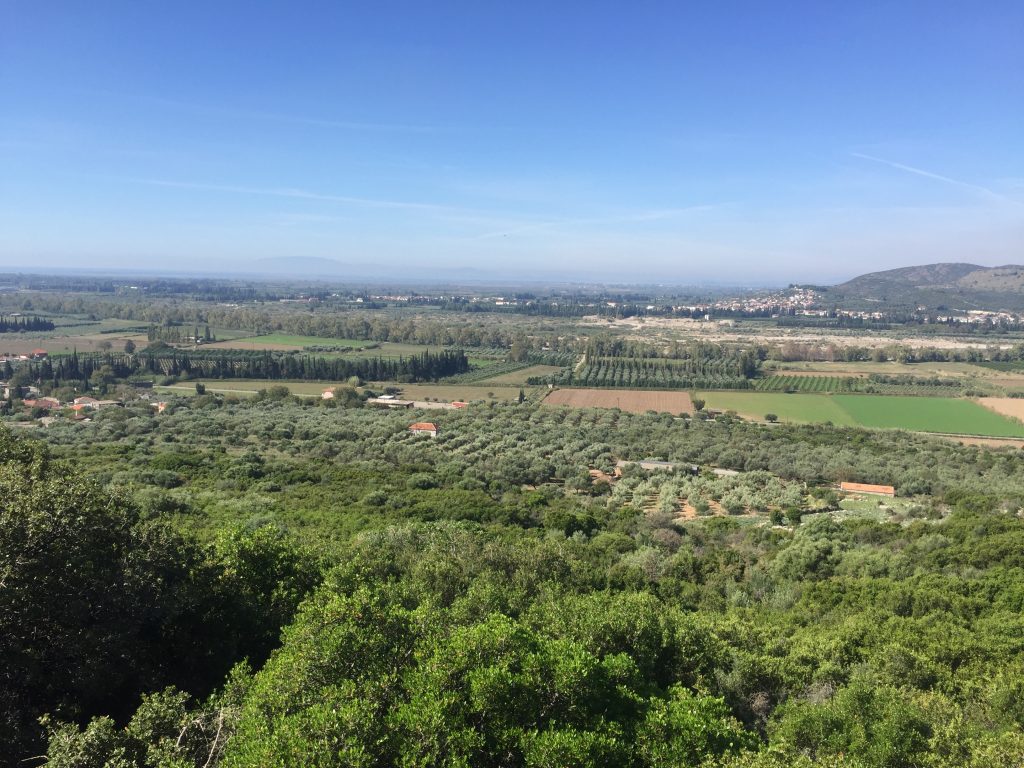
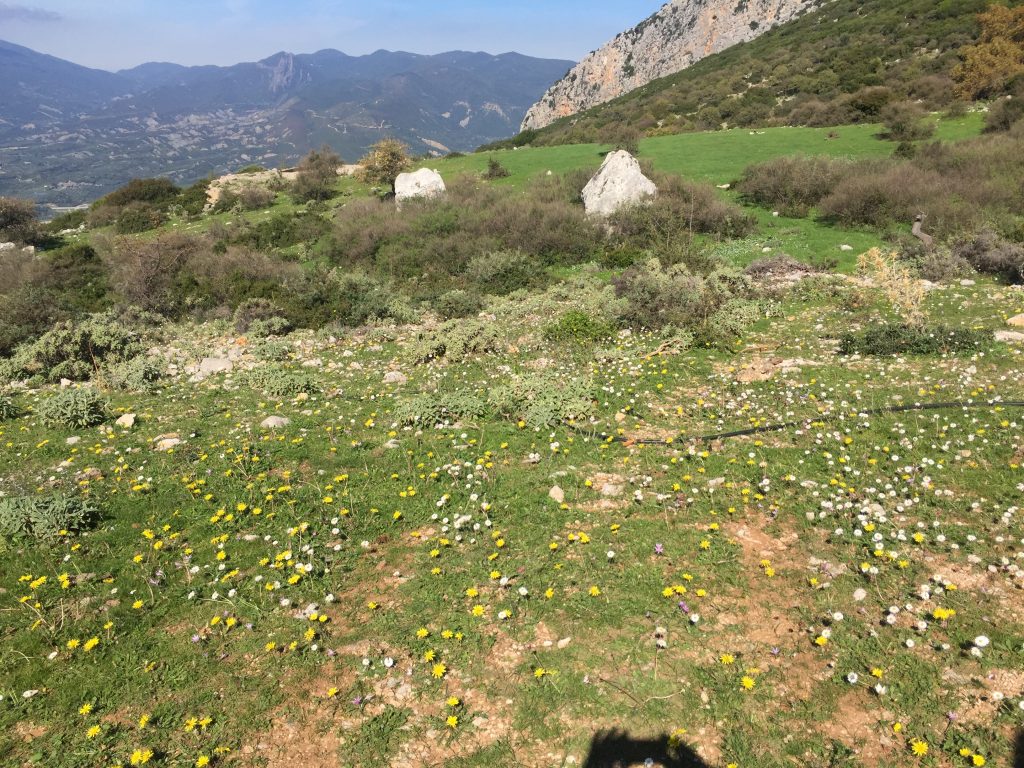
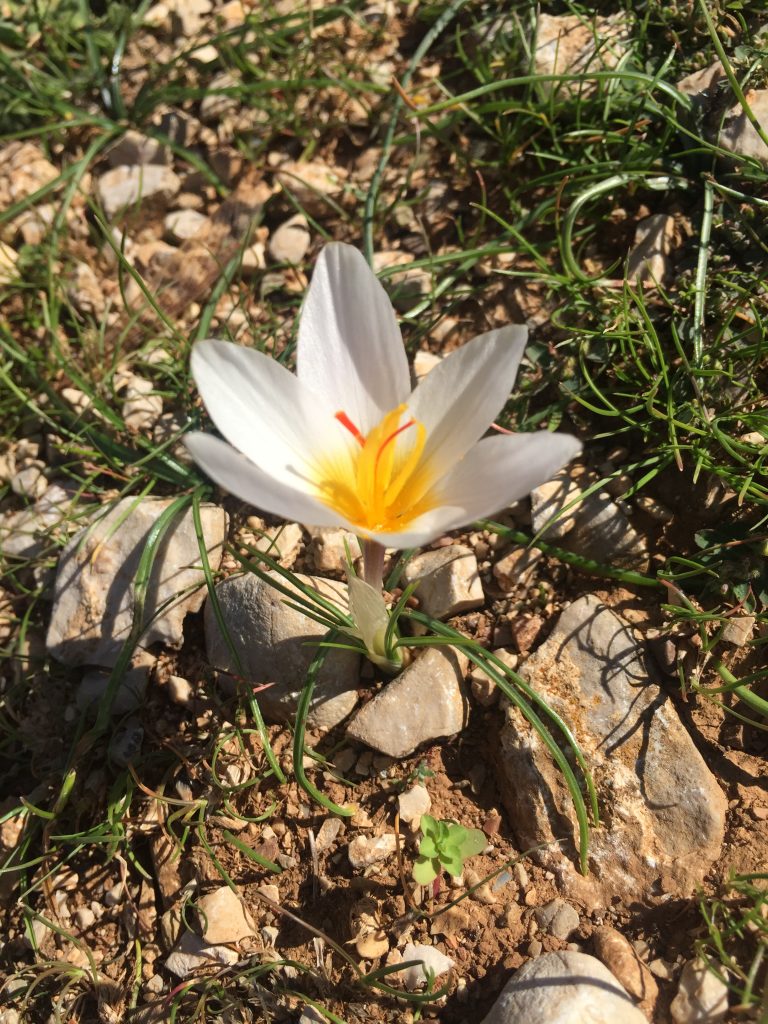
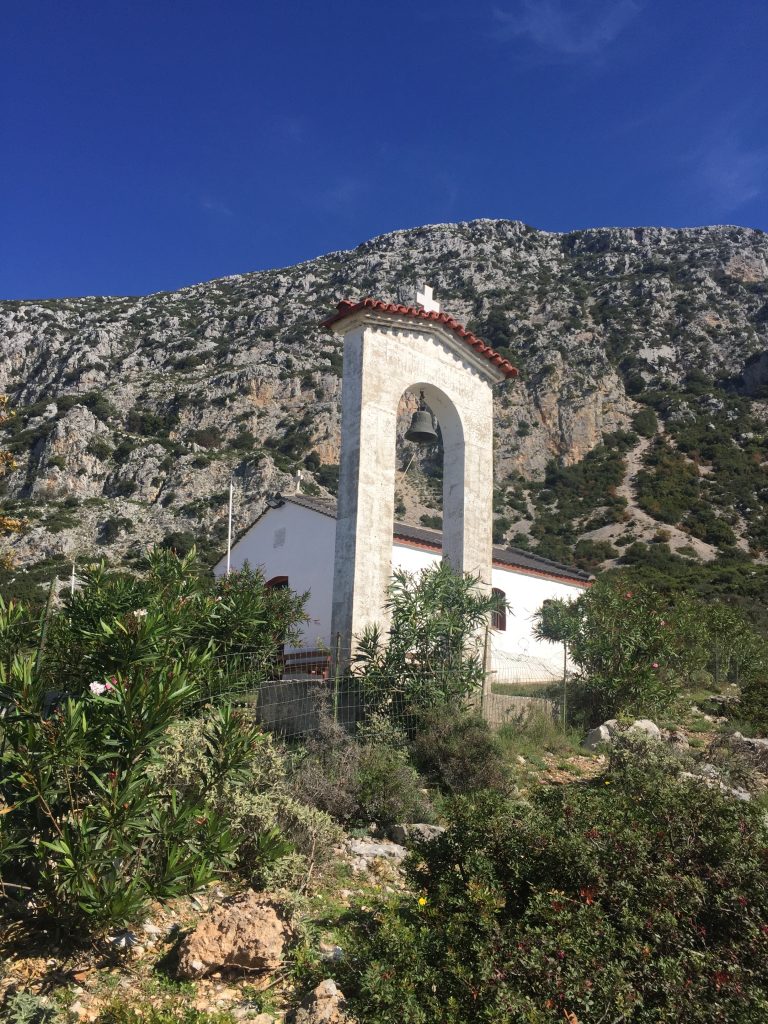
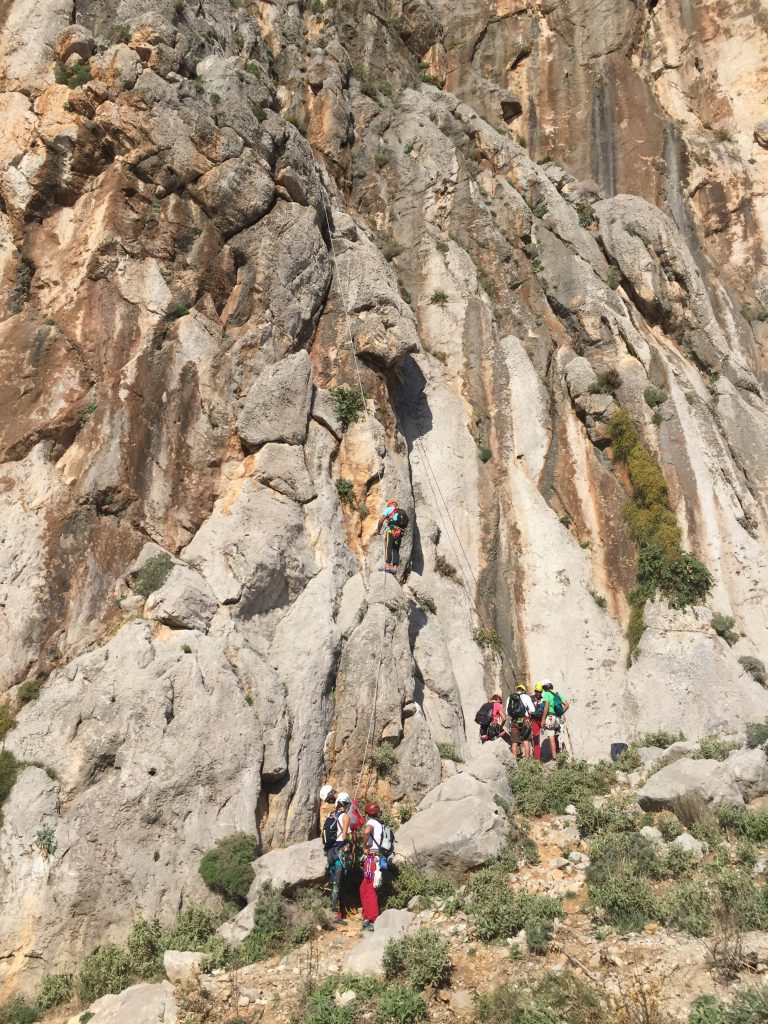
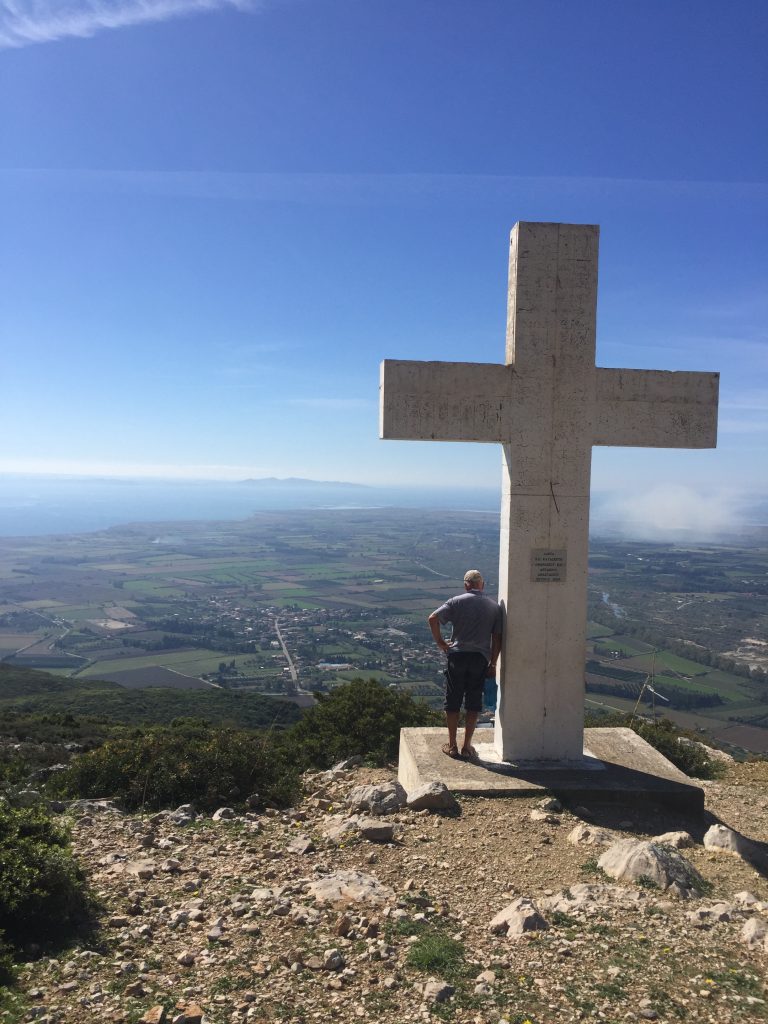
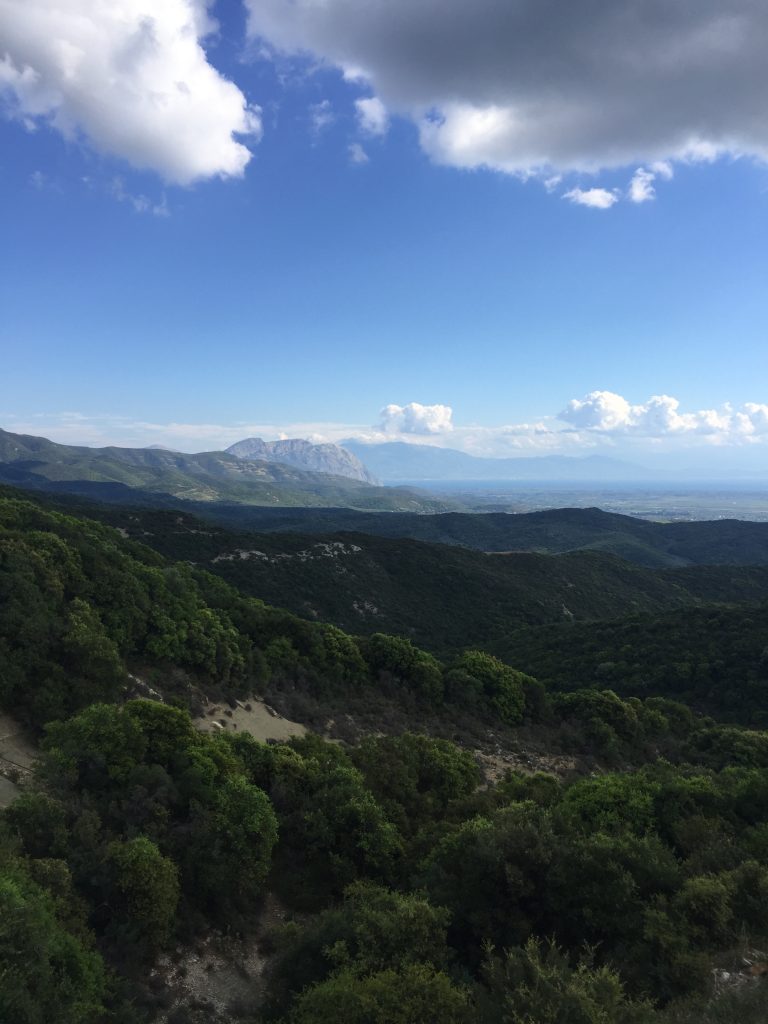
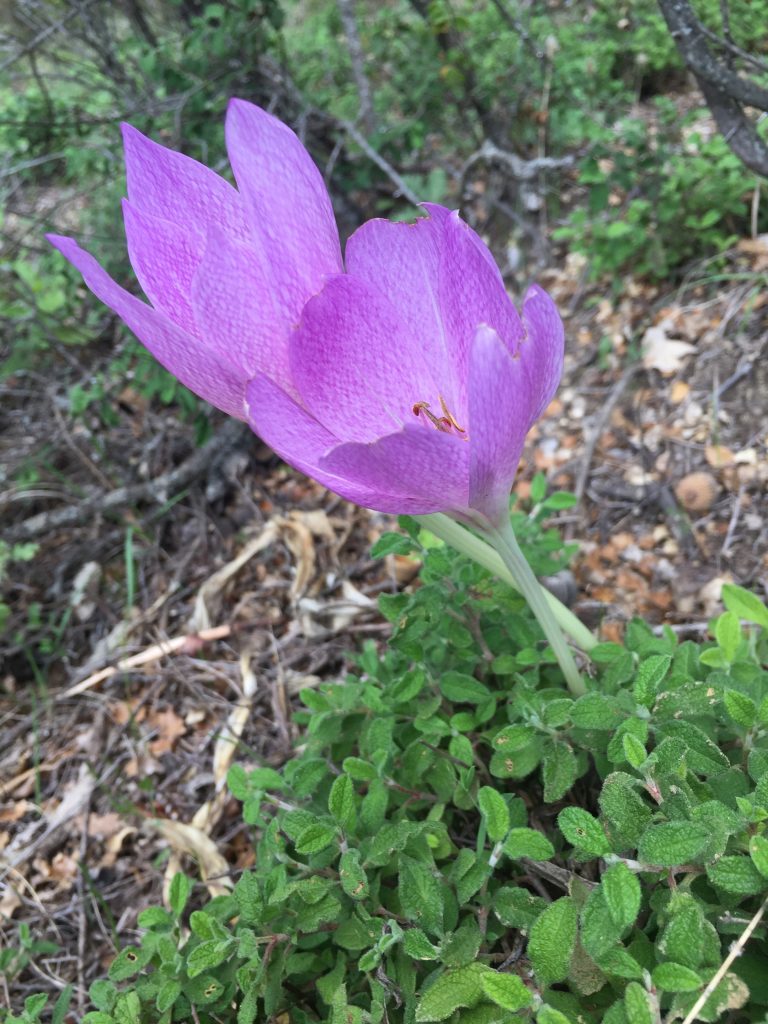
Since we are not only sailors but also enthusiastic mountain hikers, we start from his foot, steeply up 400 meters to about half height. From there on it goes into the steep rock. This is only something for experienced climbers, that we are not. Our destination is a small chapel. From there we have a wide view over the Gulf of Patras and the plain around Messolonghi. Up here we feel a little bit like on an alp in the Allgäu. Everywhere autumn saffron blossoms in violet and white, cyclamen and many other flowers. A sea of flowers, wonderful to look at after the dry summer months. After the descent we enjoyed a cool beer at the foot of the rock in Kryoneri.
Den 916 Meter hohen Varasova sehen wir von unserem derzeitigen Liegeplatz in Messolonghi jeden Tag - bei unterschiedlichem Wetter und Licht. Abends bei Sonnenuntergang zeigt er sich oft in Rot - Alpenglühen also.
Da wir ja nicht nur Segler, sondern auch begeisterte Bergwanderer sind, machen wir uns von seinem Fuß aus auf den Weg, steil hinauf 400 Höhenmeter auf ungefähr halbe Höhe. Ab dort geht es dann in den steilen Fels. Das ist nur etwas für versierte Kletterer. Die sind wir nicht. Unser Ziel ist eine kleine Kapelle. Von dort haben wir einen weiten Blick über den Golf von Patras und die Ebene um Messolonghi. Hier oben fühlen wir uns ein bißchen wie auf einer Alm im Allgäu. Überall blühen Herbstzeitlose in Violett und Weiß, Alpenveilchen und viele andere Blumen. Ein Blumenmeer, wunderschön anzuschauen nach den trockenen Sommermonaten. Nach dem Abstieg haben wir uns dann am Fuß des Felsens in Kryoneri ein kühles Bier gegönnt.
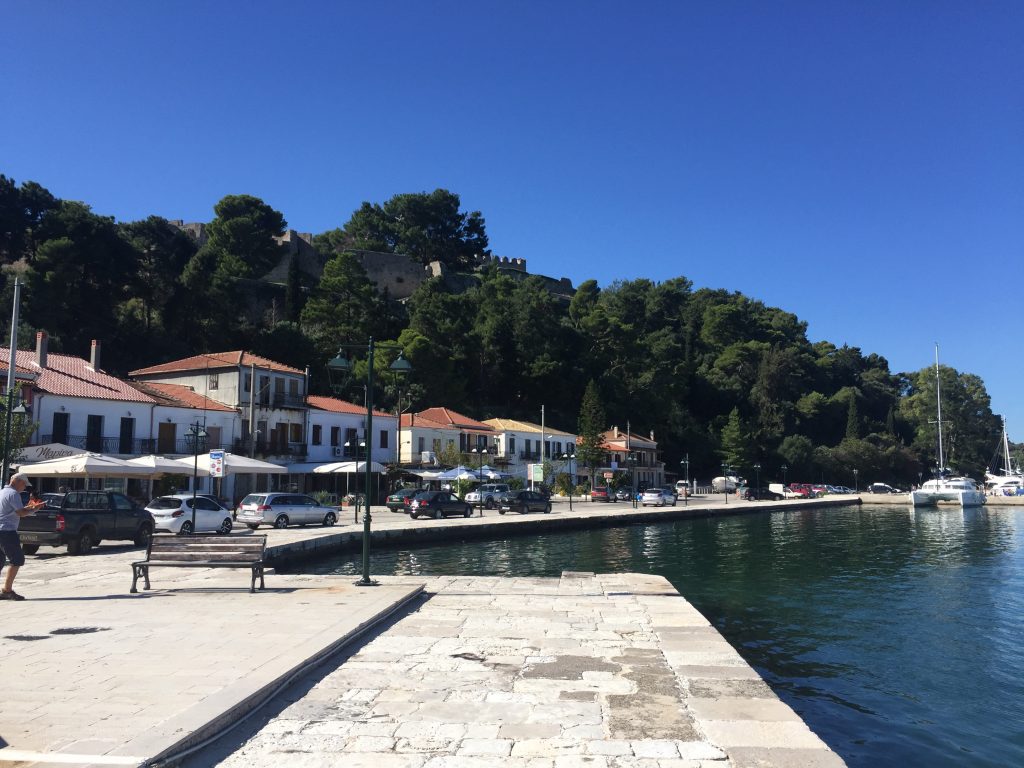
Viele Segler lassen ihr Boot im Winter in den Marinas in Prevezza. Das wollen wir uns mal anschauen und mit einem Besuch beim Segelmacher verbinden, der uns über den Winter eine neue Genua machen wird. Die neue Autobahn nach Lefkada ist noch nicht fertig. Also fahren wir viel Landstraße (mit vielen Schlaglöchern), aber mit herrlichen Ausblicken auf den Ambrakischen Golf. Besonders gut gefallen hat und das kleine Städtchen Vonitsa mit seinem Hafen und der über dem Ort gelegenen Festung.
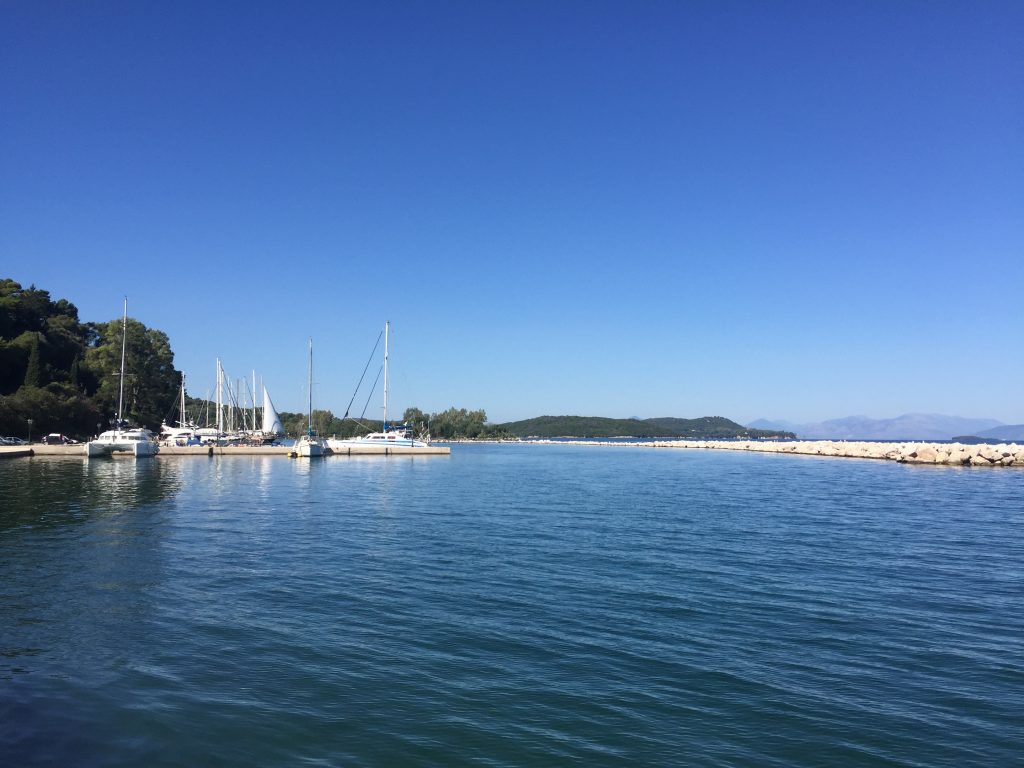
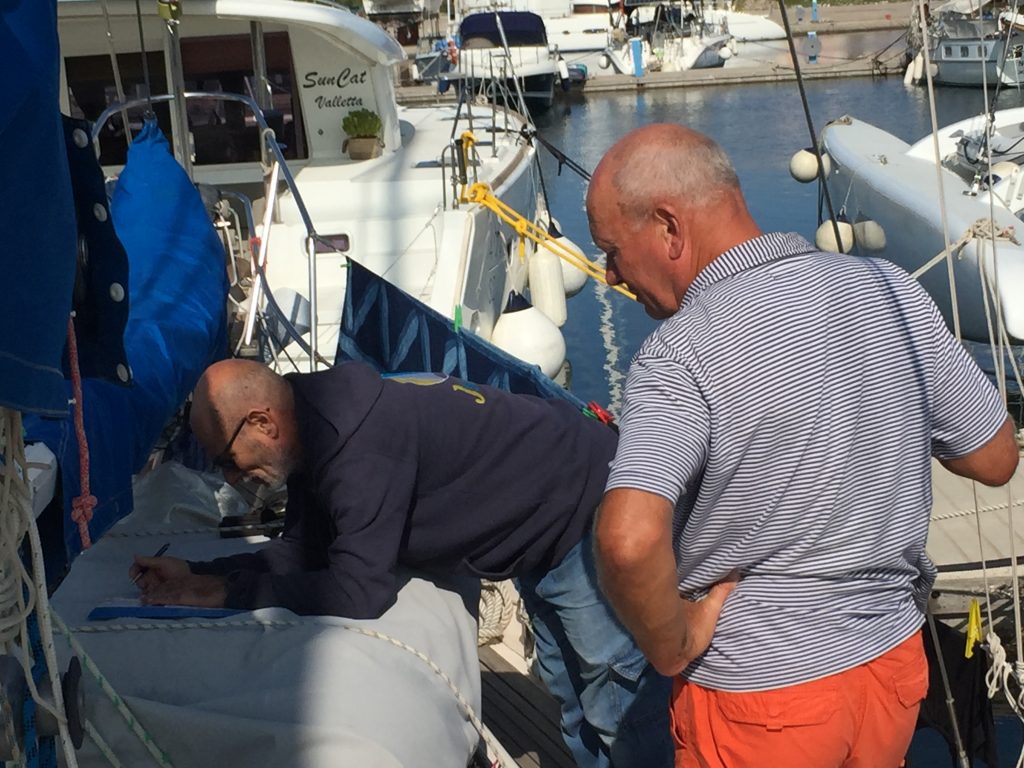
In den Marinas von Prevezza gibt es jeden Service und viele Stellplätze an Land. Im Vergleich zur familiären, idyllischen und ruhigen Marina in Messolonghi, die allerdings zurzeit keine Lizenz für Arbeiten an den Booten hat, ist hier alles groß und eher unpersönlich. Beim Segelmacher lassen wir unsere alte Genua - sozusagen als Vorlage. Aber er ist dann trotzdem noch extra nach Messolonghi gekommen, um unser Boot genau auszumessen. Im Frühjahr wird dann Aglayas Segelkleid komplett neu sein.
Many sailors leave their boats in the marinas in Prevezza in winter. We want to take a look at this and combine it with a visit to the sailmaker, who will make us a new genoa over the winter. The new motorway to Lefkada is not yet finished. So we drive mostly on country roads (with many potholes), but with wonderful views of the Ambracian Gulf. We especially liked the small town of Vonitsa with its harbour and the fortress above.
In the marinas of Prevezza there is every service and many pitches on land. Compared to the familiar, idyllic and quiet marina in Messolonghi, which does not have a licence for work on the boats at the moment, everything here is large and rather impersonal. We leave our old genoa with the sailmaker - as a model, so to speak. But he still came to Messolonghi especially to measure our boat exactly. In spring Aglaya's sailing dress will be completely new.
The land behind the lagoons of Messolonghi is wild. A rugged, steep, partly karstified, partly volcanic mountain range with immense rockfalls, vertical cliffs and gorges. We drove to Kato Retsina, a tiny village on a rocky ridge above Messolonghi (see also 'Interesting facts'). Already here you have a tremendous view of the plain, the lagoons and the sea, of course also of the Varasova mountains opposite Patras. We have already been here, because Anatoli has a restaurant here, right on the edge, with this incredible view.
This time our marina neighbours Tony and Pat told us about a Wanderflugs round Trip, so we drove from Kato Retsina even further up into the mountains, with wild gorges and often distant views of the sea, the southernmost Ionian islands of Kefallonia and Zakynthos. The roads were narrow and not in good condition, but that was just a foretaste.
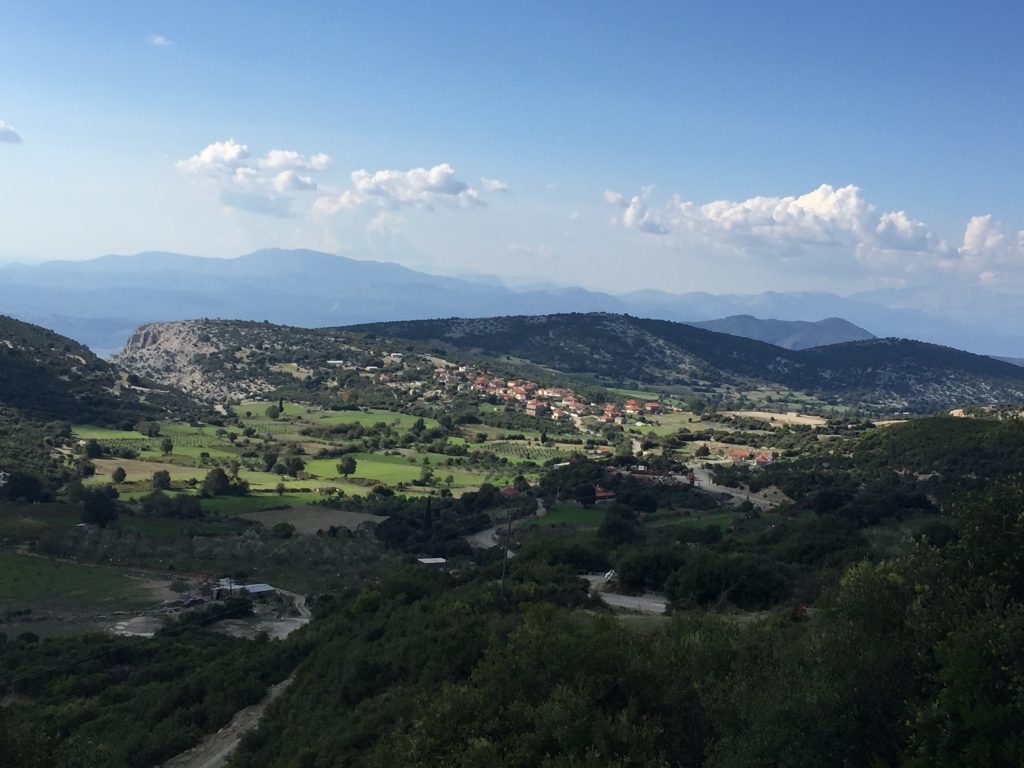
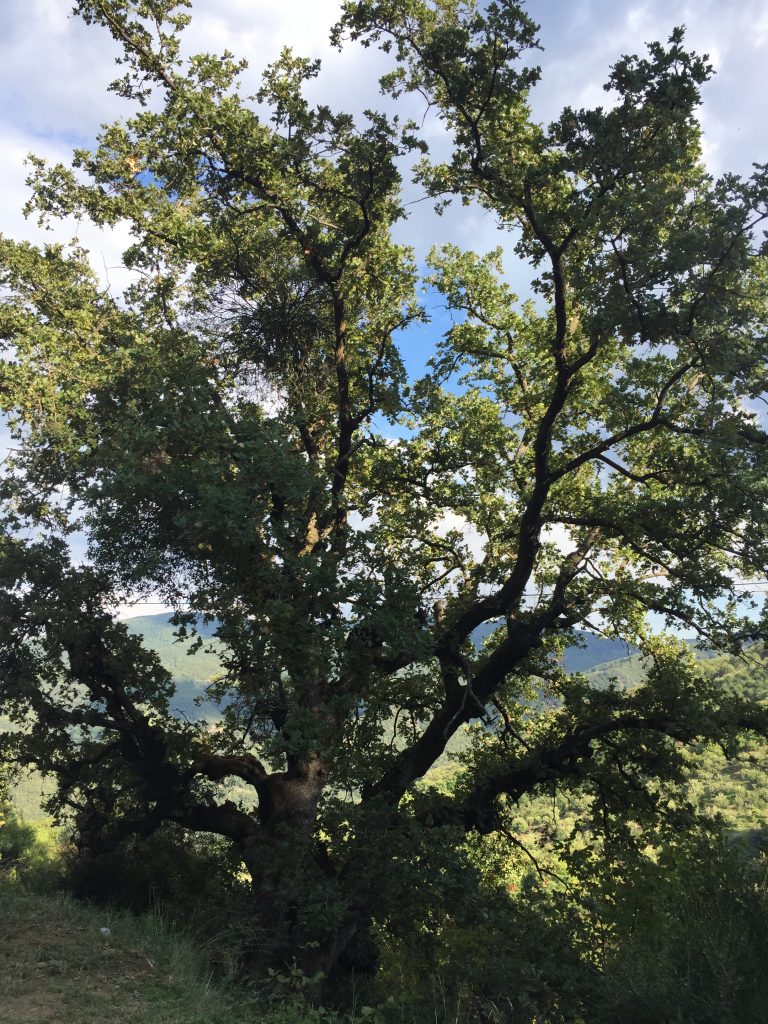
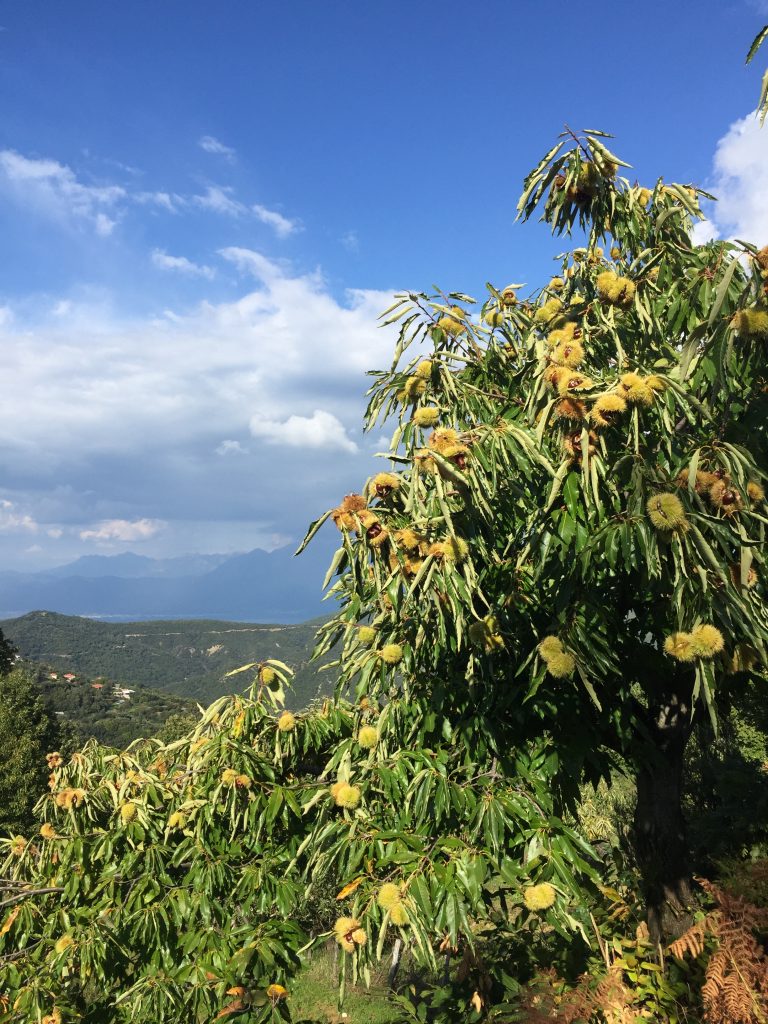
Beyond the top of the pass a huge green valley opened up, bordered by steep green slopes, one feels reminded of Ticino or Piedmont., with old oak treues an früher down chestnut trees. Small villages, goats crawling up the slopes, and the roads getting narrower and narrower. Sometimes the curves right next to the road go down vertically, several hundred metres deep, you almost get dizzy while driving. Of course, the signs are not always very clear, so we turned around several times, because we had serious doubts whether we we were on the right way at all.
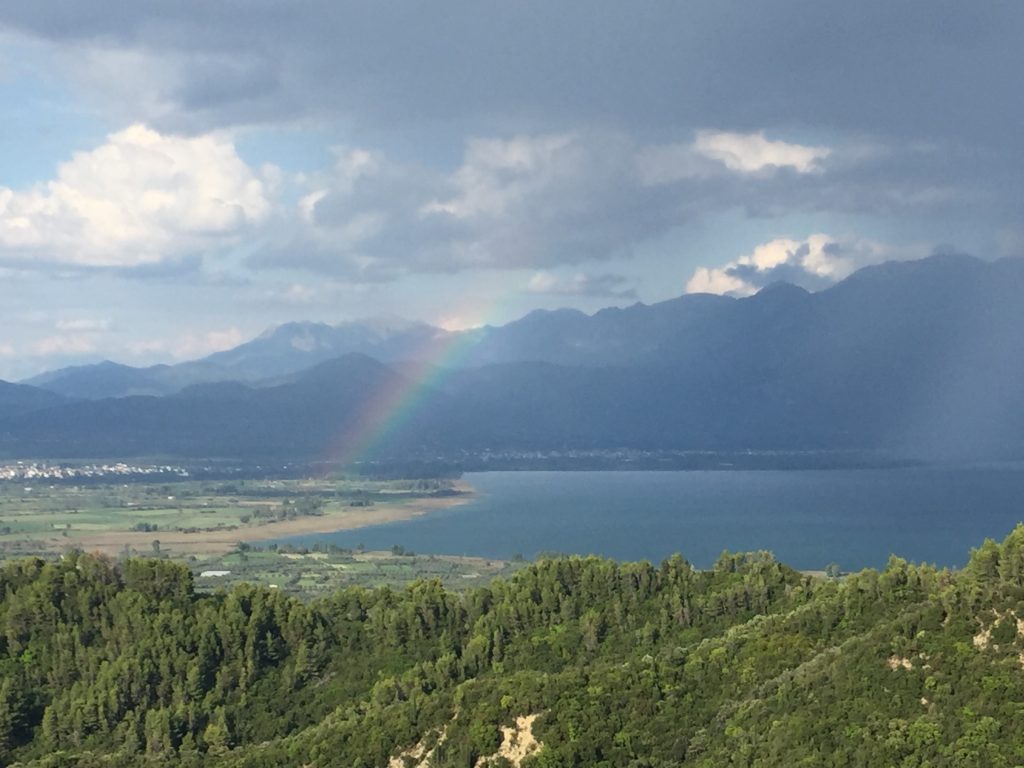
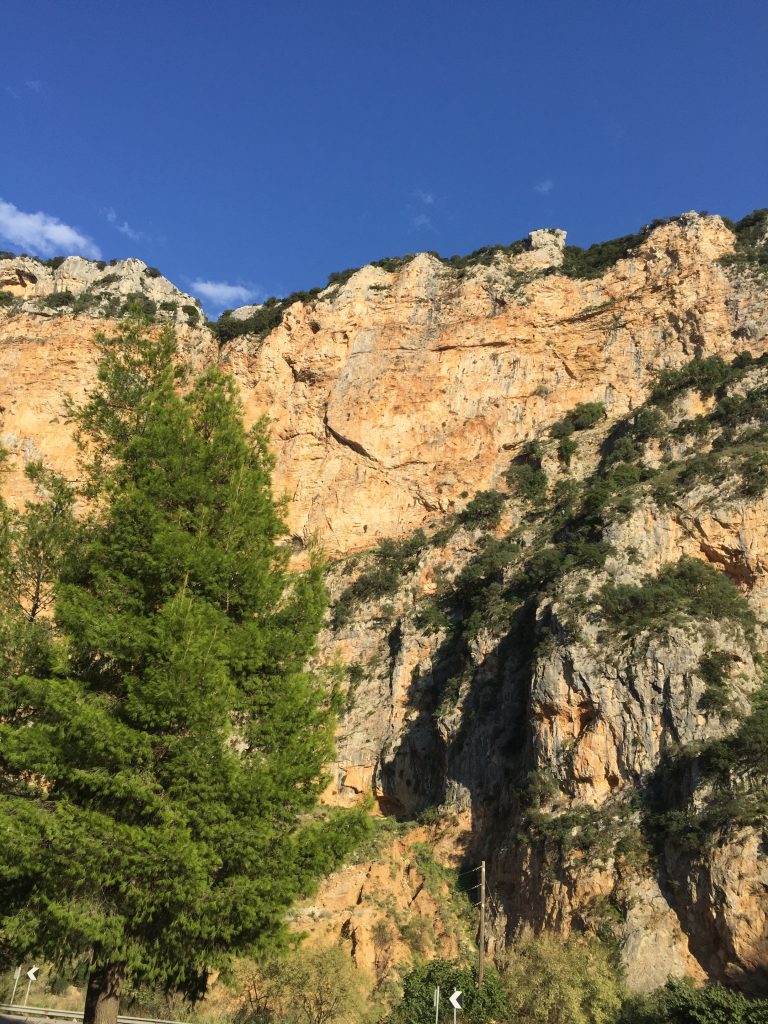
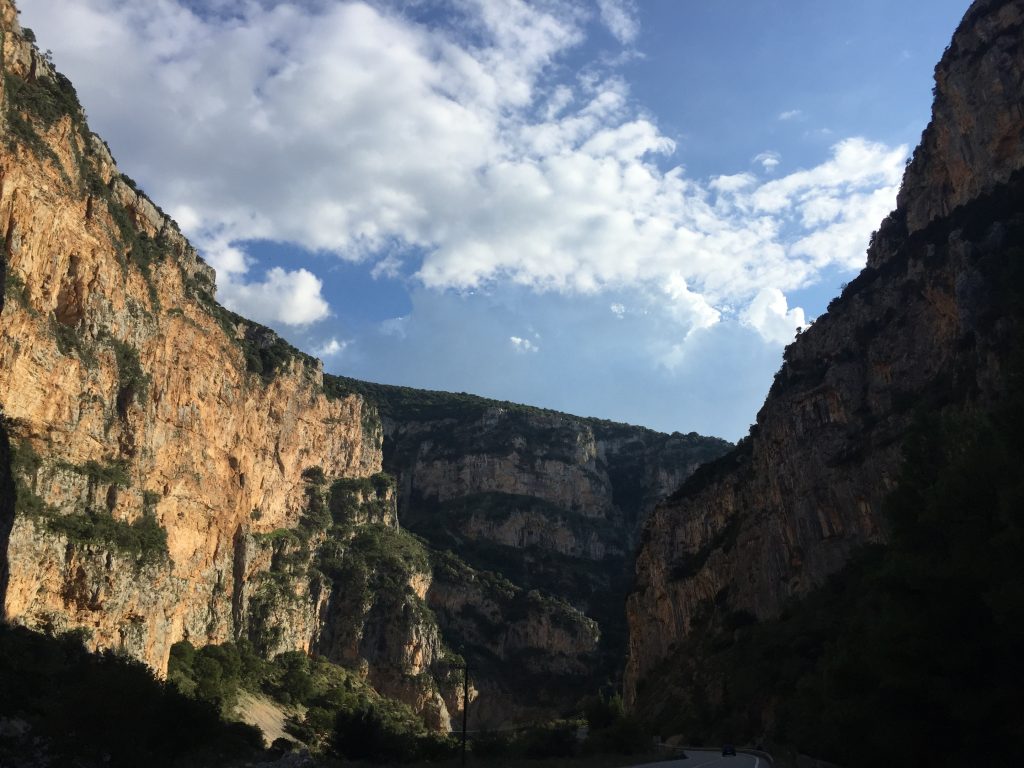
To the wide plain with two inland lakes below us we spiralled down in wild serpentines. But this was not the end of the spectacular landscape: After we reached the bottom, we headed southwest again, into a gorge. Redish-white vertical cliffs bordered the road that led through the gorge, which really puts the landscapes of the Karl May films in the shade. We often stopped to take pictures, also because the evening sun created a wonderful strong reddish light.
Das Land hinter den Lagunen von Messolonghi ist wild. Ein schroffes, steiles, teils verkarstetes, teils vulkanisches Gebirge mit ungeheuren Felsabstürzen, senkrechten Felswänden und Schluchten. Wir sind nach Kato Retsina gefahren, einem winzigen Dorf auf einer Felskante oberhalb von Messolonghi (siehe auch „Wissenswertes“). Schon hier hat man einen gewaltigen Blick auf die Ebene, die Lagune und das Meer, natürlich auch auf das Varasova-Gebirge gegenüber von Patras. Hier waren wir schon, denn Anatoli hat hier, genau an der Kante, ein Restaurant mit diesem unglaublichen Blick.
Diesmal hatten wir einen Tipp von unseren Marina-Nachbarn Tony und Pat. Wir fuhren also von Kato Retsina noch weiter hinauf ins Gebirge, mit wilden Schluchten und oft Fernblick aufs Meer, auf die südlichsten ionischen Inseln Kefallonia und Zakynthos. Die Straßen schmal und in keinem guten Zustand, aber das war erst ein Vorgeschmack.
Jenseits der Passhöhe öffnete sich ein riesiges grünes Tal, begrenzt von steilen grünen Hängen, man fühlt sich ans Tessin oder ans Piemont erinnert, mit uralten Eichen und weiter unten Esskastanien (Käschte, wie der Pfälzer sagt). Kleine Dörfer, Ziegen, die die Hänge hinaufkraxeln, und die Straßen immer schmaler. Manchmal geht es in den Kurven direkt neben der Straße senkrecht nach unten, mehrere hundert Meter tief, es wird einem beim Fahren fast schwindlig. Die Beschilderung natürlich auch nicht immer so besonders eindeutig, so dass wir mehrmals umdrehten, weil wir ernsthafte Zweifel hatten, ob wir überhaupt noch weiterkommen.
Zu der weiten Ebene mit zwei Binnenseen unter uns schraubten wir uns in wilden Serpentinen hinunter. Damit war die spektakuläre Landschaft aber noch nicht zu Ende: Unten angekommen, ging es nach wenigen Kilometern, wieder Richtung Südwesten, in eine Schlucht. Rötlich-weiße senkrechte Felswände begrenzten die Straße, die durch die Schlucht führte, die die Landschaften der Karl-May-Filme wirklich in den Schatten stellt. Wir hielten oft, um zu fotografieren, auch weil die Abendsonne ein wunderbares kräftiges rötliche Licht bewirkte.
Plötzlich waren wir aus der Schlucht heraus und wieder in der Ebene, vorbei an den Lagunen mit den Pelikanen und den Flamingos, zurück nach Messolonghi. Das Festland ist ein ebenso unglaublich schroffes, wildes und zerklüftetes Land wie der Peloponnes - faszinierend.
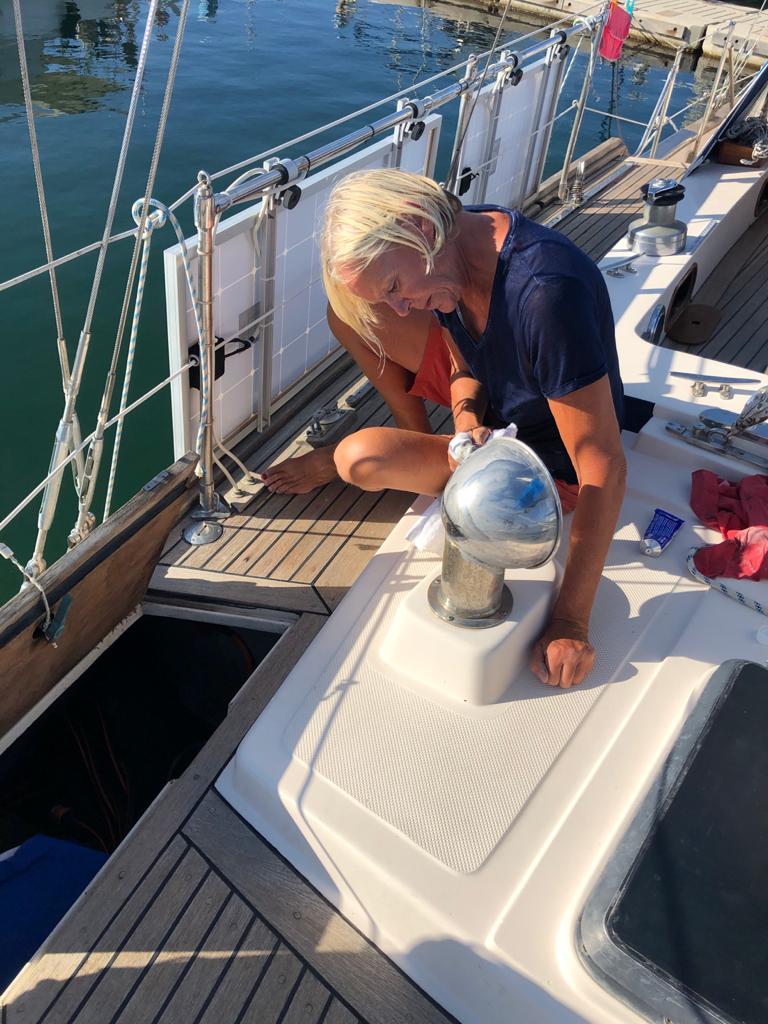
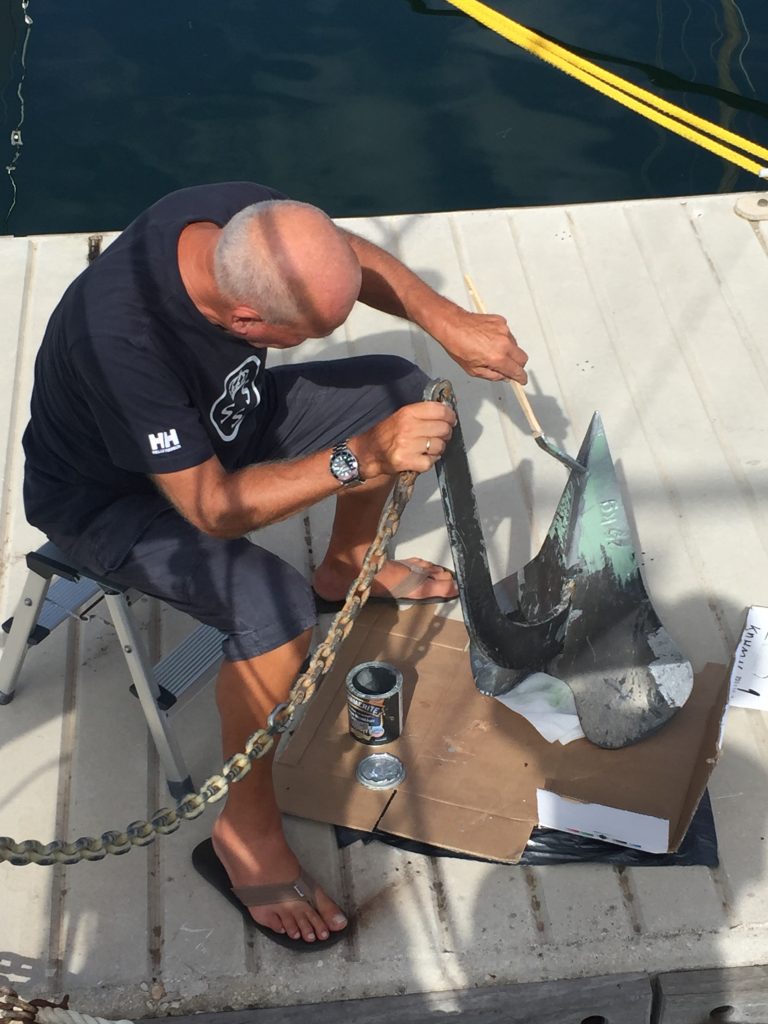
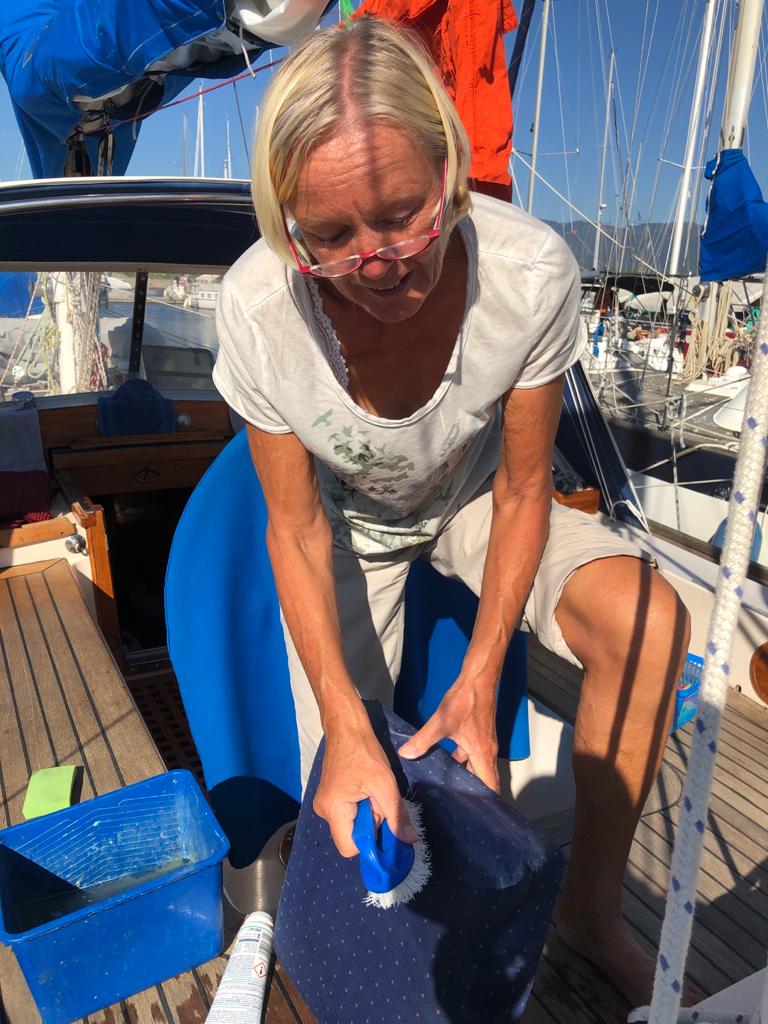
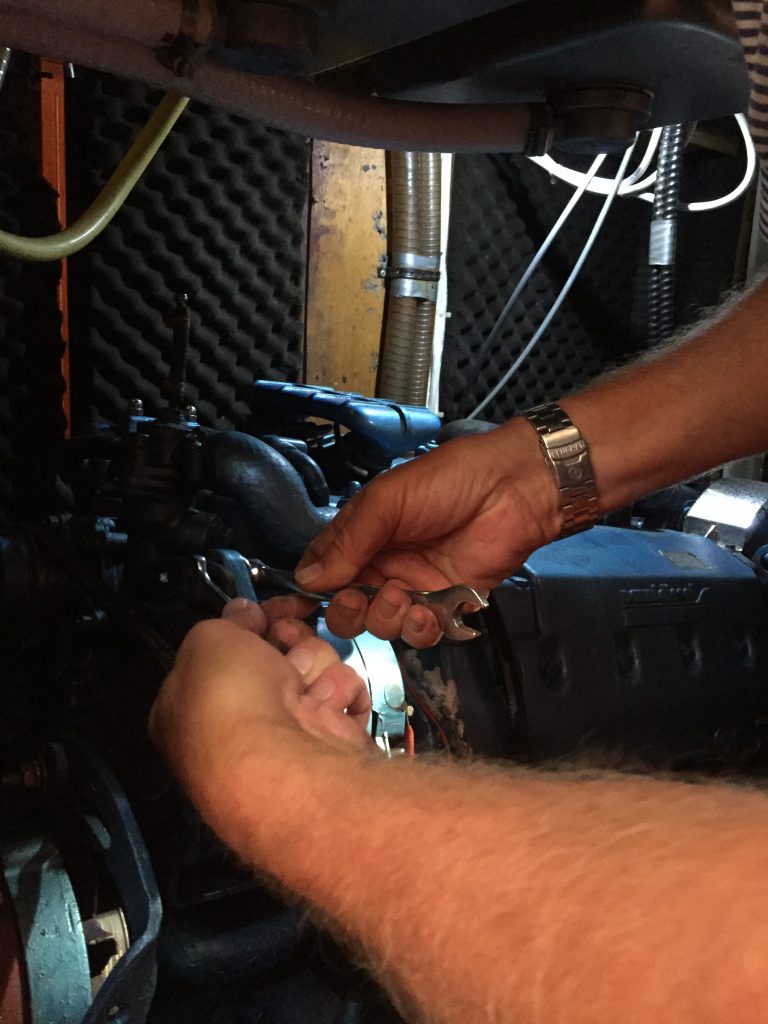
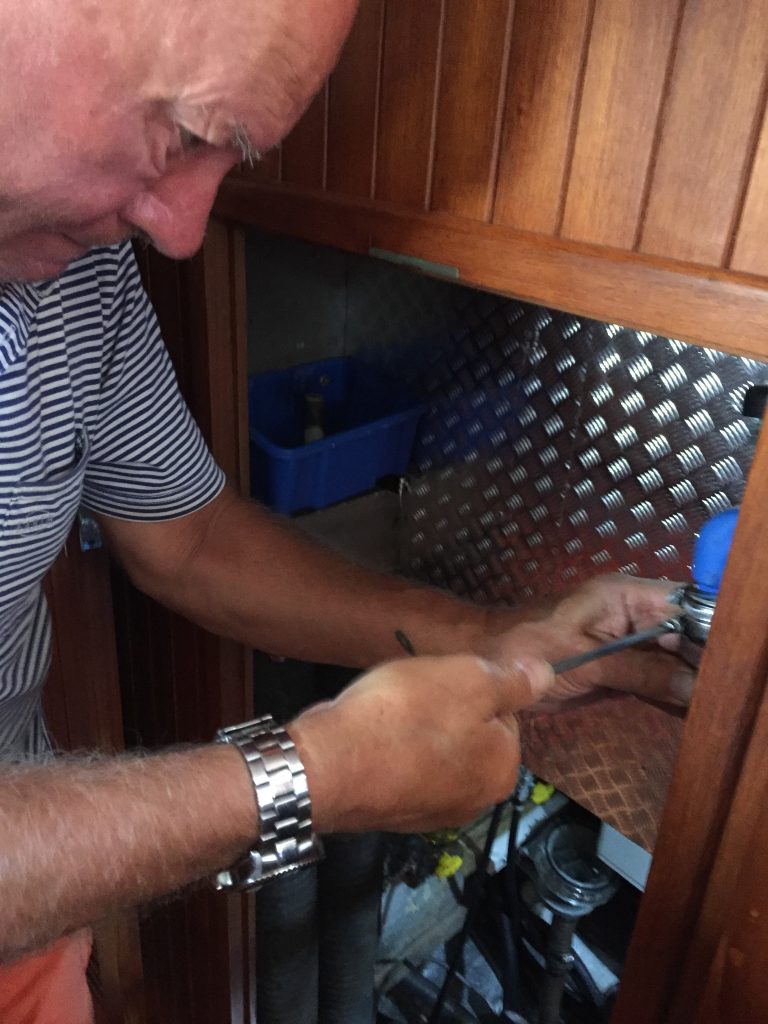
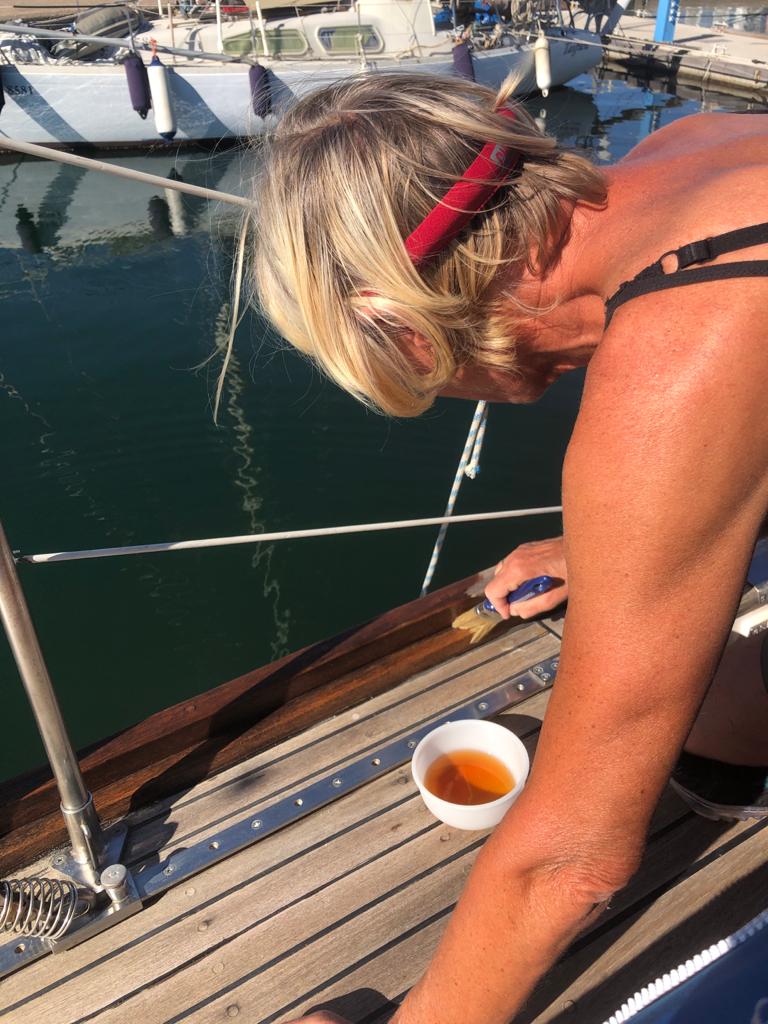
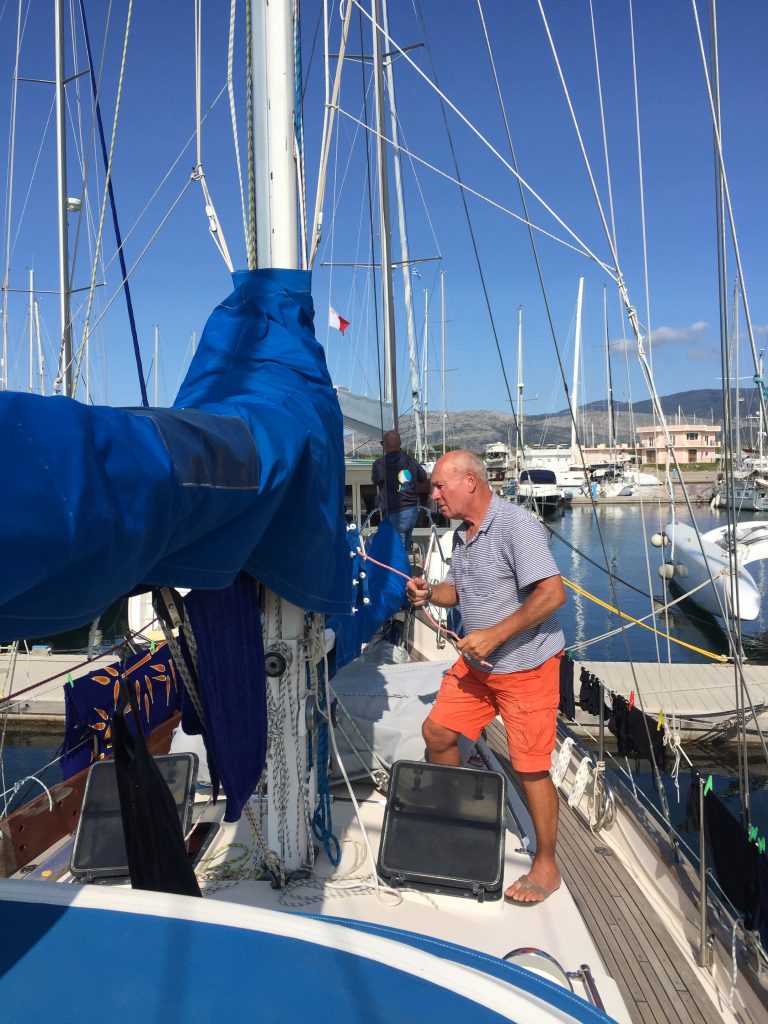
After a sailing season there is a lot to do to make sure that the boat with everything on and in it is well looked after and maintained for the winter break. The sails are well packed. On deck all metal parts are cleaned and polished. The wood also needs care. However, we save the oiling of the teak deck for spring. The anchor has probably scraped rocks from time to time. So its tip is rusty and has to be sanded down, reprimed and painted. Dirt and dark stains are removed from the hull. Everything is checked for small damages and the functionality. Especially the engine needs attention. The two diesel tanks should be almost full and a remedy against diesel plague should be filled in. Oil filter and oil are changed and the V-belts are tensioned. A small leak in the cooling water system must be sealed. John, the sailmaker, comes from Prevezza to take the necessary measurements for a new headsail. And a bigger washing action is due. Luckily, even in the second half of October the sun often shines so intensively that everything dries within a few hours. It's a bit like a big cleaning action at home. You sit there afterwards with a glass of wine and are happy about your shiny home.