Springe zum Inhalt

The exit from the port of Lygia worked well, we passed smoothly through the rocks. Along the mainland coast we headed south for 15 miles until we entered the narrow buoyed fairway to Preveza, once again without wind, motoring along endless sandy beaches, past Mytikas with its impossibly tiny fishing harbour. Past Preveza with its three huge marinas, where about 2000 boats are moored, in the water and on land, the centre of the charter bases in the Ionian Sea. 

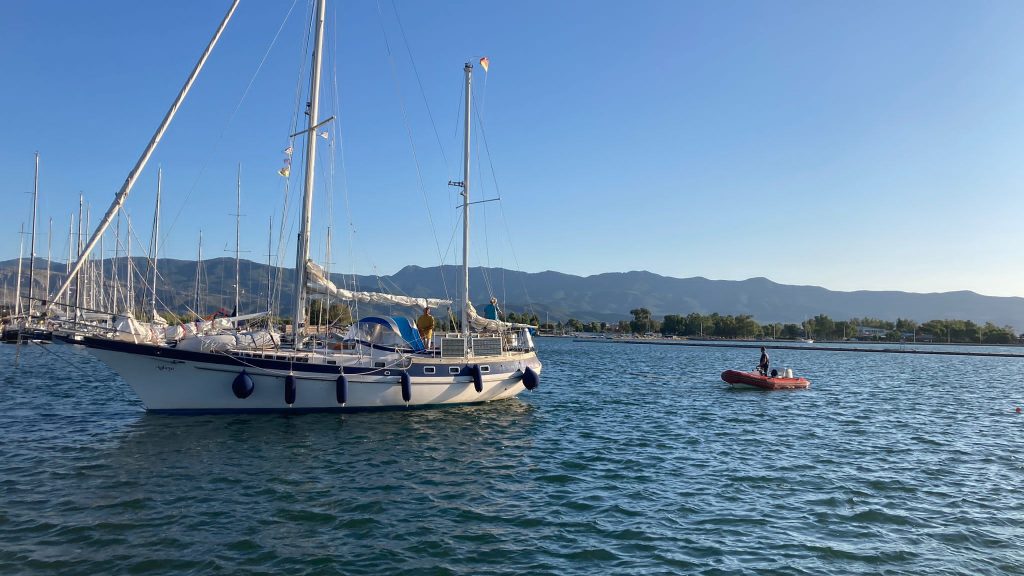
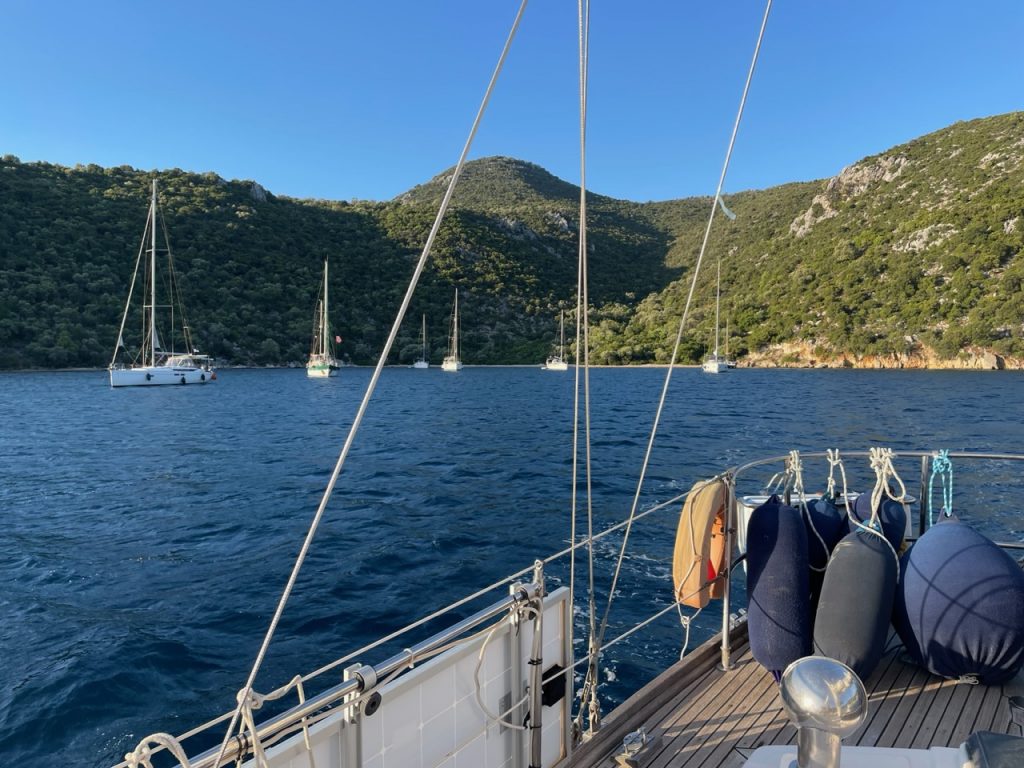
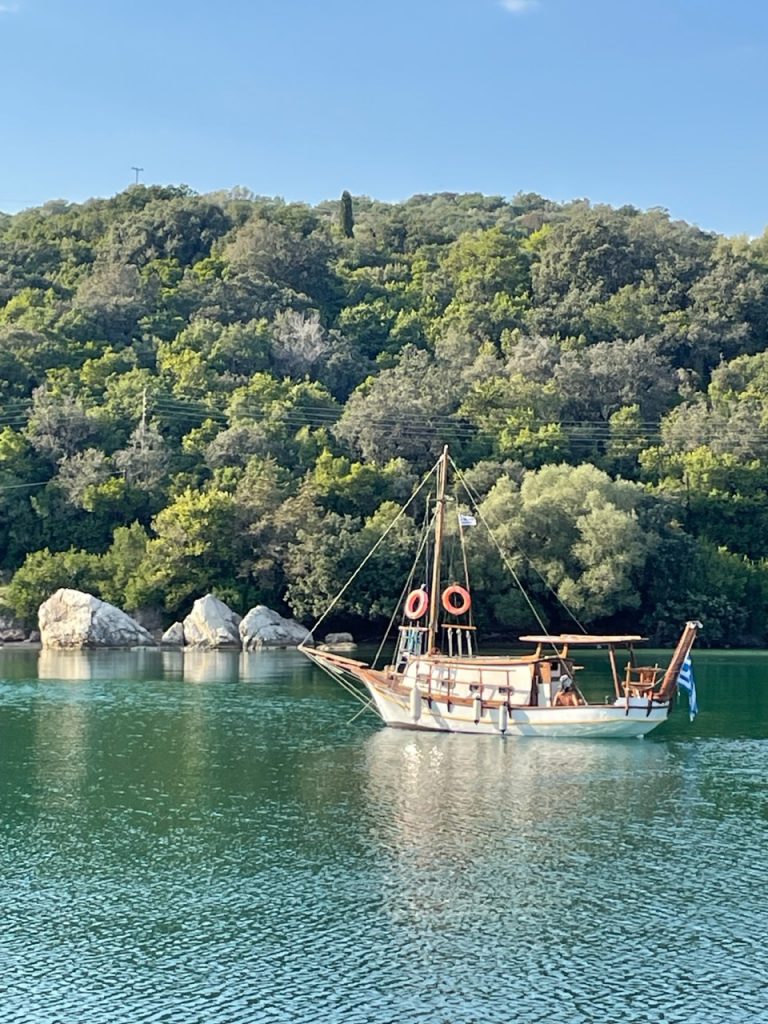
In Preveza we headed east into the Ambracian Gulf, a shallow water area with a great abundance of fish, also a migration area for countless birds on their way south - or north. Along the re-buoyed fairway between fish farms into the bay of Vonitsa, a beautiful little town that we had already explored by car. Two bays before Vonitsa we dropped anchor - idyllic with woods all the way to the shore, a single boat except for us, everything completely quiet - post-season. The little wind also fell asleep, so we were able to spend a cosy evening and a quiet night.
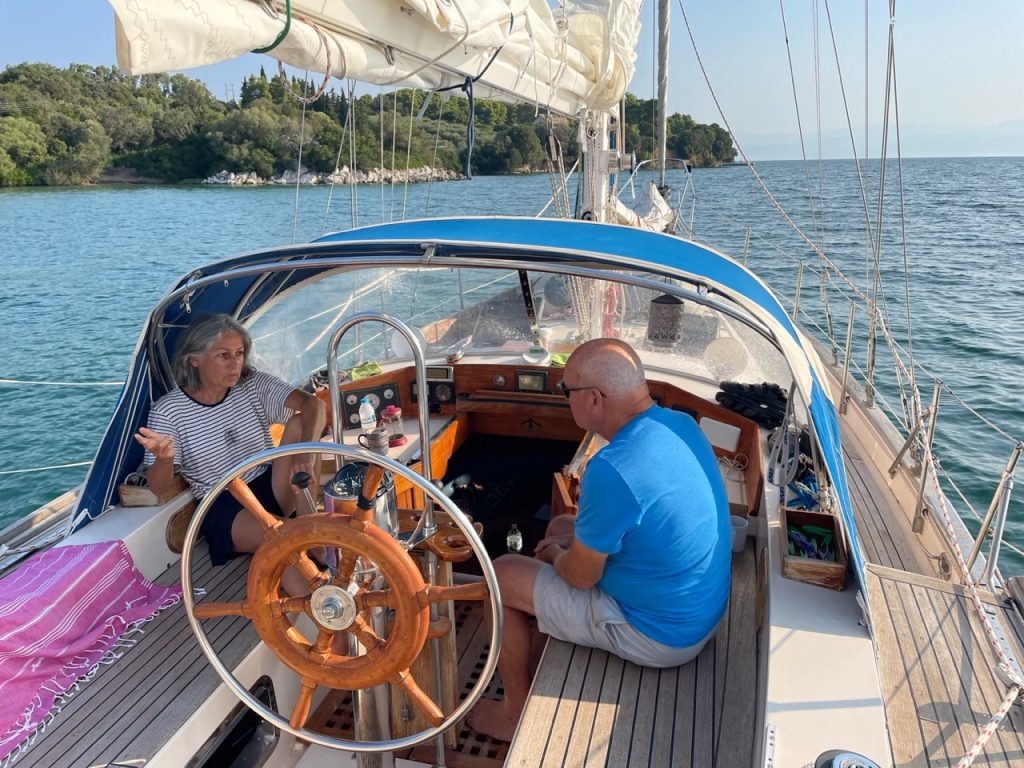
The next day we went back to Preveza, where we lay well on the second anchor attempt, at the city pier directly in front of the National Bank. Here Claudia had to disembark, as her plane for home was going from Preveza-Aktio airport, just a few kilometres away. It was a nice time with her! And we had to buy a new tender. We nearly got drowned, when we used the old one last time.

Pictures of Preveza

[ngg src="galleries" ids="89" display="basic_slideshow"]

We liked Preveza so much, with its winding alleys and friendly, relaxed atmosphere, that we stayed for 5 days. We hiked to the Pantokrator Fortress of Ali Pasha, one of the lost places, a bit scary, but impressive with its thick walls and partly dilapidated walls and archways. 

Pictures of Pantokrator-Castle

[ngg src="galleries" ids="90" display="basic_slideshow"]

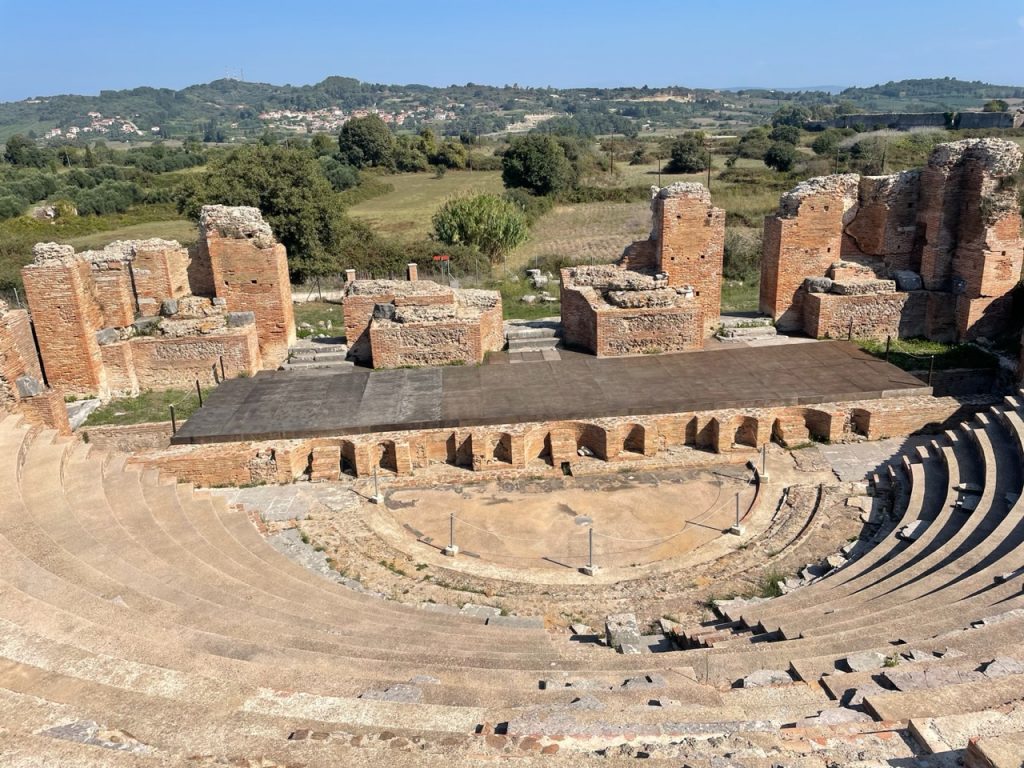
And then: Nicopolis. A gigantic city, the largest in the ancient world with 300,000 inhabitants. Founded by Octavian, later Augustus, on the occasion of the victory in the naval battle over Mark Antony and Cleopatra in 31 BC, which took place in Aktio. A huge city wall, excavations still in work everywhere, quite wonderful mosaics, a stylishly restored odeon in the shape of an amphitheatre and a large theatre (though not accessible). The small farming village of Nikopolis is situated above. We found a taverna, actually a green meadow with a few chairs and noisy men having coffee and tsiporou. With hands and feet we managed to order a Greek salad, beer and lemonade and later a taxi back to Preveza.

Pictures of Nicopolis

[ngg src="galleries" ids="91" display="basic_slideshow"]

We liked Preveza very much, we will come back next year, and not only because of the excellent sykoti (liver) in the Mythos taverna directly at the pier. 

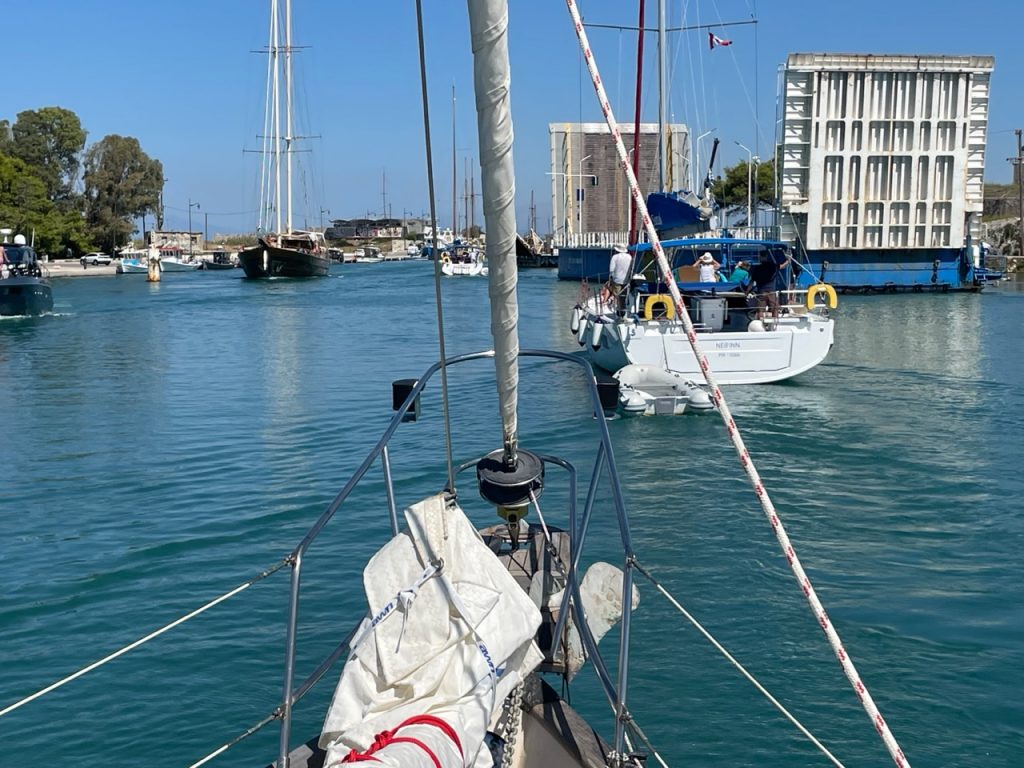
Then we set course south. We leave Preveza and sail through the buoyed fairway, setting course for the entrance to the fairway between Lefkas and the mainland. Here we meet the sailing yacht "Orca" on the way. We already know the Austrian couple on board from Messolonghi. Just in time for the opening of the bridge we are in front of the entrance, hoist the sails and go through the bridge. A short detour into the public harbour of Lefakada shows us: more new floating pontoons for charter boats, everything very narrow and crowded. Actually, we wanted to make a stop here. But we prefer to sail south through the channel and anchor in front of the small fishing port of Ligià directly after leaving the waterway. It is quiet here and we can enjoy the beautiful evening atmosphere.
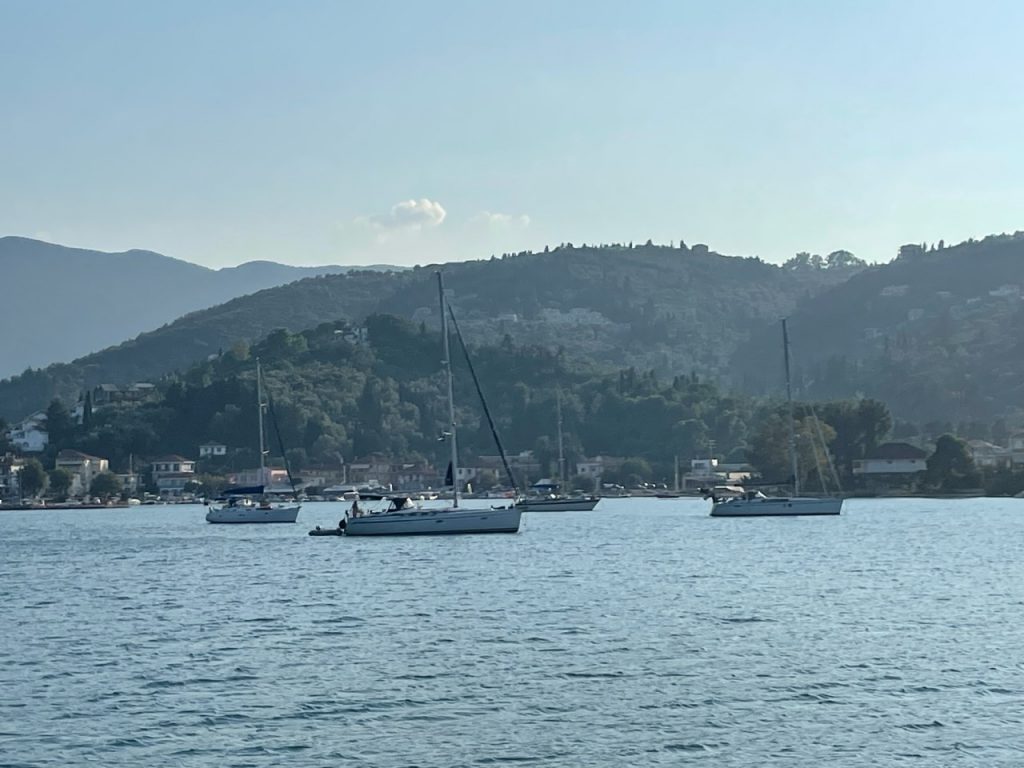
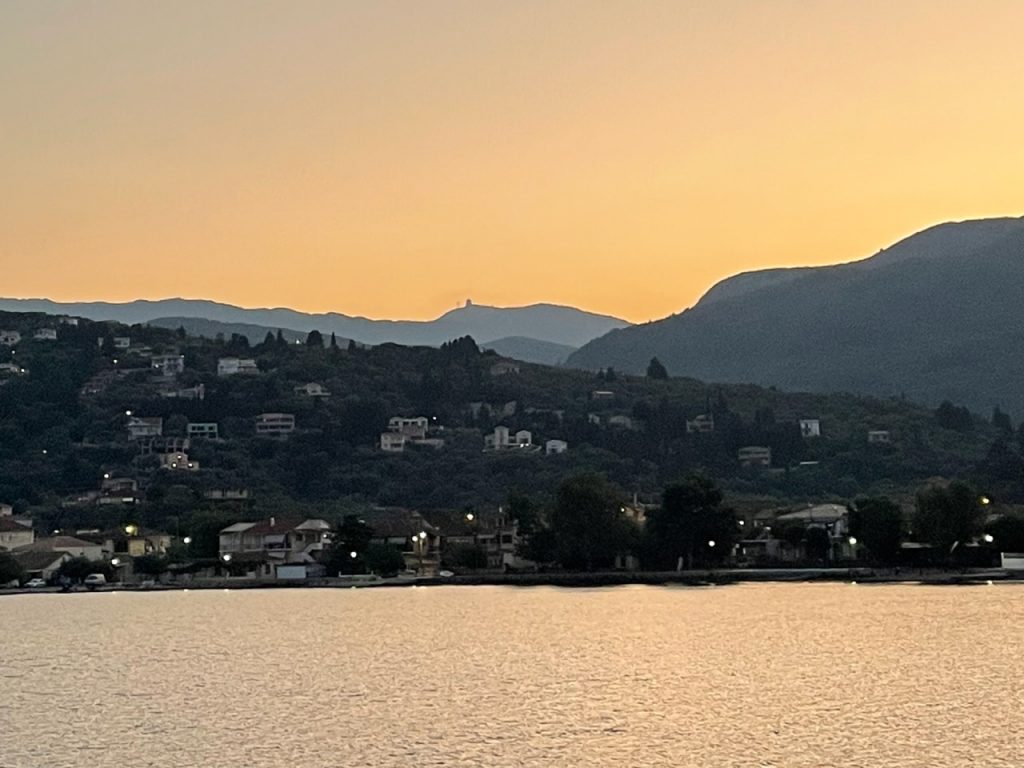
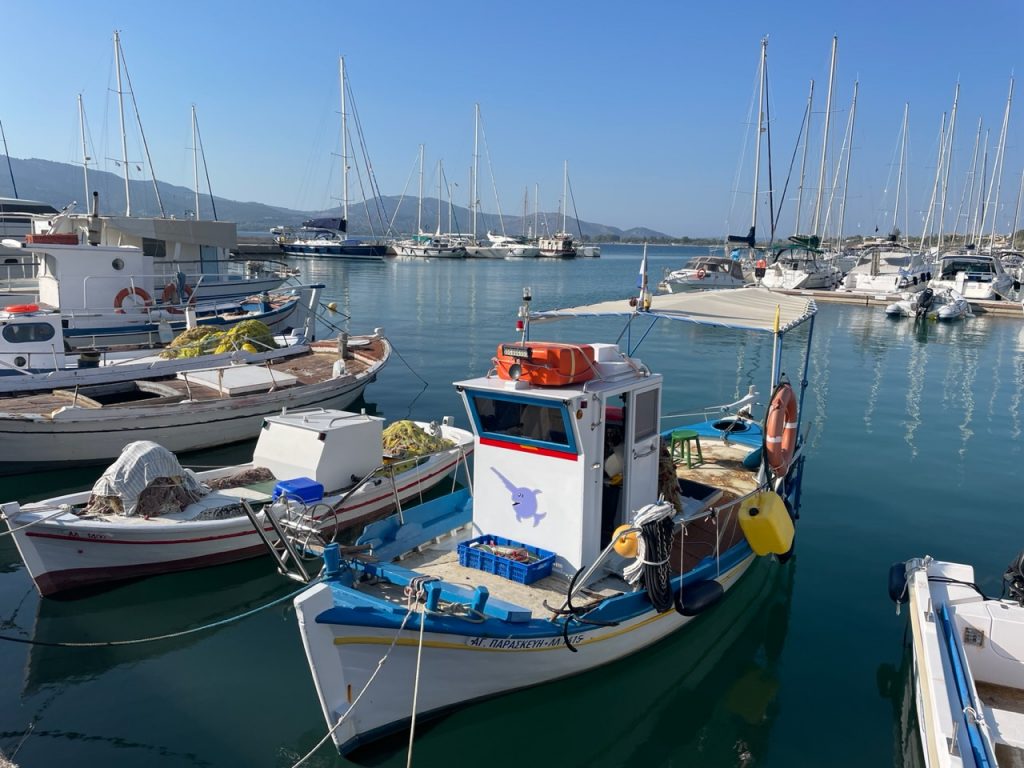
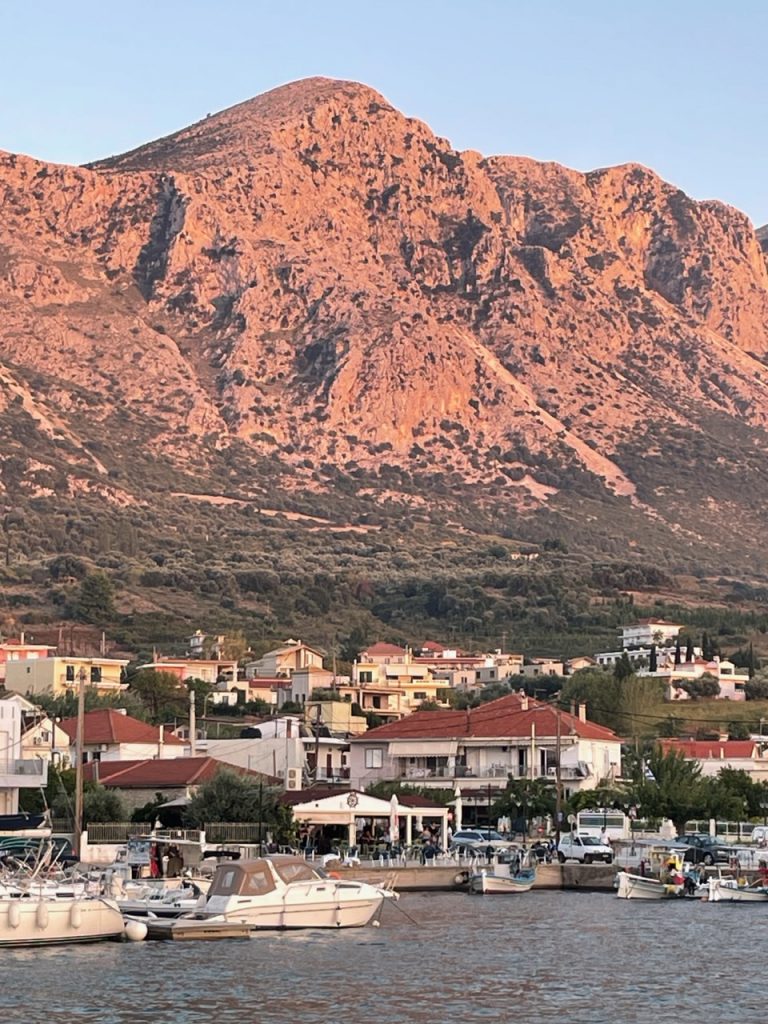
In the meantime, we are back on the Greek mainland in the small harbour of Palairos, which is cosy in the off-season. We want to stay here for a while.
Die Ausfahrt aus dem Hafen von Lygia hat gut geklappt, wir kamen glatt durch die Felsen hindurch. Entlang der Festlandsküste ging es 15 Meilen südlich bis zur Einfahrt in das enge betonnte Fahrwasser nach Preveza, mal wieder ohne Wind, mit Motor, entlang an endlosen Sandstränden, vorbei an Mytikas mit seinem unmöglichen winzigen Fischerhafen. Vorbei an Preveza mit seinen drei riesigen Marinas, in denen an die 2000 Boote liegen, im Wasser und an Land, das Zentrum der Charterbasen im Ionischen Meer. 

In Preveza ging es nach Osten in den Ambrakischen Golf, ein Flachwassergebiet mit großem Fischreichtum, auch Durchzugsgebiet von unzähligen Vögeln auf dem Weg nach Süden - oder Norden. Entlang des wieder betonnten Fahrwassers zwischen Fischfarmen hindurch in die Bucht von Vonitsa, einer schönen kleinen Stadt, die wir schon mit dem Auto erkundet hatten. Zwei Buchten vor Vonitsa fiel der Anker - Idylle mit Wald bis zum Ufer, einem einzigen Boot außer uns, alles völlig still - Nachsaison. Auch der wenige Wind schlief ein, so dass wir einen gemütlichen Abend und eine ruhige Nacht verbringen konnten.

Am nächsten Tag ging es zurück nach Preveza, wo wir beim zweiten Ankerversuch gut lagen, an der Stadtpier direkt vor der National Bank. Hier musste Claudia wieder von Bord, denn ihr Flieger ging vom wenige Kilometer entfernten Flughafen Preveza-Aktio zurück. Schön wars mit ihr! Und wir beschafften uns ein neues Dinghi. Mit dem alten wären wir beim letzten Landgang fast abgesoffen.

Bilder von Preveza

[ngg src="galleries" ids="89" display="basic_slideshow"]

Preveza mit seinen verwinkelten kleinen Altstadt-Gässchen und seiner freundlich-entspannten Atmosphäre hat uns so gut gefallen, dass wir 5  Tage geblieben sind. Wir haben die Pantokrator-Festung von Ali Pascha erwandert, einen der lost places, etwas unheimlich, aber eindrucksvoll die dicken Mauern und teilweise verfallenen Gemäuer und Bogengänge. 

Bilder von der Pantokrator-Festung

[ngg src="galleries" ids="90" display="basic_slideshow"]

Und dann: Nikopolis. Eine gigantisch große Stadt, die größte der Antike mit 300000 Einwohnern. Gegründet von Oktavian, später Augustus, aus Anlass des Sieges in der Seeschlacht über Markus Antonius und Kleopatra 31 v.C., die in Aktio stattfand. Eine riesige Stadtmauer, überall noch Ausgrabungen in Aktion, ganz wunderbare Mosaike, ein stilvoll restauriertes Odeon in Amphitheater-Form und ein (allerdings nicht zugängliches) großes Theater. Das kleine Bauerndorf Nikopolis liegt oberhalb - , wir fanden eine Taverne, eigentlich eine grüne Wiese mit ein paar Stühlen und lauter Männern  bei Kaffee und Tsiporou. Mit Händen und Füßen schafften wir es, einen griechischen Salat, Bier und Limonade und später dann ein Taxi zurück zu bestellen.

Bilder von Nikopolis

[ngg src="galleries" ids="91" display="basic_slideshow"]

Preveza hat uns sehr gut gefallen, nächstes Jahr werden wir wiederkommen, und das nicht nur wegen der ausgezeichneten Sykoti  (Leber) in der Taverne Mythos direkt an der Pier. 

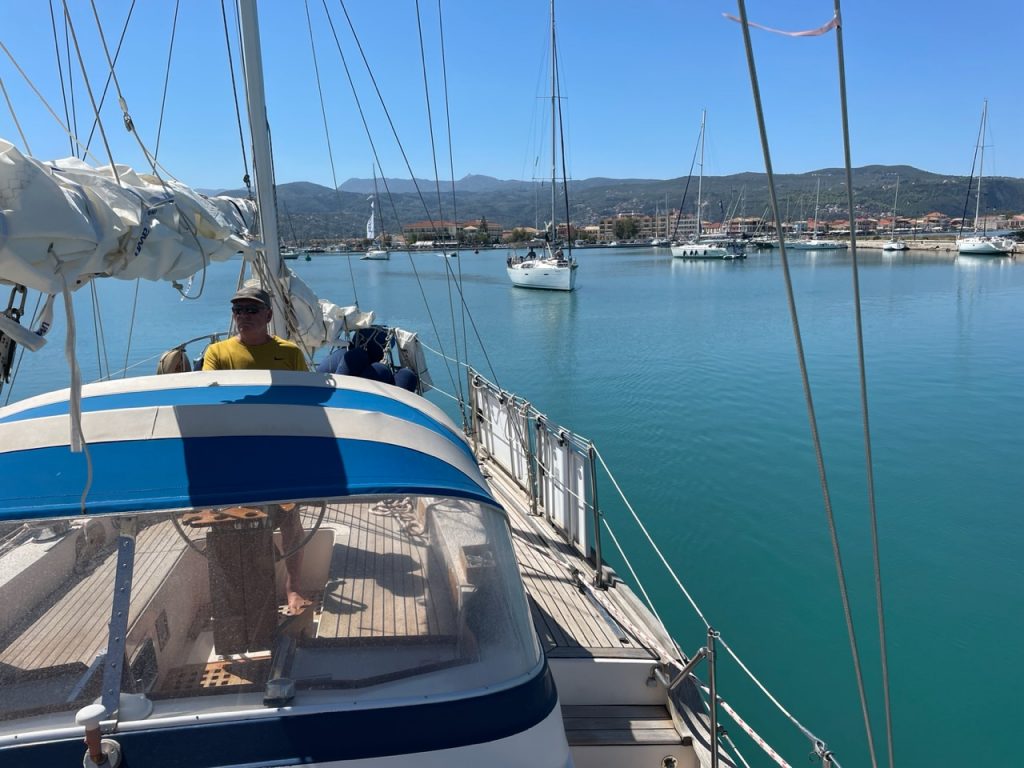
Dann ist Kurs Süd angesagt. Wir verlassen Preveza und segeln durch das betonnte Fahrwasser, nehmen Kurs auf den Eingang zum Fahrwasser zwischen Lefkas und dem Festland. Hier treffen wir unterwegs die Segelyacht „Orca“. Wir kennen das österreichische Paar an Bord schon von Messolonghi. Pünktlich zur Öffnung der Brücke sind wir vor der Einfahrt, bergen die Segel und fahren durch die Brücke. Ein kurzer Abstecher in den öffentlichen Hafen von Lefakada zeigt uns: lauter neue Schwimmstege für Charterboote, alles sehr eng und voll. Eigentlich wollten wir hier einen Stop machen.

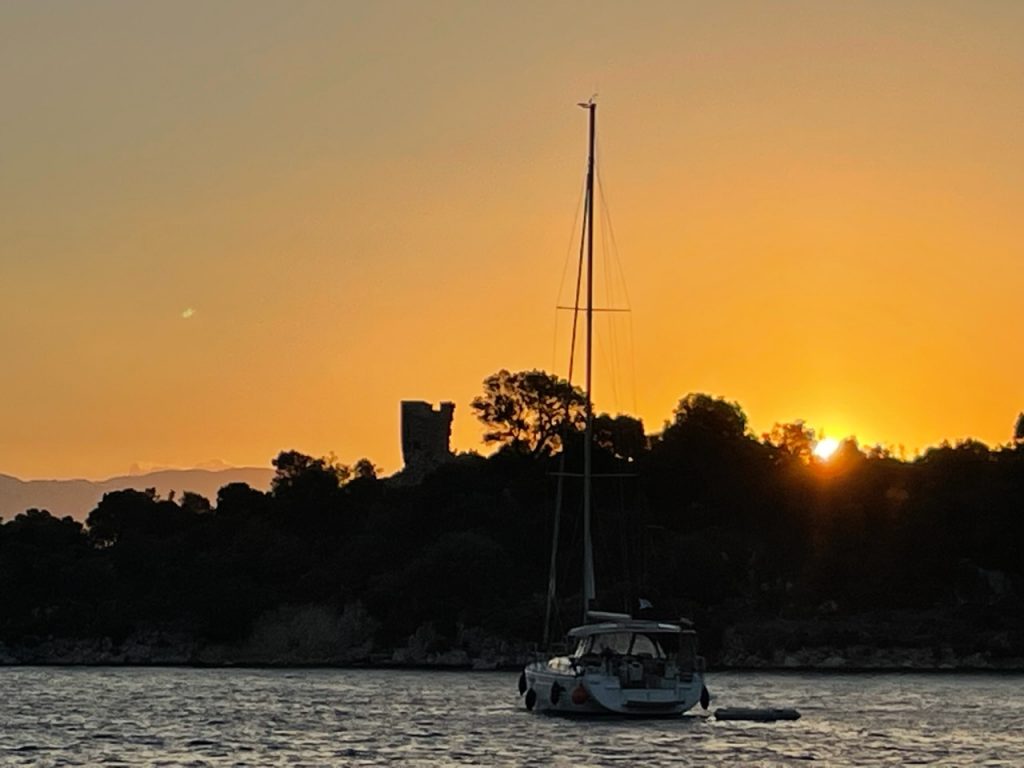
Aber wir ziehen es dann doch vor, durch den Kanal nach Süden zu fahren und direkt nach der Ausfahrt aus dem Fahrwasser vor dem kleinen Fischerhafen Ligià vor Anker zu gehen. Hier ist es ruhig und wir können die schöne Abendstimmung genießen.

Inzwischen sind wir wieder am griechischen Festland im kleinen, in der Nachsaison gemütlichen Hafen Palairos. Hier wollen wir ein bisschen bleiben.

For a week now, we are three on our boat again. Claudia came on board in Corfu Town as planned. Studying the weather map and the forecasts, we found out that a low with many thunderstorm cells was on its way to us. As it turned out in the following three days, we were only on the edge. There was more going on in the Ionian Islands further south, but we also had to deal with three days of unsettled weather and rain.

We spent two more days in Sivota on the mainland. We had already liked it there the first time. On the way there we had nice light wind sailing. The next morning our boat got a powerful freshwater shower with lots of thunder and lightning. Once again, cleaning on deck was spared. And it was also a leak test at the same time. Well, there are one or two places on many boats where moisture or some water gets through during heavy rain. This is also the case with our boat. Since we know the spots, we take precautions.

After the heavy rain, however, we had the opportunity to see a bit more of the area around Sivota. There are very nice places and anchorages, also on the small islands off the coast.

Pictures from Sivota

[ngg src="galleries" ids="84" display="basic_slideshow"]

Going to an island again, to weather the rest of the depression in a sheltered bay? Paxos offered itself. In the bay of Lakka, in the very north-east of the island, we spent two somewhat restless days and nights at anchor. Many boats came into the bay and the distances from boat to boat were small. Three times we moved to another spot during this time.

Pictures from Lakka

[ngg src="galleries" ids="85" display="basic_slideshow"]

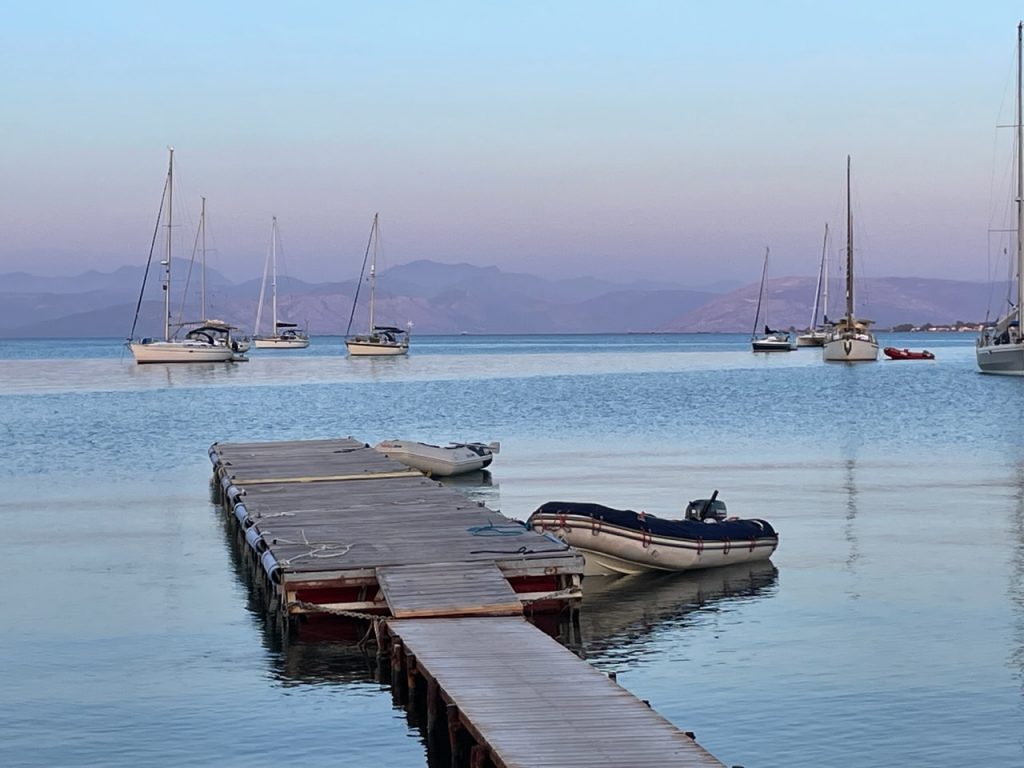
But then we could spend two calm, sunny days and nights in the south of Paxos in the bay of Mongonisi. From our place we could already see the next island, Antipaxos. For one night, a flotilla of 14 boats moored at the pier. We didn't mind, because we were anchored at a distance.

Pictures of the anchorage and the southern tip of Paxos

[ngg src="galleries" ids="86" display="basic_slideshow"]

A shore excursion to the nearby main town (Gaios) was on the programme. Gaios is also called "The Saint Tropez of the Ionian Islands". That's in some way true.

Pictures of Gaios

[ngg src="galleries" ids="87" display="basic_slideshow"]

But our trip also showed us that our dinghy has started to leak. Our inventory tells us that we need a new one.

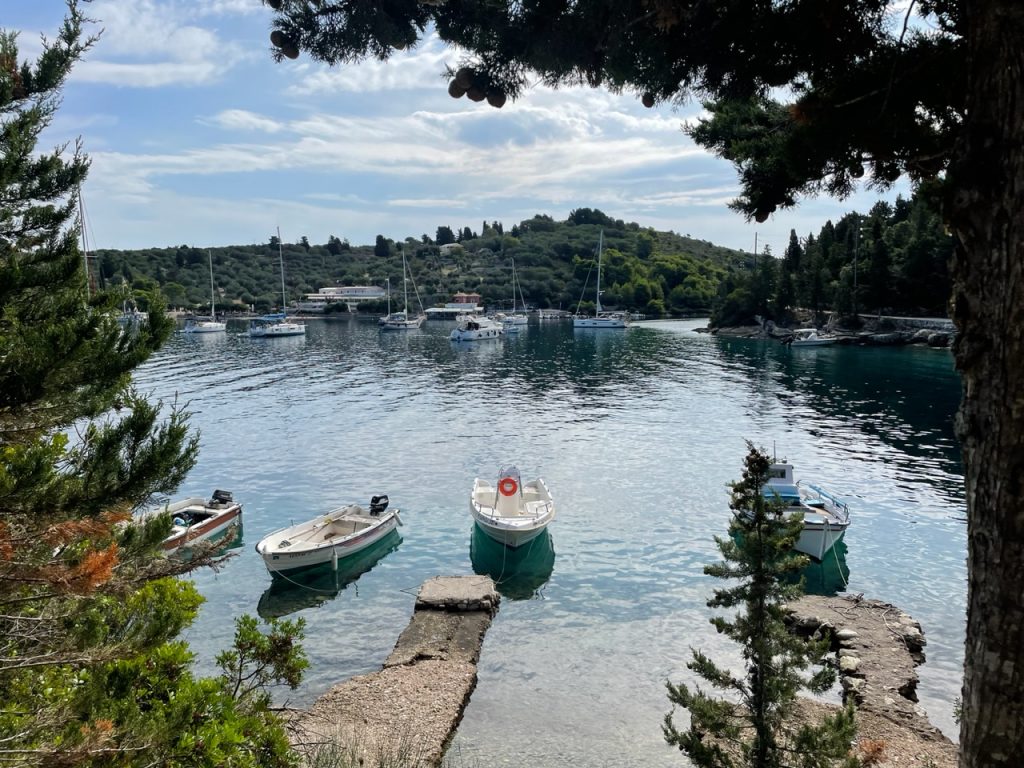
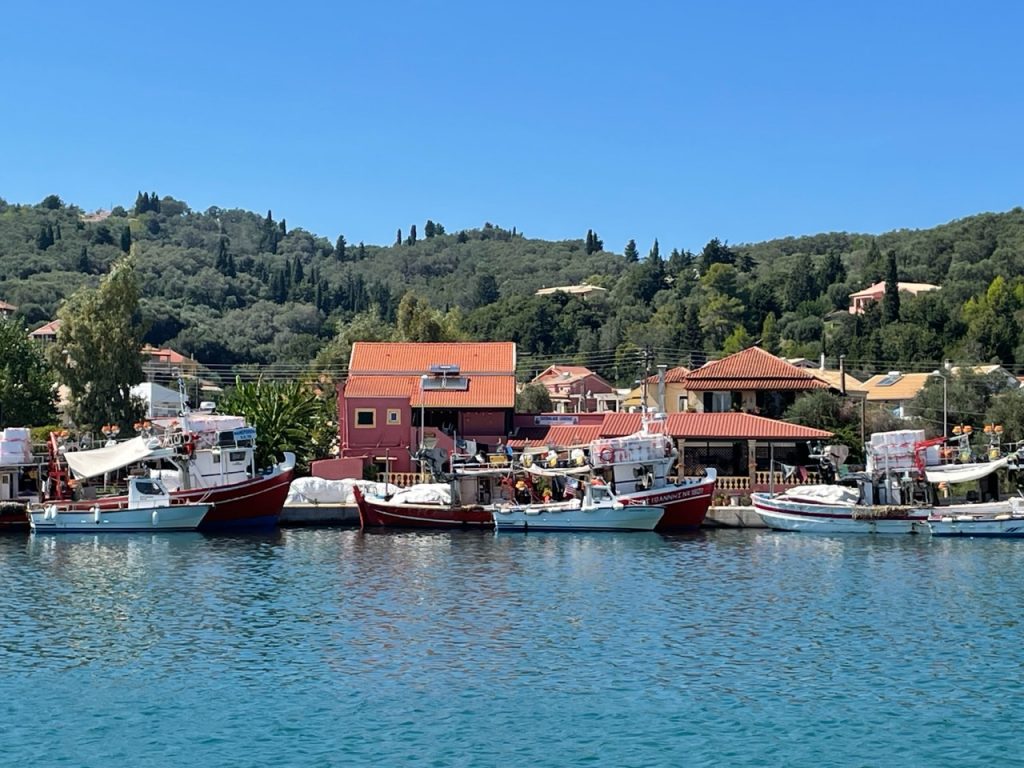
In the meantime, we sailed back across to the mainland, to Ligiá. We had a lot of respect for the entrance to this small fishing harbour. There are rocks scattered all over the place. Some stick out of the water, but most are underwater. So: keep your nerve and sail through with the right course and lookout. We made it! It's cosy here. Many fishing boats, a few sailors, no village, but a very good fish restaurant, they say. We can confirm that, because we tried it out last night.

Pictures of Ligiá

[ngg src="galleries" ids="88" display="basic_slideshow"]

Seit einer Woche sind wir wieder wieder zu dritt. Claudia kam wie geplant in Korfu-Stadt an Bord. Beim Studieren der Wetterkarte und der Prognosen mussten wir feststellen, dass ein Tief mit vielen Gewitterzellen auf dem Weg zu uns war. Wie sich in den folgenden drei Tagen herausstellte, waren wir nur am Rand. In den südlicher gelegenen Ionischen Inseln war mehr los, aber auch wir hatten drei Tage lang mit unbeständigem Wetter und Regen zu tun.

Zwei Tage waren wir noch einmal in Sivota am Festland. Da hatte es uns schon beim ersten Mal gut gefallen. Auf dem Weg dorthin gab es schönes Leichtwindsegeln. Am nächsten Morgen bekam unser Boot eine kräftige Süßwasserdusche mit viel Blitz und Donner. Wieder einmal das Putzen an Deck gespart. Und es war zugleich auch eine Dichtigkeitsprüfung. Na ja, es gibt auf vielen Booten ein bis zwei Stellen, an denen bei Starkregen Feuchtigkeit oder etwas Wasser durch kommt. So auch bei uns. Seit wir die Stellen kennen, treffen wir Vorkehrungen.

Nach dem Starkregen hatten wir dann aber die Gelegenheit, uns noch ein bisschen mehr von der Umgebung von Sivota anzuschauen. Es gibt dort sehr schöne Plätze und Ankerbuchten, auch auf den vorgelagerten kleinen Inseln.

Bilder von Sivota

[ngg src="galleries" ids="84" display="basic_slideshow"]

Wieder auf eine Insel, um in einer geschützten Bucht den Rest vom Tief abzuwettern? Da bot sich Paxos an. In der Bucht von Lakka ganz im Nordosten der Insel verbrachten wir zwei etwas unruhige Tage und Nächte vor Anker. Viele Boote kamen in die Bucht und die Abstände von Boot zu Boot waren klein. Dreimal haben wir uns in dieser Zeit auf einen anderen Platz verlegt.

Bilder von Lakka

[ngg src="galleries" ids="85" display="basic_slideshow"]

Aber dann konnten wir zwei ruhige, sonnige Tage und Nächte im Süden von Paxos in der Bucht von Mongonisi verbringen. Von unserem Platz konnten wir schon auf die nächste Insel, Antipaxos blicken. Für eine Nacht machte eine Flottille mit 14 Booten an der Pier fest. Hat uns nicht gestört, denn wir lagen ja mit Abstand vor Anker.

Bilder vom Ankerplatz und der Südspitze von Paxos

[ngg src="galleries" ids="86" display="basic_slideshow"]

Ein Landausflug zum Einkaufen im nahegelegen Hauptort (Gaios) stand auf dem Programm. Gaios wird auch „Das Saint Tropez der Ionischen Inseln“ genannt. Da ist was dran.

Bilder von Gaios

[ngg src="galleries" ids="87" display="basic_slideshow"]

Unser Ausflug zeigte uns aber auch, dass unser Dinghi undicht geworden ist. Unsere Bestandsaufnahme sagt uns, dass wir ein neues brauchen.

Inzwischen sind wir wieder zum Festland hinüber gesegelt, nach Ligiá. Vor der Einfahrt in diesen kleinen Fischerhafen hatten wir mächtig Respekt. Denn dort liegen weit verstreut Felsen. Manche ragen aus dem Wasser, die meisten sind aber unter Wasser. Also: Nerven behalten und mit dem richtigen Kurs und Ausguck durch. Geschafft! Hier ist es gemütlich. Viele Fischerboote, ein paar Segler, kein Ort, aber ein sehr gutes Fischrestaurant, heisst es. Das können wir bestätigen, denn wir haben es gestern Abend ausprobiert.

Bilder von Ligiá

[ngg src="galleries" ids="88" display="basic_slideshow"]

In der Mandraki Marina kommt unsere Freundin Lisa an Bord, um mit uns eine Woche unterwegs zu sein. Zwischen der Insel Korfu und dem Festland gibt es viele Ziele (Häfen und Ankerbuchten), die wir in kleinen Etappen erreichen können. Aber leider in dieser Woche nur sehr wenig unter Segeln. Wir sind auf der Suche nach dem Wind und müssen fast jeden Tag erneut feststellen: Kein Wind. Nirgends. Auch die Nachmittagsbrise, die wir schon häufig erlebt haben, bleibt aus. Sieben Knoten Wind, darunter kommt Aglaya gar nicht erst in Fahrt. Und sieben Knoten Wind mit einer Fahrtgeschwindigkeit von zwei Knoten, das war das höchste der Gefühle in dieser Woche.

[ngg src="galleries" ids="82" display="basic_slideshow"]

So sind wir ein bisschen herumgeschippert, nach Kassiopi im Nordosten von Korfu mit Blick auf die albanische Stadt Saranda. Dann wieder nach Süden zum Ankern vor Korfu-Stadt. Und dann hinüber zum Festland nach Sivota. Der kleine Hafen mit seinem stoischen Hafenmeister hat uns gut gefallen. Dort haben wir einen Badetag eingelegt. Walter hat es dort allerdings nicht lange im Wasser ausgehalten. Manchmal knabbern die Fische ja ein bisschen an einem. Ihn haben sie aber fest in die Beine gebissen und richtige Hautfetzen herausgerissen. Kleine Piranhas? Wohl nicht. Aber so etwas haben wir noch nicht erlebt. Trotzdem war es schön in Sivota. Obwohl noch recht viele (deutsche) Touristen dort waren, war‘s gemütlich. Und wir haben einen tollen Fischladen entdeckt, in dem wir drei fangfrische Doraden für das Abendessen gekauft haben. Auf dem Weg zurück nach Korfu zum Ankerplatz in der großen Bucht von Lefkimmi haben uns mal wieder Delphine am Boot besucht und eine ganze Weile begleitet. 

Inzwischen sind wir wieder in der schönen Mandraki Marina. Lisa ist von Bord gegangen. Jetzt kommt Claudia, die schon letztes Jahr in der Ägäis mit uns gesegelt ist. Wir freuen uns drauf.

Bilder von Kassiopi

[ngg src="galleries" ids="79" display="basic_slideshow"]

Bilder vom Ankern vor Korfu Stadt

[ngg src="galleries" ids="80" display="basic_slideshow"]

Bilder von Sivota

[ngg src="galleries" ids="81" display="basic_slideshow"]

Mandraki Marina

[ngg src="galleries" ids="83" display="basic_slideshow"]

In Mandraki Marina, our friend Lisa comes on board to be with us for a week. Between the island of Corfu and the mainland there are many destinations (harbours and anchorages) that we can reach in small stages. But unfortunately very little under sail this week. We were looking for the wind and almost every day we had to find out again: No wind. Nowhere. Even the afternoon breeze, which we have experienced frequently, is absent. Seven knots of wind, below which Aglaya doesn't even get going. And seven knots of wind with a cruising speed of two knots, that was the highest of feelings this week.

[ngg src="galleries" ids="82" display="basic_slideshow"]

So we sailed around a bit, to Kassiopi in the north-east of Corfu with a view of the Albanian town of Saranda. Then south again to anchor off Corfu Town. And then across to the mainland to Sivota. We liked the small harbour with its stoic harbour master. We had a bathing day there. Walter didn't last long in the water, though. Sometimes the fish nibble at you a bit. But they bit him hard on the legs and tore out real scraps of skin. Small piranhas? Not really. But we haven't experienced anything like that yet. Nevertheless, it was nice in Sivota. Although there were still quite a few (German) tourists there, it was cosy. And we discovered a great fish shop where we bought three freshly caught dorades for dinner. On the way back to Corfu to the anchorage in the large bay of Lefkimmi, dolphins visited us again at the boat and accompanied us for quite a while. 

In the meantime we are back in the beautiful Mandraki Marina. Lisa has left the boat. Now Claudia, who sailed with us in the Aegean last year, is coming. We are looking forward to it.

Pictures from Kassiopi

[ngg src="galleries" ids="79" display="basic_slideshow"]

Pictures of anchoring in front of Corfu Town

[ngg src="galleries" ids="80" display="basic_slideshow"]

Pictures from Sivota

[ngg src="galleries" ids="81" display="basic_slideshow"]

Mandraki Marina

[ngg src="galleries" ids="83" display="basic_slideshow"]

Then we finally managed to cast off in Messolonghi. With the help of Marinero Dimitri it was quite relaxed. As the wind was still coming from the east and might have pushed us onto the pier, he pulled us out of the box backwards with the dinghy. It couldn't have been more comfortable.

As we only had five days to get to Corfu, we couldn't always wait for the right wind and had to start our Nanni frequently. 

The first stop on the way north was the small island of Kalamos. In the beautiful green anchorage of Port Leone/Kefali, we could admire the magnificent starry sky at night. The Milky Way was especially good to see. In this bay there are only the ruins of a village, which was completely destroyed by an earthquake and therefore abandoned, and a well-preserved church.

Next stage: past the island of Meganisi, with its many beautiful bays, along the east coast of Lefkas through the channel between the island and the mainland to the small port of Mytikas just north of Preveza. This time we couldn't take our time on this stretch, but on the way back to our winter camp on Lefkas we want to take a look at many things here. At the end of the Lefkas channel, we arrived just in time at the bridge, which is raised and swung to the side every hour on the hour.

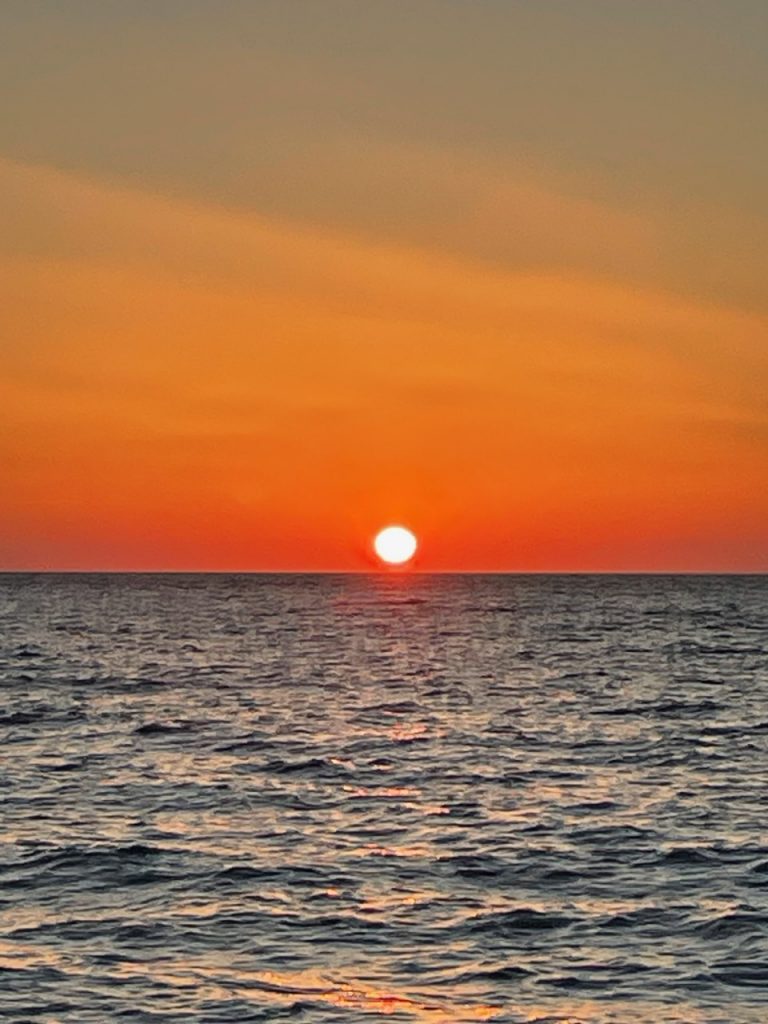
The small harbour of Mytikas, which we had chosen as a place to spend the night, turned out to be a disappointment. We had read some positive reports on Navily. We cannot recommend it. Unmarked rocks under water in the entrance, many mooring buoys of the fishing boats and otherwise very shallow. That was too much risk for us. So we anchored next to the harbour in front of a sandy beach. A nice place, but with some swell. But we could watch the sunset with a clear view of the sea.

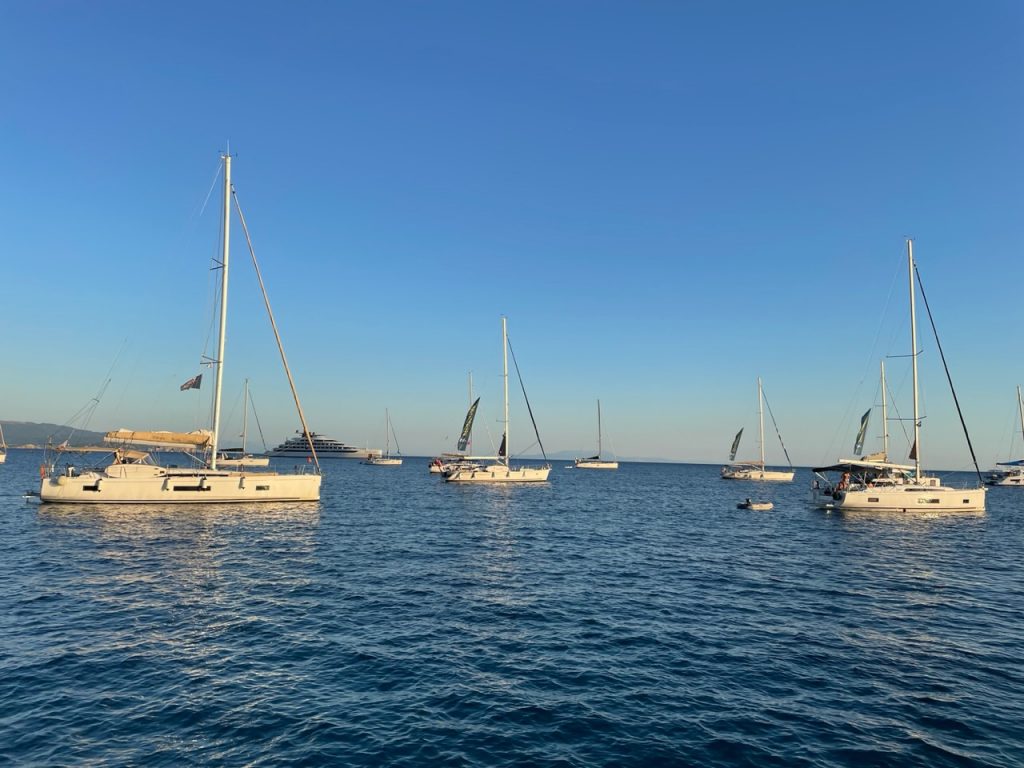
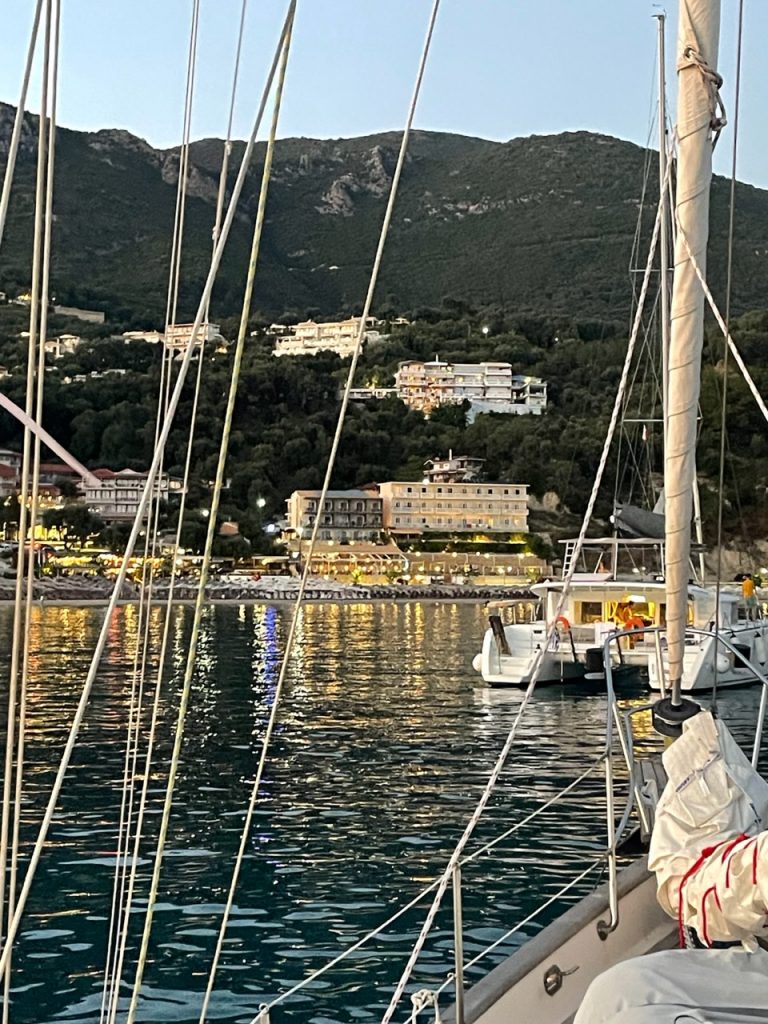
And we continued the next morning. Actually, we wanted to sail to the island of Paxos. But the wind on the way convinced us that it would be better to sail along the mainland to Parga. That was a good decision. We had already been to Parga a good four years ago, but we didn't have Aglaya then. Her former owners Trix and Peter picked us up from the ferry at Igoumenitsa. On the way to Messolonghi to visit their boat, we stopped in Parga. We had already liked the place at that time. And that's where we met Peter and Trix, and later Aglaya in Messolonghi. This time we anchored with many other boats in the bay next to the harbour.

Early the next morning we pulled up the anchor and set off for the island of Corfu. We still had one day before we wanted to be in Corfu Town. So we headed for the small fishing port of Petriti. A very nice discovery. We were able to moor at the pier, but there are also many possibilities to anchor there. We will certainly stop by here again.

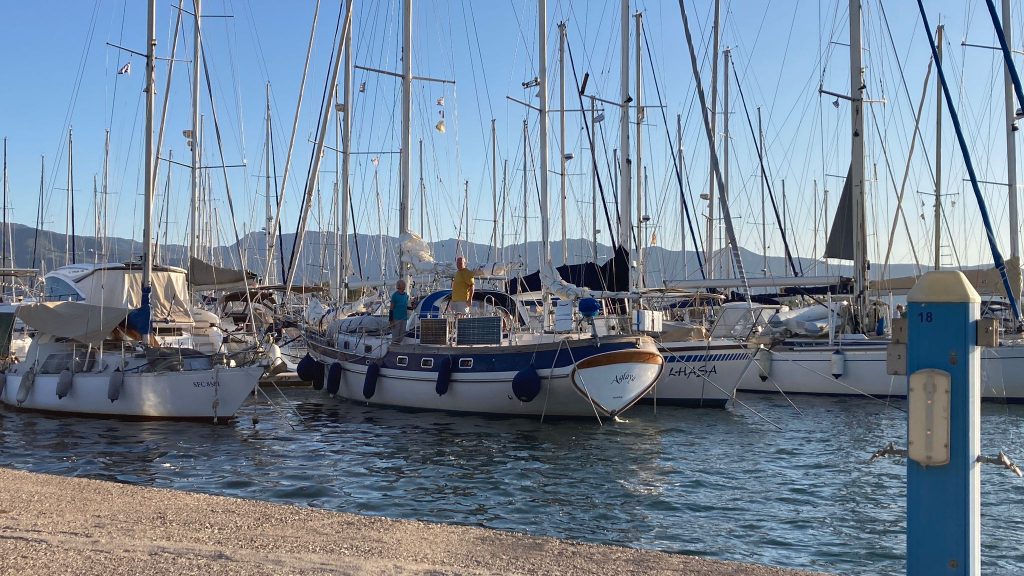
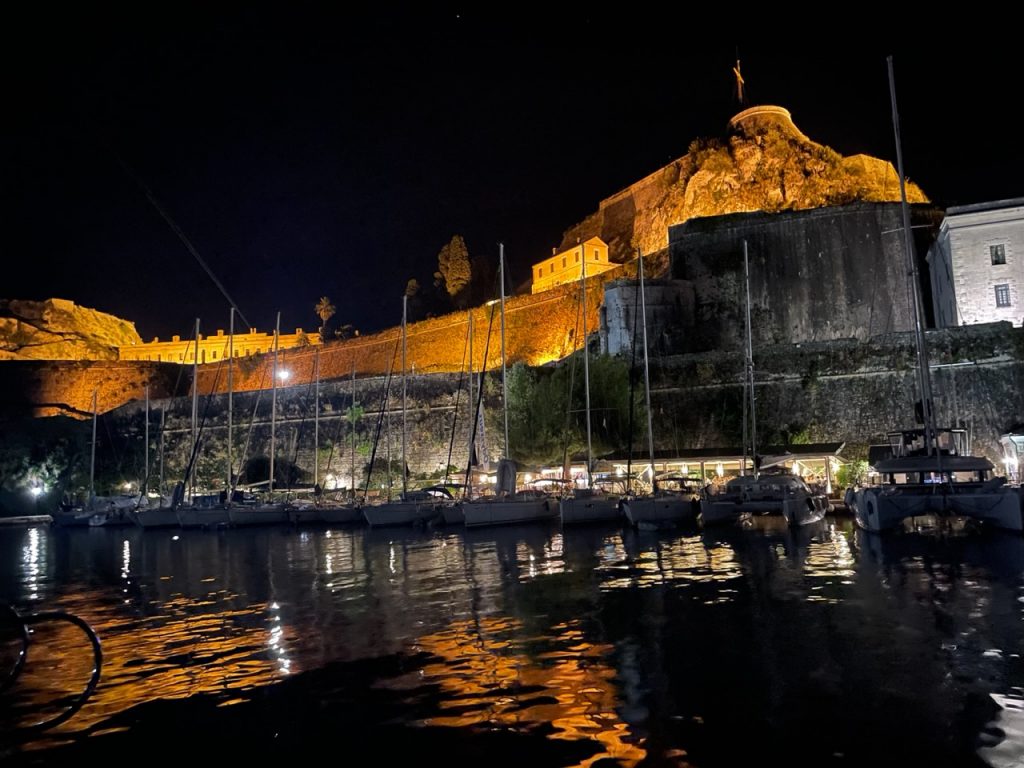
On 14 September, there was only a short distance to go. 11 nautical miles to Corfu Town. As planned, we moored there in the beautiful Mandraki Marina. We had been here once before in 2007 with a charter boat with our friends Pia and Max and their daughter Lea. Located directly below the castle, very close to the old town, we are now waiting for Lisa, our visitor. The castle is home to the Corfu Music Academy. The whole day we hear virtuoso piano sounds from there. A very special ambience.